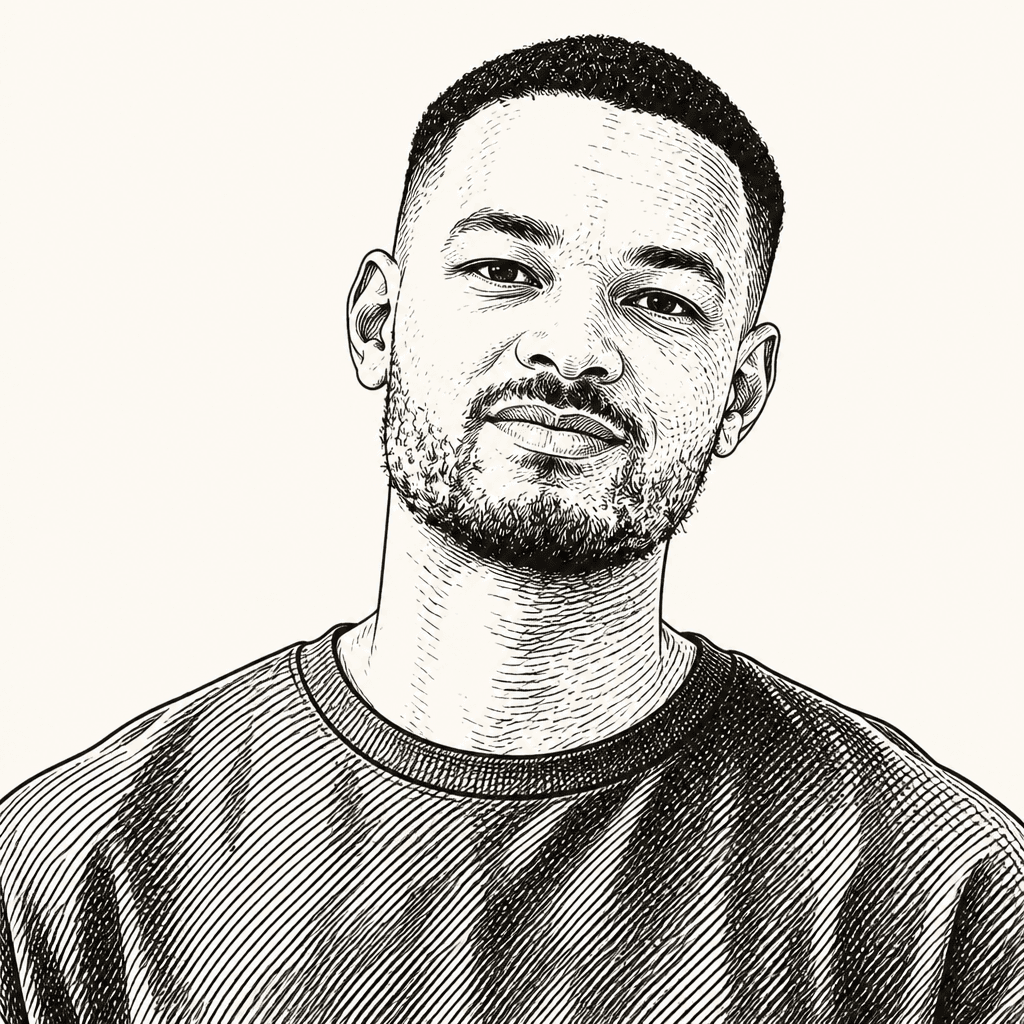
Steven Bartlett
Entrepreneur, investor, author, and host of The Diary of a CEO, where he conducts long-form interviews with influential creators, business leaders, and experts. He is also the founder of FlightStory.
Creative Breakthroughs Begin With Ideas the Market Cannot Defend
Rick Rubin, the Def Jam co-founder and producer, argues that consequential creative work begins with ideas that cannot be rationally defended in advance—choices guided by intuition rather than market research, audience expectation or professional identity. Drawing on work with artists including Jay-Z, Kanye West, Johnny Cash and Linkin Park, Rubin says artists should protect the exploratory stages of making, accept the risk of alienating existing audiences, and treat commercial response as secondary to whether the work honestly reflects their point of view.
Insurance Failure Is the Weak Link in Global Trade
Professor Jiang Xueqin argues that modern technology and prosperity rest on a dollar-centred trading system whose specialized supply chains depend on American military power, functioning shipping routes and confidence in financial institutions. In his account, escalating conflict around Iran could disrupt insurable trade, cutting energy and industrial inputs to major economies and setting off a chain of scarcity, migration, political polarization and conflict. His most extreme warning is that a future attacker could seek 9/11-scale psychological shock by targeting financial records and payment infrastructure rather than physical landmarks.
Conversation Works When Facts Become Stories and Depth Is Earned
Behavioural researcher Vanessa Van Edwards argues that people become easier to talk to not by being more impressive, but by replacing scripted fact-gathering with reciprocal exchanges that invite stories, emotion and a genuine turn for the other person. In her framework, conversation should move gradually from safe facts to personal goals and, only when trust permits, to identity and self-narrative. The practical discipline is to match depth to context, listen for cues that someone wants the floor, and avoid treating curiosity as a licence to demand disclosure.
Lie Detection Improves When Questions Test Verifiable Detail
Psychologist Leanne Ten Brinke argues that there is no reliable visual “tell” for lying or for identifying dark personality traits. Drawing on deception research, she recommends testing consequential claims with open-ended questions, requests for detail and checks on what can be verified, rather than relying on eye contact, fidgeting or first impressions. For dealings with manipulative people, her focus is on patterns over time and on reducing their leverage through clear boundaries, records and outside perspective.
Health Routines Should Follow a Daily Cortisol and Light Rhythm
Stanford neuroscientist Andrew Huberman argues that health routines should be organized around a daily biological rhythm rather than around suppressing stress or maximizing isolated metrics. His protocol calls for light, hydration, exercise and difficult work early in the day; movement and manageable eating through it; and darkness, lowered arousal and sleep protection at night. He places drugs, peptides and supplements behind those behavioral foundations, while arguing that deliberate non-instrumental time and faith can counter the urge to treat self-optimization as total control.
Assetlessness Is Driving America Toward State Dependence
David Friedberg, entrepreneur, scientist and member of President Trump’s science advisory council, argues that America’s drift toward socialism reflects an ownership crisis rather than an ideological conversion. As housing, healthcare, education and retirement become less attainable for people living on wages, he says, voters will increasingly seek state guarantees. Friedberg’s alternative is to help more Americans move from labor to capital—while ensuring they share in AI-driven growth—but Steven Bartlett questions whether that transition can happen quickly enough for workers displaced along the way.
Fatherhood Rewires the Brain Through Direct Caregiving
USC psychology professor Darby Saxbe argues that the physical changes associated with fatherhood—including modest reductions in gray matter and roughly 25% lower testosterone in hands-on dads—are better understood as adaptive responses to caregiving than as biological decline. Drawing on her research into parental brains, hormones and relationships, she says fathers develop through direct participation in care, while couples and public policy determine how much opportunity they have to do so.
Most Sleep Apnea Cases Go Undiagnosed, Especially Among Women
Dr Andy Galpin, professor of kinesiology and executive director of Parker University’s Human Performance Center, argues that persistent poor sleep and fatigue should be treated first as possible medical problems, not failures of optimization. He says roughly a billion people may have sleep apnea and that most cases go undiagnosed, often because people without the stereotypical profile of loud snoring and larger body size mistake symptoms for stress, aging or insomnia. Trackers, supplements and sleep routines can help identify patterns, Galpin says, but they should not delay clinical assessment when a disorder is plausible.
Self-Improvement Advice Works Only When It Counters Existing Tendencies
Chris Williamson argues that both optimisation culture and its anti-optimisation backlash fail when they treat advice as universally applicable. For people already prone to anxiety, perfectionism or obsessive self-management, more discipline can deepen burnout; for those avoiding responsibility, calls to relax and accept themselves can become an excuse to stay stuck. The Modern Wisdom host says intense self-improvement can be a necessary, temporary corrective, but only when it redirects rather than amplifies a person’s existing tendencies.
AI Speculation Meets Debt, Inequality, and a Changing World Order
Ray Dalio, founder of Bridgewater Associates, argues that the AI boom can be both technologically transformative and financially unstable when investors ignore valuation, borrow against rising assets, and become vulnerable to a need for cash. He places that risk within a broader “big cycle” of debt, inequality, political conflict and shifting geopolitical power, which he says has left the US, UK and other countries in a later stage of decline. His prescription is not to time a crash, but to build enough liquidity, diversification and personal adaptability to avoid forced decisions when conditions turn.
The Vitamin D–Microbiome–Sleep Pathway Remains an Unproven Clinical Hypothesis
Neurologist Dr Stasha Gominak argues that persistent sleep problems may reflect a biochemical deficiency state involving vitamin D, gut microbes and B vitamins—not simply poor sleep habits. Drawing on her clinical experience, she says vitamin D and B-vitamin supplements can help or worsen symptoms depending on dose, timing and individual response, and advocates monitoring rather than routine supplementation. Her proposed vitamin D–microbiome–B-vitamin pathway remains a clinical hypothesis rather than an established treatment model.
Iran’s Control of Hormuz Is Driving the U.S. Toward Ground War
University of Chicago political scientist Robert Pape argues that the Iran war has left Tehran with its most consequential gain: practical control over the Strait of Hormuz, giving it leverage over oil flows that air strikes and a blockade have failed to reverse. As energy disruption deepens, Pape says the White House may turn to a limited ground operation on Iran’s coast—not because it would reopen the strait, but because it could demonstrate action. He puts the chance of U.S. troops entering Iran in the near term at about 70% and warns that ground control would raise the risk of a wider, more durable conflict.
Reality and Reputation Are the Durable Moats in an AI Market
Alex Hormozi, co-founder of Acquisition.com, argues that AI should remove genuine operational constraints rather than replace founders’ judgment or become the product itself. As generative tools make information and imitation cheap, he says durable advantage will rest on real stakes, operating records and reputations earned through accountable decisions. His wider prescription is similarly foundational: build for retention before distribution, price for the capacity to hire, and use direct action—not prolonged planning—to test whether a business can endure.
Seyfried Argues Mitochondrial Dysfunction, Not Mutations, Starts Cancer
Boston College biologist Thomas Seyfried argues that cancer begins primarily with chronic mitochondrial damage, which pushes cells toward glucose- and glutamine-dependent fermentation; in his account, many genetic mutations are downstream effects rather than the initiating cause. He says that model supports using nutritional ketosis and other metabolic measures alongside chemotherapy, radiation and immunotherapy to pressure tumours’ fuel supply. The source notes that this remains a contested minority view, and that such approaches are experimental rather than established cancer treatment.
AI Safety Requires a Verified Slowdown Before Autonomous Research
Former OpenAI researcher Daniel Kokotajlo argues that the decisive AI milestone may arrive before mass job loss makes the threat visible: labs are trying to automate AI research itself, potentially accelerating progress toward superintelligent systems beyond human control. He separates the risk of losing control of opaque systems from the risk that a few companies or states retain control of them, and says competitive pressure makes voluntary restraint unreliable. His proposed alternative, “Plan A,” is a government-backed, internationally verified slowdown paired with transparency, safety research and broader distribution of AI’s gains.
Alien Life Is Probable, but UFO Claims Still Lack Physical Evidence
Neil deGrasse Tyson, the astrophysicist and Hayden Planetarium director, argues that the scale and chemistry of the universe make alien life highly probable, but says claims of alien visitation still require physical evidence. In a Diary of a CEO interview built around his book Take Me To Your Leader, Tyson applies the same standard to UFO footage, whistleblower testimony, religion, psychedelics and simulation theories: uncertainty is not proof, and belief should not outrun what can be measured.
Retired UFC Fighter Vows Sobriety After Airport Intoxication Arrest
Dustin Poirier tells Steven Bartlett that his public intoxication arrest at an Atlanta airport was not an isolated lapse but the visible result of retirement, alcohol, family trauma and a lost fighting identity colliding. The retired UFC lightweight says those pressures explain the context, not the conduct: he chose to drink, lost control, cost himself work and sponsors, and now says he will cut alcohol out completely, return to therapy and rebuild a life no longer organized around fighting.
Aging Is an Energy-Allocation Problem, Not Just Cellular Decline
Behavioral medicine professor Martin Picard argues that aging and fatigue are best understood as problems of energy allocation, with mitochondria acting not just as cellular power sources but as stress sensors and regulators of repair. In a Diary of a CEO interview, he applies that framework to gray hair, chronic stress, diet, exercise, depression and disease, while distinguishing firmer evidence from more speculative links. His central claim is that health depends less on adding fuel or interventions than on reducing chronic energetic resistance and allowing the body to recover, adapt and direct energy where it matters.
Chasing Skinny Is Undermining Women’s Long-Term Strength
Dr. Stephanie Estima, a chiropractor and women’s health clinician, argues that women’s fitness advice has too often made thinness the goal at the expense of strength, recovery and long-term capacity. In a Diary of a CEO interview, she makes the case for replacing the pursuit of “skinny” with progressive resistance training, adequate fueling, anatomy-specific coaching and recovery habits that protect muscle, bone, connective tissue and pelvic health over time.
Iran Deal Remains a Term Sheet With Verification Details Unresolved
Vice President JD Vance casts his politics as the product of childhood instability, Iraq-era disillusionment, distrust of American institutions, and a return to Christianity after what he describes as secular ambition without virtue. Speaking with Steven Bartlett, Vance argues that those experiences explain his turn toward Donald Trump, his preference for limited war aims, his view that immigration must move at a pace communities can absorb, and his concern that AI will concentrate wealth and surveillance power. On Iran, he says the administration has secured a provisional term sheet, not a completed peace deal, with nuclear verification and enforcement still unresolved.
Creatine Benefits Depend on Dose, Tissue, and Brain Stress
University of Regina creatine researcher Darren Candow argues that creatine is useful, but not in the one-scoop-for-everything way it is often sold. In a Diary of a CEO interview, Candow says the evidence is strongest for muscle performance at three to five grams a day, while bone and brain claims are more conditional, dose-dependent and often tied to exercise, ageing, sleep deprivation or other stress states. His broader case is that creatine can support training, cognition and healthy ageing, but only as a tool alongside resistance training, cardio, protein, sleep and medical judgment.
Lost-Civilization Theory Frames Ancient Anomalies as a Modern Collapse Warning
Graham Hancock, the writer and presenter of Ancient Apocalypse, uses a long interview with Steven Bartlett to restate his disputed case that the accepted history of civilization may be missing a prehistoric chapter. He argues that myths, monuments, ancient maps, Amazonian earthworks and the Younger Dryas climate shock point to the possibility of an earlier knowledge-bearing civilization, while insisting he has not proved it. The deeper warning, for Hancock, is that modern civilization could also become a fragmentary memory if its technology continues to outrun its judgment.
Rebuilding the Middle Class Requires Wages, Ownership, and Antitrust
Venture capitalist Nick Hanauer and entrepreneur Daniel Priestley agree that Western economies have become too concentrated to sustain a secure middle class, but split over where repair should begin. Hanauer argues that capitalism needs deliberate democratic design — higher wages, labor standards, antitrust, taxation and stronger counterweights to corporate power. Priestley argues those measures are not enough in an economy reshaped by technology, finance and AI; ordinary people need ownership of homes, businesses and shares, and more small firms creating alternatives to dependence on large employers.
AI Is Arriving Faster Than Labor Markets and Governments Can Absorb
Mo Gawdat, the former Google X executive and AI author, argues in a Diary of a CEO interview that artificial general intelligence is effectively already here and that the immediate danger is not hostile machines but the people and institutions deploying them. He forecasts severe sectoral job losses by 2027–2028, the spread of autonomous weapons and surveillance, and a decade of political and economic stress before AI can deliver broad abundance. His case is that AI is a neutral capability being routed through systems that reward cost-cutting, domination and control faster than governments or markets can contain.
The AI and Iran Debates Turn on Who Pays the Costs
Kevin O’Leary and Cenk Uygur use a Diary of a CEO debate to split over whether AI and the Iran conflict are manageable shocks or evidence of a political system failing in real time. O’Leary argues that the US must build AI capacity to stay ahead of China and trusts markets, entrepreneurs and geopolitical incentives to absorb the disruption. Uygur argues that AI-driven unemployment, donor capture and war costs are being pushed onto workers and voters while the companies and lobbies driving them avoid responsibility.
A £200 Million Offer Was Not Enough to Leave Manchester United
Manchester United captain Bruno Fernandes tells Steven Bartlett that he rejected a reported £200 million offer to leave because he has not fulfilled the ambitions that brought him to Old Trafford. In the interview, Fernandes argues that United’s recovery depends less on individual talent than on stable management, club-led recruitment, everyday standards and players willing to live with pressure. He also rejects Roy Keane’s criticism as based on a misrepresentation of his words, saying scrutiny is acceptable but fabrication is not.
Alien Life Is Likely, but Interstellar Visitation Remains Unproven
Theoretical physicist Michio Kaku argues in a Diary of a CEO interview that extraterrestrial life is highly likely, but that evidence of alien visitation remains inconclusive and interstellar travel would require physics far beyond present human capability. He uses that distinction — between observed reality, mathematical possibility and speculation — to frame claims about UAPs, string theory, black holes, the multiverse, AI, quantum computing and longevity. His central warning is that science is expanding what may be possible faster than humanity has proven it can manage the consequences.
Hidden Glucose in Everyday Carbs Is Driving Fatty Liver and Diabetes
NHS GP David Unwin argues that type 2 diabetes and fatty liver disease often begin years before diagnosis, driven in many patients by carbohydrate-heavy diets that are misunderstood as low in “sugar.” In a Diary of a CEO interview, he makes the case for earlier metabolic testing, clearer food literacy around starch and glucose, and lower-carbohydrate “real food” interventions where appropriate. His broader claim is that medicine has too often waited for late-stage disease, then blamed patients for failing advice that did not address insulin resistance, hunger, or food addiction.
Elected Leaders Can Hollow Out Democracy Without Abolishing Elections
Pulitzer-winning historian Anne Applebaum argues that the United States is entering the kind of democratic danger she once studied in Soviet and post-Soviet systems: not a sudden coup, but institutional capture by elected leaders who keep democratic rituals while changing the rules. In a conversation with Steven Bartlett, Applebaum says the warning signs are corruption, manipulated elections, loyalist personnel, information control and unaccountable coercive power — mechanisms that can turn a democracy into an unfair, one-party system before many citizens recognize the shift.