Dana White Says Building a Business Requires Showing Up Every Day

UFC president Dana White argues that building a business demands a willingness to solve problems every day, not the freedom to work on your own schedule. In an interview with Steven Bartlett, he calls the idea that people can build a successful business from home “impossible,” saying that working together in person helps generate ideas and that leaders must stay close to the operation. White says entrepreneurship is not for everyone, but those who choose it must accept the workload and responsibility for the people who depend on the business.
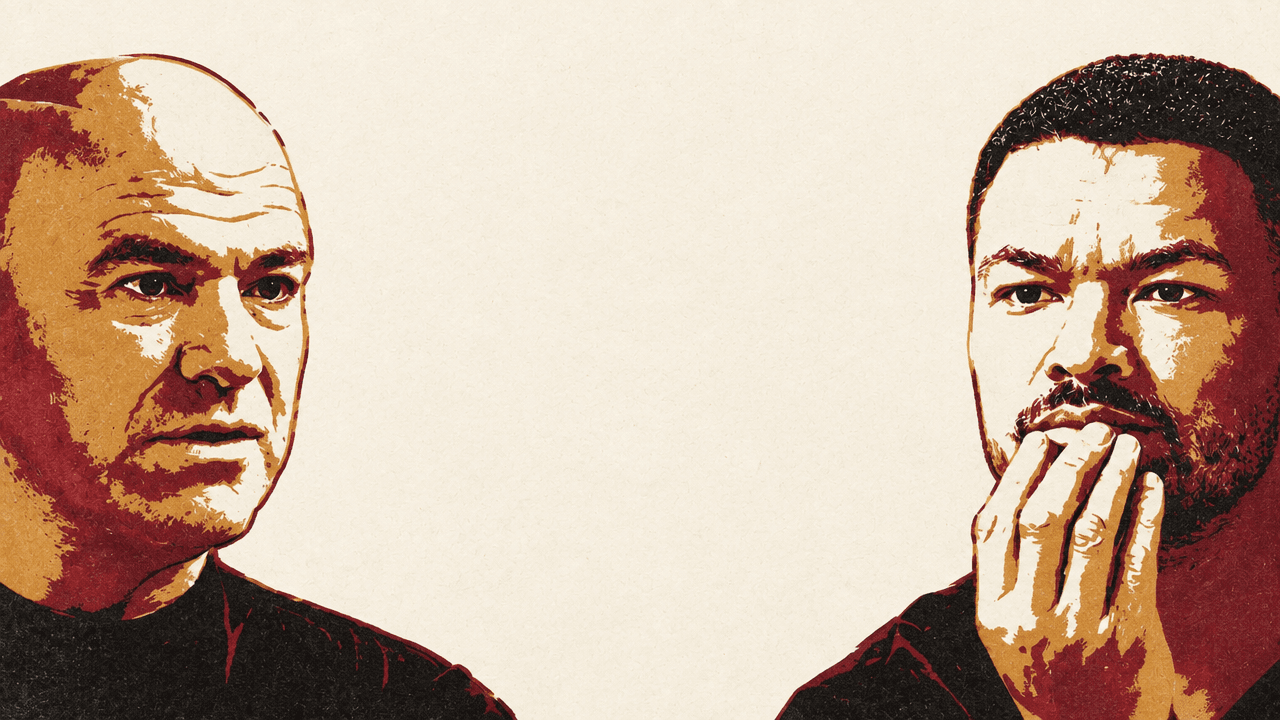
Entrepreneurship is a daily response to trouble
Dana Whitedoes not describe entrepreneurship as a route to independence or control over one’s schedule. He describes it as a job built around solving problems, including the ones that arrive before the workday has properly started.
One morning, both his electric razors had died before a board meeting. On the drive in, a sensor warned that a tire was low and told him to stop. He kept going. For White, this is a small example of the pattern: life produces problems, and a business produces more. The work does not stop for birthdays, Christmas or Thanksgiving. When Steven Bartlett asks about the idea of a day off, White’s answer is simple: “When you like what you do, it’s fun.”
That is why White rejects entrepreneurship as a way to get more leisure. He is especially skeptical of people who want to work for themselves so they can plan their schedules or build a business from home without being present. He calls the idea that this generation can work from home and build a successful business “impossible,” pointing to his own routine: in the UFC office from 8:30 in the morning, sometimes staying until seven, eight, nine or ten at night.
For White, being in the office is not only about supervision. People drop by, conversations develop, and ideas emerge that he says would not have occurred if everyone were elsewhere. He may arrive with his day planned and find that a discussion changes it. That is his account of how his workplace works, and why he values people working together in person.
His advice is not that everyone should want his life. He says some people want a stable job, benefits, weekends and holidays off, and there is nothing wrong with that. The mistake, in his view, is wanting the freedoms associated with employment while choosing the demands of entrepreneurship. The question is whether you understand what the work entails—and want to do it.
White was 19 when he walked out of a hotel job with steady pay, benefits and a schedule many people would value. He disliked working for other people and the way hotel employees were treated. He decided to enter the fight business without knowing exactly what that would mean. He had seen people in their forties doing the same job he was doing and thought that, if his attempt failed, he could return to work. The worse prospect was reaching that age without having tried.
He does not say everyone should take the same risk. He says that money was not what decided it for him: if it had been, he would still be standing in the hotel lobby. He also warns that a paycheck cannot be the only reason to choose a path. For someone who wants to build a business, he says, the daily work of finding solutions is part of the bargain.
White connects that bargain to responsibility. He says that as an entrepreneur, other people depend on you; employees and their families rely on the business. The challenge is not simply to be independent, but to keep the operation going and take responsibility for the people in it.
The UFC depends on the product—and the people making it
White says he and his partners bought the UFC for $2 million. When Bartlett asks what helped it succeed, White names matchmaking first, then live-event production and television production. The fights have to be compelling, and the event and broadcast have to make them work for the audience.
The live audience matters to that standard. White says people attending an event spend on more than a ticket: they travel, pay for rooms and dinners. He wants them leaving with the feeling that they had a good time and would like to do it again. The event experience, in his telling, is part of what makes the business worth returning to.
He also credits the brand’s relationship with consumers, sponsors and television networks. White contrasts the UFC’s approach with what he sees as a pattern in boxing: promoters trying to take as much money as possible from a fight and leave. He says the UFC built a brand that people trust, and argues that boxing’s current business arrangements have driven networks and sponsors away. He claims the UFC has the only global television deal in boxing, through Paramount, while other promoters are on streaming services.
White says there is a formula to the UFC’s success, though he does not disclose all of it. He says many wealthy and capable people have tried to enter the business and failed. He also refuses to name the three things he says he focuses on every day, calling them part of the formula. What he does explain is that he remains a fight fan and believes he knows when the UFC has put something together well because he is also the customer.
That instinct does not replace a team. White says the UFC had only a couple of employees when he and his partners bought it, and he was the “everything guy.” As the company grew, he had to learn who fit, who worked and who did not. He describes choosing the right people to surround himself with as one of his strongest skills. He looks for talent, hard work and drive, as well as commitment to the same vision.
At live events, a red phone on White’s table connects him to the production truck. The producer, Zack, has freedom to try things. White may call to ask what a choice was and say not to do it again, or call to say something was excellent. He says there are no hurt feelings. He trusts his production chief, Craig Borsari, and his head of public relations, Lenee Breckenridge, whose judgment he says he relies on in many parts of his work. The arrangement gives colleagues room to act while keeping White close to the product.
His language about that team is less managerial than martial. He describes the UFC as a battleship, with the team going to war together: “We either all go down together or we don’t go down at all.” Loyalty, in his account, means that people who have helped build the company are not disposable when circumstances turn difficult.
White says he did not want to lay off employees during the pandemic. When things began to shut down, he gathered them and told anyone who felt unsafe, or had loved ones at home who might be at risk, that they could leave. He says nobody walked out. He held weekly FaceTime calls and told employees to contact him if they needed groceries, toilet paper or help with a sick relative. After a couple of weeks, he said they would work; employees told him they were with him.
He describes a CEO’s job as figuring out how to keep the business running and take care of its people. He says he will not choose money over them. His view is shaped, he says, by having worked for companies where employees were told that other people were waiting to take their jobs. He did not want his own staff to feel that their time and effort counted for nothing.
That commitment sits beside another of White’s principles: nobody owes you anything. As a teenager, he remembers a friend complaining that his father had taken back a million dollars he had set aside for him after the family ran into financial trouble. White’s reaction was that the money had never belonged to the son; he had not earned it. Someone can make calls or give you an opportunity, he says, but you still have to deliver.
Ambition requires focus, not a universal model
White says staying at the top is harder than getting there. Once a company becomes successful, he argues, competitors study its approach and look for ways to beat it. He likes that pressure, but says a leader has to decide what deserves attention.
He says he loves “the haters” because some criticism identifies weaknesses and keeps the business alert. He distinguishes that from commentary he considers uninformed, particularly media coverage he believes misunderstands the sport. He has blocked reporters from his social-media feed, while remaining interested in what hardcore fans say about the fights and the show.
White says a fight card cannot be judged before it is over. The people on it are talented, he argues, and younger fighters may not yet have proved themselves. If an event disappoints, he says he will be the first to say so. Until the fights happen, he does not consider judgment of the whole card settled.
He says the UFC now competes with the NFL, Major League Baseball, the NHL and the NBA. In discussing its Paramount deal, he gives two figures: $8 billion at one point and $7.7 billion later. He says Paramount made the deal because it believes the UFC can affect its business. White’s job over the next five years, he says, is to deliver that value; he wants the next deal to be worth $10 billion.
That is why a major agreement does not mean the work is finished. White says he remains in the weeds because he is responsible for what the company delivers next. He also says he is “addicted to chaos”—if there is none, he creates it—and cannot picture retiring simply because he has made enough money.
But White does not present that pace as a model for everyone. He says some people want a predictable job, and the world needs all kinds of people. At the UFC, he wants the people closest to him to be able to keep up with his intensity. He is not looking for hundreds of people who live as he does.
He does not know whether someone can acquire what he calls the killer instinct. Asked whether he has seen a person go from lacking it to having it, he says he does not think he has. He does say that people who go into business for themselves need a particular mindset and must think about other people—employees and others who depend on the business—more often than themselves.
His example from fighting is a fifth-round moment involving Ian Garry. White says Garry had fought four strong rounds against Islam Makhachev, whom he calls possibly the greatest fighter of all time. Garry was younger, larger and rangier, White says, and had five minutes left to push hard. White objected to Garry shaking hands and embracing his opponent during the round: show respect after the fight, he said, not when there is still time to win. He does not conclude that Garry lacks killer instinct; he says Garry did not show it in that moment.
White applies a similar standard to business. He says a company has to perform not only for its leaders, but for employees, sponsors and its network partners. He is not interested in simply placing a sponsor’s logo on the canvas and hoping for the best. He wants the relationship to benefit both sides, and for the sponsor to feel the money was well spent.
His admiration for exceptional fighters often includes their certainty about what they intend to do. White names Conor McGregor, Khabib Nurmagomedov, Chuck Liddell and Ronda Rousey as athletes who stood apart. At dinner with McGregor, White says, he did not yet know whether McGregor could fight. He called his partner Lorenzo Fertitta afterward and said that if McGregor could throw a punch, he would become a major star.
Rousey persuaded White to change his mind about women competing in the UFC. He says he had resisted the idea because he was trying to sell men’s fights to networks and sponsors, who already thought the sport was too much. At an event, Rousey asked for 15 minutes with him. Her confidence and forceful manner made him think she was the person to build the idea around. White calls her a “unicorn.”
White calls the confidence he sees in people like these a form of manifestation, but does not mean imagining a result is enough. He believes in deciding who you are, what you want to do and what you intend to accomplish, then working toward it every day. Steven Bartlettcompares it to programming a destination into a car without pressing the accelerator; White agrees. A plan without action does not take you anywhere.

For White, success is also a question of whether someone wants to get up and do the work. He says he knows billionaires who are miserable. He tells his children he wants them to be happy, though one son once told him not to give a “happy speech” when he wanted practical direction. White’s advice to people facing a choice is not to reach the end of life wondering what might have happened if they had tried.
The past is a source of lessons, not a verdict
White resists being described as a victim of his childhood. His parents divorced when he was eight. He says his father was often absent and drank, while his mother raised him and his sister, worked as a nurse and went to school. He remembers his father arriving drunk to take the children to see Beverly Hills Cop. They were late, the theater was packed, and his father shouted that people would have to move. White recalls being embarrassed and describes his father as selfish.
He does not say he had no role models. In his view, people in a child’s life can be examples of what to do or what not to do. Watching relatives drink helped him decide to quit drinking at 21; he believed it would interfere with what he wanted to accomplish. He also says that becoming a parent made him understand how he believed a parent should feel about their children, and that his own parents made him a better parent.
White describes his mother as someone who worked constantly and raised two children alone. He and his sister were close, he says, and later talked about how their mother managed. She moved them from Boston to Las Vegas with a dog in the car; White remembers driving through the Midwest as tornadoes approached.
The relationship between White and his mother nevertheless ended badly. He says that while he was away in London, emails from her demanded money and became increasingly hostile when he did not respond. He says the exchange marked the beginning of the end. His mother later published an unauthorized book about him, including private photographs. White says he had never seen the book before Bartlett showed it to him.
Asked whether he had forgiven her, White answers, “Yeah.” He does not elaborate on what that means for their relationship. He says the book was deeply upsetting and that it hurt other people as well, while also saying he does not want to go on shows to speak negatively about his mother. He and his sister were not speaking with either parent when they died. White says that despite the estrangement, he and his sister credit their mother for raising them and respect what she did.
White says he does not want past events to dictate what someone can do next. He believes experiences can teach lessons, but rejects the idea that a difficult childhood determines the future. He says he would not choose different parents or a different family, and credits his upbringing with helping prepare him for his life.
He is equally direct about whose opinions matter to him. Asked whether other people’s words hurt him, he says, “Never.” He says he does not care what distant critics or people on the internet think. The opinions and relationships of people close to him are different: losing one of those relationships would bother him. White says a hard-edged family culture helped shape his response. He recalls relatives who were not demonstrative with affection and says that hearing difficult things from people who were supposed to love him made it harder for outsiders’ opinions to matter.
Risk means accepting that the outcome is uncertain
White’s advice to “trust your gut, not the focus groups” comes from decisions he says other people considered unreasonable. He cites Power Slap, a competition built around open-handed strikes. Critics said it could damage his legacy; White says the UFC faced similar resistance when it was new. In his view, people attack what they do not understand.
Bartlett points out that instincts can be wrong. White agrees, then asks what the worst case would be. Often, he says, it is going back to work. When he left the hotel job at 19, he thought that if the fight business failed, he would at least have tried. The worse outcome, in his view, would be reaching 45 without taking the chance when he had fewer people depending on him.
He does not say that trying guarantees success. He says timing matters, and gives an example from his own life. A high-school friend, Adam Corrigan, used to drive White to school, getting up 45 minutes to an hour earlier to pick him up. White had a rule against attending weddings, but went to Corrigan’s because of what his friend had done for him. At the wedding, he ran into Frank and Lorenzo Fertitta, whom he had not seen in years.
Lorenzo told White he had joined the Nevada Athletic Commission and had heard White was training people at a boxing gym. He came in to train the following Monday. White says they have been together ever since; he and the Fertittas later bought the UFC together. White calls the encounter a “sliding doors moment.” He does not claim to have planned it: the meeting followed from showing up for a friend.
He offers another formulation of the same advice: “Don’t be that guy that’s laying in the hospital bed saying, ‘I wonder what would’ve happened had I tried.’” To explain what it means to him, he recalls Vision Quest, a wrestling film that affected him as a child. He remembers a character describing the realization that life is finite, and another describing watching Pelé perform: “It’s not the six minutes. It’s what happens in that six minutes that matters.” White says the film helped him understand that time is limited and that he did not want to spend his life wondering whether he could have done more.
His point is not that everyone should choose an entrepreneurial life. White says some people want a city job, benefits, weekends and holidays off; there is nothing wrong with that. But if someone believes they want to build something, he says, fear of returning to work should not be enough to stop them.
White’s next test is building beyond the UFC
White says he has no final destination. When Bartlett asks what comes after “bigger,” White answers, “Then I die.” Retirement does not appeal to him as a permanent state. He takes vacations, enjoys time with his family, and says that after a few days he is ready to return to work.
His current goal is to use the seven years of the UFC’s Paramount deal to build a combat-sports brand that cannot be replicated. He says the UFC is already the biggest fight brand, but wants to make it still harder to match through its expansion into boxing and Power Slap. He expects people to say boxing is too old and entrenched for him to change. His response is that people also said the UFC and Power Slap would not work.
White says the UFC does not treat “no” as a final answer. A visit to the Sphere in Las Vegas gave him an idea for a production, he says, and he brought his production team to a U2 show there to see what might be possible. He also recalls Donald Trump suggesting a fight at the White House; White agreed. He says colleagues have brought him other ideas that he is now working on. He does not disclose all the details, but says the aim is to do what people call impossible at a level that surprises them.
Boxing, White says, was his first love. He believes the sport’s business is broken and says he knows how to fix it. He claims to be two years ahead of where he expected to be because the people currently running it have been so bad at doing so. He says he takes competitors seriously and treats competition as a fight.
On the people he is competing with, White criticizes Eddie Hearn while praising Hearn’s father, Barry, and promoter Frank Warren. He says the older promoters seem to him like “real guys” because they are willing to stop talking and fight. Bartlett points to Hearn’s long hours speaking with the media; White responds that he sees Hearn as reacting to every development and argues that Hearn has done more than anyone to hurt the proposed Anthony Joshua–Tyson Fury fight.
The expansion, in White’s telling, continues the same work he describes at the UFC: developing ideas with a team, putting them into practice and finding out whether they can deliver. He says that when he gathers talented people, shares a vision and gives them room to build, the result can exceed what one person could make alone. His ambition is not simply to have built something once. It is to keep finding out what the organization can make happen next.