Three Crises Could Turn Eight Weeks Into an Escalation Trap

Political scientist Robert Pape argues that the risk lies in three crises reinforcing one another: turmoil around the US transfer of power, a widening war with Iran and a possible Russian escalation in Ukraine. In an interview recorded on October 29, 2026, he calls this an “escalation trap,” in which leaders respond to mounting costs by taking bigger risks rather than backing down. Pape says the sequence is not inevitable, but warns that a short air campaign or a domestic confrontation could help set it in motion.
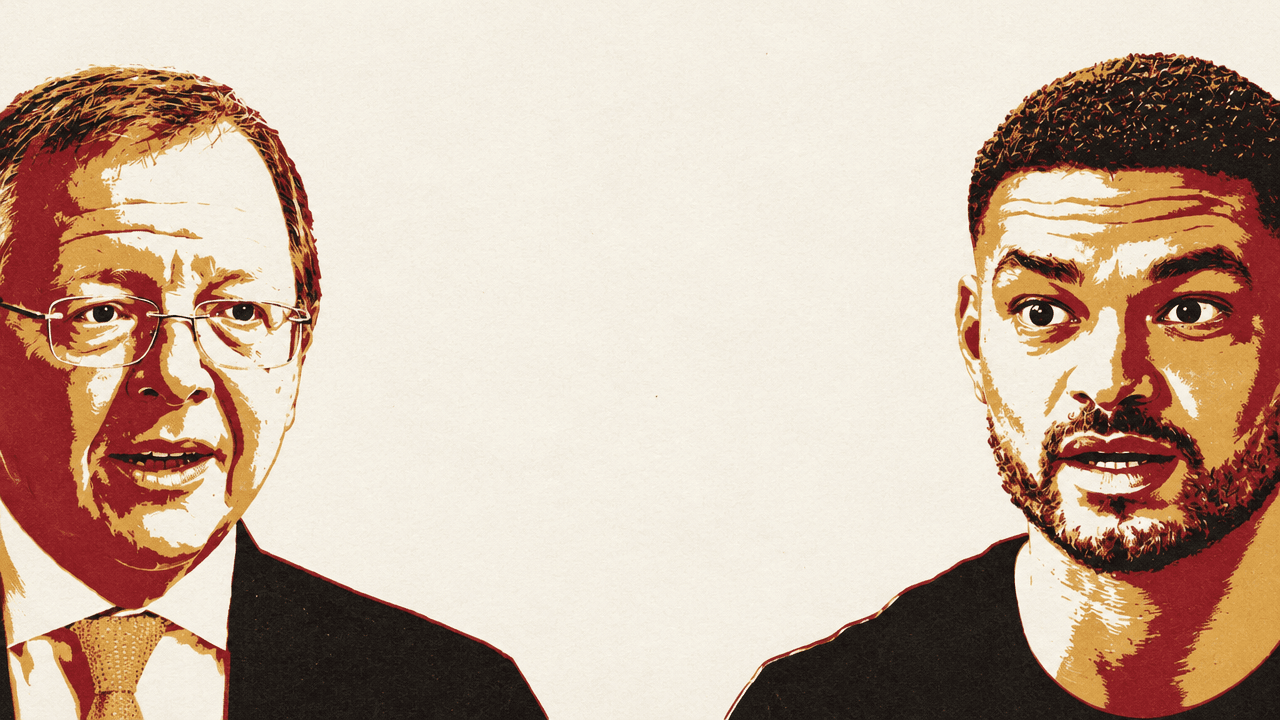
Three crises could reinforce one another
Robert Pape argues that the danger is not any single confrontation but the convergence of three: a contested US transfer of power after the midterms, a possible expansion of the Iran war, and a new Russian escalation in Ukraine. He calls the pattern an “escalation trap”: actions intended to force an opponent to yield instead create pressure for further action, while raising the costs of stopping.
There is an important timing distinction. The interview was recorded on October 29, 2026. An on-screen community note added after recording says the United States initiated strikes against Iranian targets on Qeshm Island near the Strait of Hormuz on November 2, three days before publication. That reported strike is not a forecast. Pape’s further scenario—major US and Israeli attacks on Iranian energy and leadership targets, followed by retaliation and a prolonged campaign—remains a conditional sequence he describes, not something the note says had already happened.
Pape’s eight-week timeline begins with the midterm vote and runs through the seating of the new Congress. By the time of the interview’s publication, the proposed timeline’s first events were no longer wholly prospective: the midterms had taken place, and the community note reported a strike. Pape’s broader point is that counting and certification are not administrative pauses between election day and a change of control. They are part of the transfer of power—and, in a politically volatile environment, a period when challenges to the result and clashes around the process could become focal events.
The midterms matter, Pape says, because Congress checks the president. If Republicans lose control of one or both chambers, the Trump administration could face subpoenas, impeachment proceedings and pressure on cabinet officials. If Democrats control both chambers, he says, the consequences could be especially severe. Cabinet members, including the secretaries of Defense, Justice and Homeland Security, could become targets of investigations or removal efforts. That turmoil, in his view, would make stable operations across the administration difficult.
The political stakes would arrive alongside decisions about Iran. Pape says President Trump had repeatedly promised escalation after the elections, and that US and Israeli plans for further strikes were ready. A third pressure point, he says, is Russia’s potential shift toward attacks on Ukraine’s civilian infrastructure, particularly electricity in Kyiv, Kharkiv and Odesa.
Pape presents the three tracks as capable of influencing one another. A wider Iran war could raise energy prices and intensify political pressures in the United States and Europe. Russian attacks on Ukrainian power infrastructure could prompt European retaliation. And domestic turmoil in the United States could make it harder to contain either conflict.
His timeline is a scenario, not a claim that each event is certain or can be dated precisely. The November 2 strike means the Iran track had already moved beyond a purely hypothetical starting point when the interview was published; it does not establish that the larger campaign Pape fears followed. He describes the ordering as a way to show how risks might compound over the same weeks. The mechanics of that compounding, in his account, begin with why a short air campaign might not remain short, and why a president facing political losses might choose to escalate rather than stop.
The escalation trap rewards doubling down
Pape’s account of the Iran war begins with a distinction between tactical success and strategic effect. A powerful country can hit targets or kill leaders and still leave its opponent more capable of imposing costs. He says Iran gained substantial control of the Strait of Hormuz early in the conflict, giving it leverage over a route he describes as carrying 20% of the world’s oil. The result, in his framing, is that the stronger side’s attacks have not compelled Iran to concede.
To explain why that can lead to further escalation, Pape rejects the familiar image of international strategy as chess. In his chess analogy, one side makes an opening move and appears to gain an advantage, but its opponent responds in a way that reverses the position. A rational player might then offer a draw. That logic, he says, fails to capture what happens when leaders have already invested heavily and face the humiliation of losing.
His alternative is roulette. A gambler loses a bet, then risks more to recover what has been lost. The next bet is larger and more dangerous, but the gambler sees it as a way out. Pape maps the analogy onto what he describes as successive US bets: killing Iran’s supreme leader, a six-week air campaign, and a blockade. In his account, none produced Iran’s capitulation. The costs—the “chips”—include American lives, gas prices, interest rates and political support.
The midterms, he says, make those political chips more consequential. If Republicans lose seats, legislators may distance themselves from Trump to protect their own positions. Pape argues that a president does not simply set aside a war, a political agenda or a legacy when support begins to disappear. He compares the dynamic to Lyndon Johnson’s escalation in Vietnam: as public support fell, Johnson kept raising the stakes rather than accept the political consequences of defeat.
Pape adds a financial incentive to the political one. He says Trump and his family have substantial interests in cryptocurrency, which he characterizes as dependent in part on confidence in Trump’s political power. A weakening presidency, he argues, could put some of that value at risk. Bartlett raises the family’s involvement in prediction markets and related regulation as another possible financial interest; Pape’s broader point is that the incentives to avoid humiliation are not only personal or historical but potentially financial.
None of this, Pape stresses, makes further strikes inevitable. At the time of recording, he said Trump had not given the go-code for the proposed plan and that policy could still be reversed before a final order. The post-recording note reports an initial US strike on November 2. Pape’s concern is that the incentives to expand the conflict will grow as the costs of earlier steps mount.
A three-day plan could become a longer war
The phrase “three-day plan,” Pape says, understates the scale of the proposed target set. He describes the plans as including leadership and economic targets—among them refineries, electricity infrastructure and bridges—and compares them to “Instant Thunder,” a blueprint for the opening air campaign against Iraq in 1991.
Pape says that plan was presented as a short campaign, with three days of strikes and three additional days in reserve, but that the bombing continued for 43 days. He also says it did not paralyze Iraq’s military. The danger in the Iran scenario, as he describes it, is that the initial plan could similarly expand: three days become six, then a longer campaign, as the remaining Iranian forces retaliate and the United States responds.
The objective of the proposed strikes, in Pape’s interpretation, is to paralyze the Iranian government and military, not simply to shift the balance between hawks and doves in Tehran. That creates a problem for diplomacy. If attacks destroy much of the leadership structure, he asks, whom would the United States negotiate with? He says the Iranian military would likely be damaged but not entirely disabled, leaving surviving elements able to launch missile, drone or cyberattacks.
Pape identifies airports and aircraft as potential targets in a widening exchange. He compares this risk with Iraq’s Scud attacks during the 1991 war, and with attacks he attributes to Yemen’s Houthis against terminals at Riyadh International Airport. He says those Houthi strikes killed more than a dozen people and injured more than 300, and calls them an example of attacks on civilians becoming part of the conflict.
He also warns of “inspired attacks”: violence carried out by individuals without direct orders from a government. His concern is that an air campaign causing large numbers of civilian deaths could create a pool of anger from which individuals might act independently.
Bartlett and Pape discuss an incident involving a plane flying from Dubai toward Tel Aviv. Pape says the copilot attacked the pilot with a crash axe and suggests the copilot may have intended to take control of the aircraft and crash it near Tel Aviv. He is explicit that this is not certain: he puts his estimate at roughly 90%, up from 75%, and says the pilot’s account contributed to his judgment. The incident, in his view, illustrates the kind of individual action that could occur without being commanded by Iran.
These possible responses are presented as a chain, not as a prediction that every link will occur. The reported November 2 strike is one event in the chronology; it does not, by itself, confirm the further stages on Pape’s board. His concern is that each step could make it harder to stop the next. If Iranian forces retaliate against infrastructure in Gulf states, he says, the conflict could become a “forever war,” with emergency powers expanding in the United States and consequences extending into 2027.
Domestic violence can spread from a focal event
Pape uses “violent populism” to describe political violence moving from the fringe into mainstream political life: not an isolated attack or a localized riot, but repeated incidents that spread across places and over time. He compares the conditions for that spread to a wildfire. A season’s combustible material can be measured, he says, but the spark is difficult to predict.
The combustible material in his account is public support for political force. A survey graphic shown during the interview attributes its figures to a CPOST/NORC national representative survey conducted August 29–31, 2026. Pape says it found 41 million Americans supported Trump using the military to suppress protesters and 64 million supported force to prevent Trump from being president. He says those figures were about twice as high as in September 2024.
Pape argues that this support does not mean all those people will act violently. Rather, he says, a determined minority may act while much larger numbers are prepared to excuse or support it. That combination, he says, makes the period between voting and the seating of a new Congress especially risky.
His example is January 6. Pape describes Trump’s December 19, 2020 tweet calling supporters to Washington, followed by his direction at the Ellipse to march on the Capitol. He identifies Trump’s later tweet saying Mike Pence had let the country down as the spark that helped turn the crowd toward the Capitol and the chant “Hang Mike Pence.” The point of the example is how rhetoric and a focal event can activate a wider pool of grievance.
For the coming transfer of power, Pape says a possible focal event could be a confrontation between federal agents and protesters around ballot counting or certification. If such a clash occurred while results were disputed, it could turn a political grievance into a trigger for violence. He describes that as one possible route by which combustible conditions could be activated, not as a certainty.
That domestic risk, he says, could be amplified by economic shocks. Pape links the Iran war to higher energy costs and points to protests and riots in France, which he says spread beyond a single city and were partly driven by rising prices. He argues that war, household costs and political anger should not be treated as separate developments: each can worsen the environment in which the others unfold.
Civilian infrastructure makes escalation harder to contain
Pape’s concern about Ukraine centers on a possible Russian winter campaign against electricity infrastructure. He says Russia has not obtained the territory it wants through a deal with Trump and may turn to attacks on power stations in Kyiv, Kharkiv and Odesa. He describes the potential aim as knocking out 90% of power in those cities for a month or two, not causing a short-lived blackout.
The maps shown during the interview support Pape’s argument about the distance between Russia’s declared territorial aims and its control on the ground. He says Russia controlled 18% of Ukraine in August 2022 and 19% in July 2026, while remaining far from some of the territory it claims. He distinguishes between the rest of four annexed regions that Russia has not conquered and the broader area sometimes described as Novorussia.
| Date shown | Share of Ukraine under Russian control |
|---|---|
| August 22, 2022 | 18% |
| July 9, 2026 | 19% |
Pape uses those maps as context for his claim that Putin is seeking territory, not simply a diplomatic agreement or photo opportunity. He says Putin’s minimum aim includes remaining parts of four regions Russia has annexed but not fully conquered; he describes Novorussia as a possible broader territorial ambition.
To explain why Putin might keep pressing, Pape describes Russia’s position as another escalation trap. He says Putin launched a large invasion force with the aim of taking Kyiv and a much larger part of Ukraine, but failed. In Pape’s account, accepting the current limits of Russian control would bring military and political consequences for Putin, including humiliation and danger to his position.
The danger of attacks on civilian infrastructure is not confined to Ukraine. Pape says Iran could target Gulf infrastructure, while Russia could strike European supporters of Ukraine through cyberattacks. If European governments and publics respond to a damaging attack by retaliating directly against Moscow, he says, the conflict would cross a threshold that proxy warfare has not crossed.
Bartlett asks whether support for Ukraine—including British military aid—already amounts to World War III. Pape distinguishes proxy wars from a direct war between major powers. He notes that the United States and Soviet Union fought through proxies during the Cold War, including in Afghanistan, without directly engaging one another’s militaries. For him, World War III would mean major powers attacking each other’s homelands and their militaries fighting directly. He says that was not the situation at the time of the interview.
Pape also addresses preparations for infrastructure failure in Britain. Bartlett cites a government campaign advising households to keep three days of essentials, including water, food, batteries, cash and a radio. Pape interprets the advice as recognition of risks such as cyberattacks or power disruption, not as evidence that an attack is imminent. He says people should be able to ride out short disruptions, while arguing that emergency supplies cannot prevent panic if attacks recur.
The Insurrection Act is a point on the pathway, not a certainty
Pape says that if domestic protests and clashes escalate during the transfer of power, the use of troops in American streets becomes a possibility. He places the risk in the weeks before the new Congress is seated and emphasizes that it is conditional: “I can’t tell you this is certain to come.” He says the pathway would involve mounting conflict at home alongside the wars abroad.
He describes the Insurrection Act as allowing the president to use the military, National Guard or reserves within the United States against US citizens. Pape contrasts that with the usual restriction on domestic military deployment, which he describes as a safeguard against using the armed forces to suppress the population. He says Trump’s statement in a TIME interview that he would not rule out invoking the Act makes the possibility politically relevant, though not inevitable.
The same conditional framing applies to US ground troops in Iran. Pape says the movement of Marines could be consistent with limited operations against surviving Iranian military forces after airstrikes, rather than necessarily a full-scale invasion. But he warns that once bombing begins, Iranian retaliation could create pressure for further US action. In his view, that is how a short campaign could become a prolonged conflict.
Pape’s proposed firebreaks are political
Pape offers three measures intended to interrupt the escalation he describes. First, members of Congress in both the outgoing and incoming Congresses should call for no further US escalation in Iran until the new Congress is seated, unless Iran strikes first.
Second, he says governors and mayors should ask Trump for a two-month moratorium on federally armed agents operating in their cities unless local leaders request them. The aim, he says, would be to remove some potential sparks during ballot counting and certification—not to eliminate every possible source of conflict.
Third, he calls for countries acting as mediators, naming Pakistan, Qatar and India, to press all parties to observe a “hands off civilians” rule: no direct targeting of civilian infrastructure or residential areas by states.
For ordinary people, Pape’s recommendation is to contact political leaders and urge them to adopt those measures. He is skeptical that household stockpiles can prevent panic if essential services fail repeatedly. Supplies may help people endure a disruption, he says, but they do not address the political decisions driving the risk. In his view, the firebreaks are the way to keep events from controlling the response.
The interview ends on a related claim about public communication. Pape says serious public discussion can raise the costs of a dangerous policy and bring its consequences to the attention of decision-makers. He credits the show and social media with helping make those risks visible, including in an earlier debate about strikes on Iran’s drone network. Asked whether the White House had contacted him, he does not say that he is advising the administration. He says people in positions of power have contacted him and that he believes they are listening.