James Talarico Says Political Reform Must Come Before Economic Reform
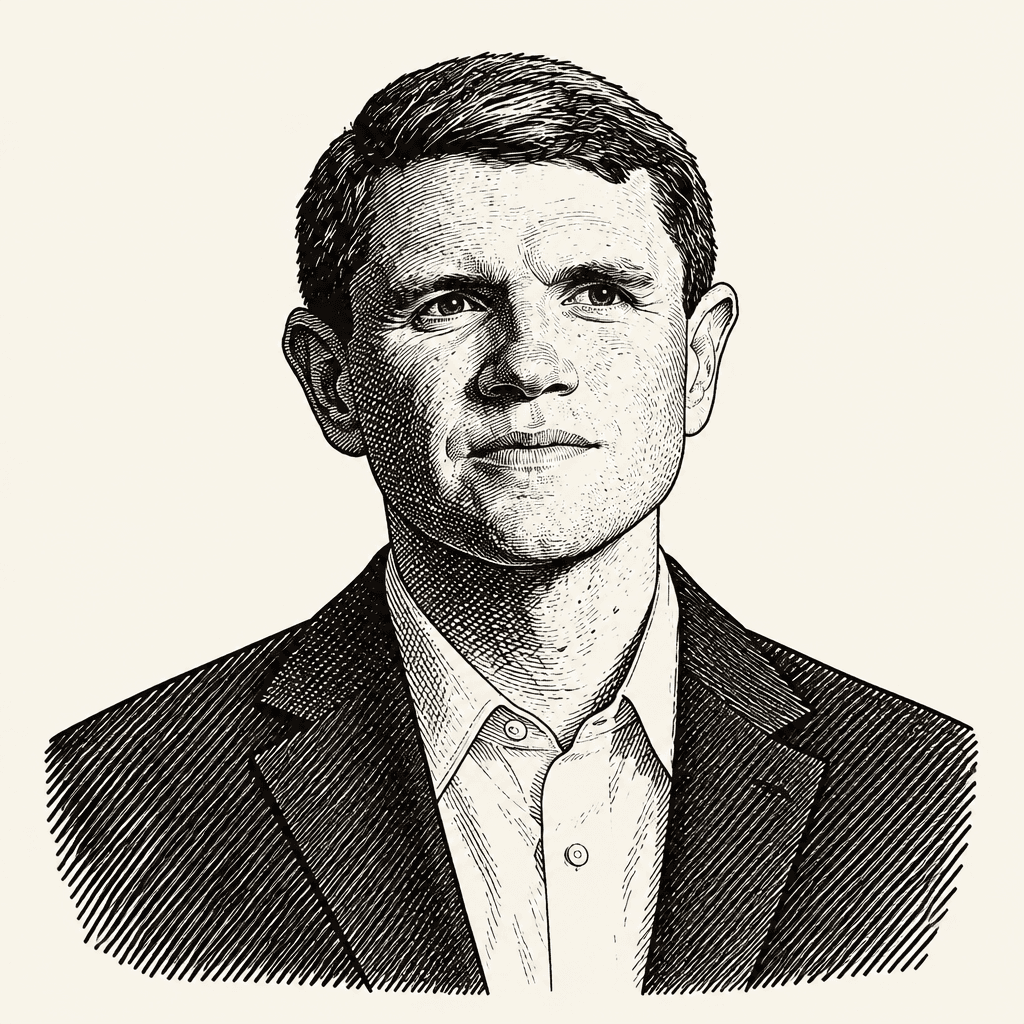
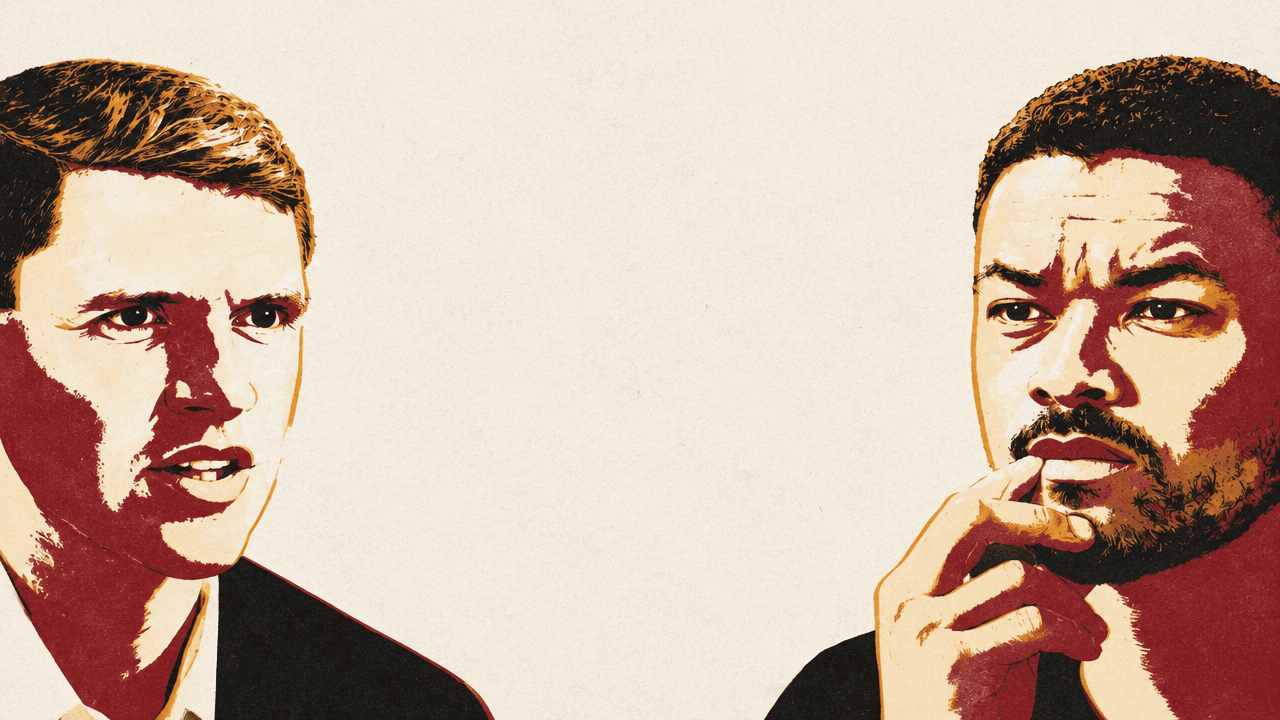
Texas state representative and Senate candidate James Talarico argues that decades of policies favoring wealthy donors and corporations have weakened the middle class—and that replacing individual politicians will not fix the problem. In an interview with Steven Bartlett, Talarico says economic reforms depend on first changing the political incentives behind them, including corporate influence, gerrymandering and a two-party system he says rewards self-preservation over public service.
The middle class is being squeezed by policy, not fate
James Talarico describes the economic problem in terms of a widening gap between work and reward. Across Texas, he says, people are working harder—including taking multiple jobs—while struggling to pay for groceries, gas, utilities and prescription drugs. Young people were told that education and hard work would make homeownership, raising a family and retirement attainable; Talarico argues that promise no longer holds for many of them.
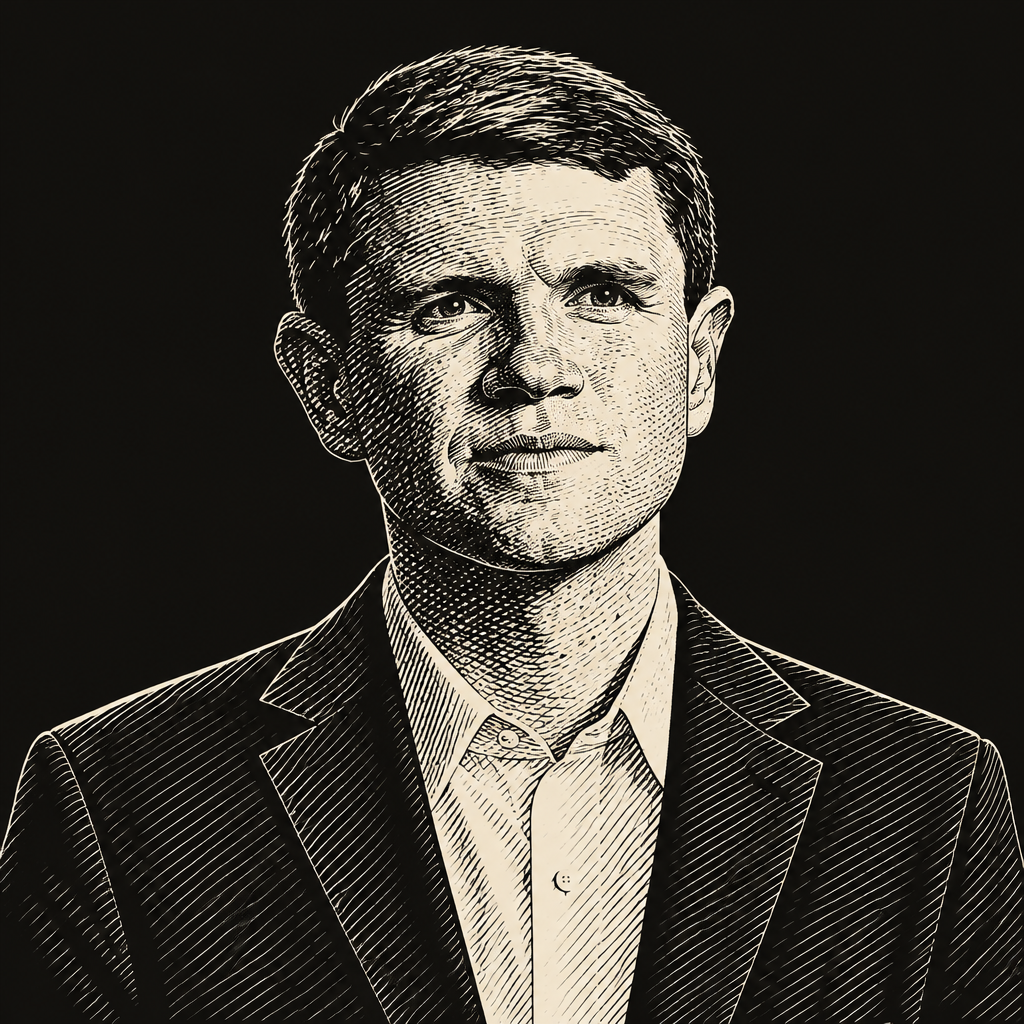
He traces the shift to a political strategy that, in his account, began with the 1971 Powell Memo. The memo, he says, set out how corporate interests could organize, spend heavily in politics, amplify their influence in media and courts, and reverse gains associated with the New Deal and Great Society. He links that effort to the rise of “trickle-down economics” in the late 1970s and early 1980s: lower taxes at the top, with less attention to the economic security of everyone else. His verdict is blunt: “Trickle-down economics, in my view, is not a theory, it’s theft.”
Talarico contrasts that period with the middle decades of the twentieth century, when government invested in education, health care, housing and highways and, he says, the country’s middle class expanded. The change is not simply a redistribution between two fixed groups, as host Steven Bartlett notes while describing a shift in the income distribution: the middle-income group has contracted, with more households in both the lower- and upper-income categories. Talarico accepts the direction of the argument but rejects the implication that reversing it requires abandoning growth or innovation.

His proposed alternative is a return to what he calls “old school capitalism”: an economy where people are compensated for the work they do, competition is real, and prosperity is shared. He argues that growth is stronger when a country invests in its people rather than abandoning them. That means raising the minimum wage, expanding overtime pay and rebuilding labor unions so workers can negotiate for better wages, benefits and conditions. It also means taking on household debt—including medical, student and credit-card debt—and supporting families through education and early-childhood investment.
The GI Bill is one historical example he cites. Talarico says it helped build the postwar middle class by making college, housing and unemployment support available to veterans, and argues that the country has not made an investment in higher education at that scale since. He also points to the expanded child tax credit, which he says cut child poverty in half before it was allowed to expire. In his view, the common thread is public investment that gives people a chance to participate in growth.
His distinction between capitalism and “crony capitalism” is about who can shape the rules. In a system he regards as crony, gains go to those who can buy access and political control. He invokes Martin Luther King Jr.’s phrase “socialism for the rich, and rugged individualism for the poor”: during the Great Recession, he argues, financial institutions and their executives were rescued while single parents, construction workers, nurses and teachers received no comparable protection. He wants corporations to recognize workers, their families and the communities where they operate as stakeholders, not just the bottom line.
That case is not an argument against successful businesses. Talarico says he is proud of Tesla and other companies operating in Texas; business success, he says, can bring wider success. His objection is to an economy in which workers who create wealth do not share in it and in which public policy protects dominant firms rather than creating fair competition.
Political reform is the precondition for economic reform
For Talarico, economic policy cannot be separated from the political system that produces it. Asked whether it is difficult to enact reforms when businesses and wealthy donors lobby against them, he answers: “Yes. And that’s the point.” A political system shaped by corporate money, he argues, produces an economic system that serves corporate interests.
He points to Texas’s lack of campaign contribution limits as a concrete example. Talarico says an out-of-state billionaire gave the Texas governor $12 million to support private-school vouchers. He argues that the policy shifts money away from Texas public schools—which he says rank 43rd in per-student funding—and toward families already able to send their children to private school. For Talarico, that is a transfer of wealth upward enabled by political influence.
Asked directly whether the governor is corrupt, Talarico says yes, then redirects from the governor’s character to the incentives around him. Politicians, he says, generally seek reelection. The more consequential question is what the system rewards: campaign money, gerrymandering, the two-party structure and the broader media environment, which he argues can reward extremism and corruption. Replacing one officeholder without changing those incentives, he says, invites the same results from someone else.
That diagnosis also informs his view of the next Democratic presidential field. He does not name a preferred candidate, but says he will look for people who support comprehensive political reform: reducing the influence of big money, ending gerrymandering and changing the Supreme Court. He calls these questions of “process” or “inside baseball,” but insists they should come first. Without reform, he argues, progress on education, health care and housing will remain blocked.
Talarico says he has tried to account for the system’s pressures in his own career by imposing a two-term limit if he is elected to the Senate. Political office, in his view, can merge with a person’s identity; the longer someone stays, the more self-preservation and accumulation of power can displace service. He says he wants a life with interests beyond politics and hopes to hand over the role to someone with fresh energy and ideas.
His legislative record is part of why he sees himself as better suited to the Senate than to the presidency. As a Texas state representative in a Republican-dominated legislature, he says, he passed 60 bipartisan bills over four terms, addressing housing, health care, early-childhood education, teacher pay and property taxes. He describes legislative work as coalition-building: bringing people over, changing minds and working as part of a larger body. He says that is a better fit for his skills than executive decision-making.
The point is not that good intentions are enough. Talarico says many people enter politics hoping to help their communities, but a broken system can reshape both them and the policies they produce. He argues that voters should ask not only whether a particular politician is different, but how the system itself could be made to bring out better behavior.
Taxing concentrated wealth is about shared obligation
Bartlett presses Talarico on how to tax fortunes that exist largely as company shares rather than cash. Talarico says he wants to close loopholes that allow the wealthiest people to avoid taxation, including deductions for private jets and yachts as business expenses and preferential treatment for carried interest and capital gains. He also says the federal government should collect taxes already owed by the top 1 percent, citing an estimate of roughly $172 billion a year. When Bartlett asks whether that means unpaid taxes would lead to jail, Talarico clarifies that he means both legal loopholes and weak enforcement: in his view, too few resources are devoted to pursuing tax cheats.
On a wealth tax, he is more cautious. He says he is interested in what forms could be implemented, recognizes the practical challenges, and wants the country to explore ways of taxing wealth as well as income. His broader standard is that the wealthiest should pay a fair share. He says working Texans pay more, as a percentage of their take-home pay, than the richest people in the state.
The discussion turns to whether high taxes would drive wealthy people and founders out of Texas. Talarico says the state should not impose an income tax; Texans already face property and sales taxes, he argues. The challenge, he says, is why federal policy matters: states acting alone cannot easily address a mobile national and global economy.
He also rejects the idea that business success and economic fairness are incompatible. He cites Mark Cuban’s work on prescription-drug prices through Cost Plus Drugs as an example of wealth and influence being used to help working people. He names Franklin Roosevelt and Bobby Kennedy as political figures who came from privilege but used their power to challenge systems that harmed people. Charity matters, he says, but changing the systems that make charity necessary matters more.
The practical question is how to distribute the gains from businesses that benefited from public investment. Talarico argues that companies such as Tesla rely in part on public resources: federal investment, publicly funded schools, roads and infrastructure. The point, he says, is not to prevent founders from succeeding, but to ensure they contribute to the country that helped make their success possible and that the next entrepreneur has a ladder to climb.
He wants more public support for small businesses and new ventures, not only tax advantages for multinational corporations. As an example of the imbalance he sees, he says taxpayers effectively subsidize Walmart when employees who lack adequate employer health coverage rely on Medicaid. His preferred direction is an economy in which workers share in the prosperity their labor creates, with public policy helping spread productivity gains more widely.
Health-care consolidation turns market power into higher prices
Talarico identifies health-care consolidation as one of the clearest cases where he believes competition has been displaced. He says a single corporate group can own a health insurer, a hospital and a pharmacy, tying together parts of the system that patients might otherwise choose among. Less competition means fewer choices and higher prices, he argues.
He names CVS as an example: it owns a major pharmacy benefit manager, a large health-insurance company and the country’s largest drugstore network. Pharmacy benefit managers, he explains, sit between patients and the prescription drugs they buy. Talarico says he and Cuban have discussed breaking up health-care monopolies to create more choices and reduce costs; he points to a bipartisan proposal by Senators Josh Hawley and Elizabeth Warren to separate large health-care conglomerates.
The stakes, in Talarico’s account, are not abstract. If someone cannot afford prescription drugs, they can become seriously ill or die. He cites nonpartisan estimates that cuts in the health provisions of the 2025 law he calls the “Big Ugly Bill” would cause 51,000 preventable deaths each year. He frames that figure as a reason to judge policy by its effects on people, not only by its accounting or political symbolism.
His argument connects the health-care example back to the larger claim: markets do not operate independently of political decisions. If a system lets a few firms control insurance, drug distribution and care, then the ability to pay determines access. In Talarico’s view, addressing that structure requires federal policy capable of limiting consolidation and restoring competition.
AI policy must protect workers, children and democratic life
Talarico sees artificial intelligence as a technology with both promise and risk. He has heard, he says, from an entrepreneur who hopes AI could help cure chronic disease or even cancer. But he is alarmed that Congress and the federal government have not kept pace with the technology’s development. The task is not simply to slow innovation, he says, but to ensure that it is developed safely and that it works for the public.
He identifies three priorities for regulation. The first is workers and the economy: AI should make jobs easier and give people more time for life outside work, rather than simply eliminate jobs and concentrate the gains. The second is children. Talarico compares the risks to those created by social-media companies, which he says preyed on young people and contributed to increases in self-harm, depression and anxiety. He is particularly concerned by accounts of children turning to AI chatbots for counselling and being encouraged toward self-harm.
The third priority is democracy. Talarico says AI-generated deepfake ads have already appeared in political campaigns, including the Texas Senate race. He notes that he once assumed he could distinguish fact from fiction online, but now finds it increasingly difficult to tell AI-generated material from reality. He argues that political deepfakes should not be allowed to circulate without disclosure.
The question of who writes the rules is central to his concern. Talarico compares AI with nuclear weapons, the space race and the internet, but says those earlier innovations were developed through public-private partnerships. AI, by contrast, is being shaped by a small number of for-profit companies with little public input. He warns that if the same concentration of power seen in the broader economy carries over into AI, the largest gains will again go to those at the top.
He proposes that workers have both a say and a share in the AI economy. One possibility he raises is an “AI dividend”: a policy that returns some of the wealth generated by these systems to the public, since AI companies draw on collective knowledge and human ingenuity. He also wants public investment in entrepreneurs, artists and inventors who have promising ideas but lack access to wealthy investors. In his account, public funding helped support earlier innovations, including Tesla and the internet; he argues that it can also help people build what comes next.
The possible scale of disruption is not hypothetical in the exchange. Bartlett raises autonomous vehicles and the potential effects on professional drivers and gig workers. He estimates that more than half a million Texans rely on driving for work when app-based delivery and ride-hailing are included. Talarico does not dispute the possibility that self-driving vehicles could improve road safety, but rejects the assumption that safer automation must eliminate human supervision. He points to commercial trucks and the reassurance many people take from having trained pilots in aircraft even when much of the flight is automated.
Bartlett challenges that proposal by asking whether humans should remain in the loop if the evidence shows driverless systems are safer. Talarico’s answer is not a specific regulatory design; it is a rejection of the framing that society must choose between safety and employment. Decisions about how to deploy these technologies, he argues, should be made collectively rather than left to a small group of company executives.
He says an AI expert he consulted fears a future of five trillionaires and 30 percent unemployment. Talarico describes that possibility as terrifying, but not inevitable. He argues that there is still time to choose a different path: prepare for disruption, invest in forms of creativity and ingenuity that remain distinctively human, and ensure that the benefits of technology are broadly shared. The economy, he says, exists to serve people—not the other way around.
Voters wanted lower costs, but the border failures were real
Talarico’s explanation for Donald Trump’s electoral appeal begins with economic pressure. He says Texans he met in 2024 disliked Trump’s conduct and had concerns about January 6, but believed he could restore the economy because prices were lower and middle-class families found it easier to get ahead in 2017, 2018 and 2019.
He links that support to a longer squeeze: decades of stagnant wages and cuts or attacks on education and health care, softened for a time by relatively cheap goods. Inflation changed the experience. When costs rose, people were squeezed from both ends—pay that had not kept up and necessities that had become more expensive. Talarico says voters were looking for relief, and that expectation was understandable.
He says some of his own family members voted for Trump because they expected him to lower costs, end the “Forever Wars,” release the Epstein files and drain the swamp. Talarico argues that those promises have not been kept: he says costs have risen, largely because of tariffs; the United States has entered a war with Iran that costs a billion dollars a day and pushes up gas prices; the Epstein files remain unreleased in full; and the government has become more, not less, corrupt. He says voters who trusted Trump may now feel conned.
But Talarico does not dismiss the issue that helped Trump win support. He says the Biden administration failed the country on the southern border. He recalls Texas colleagues representing border communities describing conditions as chaotic, and says the border is personally significant to him because his mother is from Laredo. His criticism of the Biden administration is paired with an objection to what he calls a new extremism: masked officers in unmarked vehicles taking people from the street, the deportation of long-established small-business owners and the detention of children as young as five.
The displayed border chart provides a historical frame for Bartlett’s question about encounters. Its caption says encounters in 2025 were the lowest since 1970; the chart marks 2.2 million in 2022 and 237,538 in 2025.
Talarico says voters are too often asked to choose between a secure border and humane immigration policy. He argues that both are possible. Government’s first responsibility, he says, is public safety, and it is legitimate for people to want to know who is entering the country. At the same time, he says, the United States can create legal pathways for immigrants who want to work, start businesses and contribute to the economy.
For undocumented people who have lived in the country for years, and for children brought across the border when they were young, he supports a path to citizenship as part of comprehensive immigration reform that also includes border security. He draws on his experience teaching DACA students and other undocumented students at Rhodes Middle School in San Antonio. Those students, he says, loved the United States and understood its promise of opportunity. He wants them to be able to come out of the shadows and become citizens.
His approach to the Trump coalition is similar: an open hand to voters who feel disillusioned, rather than treating them as people to be written off. He says the movement he hopes to build in Texas is larger than one party or one politician and should bring working people together across political divisions.
Talarico’s assessment of Trump as a person is also mixed. He says he does not know the president personally, but credits him with communicating clearly and forcefully, taking action amid gridlock and bringing humor to politics. He also criticizes Trump’s ego, chaotic decision-making, corruption and self-enrichment, and says he appears to put popularity above principle. Talarico argues that both strengths and weaknesses should be acknowledged when assessing a leader.
Iran requires legislative checks and an exit strategy
On Iran, Talarico argues that the United States should not have entered the conflict. From an outsider’s perspective, he says, the operation in Venezuela may have encouraged overconfidence that toppling Iran’s leadership would be a quick fix. He believes the risk that Iran would try to control the Strait of Hormuz was foreseeable, noting that earlier administrations had modeled that possibility in war games.
His proposed first step is to restore checks and balances. Talarico argues that political parties now coordinate across branches of government in a way the founders could not have anticipated, leaving Congress too subservient to the president. The legislative branch, he says, should be asking the administration to explain its military strategy and objectives. When those objectives change or cannot be clearly stated, he believes Congress should withhold funding until it can understand why American forces are being sent into another Middle Eastern war.
He says any resolution would need regional partnerships, safe passage through the Strait of Hormuz and attention to Iran’s nuclear program. He worries that the war has set back efforts to prevent Iran from acquiring nuclear weapons and says he wants a return to diplomacy. In his view, economic pressure and cooperation with regional partners may help bring the conflict to an end.
Talarico’s opposition to the war is grounded both in strategy and in the human cost. He came of age after September 11 and says he understands the need to protect the country. He also says the Iraq War cost the United States young lives, billions of dollars and moral standing, and that he cannot believe the country is repeating those mistakes.
He points to the death of 19-year-old Texan Isabella Gonzalez, killed in an Iranian air strike in Jordan. She had recently graduated from high school in the Dallas area. Talarico calls her a patriot and a hero, but says gratitude for her sacrifice should not be mistaken for acceptance of her death. He argues that sending service members into a war without a clear objective or exit strategy is deeply immoral.
Asked what advice he would give Trump, Talarico says the president should bring congressional leaders from both parties into the process and work with allies abroad. The administration, he argues, has alienated both Congress and international partners. The United States invested political and economic capital in alliances because allies matter when the country is in trouble; Trump will not be able to resolve the conflict alone.
Talarico says he is not sure he is hopeful that Trump will fix the situation. He is hopeful, however, that the midterms could force a change of course. He argues that a poor midterm result can push an executive either to retreat further into partisan politics or to listen and adjust. He says he would work with Trump on health-care access, child care and housing if the administration wanted to pursue those goals. He frames that offer around what he sees as the promise of the MAGA project: a government that delivers for people who have been left behind.
Faith, for Talarico, joins love with accountability
Talarico describes his faith as the foundation of his public life. His mother, a preacher’s daughter, raised him after leaving an abusive relationship with his birth father. He says she worked overtime, volunteered at his school, church and in the community, and taught him to stand up to bullies and fight for people he loved. After moving with him to a small apartment in East Austin, she placed his crib in a closet because there was no room for a nursery. He says her “fighting spirit” shaped how he approaches public service.
He also speaks with compassion about his birth father. As a child, he felt anger toward him; with age, he has tried to understand that an undiagnosed learning disability may have contributed to his struggles at school, and that those struggles and alcohol use may have contributed to violence. Talarico does not excuse the abuse, but says he has tried to recognize that both his mother and his birth father helped shape who he became. His adoptive father, Mark, later raised him; Talarico calls meeting him the luckiest thing that ever happened to him.
The ethical idea Talarico returns to is the Good Samaritan. He explains that in the story’s original setting, the Samaritan was not simply a helpful stranger but a member of a group regarded as an enemy by Jesus’s listeners. The story’s challenge, he says, is that people are called to love not only those who look, pray or vote like them, but also those most different from them. He compares the force of that idea to Jesus telling a story about a “Good Aggie” to a Texas Longhorn crowd.
Talarico says he has tried, imperfectly, to follow the commandments to love God and love his neighbor through teaching and public policy. For him, public service is a form of ministry: an effort to love one’s neighbor through the choices government makes.
That principle does not mean suspending judgment or accountability. Asked whether he loves his political rival Ken Paxton, Talarico says Paxton is a child of God and his brother in Christ. He adds that love requires accountability. He compares the responsibility to taking car keys from a friend who plans to drive drunk: an action that may feel aggressive but is taken to protect the friend and others.
Talarico says Paxton’s record gives voters reason for concern, citing an investment-fraud indictment, reports that his own staff went to the FBI and his impeachment by members of his own party. A community note shown during the discussion clarifies that the securities-fraud charges were dismissed in 2025 after Paxton paid restitution and completed community service and ethics training, without admitting guilt. Talarico says he would like to sit down with Paxton and urge him to put his own house in order. Defeating him, he says, could also give Paxton an opportunity to reflect on his priorities.
At 31, Talarico enrolled in seminary while serving in the Texas legislature. The decision followed a difficult legislative session in 2021, which he describes as intensely partisan and unproductive. He cites an abortion ban, permitless carry, efforts to ban books and reshape curriculum, and voter restrictions as developments that left him questioning whether he was making a difference.
Conversations with his pastor and grandfather helped him see that he had been focused on loving his neighbor through work and politics while neglecting the commandment to love God. Seminary gave him a way to connect the two. He says the inner life and outward action sustain and challenge each other: service without spiritual grounding can lead to burnout, while religious devotion without service can become self-centered and detached from the world.
His account of faith is less about certainty in an abstract proposition than trust. Studying the Greek and Hebrew texts of the Bible, he learned that the word often translated as “faith” can also mean trust. He says his own faith feels like a bodily experience of letting go. He recalls a swimming instructor telling him, “Don’t fight the water. Don’t hold on to the water. Let the water hold on to you.” That, he says, captures the way he understands faith: not trying to control everything, but trusting that life rests within something larger.
Winning Texas would test whether the coalition can hold
Talarico’s argument about reform ultimately depends on organizing voters who do not share the same party or every policy preference. He says the campaign is trying to bring people into politics who have not been engaged before and build connections across divisions. His proposed change is therefore not just a matter of replacing one officeholder: he wants a coalition large enough to press for new rules and then hold elected officials to them.
The practical test is the scale of Texas. Talarico describes a state with 18 million registered voters, 20 media markets and two time zones, and says reaching voters while listening to their needs is a logistical, physical and spiritual challenge. He says 59,000 people have signed up to volunteer and more than a million have donated. Even so, he calls his campaign the underdog and says it will campaign as if it is five points behind. He notes that Elon Musk has committed millions of dollars to defeat the campaign, and says the only poll that matters is Election Day.
Talarico asks people who are watching—even those who disagree with him or plan to vote for his opponent—to keep him in their thoughts or prayers. That appeal returns his campaign to the values he describes as its basis: civic work requires people to act together, including across differences, rather than waiting for a single candidate to solve the system on their behalf.