AI Speculation Meets Debt, Inequality, and a Changing World Order
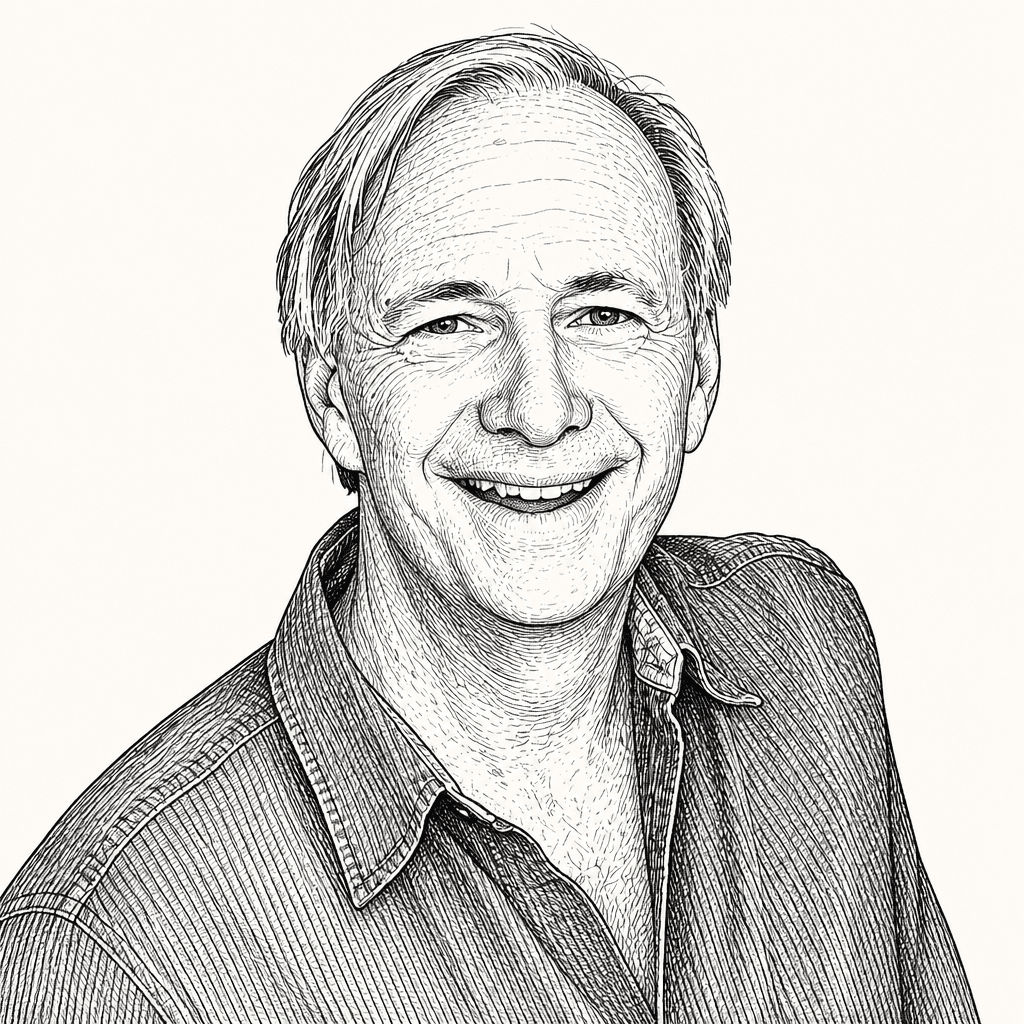
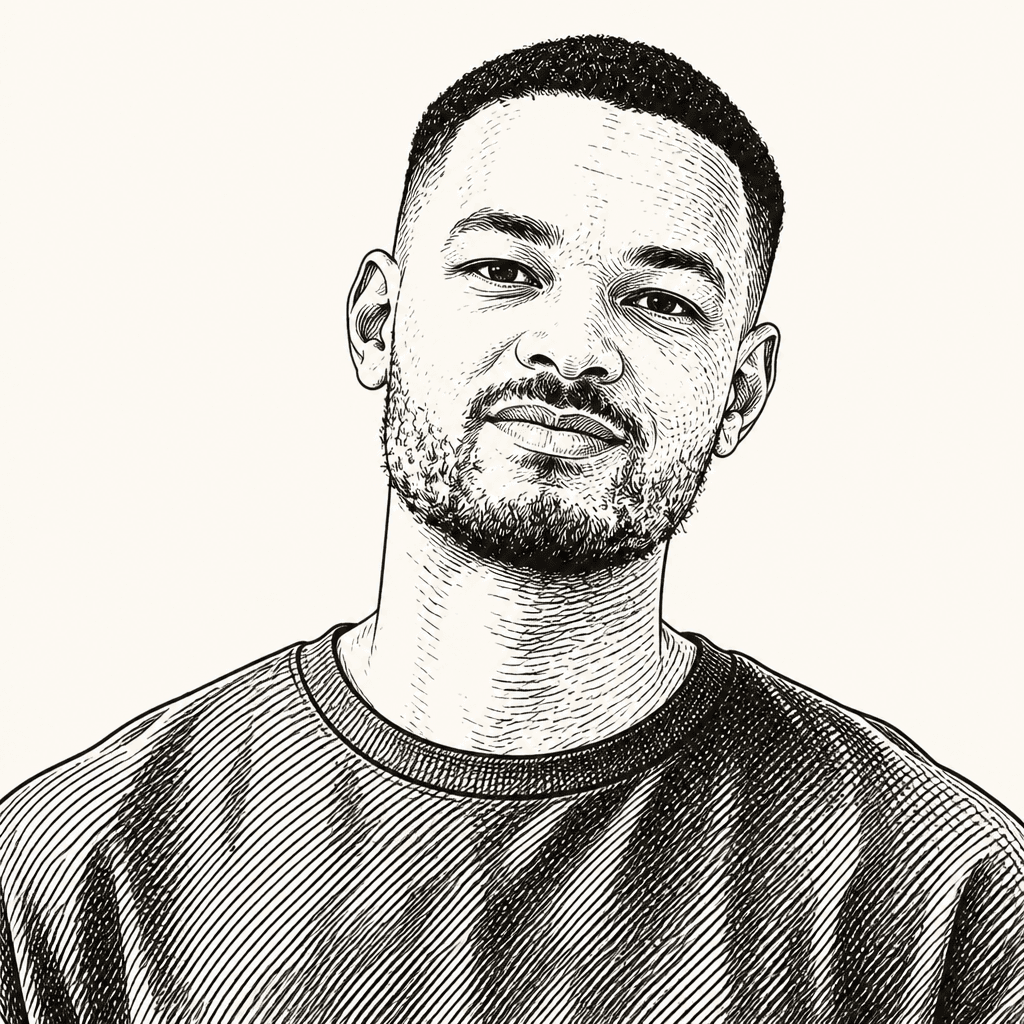
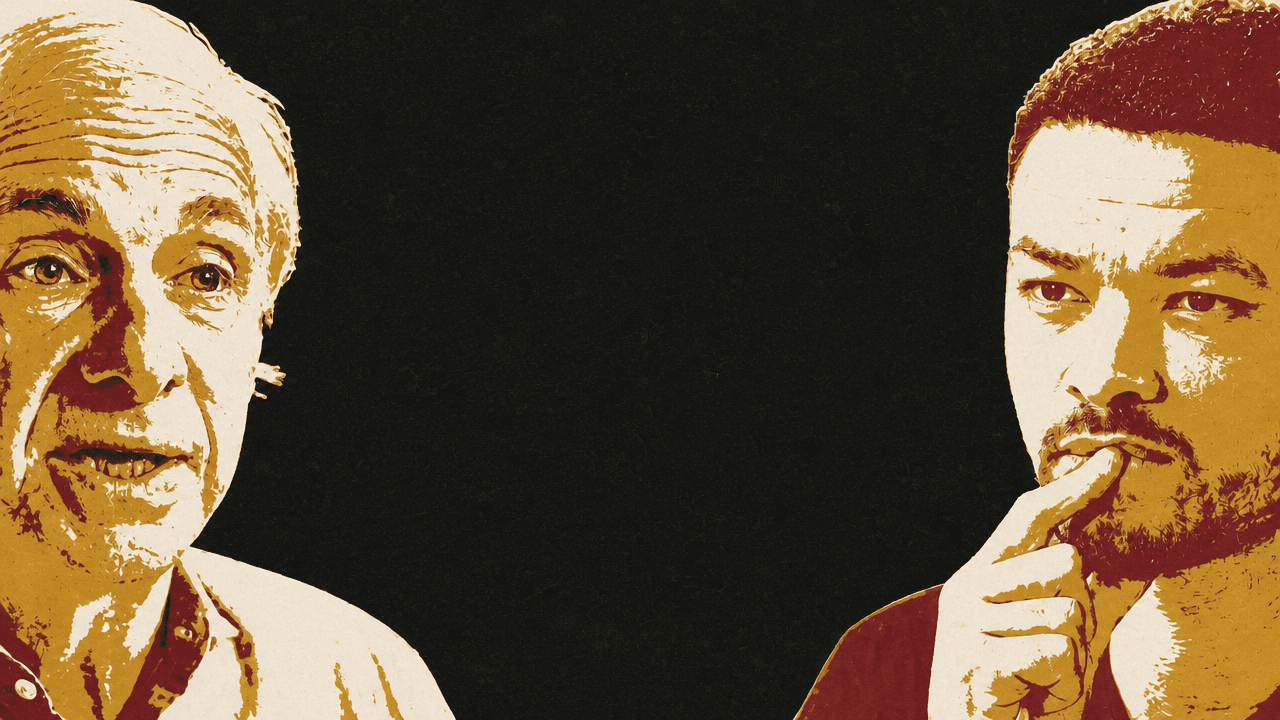
Ray Dalio, founder of Bridgewater Associates, argues that the AI boom can be both technologically transformative and financially unstable when investors ignore valuation, borrow against rising assets, and become vulnerable to a need for cash. He places that risk within a broader “big cycle” of debt, inequality, political conflict and shifting geopolitical power, which he says has left the US, UK and other countries in a later stage of decline. His prescription is not to time a crash, but to build enough liquidity, diversification and personal adaptability to avoid forced decisions when conditions turn.
The AI boom has the mechanics of a bubble, even if the technology is real
Ray Dalio agrees with Jeremy Grantham’s characterization of AI as a bubble, but insists that the useful question is not whether a revolutionary technology is valuable. It is whether investors have lost sight of the price they are paying for that value.
That distinction matters because the technologies at the center of past bubbles often did transform the economy. Dalio points to the late 1920s: electricity reached homes, refrigeration and lighting became available, cars became popular, and radio and air travel emerged. The future those investors saw was, in many respects, real. The problem was the financing and valuation of that future. When profits failed to justify prices inflated by borrowing and speculation, the market collapsed and the Great Depression followed.
The dot-com episode had the same basic form in his account. New technology was genuinely consequential; investors were also right to believe it would shape the future. Yet conviction that something will be important does not establish that every company, at every valuation, is a sound investment.
What they do is they don't pay attention to the price.
Dalio describes a bubble as a reinforcing financial process. A new technology inspires confidence; investors buy equities; rising prices create apparent wealth; that wealth becomes collateral for borrowing; and borrowed money is used to buy still more assets. The rising market makes the structure appear safe because borrowers look richer precisely while prices continue to climb.
| Stage | Mechanism in Dalio’s account |
|---|---|
| New technology | A genuine innovation creates confidence about the future. |
| Belief and buying | Investors buy because the technology appears certain to succeed. |
| Borrowing | Rising asset values become collateral for additional debt. |
| Price rise | Apparent wealth expands as demand and leverage reinforce each other. |
| Need for cash | Higher rates, taxes, debt service, or other pressures force owners to sell. |
| Forced selling | Falling collateral values create more selling, weaker spending, and a downturn. |
But wealth on paper is not spendable money. A founder may raise $50 million at a $1 billion valuation and become, in accounting terms, a billionaire. Yet no one has paid that founder $1 billion in cash. To spend the apparent wealth, the owner must sell stock. That becomes difficult when many owners need cash at once.
Bartlett illustrated the dynamic through an investor who owns an AI share valued at $100 and borrows $50 against it. If a rush to sell pushes the share price down to $25, the borrower still owes the bank $50. The investor is $25 underwater, and selling to meet the debt compounds the selling pressure. Dalio’s response was that Bartlett had the mechanics right.
The trigger is not necessarily a mysterious black-swan event. A bubble can be pricked by a change that makes owners need liquidity: higher interest rates, taxes, debt service, or a broader tightening of money. If interest rates rise, servicing debt costs more, while safer interest-bearing assets can become more attractive relative to equities. Investors sell to raise cash; declining collateral values force more selling; consumers who have lost wealth cut spending; businesses then see revenue fall.
Dalio adds a supply-side mechanism especially relevant to AI companies. When market demand is strong, companies issue more equity. “There’s almost nothing that’s easier to produce than stock,” he says. An AI founder raising a very large amount of capital ahead of a downturn may be prudently securing runway. But, in aggregate, each such raise also increases the supply of AI stock. A market can turn when the supply of securities rises just as investors become less willing or able to buy them.
Bubbles are a matter of degree, not a binary condition in Dalio’s framing. Among the signs he watches are inexperienced or “weak” holders putting large sums into an asset, particularly through leverage: debt, options, or leveraged exchange-traded products. He characterizes that behavior as “crapshooting.” When prices reverse, fear and the demand for cash can turn a gradual decline into a forced-liquidation cycle.
The practical conclusion is deliberately unspectacular. The future is too uncertain for most people to profitably time the exact peak, and Dalio says even sophisticated investors struggle to do so. The relevant preparation is not a precise call on when AI equities will fall. It is avoiding a position in which a need for cash forces a sale at the worst possible time.
Resilience starts with liquidity needs, not a forecast of the crash
Ray Dalio frames personal financial security around a blunt question: how long can someone live if income stops? He recalls counting the months he could support himself and his family if no more money came in, then trying to extend that runway from months into years.
That question is the personal counterpart to his warning about bubbles. A household, founder, or investor who does not need to raise money under pressure has more room to withstand falling prices and reduced income. A person who must sell into a downturn is exposed to the same dynamic that makes a bubble destructive at the system level.
Dalio is especially critical of treating cash or cash-like deposits as the safest long-term home for savings. A bank deposit or money-market fund can pay interest and offer liquidity, but inflation erodes purchasing power. If inflation is around 3.5% to 4%, as he says it was at the time of the discussion, a zero-interest cash holding loses that much purchasing power annually. Even an interest-bearing deposit may only keep pace with inflation before tax; taxes on nominal interest can leave the saver with a negative real return.
That does not make equities an uncomplicated answer. Dalio says stocks participate in productivity and can generate stronger returns over time, but severe bear markets can entail declines of 60% or 70%. Bonds have their own weakness: a lender locked into a fixed interest rate loses purchasing power when inflation and market rates rise. A home can provide an important environment, create forced saving, and receive favorable tax treatment, but he does not present it as a complete portfolio solution.
His recommendation is diversification: own assets that do not all respond to the same stress in the same way, and balance them according to their differing volatility. In his formulation, that reduces risk without necessarily reducing return.
Gold has a particular place in that framework. Dalio says it was money until 1971, remains the second-largest reserve currency, and can perform well when other assets are under pressure. He also values it because, in his words, it is not somebody else’s liability: it can be held directly and cannot be printed.
Dalio says he holds roughly 1% of his own portfolio in Bitcoin because it is another kind of money that cannot be printed. But he prefers gold for the hard-money portion of a portfolio, which he says should be between 5% and 15% for most people.
It's the only financial asset that is not somebody else's liability.
His reservation about Bitcoin is not simply volatility. Dalio argues that technological developments, including quantum computing, could threaten it; governments could monitor or tax it; and governments can act against assets they oppose. He says central banks are unlikely to hold significant Bitcoin because they want transactions to remain private and under their own control. In his view, gold is preferable because it is directly held and harder for governments to control through the financial system.
For people with little financial capital, Dalio says the primary asset may be themselves: the ability to sell time and skills for more income. That is difficult in an economy where automation increases the premium on scarce capabilities. But his advice is not simply to work harder in the same setting. It is to find the setting in which an existing skill is valued most highly.
Bartlett’s example was driving. An Uber driver and a private chauffeur use broadly similar driving skills, but the market may value those roles very differently. Dalio agrees and generalizes the point. At the top end of almost any market—art, furniture, clothing, or labor—the best offerings command multiples of the average price. Moving toward the top of a field can yield a disproportionate gain.
For young people, Dalio refuses to nominate a safe profession. A career that looks secure today can be disrupted quickly; he notes that coding was recently presented as a durable answer, while tools such as Claude Code now make many programmers anxious about their work. The crucial trait, he says, is adaptability.
It's not the most intelligent people or the most intelligent species that are the most successful. It is those who are also most adaptable.
His advice to a 16-year-old begins outside the labor market. Money above a basic level has little correlation with happiness, he says, so a life plan should account for health, happiness, nature, and personal preference rather than maximizing income alone. But financial security still matters: get above the point where life is governed by panic over money.
Then identify one’s nature. Some people are adventurous, some prefer certainty; some are conceptual or artistic, others concrete. The task is to find an evolving match between that nature and a path through changing opportunities. The specific job title is less important than learning continuously, maximizing use of tools such as AI, becoming useful, and applying those capabilities in work that is fulfilling.
For entrepreneurs, the equivalent principle is geographic optionality. Dalio’s answer to building amid an unstable national environment is to “exist without borders”: seek places with capital, intelligence, education, civility, and vibrancy; be global rather than provincial; and avoid dependence on a single jurisdiction. He invokes a Hong Kong expression: “a smart rabbit has three holes.” A location that is advantageous today may not remain so.
AI can increase productivity while dividing owners from workers
Ray Dalio sees AI as the latest stage in a longer substitution of machines for human labor. Agricultural machinery replaced physical work in the fields; industrial machinery replaced physical factory tasks; computers took over increasingly sophisticated cognitive tasks. AI and robotics extend that process upward, replacing not only laboring bodies but parts of the mind: routine thinking, reasoning, and increasingly complex work.
The immediate beneficiaries, in his account, are the people and institutions that own productive capital and develop technologies that replace workers. When a business earns revenue, its allocation between labor and ownership can shift. Dalio says the share going to workers is falling while the share going to business owners is rising.
Bartlett cited figures intended to show why ownership matters independently of employment: roughly 61% of US adults own stocks in some form, about 20% directly own individual shares through a brokerage account, and the top 10% of households hold almost 90% of stocks. In the discussion’s framing, people who own technology-linked assets share in appreciation; people without them do not.
Dalio’s concern is not only that AI can eliminate tasks. AI-driven productivity can widen the distance between people with ownership, rare skills, and access to the technology, and those whose work is easier to automate.
When your mind is replaced and your body is replaced, what is it that you have to sell?
He does not argue that every worker will be replaced immediately. For the foreseeable future, he sees an advantage for people with exceptional human intelligence who work in partnership with AI. He also identifies emotions and intuition as capacities that, in his view, artificial intelligence does not possess. But he sees the social question as unresolved: if machines can replicate more physical and cognitive labor, the range of work people can sell may narrow.
Dalio separates that gradual technological displacement from the abrupt unemployment associated with a financial contraction. Automation is evolutionary: tractors replace farm labor, robotics replaces physical tasks, and AI changes or replaces cognitive work over years. A bubble burst is cyclical: firms lose capital, collateral, demand, or confidence, cut costs, and lay people off. Measured unemployment, he stresses, is heavily affected by that financial downturn even while technological displacement continues underneath it.
The forces can reinforce one another. A recession makes firms more determined to reduce costs just as labor-saving systems become more capable. Dalio does not reduce the employment outlook to either force alone.
He is skeptical of an assured Silicon Valley narrative that replacement will reliably produce new jobs for everyone. His objection is not that new work can never emerge; it is that the historical comparison has limits. Earlier transformations primarily replaced the body. If machines replace more of the mind as well, he asks what remains uniquely marketable for people who are not at the technological frontier.
That prospect feeds into Dalio’s broader account of inequality. He describes capitalism as productive and indispensable while acknowledging that it can generate large differences in income, wealth, and opportunity. Wealthier families can buy stronger education and other advantages for their children; poorer communities can fall below a level where residents can readily become productive participants in society.
He argues that a healthy society needs a floor beneath which nobody falls: good education, adequate housing, and adequate health care. Singapore and some Scandinavian countries, he says, show that capitalism need not produce the same degree of social failure.
His Connecticut example is intended to show the costs of failing to establish that floor. Although he describes the state as among the richest in the US on a per-capita-income basis, he says 22% of high-school students have either dropped out or are failing with absenteeism above 25%. He links that failure to gangs, shootings, drugs, incarceration, and a situation in which incarceration costs exceed the education budget.
The aim is not simply redistribution. Dalio repeatedly returns to productivity. A society that leaves people without education, health, housing, or civic stability turns potential assets into liabilities. But a system that only transfers money for consumption, he argues, can also be destructive if it diverts resources away from investment and productive capacity.
That is the tension in his response to wealth taxes. People whose wealth is tied up in assets may have to sell assets to pay the tax, which can contribute to a market decline. Valuing illiquid wealth is administratively complicated. Higher taxation can also reduce investment, he says, because wealth is often deployed in businesses and capital expenditure.
Dalio says there are ways to raise taxes with less economic damage, including changes to the treatment of capital gains at death. But he rejects the idea that taxing the rich alone can close large fiscal gaps. Even a hypothetical 100% tax on wealth at the top would not provide enough revenue, he says, because the group is too small relative to the scale of the problem. He also expects high-net-worth people to seek to leave punitive tax environments, potentially prompting governments to consider retroactive taxation, exit taxes, or capital controls.
His preferred question is not “how do we extract the most money?” but “how do we make most people productive?” That requires a baseline of opportunity while preserving the investment and enterprise that make a society more productive.
Dalio is pessimistic about governments’ ability to deliver this on their own. He says privately owned, capitalist businesses typically operate more efficiently than government counterparts, and believes government struggles to attract people with the relevant operational ability. Yet his argument is not simply for leaving the problem to business. Government itself needs capable operators if it is to build an education and opportunity floor. The institutional challenge is to preserve entrepreneurship and investment while ensuring that people do not become permanently excluded from the productive economy.
Debt, inequality and conflict make up Dalio’s larger cycle
Ray Dalio places an AI-market correction inside what he calls the “big cycle”: the interaction of debt burdens, wealth gaps, domestic political conflict, and changing geopolitical power.
There are two distinct time horizons in this framework. The shorter one is a business cycle: recession brings easier monetary policy and recovery; prosperity eventually runs into capacity constraints and inflation; monetary policy tightens; recession follows. Dalio says this cycle has lasted roughly six years on average, give or take about three.
The longer cycle concerns the durability of monetary, domestic political, and geopolitical orders. Dalio places its average duration at around 80 years—not as a clock, but as a rough lifespan. Countries build debt over a lifetime until debt service begins to squeeze the system. Wealth gaps expand, politics becomes less compromising, competitiveness erodes, and relative power shifts. Under enough pressure, the existing order is restructured.
| Cycle | Dalio’s approximate horizon | What changes |
|---|---|---|
| Business cycle | About 6 years on average, give or take 3 | Recession, monetary easing, recovery, prosperity, inflation, tightening, and another recession. |
| Changing-order cycle | About 80 years on average | Debt accumulation, wealth gaps, political conflict, relative power shifts, and eventual restructuring of monetary, political, and geopolitical orders. |
The on-screen changing-order graphic lays out 18 markers in sequence. The rise begins with strong leadership, inventiveness, education, culture, resource allocation, competitiveness, income growth, and strong markets and financial centers. The decline begins with reduced productivity and overextension, then proceeds through lost competitiveness, wealth gaps, large debts, money creation, internal conflict, reserve-currency weakness, and weak leadership. Its final displayed stages are civil war or revolution and a new order.
Dalio’s diagnosis is that the US, the UK, and several other countries are in the later portion of that longer cycle: more indebted, more unequal, and less cohesive.
The US, the UK, a number of other countries are later in that cycle.
He says the relevant question is not whether exactly 80 years have passed. It is the underlying condition: indebtedness, education, competitiveness, productivity, political conflict, and other indicators he says can be measured “like a physical exam.”
A financial downturn makes the broader system more difficult to manage because it intensifies fights over scarce resources. Governments already running large deficits have less room to meet competing claims. Raising taxes can provoke resistance and encourage people with money to relocate; cutting benefits hurts people already under pressure; borrowing becomes harder when lenders doubt a government’s ability to finance continuing deficits.
Dalio uses the UK as a current application of this dynamic. In his account, the country has become over-indebted and underproductive and has “run out of choices.” He links rapid turnover in prime ministers to a political system in which successive leaders make promises that cannot overcome the underlying financial constraints.
The remedies that emerge in a debt restructuring can be disruptive. Dalio says central banks commonly combine money creation, which produces inflation, with changes to debt terms such as extending maturities. In severe cases, countries have imposed capital controls or exit taxes when authorities fear that people and their money are leaving. He presents these as patterns that have occurred in comparable cycles.
His alternative is a “strong middle”: a political coalition that can isolate extremes, share unavoidable pain, and make difficult changes through something like a bipartisan commission of people who understand the economic mechanics. The purpose would be practical rather than ideological: restore conditions in which most people can be productive. Dalio considers that route difficult and a long shot, but preferable to escalating conflict.
The framework also shapes his view of global power. Dalio says China is already a larger trading partner than the United States for most countries, and that relative power is not merely military. It rests on trade, capital, education, competitiveness, productivity, and the capacity to manage debt and domestic conflict.
If the US and China both remain powerful, Dalio expects a more regional world rather than one uncontested global hegemon: a US-centered Americas and a China-centered Asia-Pacific region. He considers that the most beneficial plausible outcome. Before the world became tightly integrated, different regions could contain different major powers; in a more unified world, disputes over territory, rules, commerce, and influence become harder to contain. Formal rules-based systems matter only to the extent that they align with actual power, he argues. When the two diverge, power tends to prevail.
Dalio characterizes China’s objectives as avoiding isolation and external harm while becoming as competitive as possible within a top-down system that he associates with Confucian traditions. This is his interpretation of Chinese priorities, not a settled description of them. He says he does not expect China to seek broad occupation of other countries. On Taiwan, he predicts pressure toward reunification rather than a direct US-China war, while identifying the issue as a major danger point.
The Iran conflict turns this abstract question of credibility into a live test in Dalio’s account. He calls the war a “big mistake” because it exposes the difficulty of maintaining control over a strategic area without accepting an open-ended commitment and substantial costs. The issue is not whether the US can temporarily exert force, but whether it can sustain control of the Strait of Hormuz and bear the continuing costs required to do so.
It shined a light on the vulnerability.
Dalio believes the conflict signals to Asian countries that the US does not want a prolonged war and may not reliably “show up” as a counterbalancing force against China. In that interpretation, US bases that once looked like security guarantees may also look like liabilities.
He gives Taiwan’s chip exports as an example of coercive power that need not take the form of conventional war. A blockade—or even a temporary interruption—of chip exports, he says, could crash global stock markets and produce severe economic consequences. The ability to make such a threat changes the balance of power even without an invasion.
Technological knowledge does not halt during financial or political disorder in Dalio’s account. People do not unlearn what they have learned. The long-run line of technological improvement can continue upward while financial systems, political arrangements, and global power structures move through breakdown and renewal.