Unlimited War Aims Can Turn Losing Nations Into More Dangerous Opponents


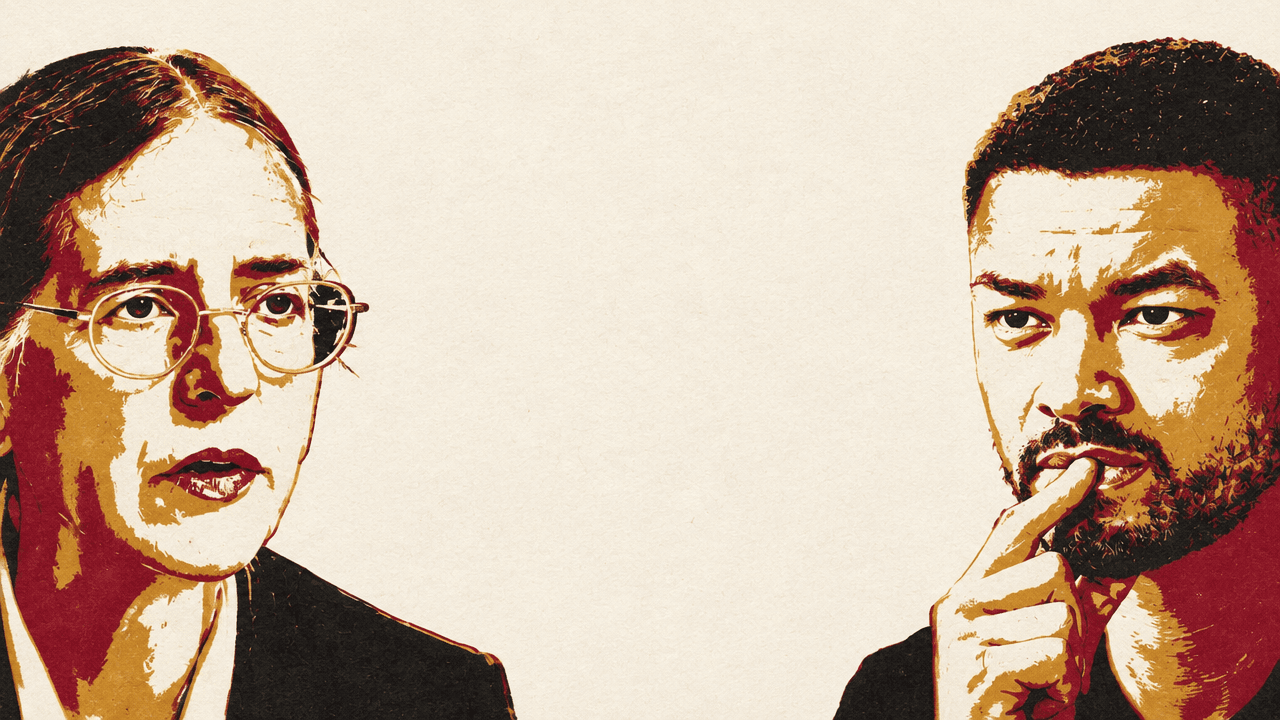
Historian and strategist Sarah Paine argues that the danger of a wider war lies not only in leaders’ decisions to fight, but in aims that leave opponents no acceptable way to stop. In an interview, the retired U.S. Naval War College professor says the Iran war risks worsening the threat it is meant to contain, while weakening alliances and the maritime rules that underpin trade and prosperity. Governments, she argues, should manage conflicts and prevent catastrophe rather than pursue goals that make escalation more likely.
War aims become dangerous when they leave no acceptable exit
Sarah Paine’s warning about a possible world war rests less on a prediction about one event than on a pattern: leaders start conflicts believing they can control them, then find that the opposing side has reasons to continue. Wars are easy to begin and difficult to stop, she said, because a side that is losing may keep doubling down rather than accept defeat. The danger, in her account, is heightened when leaders misjudge the people they are fighting, fail to anticipate how other countries will react, or choose aims that make compromise look like surrender.

Paine separates a government’s positive objectives—things it can visibly accomplish—from its negative objectives: preventing a disaster. Capturing a leader and putting him in prison is a positive objective that can be verified. Deterrence is a negative one. It is difficult to prove how many wars were prevented, just as a parent cannot count the times a child avoided being hit by a car because someone held their hand. Governments, she argued, are responsible for preventing foreign invasion and other disasters, but may get little recognition for doing so. On an ordinary day, the fact that catastrophe did not occur can look like nothing happened.
That distinction informs her answer to the objection that people have warned about another world war for decades. She did not claim to know the precise route from present conflicts to a global war. Instead, she argued that governments must prevent conflicts from breaking out or widening because, once they do, leaders may lose the ability—or the incentive—to stop. Her concern is that reckless decision-making, weakened norms and active wars are occurring together.
Once wars start, easy to do that part, really hard to end them.
The Iran war, in Paine’s assessment, illustrates how an operation can narrow a country’s choices before its leaders have considered the full consequences. She called it a “recreational war” and described the trade war as one of the most incompetent wars in history. She said she was not privy to the decisions behind the conflict, but offered a test for assessing them: a country should consider not only its own strengths and the opponent’s weaknesses, but also the opponent’s strengths, its own vulnerabilities and the interests of other countries likely to respond.
The geography of the Persian Gulf is one such vulnerability. A map shown during the discussion marked the Strait of Hormuz as the Gulf’s narrow exit to the open sea, and highlighted Kuwait, Iraq, Bahrain and Qatar as countries without another coastline. Paine compared the Gulf to a hot-water bottle: if its neck is blocked, countries inside without another way to the sea cannot move goods out by ship. Narrow seas can be closed in wartime, she said, through shore artillery, mines and other threats. She pointed to the Black Sea as an example, saying commercial shipping had been shut down there during the war.
That constraint also affects U.S. forces. The U.S. Fifth Fleet’s headquarters is in Bahrain, inside the Gulf. If access through Hormuz were blocked, Paine said, the United States would have difficulty reaching the base by sea. She pointed to Diego Garcia as a possible fallback, roughly 2,700 miles away, and described relying on it as a mess. The point was not that every contingency would unfold exactly this way, but that planners should have considered the strait’s vulnerability before starting a war.
Paine argued that the conflict’s costs have not been confined to Iran. In a war, she said, a country should try to put costs on its opponent while minimizing the costs to itself. She contended that the Iran war had damaged the U.S. economy and alliance system and had collateral effects on the world economy. Instead of making the United States a useful partner against its adversaries, she said, it had made the country an economic threat to countries worried about their own prosperity.
Her criticism also concerned the war’s stated purpose. She argued that an attack intended to prevent Iran from acquiring nuclear weapons could instead make acquiring them seem necessary. The 2015 Iran nuclear agreement, she said, was imperfect but feasible: it limited Iran’s nuclear program and provided for inspections in exchange for sanctions relief. Paine said the agreement had the backing of the permanent members of the UN Security Council and the European Union, and treated the threat as something to manage rather than eliminate. In her view, the lesson other countries might draw from war against a state without nuclear weapons is: “Get a nuke.”
Paine connected that argument to a distinction between a problem and a situation. A problem may be solvable; a situation may be undesirable but not realistically fixable. She said the United States treated the Soviet Union as a lethal threat without trying to eliminate it by force, because an attempt at regime change could have ended in nuclear catastrophe. The alternative was to manage the threat: use sanctions to constrain Soviet growth, strengthen the growth of allies, and provide accurate information in the hope that the other side might eventually reassess.
She applied that logic to Iran, whose population she put at about 90 million. Occupation or regime change, she argued, was not a feasible objective. To convey the scale, she compared Iran’s population with Germany’s during the period of Nazi expansion. She estimated that occupying Germany after the Second World War required about 1.5 million troops, while noting that this did not include the millions arriving from Russia and elsewhere. She said she would defer to a Second World War historian on the estimate. Her point was about the scale and difficulty of imposing control, not an assertion that the cases were identical.
A related danger arises when a state adopts unlimited objectives. Paine described a range from limited aims—such as taking part of a country or seeking a particular concession—to regime change and, at the extreme, genocide. She argued that Putin’s objectives in Ukraine were unlimited because they went beyond territory to the destruction of Ukraine’s government and culture. She said Putin had tried to execute the Zelensky family and to eliminate purveyors of Ukrainian culture. Those claims, in her analysis, help explain why Ukraine would not simply stop fighting after a territorial concession.
This is the logic behind Paine’s term “death ground.” If one side communicates that it intends to destroy the other, the threatened side may see no safe alternative to fighting. “If you don’t fight,” she said, “I’m gonna just come kill you.” An unlimited objective can therefore transform even a badly functioning country into a lethal opponent. Paine invoked the Soviet Union’s resistance to Hitler as an example: Stalin had weakened his own military by shooting much of the officer corps and had created famine in Ukraine, yet the Soviet Union fought with extraordinary force once it faced an existential threat.
Paine applied the same reasoning to Iran with explicit uncertainty. She said her understanding was that the late Ayatollah had opposed nuclear weapons, but she did not know whether his successor would maintain that position. If Iran’s leaders believe the United States and Israel are threatening the country’s existence, she argued, they may keep causing trouble until those leaders are out of power. Paine said she was terrified that the conflict could lead to the use of a tactical nuclear weapon, but when asked whether that was plausible, answered that she had no idea. Ten years earlier, she said, she would have considered many of the current developments—including threats against U.S. allies—unthinkable.
The same trap appears in her assessment of Russia’s invasion of Ukraine. Paine called Putin’s decision a “pivotal error”: a choice that leaves a country with worse options than it had before, without a way to regain the alternatives it gave up. She argued that Russia could have continued destabilizing Ukraine after taking Crimea and parts of the Donbas rather than launching a full-scale invasion. The invasion, in her view, strengthened Ukrainian national identity and consumed Russia’s Cold War military stockpiles. It also made the war harder to reverse.
Bartlett recalled what Ukrainian President Volodymyr Zelensky had told him: Russian soldiers arrived with food for only a few days and uniforms for a victory parade, apparently expecting a quick victory. Instead, they encountered resistance, including civilians throwing Molotov cocktails at tanks. Paine agreed that Russia had underestimated the people it was invading. She called this a form of hubris: making judgments about an adversary without understanding its culture or capacity to resist.
The cost of that misjudgment is not only military. Bartlett recounted Zelensky’s account of a trench containing hundreds of tortured bodies and said the Ukrainian president had acknowledged wanting revenge after seeing the consequences of Russian actions. Paine called what Russian forces had done “unspeakable.” She argued that a ceasefire would not erase what families had witnessed or guarantee that they would accept a sudden end to the conflict. This is one reason she rejected the idea that Ukraine should give up territory simply to bring down energy costs. She said she understood the desire for lower prices, but asked what evidence showed that Russia would stop after taking Ukraine.
Paine did not present Ukraine’s resistance as a guarantee of victory or a quick end to the war. Her claim was that surrender would not guarantee safety. She said Ukraine should be supported because it is bearing the costs of resisting Russian aggression on behalf of a wider group of countries. For Britain and Europe, she argued, allowing Russia to expand could threaten security further down the line. The question is not only what support costs now, but what an adversary may do if it concludes that force works.
The broader strategic test is whether the means serve the stated end. Paine divided warfare into three levels. The tactical level concerns the capabilities of a weapon or unit: what a tank can do, how far it can operate, and what can defeat it. The operational level concerns battles and campaigns, including how units and information efforts are coordinated to achieve an immediate military goal. The strategic level asks why the country is fighting in the first place.
For governments, Paine said, the strategic purpose should be to protect national security and promote prosperity. Military professionals can become absorbed in operational measures—such as how many enemy forces have been killed—without asking whether the political purpose has been achieved. She cited Vietnam as a case in which the United States inflicted more casualties but did not preserve the South Vietnamese government. Tactical or operational success, she argued, is not necessarily strategic victory.
She applied the same distinction to the Iran war. If the objective was non-proliferation, Paine said, the war could be counterproductive by incentivizing a nuclear program while imposing economic costs and damaging alliances. A country can win engagements and still lose wealth, credibility and the political purpose it claimed to defend.
Alliances and economic interdependence are part of national power
Paine’s distinction between continental and maritime powers provides the wider frame for her argument about trade, alliances and wealth. In the continental model, land is the currency of power: states acquire territory and burn wealth to hold it. The maritime model developed around industry, commerce and trade. With the Industrial Revolution, Paine argued, those activities made it possible to compound wealth rather than rely on conquest.
A maritime order depends on rules that allow people and firms to transact across borders. Paine illustrated the point with a payment card that works in different countries and a small company able to operate internationally without having its earnings taken away. The attraction is practical: transactions work across borders, and businesses can plan around rules that are generally followed. If that order breaks down, she said, even wealthy people who have put their money into territorial powers can become casualties of it.
Paine described war as negative-sum: it destroys wealth rapidly. Trade and stable rules, by contrast, allow wealth to compound. She argued that roughly 90% of world trade moves by sea, and compared a container ship carrying 21,000 containers with a train carrying perhaps 600. Her point was that oceans are not peripheral routes; they are a central network for moving goods. A system that keeps them open and predictable supports economic activity on a scale that territorial conquest cannot reproduce.
This is why she treats alliances as more than diplomatic relationships. They are part of the machinery that protects security and prosperity. If countries stop trusting the United States, Paine argued, they may coordinate without it, reduce their dependence on it or turn toward rival powers. A country’s ability to use force does not guarantee influence after it has used force. As Bartlett put it, there is a paradox in flexing power in ways that make others feel less safe. Paine agreed that the United States had “killed” some of its own power by acting in ways that made partners less likely to trust it.
She pointed to the Nordic and Baltic countries as evidence of changing security arrangements. Denmark, Finland, Iceland, Norway and Sweden, together with Estonia, Latvia and Lithuania, form the Nordic-Baltic Eight. Paine said those countries were organizing more closely on security, with remilitarization and other cooperation under way. She also described efforts in Europe to develop local satellite and payment systems. Consumers, she said, were being offered tools that identify American products so they can choose not to buy them. She cited Canadian Prime Minister Mark Carney’s efforts to organize “middle powers” as part of a wider reordering.
Paine connected this shift to threats against allies’ territory and changes in U.S. commitments. Canada, she said, had been threatened and was seeking to diversify its energy relationships. American businesses could be harmed by boycotts even if a foreign market represents only a small share of their sales: that share might be a firm’s entire profit margin. She cited Kentucky bourbon makers as an example of businesses affected when Canadian consumers stop buying American products. The costs of damaging an alliance, in her account, reach beyond defense budgets.
Bartlett raised the burden of foreign wars and the public’s frustration with paying for another country’s conflict. Paine distinguished between sending combat troops and helping an invaded country defend itself. She opposed sending U.S. troops “all over the place,” as the United States had done in the Middle East, but argued that giving Ukraine what it needs to defend itself is comparatively inexpensive. The more costly decision, in her view, is to damage the alliance system that helps protect the United States and its partners.
Credibility is another source of leverage. Paine said Ukraine gave up its nuclear weapons after receiving assurances that it would be protected. She argued that breaking the promise makes it harder for the United States to influence Ukraine now: a partner that expects to be abandoned has little reason to trust later commitments. This is one reason she described the most effective strategies as “win-win.” If each side gets something from cooperating, both have reason to continue. If one side sees a commitment as disposable, the arrangement loses its foundation.
Sanctions, Paine argued, can constrain an adversary without imposing the same costs as war. They do not resolve the underlying conflict, but can shrink an opponent’s resources while cooperation with allies strengthens one’s own. She compared sanctions to chemotherapy: they may reduce a threat without eliminating it. The aim is to manage a problem at an affordable cost rather than promise that it can be eradicated.
Her growth-rate comparison made the long-term costs more tangible. At 1% annual growth, Paine said, an economy takes about 69 or 70 years to double. At 3%, it takes about 23 years. The difference is only two percentage points in annual growth, but the time required to double changes substantially. Tariffs that raise domestic prices and wars that disrupt economic activity can reduce growth; sanctions may impose a similar reduction on the opponent instead. Paine’s argument was that the latter can be strategically useful if the allies’ economies continue growing, while imposing the cost on oneself and one’s partners defeats the purpose.
Paine connected those economic effects to visible household costs. She argued that the Iran war had produced an energy shock people would encounter at the pump. She rejected the claim that Russian diesel exports could lower prices meaningfully, saying Russia lacked the capacity to export enough diesel to make that difference. She attributed rising diesel prices to the wider effects of war, including disruption to energy markets and the difficulty of changing refinery output. She did not claim that every price change could be assigned to one cause; her point was that the war had created a direct, recurring cost for households.
The same reasoning applied, in her view, to tariffs on food imports from Canada and Mexico. Policies that raise the costs of imported goods can feed into household prices. Paine described a supermarket visit where a small package of oatmeal cost about $10, and used that example to challenge the idea that economic hardship could be blamed on a previous administration without considering current policy.
Her criticism of tariffs also drew on a historical comparison. She described the United States’ 1930 tariff decision as a response to the Great Depression, made despite economists warning President Hoover that other countries would retaliate. In her account, the resulting trade war deepened the global depression. Trade-dependent Japan then faced a choice between cooperating within a system that had shut it out and seeking an empire large enough to become self-sufficient. Japan moved into Manchuria in 1931. Paine used the sequence to argue that economic isolation can shape strategic calculations: a policy intended to protect one country may persuade another that it needs territory and resources of its own.
She linked that period to later conflict in Asia. Japan’s attack on Pearl Harbor, she said, followed U.S. aid to China and was intended to make the United States stop supporting China. The attack instead led the United States to double down. Paine’s point was not that present conflicts will repeat that sequence exactly, but that policies can produce responses their authors did not intend. Assessing a policy requires considering how other countries will interpret it and what alternatives they may pursue.
Paine also argued that economic frustrations at home deserve more precise diagnosis. In the United States, she suspected the tax code and concentrated buying power were part of why younger people found it hard to make ends meet. She distinguished a monopsony, in which a dominant buyer can push down wages, from a monopoly, in which a seller can raise prices. If an employer hires a large share of the workforce in a particular area, she said, it can have substantial power over wages. She argued that workers may be underpaid while wealth accumulates among a small number of families.
She did not claim to be a tax specialist. Instead, she said there was a missing public conversation that would take the tax code apart and explain its human consequences. Rules about who pays taxes, who receives income and who can retain wealth shape the distribution of opportunity. For Paine, that is part of the same strategic question: whether institutions allow people to build businesses and keep the fruits of their work, or leave them vulnerable to powerful actors.
Autocratic systems can shatter without a safe succession
Paine argued that dictatorships can look permanent until the day they break apart. Their stability may depend on a leader’s personal network and coercive power rather than institutions capable of transferring authority peacefully. When the leader is gone, the system may not have a recognized way to decide who takes over.
She contrasted that uncertainty with electoral systems, where leaders can lose office without necessarily losing their safety or property. In Russia, she said, Putin may have no safe retirement. People around him could have reasons to remove him, and he has built a protection network whose members also depend on the existing order. She said there may be no off-ramp for him that does not end badly.
Paine used Stalin’s death to show that succession can change the rules of a system. After Stalin died, she said, the generation that followed him wanted leaders to be able to leave office without being killed. They could be sent to a dacha, or summer house, rather than face violent removal. She argued that Putin had not created a comparable retirement path. If he dies naturally, she said, that is one thing; if he is displaced, the consequences could be different.
The example she gave of a political system breaking apart was the fall of the Romanov dynasty. Nicholas II entered the Russo-Japanese War of 1904–05, which Paine described as a war Russia did not need. The conflict had opportunity costs: money and attention spent on war were not spent on building railways. Russia’s limited transport infrastructure later made it harder to move troops and supplies during the First World War. Its main maritime exits—the Baltic and Black seas—could be closed in wartime.
Paine connected those weaknesses to food shortages and riots in St. Petersburg, then the capital, which helped bring down the Romanov regime. Better railways, she argued, could have improved the movement of bread and perhaps made it possible to receive food aid from elsewhere. She did not present a single missing railway as a sufficient explanation for revolution. Her point was that decisions carry indirect costs that can accumulate until a government cannot respond effectively to a crisis.
Paine described a post-Putin transition as a “free-for-all,” not a likely democratic election. A democratic election requires institutions that establish how votes are counted and accepted, she said. Russia has no such reliable process: Putin is good at doctoring elections, and no clear succession mechanism could settle a contest among the people beneath him. She compared the network to a family tree or a mafia hierarchy, with layers of associates and subordinates. When the leader at the top disappears, the other members may not know who will take over.
That uncertainty could create profound instability. Bartlett asked whether there might be a civil war. Paine answered that it was possible but unknown. She said Russia now has many people with military training and asked which leader they might line up behind. She described the aftermath as a “Humpty Dumpty” problem: depending on how badly the state shatters, it could take a long time to put back together. When pressed for a possible timescale, she said she was making up a number and suggested ten years—not as a prediction, but as an illustration of how prolonged the instability could be.
Paine argued that the democracies should have plans ready for the death or removal of dictators. A plan cannot predict exactly what will happen, but it can provide a first draft for responding to an unexpected transition. She specifically raised the risk of unsecured nuclear weapons. The breakup of the Soviet Union, she said, had prompted fears about “loose nukes”; that history is one reason she believes a post-Putin transition requires prior planning.
Her account of Russia’s dependence on China adds another risk. China, Paine said, benefits from access to discounted Russian oil, gas and coal, and provides Russia with resources used in weapons production. Because sanctions have left Russia more dependent on China, Beijing can drive a hard bargain. Paine said Russia once had nuclear weapons and other means of discouraging Chinese pressure, but argued that Putin had squandered Russia’s strength by launching a war it could not quickly win.
That imbalance is complicated by a history of Russian expansion into territory China regarded as part of its sphere of influence. Paine’s dissertation was on the Russo-Chinese border. She said Russia took land from China in the nineteenth century and described the loss as a reason not to assume that Chinese leaders have forgotten the history. Her interpretation was that China can benefit from a weak, dependent Russia while still having reason to remember that Russia once took territory from it.
This is not a claim that Paine can predict the next Russian government or the exact terms of a power struggle. On the question of whether Russia could become democratic after Putin, she said, “Not anytime soon.” She said she had not heard that Russians broadly considered the war wrong or objected to owning Ukraine; what she had heard was that they disliked its costs and did not want their children killed there. She distinguished opposition to the price of war from opposition to its objectives.
Paine’s account of autocratic risk also includes the possibility of escalation when a leader is cornered. Asked whether Russia would use nuclear weapons, she said she did not know. She noted that nuclear weapons must be maintained and said Russia’s record of lying made it difficult to know their condition. Her understanding was that India and China had warned Russia against using them, but she added that outside influence may not matter when leaders feel trapped. Her answer remained uncertain: she did not know what would happen.
Weak information and weakened norms make correction harder
Paine’s warning about autocratic succession is part of a broader argument about systems that cannot correct their own mistakes. She said dictatorships can appear stable while their leaders remain in control, but may shatter unpredictably. Similarly, institutions can continue to exist while the norms that make them work are being eroded. In both cases, the visible structure may outlast the habits and rules on which it depends.
She described the postwar international order as a system sustained less by constant enforcement than by norms people generally follow. Her analogy was road traffic: police could not prevent chaos if everyone decided to ignore the rules at once. The rules-based order, like a domestic legal system, works in part because most participants act as though the rules apply. One norm she emphasized was accepting an election loss rather than insisting that the other side cheated.
Paine argued that norms are particularly important because enforcement cannot catch every violation before it changes conditions. A leader may act first and leave a court or legislature to respond later. She gave the example of trees removed from a Washington golf course: even if a later legal decision found the action improper, the trees would not return. For her, this is a broader pattern of changing facts on the ground and making correction more difficult.
The same issue arises when governments rely on unreliable information. Paine said the Soviet Union collapsed in large part because it was built on lies. In a centrally planned economy, local officials had incentives to exaggerate what they needed and understate what they had, because they could not be sure the plan would provide resources. The same behavior occurred across the economy. As distorted reports accumulated up the chain, central planners allocated labor and capital using information that was increasingly detached from reality. The failures became visible only after they had spread.
Paine’s account of that collapse is also a warning about normalizing lies in a democracy. A system that cannot distinguish reliable information from falsehood cannot assess whether a policy is working. Paine distinguished disinformation—deliberate falsehoods, as she described Putin’s use of it—from misinformation, which people spread because they believe it. Both can degrade the information on which decisions depend.
She used claims about Russian diesel exports as a current example. Bartlett raised the claim that the United States had made a deal with Putin to buy Russian diesel. Paine called it disinformation and said Russia did not have the capacity to export enough diesel to make a meaningful difference. She also rejected the claim that Ukraine was responsible for rising prices, arguing that the effects were tied to the wider war and the difficulty of changing what refineries produce. Her point was that political leaders can blame an adversary or an ally for economic costs rather than examine the policy choices that produced them.
Paine said assessing policy requires listening to people who disagree and understanding the other side. She called one failure “half-court tennis”: looking only at one’s own side of the court. Her comparison was with following a sport. A serious fan knows not only the home team but also the other teams and players. Foreign policy, she argued, requires similar attention to an adversary’s goals, culture and constraints.
She said Iranian animated videos parodying American leaders showed that Iranians had a deep understanding of Americans, while Americans often did not know what was happening in Iran. The point was not that mockery establishes military capability. It was that a government can study and communicate about its opponent while the opponent fails to understand it. Paine called this failure a form of American hubris: assuming that important decisions happen only in the United States, or that expertise in one field makes someone qualified in every other field.
Her account of the NATO debate followed the same principle. Bartlett raised the claim that NATO had promised not to expand toward Russia. Paine said this repeated Putin’s propaganda and argued that the countries joining NATO had sought membership because they feared Russian control. She described Soviet-era efforts to install loyal cadres in Eastern European countries and take control of ministries responsible for armed force, justice, information and agriculture. Those ministries, she said, determined whom the state could shoot, arrest, inform or reward.
Paine recalled purges and imprisonment of people who had run for other parties, as well as Soviet force against countries seeking change. She cited the suppression of the 1953 East German uprising and the use of tanks in Hungary. Her argument was that the countries of the former Soviet bloc had reasons grounded in experience to seek protection. In her view, their decision to join NATO was not simply the product of U.S. pressure.
She also drew on her own experience living in the Soviet Union in 1988–89. She recalled grocery stores with about 77 items, the smell of rotting meat at the counters, and imported goods valued simply because they came from elsewhere. She remembered eating Hungarian apples and making applesauce, and said Romanian canned tomatoes were among the better local products. These details supported her argument that Russia had resources but had not built an economic system that allowed people to develop them through stable rules.
Paine contrasted that model with democracies, which she said generate wealth by allowing people to start businesses, keep what they earn and rely on legal protections. She did not claim that democratic countries always act well; she described them as messy and argued that their advantage is the capacity for correction. Leaders can be removed, people can organize, and rules can be changed. Autocratic systems, in her account, can double down on bad decisions for too long because there is no safe or accepted way to challenge the person at the top.
The same capacity for correction is why Paine urged people to reassess political choices. Americans who voted for a candidate because they wanted to “throw over the chessboard,” she said, should be willing to recognize if the result is worse than the alternatives. She compared it to buying a bad pizza: if it turns out badly, a person should say so rather than insist it was good. People learn as they go, she argued, and politics should allow the same kind of revision.
For Paine, elections are one mechanism for reassessment. She urged people concerned about fuel prices to vote, and said a two-party system is important because competing parties can expose blind spots. She was uncertain about the outcome of the midterms, but explained that all House seats and a portion of Senate seats would be contested, along with governorships. She expressed concern about threats to election norms, including the prospect of federal agents at polling stations or voting equipment being removed. She argued that parties and officials who enable such behavior weaken the process through which voters can correct policy.
Her criticism extended to party loyalty. Paine said Americans should assess leaders by whether they protect national security and promote prosperity, not by whether they belong to the preferred party. She argued that the Republican Party had enabled decisions she considered damaging, including the war and the appointment of officials she regarded as unqualified for senior posts. She said a party that focuses only on keeping power may sacrifice the institutions and alliances that protect its own supporters.
She also challenged the idea that the United States is simply identical with the actions of its current president. When Bartlett said America had turned against Zelensky, Paine answered that Donald Trump had, not America. She acknowledged that voters had elected him, but argued that democracy includes the possibility of changing one’s mind. In her view, refusing to reassess after evidence changes is a political failure, not a sign of consistency.
Prevention matters most when the consequences cannot be repaired
Paine’s argument ultimately returns to the government’s negative objective: preventing disasters that cannot be undone. The cost of a war, the destruction of an alliance and the erosion of a norm may not all be visible at once. But once a conflict has begun, or a promise has been broken, the choices available can be worse than those that existed before.
Nuclear weapons make that problem stark. Bartlett asked whether the possibility of mutual destruction keeps nuclear-armed countries from starting a wider war. Paine answered no. She argued that Putin had already challenged assumptions behind deterrence by threatening NATO countries and sending drones into the airspace or territory of countries including Romania and Bulgaria. She was unsure of the precise details, but said that a direct attack on a NATO member could bring Article 5 into play, requiring allies to respond together.
The chart shown during the discussion listed estimated nuclear inventories for January 2024: 5,420 warheads for Russia and 5,042 for the United States, with smaller inventories listed for other countries. Paine said she could not predict what a world war would look like. She pointed instead to the human consequences of nuclear use: a computer program can show how many people would die if a weapon of a chosen size were detonated over a chosen city. The scale of destruction, she said, is obscene. The existence of nuclear arsenals does not guarantee that leaders will always be deterred.
Paine said the generation that remembered the Second World War was careful not to trigger a collective war. She worried that current leaders lacked that restraint. When Bartlett asked whether a Russian invasion of Poland would begin a world war, she said yes, while emphasizing that she had no idea what the conflict would look like. She described the danger not as a detailed forecast but as the consequence of putting leaders in power who do not care how many people they kill.
Her concern about leaders’ personal characteristics was not that every crisis can be explained by one person’s psychology. She said people have difficulty recognizing “dark personalities” until the consequences become undeniable. Many cannot imagine wanting to inflict extreme pain on others, she argued, and so may fail to take the danger seriously until the person has power.
The same gap between visible achievement and prevention appears in her view of government. Governments are judged by what they deliver, but their most important work may be stopping a bridge from collapsing, preventing an invasion or keeping a conflict from escalating. Such work does not provide an obvious event to celebrate. Its success is the absence of disaster.
Paine said this logic should shape choices about Ukraine as well as the wider international order. International institutions are flawed, but she called them a feasible way to manage disputes without resorting to war. If an institution such as the United Nations cannot be reformed, she argued, countries could create a parallel institution and gradually move their work to it. The alternative is not a perfect system; it is a choice between imperfect arrangements and the costs of letting conflicts escalate.
She also described the maritime order as an “infinite game” because cooperation and trade can produce positive-sum gains. Countries can accumulate wealth while maintaining rules that allow goods and services to move. War, by contrast, destroys wealth and makes the eventual settlement harder. Even an imperfect agreement can leave room for businesses and people to rebuild; conquest leaves destroyed infrastructure and new grievances.
Paine used Europe after the Second World War as an example of institution-building under pressure. The continent had been devastated and its countries were indebted, yet within a decade the generation that followed the war had created an institutional architecture that helped hold the peace for three generations. She said the current moment is frightening because history is moving quickly, but also an opportunity to build institutions before new arrangements harden.
Her appeal to younger people followed from that view of time. Paine said her generation was leaving them a mess and that they would have to live with its consequences. She urged them to read, keep learning, speak across political divisions, treat one another with civility and vote. When Bartlett described the accumulation of war, climate concerns, artificial intelligence and economic insecurity facing younger people, Paine acknowledged that it was a lot. She added that the people who cause the most harm are few in number, and argued that others can make a difference within their own spheres.
The measure she returned to was the generations that follow. Paine said she was moved by the suffering of children and by the fact that adults allow large numbers of them to suffer. Governments, she argued, should protect national security and prosperity without sacrificing the future for short-term advantage. The most consequential work may be the work that prevents a disaster from happening at all.