Insurance Failure Is the Weak Link in Global Trade
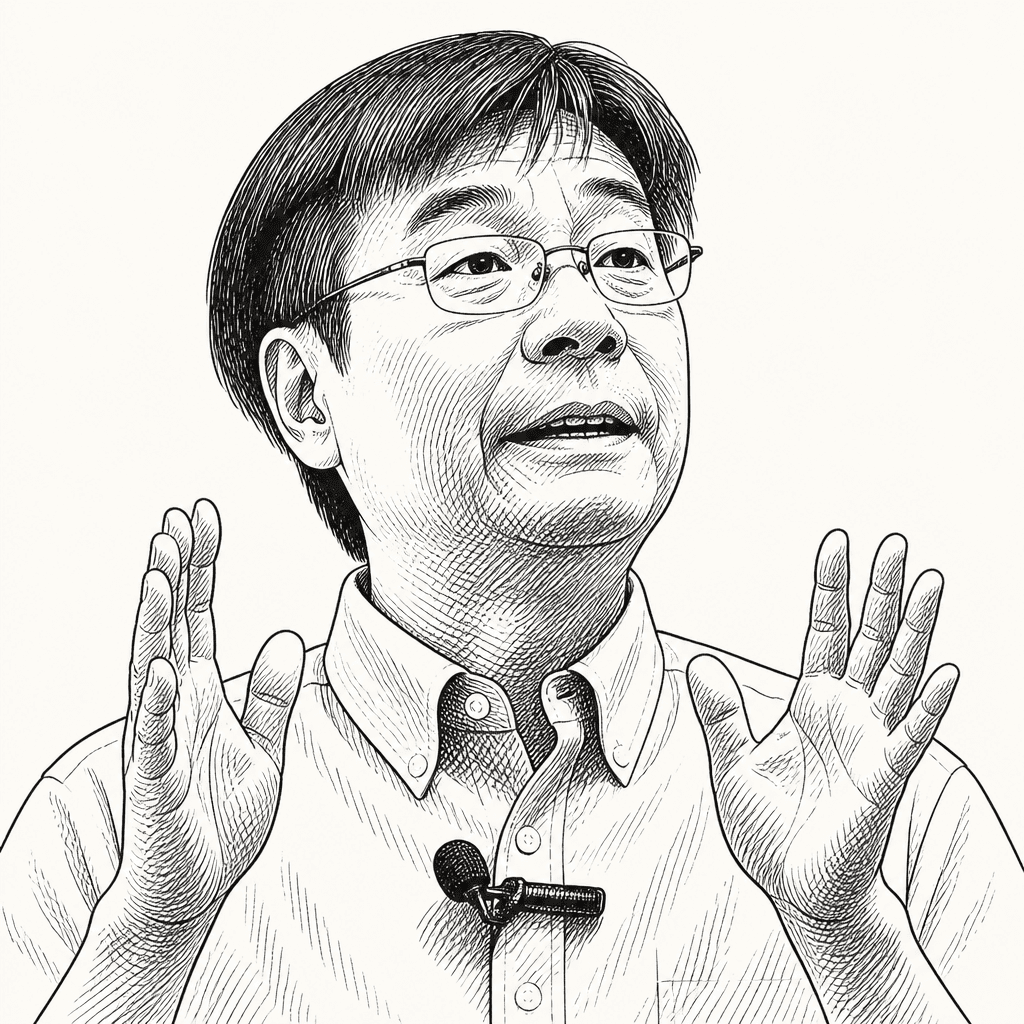
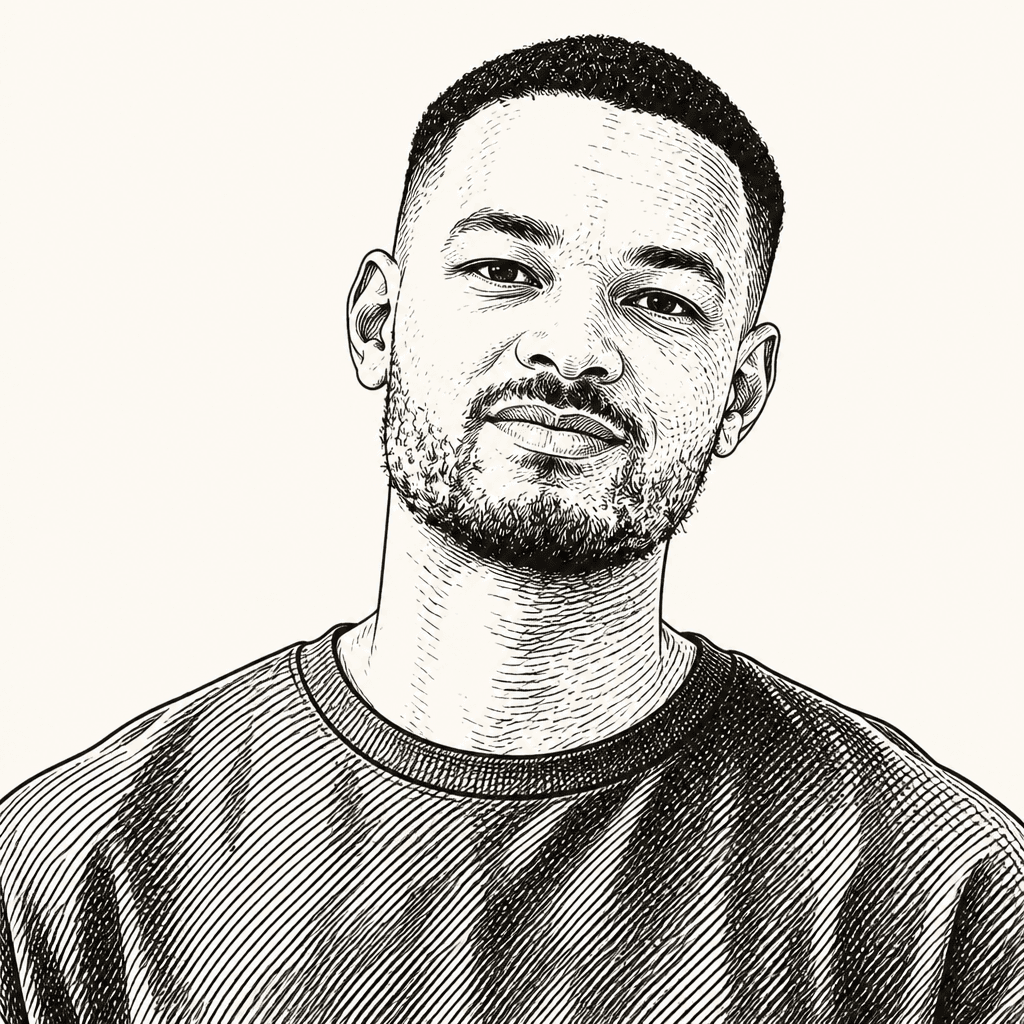
Professor Jiang Xueqin argues that modern technology and prosperity rest on a dollar-centred trading system whose specialized supply chains depend on American military power, functioning shipping routes and confidence in financial institutions. In his account, escalating conflict around Iran could disrupt insurable trade, cutting energy and industrial inputs to major economies and setting off a chain of scarcity, migration, political polarization and conflict. His most extreme warning is that a future attacker could seek 9/11-scale psychological shock by targeting financial records and payment infrastructure rather than physical landmarks.
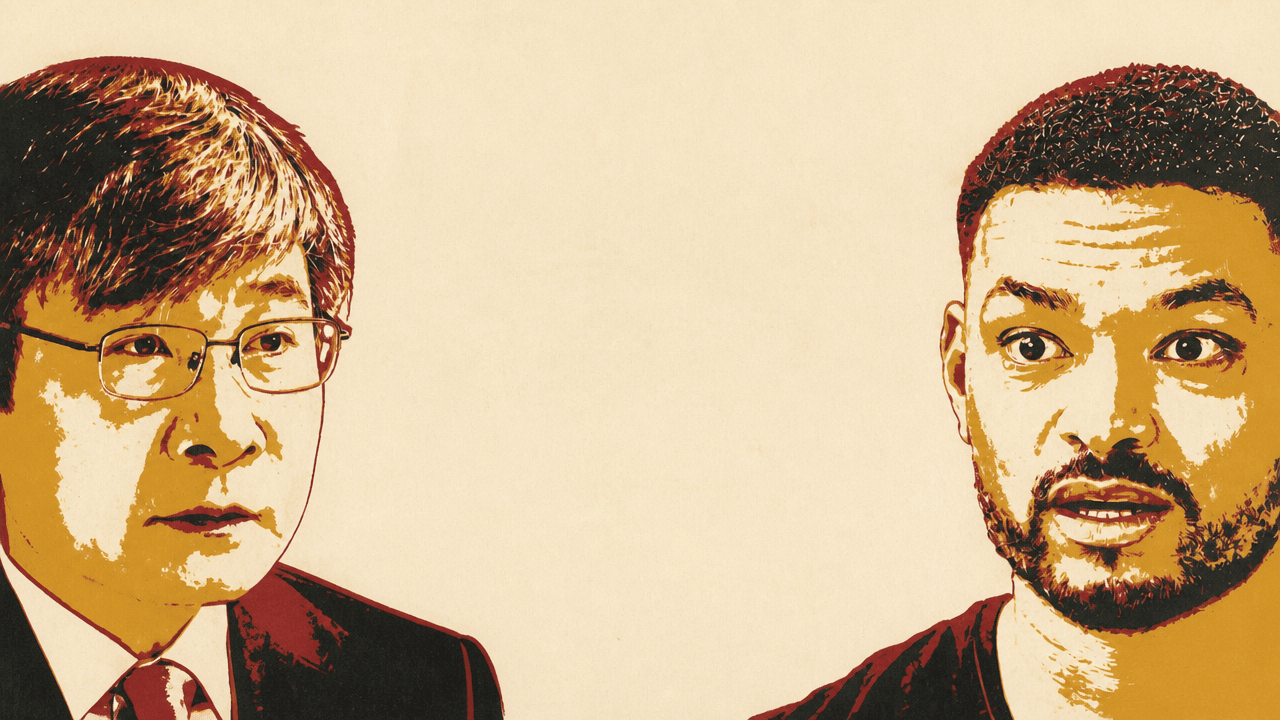
Modern technology rests on a dollar-centred system of specialization—and confidence
Jiang Xueqin organizes his warning around a single proposition: technological progress equals specialization multiplied by globalization. In his model, advanced societies depend on countries and firms performing narrow, difficult-to-replace roles, then moving materials, components, capital and finished goods through a trade system that participants expect to keep functioning.
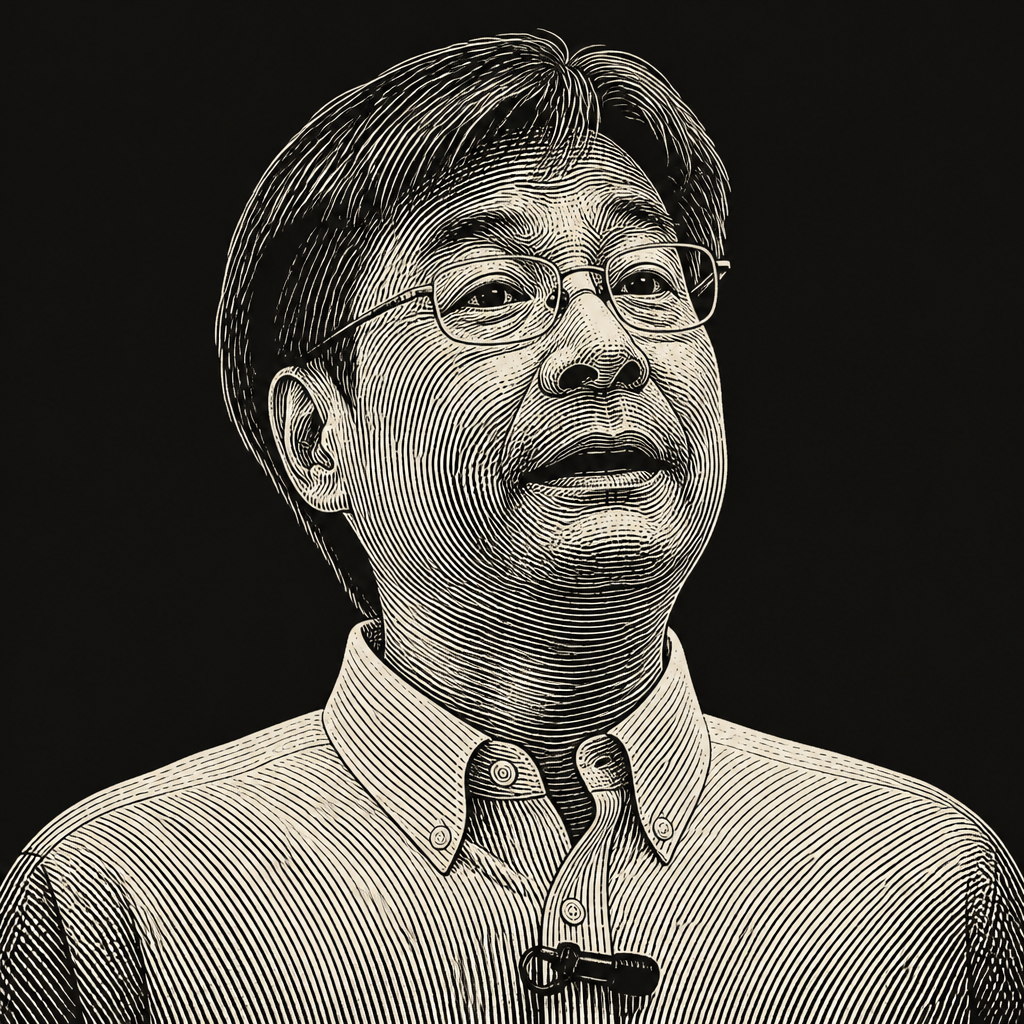
A semiconductor is his central example. It is not merely a piece of hardware, Jiang says; it represents a world in which different places provide designs, machinery, materials, manufacturing capacity and final assembly. American firms such as Nvidia and Apple design advanced chips. The Netherlands and Japan produce manufacturing equipment. Taiwan and Malaysia fabricate and package chips. China integrates them into appliances and consumer electronics.
A Reuters graphic based on Boston Consulting Group material, displayed during the discussion, adds further links: US chip-design software may rely on European intellectual-property licenses; silicon may be mined and refined in the United States, then processed into wafers in Japan and South Korea; and final smartphone assembly takes place in mainland China.
| Supply-chain function | Locations shown | Role in the displayed processor supply chain |
|---|---|---|
| Design | United States; European intellectual property | US firms provide design software, sometimes relying on European licenses. |
| Equipment | United States, Japan and Europe | Manufacturing equipment is developed across several advanced industrial economies. |
| Materials and wafers | United States, Japan, South Korea and China | Inputs are sourced, refined and processed in different locations. |
| Manufacturing and packaging | Taiwan and Malaysia | Specialized production hubs fabricate and package chips. |
| Final assembly | Mainland China | Chips are assembled into smartphones and other finished products. |
Jiang places the financial foundation of this system in the postwar order. After 1945, he says, the United States lent dollars to Europe and Japan so they could purchase US exports, with gold underpinning repayment. As American spending grew, he argues, the country moved from creditor to debtor. Nixon’s 1971 decision to end the dollar’s peg to gold created a new question: what would sustain global demand for dollars?
Jiang’s answer is the petrodollar system. Saudi Arabia and other Middle Eastern producers agreed, in his account, to sell oil in US dollars. China later required dollars for access to cheap manufactured goods. Japan, through the Plaza Accord as Jiang describes it, directed savings into US Treasuries. The result was a set of linked promises: energy producers would provide oil, China would provide manufactured goods, and the United States would provide the currency, financing and military protection that kept trade moving.
The US dollar is a contract. It’s a promise.
For Jiang, that contract depends on confidence as much as material output. Countries and firms must expect payments to clear, shipping lanes to remain usable, goods to arrive and the United States to retain the capacity to protect trade. By US military hegemony, he means the absence of a peer competitor able to challenge American control of the seas.
He also emphasizes that material dependence runs in several directions. China, he says, supplies major shares of silicon, gallium, germanium and rare earths. But China also needs imported helium for semiconductor manufacturing, while the United States possesses an advantage in Spruce Pine, North Carolina, which he says supplies roughly 90% of the world’s high-quality quartz used in silicon production.
You are not able to build semiconductors unless you have a globalized economy.
If countries stop trading, Jiang argues, they will have to make more things domestically and become less specialized. Supply chains become national rather than international. That reduces the multiplication of specialization and globalization on which he believes technological progress depends.
His use of “collapse” is intentional. He rejects the language of an ordinary shift in world order, and says the next two decades could bring “the collapse of civilization itself”: not simply weaker growth or higher prices, but a breakdown of the integrated systems that support modern economic and technological life.
Jiang’s historical analogy is the Late Bronze Age collapse. Bronze required copper and tin sourced from different places, creating long-distance exchange. In his telling, integration eventually produced inequality, debt and polarization. Climate disruption caused famine; famine drove migration; migration overwhelmed established societies, including Egypt and Anatolia; and political authority and social order disintegrated.
Steven Bartlett presses on why such a rupture is hard for people in Western societies to imagine. Jiang agrees that many younger Westerners have lived comparatively insulated lives. People in Iraq, Afghanistan and parts of Africa, he says, have experienced political violence and institutional breakdown that Western populations have been able to observe from a distance. As US power recedes, Jiang believes, disorder long regarded as distant will increasingly reach Europe and North America.

Iran is Jiang’s test case for how confidence in trade can break
The Middle East is pivotal in Jiang’s model because it joins energy, maritime routes, dollar demand and East Asian industrial production. He describes a widening conflict involving Iran, the Islamic Revolutionary Guard Corps, the Houthis in Yemen, Hezbollah in Lebanon and Shia militias in Iraq.
His concern is not simply who wins a conventional battle. It is whether multiple actors can threaten different routes, energy assets and trading chokepoints at once. Iran, he says, can disrupt the Strait of Hormuz. The Houthis control the Bab el-Mandeb strait at the entrance to the Red Sea. Hezbollah can threaten routes linked to the Suez Canal, while Iraqi militias add another source of regional pressure. Saudi oil exports to East and South Asia depend heavily on the wider maritime geography.
Jiang describes the Houthis as particularly difficult to dislodge because of Yemen’s mountainous terrain and their capacity to sustain a fight. A DOAC community note shown during this discussion qualifies his sectarian framing. Scholarship, the note states, generally does not portray violence as inherent or unique to Sunni or Shia Islam; organized Sunni–Shia violence is more often driven by states, rebel groups and militias than by Sunni and Shia communities as such.
What makes the current conflict different from the Iraq war, Jiang argues, is decentralization. Saddam Hussein led a state whose government could be removed through “shock and awe.” The groups Jiang identifies are separate organizations with local bases and incentives, but he says they coordinate through Iran. The United States, he adds, struggled in Afghanistan and Iraq against insurgencies that could not be ended by a swift conventional campaign.
He sees outside supply routes as making the conflict more durable. China, he says, can support Iran through an overland corridor associated with the Belt and Road Initiative; Russia can support it through the Caspian Sea. In Jiang’s account, these routes could allow Iran and its partners to withstand a long conflict rather than succumb to a rapid campaign.
The decisive mechanism is insurance. A coordinated campaign of attacks would not need to physically eliminate global shipping, Jiang argues. It could make the risk of using particular routes too unpredictable for insurers to cover vessels and cargoes. In Jiang’s model, commerce can fail before ships stop existing because the system depends on the ability to price and insure risk.
The global trade system is built on confidence, and that’s what drives insurance. If you can’t insure global shipping, global shipping ceases to work.
He calls a strategy of dispersed, unpredictable attacks Iran’s “madman theory.” The Houthis could strike Saudi infrastructure, Iraq-based militias could strike Israel, Iran could threaten Hormuz and Hezbollah could threaten the Suez route. The goal would be to create uncertainty at several points at once, rather than to defeat the United States in a conventional contest.
Jiang does not say Iran will necessarily pursue that strategy. He explicitly says he does not know enough about political factions inside Iran, and that some may see such a move as too provocative or fear it would unite the world against Iran. His narrower prediction is that the conflict will escalate, though he does not claim to know its exact path.
The stakes, in his account, extend to the petrodollar system. If oil cannot reach Japan, China, India, Pakistan and other Asian economies, those economies lose a critical industrial input. If manufacturing and exports contract, the recycling of dollar surpluses into US assets weakens. Jiang identifies Japan, the Gulf Cooperation Council and China as major buyers of US Treasuries, and argues that their role in financing the US economy—including investment associated with AI—depends on the continued flow of energy, trade and dollars.
His most severe scenario is an American response to comprehensive trade disruption. Jiang says the United States could attack Iranian civilian infrastructure, including power and desalination plants, to compel Iran to stop. Without electricity, refrigeration and food distribution could fail in Tehran, which he describes as a city of around 10 million people.
Bartlett asks whether the United States would take a step with consequences on that scale. Jiang says the logic of escalation could make leaders feel “forced” to do so. His explanation is that great power erodes imagination and empathy, producing hubris, self-delusion and an assumption that overwhelming force will deliver victory.
The more power you have, the less imagination and empathy you have.
Jiang presents that formula as an account of decision-making, not a moral defense. A leader who sees retreat as weakness, he argues, may choose escalation over a limited settlement because US military invincibility is part of what sustains confidence in the broader dollar-centred order.
Scarcity turns supply-chain failure into a migration and domestic-politics crisis
Jiang extends the supply-chain argument beyond chips and oil to food. Maps shown on screen locate nitrogen-fertilizer demand and ammonia-production facilities heavily in North America, Europe, China and Russia. Ammonia is an important component of fertilizer, and Jiang says large parts of Africa, the Middle East and South America depend more heavily on imports.
Trade disruption has unequal consequences in this account. Countries in the global North might lose access to expensive consumer electronics. Regions dependent on imported energy and fertilizer could face food scarcity or famine. That difference, Jiang argues, is what makes disruptions in shipping and finance a political issue far beyond the immediate conflict zone.
Water is his next source of pressure. A global scarcity map highlights the western United States, North Africa, the Middle East, India, parts of China and Australia. Jiang treats it as a guide to likely geopolitical flashpoints over the next two decades.
He points to the Colorado River, which supplies water to western US states including Colorado, California and Arizona, as an example of an already contested system. He applies the same logic to the Middle East and to tensions between India and China. Water scarcity alone does not explain conflict in his model; it compounds existing political, economic and territorial pressures.
Demography creates the third link. A fertility map displayed during the discussion shows high fertility in Africa and the Middle East. A separate United Nations Population Division map compares the proportion of people aged 60 or older in 2012 with projected shares in 2050, showing a steep rise across North America, Europe and East Asia.
For Jiang, the maps create a structural contradiction. Young people in water-stressed, conflict-prone and food-dependent regions will seek security and work elsewhere. Wealthier countries may respond by restricting immigration, but they also need workers to support ageing populations through healthcare, nursing and other labor-intensive work.
Bartlett suggests robots as a solution. Jiang returns to the supply chain: robotics requires copper, lithium, silicon and rare earths, much of it sourced or processed through distant and concentrated international networks. If those networks are breaking down, he argues, automation becomes harder and more expensive to scale.
People, I hate to say this, but people are much cheaper and much more expendable than robots.
Jiang therefore sees immigration as the least expensive response to ageing, even where it is politically unpopular. Bartlett suggests this pressure may translate primarily into right-wing electoral victories rather than civil war. Jiang agrees that this trend is already visible, citing AfD in Germany, MAGA in the United States and Vox in Spain. But, in his view, stricter borders do not remove the underlying demand for labor.
The feedback loop is the core of his forecast. Disrupted trade creates scarcity; scarcity accelerates migration; ageing societies need migrants despite political resistance; and migration intensifies domestic polarization. Under sufficient pressure, Jiang says, political violence, civil conflict and even revolution become conceivable.
Middle Eastern escalation belongs to the same loop. If Iranian infrastructure is destroyed, Jiang says, people would flee toward Europe. Africa could face comparable pressure if access to cheap energy and fertilizer deteriorates. He links this to the political strains that followed migration from Libya and Syria after 2014, arguing that a larger wave could overwhelm European social and state institutions.
The predictions translate systemic fragility into everyday institutional shock
Jiang presents three predictions around the anniversary of 9/11. They are deliberately extreme, but the first two extend his central concern with institutional legitimacy, public fear and confidence in systems people normally take for granted.
The first is a “siege of New York City,” conditional on Donald Trump remaining in power beyond 2028. Jiang defines his wager with Bartlett narrowly: Trump will still be in the White House on January 21, 2029. They agree on a $100 bet.
Bartlett raises the Twenty-Second Amendment, which says no person may be elected president more than twice. Jiang imagines two hypothetical paths: a national emergency in which a president disregards constitutional constraints, or a ticket in which Trump runs for vice president, another candidate wins the presidency and then resigns.
Bartlett challenges the claim that a president can suspend the Constitution in an emergency. Jiang points to Lincoln’s suspension of habeas corpus during the Civil War and Franklin Roosevelt’s internment of Japanese Americans during World War II. His point is that American institutions rely on convention and norms as well as formal law, and that a president prepared to defy convention could create a confrontation legal language alone might not settle.
From there, Jiang imagines Democratic-led cities resisting federal authority by refusing taxes or rejecting Immigration and Customs Enforcement activity. A president could interpret that as insurrection, he says, and send federal forces. His most extreme hypothetical is a prolonged siege in which federal forces, perhaps joined by militias from supportive states, cut New York City’s food and water supply.
The second prediction concerns an attack on US financial infrastructure if another attack comparable to 9/11 occurs. Jiang characterizes 9/11 as an attempt to traumatize Americans into self-destructive violence. The destruction of symbols of American power, he says, helped create a demand for vengeance that led to wars imposing fiscal, military and political costs on the United States.
A future attacker seeking equivalent shock would not necessarily target buildings, in his view. It would target the systems through which people experience financial security.
His thought experiment begins with an ordinary purchase. A phone payment for coffee fails, the bank cannot be reached, and hours later the person learns that critical financial-data servers have been attacked. Account records have been wiped or made inaccessible, with no clear timeline for recovery.
You’ve worked your entire life to save up two million dollars. That two million dollars is your retirement.
The scenario turns system-wide uncertainty into personal panic. Shipping insurance, reserve-currency arrangements and bank accounts all depend on the expectation that contracts, records and institutions will hold. Jiang believes a failure involving deposits and payments could generate anger, anxiety and pressure for retaliation that an attacker would seek to exploit.
Bartlett questions whether financial infrastructure could be disabled so comprehensively. Jiang does not claim that such an attack is likely or easy. His answer is that 9/11 was also difficult, that attackers can be creative, and that he would not rule out an attempt to produce this form of trauma.
His third prediction is that Lionel Messi will become president of Argentina. Jiang links it to Argentina’s relations with the United States and Israel, Javier Milei’s relationship with Benjamin Netanyahu, Argentina’s claim to the Falklands and Trump’s stated support for Argentina on that question. He imagines Messi’s popularity helping make a large influx of Israeli migrants politically acceptable. The prediction is speculative and sits outside the main causal chain, but it reflects Jiang’s broader belief that celebrity, nationalism and geopolitical bargains can make disruptive arrangements acceptable to domestic publics.
The wider conflicts are contests for leverage, not simple predictions of invasion
Jiang treats China–Japan and Russia–Europe as versions of the same strategic problem: powers seek leverage over rivals as the US security umbrella weakens and access to resources becomes less secure.
In East Asia, he distinguishes China as a land power he considers comparatively self-sufficient from Japan as a maritime power dependent on imported energy and resources. Japan’s ageing population compounds that dependence. If it cannot count indefinitely on US protection or US energy supplies, Jiang argues, it needs reliable access to Southeast Asian resources.
Taiwan is central because its location affects control of sea routes. If China and Taiwan reunified, Jiang says, China would have the option to blockade Japan. He does not say China will necessarily impose an embargo. The option itself, in his account, makes Taiwan a vital Japanese security interest.
Japan is attempting to create countervailing leverage through ties with the Philippines, Australia and India, Jiang says. China, meanwhile, can use North Korea as a pressure point against South Korea and Japan. His broader argument is not that full-scale war benefits either China or Japan. It is that both sides seek bargaining power through alliances, proxies and the credible ability to disrupt trade.
Bartlett asks whether such a crisis would compromise Taiwan and the global supply of semiconductors. Jiang replies that the United States may have an incentive to shift Taiwanese chip production to American soil. He cites TSMC’s Arizona investment and argues that worsening regional insecurity could accelerate relocation.
Jiang applies the same logic to Russia’s war against Ukraine. Ukraine’s drone attacks on Russian energy infrastructure, he says, have changed the war by imposing economic costs inside Russia rather than only at the front line. Russia therefore sees NATO and Europe—not Ukraine alone—as the deeper adversary because Europe provides manufacturing capacity, financing and intelligence.
His theory is that Russia’s path to victory is to create enough instability in Europe that mass mobilization becomes politically intolerable. Russia would first need to declare total war and mobilize society; Jiang estimates that at least three million Russian reservists could be called up. That, he says, could force a corresponding European mobilization and widen domestic political conflict.
When Bartlett asks whether the United States would prefer a negotiated settlement, Jiang argues that Washington may see leverage in continued Europe–Russia conflict. In his model, war constrains Russian energy exports while increasing Europe’s dependence on American energy. It is another example of the same grim premise: as the old order weakens, states prioritize strategic advantage over stability.
Jiang sees a missed Middle East settlement, not a technical fix, at the root of the crisis
When asked what would have to happen for the projected conflicts not to spread, Jiang returns to the 1990s and the Middle East.
He contrasts the neoliberal—or Washington Consensus—view with what he calls the logic of the 1996 “Clean Break” memo. The first approach, as he describes it, assumed that trade, prosperity and integration could reduce conflict. He associates it with Bill Clinton and the Oslo peace process: a two-state solution in which Israelis and Palestinians could live alongside one another, enter a regional economic order and eventually have more to gain from cooperation than conflict.
The second approach is represented by A Clean Break: A New Strategy for Securing the Realm, a policy document prepared for Benjamin Netanyahu by a study group of American neoconservative strategists. Bartlett summarizes its objectives as abandoning the land-for-peace approach under Oslo, pursuing regional dominance through pressure on hostile regimes including Iraq and Syria, and favoring proactive action over defensive containment.
Jiang says Netanyahu commissioned the memo and that its broad logic has shaped Israeli policy for three decades. He characterizes that logic as a rejection of compromise in favor of Israeli regional hegemony.
His counterfactual is that the United States could have used its provision of technology, financing and arms to pressure Israel toward peace with Arab states. That, he says, was the point at which the chain of escalation might have been interrupted.
But Jiang thinks those structural pressures are now self-reinforcing. Middle East conflict affects energy flows; energy flows affect manufacturing and finance; scarcity affects migration; and governments respond by pursuing self-protection and leverage. In his view, the conditions for China–Japan and Russia–Europe tensions have already been created. The “genie” cannot simply be put back in the bottle.
AI becomes a control system when abundance no longer looks attainable
Jiang’s view of AI follows from his supply-chain thesis. AI depends on energy, semiconductors and the industrial networks that produce them. If war and fragmentation reduce specialization and globalization, he says, societies will not make the leap to an abundance-producing form of artificial general intelligence capable of reducing scarcity, solving major medical problems or addressing climate change.
Instead, he expects AI to be repurposed as a “control grid”: systems for monitoring and surveilling people during war, political disorder and institutional stress.
Steven Bartlett says this trajectory may occur even without civilizational collapse. Cameras are already widespread in cities, he notes, but they remain disconnected and comparatively limited. AI could integrate them, identify people and track their movement through public space.
Jiang agrees, but says crisis would accelerate adoption. In his hypothetical siege of New York, a company such as Palantir could use emergency conditions to develop AI-controlled autonomous drone warfare.
Surveillance is not his deepest concern. He worries more that AI cheapens the human experience by pushing people toward machine-like definitions of value.
The big risk I see is how AI can cheapen the human experience. How AI is almost dehumanizing.
Computers may become better than people at mathematics or medical diagnosis, he says. But he believes human beings exist to love, imagine and act with kindness. A culture focused too heavily on AI, in his view, mistakes efficiency for purpose and distracts people from spiritual growth.
Faith and family are Jiang’s answer to a world he expects to become harsher
Jiang’s answer to civilizational decline is religious rather than technocratic. The best advice he can give, he says, is to believe in God and focus on family.
He presents this as a reversal from his earlier worldview. Raised in a poor immigrant family, with a father who worked as a dishwasher for 30 years, Jiang attended Yale on a full scholarship. He saw that outcome as proof that the world was a meritocracy governed by reason, science, truth and hard work.
Brexit and Donald Trump’s election changed that view. Jiang interpreted Brexit as a rejection of globalization and Trump’s election as a rejection of meritocracy, reason and order. Those events pushed him to study historical patterns and global supply chains in search of another explanation for how societies function and fail.
His spiritual turn, he says, is recent and rooted in his wife, his three children and a conviction that life contains purpose and order beyond material competition. Faith does not mean withdrawing from public life. It creates a duty to act and to speak what he believes is true.
He acknowledges fear about the consequences. After being sent to secondary inspection while entering the United States from Canada, Jiang came to believe that his commentary—particularly his discussion of the Clean Break memo—may have led to greater scrutiny. He explicitly calls that a theory: officials did not tell him why he was placed in secondary inspection. His stated personal challenge is fear, doubt and paralysis, including fear of exclusion from the United States, Canada or China after criticizing all three.
The discipline he returns to is faith in God, faith in family and faith in his purpose. When Bartlett asks why God would permit war and suffering, Jiang answers that struggle produces wisdom. Crises force people to ask what matters, he says: not wealth, status or control, but love, empathy, imagination and connection with other people.
That reassurance does not cancel the collapse thesis. Jiang does not expect better forecasts or greater technological capability to make the world safe. He believes suffering can induce the reflection through which people become more fully human.