Druski Built His Comedy Career Through Years of Work Before the Break

Comedian and producer Druski argues that success is rarely overnight: his career took years of making videos before a major break, and repeated rejections from networks led him to finance his own shows. In an interview with Steven Bartlett, he traces his drive to a difficult childhood and a period of isolation that helped him recognize comedy as his purpose. His account pairs persistence with judgment: commit to the work, he says, but choose a path rather than waiting for gatekeepers to choose you.
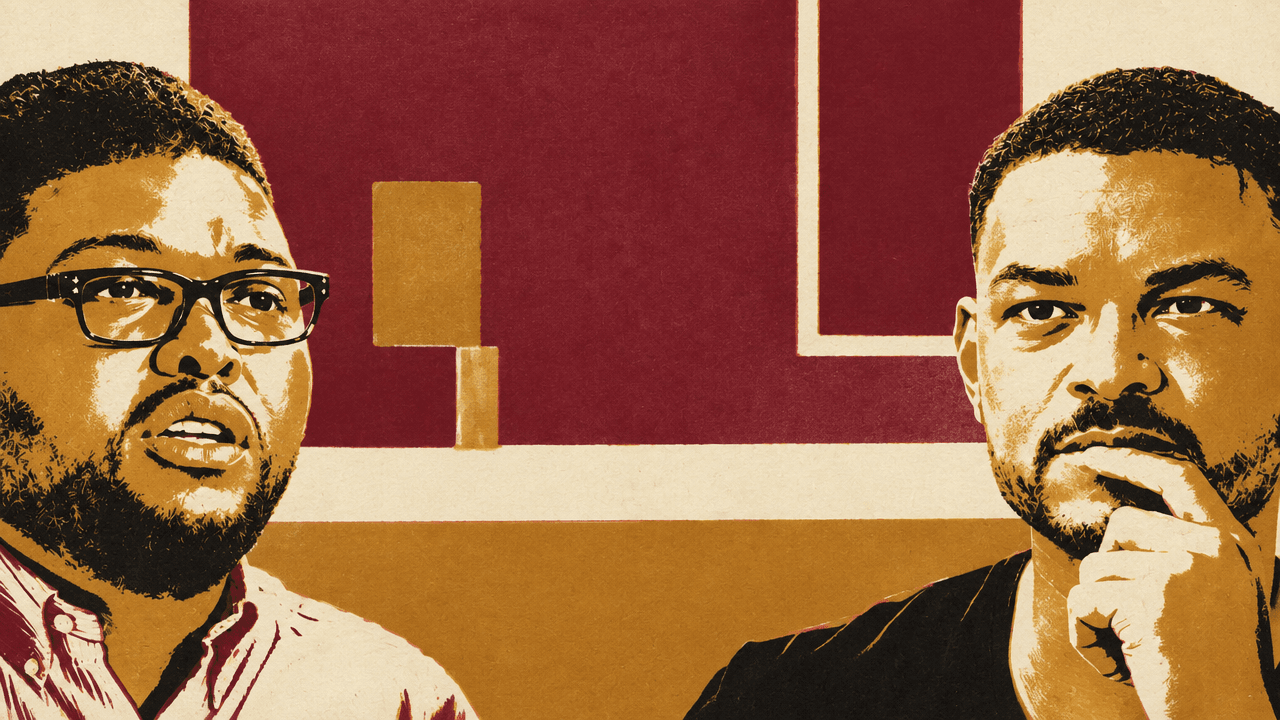
Comedy began as a way to make a difficult home feel easier
For Druski—whose given name is Drew—being funny was not only a performance. He describes comedy as a way to lift the mood at home, help his brother cope, and give his family moments of relief during a childhood he remembers as frightening and physically abusive.
He recalls his father turning ordinary requests into tests. His father might ask for a Phillips screwdriver; if Druski brought back the wrong tool, he says, he would be hit. His brother might be sent for a screwdriver and return with a hammer, with the same result. Druski remembers that he and his brother would sometimes flinch when their father raised a hand, even when their father was introducing them to other adults. At the time, he did not know that this was not a normal way for a parent to teach.
He also remembers seeing his brother beaten for wetting the bed. He says he saw his father choke his mother, push her outside, and lock the door. Druski was left at the door, with his father warning him not to let her in and his mother asking him to open it. He says some memories are blurry because the situations began when he was so young.
The childhood recordings shown during the interview offer a different kind of evidence about that home: Druski as a young boy performing, joking, and playing for his family. He says his mother used a camcorder to give him an outlet where he could be free and himself. The recordings do not erase the difficult memories he describes; they show that he also had a place to perform and be supported.
Druski distinguishes the family’s circumstances from its treatment of one another. His father was an airline pilot for United Airlines throughout much of Druski’s younger life; his mother worked for the CDC and was often home. He calls it a “broken home,” not a “broke home.” His father’s approach was physical and severe, while his mother tried to intervene and soften it. Druski remembers his father telling him and his brother that they had to figure out what they wanted to do, but says the lessons came with a short temper and physical punishment.
He does not reduce his comedy to a direct product of abuse. Instead, he describes it as a coping response that developed alongside a habit of watching people closely. As a child, he learned to assess a room: to notice tension, danger, sadness, or a shift in someone’s mood, and to try to change the atmosphere. He says he can still read a room quickly and judge people’s character. During the interview, he notices Bartlett’s expression and stops to ask whether he has something to say. Bartlett says guests rarely do that, and that some comedians seem unusually aware of the person listening even when they are speaking.
Druski agrees that this kind of awareness can have a cost. He says his brother was diagnosed with schizophrenia and bipolar disorder as they grew older. Druski wonders whether the trauma in their home may have played a role in his brother’s experience, and whether comedy gave him a coping mechanism his brother did not find. He remembers trying to make his brother laugh, sometimes during or after difficult moments, and trying to lift the family’s mood after arguments.
The impulse to find humor without humiliating someone is still part of how Druski describes his comedy. He says he looks for a funny angle in a negative situation without making the other person the target. He tries to find humor for both sides rather than punch down.
Bartlett suggests that the attentiveness which helps a comedian can also bring mental strain: vigilance is not cost-free. Druski agrees. He also describes changing how he holds his childhood. He eventually forgave his father, both privately and face to face, and says they now have a very good relationship. He says grudges become a burden, and that he could not keep looking for success while holding on to resentment about the past.
He says his father also taught lessons he came to value, including doing a job thoroughly rather than “half-assing” it. His father would insist that a floor be mopped all the way or that all the dishes be cleaned, not just some of them. Druski says those lessons became clearer later in life, after he had grown to appreciate them and had forgiven his father for what happened. He describes the useful lessons and the harm together, without treating one as a justification for the other.
A talent became a purpose only after he named it
Druski’s childhood recordings show him performing for his family: singing, dancing, acting out characters, and making people laugh. His mother recorded him with a camcorder and gave him a space to be expressive. He remembers those recordings as an outlet where he could be himself. His parents also put comedy in front of him. He watched In Living Color, What About Bob?, and Chappelle’s Show, sometimes sneaking a look at material he had been told was too adult.
Even with that history, he did not immediately understand comedy as a career he could pursue. At school he knew he was funny and cared intensely about whether other students thought he was the funniest in his class or grade. He would ask who was funniest and what made that person funnier. Their approval felt like winning an award. But knowing he liked comedy was different from deciding that it was his work.
That decision came while he was at Georgia Southern. He had first spent time at a school in Gwinnett County, then transferred because he wanted a four-year college experience. At the new school, he expected to find a social life and a sense of belonging. Instead, he struggled to connect with two men he knew from home. They made him feel like a burden because he did not have a car, could not pay to get into a game, or wore the same shoes he played basketball in.
He began staying in his dorm room and stopped going to classes for much of a semester. He describes the period as a depression he had not experienced before: he was alone, confused, and hard on himself. He played video games, listened to music, and walked to a corner store with money his mother sent, buying enough food to avoid going out and socializing. He had previously been the class clown and the person in his family who brought warmth to a room. Now he was hiding from other people and asking what his life was for.
He had enrolled in sports journalism partly because he wanted to get on television, perhaps as an ESPN sportscaster. In his dorm room, he started watching interviews with people he admired: Steve Harvey, Kevin Hart, Will Ferrell, Chris Farley, and Jim Carrey. The pattern became hard to miss. The figures he felt most connected to were comedians. He recognized that the funny kid he had always been was not just a personality trait; comedy was the craft he wanted to pursue.
A video of Steve Harvey talking about taking a risk became especially important to him. Druski says he replayed Harvey’s message about taking a leap of faith and not overthinking everything. He had already felt that there was more to his life than what he was doing, but hearing someone he admired describe that feeling helped him treat it as a reason to act. Harvey later sent a video message to Druski, telling him he had a gift and advising him to remember what his mother and grandmother had taught him. Druski called the message a full-circle moment because Harvey had been one of the people whose words helped him imagine a different future.
The realization did not make the path sound respectable or safe to his family. He knew that telling people “I want to be a comedian” could sound like saying he wanted to be a clown. His mother cried when he said he was leaving college. His grandparents urged him to return to school and warned that he would end up asking them for money or using drugs. They had seen education lead to jobs and feared what might happen without it; they had not seen the outcome he was imagining.
Druski says he could not persuade them to see the plan as he did. He told his mother he wanted to be on television within a year, and said that if he did not become a famous comedian, he would kill himself. Looking back, he calls the statement far-fetched and says he knew he was not going to kill himself. He describes it as an expression of how completely he believed he had to pursue the goal: he could imagine no other route forward. His mother told him not to talk that way.
He left college around 21 or 22 and returned home. For a while, the plan remained an idea rather than a daily practice. He worked at restaurants, including Red Lobster, LongHorn Steakhouse, Outback Steakhouse, and McDonald’s. He also got involved in scams in Atlanta, which he describes as a way of getting quick money. He says the money and the pursuit of comedy did not sit well together: he was flirting with the idea of creating videos without committing to it.
Then a scam went wrong and he and a friend were held at gunpoint. Druski describes seeing the barrel of the gun as a turning point. He wondered how he had ended up in that situation after returning home to pursue a different life. If he survived, he decided, he would stop drifting between options and become a comedian or die trying.
Afterward, he went home and wrote down goals, following his mother’s repeated advice that he should write things down if he wanted to remember them. The first was:
Don’t have a plan B, your plan A will work.
He also wrote down specific ambitions, including hosting a tour, hosting an awards evening, acting in a major movie, and becoming a comedian. Some of those aims, he says, later became real.
The years before the break were not an overnight success
The commitment did not immediately bring security. Druski says that soon after he wrote down his goals, his car was repossessed. He was sleeping on the floor in a room without a mattress, using his younger sister’s blanket. His mother had stored or given away much of his college furniture and belongings, so he had little else in the room.
He filmed the repossession and posted it, though he says he was genuinely upset. His mother’s house became both his living space and a makeshift set. He flipped a couch over to stage a surveillance-camera sketch, propped a phone on a trash can to play a news reporter in the backyard, and used clothes from a closet as costumes. His mother came home to find the house rearranged and ask what he was doing. The repossession footage turned a private setback into content, but he says the post did not mean he was untroubled by what had happened.
At first, the numbers did not amount to a livelihood. He would tell his mother he had 10,000 followers, then 15,000, then 100,000. She would ask whether he had made money. He often had not. He eventually earned a few hundred dollars by promoting music or videos on his social-media story, sometimes enough to help with groceries or cover a night out, but not enough to feel established.
His first social video was more tentative than the later productions. In footage shown during the interview, a younger Druski is at a gas station counting cash and telling viewers not to count him out. He explains that the money was in one-dollar bills and that he was acting. His friend Chauncey, now his lead comedic writer, had urged him to post the clip. Druski thought it was silly, but it drew supportive comments from people back home. He took the response as encouragement to make more videos and become more creative.
An old clip also captures him saying he would one day be on Meek Mill’s level. He clarifies that he did not shake the rapper’s hand and tell him directly; he shouted it across a party where security kept people at a distance. Meek Mill had appeared at parties hosted by Lou Williams, an NBA player from Druski’s high-school area. Those events brought celebrities to Gwinnett County, where Druski and his friends could see people they admired. Druski says he had long been interested in pursuing greatness, though at that point he had not yet assembled the pieces of a plan.
That plan, he argues, was built from steps rather than from treating famous comedians as unreachable gods. People at college told him he was funny but could not compete with figures such as Kevin Hart or Bernie Mac. He remembers the implication as “don’t even bother.” He did not deny the distance between his circumstances and theirs. He rejected the idea that the distance made progress impossible.
His alternative was to construct a ladder. Wanting to win an Oscar, he says, is not enough; an aspiring actor has to identify the stairs that might lead there. He focused on the next achievable step rather than staring at the final outcome as an unbridgeable gap. In his account, a distant ambition remained useful only when he could see what to do next.
That distinction also shaped his choices about money and image. Early on, he took paid promotions and considered opportunities that brought quick cash. Then he began asking whether a job fit the work he wanted to make. He gives the example of being offered money to appear in music videos that he did not respect. A couple of thousand dollars could help immediately, but he worried that attaching himself to work he did not believe in would pull him off course. He says he became more selective and put the larger goal ahead of short-term income.
Druski rejects the idea that a viral moment alone makes an artist. In his experience, years of work came before the break. He says people often see a post take off and rush to assemble a team, when the more useful next move may be to make another video. He describes long stretches of editing with his collaborators, sometimes for 18 hours or more, while also touring and developing shows. His measure is not whether other people announce that they want to work; it is whether they keep showing up.
He also says the work has a cost. He does not easily stop to celebrate one achievement before turning to the next. After doing the BET Awards, he flew the following day to shoot Collect & Praise. After that, he went on to film The Catch with Emma Stone and Chris Pine. The rapid succession left little room to take in what he had just done. He connects that restlessness partly to his upbringing, where good results were often met with the suggestion that he could have done better.
He says he is happy, but not fulfilled, and does not believe ambition should run out. Bartlett challenges whether it is possible to feel fulfilled while still pursuing more. Druski answers that, for someone pursuing greatness, the hunger has to continue. He says he is very happy, while also believing that he has much more to do.
Drake’s call changed the industry's terms
Druski’s work had begun to attract attention before it generated meaningful income. The decisive shift, as he recalls it, came when Drake invited him to appear in the music video for “Laugh Now Cry Later.” Drake had been watching his posts and had exchanged messages with him about them. Before the video, Druski says, money was not coming in. Brands might send free clothes or invite him to events, but the attention was not yet translating into substantial commercial opportunities.
The music video changed the way brands treated him. It placed him alongside Drake and other prominent figures, including Lil Durk, Marshawn Lynch, Kevin Durant, and Odell Beckham Jr. Druski played the comic relief. He says the appearance made brands take him seriously as a star rather than as one more person posting comedy online. The conversations became transactional: companies were now looking to hire him, not merely send him merchandise or offer access.
He remembers Drake’s decision as more than a useful credit. The two had communicated by direct message, and Drake later spoke to him at length about leading a generation of comedy. Druski says he initially wondered whether the praise was just encouragement. He had not yet met Drake, and found it difficult to hear that kind of assessment from someone he regarded as a megastar. He says he still feels grateful that Drake took a chance on him when his work was much less developed than it is now.
The opportunity altered what the industry was willing to offer; it did not erase the years of posting and building an audience that came before it. Druski says brands began to see him in a broader light after the video, and the relationship shifted from free merchandise and event appearances to paid work.
Fame complicates the question of who loves the person behind it
The rewards of becoming recognizable do not resolve every uncertainty. Druski says it can become harder to trust a romantic partner as success grows. At first, he says, he might think someone likes him for himself while also being attracted to his public profile. As he becomes more successful, he worries that a partner may be in love with “Druski” the celebrity rather than Drew.
He connects some of that fear to not having seen a successful relationship between two parents in his own home. He says he can develop feelings for someone and then pull back as soon as the relationship gets close. He compares the reaction to a magnet that repels when it is brought near another. He says he has not fully understood why he does it, but suspects that not seeing a healthy relationship modeled may be part of the reason.
The difficulty is not only about celebrity. Druski says he can be affectionate until he is not, and that he sometimes withdraws when intimacy increases. Bartlett says he experienced something similar when younger. Druski, who says he is 31, replies that he is still experiencing it and jokes that he needs to find a wife.
Success adds another layer to the uncertainty. Druski says that when fans chase him, ask for photographs, or react to him in public, he wants to believe that someone he dates is responding to him as a person rather than to the same celebrity image. A partner may not have known him when he was broke and living at home, he says; she may have met the public version instead. He describes the question as difficult to put aside, even when he wants to trust someone.
Relationships help talent travel through the industry
Druski describes the entertainment business as dependent on both talent and relationships. A brand considering someone for a campaign wants to know more than whether that person can perform on camera. It may want to have dinner with him, see how he treats people, and get a sense of what he is like outside his public persona.
He distinguishes between the public character “Druski” and the person a company meets away from the camera. Before offering a T-Mobile commercial or a Nike deal, he says, people want to know who they are working with. In his experience, those relationships matter in the large companies and entertainment “buildings” where decisions are made.
Druski says this did not require him to become a different person for corporate settings. He has always been comfortable talking to people. As a child, he would approach adults in a grocery store and joke with the parents of kids he knew from football. He also grew up in Gwinnett County among people of different races, nationalities, and backgrounds. He believes that experience helped him feel at ease in rooms with people unlike himself.
His account of brand safety follows a similar distinction between provocation and cruelty. He says his sketches may say aloud what people usually leave unsaid, but he tries not to make jokes by punching down. He describes his material as coming from a good-hearted place and from observing mannerisms and situations people recognize. A strong comic performance, in his view, can make a viewer remember something they saw years ago but had not thought to name.
He says he is not trying to make political or religious arguments through comedy. Rather, he says he tries to find humor across situations instead of choosing a political side and targeting its opponents.
When Bartlett raises a widely viewed sketch about conservative white women and asks about a reported suggestion by Donald Trump that someone sue him, Druski repeatedly says he does not know whether Trump meant him. He says he is not looking to be sued. Bartlett thinks the remark may have been about Druski; Druski says they may never know unless someone asks Trump.
After repeated rejections, he financed the shows himself
Druski says streaming companies and networks turned down multiple proposals over several years. He recalls projects with FX, Amazon, and Netflix that did not proceed: a planned show, a movie proposal, and other ideas that received repeated rejections. Rather than continuing to revise pitches in the hope of being accepted, he decided to invest money he had earned back into his own productions.
The result was a group of shows and projects under the “Coulda Been” banner, including Coulda Been Auditions, Coulda Been Love, Coulda Been House, and Coulda Been Daddy. Clips shown during the interview give a sense of their range: an audition setup at a red table, a backyard scene, night-vision footage, and a sketch staged in a field. Druski says he spent millions of dollars building the productions and expanding the sketches into a larger creative world.
The point was not that everyone needs a large production budget. Druski says creators can make work without one. His question is whether people who say they are waiting for an opportunity are investing in the work they can make now. He says he had to ask himself whether he was betting on his own ideas or waiting for someone else to do it.
For Druski, self-financing was a way to reverse the relationship with the gatekeepers. Instead of returning to a platform with another proposal and asking for permission, he could make a version himself and let the work demonstrate what it could become. He says companies now want to buy shows they have already made and discuss doing more. He describes the situation as having become a bidding war.
The rejected proposals did not prove that the projects were impossible. Druski chose to make them himself rather than continue returning to the same companies with revised pitches. That meant putting money into work before knowing whether the investment would pay off.
He wants a career that keeps changing shape
Druski defines greatness less by a particular income or touring figure than by how high a person sets the bar and what they leave behind. He points to Eddie Murphy, Kevin Hart, and other comedians as examples of people whose careers set standards for those who came after them. In his view, there will always be someone chasing the people who are currently considered great. The goal is to enter that conversation and leave a legacy, not to assume that one achievement ends the pursuit.
His ambitions now extend beyond social media. He says his immediate goal is to become a superstar and that, over the longer term, he wants to be the number-one comedian of his generation and the face of comedy for the next 30 years. He talks about following artists who have moved between formats and types of performance: leaving sketch or television work for movies, moving between comedy and more serious acting, and collaborating with other major performers. He describes that kind of evolution as the career he wants, rather than becoming known for one successful era or one recurring character.
He gives Jamie Foxx as a model of range: an artist who could play Ray Charles in a biographical film, appear in Django Unchained, and then return to comedy. Druski wants to move across social media, live shows, film, television, and commercials. He points to a T-Mobile campaign featuring Zoe Saldaña and Jeff Bridges as an example of the unexpected settings in which his comic persona can work. He also talks about wanting to work with major comedic performers of his generation and to keep changing what audiences expect from him.
He connects his confidence to the way his family treated possibility. His mother recorded him performing from a young age and encouraged him to believe that things could become big. Both parents, he says, pushed him to look for another way to solve a problem rather than stopping at the first answer. He remembers bringing his father a simple math problem and getting a much longer explanation of alternative methods. That habit of looking for multiple routes, he says, now appears in his approach to comedy: if one sketch works, he wants to find another setting in which he can be funny.
The pursuit has not meant ignoring every other part of life. Druski says that about a year before the interview he began paying more attention to what he ate and balancing it with exercise. He wants to remain a heavyset comedian, a type represented by performers he admires, but does not believe that means he has to be unhealthy. He says he is comfortable with his weight and wants to maintain a healthy balance.
Persistence still requires judgment and self-knowledge
Near the end, Bartlett questions the advice to never quit. He points out that both he and Druski left college, and that persistence can become bad advice if someone is pursuing the wrong thing. Druski jokes that rappers still pursuing a career past 30 should get out of the studio, then agrees that some things should be quit. The exchange makes the distinction concrete: persistence helped Druski keep making videos when his car was repossessed and the future was uncertain, but persistence alone is not proof that a pursuit is right.
His own account includes choices to stop pursuing particular routes. He left college when he recognized that comedy, rather than sports journalism, was what he wanted to do. He moved away from quick paid promotions and opportunities he thought could weaken the image he was building. After repeated rejections from networks, he stopped returning to the same gatekeepers with revised proposals and put money into his own productions instead. In each case, he describes commitment to the larger ambition alongside judgment about which path, offer, or compromise served it.
Druski says consistency matters, but it is not the whole test. A person has to recognize the feeling that something is the right pursuit. He says he needed time to understand that about himself. The route to that recognition, in his view, requires sitting alone without a phone, alcohol, drugs, or the reassurance of a friend group. People often say they do not know what they want, he argues, while continuing to avoid the quiet in which they might work it out.
He describes that solitude as a way to review what a person has loved, what they want to pursue, and what feels meaningful when they are not distracted. In his own life, time in his college room was painful and isolating, but it also forced him to confront questions he had not answered. He says that sitting with himself and figuring out what he wanted was what shifted his life.
Asked what he would tell his younger self in that dorm room, he would say to believe in himself more, stay consistent when the road is unclear, and remember that not seeing the outcome is not the same as having no route forward. He says people can ask for change and then become unsettled when circumstances begin to shift. He describes his own car being repossessed after he had written down his goals as a point when he might have quit, but instead kept making videos.
The lesson in his account is not that every hardship is a sign to press on, or that every ambition deserves unlimited sacrifice. Druski describes looking for evidence in his own interests, breaking a distant goal into steps, and refusing opportunities that seemed likely to pull him away from the work he wanted to make. Persistence mattered because he had identified a pursuit he believed in; judgment helped him decide what to keep pursuing and what to leave behind.