Lie Detection Improves When Questions Test Verifiable Detail
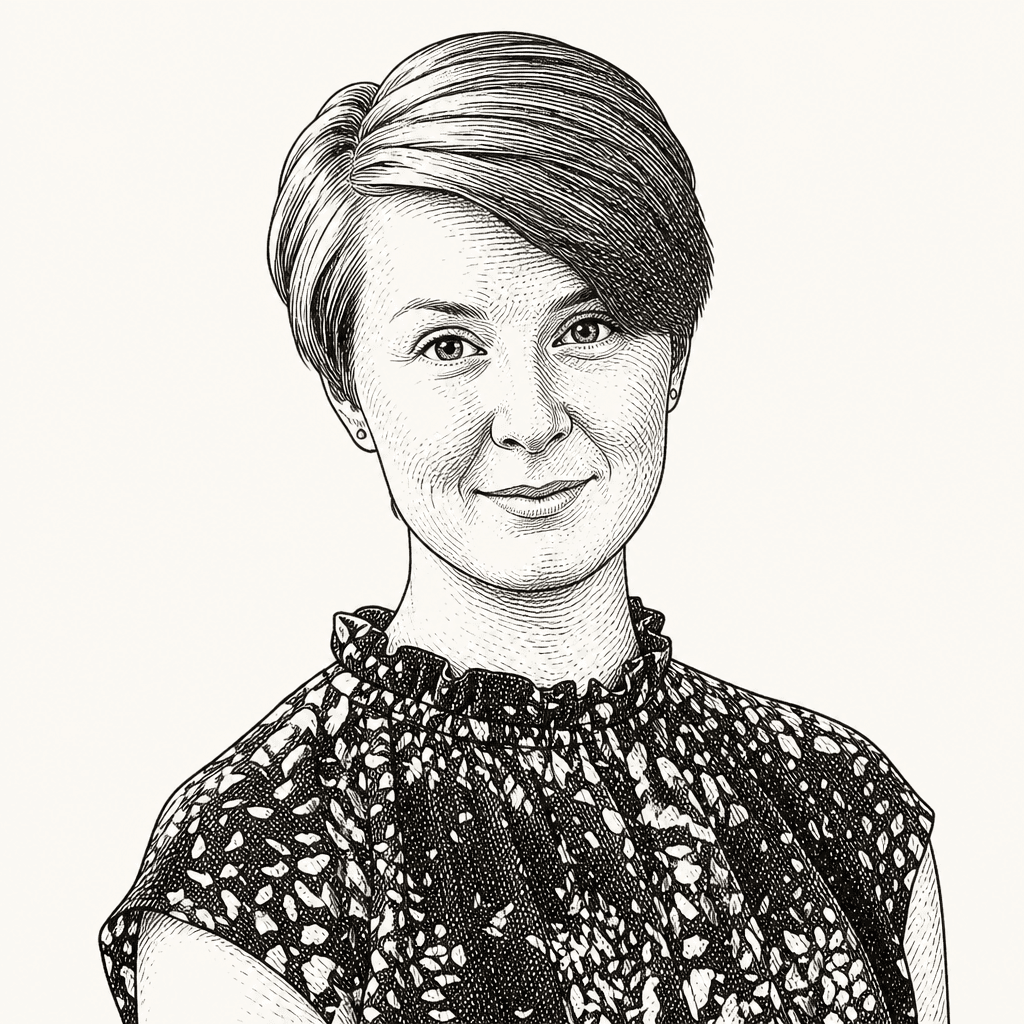

Psychologist Leanne Ten Brinke argues that there is no reliable visual “tell” for lying or for identifying dark personality traits. Drawing on deception research, she recommends testing consequential claims with open-ended questions, requests for detail and checks on what can be verified, rather than relying on eye contact, fidgeting or first impressions. For dealings with manipulative people, her focus is on patterns over time and on reducing their leverage through clear boundaries, records and outside perspective.
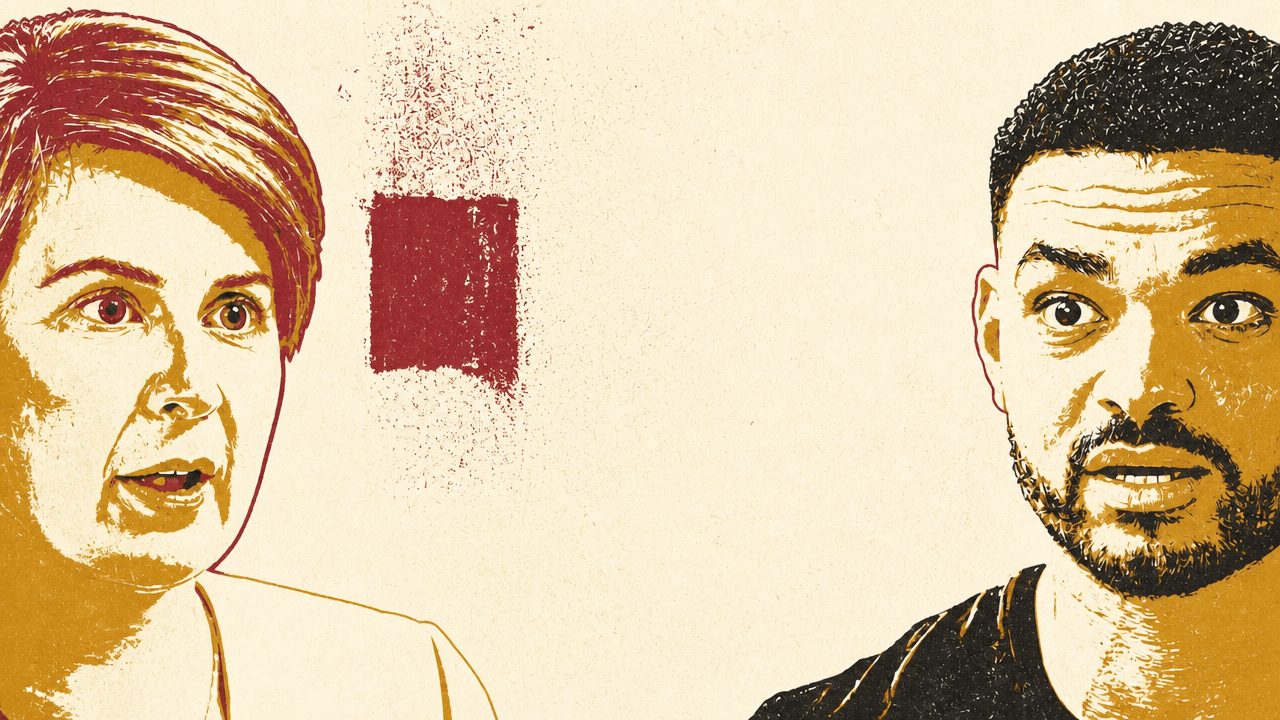
The most useful lie-detection tool is a better question
Leanne Brinke rejects the popular search for a visible “tell.” In laboratory studies, people judging whether someone is lying average about 54% accuracy—barely above chance. Training can improve that result a little, she says, but the more consequential improvement is procedural: ask questions that require an account rather than trying to read a face.
The core error is the closed question. “Are you cheating on me?” can be answered with a simple no. A more useful approach begins with a specific premise and an open invitation: “Tell me about work on Friday night.” Then comes the follow-up that Ten Brinke considers especially useful: Tell me more about that.
A truthful person can ordinarily retrieve further detail because they experienced the event. They may remember a sequence, an incidental frustration, the people present, or information that did not fit in the first version. A liar has the harder task of inventing detail, avoiding contradictions, remembering the invented account for later, and accounting for what the listener may already know. Ten Brinke describes that as increased cognitive load.
That does not turn hesitation into proof. Someone may pause because they are searching memory, nervous, distracted, or uncertain. The point is to treat a cue as a reason to inquire further, not as a verdict.
There is no Pinocchio’s nose. There’s no, like, one cue.
The most useful cues concern the information a person can provide, extend, and make accountable.
| Common shortcut | Why it is weak | Better line of inquiry |
|---|---|---|
| Avoiding eye contact | Ten Brinke says research does not support gaze aversion as a cue to deception, and eye contact is readily controlled. | Ask an open-ended question about the event and request more detail. |
| Fidgeting or nervous movement | Nervousness has many causes unrelated to lying. | Look for sparse, ambiguous, or consequentially unverifiable information. |
| An isolated pause or furrowed brow | A person may be remembering, distracted, or uncertain. | Notice whether effort appears as they try to extend an account. |
| A story with many details | Prepared or embedded lies can put detail around truthful portions while leaving the central claim vague. | Ask which consequential details can be independently verified. |
The first recurring cue is sparse or ambiguous information. Unprepared liars tend to offer fewer details than truth tellers, Ten Brinke says. In her research on televised appeals for missing loved ones, truthful pleaders more often used direct language such as, “When you see this, call me.” Deceptive pleaders were more likely to leave gray area: “If you see this, come home, or call, or whatever.”
The second is detail that is difficult to verify. A person may offer a rich account around the edges while staying thin where the consequential claim begins. Bartlett described that pattern in a public interview: elaborate mundane specifics about travel and food, followed by less description of the alleged central event. Ten Brinke calls these “embedded lies.”
The practical question is not whether a story merely sounds detailed. It is: How verifiable was that statement? Claims about unknown colleagues, inaccessible meetings, or otherwise uncheckable events may create an appearance of specificity without providing much accountability.
The third is visible cognitive effort. A person fabricating an account may speak slowly, use fillers, hesitate, or visibly work to generate an answer. Those behaviors are nonspecific, but can become informative when an account remains vague, cannot be extended, or centers on details that cannot be checked.
Preparation changes the task. Someone who has had time to construct a story can make it resemble a truthful account in volume and coherence. Unanticipated questions go beyond the prepared script. “Tell me more about that” does not need to be clever: it gives a truth teller room to retrieve what happened and requires a liar to keep producing a coherent version.
Body language is a poor substitute for context
Leanne Brinke says the public’s default lie cue—failure to make eye contact—has no research support as an indicator of deception. The stereotype itself makes it particularly weak. People know they are expected to look another person in the eye when they want to appear credible, so gaze is readily controlled.
The cost is not only inaccuracy. Ten Brinke points to emerging research suggesting that people on the autism spectrum can be perceived as more deceptive while telling the truth, partly because observers misuse eye contact as a lie cue. Cultural norms can create the same problem: in some settings, reduced eye contact is respectful rather than evasive.
Fidgeting fares no better. Ten Brinke does not say nonverbal behavior is irrelevant; rather, familiar shorthand signals are poor evidence when detached from context, a person’s baseline behavior, and their verbal account.
Her PhD research on high-stakes emotional deception illustrates both the potential and the limit of facial cues. She compared televised appeals by people genuinely seeking a missing loved one with appeals by people who, in some cases, had killed the person they claimed to be seeking. In that specific dataset, two verbal and two nonverbal cues predicted who was lying and who was truthful with about 90% accuracy. A later attempt to replicate the result produced much more modest effects, though the verbal findings were more consistent.
One distinction involved sadness. Ten Brinke says genuine sadness combines downturned lip corners with inner eyebrows that rise and draw together. In deceptive displays from that dataset, people could more readily produce the downturned mouth but showed something closer to surprise: the inner and outer brows rose without converging.
A related study examined brief interview clips of criminal offenders who had been assessed by clinicians for psychopathic traits. Naive observers watched clips lasting five, 10, or 20 seconds and judged traits such as callousness and manipulation. Their judgments from five-second clips showed what Ten Brinke called a “pretty reasonable correlation” with clinicians’ assessments, which drew on lengthy interviews and collateral information.
Ten Brinke and colleagues coded behavior in those clips. People higher in psychopathic traits showed Duchenne-looking smiles—smiles involving activation around the eyes—while saying hostile things, creating an incongruent emotional presentation. They also used more hand gestures, or “illustrators.”
The finding is not a field test for psychopathy. A brief observation can yield a kernel of information, Ten Brinke says, but personality is a pattern across time and context. More observations, in more settings, provide better data.
Lies can create distance before suspicion becomes conscious
Leanne Brinke has become interested in what happens when a person is lied to without being told that deception is possible. Much deception research asks observers to make an explicit true-or-false judgment. Ordinary interactions do not work that way: people are usually trying to converse, cooperate, or get to know one another.
In one lab paradigm, strangers conversed while one participant was instructed to lie in every response. The other did not know that instruction had been given. At the end, pairs containing a liar reported feeling less connected than pairs in which both people had told the truth.
Ten Brinke says the effect is small but consistent. She also reports that people who say they lie more in everyday life report greater loneliness. That suggests a bidirectional relationship: lying may make a person feel more socially distant, while a pattern of lying may itself be associated with loneliness.
The mechanism may be less mysterious than it initially appears. Conversation depends on reciprocal disclosure. If one person lies, they often give less meaningful information about themselves. Their partner may leave the exchange knowing little about them and experience them as less warm, less competent, or less moral—even without deciding that the person was deceptive.
This matters because many everyday lies are intended to spare another person’s feelings. Ten Brinke’s claim is not that every white lie has the same interpersonal cost as serious deception. It is that prosocial intent does not necessarily produce social closeness. Withholding or fabricating information can leave both people with a thinner relationship than truthfulness would have allowed.
The same pattern appeared in research using the televised missing-person appeals. Participants did not know which appeals were genuine and which came from people who had killed the missing person. Yet they reported more sympathy for genuine pleaders and were more willing to donate to a hypothetical fund supporting the search. The effects were not large, Ten Brinke says, but they suggest that people are not entirely insensitive to the interpersonal texture of deception even when they cannot accurately sort every statement into “lie” or “truth.”
Dark traits are patterns, not diagnoses from a single encounter
Leanne Brinke uses the “Dark Tetrad” as a framework for four overlapping trait clusters: psychopathy, Machiavellianism, narcissism, and sadism. Across the four, she identifies callousness, manipulation, hostility, antagonism, and self-interest.
Psychopathy is a constellation rather than one quality. Ten Brinke describes superficial charm, manipulation, grandiosity, shallow emotional experience, limited remorse or guilt, refusal to take responsibility, impulsivity, and rule-breaking. Rule-breaking can mean social or workplace norms rather than criminal behavior. Psychopathy is a risk factor for violence, she says, but many people with elevated psychopathic traits are not violent.
Machiavellianism is more strategic: cynicism about others, deception, manipulation, and an interest in power. Ten Brinke’s shorthand is “three-dimensional chess”—learning information about someone and keeping it for potential future leverage.
Narcissism involves entitlement, an inflated self-focus, desire for admiration, and willingness to exploit others in pursuit of what one believes one deserves. It is also the term most casually overused. Traits exist on a continuum; only the extreme end may meet criteria for a personality-disorder diagnosis.
Ten Brinke distinguishes grandiose narcissism from vulnerable narcissism. Grandiose narcissism involves a more resiliently inflated sense of self and is particularly angered by failure to achieve: a missed promotion, lost deal, or denied status. Vulnerable narcissism involves fragile self-worth but still includes entitlement and a grandiose self-view. Criticism, rejection, and being overlooked are more likely to provoke anger.
That distinction separates insecurity from narcissism. Someone can seek reassurance, promote themselves, or appear overly confident without being narcissistic. In Bartlett’s example of a self-promoting job candidate, Ten Brinke stressed the situation: a job interview is a setting in which a person is expected to explain why they can do the job.
The tendency to infer a stable trait from another person’s conduct while explaining one’s own conduct through circumstances is what she calls the fundamental attribution error. A hiring interview supplies unusually little evidence for a personality judgment, particularly when self-promotion is built into the task.
Sadism, the newest addition to the tetrad, is taking pleasure in others’ pain. It can be extreme, as in the criminal settings where Ten Brinke first studied sadistic behavior, but it can also appear in everyday conduct such as online trolling intended to upset other people.
Ten Brinke says clinical narcissistic personality disorder is estimated at roughly 2% to 5% of the population. There are no equivalent clinical thresholds for Machiavellianism and sadism. Looking instead at self-report measures, she says roughly 10% of people, on average, agree with items intended to assess Dark Tetrad traits. That is not a claim that 10% have a clinical disorder.
Hiring should distinguish confidence from competence
Leanne Brinke went looking for evidence that psychopathy might confer advantages in competitive environments. She expected that callousness, fearlessness, risk-taking, and willingness to use back-channel tactics might produce more influence in government or more money among hedge-fund managers.
Her research found the reverse: higher psychopathic traits were associated with less influence in government and lower earnings among hedge-fund managers.
She does not argue that every dark trait uniformly prevents advancement. Narcissism and Machiavellianism may be associated with rising through ranks or earning more, depending on how success is defined. But appearing suited to lead is not the same as producing good outcomes for a team.
Ten Brinke describes a study by Del Paulhus in which student groups worked together over a term. After their first meeting, members higher in narcissism were seen as confident, smart, likable, and leadership-oriented. Over time, their peers came to see them as hostile, unproductive, and difficult. The underlying mistake is easy to make: confidence can be mistaken for competence.
People higher in psychopathic traits can also, Ten Brinke says, present themselves as strategic communicators and strong managers. Yet their subordinates describe bullying and poor management, and their teams have worse outcomes. Employees under bosses with more psychopathic traits report greater stress, are more likely to take that stress into family life, and show stronger intentions to leave.
A self-promoting candidate is therefore not a diagnosis, but it can be an invitation to gather better evidence. Ten Brinke’s suggested move is to retain the initial impression as an “amber flag” and ask questions that make the pattern testable. Ask about teamwork. Ask for a specific example of a shared outcome. Ask how credit was distributed, what went wrong, and what the candidate learned from criticism. Then seek reference checks and evidence from people who worked with the person over time.
The same discipline applies to first impressions more generally. A person who talks extensively about themselves during an interview may simply be attempting to make a positive impression in a narrow window. Repeated credit-taking, contempt for colleagues, inability to name others’ contributions, or hostility when challenged would be more informative than the self-presentation alone.
Trust depends on warmth and competence together
Leanne Brinke defines warmth as the perception that someone is kind, honest, trustworthy, and has benevolent intentions toward another person. Competence is the belief that they can actually execute: that they have the ability to deliver, solve a problem, or follow through.
Neither quality is sufficient by itself. Someone can seem well-intentioned while lacking the ability to help. Someone can seem capable while appearing indifferent to the people affected by their decisions. Trust is strongest, Ten Brinke says, where both warmth and competence are high.
The behavioral signals she names are ordinary rather than theatrical: smiling, eye contact, leaning in, attention, and visible interest in a conversation partner. These are “immediacy cues”—signals that a person is engaged with the other person rather than merely waiting to speak.
The point is not that warmth must look exuberant. Ten Brinke notes that a face that appears to scowl, including what is sometimes called a resting angry expression, can be read as a signal of anger when observers have little else to go on. Because anger is not associated with warmth, that quick impression can lower perceived trustworthiness.
That first-impression dynamic helps explain why personality assessments are so vulnerable to error. The same confident communication style that can make a narcissistic person look like leadership material can also make a genuinely capable person appear persuasive. The operational question is not whether a person makes a good first impression, but whether the impression survives contact with their record, relationships, and conduct under pressure.
Early experience matters, but adult change is constrained
Leanne Brinke says variation in psychopathy and narcissism is shaped by both genetics and environment—broadly, about 50% genetic and 50% environmental experience. That does not excuse harmful behavior, but it complicates simple narratives of choice and blame.
She identifies abuse and cold, uncaring parenting as environmental risks. For narcissism, she also points to parental overvaluation: telling children that they are superior to others or exceptional in ways others are not. That differs from self-esteem, which she associates with warm, responsive parenting that lets children know they are cared for and worthy.
A child can also face what Ten Brinke calls a “double whammy.” A parent with elevated dark traits may pass along genetic risk while also being less able to provide stable, responsive care. A household marked by callousness, manipulation, impulsivity, or abuse can compound the problem.
Early intervention is the more hopeful part of the research. For children showing callous-unemotional traits, training parents to be warm and responsive can reduce the likelihood of elevated psychopathic traits later. The approach avoids escalating dominance contests and gives attention to helpful or kind behavior.
Ten Brinke says children with these traits may respond less to punishment but remain responsive to rewards. A parent can reinforce prosocial conduct by naming and responding to it: repeating a kind thing a child said, recognizing helpful behavior, and giving it attention. By contrast, cycles in which a child escalates a tantrum and a parent eventually gives in can teach that escalating dominance is effective.
She also notes neurological research associating psychopathy with differences in the prefrontal cortex and amygdala, regions linked to impulse control, moral reasoning, fear, and emotional responding. Those findings may help explain patterns of impulsivity, low fear, and weak learning from punishment; they do not make a brain scan a practical means of understanding any individual.
Adult change is possible but limited. In incarcerated populations, consistent cognitive behavioral treatment can reduce the likelihood of reoffending, though motivation is a central obstacle when a person sees the harm they cause as someone else’s problem. In a lower-trait setting, people who carried out daily agreeableness challenges—complimenting friends, offering encouragement, buying coffee for someone, or practicing perspective-taking—reported lower levels of dark traits after four months.
For people dealing with someone difficult, Ten Brinke’s working assumption is practical: enduring traits tend to endure. The task is to manage the interaction and the leverage available to the other person, rather than wait for a fundamental transformation.
The seven rules reduce leverage rather than promise control
Leanne Brinke presents seven rules for dealing with elevated dark traits. They are not guarantees that someone will respect a boundary, stop manipulating, or become a different person. They are ways to reduce opportunity, make conduct legible, and avoid relying on guilt or punishment where those tools may not work well.
Rule 1: Establish clear boundaries. Rules held privately are not boundaries another person can be held to. A respectful-workplace policy makes expected conduct explicit and creates a written basis for action when it is breached. In relationships, the same principle means naming what is and is not acceptable.
Ten Brinke cites research suggesting that explicit fairness rules reduce selfish behavior among people with elevated dark traits relative to a no-rules situation. She also says less assertive people may be more likely to be selected as targets by people higher in psychopathic traits. A boundary is therefore both a standard and a signal that someone will not be easily dominated. A trusted friend can help by knowing the red lines and noticing when they begin to slip.
Rule 2: Do not give them power over others merely because they seek it. Power is central to the tetrad: Machiavellianism is power-focused, psychopathy can be domineering, and narcissism can involve claims of superior leadership. But Ten Brinke’s account of psychopathic bosses is a warning against treating an appetite for authority as evidence of leadership fitness.
Where someone already has power, the goal may be to limit the damage rather than expect a clean exit. A difficult manager may be embedded in an organization, or a difficult relative may be inseparable from a valued family relationship. The practical question becomes which decisions, people, and resources need protection from that person’s authority.
Rule 3: Look for win-wins when negotiating. Ten Brinke argues that appeals to compassion may not be the relevant incentive. Telling a bullying manager that their team is distressed may fail if concern for others is not motivating. Linking better conduct to an outcome they value—money, status, a sales target, or a bonus—may produce a different result.
The point is not to endorse the person’s motives. It is to understand them well enough to change the immediate incentives around a behavior. A manager may treat a team better because a stressed and depleted team will miss a target that affects the manager’s compensation. The team benefits even if the motive is self-interested.
Rule 4: Use the carrot, not the stick. Ten Brinke says people with elevated psychopathic traits are particularly reward-sensitive and less punishment-sensitive. They may not form the same fear-based link between conduct and punishment that would deter others.
Punishment may still have a place, but she argues that it is often less effective than rewarding a specific constructive behavior. Reinforcing honest, helpful, or kind conduct is not approval of the person as a whole. It is an effort to increase the chance that a behavior recurs. Rewards should not take the form of greater power over other people; compensation, recognition, or status may be incentives without expanding the person’s ability to harm subordinates.
Rule 5: Emphasize common identity. Ten Brinke says people high in narcissism may be responsive to loyalty even when appeals to fairness are less effective. She cites research in which small perceived commonalities reduced anger at negative feedback among people higher in narcissism.
Before delivering difficult feedback, establish a shared affiliation, goal, or identity: a team, family role, university, or common objective. The commonality does not need to be profound. Its function is to make criticism feel less like an attack from an outsider.
The same logic affects phrasing. Rather than saying, “This process is stupid,” Ten Brinke suggests asking, “What do you think if we turned these three forms into one?” The disagreement remains, but the question gives the other person a way to participate in the solution without immediately absorbing a status threat.
Rule 6: Become a detective and notice cues. Elevated dark traits share manipulation and willingness to lie, but that does not mean inspecting someone’s eyes or posture for proof. Notice sparse information, consequential claims that cannot be checked, deviations from the person’s usual level of detail, and strain when they are asked to extend an account. Then follow up.
The practical advantage of this approach is that it can be applied without accusation. A hiring manager can ask for more specifics about a claimed accomplishment. A colleague can ask what evidence supports a proposal. A partner can ask for an account rather than ask a question that permits a one-word denial. The inquiry itself gathers information.
Rule 7: Avoid face-to-face negotiations where possible. Ten Brinke describes a University of British Columbia study in which people higher in dark traits obtained better deals in face-to-face negotiations over concert-ticket prices; that advantage did not appear in text negotiations.
If you reduce them to words on the page, they lose some of that, like, charisma.
Writing creates a record, gives the recipient time to think, and makes it easier to seek another perspective. Ten Brinke says people tend to make more accurate truth-or-lie judgments after discussing someone’s statement with others, and group judgments of personality can also be more accurate.
That does not make rumor proof. She cautions against simply accepting the rumor mill. But written exchanges can be reviewed with a trusted colleague, friend, or adviser, and other people’s experiences can help someone avoid learning every lesson through direct exposure. Where violence is a concern, avoiding face-to-face negotiation also creates physical distance.
Gaslighting is a pattern of undermining reality, not every dispute about facts
Leanne Brinke defines gaslighting as a pattern of denying another person’s version of reality: telling them events did not happen as they remember, that their feelings are invalid, or that they cannot trust their own perception and memory.
The term is often used for any lie or disagreement, but Ten Brinke draws a narrower distinction. A dispute over facts is not automatically gaslighting. A person can contest what happened—whether they were at an office, for example—without necessarily denying another person’s internal experience.
The line is crossed when someone denies that experience itself: responding to “I feel insecure” with “No, you do not,” or “You should not feel that way,” rather than engaging with the feeling being expressed. Even if the other person disagrees with the factual interpretation, the feeling remains their experience.
The destabilizing effect is dependence. People rely on others to help them check reality. If a partner isolates someone from friends and family while repeatedly insisting that their memory, perceptions, and emotions cannot be trusted, that person may increasingly depend on the manipulator’s account instead. Ten Brinke describes that as a control tactic.
She says people higher in dark traits more readily endorse these tactics toward romantic partners, which would be consistent with a greater likelihood of using them. The examples discussed include hiding belongings in implausible places to make someone doubt themselves, scripting calls with family, isolating someone from outside support, and gradually breaking down confidence.
Records and outside perspectives are a practical counterweight. The aim is not to win every disagreement about facts. It is to retain time, documentation, and access to people who can help test an account of what happened.
The damaging minority is not everyone
Leanne Brinke offers a numerical corrective to the instinct toward cynicism. If roughly 10% of people generally endorse the self-report items used to assess Dark Tetrad traits, roughly 90% generally do not.
The smaller group can still cause outsized harm. Ten Brinke says people with clinical levels of psychopathy, whom she places at about 1% of the population, account for about half of serious crime among offenders. Outside criminal settings, the asymmetry can appear as a single colleague who destabilizes a team, a manager who drives turnover, or a family member who makes every interaction difficult.
Her broader challenge is to reject the idea that selfishness is the price of success. She had expected competitive fields to reward psychopathic traits and found the opposite in the government-influence and hedge-fund-manager research she described. Success, in her account, is better understood through prestige, respect, care, and concern from others than through putting oneself first at others’ expense.
The useful response is neither to treat everyone as dangerous nor to become an amateur diagnostician. It is to use better process where the stakes justify it: test consequential stories with open questions, focus on verifiable information, look for patterns over time, state limits explicitly, preserve written records, and bring in outside perspective when it is needed.