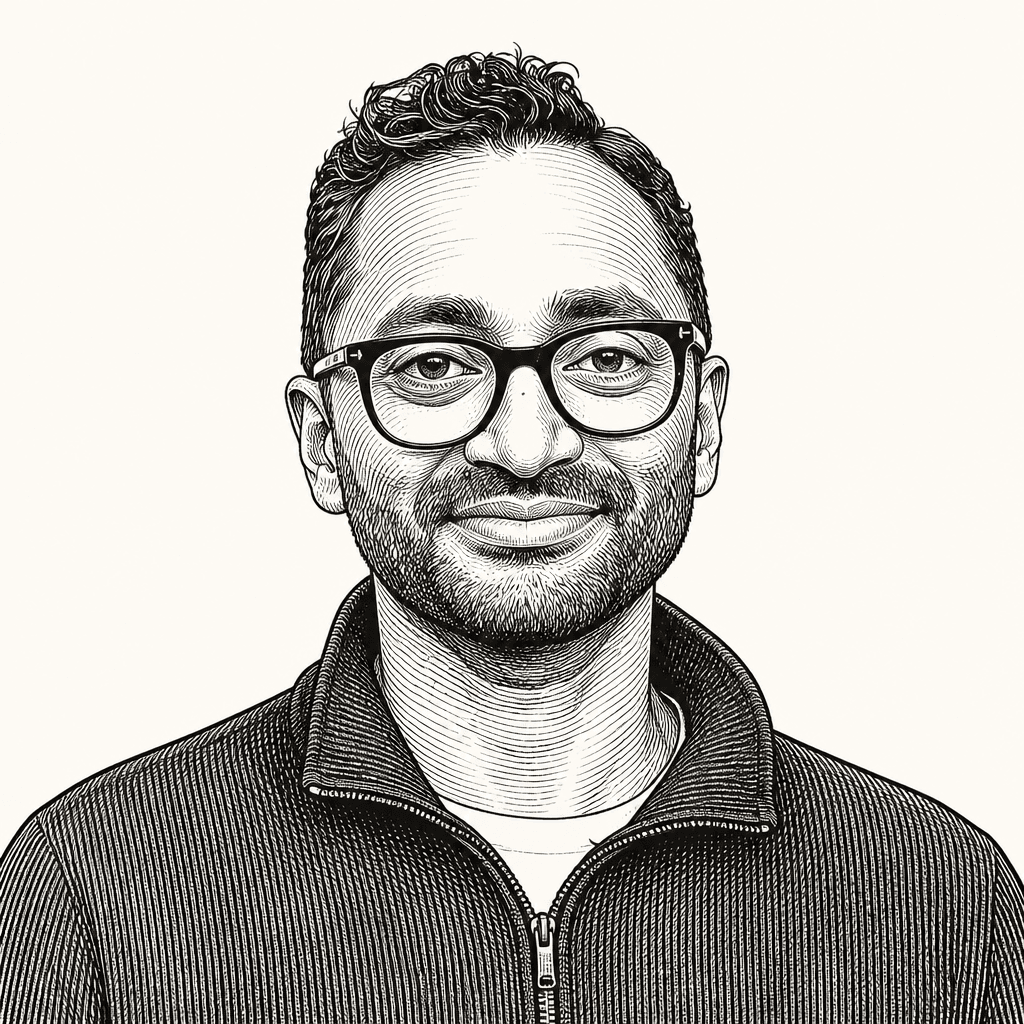
Chamath Palihapitiya
Founder and CEO of Social Capital, a technology investment company, co-founder and CEO of 8090, an AI company, and co-host of the All-In Podcast. He was previously a senior Facebook executive leading Growth, Platform, and Mobile.
America’s Promise Is Opportunity, Not Guaranteed Outcomes
David Sacks argues that America’s defining promise is not provision but the opportunity to pursue anything through work, talent and initiative. In the All-In Summit’s 2026 introductory film, Sacks, Chamath Palihapitiya, David Friedberg and Jason Calacanis frame their immigrant and entrepreneurial experiences as evidence of a culture that rewards ambition, tolerates unconventional ideas and treats failure as part of trying. The montage pairs that case with presidential appeals to building, risk-taking and national renewal.
NASA’s Strategy Shifts From Commercial Subsidies to Nuclear Deep Space
NASA Administrator Jared Isaacman argues that the agency’s $25 billion budget is sufficient but misallocated: NASA should buy commercial services where markets exist and concentrate its own resources on capabilities with no immediate business case, including lunar operations, nuclear power and propulsion, and deep-space science. He frames a sustained presence at the lunar south pole as both preparation for Mars and an urgent strategic test, arguing that delays would cede scarce operational ground to China and Russia.
AI Leadership Will Be Decided by Deployment, Not Model Ownership
Nvidia chief executive Jensen Huang argues that AI policy should target demonstrable failures at frontier labs rather than catastrophic forecasts he calls ungrounded. In a discussion joined briefly by President Donald Trump, Huang says US leadership will depend less on owning every important model than on deploying AI broadly through open and closed systems, compute, power, data centers and industrial capacity. He also contends that “superintelligence” already exists in bounded applications such as autonomous driving and protein science, making practical deployment—not speculative thresholds—the central challenge.
AI Safety Rules Could Concentrate Control Over Frontier Models
All-In’s David Sacks, David Friedberg, Chamath Palihapitiya and Jason Calacanis argue that warnings of near-term AI extinction rest on an unproven leap from current models to autonomous self-improvement, while the policy response could concentrate AI control in regulated proprietary platforms. They extend that skepticism to Anthropic’s IPO messaging, OpenAI’s handling of customer data in its Navier–Stokes work, and Nike’s decline, which they attribute to weakened product discipline, distribution decisions and a blurred athletic brand.
AI’s Defining Fight Is Open Access Versus Frontier Control
All-In hosts argue that GPT-6 Astra’s claimed AGI status matters less than the widening availability and falling cost of advanced AI. Chamath Palihapitiya expects frontier capabilities to converge quickly, while David Sacks sees a durable divide between a closed-model frontier duopoly and a larger commodity market—and warns that AI regulation could entrench the leading labs. Across cybersecurity, data centers and schools, they make the case for broad access paired with practical safeguards rather than centralized control.
AI Investment Accelerates as Treasury Faces a $10 Trillion Refinancing Wall
All-In’s David Friedberg, David Sacks and Chamath Palihapitiya argue that the US is entering a fiscal squeeze that Treasury buybacks cannot resolve, as trillions in debt must be refinanced at higher rates. They see continued private investment in AI infrastructure—bolstered by Nvidia’s earnings—as one of the few plausible sources of growth large enough to ease that burden, while Salesforce’s results challenge the broader claim that AI agents will erase enterprise software. Their distinction is between replaceable workflows and systems of record whose data, controls and organizational context agents still need.
Leverage and Rising Yields Expose the AI Trade’s Fragility
The All-In hosts argue that the AI boom’s long-term productivity promise is colliding with immediate financial and political constraints: a chip-stock selloff exposed the danger of leverage, while higher Treasury yields are raising the cost of betting on distant AI returns. David Sacks maintains that frontier labs’ revenue and compute access support the infrastructure buildout, but Chamath Palihapitiya and David Friedberg question where the economics will ultimately accrue as open models, energy limits and cheaper alternatives reshape the market. They also cast the fight over AI safety, training data and regulation as a contest over who gets to control the technology’s future.
AI Competition Will Turn on Model Rules, Data Control, and Power
All-In panelists David Sacks, Chamath Palihapitiya and David Friedberg argue that AI policy is becoming a contest over who controls model approvals, enterprise data and the power needed for data centers. Sacks backs Demis Hassabis’s proposal for a narrowly focused, industry-led safety body over a conventional AI regulator, provided it does not become a gatekeeper for incumbent labs; the panel makes a parallel case against state data-center moratoria and closed enterprise AI stacks that could limit cheaper alternatives.
Frontier AI Labs Face an Enterprise ROI Test
The panel’s central dispute is whether frontier AI labs can sustain premium pricing as enterprises shift routine work to cheaper models and begin demanding returns on rising token spend. Chamath Palihapitiya argued that customer ROI remains thin and could make current revenue growth fragile, while Altimeter’s Brad Gerstner said frontier capability will retain value in high-stakes research, engineering, and discovery—supporting potential trillion-dollar IPOs for Anthropic and OpenAI. The group also cast sovereign AI, China’s possible restrictions on model access, and Trump Accounts as contests over who controls strategic technology and long-term asset ownership.
Enterprise AI Buyers Are Turning Sovereignty Into a Vendor-Control Fight
The Palantir-Nvidia partnership is presented as evidence that enterprise AI safety is becoming a question of customer control rather than model access. David Sacks, Chamath Palihapitiya, David Friedberg and Jason Calacanis argue that companies and governments should not hand proprietary data, model weights, compute decisions and operating know-how to frontier labs that may later compete with them. The discussion extends from that AI sovereignty argument into a separate jobs dispute over whether current employment data can answer future displacement claims, and into fights over birthright citizenship and California’s budget as questions of institutional authority and fiscal accountability.
8090 Targets the $4 Trillion Services Layer in Enterprise Software
Chamath Palihapitiya argues that AI’s most important near-term business use is not casual prompt-based coding, but a governed way for enterprises to build and maintain custom software with the discipline of large technology companies. In a This Week in Startups interview, he presents 8090 and its Software Factory product as an attempt to attack the services layer of enterprise software spending by turning business intent into auditable requirements, plans, code, and updates. The same concern with agency runs through his broader claim: AI may make more things abundant, but people and companies still need risk, control, and “adventure” to develop.
SpaceX, Anthropic, and Iran Test the Case Against Centralized Power
The All-In panel uses a week of fights over welfare, SpaceX, Anthropic and Iran to argue over who should hold power when risk is high: markets and individuals, or political and corporate gatekeepers. David Friedberg, David Sacks and Chamath Palihapitiya cast much of the discussion as a warning against centralization, from benefit systems that can weaken agency to AI safety regimes that could hand control to governments and hyperscalers. Jason Calacanis shares parts of that concern but presses the practical tensions, especially in the Anthropic dispute and in Trump’s Iran memorandum, where he questions whether the war that produced a possible deal was necessary.
Anthropic’s Fable Backlash Exposes the Risk of Hidden AI Gatekeeping
The All-In panel argues that Anthropic’s handling of Claude Fable 5 turned AI safety into an enterprise trust problem, with Jason Calacanis, Chamath Palihapitiya, David Sacks and David Friedberg focusing on hidden downgrades, prompt retention and a provider’s power to decide who receives full model capability. The same concern over opaque discretion shaped their California election discussion, where Friedberg and Sacks argued that legal ballot rules can still produce outcomes voters view as manipulated, while Calacanis called for investigation rather than treating suspicious statistics as proof of fraud.
AI Compresses Years of Software Vulnerability Discovery Into Weeks
Palo Alto Networks chief executive Nikesh Arora told the All-In podcast that AI has changed cybersecurity by making years of latent software vulnerabilities discoverable in weeks. After testing Anthropic’s Claude Mythos against Palo Alto’s own code, Arora said the company found flaws that would normally have taken five to seven years to identify, raising the stakes for enterprises with weaker defenses. His broader argument was that AI will erode analytical SaaS while increasing the value of data infrastructure, workflow redesign and security systems that can make model outputs reliable enough for production.
Private-Company Secondaries Hit $248 Billion as IPO Alternatives Grow
Brad Gerstner, Gavin Baker and Kelly Rodriques argue on an All-In secondary-markets panel that private-company share trading has moved from a workaround for employees and early investors into a major exit route competing with IPOs and acquisitions. Their case is that companies are staying private long enough to create a structural liquidity problem for employees, venture funds and LPs, while platforms such as Forge are trying to turn that demand into permissioned market infrastructure. The panel also warns that broader access does not make late-stage private shares cheap, especially in famous AI, space and defense names.
Tech Founders Argue IPOs Can Create More Upside After Listing
At an All-In Liquidity IPO panel, Altimeter’s Brad Gerstner, Cerebras chief executive Andrew Feldman and Planet Labs chief executive Will Marshall made the case that public markets are again becoming a place where venture-backed technology companies can compound, not merely exit. Gerstner argued that investors often give up large gains by forcing distributions after an IPO, while Feldman said more money is historically made after companies go public than before. Marshall and Feldman also described the IPO less as an operating transformation than as a change in capital, credibility and scrutiny, with execution still determining whether the listing creates lasting value.
Short Selling Returns as Stock Selection Replaces Broad Market Bets
Dan Loeb, founder of Third Point, argues that markets have moved back toward stock picking and short selling, but not in the simple sense of betting against expensive companies. In an All-In interview, he says the useful short now requires a clear mechanism of deterioration, while long investing increasingly depends on understanding technology, business durability, management adaptability and the limits of old market-cap assumptions. Loeb presents Third Point’s evolution as an accumulation of tools: event-driven investing, activism, credit, venture-style technology work and a renewed need for selectivity.
Ackman Says AI Threats Are Leaving Durable Incumbents Mispriced
Bill Ackman told the All-In hosts that Pershing Square’s investment filter has shifted toward durable business quality while remaining activist where influence can extend a company’s time horizon. He argued that AI has made disruption risk the first question for long-term investors, even as markets may be overlooking incumbents such as Microsoft, Meta and Amazon. Ackman also cast founder control, valuation discipline and permanent capital — including his Howard Hughes project — as ways to underwrite businesses through a period when public markets and CEOs are still working out AI’s practical effects.
OpenAI CFO Says Compute Scarcity Will Define Its Next Phase
OpenAI CFO Sarah Friar used an All-In interview to frame the company less as an IPO candidate chasing public-market timing than as an infrastructure-scale AI business trying to finance scarce compute, broaden distribution, and defend the intelligence layer between users and the underlying technology. Friar argued that OpenAI’s consumer and enterprise products are meant to compound off the same foundation, even as the company raises unprecedented capital, diversifies cloud and chip supply, and considers ads without letting sponsored results distort ChatGPT.
AI Governance Fight Shifts to Centralization, Open Models, and Worker Agency
On All-In, Bill Gurley joined Jason Calacanis, David Sacks and Chamath Palihapitiya for a debate framed less around whether AI is powerful than around who will control it. The panel read Pope Leo XIV’s AI encyclical as a warning about concentrated power, but split over the remedy: Sacks argued government regulation could become the centralizing threat, while Gurley and others scrutinized Anthropic’s safety posture as either regulatory strategy or something closer to a belief in building a superior intelligence. Their practical conclusion was that open models, swappable systems and worker fluency are the main checks against AI power consolidating in a few labs or agencies.
AI Infrastructure Demand Is Becoming Revenue, Contracts, and Market Stress
Gavin Baker joined the All-In panel to argue that AI’s economics are becoming tangible: Anthropic’s reported profitability, surging LLM revenue, Nvidia’s results, and SpaceX’s compute contracts all point to infrastructure demand that is no longer speculative. The group framed SpaceX’s potential $2 trillion valuation as a bet on Starlink, launch, and AI compute rather than current earnings, while Baker defended Nvidia against share-loss and GPU-useful-life bear cases. The counterweight was political and macro risk: public backlash to AI, labor displacement, regulation, higher inflation, rising yields, and U.S.-China tension.
Economic Entanglement, Not Decoupling, Defines the New China Bargain
Salesforce CEO Marc Benioff joined the All-In hosts for a discussion that framed U.S.-China relations, enterprise AI, and the software selloff around the same question: when dependence is a stabilizer and when it becomes leverage. Benioff argued that more trade with China can lower conflict risk and that large software platforms remain valuable because AI still needs trusted customer data, cash-flowing distribution, and enterprise deployment. David Friedberg, Chamath Palihapitiya, and Jason Calacanis extended the argument across Taiwan, chips, AI assistants, El Niño-driven food risk, and private-market SPVs, where interconnection can either absorb shocks or transmit them.
SpaceX-Anthropic Deal Highlights Compute as AI’s Revenue Bottleneck
The All-In panel used SpaceX’s compute deal with Anthropic to argue that frontier AI is now being constrained less by demand than by access to power, GPUs and data-center capacity. David Sacks warned that Anthropic’s reported revenue trajectory could make it a historic monopoly if sustained, while Brad Gerstner pushed back that the market is still too early and competitive for pre-emptive regulation. The discussion turned on whether AI safety concerns justify coordination with government or risk becoming an “FDA for AI,” and whether the AI boom will ultimately show up as measurable productivity and profit for customers buying tokens.