Enterprise AI Buyers Are Turning Sovereignty Into a Vendor-Control Fight
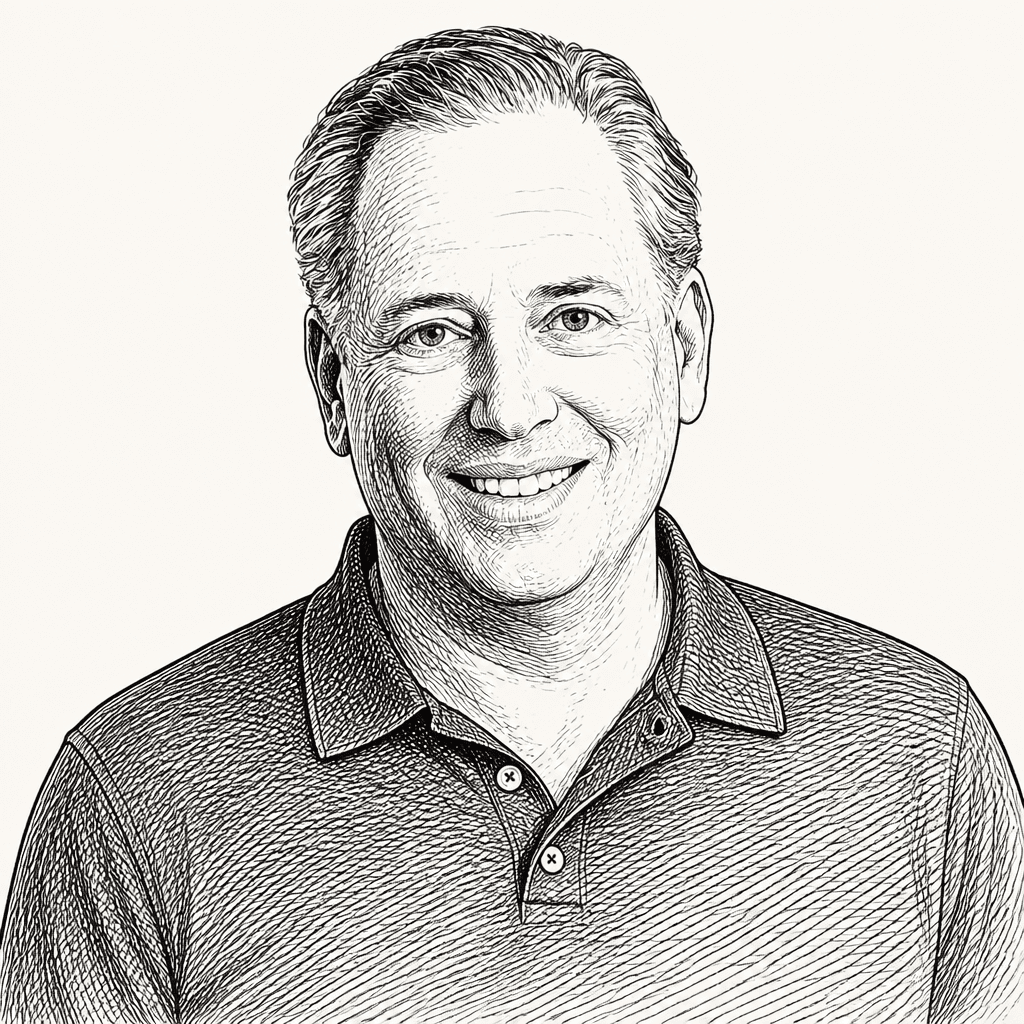 David Sacks
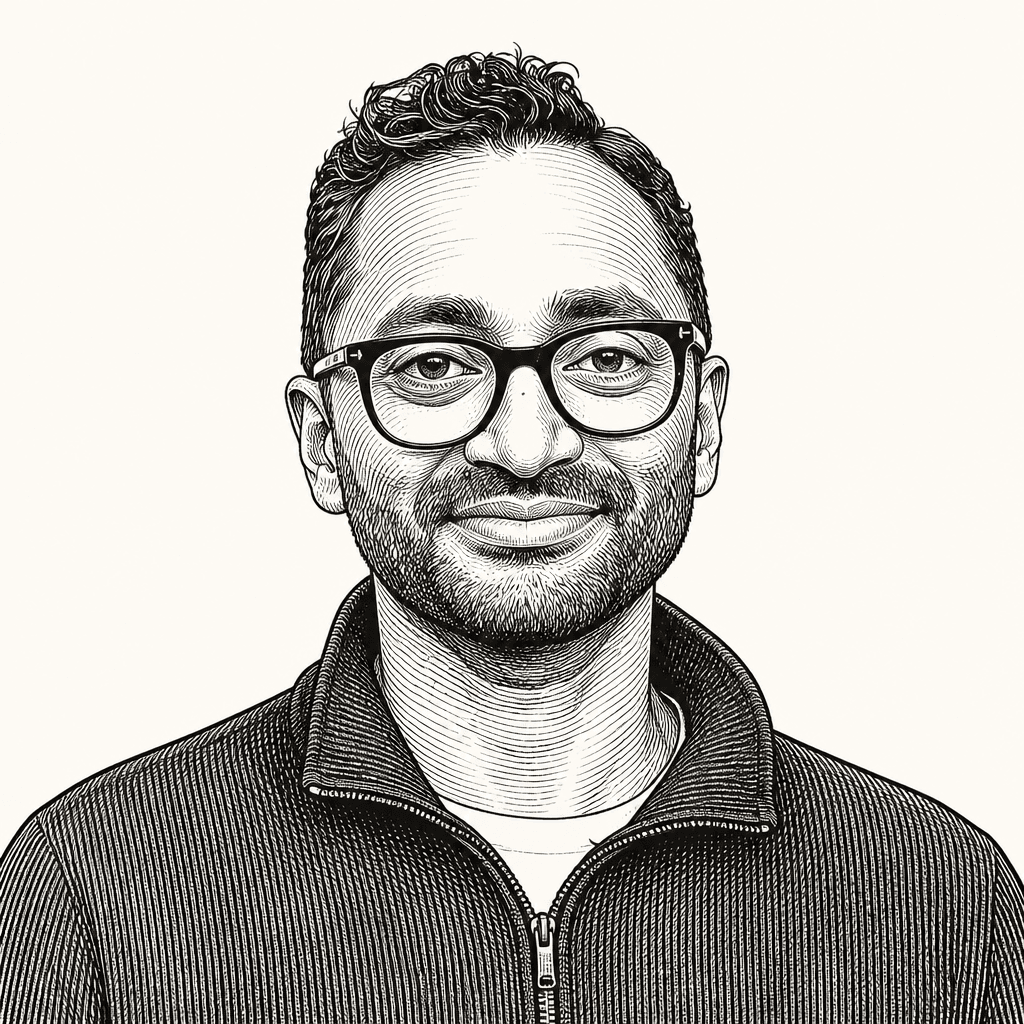 Chamath Palihapitiya
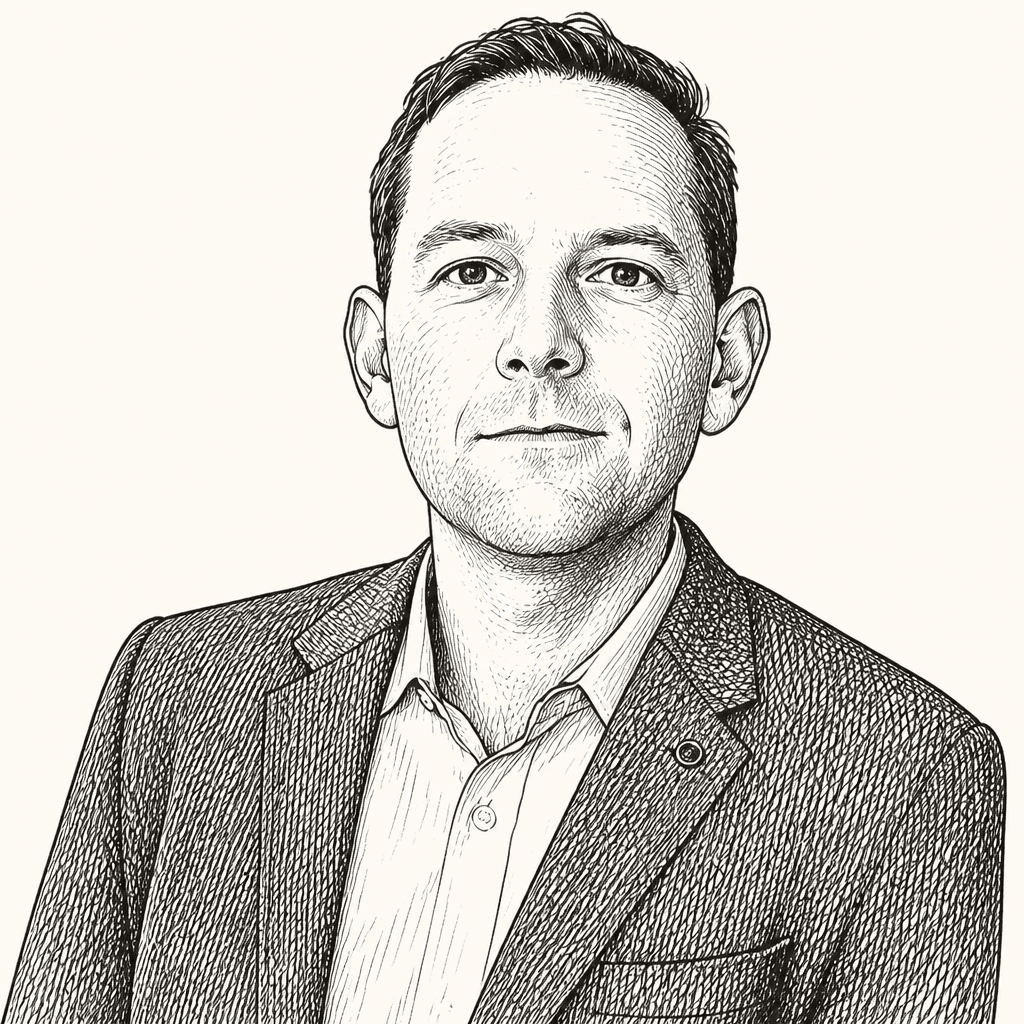 David Friedberg
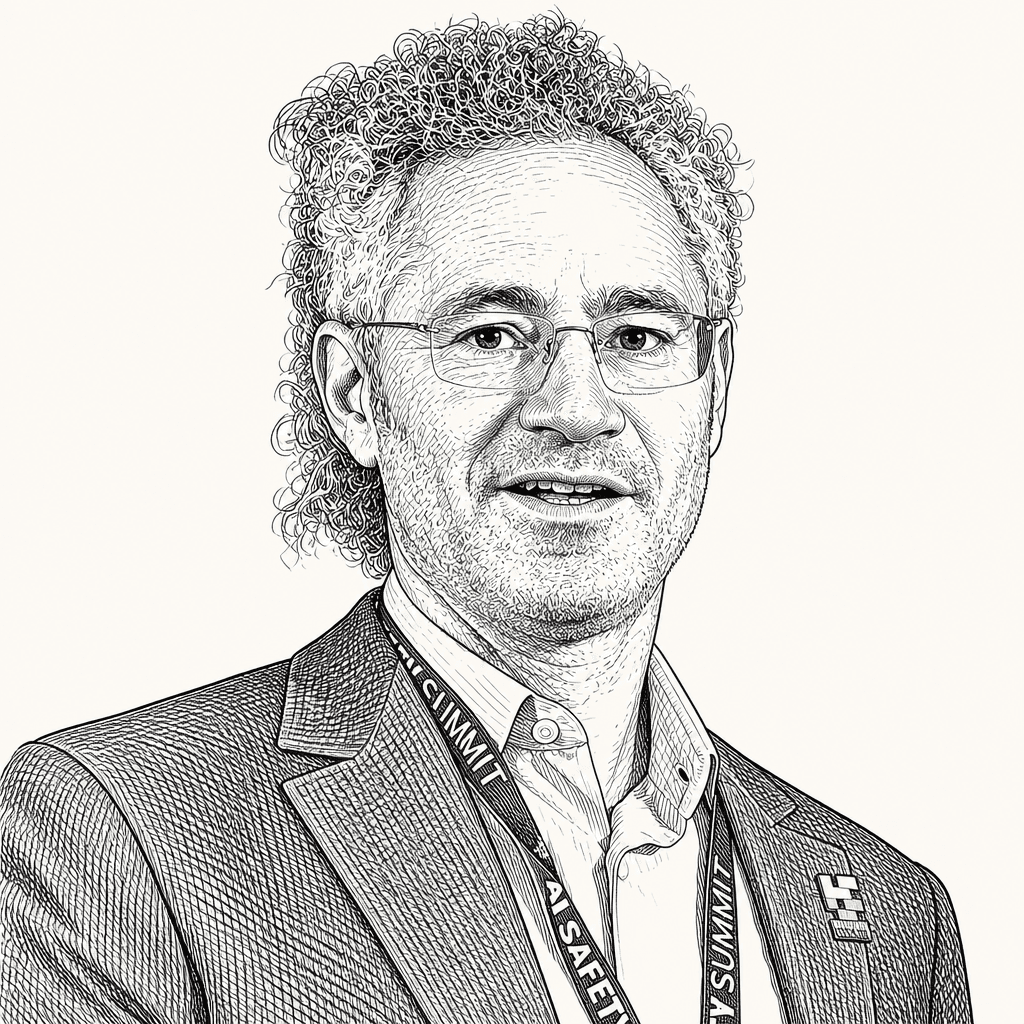 Alex Karp
 Jason CalacanisAll-In PodcastFriday, July 3, 202630 min read
The Palantir-Nvidia partnership is presented as evidence that enterprise AI safety is becoming a question of customer control rather than model access. David Sacks, Chamath Palihapitiya, David Friedberg and Jason Calacanis argue that companies and governments should not hand proprietary data, model weights, compute decisions and operating know-how to frontier labs that may later compete with them. The discussion extends from that AI sovereignty argument into a separate jobs dispute over whether current employment data can answer future displacement claims, and into fights over birthright citizenship and California’s budget as questions of institutional authority and fiscal accountability.
Enterprise AI safety is becoming a control problem
The Palantir-Nvidia sovereign AI partnership was framed as a direct challenge to the frontier-lab model of enterprise AI adoption: instead of sending proprietary data into a vendor-controlled model layer, U.S. government agencies would own the hardware, the data, and the model weights. Jason Calacanis said Palantir would use Nvidia’s Nemotron open models to build a custom frontier-quality model for the U.S. government, and that Palantir was calling the platform a “Sovereign AI Operating System.” Nvidia described the partnership as “Open Models, Closed Environments,” with Nemotron open models helping Palantir advance “mission-specific sovereign AI for government agencies and critical infrastructure operators.”

The core claim was not privacy. It was control. Palantir’s public framing argued that “AI sovereignty dictates your institution’s future” because sovereignty is “the precondition for choice.” The company’s manifesto put the point more sharply: “Data retention is your treasure. Transfer it at your own peril.” The reason, in Palantir’s account, is that an institution’s ability to win depends on compounding its own data into new insight; transferring that data gives someone else access to its “pre-existing winning plays” and the “means of production” for future ones.
Alex Karp made the same argument in a CNBC interview. Karp said Palantir’s clients had lost trust in the frontier labs. He insisted he was not “throwing shade” at Sam Altman or Dario Amodei personally, but said something had “gone completely wrong” in the relationship between enterprises and model providers.

Our clients are just, to say they're unhappy with the frontier labs is to say I'm welcome at the Berkeley faculty. It's like, there's just a level of discomfort and loss of trust.
Karp’s formulation of the enterprise concern was blunt: a company or government agency spends money on tokens, gets little value, and gives away its intellectual property. He applied the concern to national defense as well as commercial enterprise. If the “Department of War,” as he put it, asks for an application, who controls the weights: the government customer or the model provider? “Are we really going to outsource the battlefield of this country to the consensus view in Silicon Valley?” he said. “That is effing insane.”
David Sacks argued that Karp’s point was being misread by “legacy media types” as a “crash-out.” Sacks said the opposite was true: Karp had articulated what “real AI safety” means for businesses. In Sacks’s account, enterprise AI safety is not mainly abstract alignment research or government certification. It is the ability of customers to control their own data, model weights, compute, and “alpha” so that a frontier lab cannot absorb their proprietary knowledge and turn it into a competing product.
The phrase Karp used — that customers want to “own the means of production” — became the pivot. Sacks interpreted it as a warning that enterprises are at risk of transferring their trade secrets, customer data, and operating know-how to vendors that may later compete with them.
What safety means for an enterprise is again that they get to control their own data, their model weights, their compute. So a frontier lab can't hoover up their proprietary knowledge, their alpha, and turn it into their next product.
The most concrete example was Figma. Sacks cited reporting from The Information that Anthropic had “blindsided” a then-business partner with the launch of Claude Design. The excerpted report said Figma dropped out of talks a few days before launch, around the same time Anthropic’s chief product officer, Mike Krieger, left Figma’s board. The rupture followed Anthropic changing its launch plans in a way that made its design product “much more competitive” with what Figma and Canva sell. Sacks said Figma’s founder had said Anthropic had not been “completely honest” with them, and said Figma’s stock had fallen sharply this year while Anthropic’s valuation had surged. A market chart put Figma at $21.34 and down 42.90% year to date.
Sacks widened the pattern. Anthropic, he said, had launched Claude Science, Claude Security, Claude Legal, Claude Financial, and Claude Code — vertical applications in categories previously served by companies building on Anthropic’s models. Claude Code, in his telling, was the decisive example because Anthropic had been able to see Cursor’s success as a major customer and then vertically integrate into the same category.
His analogy was Microsoft and Google. Microsoft dominated the operating-system layer and then moved into spreadsheets, word processing, browsers, and other business software categories. Google began with search results that sent users off-site but used traffic data over time to build its own properties; Sacks claimed that today fewer than half of searches send users off Google properties. He argued Anthropic is following the same logic: use dominance at the model layer to identify and capture valuable verticals.
That argument carried a strategic conclusion for enterprise buyers and developers: do not share proprietary data with a model provider whose business model depends on owning the model layer and then expanding upward into applications. Sacks connected the concern to Anthropic’s opposition to open-source models. When Dario Amodei argues that open-source models are dangerous and should be restricted, Sacks asked, “dangerous to whom?” His answer was that open models are dangerous to a business model that depends on customers having limited choice at the model layer.
Calacanis agreed with the direction of the critique and gave it a founder-facing version. His warning was less restrained: free tokens from a platform company are not a gift, but an invitation to expose product insight. He compared OpenAI’s reported offer of $2 million in free tokens to Y Combinator companies with earlier platform-era behavior from Microsoft and Facebook. In his view, the application layer is now strategically necessary for frontier labs because the scale of their valuation and compute spend requires them to capture more of the value chain.
Chamath Palihapitiya pushed back on making OpenAI and Sam Altman the main example. He said OpenAI’s consumer business may be its “savior” because it gives the company more revenue diversity. Relative to Anthropic, he said, OpenAI equity looked more reasonably priced not because the team or models were better, but because it could “fall back on a really healthy consumer business.” Anthropic, by contrast, had in his view lost “fundamental trust” about whether it could stay inside its own sandbox. If a model provider repeatedly learns from its customers and then tries to disrupt them, he said, customers will find ways to work around it.
Open models become an economic argument, not just an ideological one
Chamath Palihapitiya tied AI sovereignty to a basic corporate-finance problem: many large companies already struggle to earn returns above their cost of capital. He cited a BCG report, quoted in his own post, saying that long-term cost of capital had returned to roughly 8% to 11%, while about half of large U.S. companies cannot deliver returns above that threshold. Persistently low return on capital employed, the post said, affects about one in seven public companies globally.
For Palihapitiya, that made the frontier-lab bargain more dangerous. A company facing hard economics is approached by a vendor with a “magic box” that promises to improve operations, but the condition is that the company must reveal everything it does. If the vendor then uses what it learns to compete with the customer, the customer has compounded its operating weakness by surrendering its edge.
Palihapitiya presented 8090’s thesis as encoding a company’s “edge” into software so it can recursively improve, rather than remaining as tribal knowledge in employees’ heads. In that frame, the question is not whether AI helps. It is who owns the encoded edge once AI has been applied to the business.
The economic case for open models came through a second example: a post from Xiaoyin Qu, whom Palihapitiya described as an ex-Meta product manager, recounting enterprise executives who said they would “never use Chinese models,” even if they were “100x cheaper,” because they cared about safety and security. Qu’s argument was that if open-source models are hosted on a company’s own GPUs or in U.S. data centers, data is not shared back to China; meanwhile, those same executives may be giving their data to OpenAI and Anthropic instead of owning it privately. “100x is a big number,” she wrote.
Palihapitiya said that was the point Karp was making: why accept the cost and data-transfer risk if alternatives exist?
He then described an early 8090 experiment on a common enterprise software task: modernizing an application from PHP to Next.js. The test compared Anthropic’s Opus 4.8 alone, Opus 4.8 wrapped with 8090’s Software Factory, an open-weight frontier model, and that open model wrapped with 8090’s harness. He emphasized that the results were directional, with only one run per arm, and said the next step would be rerunning the experiment with controls and 10 to 15 buyer-relevant legacy modernization tasks.
| Configuration | Reported result | Caveat |
|---|---|---|
| Opus 4.8 with 8090 Software Factory vs. Opus 4.8 alone | 1.4x cheaper and 1.5x faster | Initial pilot |
| GLM 5.2 with 8090 Software Factory vs. Opus 4.8 alone | 16.4x cheaper | Ran 3x slower |
| Overall experiment | PHP-to-Next.js modernization task | Directional; n=1 per arm |
When Sacks asked whether the slower open-model run was caused by hardware or the software layer, Palihapitiya said the test used OpenRouter on a traditional hardware stack and could likely be optimized. His conclusion was not that open models had already won every dimension. It was that a company now has to justify using intelligence in a way that leaks its edge. “To do so at this point,” he said, is becoming “derelict and irresponsible.”
David Friedberg supplied a life-sciences version of the same risk. He said Anthropic had been approaching large life sciences companies with proprietary datasets, asking them to contribute to a new life-sciences-focused model in exchange for early access or proprietary value under NDA. Friedberg said nearly everyone he had spoken with had “woken up” to the risk that this would commoditize their business.
His point was that life sciences companies have spent tens of billions of dollars running experiments, developing products, and generating proprietary datasets. Those datasets are not incidental; they are core assets. Handing them to a model company that combines them with other people’s data means commoditizing the company’s central differentiation.
Friedberg described a shift in the expected architecture of AI deployment. A few years ago, he said, many assumed AI would follow a “large hub, large spoke” model: giant capital-advantaged training clusters at the center and giant inference clusters at hyperscalers or neo-clouds for deployment. Enterprises might have proprietary data layers, but the model and inference infrastructure would remain centralized.
He now expects a more distributed architecture: large hubs for core foundation-model development, medium hubs where enterprises train proprietary models from open-source or other bases using their own data, and distributed “spokes” for inference. Some inference will still run in hyperscalers and neo-clouds, but enterprises will also run local inference in their own data centers, offices, and possibly even smaller on-prem environments.
That architecture follows from the same competitive logic. If knowledge and capabilities are being commoditized, companies must leverage the differentiating assets they already have. Friedberg said that means building their own models and likely running their own inference with proprietary models.
Anthropic’s Claude Science illustrated both sides of the issue. Anthropic described it as “an AI workbench for scientists,” with interfaces for proteins, structures, molecules, code, figures, manuscripts, compute management, and reproducible artifacts. The product materials described Mainfield Bio using Claude Science to evaluate candidate binders against criteria learned from internal proprietary data, and a UCSF neuroscientist using it to build a multi-agent computational review template. The examples showed the product value of domain-specific AI workbenches — and, in the context of Friedberg’s comments, why companies with proprietary scientific data may hesitate to contribute that data to a model provider also building the workbench.
Calacanis predicted an end state in which regulated companies and large enterprises eventually build or fork their own models on their own hardware. He cited Go Abacus as an example of a company offering on-prem AI infrastructure for regulated industries, with “Secure AI Infrastructure For Regulated Industries” and “The Go1. In one box.” In his account, companies may begin with Claude or OpenAI, then move to open-source models and independent harnesses, and eventually “roll your own LLM.”
Palihapitiya sharpened the Apple comparison that Calacanis introduced. Apple, Calacanis said, was the rare platform company that deliberately preserved a developer ecosystem because it wanted the App Store tax; by contrast, frontier labs have no equivalent 30% tax incentive to protect application partners. Palihapitiya said the deeper distinction is that Apple rented distribution, while AI vendors rent “intelligence and judgment.” A company cannot rent intelligence from the same place that rents it to its competitors without converging toward the same answers.
You can't rent intelligence from the same place that rents it to your competitor.
Nvidia and Palantir want the model layer to stay competitive
David Sacks explained the Palantir-Nvidia partnership as an alignment between the top and bottom of the AI stack against a consolidating middle. At the simplest level, he said, the AI stack has three layers: chips, models, and applications. In the model layer, Sacks claimed, Anthropic and OpenAI have become the dominant companies. He cited “around 60 something billion” of ARR for Anthropic and $47 billion of ARR for OpenAI, and added that, as far as he knew, no other model-layer company was generating meaningful revenue.
The strategic issue, in Sacks’s view, is not whether a company can earn market power by building a better product. It is whether a concentrated model layer becomes the chokepoint for every other participant. He argued that Anthropic’s safety agenda would reinforce that duopoly if it restricted access to competing models. In his framing, the market is already producing concentration at the model layer, and the government could potentially enshrine it if it accepts a regulatory framework that treats other models as unsafe.
For an application company like Palantir, that is a problem because it does not want to be beholden to one model provider. For an enterprise customer, it is a problem because model-layer concentration forces data and “alpha” into a narrow set of vendors. For a chip company like Nvidia, it creates a monopsony risk: only one or two model companies are large buyers of chips, and those companies may be developing their own chips. Nvidia’s interest, Sacks said, is a broad ecosystem of enterprises, developers, applications, and clouds buying chips to run open models and proprietary variants.
That makes Nvidia’s open-model push strategically coherent. Calacanis argued that Nvidia had downplayed its open-source model work until now because its major customers were sensitive to it. But after OpenAI announced chip ambitions, Anthropic started working on chips, AMD made progress with both companies, and Elon Musk discussed doing his own fabrication, Calacanis said Nvidia was “taking the gloves off.” He predicted Nvidia would increasingly present itself as a full-stack provider: hardware plus competitive open models, delivered through hosting partners or customer-owned infrastructure.
Sacks gave a simpler timing explanation: Nvidia likely needed time to make the offering compelling against strong AI labs. But he agreed on the strategic incentive. Everyone outside the dominant model labs benefits from a competitive model layer. His policy view was that the United States does not ban monopolies earned through lawful performance, but government should do nothing to make monopoly or duopoly more likely. It should make anticompetitive tactics harder and keep the model layer competitive because competition supports the ecosystem, civil liberties, and consumer choice.
David Friedberg predicted that enterprises themselves will become major hardware buyers. As companies run day-to-day workflows, he said, they will realize that many tasks can run on open-source models on machines in their own offices without sending data to a third-party cloud. He did not argue that everything will move on-prem. He offered a rough allocation: perhaps 70% in a big cloud, 20% local, and 10% spread across other clouds. But he said the historic assumption that everything moves to shared cloud infrastructure may not hold “in a world of intelligence.”
Chamath Palihapitiya noted that the industry had spent years convincing customers to move to the cloud. The new realization, he said, may be that shared infrastructure is not always best when what is being processed is intelligence.
Calacanis extended that logic to individual employees. He predicted companies would spend $10,000 to $20,000 per employee on local compute — a Mac Studio, Dell, or equivalent machine with large RAM — so workers can use enormous token volumes locally without worrying about variable token bills or data leakage. His mental model was “a server per individual,” with each employee continuously crafting and using local language models as part of their work.
The emerging enterprise AI posture across the speakers was not anti-AI. It was anti-dependence. Use AI everywhere, but avoid giving the core judgment layer, proprietary data, and operational edge to a vendor that can observe demand, aggregate customer knowledge, and compete upward.
Present labor data does not settle future displacement
The jobs dispute turned on a time horizon problem. The present data cited in the discussion points away from broad AI-driven job loss. The automation forecasts offered in the same exchange point toward specific categories of work being retired over time. The disagreement was not over whether AI is economically important; it was over whether current employment data is enough to reject displacement warnings.
David Friedberg made the strongest present-tense claim. The idea that AI produces a “buttered, slippery slide to job loss,” he said, is not showing up in enterprise reality. AI is valuable, but clunky. It requires configuration, integration, human oversight, and changes in workflow. Companies are not simply turning off human labor and letting “genius AI” solve all enterprise problems.
Friedberg also argued that media and politicians will not retreat from the job-loss narrative because doing so would destroy their credibility. In his view, some politicians emphasize mass job loss to justify stepping in to control AI and advance socialist systems. He told listeners to “look at the data,” saying there is no evidence that AI is destroying jobs today and predicting it will create far more jobs than it destroys.
David Sacks supplied the central empirical support: a Ramp and Revelio Labs study summarized in his post. The study, he said, examined more than 21,000 U.S. firms by linking observed AI spending from Ramp card and bill-pay data to Revelio Labs workforce records. According to the summary, companies adopting AI tended to grow faster after adoption; firms making the largest AI investments grew employment by roughly 10%; entry-level headcount rose 12% among high-intensity adopters; and gains emerged gradually across engineering, sales, administration, and customer service.
Sacks emphasized correlation rather than causation. The study did not prove AI spending caused hiring growth. But it did show, in his reading, that firms spending more on AI were not cutting headcount; they were growing it. Low-intensity adopters saw no statistically significant change. He concluded that, in the present, there is no data showing AI is causing broad job loss.
| Measure cited | High AI adoption | Low AI adoption |
|---|---|---|
| All jobs | Roughly 10% average headcount increase | No statistically significant change |
| Entry-level jobs | 12% average headcount increase | No statistically significant change |
| Role breadth | Gains across engineering, sales, administration, and customer service | Flatness |
Jason Calacanis accepted that overall jobs may increase because of AI, but insisted that specific jobs will be retired. He drew a distinction between job loss and job displacement: the economy can create more jobs while eliminating particular roles. His examples included customer support, data entry, business process outsourcing, cab driving, translators, telephone operators, bill collectors, package sorting, delivery, cashiers, and factory work.
The evidentiary fight was over whether those categories are already moving at scale. Friedberg pressed Calacanis on customer support: where are the enterprises actually shutting down support teams? Sacks said Calacanis kept shifting from present data to future prediction. Calacanis replied that the transition is already underway and cited conversations about Uber and Waymo markets where, he claimed, human driver recruitment had stopped or drivers were flat to down once Waymo reached meaningful scale. Sacks countered that Uber CEO Dara Khosrowshahi had told them hiring was increasing at Uber. Friedberg dismissed Calacanis’s Waymo/Uber claim as marketing.
That unresolved exchange matters because it distinguishes aggregate employment from localized substitution. Calacanis’s claim was that broader company growth can coexist with driver reductions in markets where autonomous vehicles have reached critical mass. Sacks treated that as too narrow to support a general jobs thesis. Friedberg’s objection was simpler: the aggregate evidence still did not show the job collapse being predicted.
Sacks conceded one limited risk: he would not want to be a level-one customer support representative handling forgotten-password requests. But he argued many such jobs had already been outsourced outside the United States, and that U.S.-based support often involves higher-value escalations that are harder to automate. The sharper employment risk, he suggested, may be in countries that handle very entry-level outsourced support, not in the United States.
Friedberg’s counter-narrative was the premium on human interaction. As more tasks can be automated, he said, actual human service may become more valuable. Vending machines did not eliminate bartenders; people pay for bartenders, drivers, massages, and other human services because the human element has value. In his view, AI will raise the value of human judgment and interaction in many settings rather than flattening it away.
Sacks cited Klarna as a cautionary case against executive hype. Klarna had claimed its AI chatbot could do the work of 700 representatives, then later changed course and began recruiting humans again for customer service. The article cited in the discussion said that over a year after claiming its chatbot could do the work of 700 representatives, Klarna was turning back to people. Sacks said the lesson was that, from a brand perspective, companies need customers to know a human will be available if they want one.
A video posted by Figure founder Brett Adcock intensified the future-side argument. It showed a humanoid robot sorting packages, with the post claiming an eight-hour challenge had run for 200 hours without failure and displaying “249,556” packages. Calacanis said this is “the least good it will ever be.” He predicted that within 10 years every package sorting and package delivery job would no longer be done by humans, and said robots such as Tesla’s Optimus would eventually walk packages from autonomous vehicles to porches.
Sacks responded that many warehouses and depots already have extensive automation — conveyor belts, routing systems, and non-humanoid robots — so humanoid robots are not the only path. He also saw upside: in construction, humans could supervise many robots, reducing the time to build a house from multiple years to perhaps one year. That, he said, could help solve the housing crisis.
The narrow common ground was that AI adoption is currently associated with growth, not broad employment collapse; low-value repetitive work is more vulnerable than high-skill human-in-the-loop work; and automation may create booms in areas where human labor constraints currently limit output. The unresolved issue is speed — whether visible robotics and AI progress translates into mass occupational displacement in years, or whether integration stays slow, clunky, and complementary for much longer.
The Anthropic export-control episode was treated as exceptional, not a new doctrine
The Anthropic export-control dispute centered on Fable 5, Mythos 5, and the government’s temporary restriction on Anthropic models. Calacanis described the episode as a case in which U.S. export restrictions were placed on Anthropic systems after concerns about Mythos expanding to unauthorized entities and Fable being evaluated as a guarded version of Mythos. He said restrictions were lifted after Anthropic replaced Dario Amodei as lead negotiator with co-founder Tom Brown, who appeared to get along better with the Trump administration. Commerce Secretary Howard Lutnick said the government had worked closely with Anthropic to analyze and approve Fable 5; Susie Wiles credited President Trump’s leadership in the AI race; Brown replied, “Thanks for your partnership on this, Secretary!”
David Sacks cautioned against reading the incident as a broad policy shift. He said the export-control letter was taken down after two weeks and described the whole episode as highly unusual. In his view, three conditions had to be present at once.
First, Dario Amodei had spent months saying he had created a “cyber weapon,” referring to Mythos. Sacks said Amodei had almost boasted about that characterization, which primed officials to view the model through a national-security lens. Second, Amazon, a trusted Anthropic partner, tested Fable — described as Mythos with guardrails — and reported that the guardrails failed. Third, when confronted with that information, Amodei refused to roll back Fable until the jailbreak could be fixed, or at least that is what the administration heard.
Change any one of those facts, Sacks said, and the government likely would not have sent the letter. If Amodei had not called Mythos a cyber weapon, if Amazon had not reported the jailbreak, or if Amodei had taken action when confronted, the episode probably would not have escalated.
His broader message was to allies, partners, and foreign customers of U.S. technology: do not overextrapolate. He said President Trump’s posture is pro-innovation, pro-export, pro-infrastructure, and supportive of American companies in the AI race. The administration reacted with tools available to it in a very particular fact pattern, not with a new generalized doctrine of restricting access to U.S. AI technology.
Calacanis then pressed Sacks on the reverse question: if exports can be controlled, why not imports of Chinese open-source models? The United States restricts Huawei products, Chinese connected cars, drones, and potentially other systems. Why not block Kimi, DeepSeek, or similar open models to support American open-source alternatives from Nvidia, Google, and others?
Sacks’s answer was that once a model is open sourced, “it stops being Chinese in a way.” An American company can fork it, adapt it, run it in an American data center on American hardware, and prevent data from flowing back to China. He did not dismiss security risks: open models still need to be checked for backdoors and other cybersecurity concerns, and this is a relatively new attack surface. But he argued that once the model is taken, converted, and run by an American company, it becomes theirs in the relevant operational sense.
He also warned that banning open-source models in the United States would isolate American enterprises. The rest of the world would keep using open models because they are cheaper, more customizable, and offer more control. American companies would then face a “token tax” by being forced into more expensive closed models.
Calacanis asked whether Sacks would support import controls if American open models become equally competitive. Sacks said he has argued for more strong open-source offerings from the United States and wants America to win both open and closed AI. But he said if American open models are better, the market should decide. He distinguished software weights from connected physical products: he is open to limiting Chinese connected cars, and said the United States should think carefully about Chinese robots, but any import limits invite retaliation and must be weighed against the broader trade relationship, including U.S. dependence on Chinese rare earths.
Birthright citizenship became a fight over who gets to draw the line
The underlying dispute over birthright citizenship was not just who should qualify. It was who gets to make the distinctions: the Constitution as interpreted by the Court, or Congress through legislation. Calacanis described the case as involving Trump’s attempt, on the first day of his second term, to end automatic citizenship for children born to illegal immigrants or those on temporary visas. He gave an uncertain vote count — “6-3, maybe 5-4, there’s some nuance here” — and said Chief Justice Roberts wrote language about citizenship being “the right to have rights.” He also said Justice Kavanaugh had left a lane for Congress to tighten birthright citizenship in ways still consistent with the 14th Amendment.
Birth tourism was the easy case for almost everyone. A Justice Department press-release headline cited a Chinese national pleading guilty to running a “birth tourism” scheme that helped aliens give birth in the United States to secure birthright citizenship. Calacanis said the defendant, Dongyuan Li, pleaded guilty in 2019 to conspiracy to commit immigration fraud and visa fraud and served 10 months in prison. His point was that such fraud can be handled through the legal system.
The harder case was not the birth tourist. It was the long-term illegal resident with a job, taxes paid, no criminal record, and a child born in the United States. David Sacks started from the opposite end of the spectrum: someone can enter illegally while pregnant, give birth, and the child becomes a citizen. He said that does not make sense as policy. His constitutional view was that the 14th Amendment was ratified to ensure citizenship rights for the children of freed slaves, not to decide every modern immigration edge case.
Calacanis repeatedly pressed Sacks on the long-term resident: someone who has been in the country illegally for 10 or 20 years, worked hard, and had a child. Sacks said that is exactly the kind of question Congress should decide. Pressed for a personal opinion, he said he did not know and called it complicated, but maintained that the Constitution should not settle it.
David Friedberg supplied the interpretive framework. He cited the 14th Amendment debate around Senator Jacob Howard, reading language that every person born within the United States and subject to its jurisdiction is a citizen, but that this would not include people born in the United States who are foreigners, aliens, or members of ambassadorial families, and would include every other class of persons. Friedberg said the historical context was Dred Scott, which had denied citizenship to Black people, and that the amendment’s original intention was to secure citizenship for newly freed slaves and their descendants.
The legal question, Friedberg said, is the familiar divide between textualism and intentionalism. A textual reading focuses on the literal words. An intentional reading asks what the framers of the amendment intended at the time. In this case, he said, the intention was freed slaves; the framers were not contemplating modern mass immigration, birth tourism, or temporary visitors. But the text is what it is, and the ruling, in his account, followed that textual representation.
Friedberg’s personal policy view was that birthright citizenship should apply to children of legal residents, whether or not the parents are citizens. A green-card holder has permanent resident status and is meaningfully part of the United States even if not yet naturalized. But a legal visitor, temporary visitor, ambassador, or illegal visitor should not confer citizenship on a child merely by giving birth in the country. Chamath Palihapitiya initially said he had not thought about the issue, then said he agreed with Friedberg after hearing the explanation.
Calacanis agreed that birth tourism should not be allowed, but argued for an exception for long-term illegal residents who have not committed crimes. His position was moral rather than textual: America, across Republican and Democratic administrations, effectively waved millions of people in to work in U.S. businesses, often below legal wage levels, because it benefited the economy. Now that the border has been closed, he said, the United States has an ethical obligation to give those people a path to citizenship unless they are criminals, and their children should be Americans.
Sacks objected that Calacanis was making exactly the kind of policy argument Congress should be allowed to make. His complaint about the Court’s ruling was that it removed legislative space. If birthright citizenship is constitutionally required in the broadest sense, the majority of Americans cannot craft distinctions for birth tourism, long-term illegal residents, legal residents, temporary visitors, or other categories except through an effectively impossible constitutional amendment.
The immigration-design argument moved from citizenship to selection. Palihapitiya said Western countries are losing the cultural representation that makes them unique. People should come to the United States to join the American ideal, not to build a version of their previous country inside it. Friedberg offered a different selection rule: “makers versus takers,” later compressed as “gain, not drain.” If someone’s primary motivation is to receive benefits, payments, social services, or support, he said, immigration should be denied. If the motivation is to work, progress, create value, save capital, and advance a family because those opportunities were denied by tyranny elsewhere, immigration should be granted.
Sacks added polling context from Pew. About a third of U.S. adults said all immigrants in the country illegally should be deported; 51% said some should be deported; 16% said none should be deported. Among those favoring some deportations, 97% said violent crime should be grounds for deportation, while far smaller shares supported deportation for having a job, being parents of U.S.-born children, coming as children, or being married to a U.S. citizen. Sacks read the data as support for a sealed border and targeted deportations, especially for violent criminals, but not necessarily mass deportation of every illegal immigrant.
| Pew measure cited | Share |
|---|---|
| All immigrants in the U.S. illegally should be deported | 32% |
| Some immigrants in the U.S. illegally should be deported | 51% |
| No immigrants in the U.S. illegally should be deported | 16% |
| Among those favoring some deportations: violent crime as grounds for deportation | 97% |
Calacanis proposed a points-based and performance-based system: language ability, understanding of U.S. civic systems, no welfare use, no crime, job creation, capital raised, and economic output should move applicants forward. He argued America should aggressively recruit high-performing entrepreneurs, engineers, and builders, because every such immigrant is a gain for the United States and a loss for strategic competitors.
California’s balanced budget was portrayed as debt, concentration, and exit
David Friedberg treated California’s “balanced” budget as a presentation problem hiding a structural one. His hierarchy was straightforward: spending has grown rapidly, the gap is being covered with accounting and borrowing, revenue depends heavily on a small group of high earners, and those taxpayers and companies are increasingly mobile.
The starting point was scale. Friedberg said California’s state budget grew from $215 billion in 2019 to $355 billion today, a 65% increase in six years. He rejected the ordinary use of “balanced budget” in this context. In a business, he said, one compares revenue and expenses. California has revenue and expenses, and expenses exceed revenue; the state then uses borrowing and accounting devices to cover the difference and calls the result balanced.
When Chamath Palihapitiya asked whether that meant California had raised enough debt to cover its hole, Friedberg answered, “Exactly.” Friedberg said the state has legal ability to “pencil away” somewhere between $20 billion and $40 billion of debt, creating liabilities taxpayers will eventually have to pay.
His next point was revenue concentration. California generates about $211 billion in revenue, he said, with $142 billion coming from personal income tax. The top 1% — about 150,000 people — pay $70 billion, roughly half of personal income tax and about one-third of all state revenue. The top 1,000 taxpayers pay roughly $22 billion per year. California also has a high corporate tax rate at 8.9%, compared with 5.5% in Florida, 6.5% in Tennessee, and zero in Texas, as Friedberg stated it.
| California revenue item | Amount cited by Friedberg | Significance in his argument |
|---|---|---|
| Total state revenue | $211 billion | Base for comparing tax dependence |
| Personal income tax | $142 billion | Largest source of state revenue |
| Top 1% personal income tax contribution | $70 billion | Roughly half of personal income tax |
| Top 1,000 taxpayers | $22 billion | A small group supplies a large share of revenue |
| Corporate tax rate | 8.9% | High relative to states Friedberg compared |
That concentration matters because taxpayers and companies can leave. Friedberg claimed at least 15 Fortune 500 companies have moved headquarters out of California since 2019, along with 2,100 mid-sized or large companies. He also claimed at least 5% of California jobs have been lost as companies moved out of the state. More importantly, he said California is losing an average of 1% to 1.5% of adjusted gross income each year as earners leave. That sounds small annually, but, in Friedberg’s telling, compounds to roughly 15% over a decade.
The state’s response, in Friedberg’s account, is to tax more broadly. He cited a new sales tax on software — affecting products such as Microsoft Word, Gmail subscriptions, or ChatGPT accounts — expected to raise about $1 billion per year. He also cited a new tax on health insurance expected to generate another $2 billion annually and said the temporary top income-tax bracket created in 2012 had been made permanent and increased to 14.4%.
The out-year projections were worse. Friedberg said California is projected to run $40 billion annual deficits in 2028 and 2029. He then turned to debt and liabilities: $1.4 trillion in public debt, including $500 billion at the state level and about $800 billion at local governments; reported unfunded pension liabilities of $664 billion, which he said some estimates put closer to $1.5 trillion; and $175 billion in retiree health-care obligations. Altogether, he said, California faces roughly $1.5 trillion to $2 trillion of incremental liabilities.
The pension issue is especially dangerous, he argued, because pension liabilities sit senior to state bonds under the California rule. Since states cannot legally declare bankruptcy, Friedberg warned that a California default crisis could force a federal bailout. If red-state taxpayers are asked to bail out California’s liabilities, he predicted a crisis of the union: states such as Texas could ask why they should remain in a union that forces them to pay for blue-state fiscal decisions.
The political forecasts were secondary but revealing. Friedberg said cost of living and wealth disparity could drive a socialist movement over the next 24 months and named Alexandria Ocasio-Cortez as his frontrunner in a wide distribution of possible outcomes. If a future federal government led by socialists were to bail out California and federalize its liabilities, he said, red states could revolt politically against the arrangement.
Palihapitiya agreed with Friedberg up to the point of federal absorption but predicted a different resolution: California pensions and pension obligations could be wiped out through some negotiated settlement, followed by some wholesale replacement of California’s constitution, redistricting, a red wave, and dismantling of the governing structures that produced the crisis. He said he hoped pensioners would not be wiped out, but believed they should be “extremely upset” with California Democratic politics.
David Sacks was skeptical that California would respond to fiscal collapse by moving right. “A blue state is going to get bluer,” he said. In his view, the response to failed socialism will be intensified socialism and “a giant final confiscation,” not reform. Palihapitiya replied that if so, California bankruptcy within 10 years would likely force restructuring of debt and obligations, with pensions not fully honored.
Calacanis added a services-per-dollar critique. Texas and Florida, he said, spend about $5,000 per citizen on services, while New York City is close to $13,000 and California close to $9,000. Residents of higher-spending jurisdictions, he argued, do not receive two times the value in services; the problems are often worse. Sacks agreed.
The California argument then folded into the proposed Billionaire Tax Act and Gavin Newsom’s presidential positioning. Sacks said his move to Texas looked better as the BTA advanced. He had not believed it was low probability, because getting it on the ballot required signatures, and once on the ballot he expected it to pass. He said many California billionaires believed Newsom would kill it, but Newsom instead posted a video calling for a national billionaires tax and a “new social contract.” Friedberg noted that Newsom also said the same day he opposed the California Billionaire Tax Act, so the video was a hedge: opposing that specific measure while endorsing more taxation generally.
A Polymarket page put Gavin Newsom at 20.6% for the 2028 Democratic presidential nomination, Alexandria Ocasio-Cortez at 11.2%, Jon Ossoff at 10.5%, and Kamala Harris at 6.7%. Calacanis said Newsom had peaked around 40 and fallen to 20. Sacks interpreted the decline as evidence that the Democratic Party is moving left and views Newsom as too moderate. Calacanis argued Newsom is trying to become more DSA-adjacent.
The California section ended without a single agreed outcome. Friedberg saw a state-level fiscal spiral that could become a federalism crisis. Palihapitiya saw pension restructuring and possible constitutional overhaul. Sacks saw intensifying socialism and confiscatory politics. Calacanis saw a tragedy of mismanagement: California had the Silicon Valley tax base and could have managed its finances, but incompetence, selfishness, and corruption squandered it.