Private-Company Secondaries Hit $248 Billion as IPO Alternatives Grow
 Brad Gerstner
 Gavin Baker
 Jason Calacanis
 Chamath PalihapitiyaKelly RodriquesAll-In PodcastSunday, June 7, 202616 min read
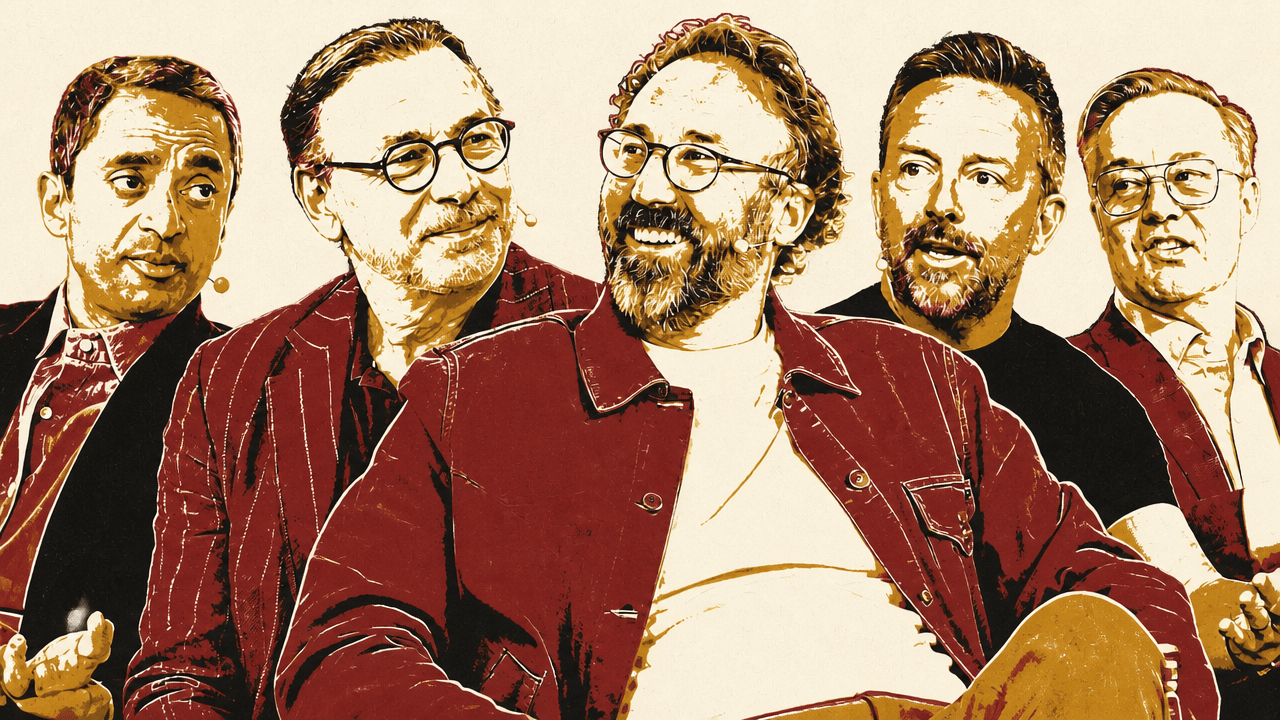
Brad Gerstner, Gavin Baker and Kelly Rodriques argue on an All-In secondary-markets panel that private-company share trading has moved from a workaround for employees and early investors into a major exit route competing with IPOs and acquisitions. Their case is that companies are staying private long enough to create a structural liquidity problem for employees, venture funds and LPs, while platforms such as Forge are trying to turn that demand into permissioned market infrastructure. The panel also warns that broader access does not make late-stage private shares cheap, especially in famous AI, space and defense names.
Secondaries are becoming a primary exit market, not a workaround
Brad Gerstner framed the secondary market as a structural answer to a venture system with too much capital still trapped in private companies. His opening data showed annual VC fund contributions and distributions from 2015 to 2025, with net cash flow to limited partners remaining “massively negative.” In his explanation, the room was full of allocators looking for distributions, and the last five years had been defined by more money going into venture than coming out.
The response has been a much larger secondary market. Gerstner described late-stage private companies as “quasi-public companies”: still private on paper, but with shares changing hands regularly. A slide sourced to Jefferies, Greenhill, and Lazard showed global secondary transaction volume rising from $60 billion in 2019 to $248 billion in 2025, up 38% year over year and nearly double the 2021 peak.
The change is not just absolute volume. Gerstner showed secondaries rising from 16% of all venture deal activity in 2020 to 31% in 2025. He said employee secondaries and investor purchases into companies such as Anduril, Anthropic, and SpaceX now represent a large share of activity that used to be understood mainly through primary venture rounds.
| Metric | Earlier point shown | 2025 point shown |
|---|---|---|
| Secondaries as share of venture deal activity | 16% in 2020 | 31% in 2025 |
| Global secondary transaction volume | $60B in 2019 | $248B in 2025 |
| Direct venture secondary bids versus NAV | below 60% / about 40% at trough, depending on slide | 101% to 106% in Q1 2025 |
Pricing has also flipped. Gerstner said that in recent years sellers of private shares often had to accept something like “80 cents on the dollar” to return DPI to LPs. His slides showed direct venture secondary pricing recovering to a premium in early 2025, with one version showing average bids at 106% of NAV in Q1 2025 and another showing 101% after a 2022 trough around 40% of all-time NAV.
Gerstner said secondaries are now “competing with IPOs and acquisitions as the principal way” venture investors exit. The market he described is no longer only a distressed outlet or an employee-liquidity accommodation; it is becoming a mechanism for moving ownership in companies that may remain private for many years.
Private-company duration creates a liquidity problem for employees
If companies keep staying private longer, Gavin Baker argued, secondary liquidity becomes “absolutely necessary.” He did not defend longer private-company duration as inherently good. His point was more practical: employees can become rich on paper and still be unable to buy a home or fund a normal life after years of work.


Baker described employees who have made “tremendous sacrifices” for companies they believe in while remaining cash poor despite paper wealth. Kelly Rodriques sharpened the point: by year seven, eight, or nine, an employee may be telling a spouse they are worth $10 million or $30 million on paper while still not owning a home. Baker added that in some cases this can be year 15.
SpaceX served as the example of a more orderly approach. Rodriques said SpaceX has run liquidity programs for almost a decade because there is both intense investor demand and a real employee-liquidity need. He presented that as a model for private issuers managing liquidity rather than leaving it to grey-market structures.
Jason Calacanis contrasted that with the “Wild West” of some SPVs: high load-in fees, double carry, grey-market access, and off-market transactions. His question was whether buyers are sophisticated institutions and family offices, or less discerning investors chasing famous names such as Anthropic, SpaceX, and Anduril because they have heard about them repeatedly.

The employee-liquidity argument was not offered as a justification for companies staying private indefinitely. Baker said companies appear likely to stay private longer, but when Chamath Palihapitiya asked why, Baker replied: “I don’t think there is actually a good reason to stay private longer.” Palihapitiya immediately agreed.


Secondaries solve a real liquidity problem created by extended private-company life. They also make extended private-company life easier to sustain. Baker and Gerstner both favored companies going public sooner, but their practical view was that the liquidity problem has to be addressed under current market conditions.
The public market is harsher, but it may give CEOs better information
Kelly Rodriques gave the clearest account of why founders resist going public. As a former private-company CEO and then public-company CEO, he said the public job is “incredibly different” and “much less fun.” In his view, the role shifts away from being a visionary, product-first, first-principles operator and toward becoming an investment manager under public scrutiny.
Founders want to build without being under a microscope, Rodriques said. Gavin Baker acknowledged the common perception that private companies have more freedom and can think longer term, but he rejected the implied superiority of that environment.
Baker used Facebook’s mobile transition as the example. He said Mark Zuckerberg has argued publicly that if Facebook had been public during its internal debate over mobile apps versus HTML5, pressure from public-market investors might have helped the company choose apps sooner. Chamath Palihapitiya, who was inside Facebook at the time, corrected the technical reference from “HTML 6” to HTML5 and described the debate as “cataclysmic”: he wanted apps and even wanted Facebook to build a phone, while Bret Taylor favored HTML5. Zuckerberg chose Taylor, Palihapitiya said, and spent the next three years unwinding the decision.
Palihapitiya added that he asked Zuckerberg for $1 billion to build the phone, arguing that the public markets would provide it. Zuckerberg said Facebook did not have the money; the company went public a year later. “That year made all the difference,” Palihapitiya said.
Baker’s broader point was about feedback. Private-company CEOs can become “the most special flower” to their investors, especially if the company is successful. Investors want access to future rounds, so they may end up selling to management rather than telling management hard truths. Public investors, by contrast, can buy or sell without permission, which Baker said can make them freer to challenge strategy.
Rodriques agreed: private CEOs and management teams do not always get “clean information” because investors are afraid hard questions will cost them access. Baker summarized the dynamic bluntly.
The sycophantic nature of private markets is real.
Palihapitiya and Baker allowed for exceptions. An exceptional CEO, Palihapitiya said, seeks out negative feedback. Baker named Elon Musk as an example. But their point was that most CEOs may not be wired that way, and private-market structures can make the problem worse.
Gerstner’s own public activism was folded into that argument. Palihapitiya referenced Gerstner’s 2022 “Time to Get Fit” open letter to Zuckerberg, treating it as another example of outside public-market pressure that can have real strategic effect.
Permissioned access is the line between infrastructure and grey market
A slide showed notices from Anthropic and OpenAI warning against unauthorized secondary transactions. Anthropic’s notice said its preferred and common stock are subject to transfer restrictions, that any sale or transfer requires prior consent, and that unauthorized transfers would not be recognized on its books and records. OpenAI’s notice said it was “actively shutting down attempts by secondary markets, non-permissioned SPVs, and retail investment platforms to sell unauthorized exposure to OpenAI equity” and would not recognize those transfers.
Kelly Rodriques said Forge had not had to dissolve SPVs on its marketplace. His argument was that SPVs are not inherently the problem; non-permissioned and poorly structured products are. As companies grow large and demand for exposure rises, “a market’s trying to happen.” The question is whether it happens through a company-permissioned system or through a shadow market.
Rodriques described the Forge-Schwab deal as a step toward infrastructure. He said it signals that private-company equity is a real asset class, and he claimed the market can put company equity into fund products and “very well managed, regulated SPV structures.” His pitch to founders is distribution and eventual public-market preparation: Schwab represents 46 million investors and $12 trillion, and Rodriques said that can change capital access and share distribution as companies move from private to public.
When Jason Calacanis asked how that pitch works for someone like Elon Musk, who already runs his own liquidity process, Rodriques said the argument is not merely current secondary access. It is that companies may eventually go public, and broad-based distribution can matter. Rodriques said Forge got its first SpaceX SPVs in 2018 and 2019 and described them as “totally permissioned.” He then referred, somewhat confusingly, to being “closer to the IPO” and to having tens of millions of retail investors who would want a $50,000 slice of SpaceX; he said Musk publicly discussed broad-based distribution at an IPO price and that Schwab was named in that context. The source did not establish that a SpaceX IPO was imminent or that an allocation had occurred.
Gavin Baker said the pitch is likely appealing to many CEOs. Even if institutional investors represent unions or retirement plans indirectly, founders may like the idea that ordinary Americans can participate directly in companies they believe are important.
But the access question remains bounded by regulation. Rodriques said that today, individual share trading, whether through an SPV or directly on a cap table, is for accredited investors. He also described products coming to market with 60 companies, including SpaceX, available through listed products with $500 minimums for unaccredited investors. Calacanis identified the product category as interval funds, and Rodriques agreed.
Calacanis distinguished those from closed-end funds, warning that in some closed-end structures, FOMO can push prices far away from the value of the underlying assets. That made price discovery a central issue: the new market is not only about access, but about whether the price paid for that access is economically grounded.
Venture firms are learning to sell, and founders may not like it
Brad Gerstner said directly that Altimeter is selling into the secondary market. His reasoning was fiduciary, not tactical hype. Some LPs invested in venture funds seven or eight years ago; if a slice of a position can be sold at four or five times cost and return DPI, they want the manager to consider it.
He contrasted this with the historical venture mindset. Public-market investors wake up asking whether to buy or sell. Venture capitalists, he said, often think only about buying. But if companies can remain private until they are worth hundreds of billions or even trillions, venture investors have to ask whether a given moment is also a time to sell.
Chamath Palihapitiya pressed on the interpersonal cost. In public markets, a manager can sell and the company may not know until a filing appears. In private markets, selling usually requires a conversation with the founder. Gerstner said founders “never like it.” They may prefer that the sale not become known. But he said his duty is to his LPs.
For early-stage venture, Jason Calacanis said the market has crossed into a “third way” beyond M&A and IPOs. He described selling pari passu with founders when companies reach around $500 million in valuation, especially when his original entry prices are $10 million to $20 million. The rationale is recycling capital into the next founder. He contrasted that with the 2021 environment, when a company asked him not to sell alongside insiders even though insiders were taking $40 million out of a $110 million round.
Palihapitiya asked how to systematize that liquidity so it works more like an exchange. He described the current process as inefficient and opaque: CFOs calling multiple intermediaries, collecting bids that do not make sense, and still having to manage founder anxiety.
Rodriques said that is exactly why infrastructure is needed. Forge, he said, spent three years building a platform so a company can plug in much as it would list on an exchange and offer liquidity. A VC on a cap table for 10 years could use the same infrastructure to offer LP liquidity. Forge had about 3 million investors, and Schwab would add access to 46 million.
Rodriques also distinguished between trading a fund interest and selling the fund’s exposure to one major winner. Secondary fund trading has existed for a long time, and he said blockchain or tokenization may eventually make it more efficient. But in many cases, an LP in a fund that holds a highly valuable company may not want to trade the whole fund position; they may just want liquidity from the major winner. He also described old vintage funds with one or two 15-year-old companies left as another likely use case.
Retail access is expanding into a market the panel repeatedly called expensive
The democratization theme ran through the discussion, but so did warnings about timing, structure, and valuation. Brad Gerstner said he worries at this point in the market cycle when speaking to retail investors, because people can be encouraged to “YOLO” into double-fee SPVs and late-stage private names without doing the work. He connected the democratization project to trust: if trillions of dollars of private value are created while many Americans feel excluded from capitalism, the system becomes destabilizing. But if those same investors rush in at the wrong prices, they may be “playing not so good cards.”
He used a simple allocation example. Asked on CNBC what he would do with $100,000 of fresh capital, he said he would not put it all into the market at once after two of the strongest months in a decade. He might put $30,000 to work and accept that he will not pick the top or bottom. He said he would think similarly about late-stage private markets.
We want this to be durable democratization for a long time.
Kelly Rodriques was similarly cautious when Chamath Palihapitiya asked whether retail could become exit liquidity for giant private companies. Rodriques said he and Gerstner had been looking at valuations and multiples and calling them “extraordinary.” Gavin Baker joked that “extraordinary” was coded language. Rodriques accepted the correction: “It’s a bubble, call it what it is.”
His advice was for retail investors to look down-market rather than crowd only into companies that are on CNBC every day. He cited retail investors who entered SpaceX in 2018 and 2019 at a $30 billion valuation and were happy with that outcome. If the market opens, he said, the better question becomes what one can access earlier, not what is already at the very top of the market and preparing to go public.
Gerstner said technology assets are broadly “pretty fully valued.” That does not mean they cannot go higher, but parabolic moves should not be mistaken for cheapness. He warned that retail investors often buy near the top because excitement builds, then panic through drawdowns. If an investor has staying power through a product’s drawdown, he said, they may do fine. The problem is leverage and top-tick enthusiasm.
As a hypothetical signal of excess, Gerstner described a future SpaceX IPO day on which many levered ETFs might launch into the name at an extremely high valuation. To him, that would not necessarily mark the absolute top, but it would mean “we ain’t at the bottom.”
The panelists rejected a direct comparison to 1999–2000. Baker said the current cycle is “nothing” compared with that period. Gerstner described 1999 as “Vegas on a Friday night after way too many drugs,” citing CMGI as a company with no revenue whose stock exploded, bought Foxboro Stadium, appeared on the cover of Time, and was out of business two years later. He argued that Anthropic, OpenAI, and SpaceX are “extraordinarily real businesses.” A better comparison, in his view, is 2021: real companies, but valuations at the top end of the range and vulnerable to ordinary 10% to 20% public-market consolidations that could translate into 30% to 40% drawdowns in high-beta assets.
The winners are concentrating returns, and that changes venture behavior
Gavin Baker described a second-order effect of the new market: venture firms without exposure to the largest private winners may face franchise risk. If a firm lacks material exposure to one of the trillion-dollar-plus companies it had many chances to buy into, he said, its returns and DPI may look weaker on a relative basis.
He allowed exceptions for strong Series A firms that can still generate excellent returns and DPI without those particular companies. But he said he is beginning to see firms without exposure behave strangely. They are, in his phrase, writing call options: making bets in “Neo labs” and other names because they need a story. Jason Calacanis translated that as “chasing it,” and Baker agreed.
The dispersion matters for how venture returns are interpreted. Chamath Palihapitiya suggested that mean venture returns may look incredible while median returns remain poor. Baker’s answer implied that the mega-winners will pull up averages, but firms without exposure may be under pressure to manufacture upside elsewhere.
He also pointed to a coming demand shift from mutual funds and crossover investors. Long-only mutual funds such as Fidelity, Baillie Gifford, Capital Research, Wellington, and T. Rowe Price can allocate up to 15% of their funds into privates under SEC rules, Baker said. In practice, he said, many firms cap themselves lower, such as 3%, 5%, or 7%, because they do not want to get in trouble with the SEC. Baker also said it was public that Baillie Gifford had been forced to sell SpaceX the prior year for regulatory reasons.
When these companies go public and lockups expire, Baker said, positions move out of that private bucket. That could free “hundreds of billions of dollars” of late-stage demand from long-only funds that have been constrained by self-imposed private-market limits. Calacanis called that dry powder, and Baker agreed.
Secondaries are changing who owns late-stage private companies, how venture firms report success, and how public-market capital may re-enter once the same companies list.
Away from the obvious giants, the panel looked for secondaries with asymmetric upside
Chamath Palihapitiya took the largest private companies off the table and asked each panelist for a secondary they would want to buy below the obvious top names. The answers were less useful as a stock list than as a map of where the panel thought late-stage private upside still might exist: AI application layers, rebuilt financial infrastructure, AI data-center networking, robotics, space infrastructure, and autonomous delivery.
Brad Gerstner said the hardest category is what he calls “inflection growth”: companies above roughly $3 billion but below $50 billion. They benefit from high valuations but may still carry binary risk. Pressed for a name, he mentioned Sierra, Bret Taylor’s company, which he described as building an agent-native version of Salesforce: sales, marketing, and customer-service agents built around AI from the start. The risk, in his view, is that OpenAI or Anthropic could enter the same area and eviscerate revenue; the upside is that larger platforms could want to acquire sophisticated agentic layers rather than build them from scratch.
Palihapitiya named Revolut after hearing what he described as a compelling pitch from Thomas LeFount. He described it as a neobank with a next-generation stack, fitting the theme of rebuilding an incumbent industry in the modern era. Gerstner added that Revolut has tens of millions of customers and 14 lines of business that are each around a billion dollars.
Gavin Baker named Aria and DriveNets, both in networking, where he said Atreides has been involved publicly. His thesis was that as data centers become more specialized, inference will be disaggregated into prefill and decode, with different chips doing different jobs. To make those chips work together “like a symphony,” networking has to be reinvented.
Kelly Rodriques named NEURA Robotics in Europe, describing it as an AI-powered logistics robotics company in Germany with major investors and $100 million in revenue.
Jason Calacanis pointed to two theses rather than one category. The first was space infrastructure enabled by falling launch costs; he said he had invested directly through an SPV in Vast, which is building space stations. The second was “Uber 2.0,” where he cited Zipline and the possibility that drone delivery could reduce delivery costs from $15 to $5 and eventually $2.
Gerstner added why Zipline fit the broader pattern. Autonomous systems need real-world data, he said, and Zipline began in African countries delivering medicine to villages because it was hard to get approval to fly autonomous drones in American airspace. He said Zipline focused on maternity care and, in some countries, cut maternal mortality by 90% to 95% by delivering medicine, blood, and supplies by drone. After years of operating outside the United States, he said, the company is now coming to America.
The pattern was consistent: the panelists were not looking only for popular private-company exposure. They were looking for markets where infrastructure, regulation, distribution, or AI-driven rebuilding could turn a late-stage private company into something much larger, while acknowledging that the same secondary market can overprice precisely those stories.