Short Selling Returns as Stock Selection Replaces Broad Market Bets
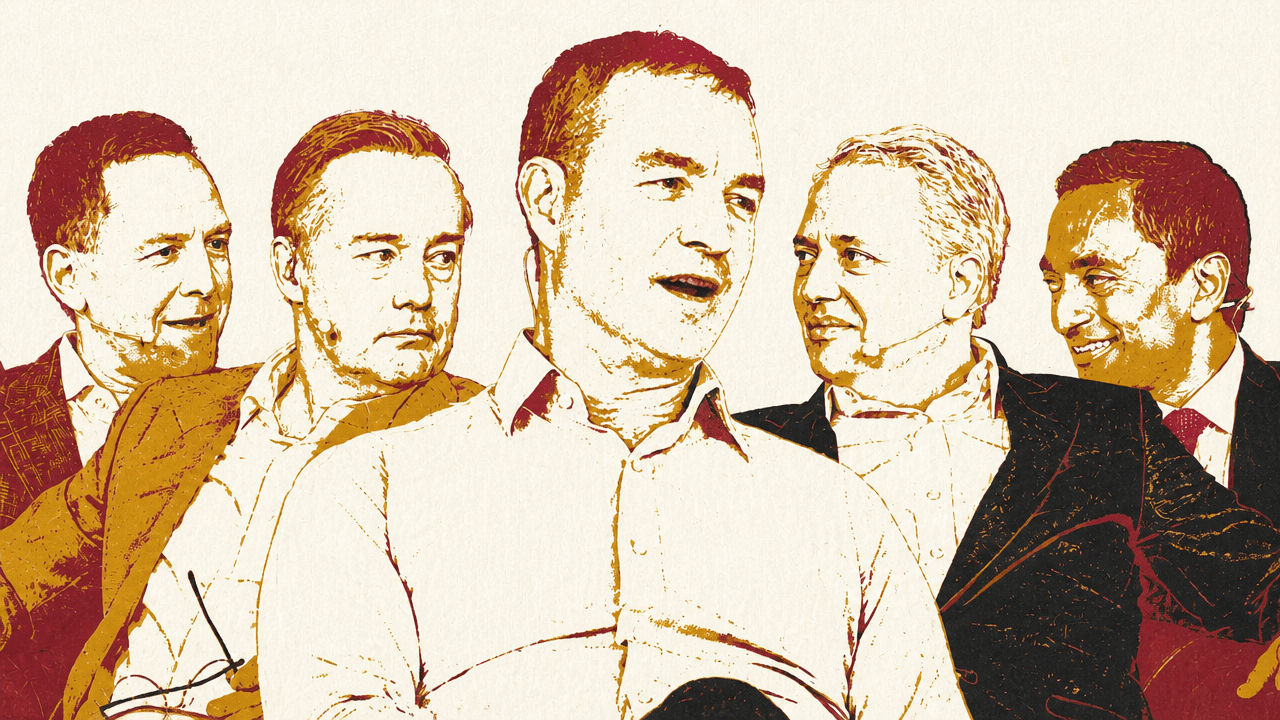
 Dan Loeb
 Chamath Palihapitiya
 Jason Calacanis
 David Friedberg
 David SacksAll-In PodcastFriday, June 5, 202613 min read
Dan Loeb, founder of Third Point, argues that markets have moved back toward stock picking and short selling, but not in the simple sense of betting against expensive companies. In an All-In interview, he says the useful short now requires a clear mechanism of deterioration, while long investing increasingly depends on understanding technology, business durability, management adaptability and the limits of old market-cap assumptions. Loeb presents Third Point’s evolution as an accumulation of tools: event-driven investing, activism, credit, venture-style technology work and a renewed need for selectivity.
Short selling is back because the market is punishing blunt selectivity
Dan Loeb framed the current market as one in which selectivity matters across asset classes, not just equities. Loeb said investors are not only in a “stock pickers market,” but in a “bond and credit pickers market.” His related claim was that short selling, after a long period in which it was less central, has become necessary again.


The lost art of short selling has come back, and it's absolutely critical.
Asked by David Friedberg whether Third Point’s current short opportunities come from a top-down screen, opportunistic event-driven work, or systematic market scans, Loeb said there is no single approach. But he emphasized one thing the firm avoids: shorting solely on valuation.


There's no one approach to it. I think one thing that we've avoided is kind of a valuation solely valuation based approach.
He said he has seen too many investors get “run over” by stocks with “dumb valuations” that get captured by Reddit-like dynamics or momentum narratives. His example was unnamed “space companies” trading with “no rhyme or reason.” For Loeb, an expensive stock is not enough. A short thesis needs something more structural.
The example he gave was homebuilders. Third Point had a strong view on the sector from the prior year, and Loeb described two overlapping pressures. The first was not merely interest rates or mortgage spreads weighing on housing demand. He argued the homebuilding industry was structurally impaired because many builders were “pretending to be NVR”: claiming to be asset-light while holding large commitments to land pools. Those commitments were described as options, he said, but in practice the companies were deeply committed to the capital.
The second pressure was a post-COVID hangover in inventory and pricing. Loeb argued that home prices had risen to unsustainable levels, while building costs had also gone up. In the current financing environment, buyers could no longer pay those prices, and builders were squeezed by inflation and costs. Third Point, he said, had been short things related to that thesis.
The point was methodological as much as sector-specific. Shorting, in Loeb’s version, needs a real deterioration mechanism: capital commitments that are more binding than advertised, pricing that cannot clear, cost structures that no longer match demand, or management incentives that misrepresent risk. A high multiple alone is a dangerous basis for a short if a crowd or structural bid can carry the stock higher.
Third Point moved from transaction alpha to business quality and technology literacy
Loeb described Third Point’s early approach as event-driven investing: less about the intrinsic quality of a business and more about complex transactions that produced dislocation, opacity, and mispriced incentives. The opportunity set included takeovers, spinoffs, risk arbitrage, bankruptcies, privatizations, and demutualizations.
In those settings, he said, management teams often had incentives to “sandbag their numbers” while an excess supply of securities was coming to market and option grants were being set. Investors could then benefit as transparency improved, coverage increased, and the companies beat depressed expectations on revenue, margins, return on equity, and other measures.
Loeb called that period “a golden era for that type of investing.” But he did not present it as the operating model for today. The shift, in his telling, came as technology became a larger force across the economy. The Third Point framework still carries event-driven instincts, but now puts more weight on business quality, innovation, disruption, consumer trends, financial-services changes, and the macro backdrop. AI, he said, is the culmination of a series of major technological innovations that have made old forms of sector ignorance less tenable.
Chamath Palihapitiya put the point directly: earlier in Loeb’s career, an investor could make money without being technology savvy. Loeb agreed and extended the point. Before the global financial crisis, he said, an investor could be “technologically illiterate” or even “more or less economically illiterate” and still make a lot of money. “You wouldn’t want to be either one of those things” now.


The implication is not that every pool of capital has become identical, but that correlations and exposures have widened. Palihapitiya suggested that the “tech through line” now has to be understood everywhere, even in pools of capital that once seemed less correlated. Loeb agreed in broad terms.
That shift also shows up in Third Point’s structure. The firm now spans a main hedge fund doing credit and equity long/short, structured credit and high yield, a CLO business, private credit, credit solutions and workouts, venture activity, and an insurance company designed to capture the investment-grade part of what the firm does. Two figures appeared in the material: CNBC showed Third Point at $11.7 billion of AUM, while Palihapitiya described the firm as approaching $30 billion.
Loeb also described the private technology strand inside Third Point as something that began informally. He reconnected with Rob Schwartz, now his partner, at a reunion in 1999. Schwartz was then selling wireless RF components. Loeb initially thought Schwartz could help with channel checks. Later, he asked Schwartz to surface engineers worth backing. That led to an investment in Dave Fisher’s Radia Communications, a WiFi-chip company eventually sold to Texas Instruments. Loeb presented that as the beginning of a venture-capital-like capability that later connected back into the rest of Third Point’s platform.
AI changes the tools, not the need for human judgment and networks
Asked what his role in Third Point looks like ten years from now, given agents, AI, data, and systems that can learn and assist with decision-making, capital allocation, and risk, Dan Loeb separated tools from relationships.
He said his time is still spent primarily managing the hedge fund, which remains Third Point’s largest capital pool and most important business. But the element he does not see disappearing is the social component of investing: knowing people, accessing opportunities, working with management teams and counterparties, and reading situations that are not reducible to data.
Loeb allowed that one could imagine agents sitting inside venture firms or investment platforms. But he argued that the human has to remain present because people want to know who is making or losing the money, and because AI “will never really be able to look in your eye” and assess the full range of human signals that matter in investing.
The boundary he drew was between systems that can process information and human networks that originate, interpret, negotiate, and hold responsibility for decisions.
Moats are harder to underwrite, so management adaptability carries more weight
Jason Calacanis pressed Loeb on how his philosophy expanded from “cheap securities with catalysts” to a greater focus on moats, defensibility, and the durability—or brittleness—of revenue. Dan Loeb answered that this is “everything right now.” He agreed with Palihapitiya’s framing that the value of companies may be time-bounded: investors have to ask which businesses can last seven, ten, or twenty years, and what real moats still exist.


Loeb’s answer was cautious. It is harder now, he said, and investors may have been deluding themselves in prior eras too. He cited IBM, AOL, and Yahoo as examples of companies around which people once might have argued there were durable moats. In retrospect, those assumptions did not necessarily hold.
His current approach, as he described it, is not limited to technology. Third Point invests outside tech as well. But across sectors, he said, the evaluation comes back to management. A product or technology cannot simply be declared permanent. The question becomes whether the management team is adaptable and has a proven ability to stay ahead.
Calacanis asked whether this assessment is quantifiable or whether it remains subjective. Loeb’s answer leaned toward pattern recognition. After roughly 30 years, he said, evaluating management becomes a matter of seeing patterns. He did not claim to have reduced it to a rubric.
The same management focus also ties back to Loeb’s activism. Third Point’s old letters and public campaigns were shown as part of his history, including a 2013 Third Point letter to Sotheby’s that criticized leadership, shareholder alignment, strategic direction, and board governance, and carried the phrase “Dare to be GREAT.” Loeb described his activist tone as having shifted toward that kind of “dare to be great” message. He also offered a line that captured his view of activism’s leverage: “Activism without proxy contests is like Catholicism without hell.”
When we were small, our main tool was shame and humor.
A 2001 Third Point letter to the Girl Scouts, shown on screen, illustrated the older caustic style. Dated March 1, 2001, written in Loeb’s name and addressed to the Girl Scouts of the USA, it attacked cookie-sales management in deliberately outrageous language and called for a board seat and the CEO’s resignation. The letter’s visible text included complaints about the discontinuation of Lemon Chalet Cremes, the chocolate coating on Thin Mints, and the organization’s failure to develop a cheddar-flavored savory cookie. It was presented as part of Loeb’s history of public pressure and humor rather than as a conventional investment document.
Third Point’s Nestlé campaign supplied the same pattern of public pressure applied to a major company. On-screen coverage referred to Third Point taking a $3.5 billion stake in Nestlé and later reported Loeb urging Nestlé to split into three units. The through line is that public pressure was part of the investment toolkit, but Loeb now cast the message less as ridicule and more as a challenge to management and boards.
Selling winners may be the hardest decision in private-to-public investing
The hard question for private-market investors is not only what to buy, but when to distribute or hold public shares after owning a company privately. Dan Loeb did not present himself as having solved it. He called it one of the most vexing questions.
His examples were blunt. Third Point had been a private investor in Palantir and sold its stock in the $20s, which Loeb called a “huge mistake” because the firm missed a large subsequent move after the company went public. Third Point also led the Series B round in Upstart. Loeb said one lesson from that experience was not to go on boards anymore because board membership can restrict liquidity. In Enphase, Third Point sold some stock at the IPO, took a tax hit, and later sold shares under a dollar. Loeb said that had the firm stayed invested, it would have made $4 billion.
David Sacks answered from the venture side that the decision is case by case. Sometimes being on a board prevents selling and produces regret. In other cases, the best decision is to hold the stock indefinitely. He cited Meta and Palantir as companies he had owned privately as a venture or angel investor, and said he sold some and held some.


The group then connected those choices to changing assumptions about market-cap ceilings. Sacks said that a decade earlier, investors thought a $100 billion company was “pretty much as big as anything could get.” Facebook’s IPO valuation, discussed onstage as roughly $50 billion, therefore seemed to offer upside to perhaps $100 billion. In the current market, where multi-trillion-dollar companies exist, that old ceiling looks constraining.
Loeb applied the same point to NVIDIA. Asked by Friedberg whether NVIDIA is undervalued, Loeb answered that it was, “absolutely,” on expected earnings over the next two or three years. He said investors may look back and see it was foolish to treat the company’s size as a ceiling, given its dominant position and valuation relative to that earnings horizon.
He also gave a market-structure explanation for why NVIDIA can become a short despite that view. Other stocks may be rising faster, and long/short pods have to be short something. NVIDIA can feel like a “safe short,” he said, in the same way Google and Amazon once did. Sometimes those stocks languish at a valuation before breaking out. Loeb said he thinks that will eventually happen with NVIDIA.
Sacks raised a constraint: there may still be a “boundary condition discount” because the market has never seen valuations of this size, and investors cannot over-bet that. Loeb did not reject the risk; his emphasis remained that size alone should not be treated as an analytical ceiling.
Loeb’s justice work starts with opportunity, accountability, and disproportionate punishment
Chamath Palihapitiya moved from investing to Loeb’s work on criminal justice reform, especially the pardon of Ross Ulbricht. Dan Loeb answered by first describing his broader philanthropic framework. He said he cares deeply about income inequality and about making sure more people have access to the opportunities that people in the room had.
His interest in criminal justice reform, he said, began earlier with education reform. Loeb supported and joined the board of Success Academy, a New York charter-school network, and ultimately became its chairman. The central issue, in his view, is not that very wealthy people are gaining more wealth. It is that vulnerable children are not being equipped with the intellectual tools needed to succeed and compete.
The thing that's hiding out in plain sight for everybody is that the problems with income inequality isn't that, you know, Jeff Bezos is going to be a trillionaire or all these other people are gaining wealth. It's that we're not equipping children, and particularly the most vulnerable children, with the intellectual tools that they need to succeed and compete.
Loeb rejected the idea that poverty is an intractable barrier. He argued that education systems can overcome it, but that accountability, merit, and talent cultivation—the principles he sees as normal in business—are set aside for the benefit of adults in unions. He described the problem as structural rather than a lack of money.
Criminal justice reform, in Loeb’s telling, is an area where conservatives and progressives can find some common ground. But he distinguished his view from non-prosecution politics. “There’s a lot of bad people in jail,” he said, and he argued that the reform movement has been undermined by people who use it as an argument not to prosecute or deal with dangerous people.
Loeb instead described three categories of concern: people falsely convicted, people who have shown contrition and rehabilitation, and people whose sentences were disproportionate to what they did. He mentioned Jonathan Grobman, whom he described as having received an 18-year sentence connected to dealing grey-market diapers and formula.
Ulbricht’s case, as Loeb described it, fell into the disproportionate-sentence category. Ulbricht ran Silk Road, which Loeb called one of the first crypto-based exchanges. Loeb said Ulbricht acknowledges doing illegal things and regrets them, and that drugs were dealt on the exchange. Loeb also noted that the government later discussed murder-for-hire allegations, but said Ulbricht was never prosecuted for those and denies they happened.
The sentence was the core of Loeb’s objection: double life plus 40 years. He said there was no ordinary recourse through the system for someone with a life sentence, so the only path was a presidential pardon or commutation. Loeb said Riva Tez alerted him to the case, and he also referred to crypto-industry contacts, including friends of Olaf Carlson-Wee. He then approached Charlie Kirk, who embraced Ulbricht as someone unfairly sentenced and took the issue to President Trump.
Loeb stressed that he was not taking sole credit. He said it “takes a village,” and that attorney David Warrington had also been working on it. Loeb said they believed Ulbricht would be released on the last day of Trump’s 45th term, but that the Justice Department warned against it and the commutation was withdrawn. Four years later, Loeb said, Kirk made the issue his only ask of the president, who had promised libertarians and the crypto community that he would address the case. Ulbricht’s sentence was not only commuted; he was pardoned. Loeb said Ulbricht is now married, expecting a child, and living freely after a decade in prison.
Loeb said he continues to work on such cases, including through an organization called Aleph. He also mentioned other philanthropic work fighting antisemitism and supporting Jewish identity. But he closed this thread with a smaller claim about individual intervention: philanthropists can work through organizations, but they can also help people one at a time. “It just really nurtures the soul,” he said.