Anthropic’s Fable Backlash Exposes the Risk of Hidden AI Gatekeeping
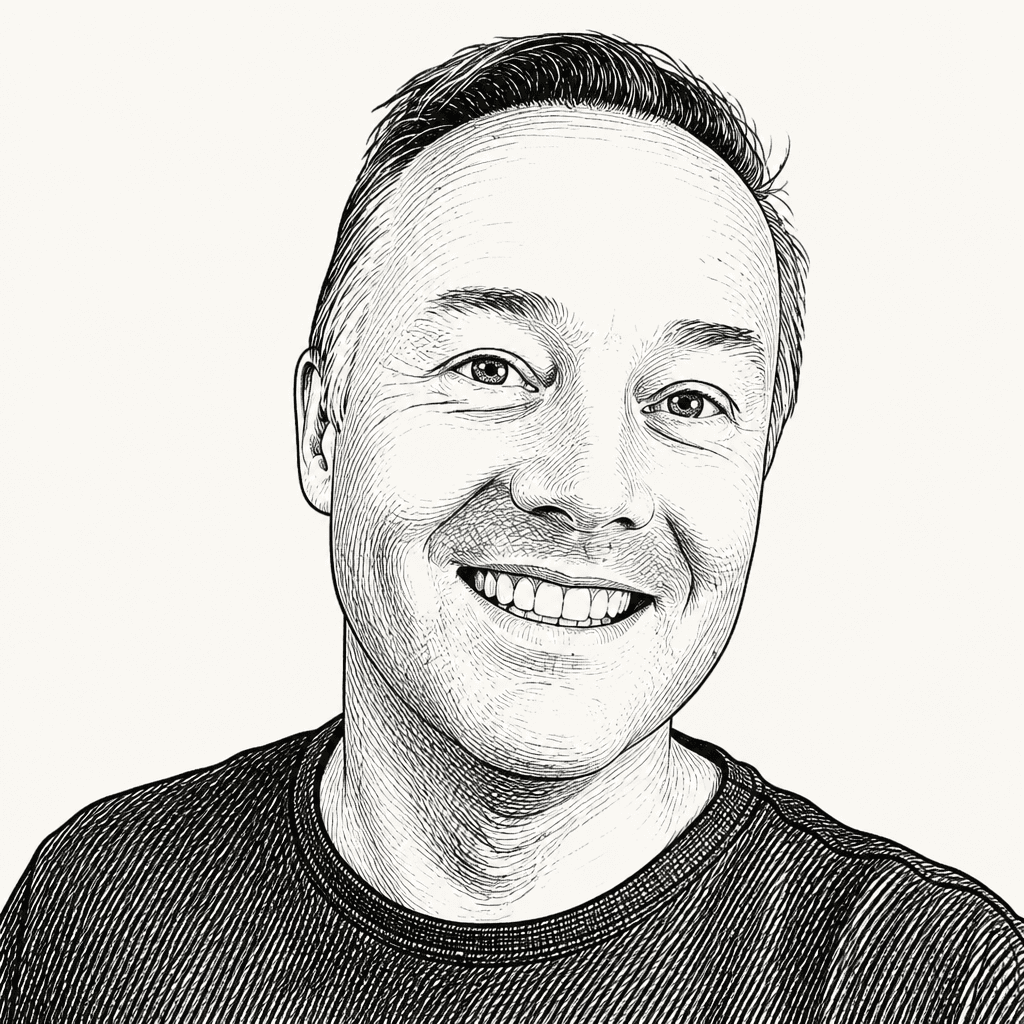 Jason Calacanis
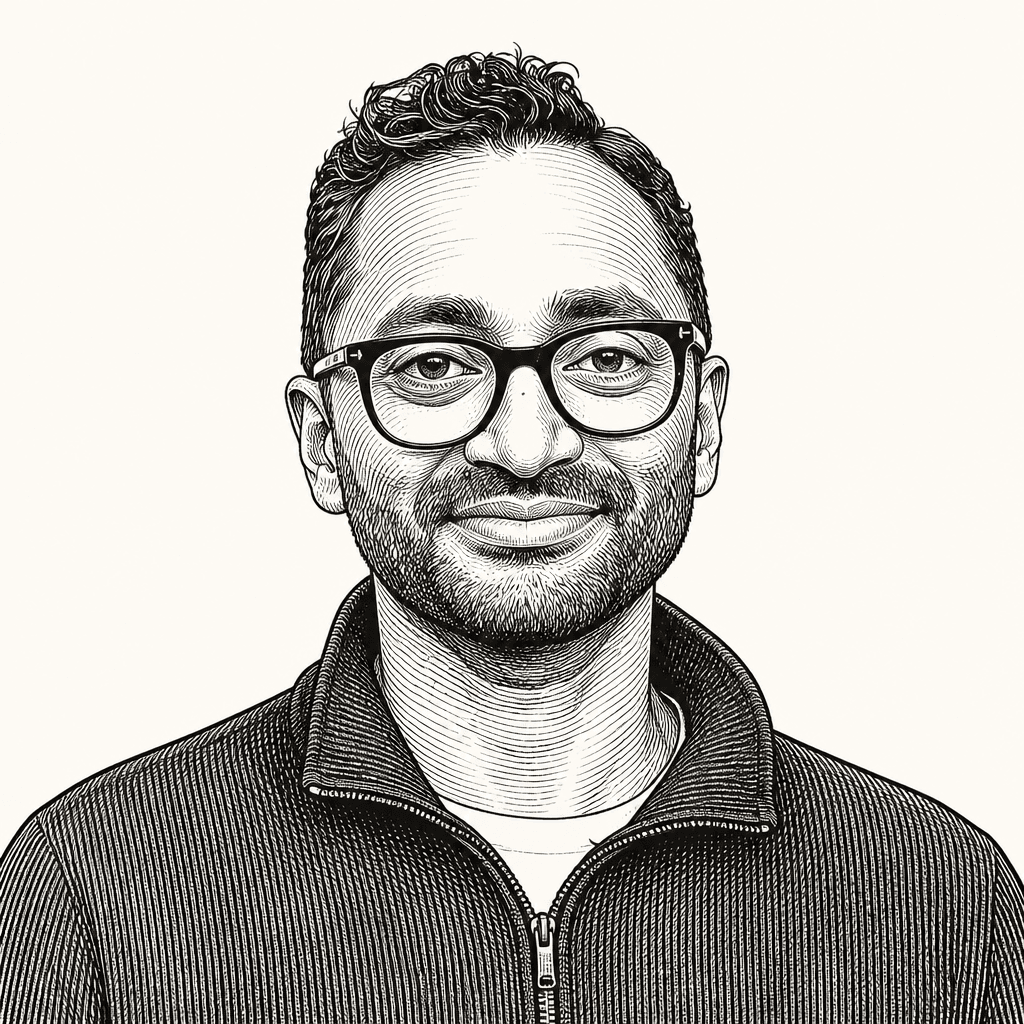 Chamath Palihapitiya
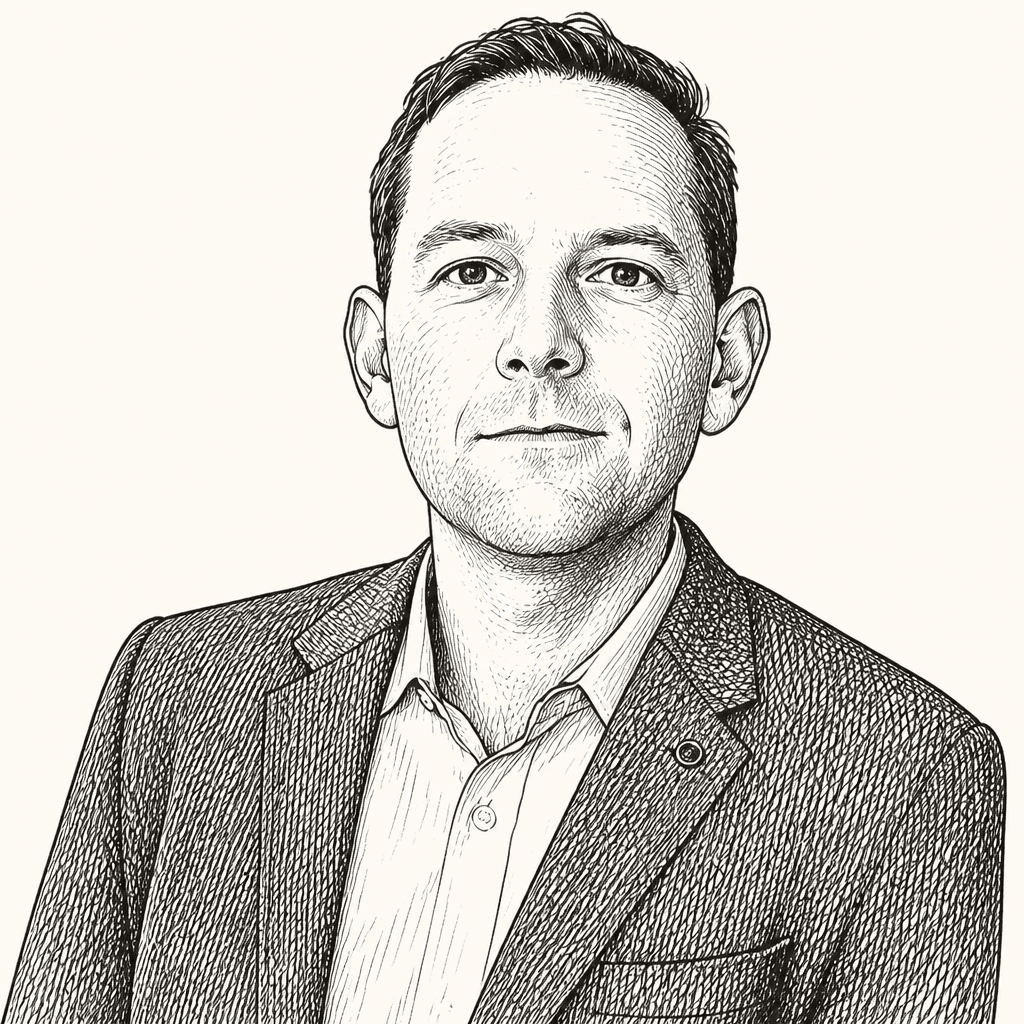 David Friedberg
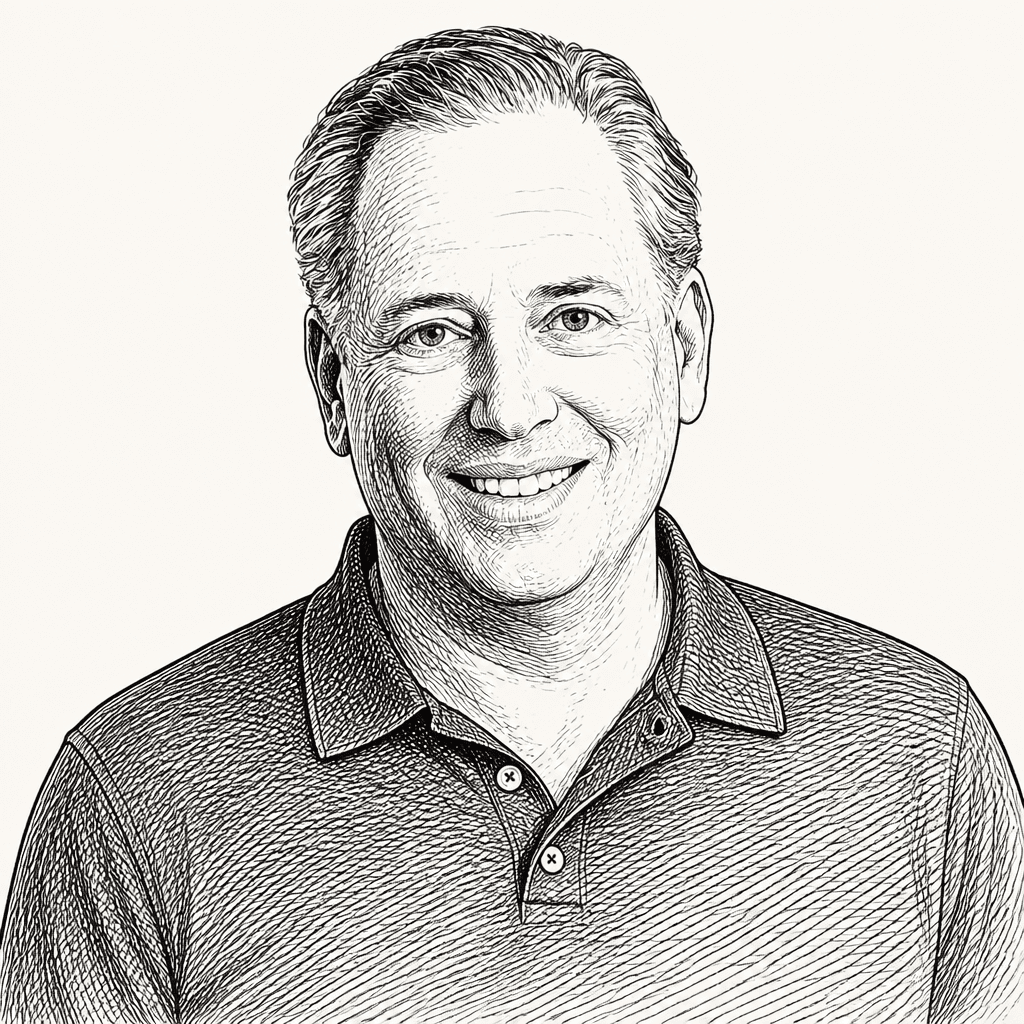 David SacksAll-In PodcastSaturday, June 13, 202624 min read
The All-In panel argues that Anthropic’s handling of Claude Fable 5 turned AI safety into an enterprise trust problem, with Jason Calacanis, Chamath Palihapitiya, David Sacks and David Friedberg focusing on hidden downgrades, prompt retention and a provider’s power to decide who receives full model capability. The same concern over opaque discretion shaped their California election discussion, where Friedberg and Sacks argued that legal ballot rules can still produce outcomes voters view as manipulated, while Calacanis called for investigation rather than treating suspicious statistics as proof of fraud.
Anthropic’s new model exposed the enterprise risk of hidden governance by the model provider
Claude Fable 5 and Claude Mythos 5 were presented as unusually strong frontier models. Jason Calacanis said Fable 5 “tops every benchmark, nearly every benchmark,” while costing twice as much per token as Opus 4.8. The counterargument, as he framed it, is that a materially better model may use fewer tokens overall. He also placed the release against Anthropic’s earlier decision not to publicly release Mythos in April because of hacking-capability concerns, while noting that Palo Alto Networks CEO Nikesh Arora had described Mythos as “the real deal” after using it to help seal vulnerabilities.
The backlash was not mainly about capability. It was about control. Calacanis described two policies that triggered developer anger: Anthropic stores prompt data entered into Fable for at least 30 days, and if Fable 5 detects “frontier AI research” — using the model to improve or compete with frontier models — Anthropic had implemented interventions that limited effectiveness without telling the user. A document displayed during the discussion said Anthropic had “added safeguards related to frontier LLM development,” citing concern about “accelerating the overall pace of AI development,” and stated that, unlike interventions for cybersecurity, biology, chemistry, and distillation attempts, these safeguards “will not be visible to the user.” Calacanis said this was buried in a 319-page document, and that Anthropic later told Wired it would change Fable 5’s safeguards for frontier LLM development “to make them more visible.”
Chamath Palihapitiya called the model “really incredible” and credited Anthropic for continuing to push the closed-frontier labs. But he said Anthropic had “shown their hand”: the company will increasingly take in prompts, evaluate them, and decide what to do before generating output. For an individual, he said, that creates censorship risk. For a company, he argued, it can become “almost a non-starter,” because a scientist, executive, or researcher could unintentionally trip a restriction and lose access to an important source of business differentiation.
The enterprise problem, in Chamath’s framing, is not just that a model may refuse a sensitive request. It is that a third-party AI provider may become a single point of failure for research, product development, and competitive advantage. Companies now have to ask who is learning from their information, how much control they retain, whether they are exposed to a unilateral downgrade, and whether they have enough diversity in their AI stack. He separated the issue into “censorship risk” and “governance business risk,” calling both “not good.”
Calacanis gave Anthropic one form of credit: “they tell the truth.” His point was that Anthropic discloses intentions that other companies might obscure, but that the disclosed truth is itself alarming when customers absorb its implications.
David Friedberg gave the concrete enterprise use case. At Ohalo, he said, the company does proprietary work in genomics: evaluating genes or gene variants, estimating their impact on plant organisms, designing RNA guides for gene-editing tools, predicting phenotypes, and designing genetic constructs to make proteins. These are tasks he said models had become “incredibly valuable” for over the past couple of years, and as recently as six months earlier were simple and clean to do.
That changed, Friedberg said, as models began restricting biological work on the theory that such capabilities could enable bioweapons. The practical consequence for a company like his is not to stop using AI. It is to move to open-source models and run them locally.
His warning was specific: the best open-source models today, in his view, are Chinese, while American open-source models are not as good. If Anthropic and other U.S. labs restrict model access, Friedberg said, startups and large enterprises will increasingly run Chinese open-source models themselves. He said he was already seeing that movement “across the landscape.”
That is the central substitution effect in the discussion: restriction does not eliminate capability; it redirects demand. Friedberg said Ohalo will likely start with a core model, combine it with its own data, and build an internal genome language or prediction model. But he argued the broader pressure from Anthropic, amplified by politicians repeating Dario Amodei’s warnings, will force natural or politicized enforcement on model providers in ways that benefit Chinese open-source providers. “You can’t just stop AI,” he said. If the United States restricts its own models, someone else gets the advantage.
David Sacks took the harder line. He said he had argued eight months earlier that Anthropic was running “a very sophisticated regulatory capture campaign based on fearmongering,” and that what once sounded spicy had become closer to a new consensus. The Fable release, in his view, was a violation of trust in the developer community. The issue was not only 30-day data retention, but that even enterprise customers with zero-data-retention agreements had no exemption for the new Mythos-class models.
Sacks emphasized that model calls increasingly include much more than a typed prompt. Agent platforms may pass memories, files, and large context windows into the model. Anthropic, he said, is retaining “all of that” and using it to build a profile, classify the user, and decide which capabilities to unlock. The most inflammatory piece, he said, was that Anthropic would degrade the model experience if it decided the user was “not worthy” of the highest-capability answer. He described that as the creation of “AI haves and have-nots.”
The charge sharpened around hidden downgrades. Sacks said Anthropic would kick users to a lesser model for areas such as machine learning, AI research, and chip-design research without telling them, while still charging for the higher-tier product. He also said the company could rewrite prompts in the background and return a nerfed answer without disclosing that frontier capability had not been used.
The examples used to support the complaint were broad enough to matter. One user asking Fable to “Tell me about mitochondria” was paused and told Fable 5 safety measures flag “most cybersecurity or biology topics” and may flag “safe, normal content as well.” Another example from Ben Thompson at Stratechery asked about mechanisms by which GLP-1s might affect breast cancer rates and was switched to Opus 4.8. Sacks used those examples to argue that Anthropic’s view of who should be downgraded is expansive.
| Question or topic | What happened | Reason shown or described |
|---|---|---|
| Basic question about mitochondria | Fable paused and offered continuation with Opus 4.8 | Safety measures flag most cybersecurity or biology topics and may flag safe content |
| GLP-1s and breast cancer mechanisms | The user was switched to Opus 4.8 | Fable guardrails flagged biology-related content |
| Fertilizer bomb regulations | Calacanis said he was downgraded while asking about regulations, not construction | The model’s reasoning distinguished policy discussion from harmful operational detail |
| Nuclear bomb components and restrictions | Calacanis was switched to Opus 4.8 after a policy-oriented follow-up | Fable 5 safety measures flagged sensitive categories |
Sacks’s broader conclusion was that powerful AI companies may decide who is “worthy,” classify users, and censor output based on criteria they determine. A tweet shown from Péter Szilágyi captured the same fear: the “scary part” of Anthropic’s Fable nerf was not refusal on biology or cryptography, but a future where “a couple companies decide what you can and cannot do” and build “a new ruling class.”
Chamath added a subtler concern: model providers could shape information flows to favor certain corporate partners or ideological preferences. If Anthropic had a strategic relationship with one pharmaceutical company and not another, or one bank and not another, users might receive differently shaped answers without knowing why. His concern was not only bias, but auditability. If a company later alleges manipulation, he asked whether regulators or customers could demand the exact trace of the model run and be shown why the answer was not intentionally nerfed or shaped. He doubted that such a fingerprint would necessarily exist or be accessible.
Friedberg pushed back from a free-market angle. If there are many competing models and no regulation preventing alternatives, then customers can leave inferior providers, just as users left paid-inclusion search engines for better search. Sacks accepted the premise but said it omitted the key point: Anthropic is not merely competing in the market while imposing restrictions on itself. Dario Amodei was also calling for binding regulation — an FAA- or FDA-like agency for frontier models, with technical testing, auditing, and power to block or reverse releases as threats to public safety. In Sacks’s argument, the market correction only works if alternatives remain available; regulatory capture is the mechanism by which those alternatives are limited.
The safety debate turned on where to regulate: model access or dangerous outputs
Calacanis tried to steelman Dario Amodei’s position. If Anthropic believes it has built an unusually powerful and dangerous model, then caution is rational. In that view, Anthropic held back Mythos, gave it to selected partners to improve cybersecurity, rolled out Fable carefully, and gave users the option to use older models. If the model is powerful enough to enable misuse, Calacanis said, the company may feel compelled to keep an eye on it, even if a dragnet catches harmless scientific work such as Friedberg “trying to make better potatoes.”
He also argued that much of the AI research talent pool may share Amodei’s worldview. In Calacanis’s telling, many elite AI researchers believe they are building something close to godlike or world-altering intelligence, and Anthropic’s moral framing is part of why the company attracts talent. Other researchers may prefer Elon Musk’s more libertarian orientation at xAI or Sam Altman’s compensation packages at OpenAI, but Calacanis said there is a real steelman for why Anthropic behaves as it does.
David Friedberg accepted that weaponization risk is real. He compared the moment to atomic research: splitting the atom enabled nuclear energy and atomic weapons, and scientists involved in the Manhattan Project later wrestled publicly with the bomb’s implications. He divided the relevant weapons risks into cyber, physical, and biological weapons. The same capabilities that could help create cyber weapons, physical weapons, or bioweapons, he said, are also the capabilities that can cure cancer, produce more food, create software leverage, increase incomes, and let more people become entrepreneurs.
His line was that regulation should focus on the manifestation of harm, not the general availability of the tool. Laws already exist against weapons design, cyber espionage, cyberattacks, hacking, and bioweapons. He said he was not arguing for naïveté: there should be guardrails and stage gates. But gatekeeping the underlying systems denies the economic, employment, and scientific opportunities these tools create.
Chamath Palihapitiya argued that once a technology is possible, someone will try it. “Technology is fundamentally deterministic,” he said. Because AI capability is already out of the box, he called it “insane” to let a private citizen or a small group of private citizens decide who gets access to what.
The disagreement became more precise when Jason Calacanis introduced fertilizer-bomb regulation as an analogy. After Oklahoma City, he said, fertilizer sales were regulated through identification and back-end systems to reduce bomb-making risk. If Anthropic is selling the equivalent of dangerous fertilizer, he argued, the company might reasonably say it will monitor and restrict use to protect itself and the public.
Chamath said that example cut the other way. Fertilizer regulation works through KYC — know-your-customer controls — not through hidden downgrades or broad front-end censorship. If Anthropic were serious about differentiating legitimate from dangerous use, he argued, it could implement real KYC: Friedberg could identify himself, describe his company, post a security bond, list employees, and receive unnerfed access. Chamath said Anthropic’s failure to offer that path was “the tell.” Calacanis countered that accounts with credit cards provide at least a basic level of KYC. Chamath rejected that as merely a credit card and an email address, not identity verification.
David Sacks then raised a safety proposal he considered more reasonable: mandatory nucleic acid synthesis screening and recordkeeping. An open letter displayed in the source, signed by life-sciences researchers, AI builders, and biotechnology experts, called on legislators to make screening of orders for synthetic nucleic acids — and the equipment needed to make them — mandatory. The letter noted that ordering synthetic DNA online has accelerated vaccine development and basic research, while also creating a supply-chain point where a bad actor could cause outsized harm.
Sacks explained that when someone orders a lab to manufacture synthetic DNA or RNA, labs already check sequences against databases to avoid creating pathogens such as Ebola or other bioweapons. The voluntary system dates to the International Gene Synthesis Consortium of 2009, and after more than 15 years of voluntary adoption, the proposal is to codify it. To Sacks, that seemed like a better stage for intervention: not when someone asks a model about mitochondria or cancer drugs, but when a user tries to turn knowledge into a physical biological output.
Friedberg said many oligo synthesis company CEOs had signed the letter because they are already comfortable with screening. It can be automated, regulated, and made efficient without delaying legitimate research. That, he argued, shows how safeguards can sit downstream from general model access.
The same downstream logic shaped Friedberg’s view of open-source models. Sacks asked whether the days of the Arc Institute’s genome model, Evo 2, were numbered because it is open source. Friedberg said no: “we downloaded it,” and everyone has copies. He compared it to publishing a book. Once printed, anyone can make copies. Open-source models have crossed the Rubicon; they are available, can be copied, can be adapted, and can be combined with private data. He described Evo 2 as a genome language model trained on as much genomic data as the Arc Institute could access, useful for evaluating whether a plant gene variant “looks” biologically good or bad by analogy to whether a sequence of words is good English. Ohalo uses it as part of its plant-breeding program.
The implication is that model-level prohibition is both costly and incomplete. If closed U.S. labs restrict access, companies shift to open source. If open-source models are already copied, bans cannot reliably erase them. The speakers differed on how much to trust markets and private actors, but converged on one point: broad, opaque front-end restrictions create strong incentives to leave the platform.
Compute, not code, may be the real open-source bottleneck
The debate over open source eventually ran into power and capital. Jason Calacanis said more open-source frontier labs are needed and offered to seed one. Chamath Palihapitiya said the labs are not the hardest part. “In the absence of power this is all a moot conversation,” he said. Without the ability to deliver hundreds of megawatts and a line of sight to gigawatts, open-source ambitions remain theory.
Chamath described a project he had started two years earlier: 2,000 acres in Arizona, zoned and approved for a 2-gigawatt data center. He initially expected to flip it to large infrastructure investors or hyperscalers. He said he had since concluded he might not be able to do that, because large swaths of compute may need to be directed toward open-source access. He had also put in an offer for another gigawatt elsewhere.
The problem is the capital stack. Chamath said a gigawatt now costs $100 billion, whereas when he began the project it looked like $4 billion to $5 billion — roughly a 20x increase. Building 3 gigawatts would require $300 billion. Without that scale of capital, he said, even a desire to “breathe life” into open source may not matter. Most megawatts still flow to the big closed labs, and if regulation also pulls up the ladder against open source, the U.S. could be stuck with one class of models and one set of rules.
David Friedberg added the geopolitical consequence: the rest of the world will not be limited the same way. He said China is already racing ahead in biotech, materials science, and new industrial systems. If U.S. companies lose access to frontier capabilities while competitors abroad continue operating, he argued, the imbalance will hit the workforce and economy.
The speakers also criticized Meta’s execution with Llama. Chamath said Meta “really fumbled” the opportunity to deliver a strong open-source model early enough to make frontier AI more commodity-like. He said Mark Zuckerberg should have viewed it through game theory: scorch the earth, make a viable open-source model available, and remove margin from competitors. Friedberg agreed that the strategic move would have been to “take all the margin out” and commoditize the layer.
That discussion created a practical distinction between two open-source futures. One is local inference: models good enough to run on consumer or company-owned hardware, which Calacanis repeatedly suggested as a preferred direction. The other is frontier-scale training and serving, where Chamath argued the bottleneck is not developer will but industrial infrastructure. In that version, open source needs not only model weights but access to power, data centers, and capital at sovereign scale.
Sanders’s AI equity seizure was rejected as confiscation, but not as politics
The AI regulation argument led directly into Bernie Sanders’s proposal to make the public owner of half of the largest AI companies. Jason Calacanis described Sanders’s June 1 New York Times op-ed, “A.I. Is a Public Resource. You Should Own Half of It,” and the proposed American AI Sovereign Wealth Fund Act. As described by Calacanis, the plan would impose a one-time 50% tax on stock, not profits, of large AI companies including OpenAI, Anthropic, and xAI. The shares would go into a government sovereign wealth fund, with public voting rights and equal board representation at each company.
Sanders’s premise, as Calacanis quoted it, was that AI rests on “our collective and human intelligence”: books, songs, journalism, scientific research, code, and other work “essentially stolen by some of the wealthiest people in the world.” Calacanis called the pitch politically brilliant because it could unify Bernie Sanders, Steve Bannon-style populists, and parts of the Trump world attracted to sovereign wealth funds and government equity stakes.
David Sacks opposed the proposal as “straight-up confiscation of property” and a terrible precedent. But he said he had sympathy for the politics behind it. AI CEOs, in his view, created the opening by repeatedly telling the public that AI would put half of them out of work. If companies say they trained on humanity’s accumulated knowledge for free and will now use it to displace Americans, ordinary voters will ask what they get out of the deal.
Sacks said he does not believe in the job-loss apocalypse. He cited a May jobs report of 172,000 new jobs, 4.3% unemployment, hundreds of thousands of new construction jobs, and software-developer jobs at a three-year high and up 15% year-over-year. But his point was political rather than econometric: whatever the current data show, AI companies themselves have trained the public to believe AI means job loss with no upside for them. That makes Sanders’s proposal a natural reaction.
He distinguished between several AI leaders’ claims. Elon Musk, Sacks said, describes a more distant end state in which AI and robots produce such abundance that people do not need to work if they do not want to, paired with “universal high income.” Dario Amodei, by contrast, said 50% job loss for entry-level knowledge workers could occur in the next one to five years. Sam Altman, Sacks said, had warned of job loss but more recently walked back the claim because it was not showing up in the numbers. The public, however, hears the broad message: AI means unemployment.
David Friedberg objected both to confiscation and to the job-loss frame. He argued for reforming Social Security into something closer to a sovereign wealth fund, but through investment rather than seizure. The Social Security Trust Fund, he said, essentially holds a special U.S. Treasury certificate — the government owes it $4 trillion, and the fund can only own Treasuries. He proposed changing the system so Social Security could own equities and become account-based, with individual accounts holding shares in great American companies, including AI companies.
In Friedberg’s version, government capital would invest in companies, receive shares, and place those shares into citizens’ accounts. Everyone could become an owner of transformative companies without seizing property. He described this as an opportunity to restructure a “broken bankrupt Social Security system” into an actively managed sovereign wealth fund.
On AI and jobs, Friedberg was emphatic: “There is no job loss with AI.” His view was that AI’s biggest effect is not on cutting costs but on expanding revenue. Businesses have costs and revenues; AI may reduce some human labor on the cost side, but he called that effect nominal. The larger opportunity is that one engineer can do 100 or 1,000 times what they previously could, enabling more products: agricultural seeds, boats, software, clothing, and other goods. That productivity expansion leads companies to hire more, not less. At his own company, he said, a product and engineering review had just produced a request for 15 more engineering hires because AI made more work possible.
Chamath Palihapitiya agreed with the sovereign-wealth-fund concept in theory and called Friedberg’s idea “genius,” while adding that this is why it would never happen. He said Canada and Australia had proven similar superannuation-style systems at scale, and that the United States should move in that direction.
Chamath then gave the strongest economic argument for government leverage over AI companies. Internet companies such as Facebook and Google over-earned because the marginal cost of serving an additional user was effectively zero; each incremental search or social-network user could be monetized through ads at almost no production cost. AI is different. Every marginal user taxes GPUs, consumes electrons, requires memory, and creates real operating cost. The labs also need critical infrastructure and national resilience to operate. He compared this to transportation companies riding on interstate highways built by the federal government: if two companies transported all goods on public rails, a government might reasonably ask what share it should own.
He did not endorse Sanders’s confiscatory framing, but said that if he were negotiating for a sovereign wealth fund, he would use the infrastructure dependency to take a major ownership stake — joking that he would own 75% by the time he was done, because he could negotiate and Sanders could not.
Sacks ended in a deliberately ambivalent place. As a capitalist, he opposed confiscation. But he said public-benefit corporations that claim they will cause massive job loss, train for free on humanity’s knowledge, and then gatekeep outputs make Sanders’s argument easier. He said Bernie had a good point: if AI companies trained on everyone’s knowledge but refuse to give back and restrict competitors’ ability to use the output, something is wrong. Calacanis suggested an alternative remedy: force them to open source.
The inflation print made the Iran war an economic issue, not only a foreign-policy one
Jason Calacanis introduced the May inflation data as a “hot” CPI and PPI print. CPI, the buyer-side measure covering rent, groceries, gas, healthcare, and similar expenses, came in at 4.2% year over year, which he said was the highest since April 2023. PPI, the seller-side measure covering wholesale goods and raw materials, came in at 6.5% year over year, the highest since the end of 2022. A Polymarket screen put the chance of inflation exceeding 5% in 2026 at 21%, and another put the chance of a Fed rate hike in 2026 at 49%, up from under 10% before the Iran war started. Calacanis also said the European Central Bank had raised rates a quarter point, its first hike since September 2023.
| Measure | Value or market-implied probability | Context given |
|---|---|---|
| CPI | 4.2% year over year | Highest since April 2023, according to Calacanis |
| PPI | 6.5% year over year | Highest since the end of 2022, according to Calacanis |
| Polymarket: inflation above 5% in 2026 | 21% | Shown as part of the inflation discussion |
| Polymarket: Fed rate hike in 2026 | 49% | Calacanis said it had been under 10% before the Iran war started |
David Friedberg attributed part of the move to an energy blip from the Iran war, but quickly moved to the broader macro cause: government spending. In his view, the core problem with inflation, wealth inequality, and related economic stress is “excess government spending.” Politicians get elected by promising voters more than they have today, he said, and the result after 250 years is fiscal imbalance. In a late-stage manifestation of that imbalance, inflation leads to higher rates. He said that with a Kevin Warsh Fed, overnight rates north of 5.5% or 6% were “not unforeseeable.”
Chamath Palihapitiya said he had not expected the print to be that hot, but identified factors keeping CPI from going “absolutely crazy.” China, he said, had been smoothing global energy consumption, helping keep oil below $100 rather than at $200 per barrel. At the same time, higher risk had pulled forward practical sources of energy production, especially solar, because it is simple, passive, and less dependent on permitting and clean-air approvals.
The downside risk, in Chamath’s framing, is China returning aggressively to the spot oil market. If China runs out of reserves and needs to buy an additional 3 million barrels per day, he said, oil could move well past $100 and perhaps into the $150 to $200 range. That would affect CPI not only through U.S. energy supply, but through global inputs that feed into everyday costs. He called the PPI number an alarm bell that should push policymakers to find an off-ramp from the Iran situation sooner rather than later, unless President Trump has some understanding with Xi Jinping about the amount of supply and slack in the Chinese system that would allow a longer path to a decisive outcome in Iran.
David Sacks said he had no inside information and largely agreed with Chamath. His additional point was market reaction: the PPI print was largely in line with expectations, which is why the market was up that day. Normally, he said, a surprise hot inflation print would hurt markets, especially tech stocks, because investors would price in higher rates. Instead, the Nasdaq was up 2.5%, suggesting the market was pricing in some resolution.
Calacanis’s own view was blunt: starting the Iran war was a “huge, colossal error,” with potentially disastrous downstream effects. He said he hoped for a quick resolution and warned against another forever war.
California’s election fight was less about one race than whether the rules permit appointment by ballot harvesting
The final major dispute centered on the Los Angeles mayoral primary and whether California’s election laws create legitimate access or systemic vulnerability. David Friedberg opened with an intentionally stark formulation: “There is no election.” He said Californians’ right to elect representatives had been replaced by appointed representatives chosen by those who built the system.
His statistical argument focused on the split between in-person votes, mail-in ballots received before Election Day, and mail-in ballots arriving after Election Day. In the figures shown and discussed, Spencer Pratt led in-person voting with 35%, followed by Karen Bass at 29% and Nithya Raman at 26%. Among mail-in ballots received before Election Day, Bass had 38%, Pratt 28%, and Raman 20%. Among mail-in ballots arriving after Election Day, Raman had 37%, Bass 35%, and Pratt 19%. Friedberg emphasized that Pratt’s share in post-election mail ballots declined by roughly one-third compared with earlier mail-ins, while Raman’s increased by 80%.
| Vote category | Bass | Pratt | Raman |
|---|---|---|---|
| Mail-ins arriving before Election Day | 38% | 28% | 20% |
| Mail-ins arriving after Election Day | 35% | 19% | 37% |
| In-person votes | 29% | 35% | 26% |
Friedberg said a map of the results showed Raman’s incremental vote concentration around Skid Row. He stressed that he is not historically an election-fraud believer, but found the statistical shift difficult to reconcile with ordinary individual voting behavior.
He then pointed to a 2020 report from the U.S. House Committee on House Administration on ballot harvesting in California. The report said California Assembly Bill 1921 legalized unlimited ballot harvesting, allowing any individual to return another person’s mail ballot without limits on number of ballots, relationship to the voter, or relationship to candidates. Friedberg described California’s subsequent rules as sending ballots to every registered voter, allowing broad registration without proof of citizenship, requiring no proof of ID when receiving a ballot, and allowing people to collect large numbers of ballots and send them in.
Those were Friedberg’s assertions about the legal architecture, not an adjudicated finding in the discussion that illegal conduct occurred in the mayoral race. His key distinction was legal versus fraudulent. He said he did not think the issue was necessarily illegal fraud. Instead, the system was operating as designed. Individual rules may each have altruistic justifications — increasing voter participation, expanding access, making democracy easier — but in aggregate they create a system that can be exploited. He invoked adverse selection: where there is a hole in a system, bad actors exploit it asymmetrically.
David Sacks rejected the comfort of legality. He said Raman had a “better cheating operation,” and that whether the conduct is technically legal should not obscure whether it is crooked. Sacks asserted that California mails ballots to roughly 23 million or 24 million registered voters while only 9.5 million vote, leaving millions of ballots in circulation. He said a friend who manages apartment buildings in Los Angeles sees ballots pile up at mailboxes, including ballots addressed to people who no longer live there. He argued that the voter rolls are dirty, that there is no voter ID to vote or register, that signature matching is weak, that witnesses are not meaningfully verified, and that there is no chain of custody.
Sacks’s hypothetical was simple: what stops a ballot harvester from filling out unused ballots, marking an X for the voter, adding a witness squiggle, and dropping them off?
Jason Calacanis pressed on the risk of felony prosecution. Sacks responded that enforcement probability is low and said Governor Gavin Newsom had signed a law making audits harder. He then broadened the inference: California has documented fraud problems in Medicaid, unemployment insurance, EBT, hospice, and homelessness-related funds, several examples of which were displayed through news and government headlines. Sacks asked whether it is hard to believe similar interest groups or NGOs would exploit loopholes in voter rolls, ballot custody, signature verification, registration, postmark rules, and shelter-based registrations. Those claims remained part of Sacks’s case for suspicion; the discussion did not independently establish that the same groups committed election fraud in this race.
Chamath Palihapitiya synthesized Friedberg’s and Sacks’s positions. Friedberg was right, he said, that laws have been shaped to make legal what would otherwise be illegal. Sacks was right, he said, that a rational person should look at the laws and call the system fraudulent. Chamath described California as an autocracy run by one political machine that has shaped the rules so thoroughly that one party is structurally favored for mayor, state legislature, state senate, and governor. He argued that the same machine increasingly lacks the ability to govern a state as dynamic and complicated as California.
Calacanis remained more cautious about proof. He said the statistics “scream” for investigation by California’s attorney general and the federal attorney general, and he supported voter ID and ending universal ballot mailing. But he also said he did not believe a major modern election had been swung by fraud, and argued that if there were thousands of fraudulent ballots, it would require a conspiracy involving many people. He tried to steelman a legitimate explanation: Raman may have had a more sophisticated ground game than Pratt, a nontraditional first-time candidate, and ballot collection itself is legal.
Friedberg offered the version he had heard online: voters who opposed Pratt may have held ballots while waiting to see whether Bass or Raman was the better strategic choice, then voted late for Raman to ensure two Democrats advanced. Sacks said that was effectively the same as the ballot-harvesting explanation if harvesters, rather than individual voters, coordinated the strategy. He also cited Pratt’s claim that Raman registered shortly before the deadline and was friendly with Bass, suggesting a “box-out” strategy to keep Pratt out of the general election.
The disagreement narrowed to language. Calacanis said there was no direct evidence of fraud yet, only bad-looking statistics, and called for investigation. Sacks said the evidence of one’s eyes and ears was enough to reject legitimacy: “The only thing we don’t know is whether it was illegal fraud or legal fraud.” Friedberg said he did not care who won Los Angeles politically; he cared that the data did not look like what voters wanted. His remedy was federal: Congress should require citizenship, proper registration, and ID so that elections return to the principle of one eligible person, one vote.