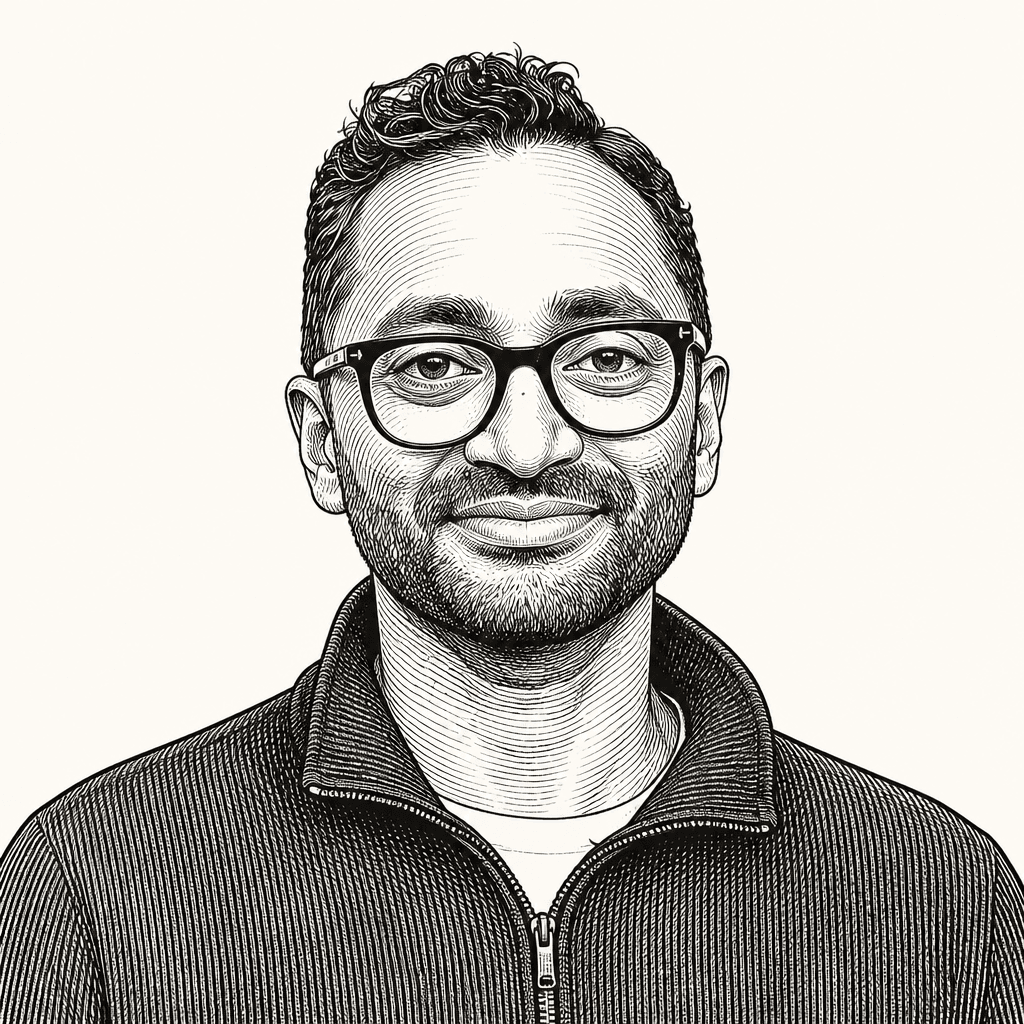
Chamath Palihapitiya
Entrepreneur and investor, founder of Social Capital, and co-host of the All-In podcast, where he discusses technology, business, and AI.
OpenAI CFO Says Compute Scarcity Will Define Its Next Phase
OpenAI CFO Sarah Friar used an All-In interview to frame the company less as an IPO candidate chasing public-market timing than as an infrastructure-scale AI business trying to finance scarce compute, broaden distribution, and defend the intelligence layer between users and the underlying technology. Friar argued that OpenAI’s consumer and enterprise products are meant to compound off the same foundation, even as the company raises unprecedented capital, diversifies cloud and chip supply, and considers ads without letting sponsored results distort ChatGPT.
AI Governance Fight Shifts to Centralization, Open Models, and Worker Agency
On All-In, Bill Gurley joined Jason Calacanis, David Sacks and Chamath Palihapitiya for a debate framed less around whether AI is powerful than around who will control it. The panel read Pope Leo XIV’s AI encyclical as a warning about concentrated power, but split over the remedy: Sacks argued government regulation could become the centralizing threat, while Gurley and others scrutinized Anthropic’s safety posture as either regulatory strategy or something closer to a belief in building a superior intelligence. Their practical conclusion was that open models, swappable systems and worker fluency are the main checks against AI power consolidating in a few labs or agencies.
AI Infrastructure Demand Is Becoming Revenue, Contracts, and Market Stress
Gavin Baker joined the All-In panel to argue that AI’s economics are becoming tangible: Anthropic’s reported profitability, surging LLM revenue, Nvidia’s results, and SpaceX’s compute contracts all point to infrastructure demand that is no longer speculative. The group framed SpaceX’s potential $2 trillion valuation as a bet on Starlink, launch, and AI compute rather than current earnings, while Baker defended Nvidia against share-loss and GPU-useful-life bear cases. The counterweight was political and macro risk: public backlash to AI, labor displacement, regulation, higher inflation, rising yields, and U.S.-China tension.
Economic Entanglement, Not Decoupling, Defines the New China Bargain
Salesforce CEO Marc Benioff joined the All-In hosts for a discussion that framed U.S.-China relations, enterprise AI, and the software selloff around the same question: when dependence is a stabilizer and when it becomes leverage. Benioff argued that more trade with China can lower conflict risk and that large software platforms remain valuable because AI still needs trusted customer data, cash-flowing distribution, and enterprise deployment. David Friedberg, Chamath Palihapitiya, and Jason Calacanis extended the argument across Taiwan, chips, AI assistants, El Niño-driven food risk, and private-market SPVs, where interconnection can either absorb shocks or transmit them.
SpaceX-Anthropic Deal Highlights Compute as AI’s Revenue Bottleneck
The All-In panel used SpaceX’s compute deal with Anthropic to argue that frontier AI is now being constrained less by demand than by access to power, GPUs and data-center capacity. David Sacks warned that Anthropic’s reported revenue trajectory could make it a historic monopoly if sustained, while Brad Gerstner pushed back that the market is still too early and competitive for pre-emptive regulation. The discussion turned on whether AI safety concerns justify coordination with government or risk becoming an “FDA for AI,” and whether the AI boom will ultimately show up as measurable productivity and profit for customers buying tokens.