OpenAI CFO Says Compute Scarcity Will Define Its Next Phase
 Chamath Palihapitiya
 Jason Calacanis
 David Sacks
 David Friedberg
 Sarah FriarAll-In PodcastTuesday, June 2, 202615 min read
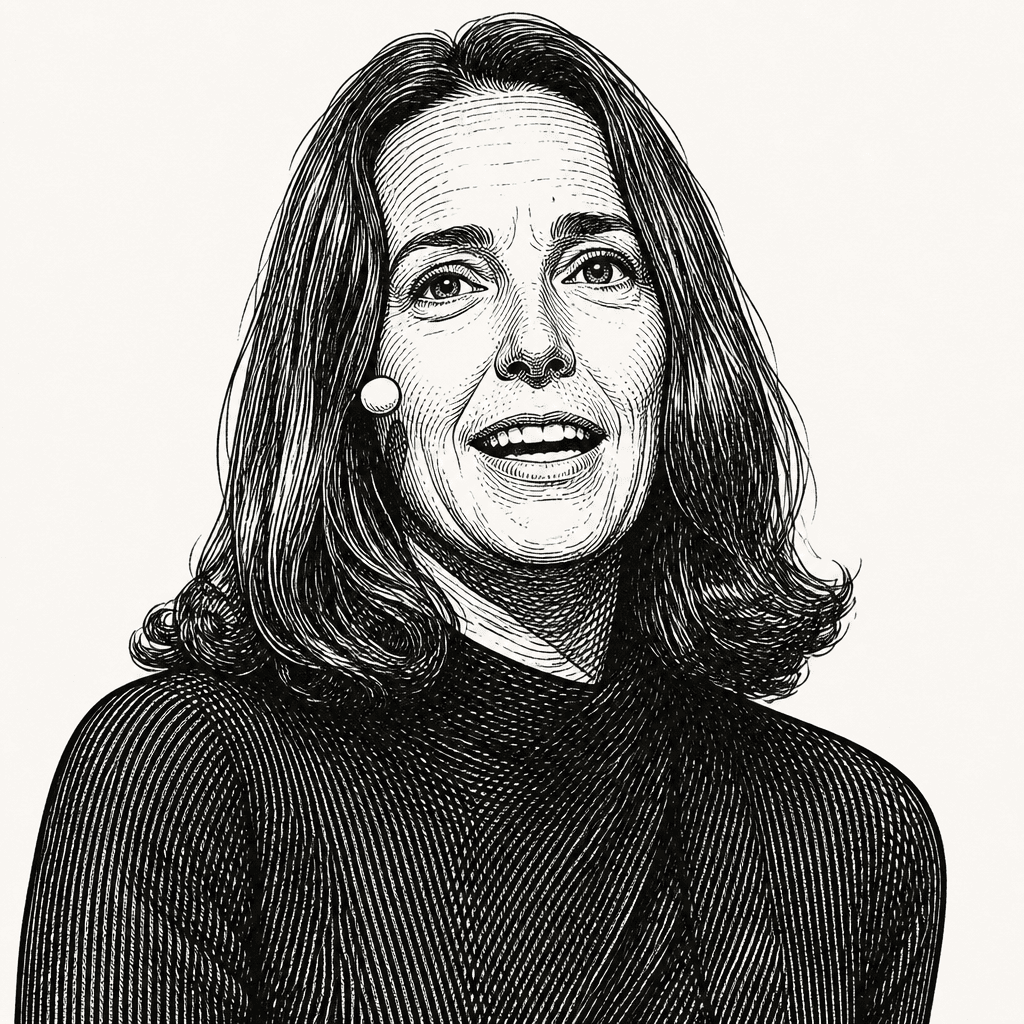
OpenAI CFO Sarah Friar used an All-In interview to frame the company less as an IPO candidate chasing public-market timing than as an infrastructure-scale AI business trying to finance scarce compute, broaden distribution, and defend the intelligence layer between users and the underlying technology. Friar argued that OpenAI’s consumer and enterprise products are meant to compound off the same foundation, even as the company raises unprecedented capital, diversifies cloud and chip supply, and considers ads without letting sponsored results distort ChatGPT.
OpenAI is using capital markets to buy optionality
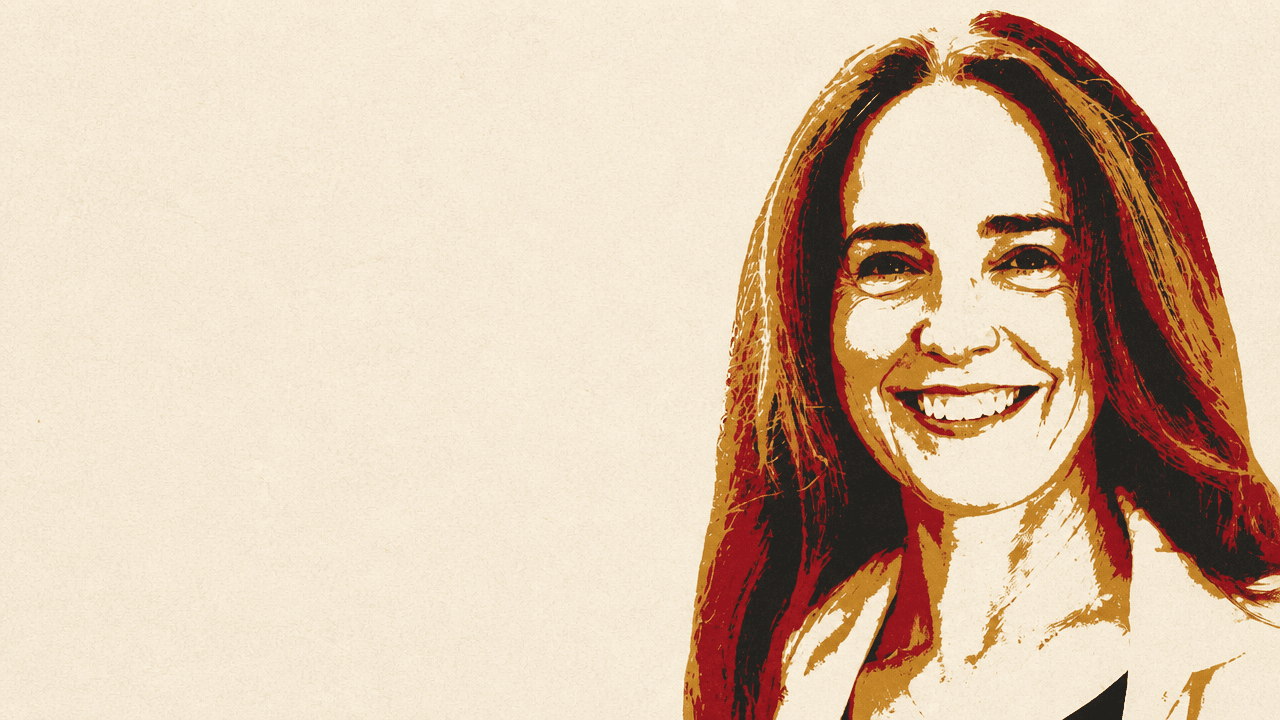
Sarah Friar framed OpenAI’s potential IPO as one financing option among others, not as the company’s destination or a race to win. Asked by David Sacks whether AI companies have an advantage in going public earlier, Friar said she tells employees that an IPO is “a milestone” and “not a destination.” The CFO’s job, in her telling, is to create optionality for OpenAI and for what she called “this era that we’re living in.”
That framing matters because OpenAI is trying to build high-margin product revenue on top of infrastructure-scale capital needs. Friar said the company raised $122 billion in March and described that round as giving OpenAI “maximum flexibility.” The source’s opening visuals reinforced the scale of that financing: one article shown on screen said OpenAI had raised a total of $122 billion in a round valuing the company at $730 billion, while a later broadcast graphic quoted Friar saying the latest round had closed with $122 billion in committed capital at an $852 billion post-money valuation.
When Chamath Palihapitiya asked whether that fundraising was the largest private or public raise up to that point, Friar said it was, “by orders of magnitude,” contrasting it with Saudi Aramco’s roughly $30 billion IPO. She did not present timing as irrelevant. Fundraising, she said, will be a “key component” of building “big, sustainable, durable companies.” But she rejected the premise that the market will primarily reward whichever AI lab files first.
In the end the market is a weighing machine, not a popularity machine.
Friar argued that people do not remember who was first between Google and Yahoo or Lyft and Uber. The press may want the drama of sequence, she said, but the enduring question is whether companies can become large, sustainable, and durable.
Jason Calacanis sharpened the rivalry by saying Anthropic had just confidentially filed its S-1 and asking whether that put OpenAI in third place. Friar said it did not mean anything yet because a company still has to go through the SEC process, “and who knows how long that takes for anyone.” Calacanis then said Anthropic had been “far behind” and had now, in his view, “blown past OpenAI in terms of developers and corporations, and it seems revenue.”

Friar’s answer was not to concede that framing, but to distinguish OpenAI’s strategy. OpenAI, she said, is building “the AI layer, the infrastructure,” with a single foundation and many interfaces into the world. ChatGPT is the consumer interface; Codex, enterprise offerings, and other products are additional interfaces. The compounding loop she described runs from more users to more data, more personalization, a stronger ChatGPT front door, better model efficiency, higher gross margins, greater capacity to pay for compute, and then more access to compute.
That is the loop Friar wants investors and competitors to understand. OpenAI is not choosing consumer versus enterprise, she argued. It is trying to place one intelligence layer beneath multiple ways people and businesses use AI.
Consumer and enterprise are meant to compound off the same intelligence layer
OpenAI’s consumer and enterprise businesses are not, in Sarah Friar’s telling, separate strategic identities competing for focus. They are different interfaces on the same foundation. When Jason Calacanis challenged whether OpenAI had spread itself too thin across consumer products, Sora, a new device project, and enterprise sales, Friar rejected the binary. OpenAI is “very much both” a consumer and enterprise company, she said, and its revenue is now “about 50-50.”
Her examples were meant to show that enterprise demand is not theoretical. Friar said that in the prior week she had visited Thermo Fisher in Boston, met with banks in New York, spoken with Travelers, and taken a call with a technology company. The vertical, she argued, matters less than the broad movement: “people are really moving on AI right now.” She credited Denise Dresser, OpenAI’s head of revenue since December, as a major force behind enterprise execution.
At the same time, Friar tied OpenAI’s free access to its mission. OpenAI’s mission, she said, is “AGI for the benefit of humanity,” not only for people who can pay or who work inside enterprises. That is why the company offers so much for free: it wants users to “get a taste” of intelligence and then move up what she called the “commitment curve.”
The usage numbers she gave were intended to support that curve. Free users ask about seven questions a day. The first paid tier uses about double that, around 15. Plus users at $20 and higher use about three times the free tier, and Pro users use about 11 times the free tier. Friar compared the pattern to the evolution from a flip phone that “makes some calls” to the modern phone that mediates a wide range of daily activity. Intelligence, she argued, is on a similar path.
Friar also used OpenAI’s geographic and language growth to make the consumer case. ChatGPT, she said, has become “the noun and the verb” for many people’s first experience with AI. OpenAI’s economic research team had told her that Africa was among the fastest-growing continents for ChatGPT, and that Azerbaijani and Kazakh were among the fastest-growing languages. Codex, meanwhile, had reached 5 million users over a weekend, up from “almost zero” in January.
The enterprise story, in Friar’s telling, sits on the same foundation as the consumer story. More users generate more interaction, more context, and more personalization. ChatGPT becomes a front door, while enterprise products turn the same underlying intelligence toward business workflows. OpenAI’s contention is that a broad interface strategy compounds against more narrowly targeted competitors.
Compute scarcity is now the operating constraint
Compute is the binding constraint in OpenAI’s business as Sarah Friar described it. Chamath Palihapitiya referred to a tradeoff he said Friar had framed about 18 months earlier: “gigawatts to cash,” or roughly 1 gigawatt equaling $10 billion a year of OpenAI revenue. Friar did not restate the formula as a fixed law, but she confirmed the broader premise: compute is scarce, and OpenAI is climbing a “vertical wall of demand” without enough tokens available.
Friar said OpenAI had taken criticism the prior year for buying so much compute, but that she was grateful to have worked alongside Greg and Sam, whom she described as prescient on the issue. “Thank God we did,” she said, because in 2026 OpenAI still will not have enough compute.
She described the compute supply chain as a moving set of chokepoints: energy, land, power, regulation, racks, chips, memory, and talent. Memory, she said, was experiencing a spike. She also emphasized education, saying she worries whether enough people are coming through the education system with the needed science and technical training.
Trust, unusually, was part of her supply chain analysis. Friar said Sam was in Saline, Michigan, to cut the ribbon on a one-gigawatt data center that is part of OpenAI’s Oracle complex. The community case, as she presented it, is that OpenAI will not raise local electricity bills, will pay for its own infrastructure and power, will bring 2,500 union jobs, will pay $1 billion in taxes connected to that data center, and will invest $45 million in education and compute credits.
Friar’s point was not simply that OpenAI needs more infrastructure. It was that the company has to invest ahead of demand and persuade local communities that they are not being asked to subsidize the buildout. Drawing on her time at Nextdoor, she said communities cannot be told from the top down what they need. They will say, “thank you, but no thank you, I will tell you what I need.”
Asked what happens over the next year at current course and speed, Friar was blunt.
In ’26, if you want to buy more compute, good luck to you. Tell me, because I don’t know where else to find it.
She added that 2027 looked “pretty limited as well.” Training, she said, mostly still happens in the United States for USG reasons and because it is effectively a national asset, while inference should become global, especially in an agentic and multimodal world where real-time responsiveness matters.
That scarcity has forced product choices. Friar acknowledged that video uses a lot of compute and that OpenAI had to make a “really tough choice” because it did not have enough. But she also said video is “not over,” particularly as AI moves toward multimodality. She criticized the prior technology era for training people to “talk with our thumbs,” and said the next phase involves speaking to tools and requiring more real-time compute.
The Jony Ive project remains mostly undisclosed
The Jony Ive device project entered Sarah Friar’s argument through multimodality: if users are going to speak to AI tools in real time, OpenAI needs interfaces that are not merely today’s phone-and-text interaction. Jason Calacanis mentioned rumors of a puck or earpieces; Friar refused to identify the form factor. “If I tell you it’s an earpiece, Jony will come and steal my teenage son,” she joked.
What she did disclose was timing and her own reaction to using it. OpenAI is “changing into a consumer substrate,” she said, with an unveiling planned by the end of the year and availability to buy early the following year.
We are changing into a consumer substrate that I cannot tell you what it is, but by the end of this year, we will unveil it, early next year you will be able to buy it.
Friar said she had seen and tried the device. Asked whether using it felt like having an iPhone for the first time, she avoided that comparison but described Jony Ive and team as unusually good at “bringing humanity to devices.” She said the experience feels “very natural” and “very lovable,” though she struggled to define the emotion.
Calacanis described what he had heard from people who had tried it: that it was intimate, seamless, and did not require taking out a phone. Friar responded with a design principle rather than a product confirmation: great design makes technology “fade away,” and “simple is hard.”
The device matters in Friar’s account because the interface and the infrastructure are linked. A more natural, multimodal AI interface would imply more real-time interaction, and more real-time interaction increases the demand for inference capacity. Friar disclosed timing, personal use, and design impressions; she did not disclose the product category or form factor.
OpenAI’s capital model leans on falling unit costs and rising customer value
David Friedberg asked Friar to explain OpenAI’s capital allocation model: where the company can deploy capital at unusually high returns, and whether that engine improves over time. Sarah Friar began with a conventional principle: durable, high-value companies in this era will still look like durable companies in prior eras. They create customer value, help customers do something meaningfully different, and convert that into strong economics.
Her enterprise example was Thermo Fisher. Faster patient screening can accelerate FDA approval, which can matter materially for patients with forms of cancer where weeks matter. Thermo Fisher’s field sales organization, which Friar put at roughly 30,000 to 38,000 people, is another productivity target. Inside OpenAI itself, she said, the fastest takeoff of Codex was not among developers but in the go-to-market team, measured by month-over-month growth.
From customer value, Friar moved to gross margin. The main cost-of-revenue input is compute, and she argued that compute costs are falling dramatically on a per-unit-of-intelligence basis even if the total infrastructure bill is rising. From ChatGPT-4 to 4o, she said, the cost decline was about 97% over roughly two years. With o1, OpenAI raised prices by 2x, but she said customers were still likely seeing a 20% to 30% cost reduction per token because the model was more efficient per token.
The implication for capital allocation is that a CFO cannot price the future using only today’s cost curve. Friar said OpenAI has to “lean in” on the cost profile. Compute decisions are being made years ahead: she is focused on what compute OpenAI can buy for 2028 onward, while the Saline, Michigan data center is unlikely to produce compute until late 2027 or early 2028. She added that the areas where she feels most short of compute are now 2030, 2031, and 2032.
Friedberg pushed on forecasting: how can OpenAI estimate compute needs years out when model architecture and utility per watt are changing quickly? Friar said OpenAI models multiple assumptions. On one hand, compute per gigawatt is getting more expensive because power, memory, and other inputs are getting more expensive. On the other hand, chip improvements are producing more intelligence output, more than offsetting those increases in terms of the unit sold to the customer.
She was careful not to overclaim model-side efficiency in the forecast. OpenAI does not assume too much improvement from models, because different model generations have different profiles. Some models, like o1, are efficient; others, like GPT-4, were large, expensive to serve, and required multiple later turns to reduce cost. For 2026 and 2027, Friar said OpenAI builds bottom-up models around products, pricing, weekly active users, subscriptions, advertising, daily activity, and message volume. In later years, the exercise flips: OpenAI looks at compute purchased and asks what amount of revenue that compute should support.
She gave one example of how hard that outer-year modeling is. A year earlier, she had shown investors an “agentic revenue” model in which developers would build with natural language and perhaps pay up to $2,000 a month. At the time, she said, investors doubted both the product category and the price point, especially when people were already reacting strongly to ChatGPT Pro at $200. In hindsight, she said, the $2,000 figure looked less implausible.
The infrastructure stack is becoming multidimensional
A $100 billion raise does not translate cleanly into a fixed number of gigawatts in Sarah Friar’s description, because OpenAI is trying to finance compute through a more varied stack than direct ownership. David Friedberg cited estimates he had seen that one gigawatt of AI compute might cost about $50 billion all-in for land, power, shell, chips, and other capital. Friar answered by describing a compute strategy that has changed radically in two years.
Two years earlier, she said, OpenAI was essentially one-dimensional: one cloud service provider, Microsoft Azure; one chip provider, Nvidia; one product, ChatGPT; one price point, $20 a month. She uses a Rubik’s cube as her metaphor for the current strategy. The first move was to diversify across cloud service providers, because CSPs effectively shift OpenAI’s capital expenditure into operating expenditure: OpenAI pays as it generates revenue and uses the data centers.
Friar said OpenAI now sits on top of Oracle, CoreWeave, Microsoft, Google Cloud, AWS, and smaller neo-scalers. On chips, OpenAI is also pursuing a multi-chip program. Nvidia remains its “absolute priority partner,” and Friar said the next large training run in the fall will be done on Vera Rubin chips, with planning already extending to the Feynman series. But she also named AMD, Cerebras, and OpenAI’s own chip work with Broadcom. Cerebras, she said, is already online and has been “incredible” for low-latency workloads such as real-time coding.
| Layer | Friar's description of OpenAI's diversification |
|---|---|
| Cloud providers | Oracle, CoreWeave, Microsoft, GCP, AWS, and smaller neo-scalers |
| Chips | Nvidia as priority partner, plus AMD, Cerebras, and OpenAI's own chip with Broadcom |
| Infrastructure model | CSP capacity shifting CapEx to OpEx, with emerging build-to-suit projects |
The strategy is not limited to renting cloud capacity. Friar said OpenAI is beginning to shift into build-to-suit environments, including a data center announced with SoftBank Energy in Texas. That model requires more CapEx than the CSP approach. But the broader objective remains optionality, especially because OpenAI is not yet an investment-grade entity that can borrow at the lowest cost.
Chamath Palihapitiya then asked whether, in five years, the stack simply merges: chip companies build models, cloud companies build chips, model companies build silicon, and everyone moves toward the customer. Friar agreed with the strategic logic. Everyone wants to sit at the layer closest to the customer because that is where the largest share of ecosystem profits usually accrues. No one wants to be abstracted away.
For OpenAI, that means defending the “AI intelligence layer.” Friar said that a year earlier people were discussing the commoditization of large language models, but she believes the opposite has happened. As agentic systems develop, the “harness” around a model — context, memory, preferences, and enterprise intuition — makes it more powerful and harder to commoditize.
Her example was personal. Her Codex has a large memory file: it knows she is OpenAI’s CFO, how she likes to write, what she is interested in, and that she is a mother of teenagers. In an enterprise, she argued, that kind of memory and context connects to institutional intuition, not just data. She compared it to Wall Street: the data after an earnings call might suggest a stock should rise, but a trader might know that a particular fund is under pressure and needs to sell, changing what will happen over the next week. Every company has that kind of intuition, she said, and executives get excited when AI can connect to it.
Ads are attractive only if sponsored results do not distort the product
Jason Calacanis asked about advertising by noting that among the great consumer businesses of recent decades, Google and Meta are ad-based, and even Apple has some ads. He asked whether ads are the solution to making ChatGPT free for the world, while also noting that OpenAI had been mocked by Anthropic over the possibility of ads.
Sarah Friar’s first answer was a product principle. OpenAI, she said, wants users to know they are always getting the best result based on the model, not because something was sponsored. That principle “has to hold true.” She also said OpenAI will always provide an ad-free tier for people who do not want ads, with Calacanis clarifying that this would be for paying users.
Then Friar made the affirmative ad case. Fidji Simo, she said, has a useful formulation: “If, you know, Google and Meta had a baby, it would be ChatGPT.” Google has search intent. Meta has demographic and behavioral targeting. ChatGPT, in Friar’s view, has both intent and memory. A user might explicitly say they want “really cool shoes” for an event, while the system also knows who they are, their context, and their preferences.
That combination, she argued, could create “a very potent ad platform” and help fund broad access. It is also not where OpenAI would allocate tokens if optimizing only for current revenue.
If I was optimizing only for today, I would give every token to the API.
Friar said the API yields an order of magnitude more revenue than consumer usage. But she described OpenAI as playing a long game: an AI infrastructure layer “like electricity” serving consumers, small businesses, large enterprises, and governments.
That final tradeoff captures the financial tension in Friar’s account. OpenAI needs enormous capital, faces scarce compute, and can currently monetize some uses far better than others. Yet it is choosing to preserve broad consumer access because it believes scale, memory, context, and distribution will matter more over time than short-term token yield.