Economic Entanglement, Not Decoupling, Defines the New China Bargain
 Jason Calacanis
 Chamath Palihapitiya
 David Friedberg
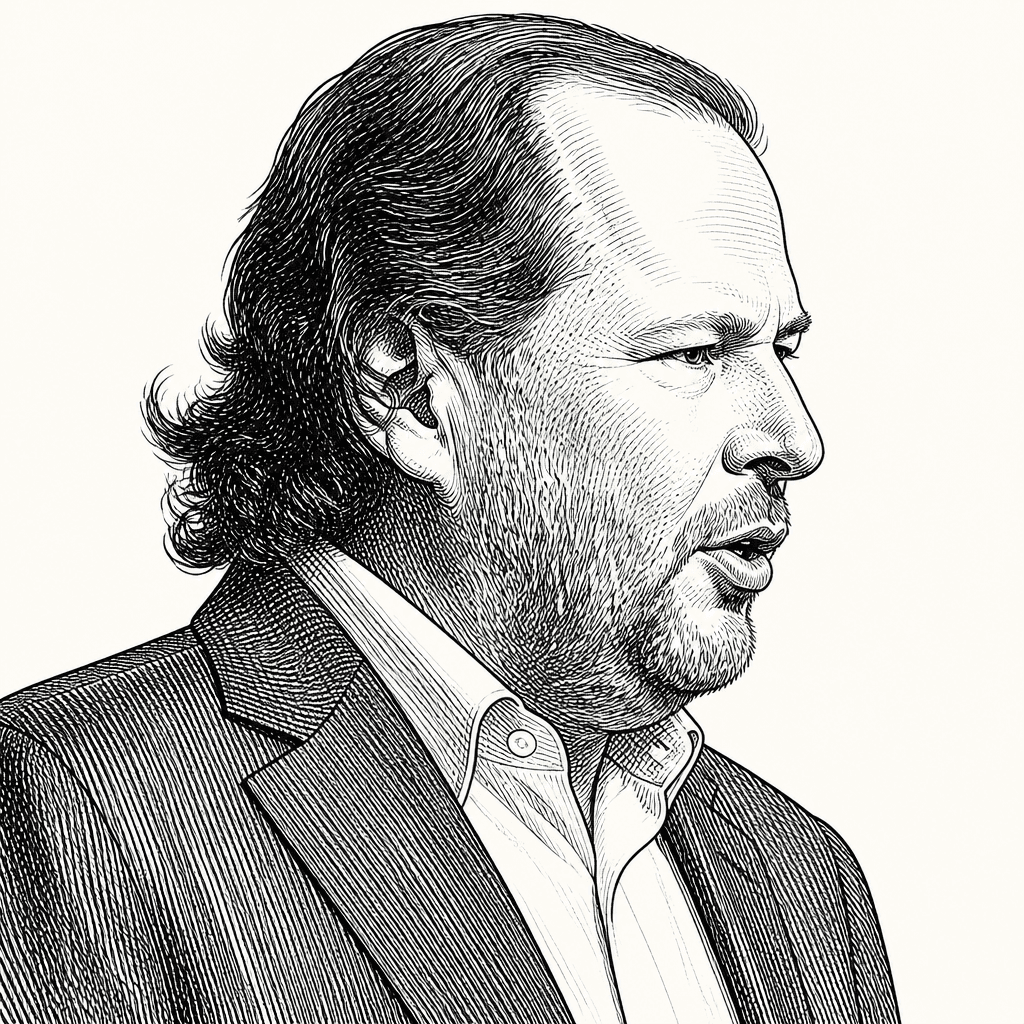 Marc BenioffAll-In PodcastFriday, May 15, 202620 min read
Salesforce CEO Marc Benioff joined the All-In hosts for a discussion that framed U.S.-China relations, enterprise AI, and the software selloff around the same question: when dependence is a stabilizer and when it becomes leverage. Benioff argued that more trade with China can lower conflict risk and that large software platforms remain valuable because AI still needs trusted customer data, cash-flowing distribution, and enterprise deployment. David Friedberg, Chamath Palihapitiya, and Jason Calacanis extended the argument across Taiwan, chips, AI assistants, El Niño-driven food risk, and private-market SPVs, where interconnection can either absorb shocks or transmit them.
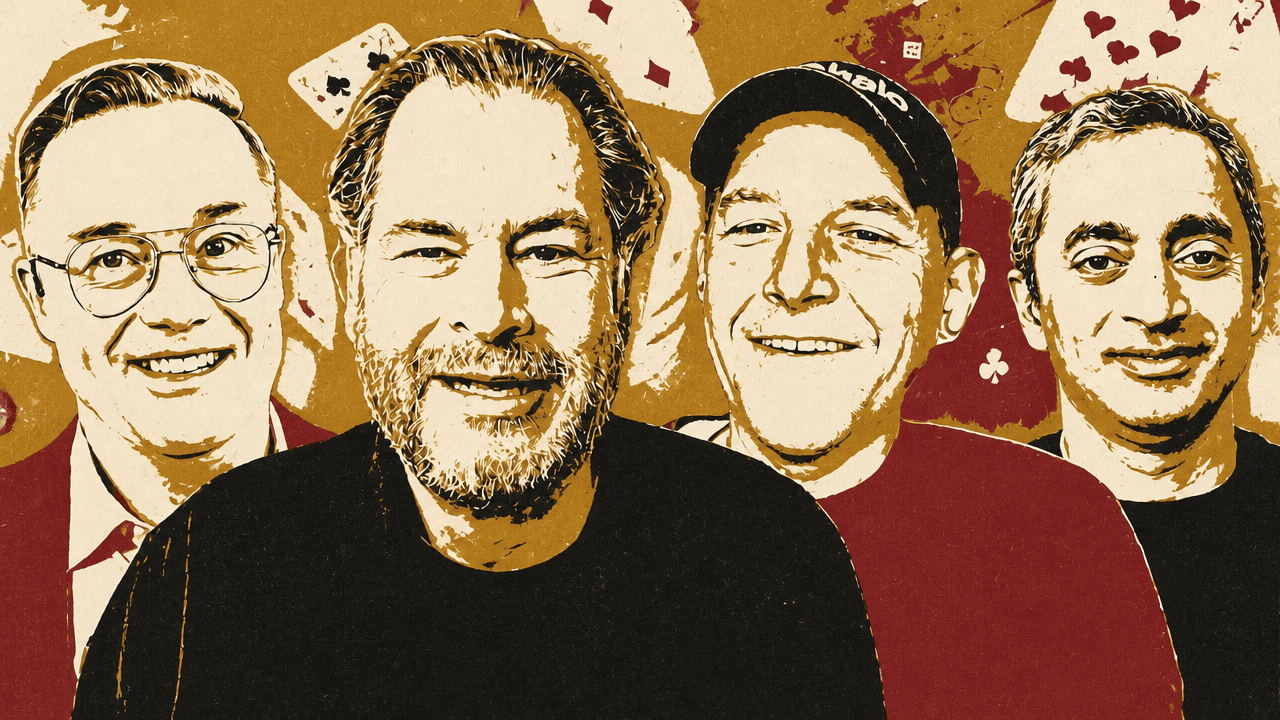
The China bargain was economic entanglement, not decoupling
The Trump-Xi summit put a contradiction at the center of U.S. China policy. After years of tariffs, supply-chain security, and decoupling rhetoric, the practical case around the table was that lower conflict may require more trade, more sales, and more business dependence in both directions.
Jason Calacanis laid out the early summit contours. China, he said, agreed that the Strait of Hormuz should remain open, without making a military commitment, and that Iran should not have a nuclear weapon. On Taiwan, Xi warned that if the issue were “handled poorly,” the two countries could “collide or even clash,” putting the broader U.S.-China relationship in an “extremely dangerous situation.” Calacanis also cited Polymarket screens showing a 6% chance that China invades Taiwan by the end of 2026 and a 17% chance by the end of 2027. On trade, he said Xi had committed to buy more soybeans, U.S. oil, LNG, and 200 Boeing jets.

| Question | Market-implied odds cited | Context |
|---|---|---|
| Will China invade Taiwan by end of 2026? | 6% | Polymarket screen referenced by Calacanis |
| Will China invade Taiwan by December 31, 2027? | 17% | Polymarket screen referenced by Calacanis |
For David Friedberg, the summit belonged inside the larger question of whether the United States and China can avoid the “Thucydides Trap” — the pattern in which a rising power and an incumbent power drift toward conflict. Friedberg’s escape hatch was not moral alignment or diplomatic theater. It was abundance. If AI, automation, biotech, and other technology shifts make the world “resource expansive,” both countries can raise living standards without treating the other’s gain as their loss. If the pie is static, the logic changes: countries fight over land, territory, and resources.

That produced two layers of success in Friedberg’s account. Politically, Trump would get a major win if he returned with trade deals that increased job security, American investment, incomes, and prosperity. Strategically, the more important question was whether the two countries could chart an economic path that does not involve “eating each other” but instead sharing in a larger pie.
Chamath Palihapitiya agreed that economic cooperation is the surest route to a no-conflict détente with China, especially because China is the largest consumer economy in the world and remains “largely closed off.” But he described the likely private negotiation more bluntly as a division of spheres. China needs energy and critical technologies from the United States; the United States wants China to de-escalate in places such as Central and South America, the Middle East, and parts of Asia-Pacific. His version was not just “grow the pie.” It was decide how the pie is divided.

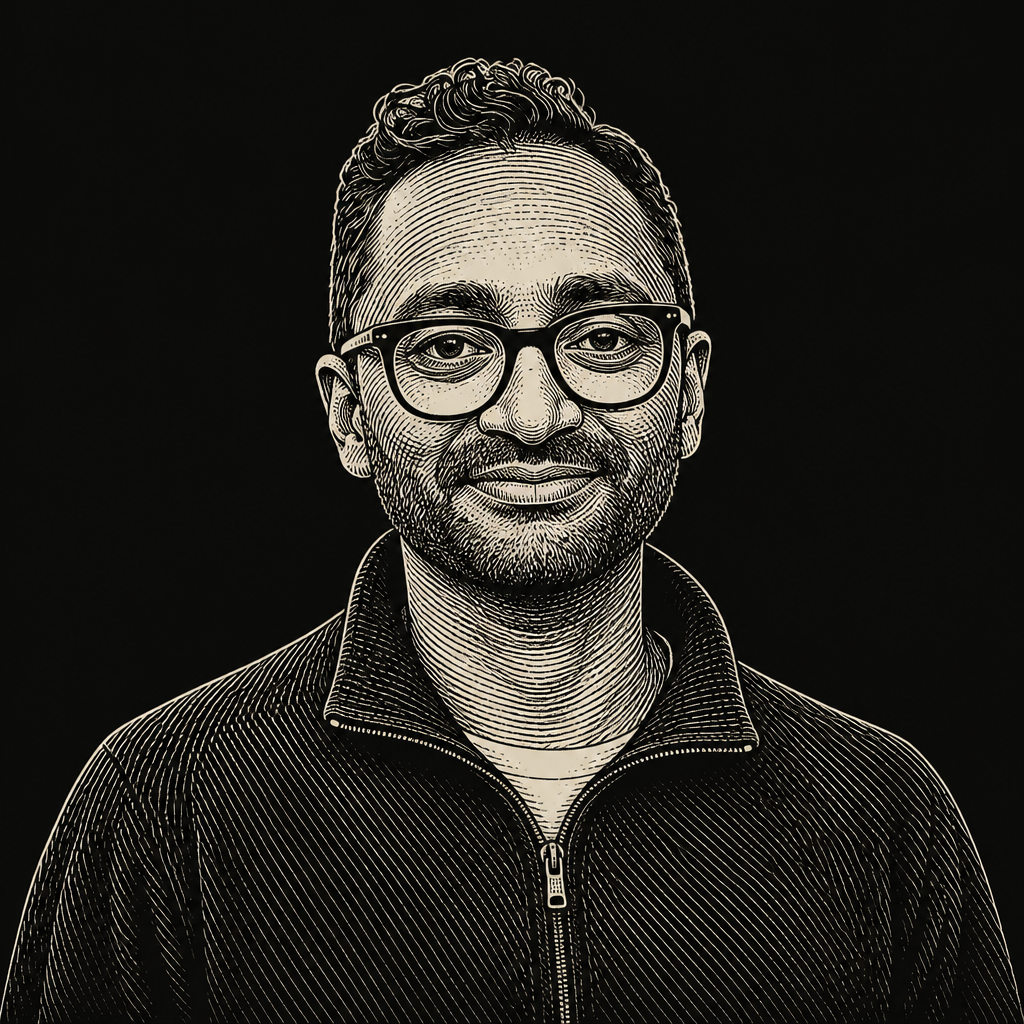
The CEO delegation sharpened that point. Marc Benioff described the executives traveling with Trump as America’s best salespeople in their categories: Trump himself, Elon Musk, Nvidia’s Jensen Huang, Boeing’s Kelly Ortberg, Cargill CEO Brian Sikes, Visa, Mastercard, Qualcomm, and others. Xi had said he wanted a “wider door,” which Benioff read as an invitation to widen business ties. “They’re going to come back with orders,” he said.
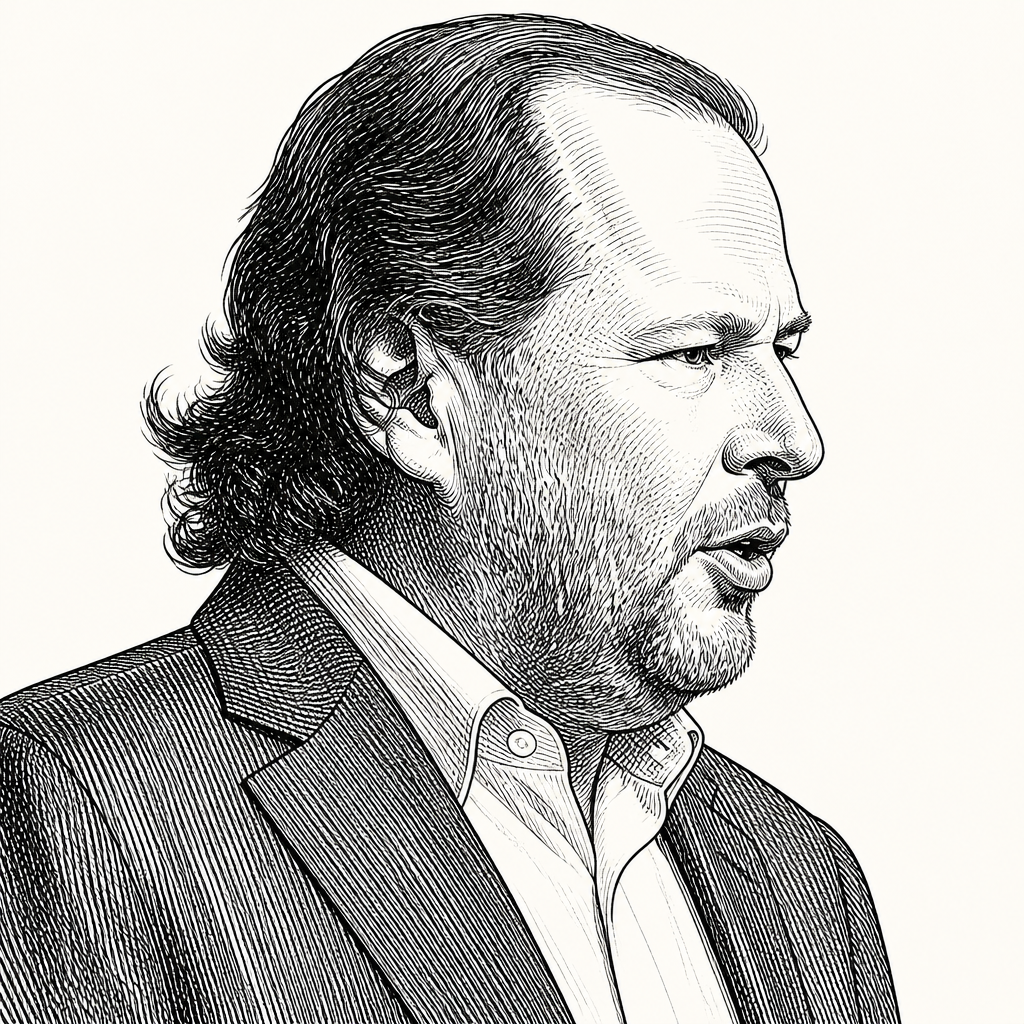
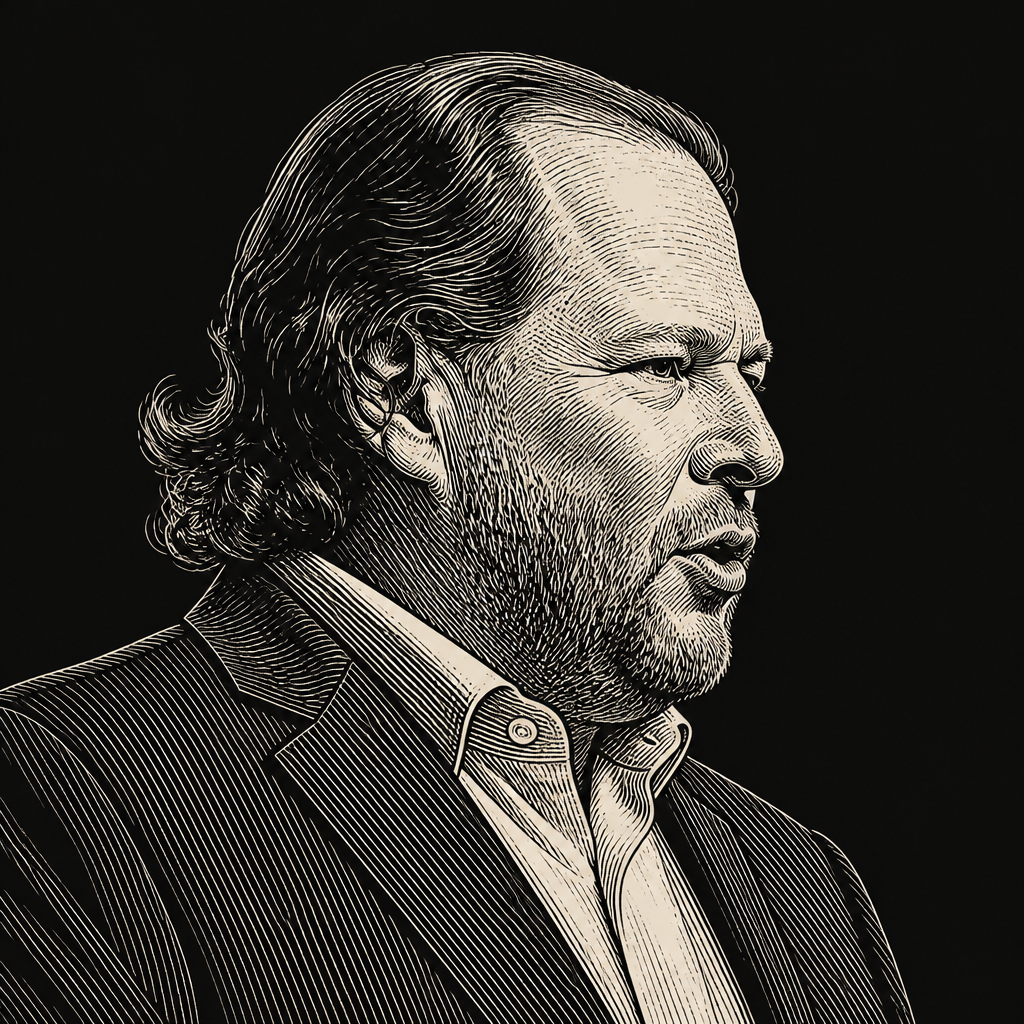
Benioff’s own China structure showed the limits of that door. Salesforce has no offices or employees in China, he said, and never has except when it acquired companies with a China presence and then had to divest. The company sells there through an exclusive Alibaba partnership because of Chinese data residency requirements. For global customers such as Louis Vuitton or Loro Piana, Salesforce runs through Alibaba inside China while operating normally elsewhere. Benioff called it “a totally unique relationship” and said China is the only country where Salesforce works that way.
Tesla, to Benioff, is the exception. Musk has Tesla in China without a partner, he said, with AI-equipped vehicles and cameras operating in Chinese factories and on Chinese roads. Benioff attributed that to Musk being “the greatest salesman in the world.” Calacanis supplied the more cynical reading: China wanted Tesla there, studied the company and its innovation, and has since become a major EV competitor through firms such as BYD.
The midterm politics mattered less to the speakers than the second-order economic effects. Friedberg said voters would respond to job security, income security, income growth, and cost of living. A trade deal could help if it lowers prices on imported goods and expands export markets for American soybeans, oil, technology, and software. Palihapitiya thought the U.S. midterms would be shaped more by gerrymandering rulings, state legislatures, and political money than by the summit itself. He pointed to an article excerpt shown on screen naming Andreessen Horowitz as the largest donor in the midterm cycle so far, ahead of George Soros, Elon Musk, and Jeff Yass. Palihapitiya interpreted that as the firm positioning itself inside the American financial establishment as it grows its asset-management business; he said they “can’t stop at 100 billion of AUM” and are “marching towards a trillion.”
Benioff pushed back on Calacanis’s claim that Taiwan is what China “wants most of all.” Xi’s main focus, Benioff said, has been moving 500 million people from poverty into the middle class and sustaining economic success. Taiwan, in his view, was not the core issue. More trade was.
Taiwan’s strategic value was treated as contingent, not fixed
The hardest China question was whether Taiwan’s strategic importance is already fading because the United States and China are building, or trying to build, semiconductor capacity outside the island. That was an argument advanced by Benioff, Friedberg, and Palihapitiya — not an established fact. Their claim was narrower: if Taiwan’s centrality depends heavily on semiconductor dependence, and if that dependence declines, then the U.S. security calculus may change.
Jason Calacanis asked Marc Benioff directly whether the United States should sell China the latest chips. Benioff answered that the question may already be “irrelevant.” Chinese AI models, he said, are competitive with U.S. models despite export controls, and China has learned to build strong models without the highest-end chips. In his view, the best Chinese models are roughly where the best U.S. models were six months earlier. If that is the case, he argued, the United States might as well “sell whatever we can,” because economic cooperation lowers the risk of conflict.
I think the highest end chips is kind of more of an ego gratification for us.
David Friedberg also treated Chinese technological catch-up as inevitable. He argued that Taiwan may become less relevant to both the United States and China as each side “mainlines fabs.” The United States is building domestic capacity, with a TSMC facility in Arizona already running, while China is investing heavily through Huawei and others not only in fabs but in semiconductor manufacturing equipment, so that companies such as ASML cannot cut it off. If both sides reduce their dependence on Taiwan’s manufacturing base, Friedberg asked, does Taiwan still carry the same economic and security significance?
He did not frame that as the United States selling Taiwan out. His blunter formulation was that “no one gives a shit anymore” if Taiwan’s unique strategic semiconductor role diminishes. China may still have a cultural or political goal of bringing Taiwan “fully into the sphere” by 2040, he said, but the U.S. economic and security rationale may weaken.
That logic carried into arms sales. Calacanis asked whether the United States should trade away arms sales to Taiwan in exchange for China not selling arms to Iran. Friedberg said the United States should ask China not to sell arms to Iran. On whether the Taiwan side of the trade should be on the table, he called it nuanced but acknowledged it was “probably a trade” that should be discussed.
Chamath Palihapitiya was more direct: “Make the trade. Do the deal.” His argument was that the United States is “18 months” away from Taiwan no longer being the same strategic chokepoint, because domestic fab capacity and technologies operating near nanometer precision are closing the gap. The core U.S. interest in Taiwan today, he said, is economic. Remove that from the table and attitudes toward Taiwan change. A Neuralink video shown during the exchange, depicting a robotic surgical system operating at near-microscopic precision, served as Palihapitiya’s example of the kind of mechanical dexterity he believes is emerging outside traditional chipmaking assumptions.
On chip sales, Palihapitiya’s answer was also yes, but for a competitive reason. Selling chips keeps Nvidia dominant and denies Huawei the oxygen to become the alternative. If Chinese models are catching up anyway, he argued, the better priority is reasonable know-your-customer controls on model use — preventing, for example, a person in a basement from creating a bioweapon — while letting American chip companies win the market.
Benioff, when pressed on whether the United States should defend Taiwan if China blockades it, refused the premise. He said he has long disagreed with Niall Ferguson on this point and called Taiwan “a nonsense issue,” predicting that China and Taiwan will reconcile. He did not give Calacanis the requested yes-or-no answer.
Benioff’s answer to the SaaS selloff was cash flow, customer data, and agents
Public SaaS companies had been rerated, and Jason Calacanis put numbers on the pressure: Salesforce down 37%, ServiceNow 42%, Workday 45%, and a combined $180 billion in market cap losses among the names he listed. The market fear, as Calacanis framed it, is that AI will make tools such as Slack, Salesforce, HubSpot, and other software unnecessary. Instead of using applications, employees will ask an AI agent to do the work.
| Company or group | Drawdown cited | What Calacanis used it to illustrate |
|---|---|---|
| Salesforce | 37% | Public SaaS rerating under AI pressure |
| ServiceNow | 42% | Public SaaS rerating under AI pressure |
| Workday | 45% | Public SaaS rerating under AI pressure |
| Listed SaaS names | $180B market-cap loss | Scale of the selloff across the cited group |
Marc Benioff accepted the label with a joke — “the SaaSpocalypse” — but immediately put it in historical context. He said it was not his first SaaSpocalypse, pointing to COVID in 2020 and another software market downturn in 2016. This time, he said, the public market has rerated software despite what he called strong quarters across major enterprise companies. HubSpot trading around two times sales, after what he described as a great quarter, was for him evidence of a broad AI “hypnosis,” not yet evidence of collapsing software demand.
His internal message to Salesforce employees was not to anchor their emotional state to the stock price. Salesforce, he said, expects to do more than $46 billion in revenue this year, more than $16 billion in cash flow, and has more than 83,000 employees. Those are the numbers he said he focuses on: customer success, revenue, cash flow, and the company’s ability to deliver value. The stock price, he said, is not something he or employees can control.
You can’t get drunk on the stock price.
Chamath Palihapitiya drew a line between low-end SaaS and large enterprise platforms. The low end, he said, is “basically finished.” The high end, where Salesforce and other large platforms operate, is much safer because enterprise AI deployment is harder than the market narrative suggests. His evidence was a Quartz headline shown on screen: “OpenAI launches $4 billion AI deployment company.” Palihapitiya read that as evidence that OpenAI is running into the difficulty of real enterprise deployment. If AI implementation inside large companies were as easy as prompting, he argued, OpenAI would not need to fund a services-like operation resembling a competitor to Ernst & Young, Deloitte, PwC, Cognizant, and similar firms.
For Palihapitiya, the next market rotation will come when investors ask AI companies what the return is on the trillions spent on tokens and infrastructure. At that point, he argued, the AI labs will need trusted enterprise distributors — companies already inside the C-suite, with predictable net dollar retention, negative churn, and long customer relationships. Those companies, he said, are positioned to “crush” because they can sell AI into enterprises that the model labs cannot easily penetrate alone.
Benioff agreed that the new tools are powerful but emphasized that they do not remove the need for enterprise platforms. Salesforce, he said, will likely use $300 million of Anthropic this year for coding. Coding agents make software cheaper to build, allow work to go faster, and let Salesforce “implement my software and sell it at the same time.” His operating model now includes humans, agents, and headless platforms interoperating.
The acquisition of Informatica fit that thesis. Benioff said AI systems are probabilistic and need to be grounded in real data and a semantic layer — “locked down into the truth, into a single source of truth” — or they do not work well. Customers want harmonized, federated, integrated data; Salesforce bought Informatica to provide that foundation.
Agentforce was his practical example. If a customer calls 1-800-NO-SOFTWARE, Benioff said, they now speak first to Agentforce. If the agent cannot resolve the issue after authentication, it escalates to a human who can see what the customer has already done and continue the work. The “trinity” of phone, web, and human support is now tied together by AI, which he said Salesforce could not do before.
Slack was presented not as a messaging app vulnerable to replacement, but as a context layer. Benioff said Salesforce’s platform has always exposed APIs — XML, SOAP, REST, CLI, MCP — and its applications were not hard-coded UIs that had to be decapitated to become headless. They were already embedded in the platform. Now Salesforce can stream apps through a new API called AXL and manifest them into a large language model, a device, or another interface.
Slack’s strategic value, in that account, is the business context inside channels and direct messages. Benioff said Slackbot can read across a company’s Slack environment and answer questions such as: What are the top five deals? What are employees upset about? What are the top three things the CEO should focus on? Calacanis said he had created a prompt to review Slack every two hours, identify decisions being made, who is making them, and how a chief of staff, CEO, or board member might handicap those decisions.
Benioff’s advice to private software companies facing AI-driven valuation pressure was unsentimental. Private valuations, he said, are “fantasy land” until someone pays them. CEOs should stop crying about market cap and focus on revenue, customers, cash flow, profitability, innovation, and customer value. He argued that public markets rationalize companies continuously, which is painful but clarifying.
David Friedberg added a buyer’s perspective from Ohalo. His company, he said, is doing a large Salesforce implementation and has been dropping vertical software while doubling down on horizontal platforms that can support custom apps and workflows. In his view, the market is not yet sufficiently distinguishing between vertical and horizontal enterprise software, creating a possible arbitrage.
Benioff closed the software thread with a demand-generation example. Salesforce has 15,000 salespeople, but over 27 years it calculated that there were 20 million to 30 million people it did not call back because it lacked enough people. With agents, he said, Salesforce called back 50,000 people in one week. AI makes outbound, qualification, BDR, and SDR work possible at a scale the company could not previously staff.
The assistant layer is still unresolved
The reported Apple-OpenAI dispute mattered because the assistant interface remains unsettled, and because distribution alone has not yet translated into a dominant AI assistant.
Jason Calacanis summarized the Bloomberg material shown on screen: Apple and OpenAI had announced a ChatGPT integration into Siri, iOS, and macOS, but OpenAI is reportedly considering suing Apple for breach of contract because the integration has not produced the expected subscription revenue. The text overlays said users must specifically say “ChatGPT” to route requests there, Apple has not promoted the integration heavily, and users continue to go to the standalone ChatGPT app or other products. One displayed excerpt said OpenAI initially believed the deal could generate billions of dollars per year in subscriptions and now believes Apple’s implementation has hurt its brand. Another said Apple has concerns about OpenAI’s privacy practices and that Apple executives have been angered by OpenAI’s hardware ambitions and recruitment of Apple hardware engineers, including the broader orbit around Jony Ive.
Marc Benioff answered by changing the level of the question. He described the major AI labs as having taken different paths: Elon Musk’s Grok pursuing companions and sex bots, OpenAI pursuing Sora video and ad networks, Gemini with “Nano banana,” and Anthropic focusing on coding agents. In Benioff’s telling, Anthropic was right. Once Anthropic’s 3.5 model made coding materially useful inside companies, everyone else had to pivot toward coding agents. He said Salesforce is working on technology inside Slack to make coding easier, though he was not ready to describe it.
The organizational implications were not limited to engineers. Calacanis asked whether the product manager, developer, or UX designer becomes the creator in an AI coding world. Chamath Palihapitiya answered that it all blends together. Engineers at his company, he said, often speak rather than type, using voice and foot-pedal tools. Calacanis said he uses a similar “pedal plus Whisper Flow” workflow. The old “hands on keyboard” model, in their view, is giving way to speech-driven creation.
David Friedberg gave the Apple-OpenAI relationship a terse diagnosis: “There doesn’t seem to be a lot of long-term partnerships with OpenAI.” He saw Google as a major beneficiary if it can integrate Gemini into Gmail, Calendar, Drive, Photos, and enterprise G Suite data. A useful assistant needs access to the user’s personal and enterprise information, he argued. Apple has distribution through devices and services, but it likely needs either its own model or a white-labeled partner, perhaps Anthropic or someone else, to compete. Google, in Friedberg’s view, has a real chance to own the assistant interface once the data flywheel starts.
Calacanis thought Apple has a clear path if it buys or builds a serious AI lab and uses its hardware base. He emphasized privacy-preserving local models running on powerful Apple hardware as a way to index personal photos, files, and workflows without sending sensitive data to OpenAI or Gemini.
Palihapitiya was skeptical that local models alone solve the problem. Users need persistence across multiple devices, browsers, computers, and personal contexts. In 2026, he argued, an assistant that does not follow the user around is broken. Benioff tried to reconcile the two positions: edge and cloud intelligence will come together, with iCloud-like persistence and more distributed intelligence.
The device question remained open. Palihapitiya asked whether the form factor itself is about to change: whether some new AI device could become an “iPhone moment” that surprises the market and forces even Apple, an organization optimized over decades for its current hardware ecosystem, to pivot.
Multi-sensory AI shifted the AGI discussion away from text alone
The Thinking Machines demo from Mira Murati’s company moved the AI discussion from turn-based text prompts toward persistent, multi-sensory systems. The on-screen demo showed a real-time model producing visualizations while continuing a conversation; a displayed chart, sourced in the frame to Harvard BioMembers, Backyard Brains, and Human Benchmark, compared human reaction times by modality. Jason Calacanis described the system as watching the desktop, listening to voices, and watching the webcam simultaneously, then uploading context every 200 milliseconds to two models: one deep-thinking model looking backward over a longer window and one real-time model.
His immediate inference was token demand. If workers run systems like this eight hours a day, always querying an LLM in real time rather than issuing discrete prompts, token usage could rise by orders of magnitude and force hardware upgrades.
Marc Benioff agreed with the significance but not the cost extrapolation. The importance of the demo, he said, was that large language models alone are not enough to reach the science-fiction version of AGI people imagine. LLMs predict language one word at a time; humans are multi-sensory biological computers with eyes, ears, a mouth, a brain, a heart, and other inputs. Multi-sensory models, in his view, are the next big wave.
Multi-sensory models are the next big wave for AI.
But Benioff rejected the assumption that persistent multi-sensory AI implies runaway token costs. Salesforce may spend $300 million on Anthropic this year for coding, he said, but many of those tokens do not need to go to a frontier model. An intermediary layer should route only the hard problems to Anthropic or OpenAI while using smaller models for cheaper tasks. The industry is in an early stage where companies are effectively sending “all the water” when they only need some.
Calacanis called that a micro-model routing layer. Benioff broadened it: edge and cloud intelligence will converge; more intelligence will run locally; multi-sensory models will emerge; coding will become more efficient; and a new company may sit between enterprises and frontier labs to make sure expensive tokens are used only when necessary.
That routing thesis connected back to the Apple debate. Calacanis’s local-model argument and Palihapitiya’s persistence argument were not mutually exclusive in Benioff’s view. The likely architecture is distributed: local edge intelligence for privacy, latency, and cost; cloud intelligence for persistence and heavy reasoning; and routing logic deciding which model does which work.
Friedberg’s El Niño warning was about food systems, not weather trivia
David Friedberg used Science Corner to warn that a forecasted El Niño could become an economic and food-supply event, not just a weather story. The NOAA NWS/NCEP/CPC CFSv2 forecast for Niño 3.4 sea surface temperature anomalies shown on screen had an ensemble mean rising sharply into 2026 and 2027. Friedberg said ocean temperatures could reach about 4 degrees above normal, which “doesn’t sound like a lot” but represents enormous stored energy. A second visual compared 2026 sea-temperature anomalies with 1877, which Friedberg described as the biggest El Niño year ever.
He described oceans as the “battery of weather.” They absorb heat energy, store it, and later release it into the atmosphere, driving weather events globally. Friedberg said current excess heat stored in the oceans is about 11 million terawatt hours, compared with annual human energy use of about 25,000 terawatt hours. In his framing, that is roughly 500 years of human energy stored as excess ocean heat. As that energy releases into the atmosphere, he said, there is “99% confidence” the coming year will be the hottest on record by far in the period humans have measured.
| Figure | Value cited | Why it mattered in Friedberg’s argument |
|---|---|---|
| Forecast sea-surface temperature anomaly | About 4°C above normal | Indicator of an unusually strong El Niño |
| Excess ocean energy | 11 million TWh | Stored heat available to drive weather systems |
| Annual human energy use | 25,000 TWh | Comparison point for the scale of stored ocean energy |
| Indian farmers at risk | 150 million | Dependence on monsoon-linked agricultural output |
| People dependent on Indian food supply | 1.5 billion | Scale of potential food-system exposure |
The weather effects he listed were geographically uneven. The Southwest, California, and the Gulf Coast could see major atmospheric river events. The northern United States and Canada could see low snowfall and high heat waves. Interior regions such as Phoenix were already seeing 106-degree temperatures in May, and a super El Niño could extend heat domes into unprecedented temperature ranges. Southern Argentina, Chile, and Brazil could face record heat waves.
The more severe concern was agriculture. Crop failures in Brazil, India, and Australia would not remain local. Australia’s wheat crop feeds import markets such as Indonesia and the Philippines. Brazil is a major agricultural exporter. India depends heavily on monsoons, and Friedberg said monsoon failure is now a high-probability event. He put the human stakes at 150 million farmers in India who depend on agricultural output for income and 1.5 billion people who depend on the food supply.
The geopolitical risk compounds because South Asia is also facing a shortage of nitrogen-based fertilizer tied to the Iran crisis and Strait of Hormuz disruption discussed earlier. If monsoons fail and fertilizer is scarce, Friedberg warned, South Asia could face a calorie deficit and major economic crisis.
Chamath Palihapitiya asked whether prior El Niños had caused food shortages. Friedberg said yes: El Niño events regularly produce shortages from Australia, Brazil, and other regions. The difference this year, he said, is that the index is “so off the charts” that the severity could trigger a crisis difficult to manage in many places. The United States, as a net agricultural exporter, is relatively more stable, though it still faces fire season, heat waves, electricity price spikes, and grid stress. El Niño also tends to decrease Atlantic hurricanes, he said, meaning fewer hurricanes in the South.
Jason Calacanis raised the offsetting point that warming can make some northern regions more viable for crops, such as soybeans in Canada. Friedberg agreed: both plant breeding and warmer temperatures have moved certain crops northward over the past two decades. But he cautioned that in a year with this much energy entering the atmosphere, the usual global “give and take” may not work. If multiple breadbaskets fail at once, systems buckle.
Friedberg connected the warning to prior food crises, including Ukraine, where Calacanis said Friedberg’s earlier warnings helped raise awareness around the need to keep wheat and fertilizer exports flowing despite war.
Anthropic’s fight against dark SPVs became an argument for public-market discipline
Anthropic’s move against unauthorized stock sales and investment scams gave the speakers a final market-structure problem: private-company exposure sold through multi-tiered vehicles with fees and unclear economics. The on-screen support page was titled “Unauthorized Anthropic stock sales and investment scams.” Jason Calacanis characterized the target as layered SPVs being sold to retail-adjacent buyers such as dentists, often with 10% load-in fees.
Chamath Palihapitiya was unequivocal. Private companies should go public, get a real valuation, and focus on the higher-order business. The mechanisms that let companies stay private longer — especially layered SPVs built on other SPVs — should, in his words, “get a bullet put in its head.” He predicted lawsuits once companies such as SpaceX, Anthropic, and OpenAI go public, because someone in a layered SPV structure will discover they were disadvantaged or did not understand the economics.
Calacanis emphasized the fine print: investors may be paying double carry, a 10% load-in fee, and a price above the last round. Palihapitiya called that a “recipe for disaster” and said he hoped more companies follow Anthropic’s approach, negate unauthorized exposures where possible, and rationalize their equity structures sooner by going public.
Marc Benioff had made the broader public-market argument earlier in the software discussion. Public markets are painful because they continuously rationalize valuations, but that discipline is also the point. Private-market workarounds can defer reality, but they do not eliminate it.
Benioff’s closing corporate lesson was institutional but brief. He called Salesforce’s 1-1-1 model the best decision he made when starting the company: putting 1% of equity, 1% of profit, and 1% of employees’ time into a foundation. He said Salesforce has now done more than 10 million hours of volunteerism, given away more than $1 billion in grants, and runs more than 50,000 nonprofits for free on its platform. He argued that every company should adopt the model through Pledge 1%.