AI Infrastructure Demand Is Becoming Revenue, Contracts, and Market Stress
 Jason Calacanis
 Gavin Baker
 Chamath Palihapitiya
 David Friedberg
 Mark Zuckerberg
 Shyam SankarAll-In PodcastFriday, May 22, 202624 min read
Gavin Baker joined the All-In panel to argue that AI’s economics are becoming tangible: Anthropic’s reported profitability, surging LLM revenue, Nvidia’s results, and SpaceX’s compute contracts all point to infrastructure demand that is no longer speculative. The group framed SpaceX’s potential $2 trillion valuation as a bet on Starlink, launch, and AI compute rather than current earnings, while Baker defended Nvidia against share-loss and GPU-useful-life bear cases. The counterweight was political and macro risk: public backlash to AI, labor displacement, regulation, higher inflation, rising yields, and U.S.-China tension.

Anthropic’s growth changes the AI investment debate
Gavin Baker treated Anthropic’s reported move into profitability as a more important fact than the hiring news that prompted the exchange. The Wall Street Journal headline shown in the source said Anthropic expected a 130% revenue surge to $10.9 billion in the June quarter and its first operating profit. Baker’s argument was that this matters for the entire AI narrative: if OpenAI and Anthropic together are now around “$100 billion of ARR” with “80 percent-ish gross margins on inference,” then the returns on AI infrastructure are no longer only theoretical.


He explicitly narrowed the claim. He was talking about LLM revenue under a “strictest possible definition” of tokens, excluding Google and also excluding some of the historically important returns from GPUs: better recommender systems, ad targeting, and ad measurement at Facebook, Google, and Amazon. Even on that narrower base, he said it was “not hard to see” $200 billion, $300 billion, or $400 billion of ARR by year-end across OpenAI, Anthropic, Gemini, Cursor, xAI, and open source, at high margins.
That is the backdrop for Andrej Karpathy joining Anthropic. Jason Calacanis framed Karpathy as a rare technical figure: a founding member of OpenAI, the former leader of Tesla’s self-driving team, the person who coined “vibe coding,” and the creator of an open-source “autoresearch” tool that, according to Calacanis, received more than 82,000 GitHub stars after what he described as a weekend experiment. A TechCrunch quote shown on screen said an Anthropic spokesperson described Karpathy’s role as starting “a team focused on using Claude to accelerate pre-training research.”


Chamath Palihapitiya compared Karpathy’s role to the kind of singular technical talent Google historically elevated as “Google Fellows,” naming Amit Singhal, Sridhar Ramaswamy, and Jeff Dean. In Palihapitiya’s telling, Karpathy has repeatedly been “at the foot” of major AI waves. He said Karpathy commercialized Richard Sutton’s “bitter lesson” during Tesla FSD by leaning into brute-force computation, and recalled Karpathy spending a significant portion of his time hand-labeling Tesla video data around 2016 or 2017.

The important claim was not that one hire changes everything. It was that recursive self-improvement could alter the slope of model progress. Palihapitiya described the project as putting models on “a combination of overdrive and autopilot,” potentially allowing an order-of-magnitude improvement every year — “this new form of Moore’s Law.”
Baker agreed that recursive self-improvement and continual learning may be “the two final frontiers for AI.” He defined recursive self-improvement as a model having input into its own training during a forward pass, or another model having input into the training process. Continual learning, by contrast, is the ability for a model to learn from experience in the way humans do. He said those two together could “pull the future forward in a very real way,” and even suggested Palihapitiya’s 10x-per-year estimate could prove conservative if they are unlocked.
David Friedberg was more architectural. He did not commit to a moment when a model could effectively train a successor by feeding itself into a context window. Instead, he emphasized the possibility of networks of smaller models that work together, producing lower energy use or lower cost per token than one large model. His near-term breakthrough case was not a philosophical singularity; it was a cost curve. “All it takes is a minor breakthrough and your cost per token drops in half,” he said, calling that a “tremendous efficiency gain” that appears to be on the horizon.

The AI backlash is about power, not just jobs
The argument over AI adoption turned on how the technology is being explained to the public. Calacanis raised Google’s inclusion of Gemini Nano in Chrome, saying it had happened quietly and describing the model as roughly four gigabytes on a user’s computer for functions such as proofreading, spelling, and autocomplete. Palihapitiya objected to Calacanis’s use of the word “covert,” saying Google was not “in the business of doing shitty or shady things.” His point was that the industry’s language itself is contributing to the backlash.
Chamath Palihapitiya argued that the useful framing has shifted. Talking breathlessly about every model improvement has, in his view, little value. The public story should be about end-user achievements: OpenAI helping solve a longstanding math problem with a human in the loop, or drug candidates entering clinical trials after having been considered nonviable. The industry, he said, should focus on what users can now do that they could not do before.
Gavin Baker added a geopolitical dimension. He said it is incumbent on Americans involved in technology to advocate for “the positive optimistic possibilities” of AI, because it is beginning to feel to him as though there may be a “CCP funded campaign against AI and data centers in America.” He argued that such a campaign would be logical for China and bad for America.
Palihapitiya was also skeptical of the incentives of AI CEOs warning about AI. He argued that “everybody is trading their own book,” and that it makes sense for Anthropic CEO Dario Amodei to create conditions for a regulatory moat now that his company is large enough to be “inside of the tent pissing out.” He said the volume of warnings can be annotated against fundraising rounds and scale.
The counter-message Palihapitiya wanted came from Shyam Sankar, Palantir’s CTO, in a Fox News clip. Sankar said the public is listening too much to “the inventors of AI” and not enough to frontline users.
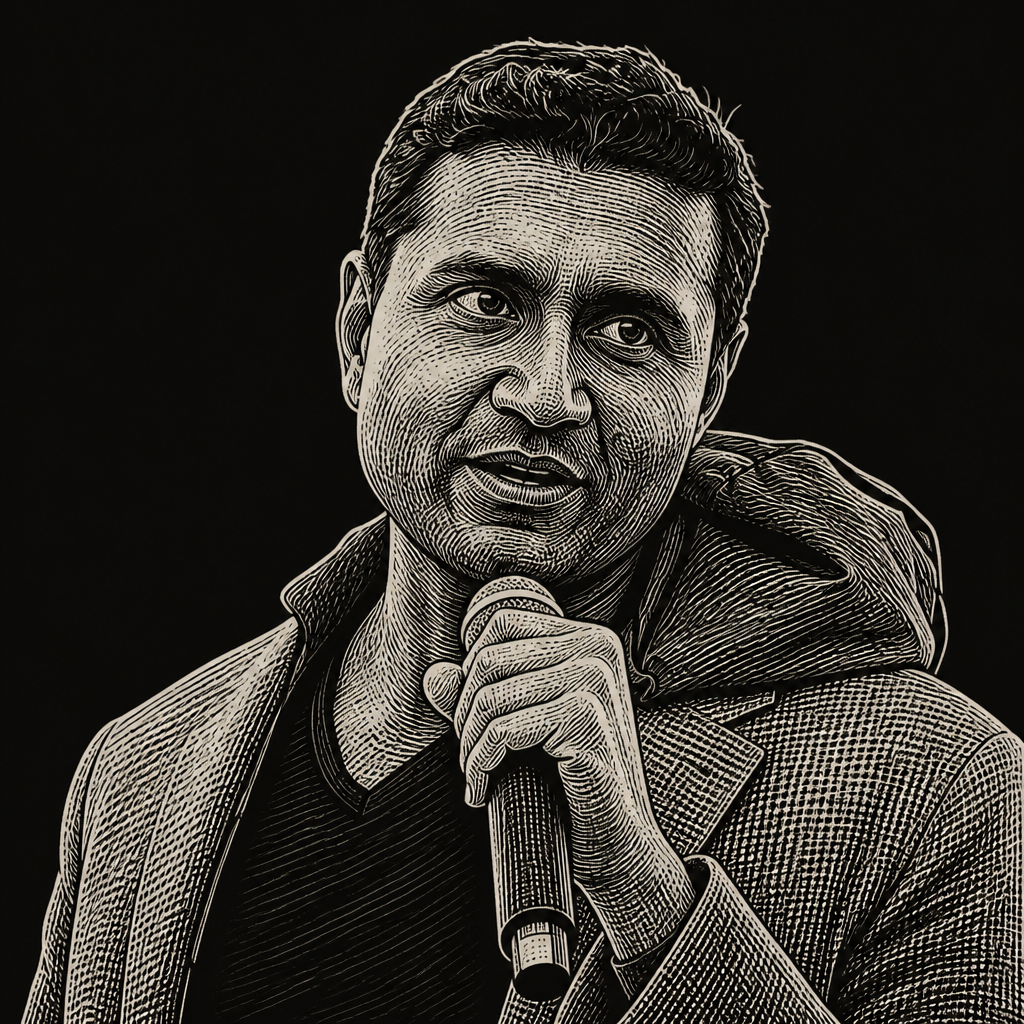
We're listening too much to the inventors of AI. I know that's appealing. They're geniuses, they're smart. We need to be listening to the frontline factory workers who are using AI, saying, wow, I was able to add a third shift. I was able to hire more workers, or the ICU nurse who says, I have more time to spend with my patients.
Baker then gave the most concrete pro-AI story in the source. He described a hedge fund manager whose daughter was born with a rare genetic mutation that impaired neuronal firing and would, Baker said, likely have condemned her to a life “devoid of joy” and meaning. The father used LLMs to research existing drugs and found one that was safe and already on the market. According to Baker, the drug increased the percentage of times the neurons were firing from roughly 30–40% to 80–90%, allowing the child to live a normal life. Baker said the father was now using AI to tailor a further drug and believed he could have a complete cure in months. “We need to tell those stories,” Baker said.
Friedberg’s explanation for anti-AI sentiment was broader and more psychological. He said people see technology as leverage for a small group, and AI represents that more than anything: a small number of people who control and profit from AI may receive outsized returns before the technology diffuses broadly. The average person, in his account, is not yet being told when AI benefits them or how, while they are being told that a few people are making trillions of dollars.
He also described AI as “almost anti-humanist.” Like the Copernican revolution, which displaced Earth from the center of the universe and threatened existing power structures, AI shifts the human ego away from the center. Friedberg said this is not the cause of the backlash, but it fuels it.
On whether AI should slow down, Friedberg’s answer was no — and also that it may not be possible. He compared the situation to nuclear proliferation after the Manhattan Project. Once the technology proliferated, the United States could not simply stop; it needed a balance against Russia. He argued AI has a similar game-theoretic structure. If the United States slows and China does not, the resulting asymmetry would be dangerous for the world and for the United States.
Regulation, job protection, and the limits of asking government to manage the transition
Calacanis pressed two concrete policy proposals: testing frontier models before release for risks such as bioweapons and terrorism, and pacing the rollout of automation such as self-driving cars or humanoid robots to protect workers.
Gavin Baker was cautious about federal testing requirements. He said the issue is complicated and that “we’re a little early” for the United States to impose such a framework alone. A bilateral or multilateral arrangement with China, with alignment and verification, would be more palatable to him. But he emphasized that the United States already has forms of regulation: self-regulation and the courts. If an AI model company behaves irresponsibly, people who are harmed have recourse. His deeper objection was institutional: once power is given to the government, “it’s almost never taken back,” and tends to grow.
Chamath Palihapitiya’s regulatory framework was narrower. He said the United States and China likely need some form of KYC for AI models so that dangerous capabilities do not get into the hands of people who cannot be controlled, such as someone trying to create a biological weapon. He argued China already reviews training runs before model releases, and that both sides should be able to agree on some ground rules. But he sided with Friedberg’s view that the broader race is deterministic: the United States and China need to reach a place where both can look at each other and say “weapons down.”
On job protection, Palihapitiya objected to policymakers speaking on behalf of truck drivers, warehouse workers, or package sorters without asking those workers whether they want the jobs being protected. If truck drivers say they love the work and can provide for their families, he said, that is one argument. But if Amazon warehouses have 35% or 40% churn, then policymakers should ask why. “What exactly is it that we want to protect?” he asked.
Baker argued that cities without autonomous vehicles will come to feel “barbaric and unsafe,” comparing it to the early days of Uber when some cities did not have the service. He invoked automotive deaths in the United States and globally, saying municipalities that ban safer technology could face wrongful-death arguments. His broader point was that America’s patchwork of states and municipalities can surface competing approaches; over time, people and voters can move toward what works.
The local-governance version of the same argument came through AI-enabled policing. Calacanis cited Flock Safety as an example of a bottom-up AI tool deployed town by town, with cameras used to monitor vehicles associated with crimes. He said, based on his conversations with Flock’s CEO, that the company uses a rolling database, does not do facial recognition, and maintains audit trails. Baker argued that technologies such as Flock could materially reduce crime, while noting that some municipalities will choose differently for moral or ethical reasons.
A Cambridge City Council excerpt shown on screen said the council had voted to drop ShotSpotter after public comment and deliberation, with “intense distrust of the current federal administration” cited as a factor. Baker framed that decision as an example of a city choosing against gunshot detection. Palihapitiya contrasted it with what he said he saw in Las Vegas: gunshot detection, drones deployed from police buildings, and a mission-control environment that can put eyes on an incident within minutes. He argued the investment required is small relative to the cost of crime, estimating that $30 million to $40 million a year could make Las Vegas the safest city in America.
Tech CEOs are making the labor story worse
Calacanis argued that public fear about AI is no longer only about speculative future job loss. In his view, large technology companies are now providing current examples that confirm the fear: profitable companies laying people off while explicitly discussing AI-driven productivity and model training.
He pointed first to a text excerpt shown on screen that he attributed to Cloudflare CEO Matthew Prince. The excerpt said Prince had laid off more than 20% of the workforce despite record revenue growth, strong free cash flow, and unprecedented customer additions. The text framed jobs into three categories drawn from Peter Drucker: builders, sellers, and measurers. It said builders and sellers were safe, while “measurers” include functions such as audit, revenue recognition, finance, legal, compliance, and human management. The memo said the best businesses would minimize investment in those functions.
Chamath Palihapitiya called the note horrible and said it was an example of disastrously bad PR. His objection was not simply that layoffs happened; it was that the memo reduced people to a label and then marked them with it publicly. If a former Cloudflare employee now seeks work, he said, someone might ask whether they were one of the “Cloudflare measurers.” Palihapitiya’s advice to CEOs was blunt: stop writing public missives if they cannot communicate responsibly.
The second example was Mark Zuckerberg. A leaked recording was played in which Zuckerberg said Meta’s internal engineers could help train coding models better than contractors because the average intelligence of employees at the company was significantly higher.
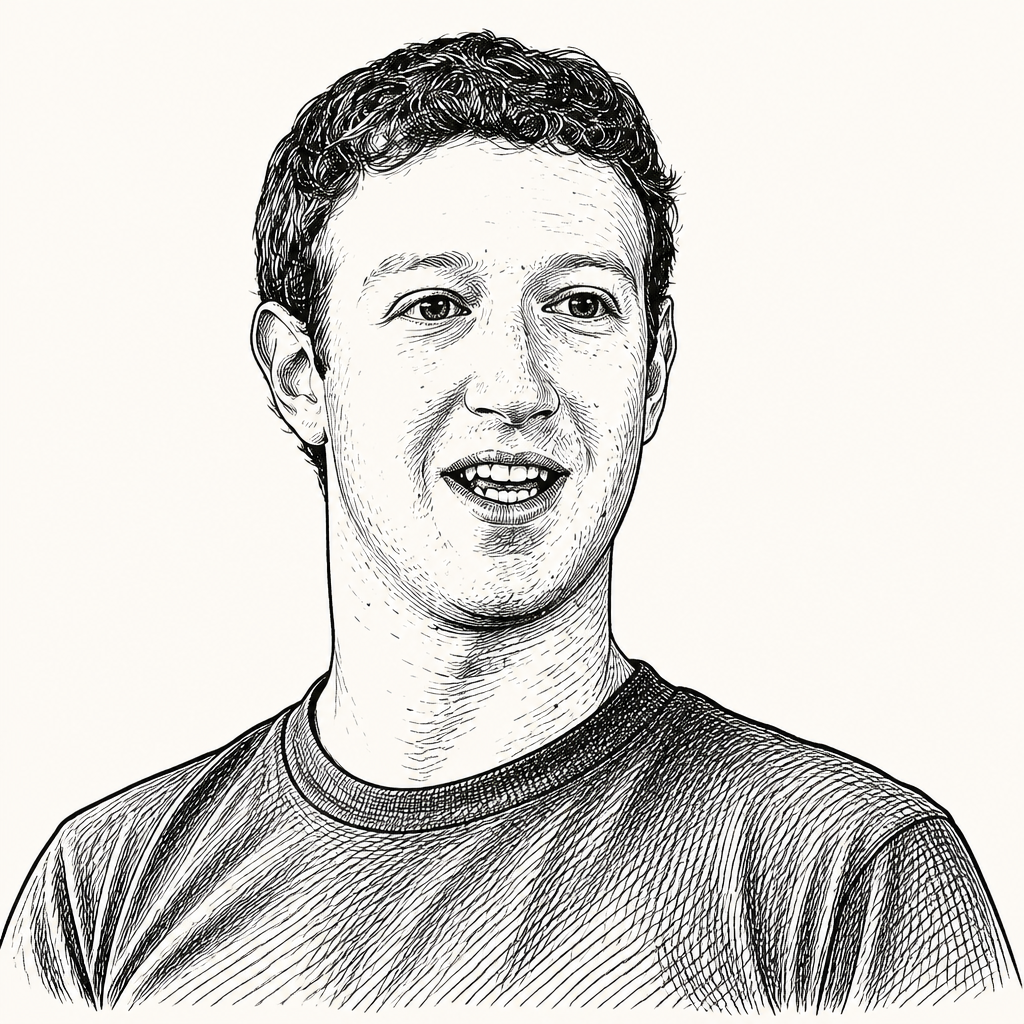
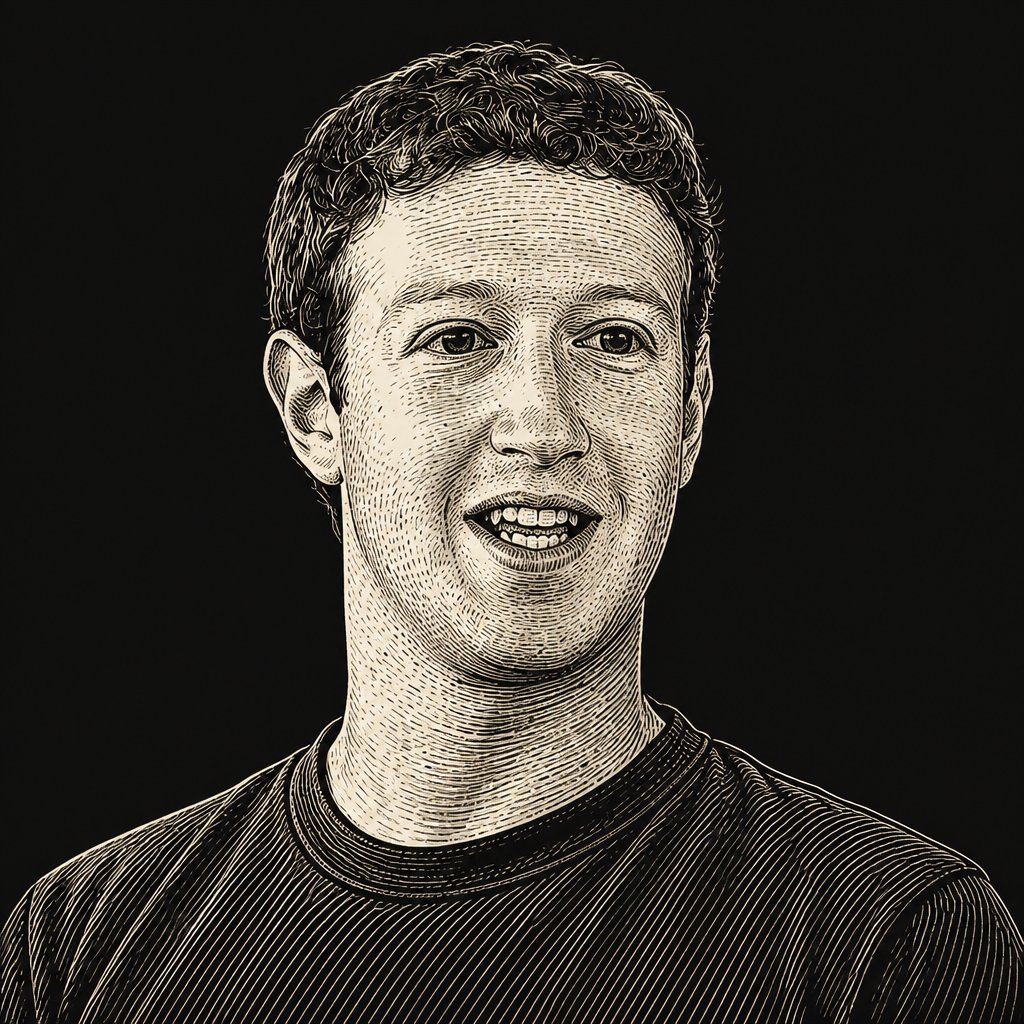
If we're trying to teach the models coding, for example, then having people internally build tools or solve tasks that help teach the model how to code, we think is going to dramatically increase our models' coding ability faster than what others in the industry have the capability to do who don't have thousands and thousands of extremely strong engineers at their company.
Calacanis said Zuckerberg was laying off 8,000 people while, according to Calacanis, also putting recording software on employees’ computers to study and train Meta’s models. He described workers who had built AI tools during hackathons to make their jobs more efficient and were then laid off. The perception, he argued, is now that the best an employee can hope for is to keep a job long enough to train the system that may replace them.
Palihapitiya did not dispute the fear. He said the problem was the messaging and the sequencing: wait, he said, until these companies next file regulatory documents authorizing massive buybacks and dividend increases. His point was that companies may make labor decisions, but they are choosing a particularly damaging way to explain them at a fragile public moment.
The SpaceX filing, as presented, is really three businesses and a compute option
Calacanis said SpaceX had filed an S-1 and was aiming to raise $75 billion at a $1.75 trillion valuation, with a likely mid-June listing under ticker SPCX. He said it would be the largest IPO ever by more than double Saudi Aramco’s $29 billion IPO.
As Calacanis presented it, SpaceX is less a single rocket company than a collection of three major businesses: Starlink, space launch, and AI compute.
The operating picture he described was uneven. Calacanis said Starlink is currently the “money printer,” with $11.4 billion in revenue last year, 50% growth, and $4.4 billion in operating income. A Starlink subscriber chart shown in the source listed 2.3 million subscribers in 2023, 4.4 million in 2024, 8.9 million in 2025, and 10.3 million in Q1 2026. He argued that the business could plausibly reach hundreds of millions of paying subscribers.
The space business, by contrast, was described by Calacanis as $4 billion in revenue, growing 17%, but with $650 million in operating losses. The AI business was $3.2 billion in revenue, more than doubling year over year, but with $6.4 billion in operating losses. Calacanis also said SpaceX had $20 billion in capex last year, with more than 60% for AI compute buildout.
| Business | Revenue described | Growth or profitability detail |
|---|---|---|
| Starlink | $11.4B last year | 50% growth; $4.4B operating income |
| Space launch | $4B | 17% growth; $650M operating loss |
| AI | $3.2B | More than doubled year over year; $6.4B operating loss |
The most important shown disclosure was the Anthropic compute agreement. The document excerpt on screen said SpaceX had entered cloud services agreements with Anthropic in May 2026 for access to compute capacity across COLOSSUS and COLOSSUS II. Anthropic agreed to pay $1.25 billion per month through May 2029, with capacity ramping in May and June 2026 at a reduced fee. Either party can terminate on 90 days’ notice. Anthropic retains ownership and IP rights in its content, AI models, and data.
Calacanis called this “Elon Web Services” and said the deal amounts to $45 billion over three years, or $15 billion a year — effectively adding another Starlink-sized revenue stream. Baker’s reaction was that the AI business had “already effectively quadrupled.” The key was not just the contract size but the build-speed evidence: Baker cited data indicating that SpaceX’s first data center took 122 days, the second 91 days, and the third 66 days. He argued SpaceX can build data centers “dramatically faster than anyone else at a lower cost,” and now has a clear off-take partner.
| Data center | Build time cited by Baker |
|---|---|
| First | 122 days |
| Second | 91 days |
| Third | 66 days |
Baker tied that to Nvidia’s allocation incentives. Jensen Huang, he said, wants GPUs used. GPUs will go to whoever can plug them in, turn them on, and “start converting electrons into tokens.” If SpaceX can repeatedly stamp out data centers, Baker said the business can grow much faster than anyone might have contemplated three months earlier.
The Cursor angle was central to Baker’s xAI argument. Calacanis and Palihapitiya spoke as though xAI’s purchase of Cursor was already effectively decided, while Calacanis noted the deal was not in the S-1. A shown “Pareto Curve: Score vs. Avg Cost / Task” compared AI coding models, with Cursor’s Composer 2.5 plotted outside the existing frontier. Baker said Composer 2.5 was the result of three or four weeks of reinforcement learning on Colossus 2 using Cursor’s data. He said Cursor allegedly has more coding-token data than exists on the public internet, and said Cursor and Anthropic probably have the most proprietary coding data. Composer 2.5 used the same base model as Composer 2, Kimi 2.5, so Baker attributed the jump to reinforcement learning on proprietary data and compute.
That led to a larger claim: if Cursor data is injected into a new base model and then reinforced on what Baker called the biggest coherent compute cluster in the world, Cursor could move from behind Codex, Google, and Anthropic to dominance. He said Cursor had been “dead in the water” on compute access until Elon Musk let it onto Colossus.
Baker also emphasized Grok Build. In his account, Grok lacked a “harness” comparable to Claude Code or OpenAI’s Codex. Calacanis translated that as a downloadable app with integrations to Notion, Gmail, Slack, and other tools. Baker said it is more than an app: it is a runtime and environment that manages state and memory, making models dramatically more useful in an agentic world. The model and the harness, he said, increasingly need to be developed together.
The $2 trillion SpaceX case rests on infrastructure, not launch revenue
Chamath Palihapitiya’s valuation case for SpaceX at roughly $2 trillion was explicitly not based on current earnings. He estimated SpaceX did $18 billion or $19 billion in revenue last year and might do $25 billion to $30 billion this year. On that basis, the IPO would look expensive. But he argued investors would not primarily be buying last year’s revenue; they would be buying the most important internet infrastructure project since the internet itself, a delivery infrastructure, and an AI compute business.
He divided the case into layers. Starlink, in his view, can scale to hundreds of millions of users because it is useful and will become cheaper. The launch business is a GDP-plus growth business that enables everything else. The AI business includes both applications and compute infrastructure, with terrestrial Colossus data centers alone potentially reaching $100 billion to $200 billion in revenue by 2030 or 2032.
The reason to value the company on revenue, Palihapitiya argued, is operating leverage. Revenue gives Musk the capital to invest in adjacent businesses that consolidate SpaceX’s differentiation. He described this as a flywheel: a capital moat accelerates a technology moat, which accelerates execution and learning. He also repeated his view that Tesla would eventually be merged in, creating a larger entity with physical capability, learning capability, connectivity, infrastructure, and AI.
What he creates is a capital moat that then accelerates a technology moat, that then accelerates an execution and a learning moat.
Palihapitiya also focused on data-center power architecture. He said Jensen Huang needs a design partner for direct-current-to-direct-current delivery inside data centers, avoiding inefficient conversions from DC to AC and back to DC. Today, he said, power transformations create loss, cooling requirements, and complexity. A fundamental rearchitecture could be a game changer, and Palihapitiya argued Musk is likely the natural partner because of the complexity of gigawatt-scale infrastructure.
David Friedberg’s case for SpaceX was less financial and more civilizational. He connected SpaceX to the earlier anti-AI and anti-progress theme. If governments restrict speech, commerce, information flow, or data-center buildout, then an alternative internet infrastructure becomes important. A space-based communication network and eventually space-based data centers could serve as a “backup for civilization” or a “backup for progress,” because they would be harder for Earth-based governments to control, manipulate, or destroy.
Calacanis linked this to Musk’s original SpaceX vision, saying Musk initially wanted to “back up the biosphere” with geodesic domes in space containing plants, wildlife, and creatures. He argued that orbital data centers look doable when compared with Starlink, although Palihapitiya cautioned that data-center satellites are physically very different: larger, with bigger foils and wings, and not simply a scaled Starlink.
Gavin Baker supplied the technical distinction he thought mattered most: reusable versus rapidly reusable rockets. Falcon is reusable, but Starship is designed for rapid reusability — flying and landing the same rocket multiple times per day rather than refurbishing it over 30 or 60 days. Baker said this is much harder than ordinary reusability, but necessary for Musk’s larger ambitions, including a moon base, a Mars colony, and mass drivers on the moon. If Blue Origin or China solves reusability, Baker argued, they are still roughly where SpaceX was 10 years ago.
Asked when rapid reusability arrives, Baker declined a precise prediction but guessed “a year or two,” maybe sooner. He stressed that even a failed Starship test would still produce learning because SpaceX instruments failures and iterates quickly.
On orbital compute, Baker said there is already a working Nvidia H100 GPU in space, and that Karpathy had both trained a model on it and used it for inference. He also said SpaceX has a talent for using semiconductors not designed for space by engineering the rocket and payload around them and testing whether they survive. His point estimate for orbital compute becoming real was the second half of 2028 to the first half of 2030.
Nvidia’s selloff reflects skepticism about share, useful life, and what the market is actually pricing
Calacanis presented Nvidia’s quarter as extraordinary: $81.6 billion in revenue, up 85% year over year and 20% quarter over quarter; $48.6 billion in free cash flow; roughly 75% gross margins; a $5.3 trillion market cap; a new $80 billion buyback authorization on top of remaining authorization; and a dividend increase from one cent to 25 cents per share. Yet the stock’s performance had not matched the scale of the results.
| Metric | Q1 FY27 figure | Comparison or note |
|---|---|---|
| Revenue | $81.6B | Up 85% year over year; up 20% quarter over quarter |
| Free cash flow | $48.6B | Shown against $26.1B in Q1 FY26 |
| GAAP gross margin | 74.9% | Non-GAAP gross margin shown at 75.0% |
| Capital return | ~$20B | Dividends and share repurchases in Q1 FY27 |
| New repurchase authorization | $80B | On top of roughly $39B remaining as of Q1 FY27 |
Gavin Baker said the market is cross-sectionally inefficient across AI infrastructure. In Baker’s telling, memory makers trade at three to five times earnings, Nvidia at what he called a low multiple, and some other accelerator companies at reasonable multiples. Meanwhile, power, cooling, and some optical names are discounting much more aggressive outcomes. His conclusion was that both cannot be right. If the power, cooling, and optical multiples are right, then Nvidia and memory should go up a lot. If Nvidia and memory multiples are right, the rest probably underperform.
He pushed back on the narrative that Nvidia is losing share to hyperscaler ASICs such as Google’s TPUs or Amazon’s Trainium. Broadcom had guided for 143% year-over-year growth in AI semiconductor revenue, which Baker said feeds the ASIC share-gain story. But he argued the proper comparison should strip out China and compare Nvidia’s hyperscaler plus AI cloud revenue against Broadcom’s relevant AI semiconductor revenue. On that basis, he said Nvidia is growing faster in Western AI data centers than Broadcom and other companies associated with ASIC share gain.
The frustration for Huang, Baker said, is that Nvidia is growing faster than hyperscaler capex even without those adjustments, yet the share-loss narrative persists. The other frustration is benchmarking. Baker said competing ASICs are not being submitted to benchmarks such as MLPerf or semi-analysis inference tests, and he thinks that is because they would lose. “You can’t fight shadows,” he said.
The most important underappreciated detail in Nvidia’s quarter, in Baker’s view, was its CPU business. Nvidia said it expected CPU revenue of $20 billion this year. Baker called that extraordinary: overnight, Nvidia becomes one of the world’s largest CPU manufacturers. He attributed this to Nvidia’s unique position working with every lab, giving it visibility into where models are going and allowing it to co-design chips accordingly.
Chamath Palihapitiya said this changed his own prior view. He had believed the market would move toward domain-specific architectures outside Nvidia. Instead, he said, that DSA market evolution appears to be happening inside Nvidia because Nvidia is co-designing with everyone.
The financing debate around GPUs was also important. Baker addressed the bear case that CoreWeave and other neo-clouds are amortizing GPUs over four, five, or six years when the true useful life may be closer to two. Calacanis identified this as Michael Burry’s argument. Baker said the emergence of disaggregated inference and domain-specific accelerators changes the useful-life question. Older GPUs can remain central in a constellation, with accelerators such as Groq or Cerebras in front of them for decode. That could extend GPU useful lives to 10 or 15 years, he said.
Palihapitiya said Nvidia’s quarter “single-handedly saved the neo clouds,” because it supported the financing case. If GPUs can be financed through asset-backed loans at rates such as CoreWeave’s roughly 6%, and if the useful life is longer than skeptics claim, the economics of GPU clouds look much more durable.
Macro signals are flashing, but the group split on whether they overwhelm the AI cycle
The macro backdrop was presented as deteriorating. Calacanis cited oil remaining elevated during week 12 of a conflict he said had been expected to last four to six weeks. A Polymarket chart shown in the source assigned a 99% chance that May annual inflation would come in at 4.2% or higher, and a separate headline said top economic forecasters projected inflation to hit 6% in the second quarter. Another Polymarket chart showed a 34% chance of a Fed rate hike in 2026. The 10-year Treasury yield was cited around 4.6%, above the sub-4% target Calacanis said Scott Bessent had discussed on prior appearances.
International bond markets were also flashing. A shown excerpt said Germany’s 10-year bund yield had hit its highest level since 2011, Japan’s 10-year JGB its highest since 1997, Japan’s 30-year its highest level in history dating back to 1999, and U.K. gilt yields their highest since the financial crisis era. Calacanis also noted that Korean retail investors were borrowing record amounts to trade AI chip stocks, comparing it to prior crypto speculation.
David Friedberg’s response was deliberately fatalistic. Global debt-to-GDP is 310%, he said, and governments at every level are spending to keep economies growing and support existing leverage. Eventually, in his account, that breaks. Currency values fall, inflation rises, money printing inflates asset prices so debt can still be serviced, and a spiral begins. He singled out the Japanese yield move as a possible catalyst for a credit crisis because of carry trades.
Chamath Palihapitiya did not dismiss the signals but gave an investor’s answer: own a few businesses that represent the future and can be underwritten for 10 years; avoid speculation elsewhere. He said he now keeps fewer than five public stocks in his head and has concentrated holdings in a small number of companies. The market’s “sugar high” on the way up no longer compensates for the pain on the way down.
Gavin Baker’s answer was that multiple things can be true at once. Rising rates and inflation are concerning. At the same time, AI fundamentals are unprecedented, with Anthropic growing faster than any company in history at massive scale and now reportedly profitable. He also noted that the late-1990s tech bubble occurred when the 10-year and 30-year were much higher than today, while the Nvidia of that era, Cisco, traded at 100 times forward earnings; Nvidia, in Baker’s view, trades at a low-to-mid-teens multiple of real earnings based on buy-side consensus.
Baker also argued that a Strait of Hormuz disruption, while bad for everyone, is relatively best for America because the United States is self-sufficient in energy and food and is a major oil and gas producer and exporter. Natural gas, the dominant input for U.S. electricity, is down this year, while important electricity inputs elsewhere, including LNG, are up sharply. Because electricity is a base input to manufacturing and industrial processes, he said the disruption could be a forcing function for American reindustrialization and aligns with Trump’s policy goals.
His caveat was clear: rising rates and inflation are never good. But he argued they have to be held in mind alongside the strengthening AI fundamentals and America’s relative advantages. He added one more tactical note: AI usage and AI stocks may have seasonality, historically because students use ChatGPT and Claude less in summer and people work less when the weather is good. Whether agentic AI changes that seasonality remains unknown.
The China trip produced little on the surface, but the strategic question is chip access and oil leverage
A 48-hour trip by technology CEOs and President Trump to meet Xi Jinping produced limited visible results, according to Calacanis: positive optics, some soybeans, some aircraft, and some movement on H100s or H200s being sold to Baidu and other Chinese companies. Friedberg said the hoped-for “grand deal” that would de-escalate tensions and establish a long-range partnership did not materialize. He noted that Putin was with Xi immediately afterward, presenting another performative relationship moment between China and Russia. His conclusion was that there is no tidy resolution; the rising-power challenge continues.
Chamath Palihapitiya was more constructive. He said the trip was successful because what matters may have happened behind closed doors. He guessed the parties discussed geopolitical “tic-tac-toe” and how to divide the game board in ways that help both sides. He did not claim to know the details, but suggested the public announcements may not capture the meaningful alignment.
On chips, Gavin Baker argued that selling deprecated Nvidia GPUs to China can be stabilizing. His reasoning was that limiting China too aggressively increases the odds that China develops its own alternative AI ecosystem, which he said would likely be more power-hungry and bring optical scale-out fabrics earlier. Selling controlled, older Nvidia chips may keep America ahead while reducing the need for China to build a separate stack. Palihapitiya clarified that he agreed: “sell everything to them,” he said, while maintaining that the deeper negotiations would not appear in a press release.
Baker also emphasized that dialogue itself helps avoid the Thucydides Trap, a concept he said China is aware of and that Xi had raised by name. Talking is an integral step, in his view, toward avoiding a great-power conflict.
The more forceful deterrence point was about oil, and Baker presented it as the kind of message he assumed would be communicated. Wars consume vast amounts of oil, he said, and China buys oil from Iran, Venezuela, and Russia. If two of those three are effectively removed from the chessboard, China is left relying on Russia for a fraction of what it needs. If China did something the United States disliked, Baker said, Venezuelan oil, American oil, Brazilian oil, and Middle Eastern oil via the Strait of Hormuz could all be denied. Good luck, he said, fighting a war with only Russian oil against the United States, Japan, South Korea, Australia, and others.
That led Baker to a stabilizing conclusion: however the Iran conflict resolves, the world may be more stable afterward if China better understands the energy constraints around any military escalation.