AI Governance Fight Shifts to Centralization, Open Models, and Worker Agency
 Jason Calacanis
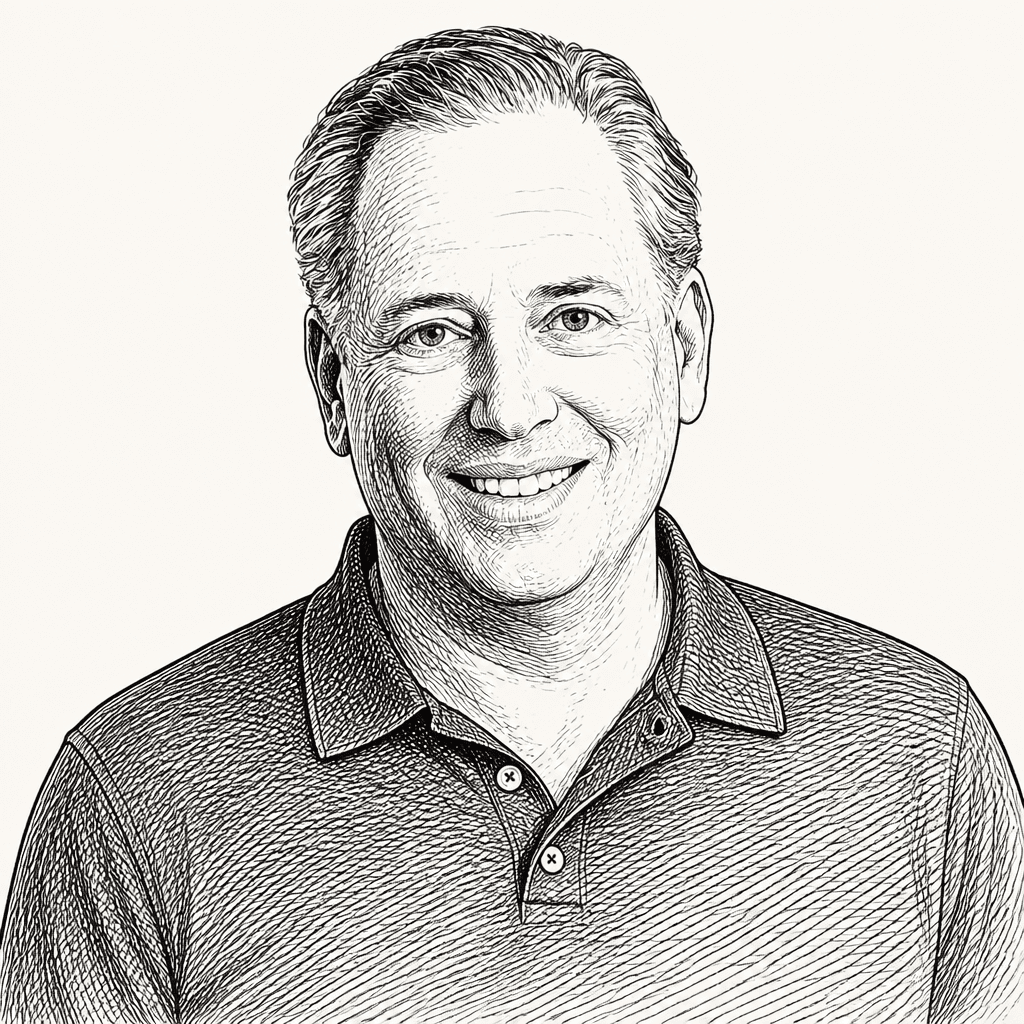 David Sacks
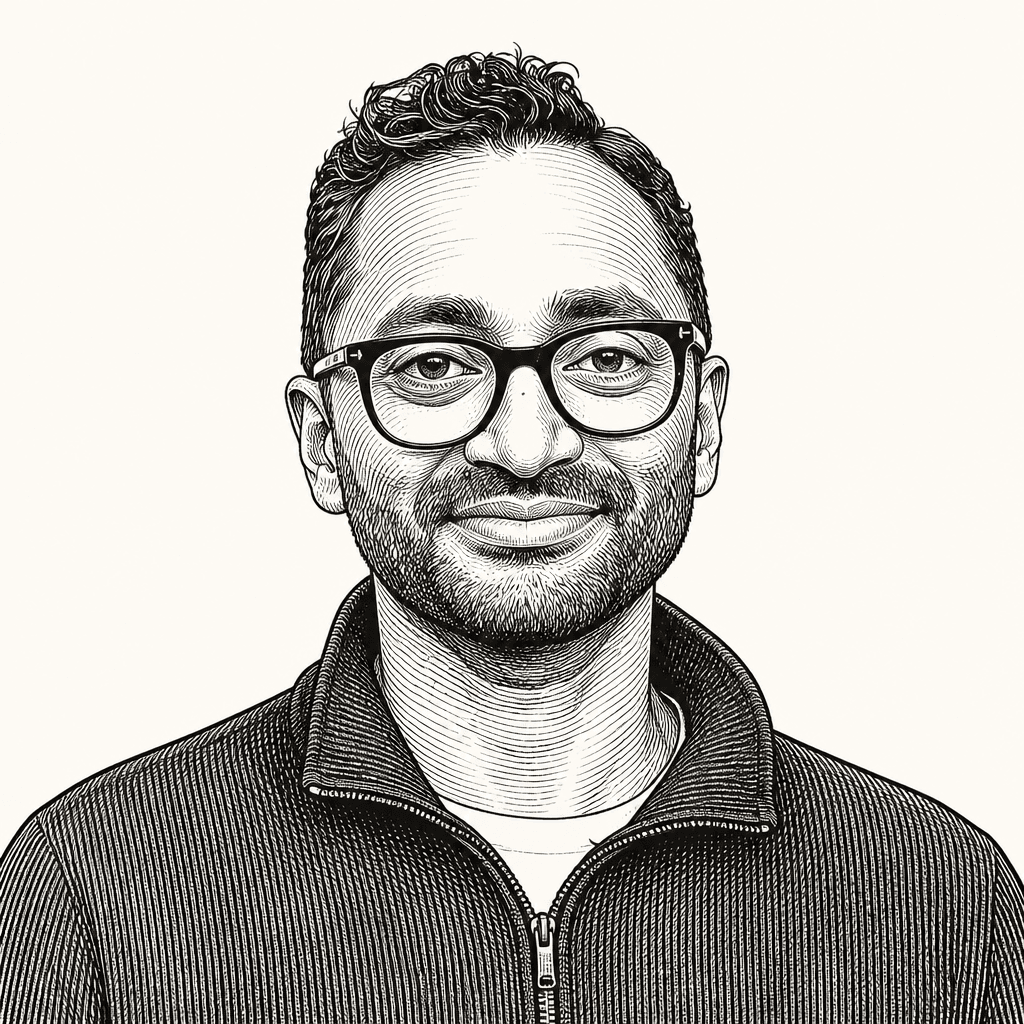 Chamath Palihapitiya
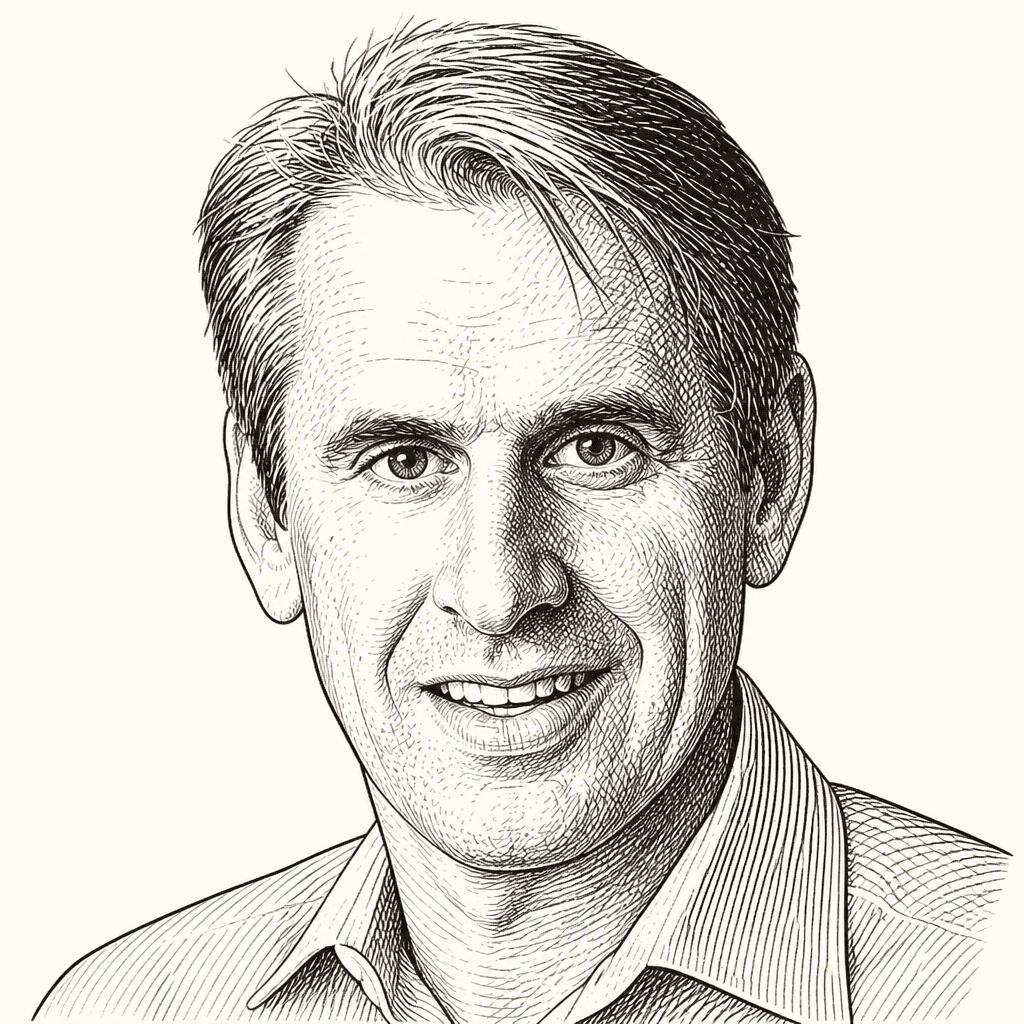 Bill Gurley
 Nick CalacanisAll-In PodcastFriday, May 29, 202627 min read
On All-In, Bill Gurley joined Jason Calacanis, David Sacks and Chamath Palihapitiya for a debate framed less around whether AI is powerful than around who will control it. The panel read Pope Leo XIV’s AI encyclical as a warning about concentrated power, but split over the remedy: Sacks argued government regulation could become the centralizing threat, while Gurley and others scrutinized Anthropic’s safety posture as either regulatory strategy or something closer to a belief in building a superior intelligence. Their practical conclusion was that open models, swappable systems and worker fluency are the main checks against AI power consolidating in a few labs or agencies.
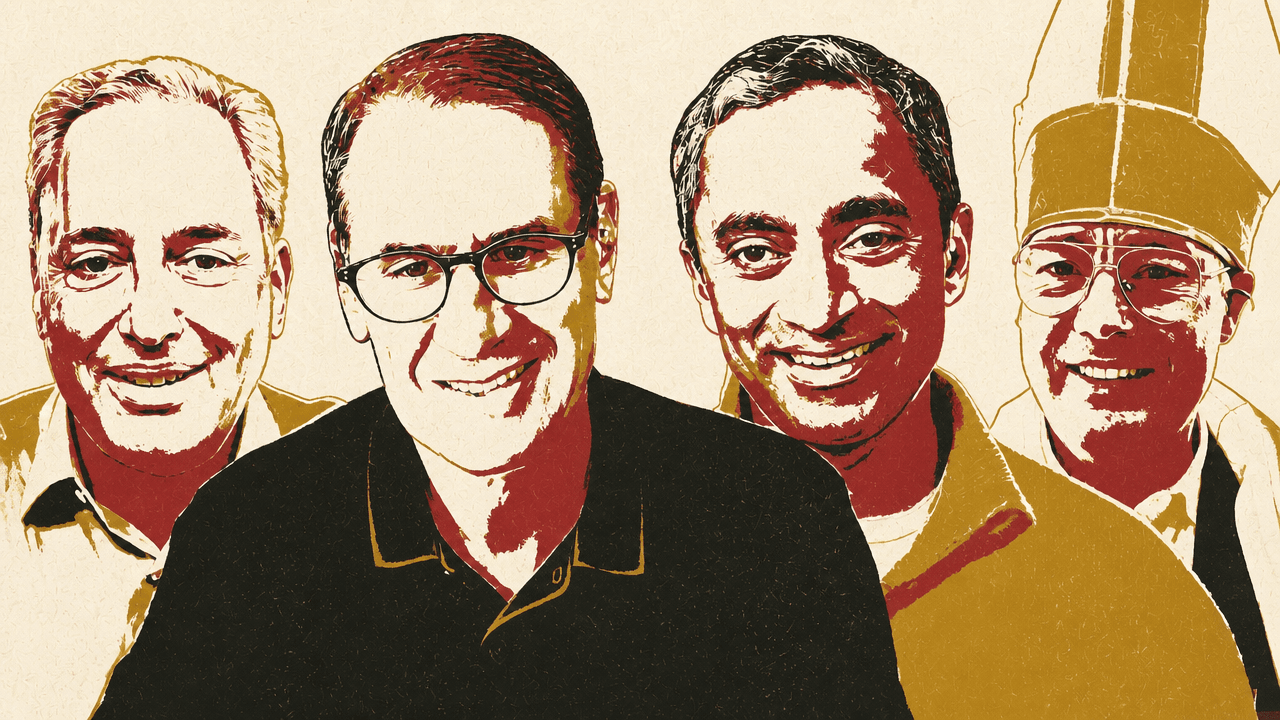
The AI fight is becoming a fight over who gets to centralize power
The sharpest disagreement was not whether artificial intelligence is powerful. It was who should be trusted with that power: frontier labs, governments, open-source communities, enterprises running their own systems, or individual workers learning to use the tools directly.
The Vatican’s AI encyclical, Magnifica Humanitas, put that question in moral language. The Vatican page identified the document as “Encyclical Letter Magnifica Humanitas of His Holiness Pope Leo XIV on Safeguarding the Human Person in the Time of Artificial Intelligence,” with sections including “Building for the common good” and “Remaining human.” Jason Calacanis said the document ran 235 pages and more than 42,000 words, making it almost a book-length treatment.

The encyclical passage presented on screen said technology “has the power to heal, connect, educate and protect our common home,” but can also “divide, exclude and generate new forms of injustice.” It continued: “In the abstract, technology in and of itself is not a solution to humanity’s problems, just as it is not inherently evil. In practice, however, technology is never neutral, because it takes on the characteristics of those who devise, finance, regulate and use it.”
Calacanis summarized the Pope’s position as a warning to business leaders: AI is not inherently evil, but it will reflect the people who build, finance, and control it. He said the Pope called for regulation of AI companies, worker retraining, safety for children, guardrails, and a ban on autonomous weapons. The harder question, as Calacanis put it, was whether AI would concentrate power in the hands of a few or serve everyone.
David Sacks said he agreed strongly with the Pope that the largest AI risk is the centralization of power and its misuse “against us” in an Orwellian way. But he located the most dangerous actor differently. The centralizer most likely to abuse AI, he argued, is government, because governments ultimately hold coercive power. He worried about AI being used for surveillance, censorship, and control.
The disagreement was over remedy. Sacks warned that giving government authority to regulate or approve AI development could create an “FDA for AI,” empowering agencies to give notes to model developers. The definition of safety, he argued, would then expand, as it did in social media trust-and-safety regimes, from narrow harms into psychological safety, microaggressions, disinformation, transphobia, and other categories. He said that path would turn AI safety into a censorship agenda.
Sacks reached for an old political-philosophy formulation: quis custodiet ipsos custodes — who guards the guardians? If a society gives guardians power to protect it from threats, what prevents those guardians from becoming tyrannical? He said the American founding handled that problem through checks and balances: federal versus state power, three branches of government, and a bicameral legislature. His AI analogue was competition and decentralization. If the AI market becomes monopolized by one or two firms, he would use antitrust aggressively. But while five frontier labs are competing, he would rely on competition as a check.
Bill Gurley challenged the historical premise behind the Pope’s framing. Pope Leo XIV, he said, had invoked Leo XIII’s 1891 encyclical on the Industrial Revolution as a model. Gurley argued that Leo XIII had been wrong about the long-run effects of industrialization. He listed the changes from 1891 to today as he understood them: the global workweek fell from over 60 hours to 34 hours; real wages rose 8 to 10 times after inflation; the median worker now earns more than a doctor did in 1891; global GDP per capita rose from $1,500 to $20,000; child labor in the United States fell from 18% to zero; workplace deaths fell 40-fold; life expectancy rose 60%; and global poverty fell from 75% of humanity to under 10%.
| Measure | Gurley’s stated change from 1891 to today |
|---|---|
| Global workweek | Over 60 hours to 34 hours |
| Real wages | Up 8x to 10x, adjusted for inflation |
| Global GDP per capita | $1,500 to $20,000 |
| U.S. child labor | 18% to 0 |
| Workplace deaths | Down 40x |
| Life expectancy | Up 60% |
| Global poverty | 75% of humanity to under 10% |
Gurley’s conclusion was not that AI is risk-free. It was that the earlier anti-industrial warning, which the new Pope explicitly admired, missed the long-run role of technology, innovation, and capitalism in raising living standards. “He got it dead wrong,” Gurley said of Leo XIII.
The governance debate split into two issues. One was whether the Pope was right that technology inherits the values and incentives of its builders, financiers, regulators, and users. Several speakers agreed with that premise in different ways. The second was whether more regulation would prevent centralization or accelerate it. Sacks’ answer was that regulation, if designed around approvals and safety mandates, could become the centralizing force itself.
Anthropic’s safety posture was read as both strategy and theology
The most charged thread concerned Anthropic. Bill Gurley said the company is a “mystery” to him because he had never seen a market leader so negatively outspoken about its own field. His first theory was regulatory capture: Anthropic’s public warnings about AI risk would help generate regulation that incumbents could shape and smaller rivals could not bear. He said Anthropic has been unusually aggressive in lobbying, including at the state level, and that its messaging has helped make American consumers afraid of AI.
After reading extensively about the company over the prior 30 days, Gurley said he had developed a second theory, which he called the “Dr. Frankenstein theory.” This was explicitly his interpretation, not a fact established by the materials on screen. He said he had met people who seemed to believe it was their responsibility, and were excited, to build a species superior to humans. He urged viewers to read Anthropic’s materials directly.
The materials shown were specific. A cover page for “Claude’s Constitution,” published January 21, 2026, listed authors including Amanda Askell, Joe Carlsmith, Chris Olah, Jared Kaplan, Holden Karnofsky, several Claude models, and many other contributors. Gurley called the document roughly 80 pages and “hard to get through,” but worth reading. He also pointed to Amanda Askell’s podcast appearances and Dario Amodei’s essay “Machines of Loving Grace.”
Amodei’s essay took its name from the poem “All Watched Over By Machines Of Loving Grace.” The poem’s final stanza appeared on screen:
“I like to think / of a cybernetic ecology / where we are free of our labors / and joined back to nature, / returned to our mammal / brothers and sisters, / and all watched over / by machines of loving grace.”
Gurley found the imagery disturbing. “Sounds like overlord to me,” he said. He then cited a passage from Amodei’s essay speculating that future economic arrangements could include universal basic income, but perhaps only as a small part of a solution. The passage continued: “It could be a capitalist economy of AI systems, which then give out resources … to humans based on some secondary economy of what the AI systems think makes sense to reward in humans.”
Chamath Palihapitiya translated that as “a computational reward function for humans” that decides how much a person is worth. Gurley’s interpretation was sharper: “I don’t think they think they’re writing software,” he said. “I think they’re midwifing a deity here.” Between regulatory capture and the Dr. Frankenstein theory, Gurley said the second was more frightening to him.
Calacanis called the mentality “delusions of grandeur,” tying it to transhumanism and the belief that a small group of highly intelligent people can create a benevolent godlike system. Gurley corrected him on one point: the resource-allocation vision was not Gurley’s invention; he was quoting Dario Amodei’s writing.
Palihapitiya offered a tactical explanation that could coexist with Gurley’s theological one. If a company wants to build a “super god,” he said, the game-theoretic move is to get three or four entities in a room, close the door, dominate those counterparties, and set the rules. The asymmetry comes from the fact that regulators and oversight bodies cannot track the technical capability of the frontier lab. “If the refs don’t understand the game,” he said, “you’ll run over the game.”
Gurley added that Anthropic’s doom-oriented messaging has given it a halo among the “intellectual elite” — media, professors, and others likely to judge which AI company is most caring. Palihapitiya said that on one hand the company creates empathy, and on the other it publishes documents that reveal what it thinks. His charge was that people fail to connect those dots.
David Sacks tried to steelman Anthropic’s position before criticizing it. The best version, he said, is that Anthropic believes it is creating something extremely powerful, perhaps godlike, and therefore wants it to be safe. Anthropic spun out of OpenAI because its people believed OpenAI’s leadership was not taking safety seriously enough. In that telling, Anthropic sees itself as the actor that cares most and is therefore best positioned to manage the technology.
But Sacks said the same position leads naturally to regulatory capture. If a company brands itself as the safe AI company and depicts rivals as reckless, then calls for “reckless AI” to be stopped can strengthen that company’s monopolistic control. For Sacks, the relevant lens was centralization versus decentralization. If AI is as powerful as its critics and builders say, users need the ability to run it themselves on their own hardware rather than depend on a single company that may be aligned with government.
Palihapitiya made the dystopian version concrete. If benefits, compensation, and economic support were tied to algorithmic decisions, he said, society would need “100 or 1,000 or 100,000 versions” of the answer so a singular allocation could be challenged. A single authoritative answer to questions of human worth would be dangerous.
Open models became the proposed backstop against monopoly
The Anthropic debate flowed directly into AI sovereignty. Jason Calacanis distinguished privacy from what he called “intelligence sovereignty.” Privacy means a company cannot look at your photos, notes, or journal. Intelligence sovereignty means a company cannot use its AI to analyze your photos, emails, and messages and tell you how to interpret the world.
That is why Calacanis argued for open-source agents, local hardware, small language models, and verticalized models that can run on consumer or enterprise devices. He described Apple as a possible “dark horse” because of its historical stance on data privacy and because future Apple hardware might support local inference with substantial memory. When Calacanis described China as leading open source, Palihapitiya narrowed the claim: “They’re leading the open weight movement. It’s not open source.”
David Sacks agreed with the broader point. Open source, he said, means software freedom: the ability to run the program on one’s own hardware without giving up data sovereignty or privacy to a monopolist aligned with government. If monopoly or duopoly AI becomes the only option, he said, users face a choice between living off the grid or submitting to a social-credit-like system.
The economic case for decentralization turned on whether frontier models are becoming interchangeable faster than their capital needs are growing. Palihapitiya showed a Rogo AI benchmark for financial-analysis tasks and quoted its most important line: “There is no single best model.” The visible text said Opus 4.7, GPT-5.5, and Sonnet 4.6 were separated by less than 0.3 percentage points overall. Palihapitiya said he sees similar convergence across many evals. If trillions of dollars are going into model training while benchmark performance converges, he asked, what is the ROI on incremental spend?
The tweet shown from Palihapitiya quoted the Rogo AI result this way: “At the top of the leaderboard, Opus 4.7, GPT-5.5, and Sonnet 4.6 appear almost indistinguishable, separated by less than 0.3 percentage points overall. Read superficially, the result suggests convergence: three frontier systems reaching roughly the same level of capability.”
Gurley answered from the application and infrastructure layer. Smart people in the open-source community, he said, have told him the market needs more open-source connectors. He pointed to MCP, which he said is run by the Linux Foundation, as an example of the kind of interface that can let models interact with other software. His analogy was Kubernetes: Google used it to commoditize where workflows live and make migration away from AWS easier. If connectors, context management, and data interfaces become open and standardized, models become more swappable.
That matters because frontier model companies are moving up the stack while application companies want to avoid being trapped below them. Gurley mentioned Cursor’s need to reckon with model companies moving into its territory and argued that founders and developers should build more open interfaces that make model exchange easier.
Calacanis showed a company he said he invested in and incubated, Go Abacus, which sells an on-prem AI appliance called Go1. The product page described it as “on-prem AI that’s easy to setup,” with “no cloud required,” up to eight Nvidia GPUs, up to 2,000 concurrent users from a single appliance, and up to 800GB/s memory bandwidth. Calacanis said organizations in insurance, healthcare, and other sectors want to run AI internally, build their own models, and avoid sending sensitive data to cloud providers.
Palihapitiya described the enterprise pattern similarly. In Fortune 1000 deployments, he said, his company does not compete directly with OpenAI or Anthropic. Customers may prefer a particular model under the hood, but the control plane can hot-swap among them. Enterprises want to ride innovation without betting the company on one lab. They fear choosing the wrong technology if another model leapfrogs it, and they fear terms of service or political-philosophy conflicts with a frontier lab.
His example was a Canadian hospital system that supports Canada’s euthanasia laws but depends on a U.S. model provider whose policies say no. Whether the policy is right or wrong was not his point. His concern was operational: regulated enterprises do not want critical functions subject to a frontier lab’s shifting rules.
The cost side of enterprise AI is becoming just as important. Palihapitiya showed a tweet from Vivek Garipalli claiming that a Fortune 20 company had set a goal of $1 billion in AI-generated operating-expense savings, spent $200 million on tokens year-to-date, and had minimal results beyond modest customer-experience savings and some engineering savings from reduced hiring due to coding assistants. According to the tweet, the CEO had ordered token costs to be cut dramatically because the ROI was not there.
A separate headline said Microsoft had started canceling Claude Code licenses and would move thousands of developers to GitHub Copilot CLI instead. Palihapitiya called the market “super dynamic” and said no one knows the terminal solution. Gurley nevertheless praised Claude’s product quality, saying Claude for Excel is much better than Copilot. Palihapitiya said he uses Claude daily and, after hitting his token limit, put in a credit card and spent more because “it’s so good.”
Sacks then connected regulation to open models. He said the regulatory-capture agenda in Washington appears to be moving toward a ban on open-source or open-weight models. The rhetoric, in his account, is already visible: models need guardrails; open models can have guardrails removed; therefore open models are dangerous. He said Anthropic’s blog posts repeatedly take shots at open models in contexts such as cyber and biological threats. He interpreted that as predicate-building — putting facts and arguments into the public record to justify a later ban.
Palihapitiya asked what such a ban would do to the rest of the market. Sacks replied that the rest of the world would continue using open models, while the United States would put itself on an island. A ban on a model file — “a bunch of numbers” — would be hard to enforce against individuals, but cloud providers and infrastructure companies would comply, making open models much harder to use in the U.S. Meanwhile, the rest of the world would keep benefiting from lower cost, customization, and control.
The cost curve may also undermine the training moat. Sacks said the economics of training are changing because of domain-specific silicon and rewrites of core components. Two Elon Musk tweets were used to make the point: one saying SpaceX was nearly finished writing an in-house AI training stack in C that exact-maps to 220,000 GB300s and could improve speed by more than an order of magnitude versus JAX, and another saying the next step would be writing the inference stack in C for simultaneous high-speed reinforcement learning. Calacanis estimated that even a 1% efficiency improvement at that scale would equate to roughly 2,000 GPUs and hundreds of millions of dollars in compute.
Gurley said he had reached the same conclusion in a recent piece on open source strategy. If the U.S. succeeds in restricting open models, he said, the rest of the world may end up running on Chinese models.
Anthropic’s growth sharpened the monopoly question
Sacks’ case for decentralization had an immediate commercial backdrop: Anthropic’s reported revenue momentum. A headline from The Briefing said Anthropic was likely generating at least 35% more revenue than OpenAI. A chart attributed to The Information showed estimated annualized revenue of $45 billion for Anthropic and $30 billion for OpenAI.
| Company | Estimated annualized revenue shown |
|---|---|
| Anthropic | $45B |
| OpenAI | $30B |
David Sacks said this was not surprising and was something he had predicted. His concern was compounding. If one company is growing 10x year over year and another is growing 3x, he said, within two years the faster grower can approach monopoly share: “10 times 10 is 100. 3 times 3 is 9.”
He immediately added constraints. Anthropic may not be able to sustain that growth rate for two years. Competitors will respond, and already have. Compute availability may also impose physical limits. But he argued that any company would rather be on Anthropic’s trajectory than be the company that has to change the trajectory of a leader already pulling away.
This is why the same discussion kept returning to open models, swappable control planes, and antitrust. Sacks’ position was not that a monopoly has already formed. It was that AI, like other major technology categories, could still settle into monopoly or duopoly. In that scenario, the governance problem the Pope raised would return in a more concrete form: not whether AI is morally neutral in the abstract, but whether one or two firms can mediate economic, informational, and political life through proprietary systems.
Token spend is becoming a management problem
The AI sovereignty discussion exposed a second, less philosophical issue: companies are spending heavily on inference without yet understanding how to govern it. A Polymarket tweet claimed that an AI consultant revealed a client accidentally spent $500 million on Claude in a single month after failing to set employee limits. A follow-up tweet by savipww broke that down as $16.6 million per day and $694,000 per hour, claiming Claude had a built-in spending-limit feature that takes 30 seconds to enable.
David Sacks said a new meme was forming that token spend is wasteful or useless, even as the broader public narrative oscillates between “AI will put everyone out of work” and “AI is useless and it’s a bubble.” He said the spending ramp has been faster than enterprise customers expected, and companies will now push for efficiency. He did not think that changes the fundamental dynamics, though it may temper growth.
Jason Calacanis described how consumer pricing has trained people to think tokens are nearly free: $20 or $200 monthly plans that feel unlimited until the user hits a usage modal. He compared it to water: the first 10,000 gallons feel free, then suddenly every gallon costs money. Inside his own organization, he said, one person built an interface for Founder University, then another built one, then another followed because the first two got credit in a management meeting. Three people built three versions of the same portal before coordination caught up. The cost was hundreds of dollars and could have become tens of thousands, he said.
This is the enterprise version of the same problem Palihapitiya described earlier: bottom-up adoption through individual credit cards, later wrapped in enterprise licenses, produces spend that CEOs and CFOs cannot easily tie to outcomes. It looks like familiar product-led growth from Slack and other tools, but the economics are different because token usage scales with activity and experimentation. The issue is not whether employees are using AI; it is whether the organization has a control plane, governance, cost limits, and a way to map usage to productivity.
That pressure coexists with strong demand for the tools. Gurley and Palihapitiya both emphasized that Claude is a high-quality product. The issue is not that AI is obviously useless. It is that enterprises are discovering a gap between usage and measurable operating leverage. A company can spend heavily on tokens, generate prototypes and workflows, and still struggle to convert that into audited savings.
The jobs argument split into three different claims
The labor debate turned on whether AI is already causing net job losses, whether executives are using AI as cover for overdue cuts, or whether both can be true during a painful transition. The same headlines supported different interpretations.
Jason Calacanis introduced the perceived narrative reversal through Goldman Sachs CEO David Solomon’s New York Times op-ed, “The A.I. Job Apocalypse Is Overblown.” Calacanis summarized Solomon’s three points: AI will not eliminate 25% of jobs but may automate 25% of work hours; workers will fill that time with higher-level tasks; and just because a job can be replaced does not mean it will be. Solomon’s examples, as Calacanis presented them, included bank tellers increasing after ATMs, live entertainment growing after TV, and the U.S. labor market creating and destroying 25 to 35 million jobs annually.
A Fortune headline said Sam Altman and Dario Amodei were “walking back their AI jobs apocalypse prophecies” as they eyed blockbuster IPOs. David Sacks seized on that as vindication. His January prediction, he said, was that AI would lead to job gains, not job loss. Over the prior week, he argued, the narrative had shifted almost completely toward his position: Goldman’s CEO said the apocalypse is overblown, and Sam Altman and Dario Amodei were softening prior claims.
Sacks said Amodei’s newer argument resembled the Goldman framing: AI may automate 90% of someone’s tasks, but the remaining 10% could expand into new tasks. That matched what Sacks and Nvidia CEO Jensen Huang had been saying, in Sacks’ account: automating tasks does not necessarily automate away the purpose of a job. It frees workers to do higher-complexity work.
The three positions were distinct even when they used the same examples.
| Claim | Main speaker | Core argument | Evidence or examples used |
|---|---|---|---|
| Net job growth | David Sacks | AI automates tasks, but new work expands around the remaining human role; productivity and software proliferation create more jobs on net. | Goldman Sachs op-ed; Amodei and Altman softening rhetoric; Yale Budget Lab finding as described by Sacks; software-developer postings up 15%; GitHub code commits rising sharply. |
| AI washing | Chamath Palihapitiya and David Sacks | Many layoffs attributed to AI are really corrections for overhiring, mishiring, and poor management from the prior cycle. | Block layoff headline and analyst criticism; Meta overhiring argument; lack of reported, audited productivity lift from token spend. |
| Displacement | Jason Calacanis | Even if the economy eventually grows, CEOs are using AI to do more with less, and some jobs or layers will be eliminated in a painful transition. | Self-driving, robotics, package sorting, product-manager and middle-management compression, Cloudflare’s “measurers,” startup teams doing more with fewer people. |
Sacks’ claim was a net-job-growth thesis. He argued that current data does not support massive AI job loss. He cited a Yale Budget Lab study as finding “no discernible disruption” in the labor market over the last three years due to AI. He also said software-developer job postings are up 15% year-over-year and at a three-year high, despite coding being the breakout enterprise AI use case. If AI has not eliminated software-development jobs on net, he asked, which category has it eliminated?
A chart attributed to Indeed Job Labs, Bloomberg, and Bianco Research displayed software-development job postings rising against overall U.S. postings. Sacks then cited GitHub activity: 1 billion code commits last year and 1.1 billion in the past month. He interpreted that as a 14x year-over-year increase in code generation. More code, he argued, creates more complexity that humans must manage. The result is not 10 times more engineers, but continued or increased demand for engineers to supervise, integrate, and maintain expanding software systems.
Sacks also described demand spreading beyond traditional technology firms. He said a fund manager told him his next two hires would be software developers rather than data analysts because the firm is now deploying code in ways it never had before. This supported his broader thesis: cheap bespoke software will proliferate throughout the economy, used by firms that never thought of themselves as tech companies. That productivity growth, he argued, will create a healthier economy and more jobs. He also pointed to a blue-collar boom from data centers, energy, and power infrastructure, saying hundreds of thousands of construction jobs are being created.
Chamath Palihapitiya offered a different explanation: AI washing. Over the last five or ten years, he said, many companies overhired and mishired. CEOs did not have a good handle on operating expenses. AI now gives them a simple two-letter explanation for workforce reductions that were actually overdue. “Never let a good crisis go to waste,” he said. He argued that the public has not yet seen companies report clear, audited productivity lifts from token consumption. What is visible is executives using AI as cover to fix bloated cost structures.
Palihapitiya’s example was Meta. He said the company could have stopped at 3,000 people when he left and “it would not have changed the outcome of that company.” Going to 90,000 people and spending $50 billion on VR reflected the freedom of a company awash in cash. Now, he argued, these firms are returning to a more efficient version of themselves, and that does not require AI as the causal explanation.
Sacks made a similar point about Block. A headline displayed during the discussion read: “Jack Dorsey Laid Off 4,000 People, Blaming ‘AI Innovation.’ Critics Blame ‘AI-Washing.’” Sacks said analysts on X had quickly argued Block was overstaffed during COVID and needed cuts regardless of AI. He also said Mark Zuckerberg had not directly attributed Meta layoffs to AI in the way Calacanis claimed, but rather to balancing additional capital spending.
Calacanis rejected the idea that recent layoffs can be dismissed as pure AI washing. His was a displacement thesis. He argued that CEOs are obsessed with AI, earnings, and doing more with less, and that public markets will reward headcount restraint. He accepted that Silicon Valley overhired, including deliberately hiring talent to keep it away from competitors. He said that was explicitly explained to him by Google’s founders as a strategy: hire people, then figure out what to do with them later. But he argued that the current wave is different because the tools are now working.
His examples included self-driving cars, warehouse robotics, package sorting, middle managers, product managers, designers, and what Cloudflare CEO Matthew Prince called “measurers.” In Calacanis’s account, the product-building stack is compressing: a designer can vibe code, a developer can handle front-end design and user experience, and project-management work can be partly automated or self-managed. He said some jobs will grow, especially software and startups, while others will be eliminated, much like mailrooms, bike messengers, and typing pools were eliminated by earlier technologies.
The sharpest disagreement was over whether future automation claims should be treated as evidence. Calacanis argued that cab drivers, truck drivers, and package sorters will lose jobs over the next decade. Sacks and Palihapitiya objected that he was asserting future beliefs as facts and mixing distinct industries. Calacanis clarified that it was his belief, while maintaining that companies such as Amazon are already investing heavily in robotics and self-driving through efforts such as Zoox.
Bill Gurley was less categorical. Historically, he said, innovation has led to more prosperity, and he saw no reason that pattern would fail here. But at the individual level, the prescription remains the same: use the tools or risk becoming like someone who refuses email, spreadsheets, or computers.
On self-driving specifically, Gurley did not expect a 100% automated solution because he did not think the economics would work. He thought use of non-owned cars would rise substantially, and humans might be used for 50% of it instead of 100%. It would not surprise him if the number of human jobs in that category stayed the same or even grew, he said, because ride-hailing itself created jobs by expanding a taxi market previously constrained by regulation.
Gurley also challenged a common assumption about corporate profits. When Calacanis asked whether companies like Amazon and Shopify are signaling permanently smaller headcounts because of AI, Gurley said competition is missing from much doomer analysis. If firms can do more for less, he argued, they will not simply keep 70% operating margins forever. Competitors will use the same tools and lower prices. The likely result is a productivity boom in cheaper goods and services, though he noted healthcare and education often offset such gains because of regulation.
Sacks added that “AI washing” itself could become a legal risk. He cited securities-litigation partner Donnie King of Akerman, saying King and colleagues have warned that companies attributing operational problems or non-performance to AI could face shareholder lawsuits if that puffery misleads investors.
The dispute ended with partial convergence and no full agreement. Calacanis said his actual position is displacement: job loss may rise in the short to medium term, displaced people will need to learn or leave the workforce, and eventually new companies and new categories will absorb talent. Sacks said that sounded like a shift away from mass-job-loss predictions. Calacanis insisted he had always believed both things: painful displacement and eventual growth.
AI advantage is becoming a workplace literacy test
The practical labor-market advice was more unified than the jobs debate. Bill Gurley framed the immediate question less as whether AI will replace “jobs” in the abstract and more as whether workers are willing to become “the most AI-enabled version” of themselves. His warning was aimed at people who are ambivalent about their work. Citing a Gallup poll that he said found 59% of surveyed workers were “kind of ambivalent” about their jobs, Gurley argued that ambivalence produces low agency: people do not lean in, do not experiment, and are therefore more exposed when tools change.
The practical advice was blunt. If a person is not interested enough in their craft to be continuously learning, Gurley said, they are probably not “tilting against something” they adore or are fascinated by. The people profiled in his book, he said, all had the same trait: they were on a constant learning journey. In that context, AI is not a discrete tool to be learned once. It is a new substrate for lifetime learning.
David Sacks made the same point in occupational terms. For a new graduate, he said, “the single most marketable skill in the economy right now has got to be proficiency in Claude.” His analogy was to an earlier office technology shift: if a worker joined a firm as the only person who knew how to use a spreadsheet or word processor, the advantage would be enormous. He acknowledged that the edge may be a short-term arbitrage because everyone will eventually need to learn the tools. But for the current cohort of “AI natives,” the gap is real.
The All-In production workflow became the demonstration. Sacks described a daily briefing document produced with Claude that did not merely summarize news. It identified topics he would be interested in based on prior comments, searched past transcripts, and updated recurring arguments with new developments. What impressed him was not the existence of a news roundup, but the context: the system had been trained to understand the people, arcs, and prior positions.
The briefing document’s visible taxonomy put Goldman Sachs CEO David Solomon’s op-ed, “The A.I. Job Apocalypse Is Overblown,” under “AI & Compute” and the arc “AI Jobs Debate.” A Notion workspace for an “All-In Daily Briefing” included sections titled “Task description,” “Before You Do Anything,” and “Workflow: Daily Briefing.”
Sacks initially assumed the producer had written a technically sophisticated custom prompt and skills document. Producer Nick explained that once Claude had expanded memory access, he began feeding transcripts into it and asked the model how it would write the skills file and training rules. “It wrote all of it for me,” he said. Sacks treated that as the real lesson: value did not come from passively dropping AI into an organization. It came from a person supervising, iterating, validating, and improving the system.
Jason Calacanis pushed the same lesson from the opposite direction. He said applicants to an associate training program at his venture firm were given a choice: write coverage of a portfolio company and competitive landscape, or “vibe code” a specific competitive-intelligence project he had wanted for the firm. He expected most applicants to choose the written memo. Instead, he said, roughly 80% chose to build software.
That was the dividing line he saw in the labor market. Graduates from five or ten years ago, before generative AI, often seemed “lost and adrift” and not AI-first. The current class, he said, had already used ChatGPT and similar tools to get through school. He joked that they had “cheated,” then corrected the word to “hacking.” They knew how to use the tools to pass finals and now knew how to use them to build.
For Calacanis, the obstacle is not even typing well-structured prompts. People can use voice input, “blather on,” and let the model impose structure on two or three paragraphs of rough instructions. The important move is to start talking to a model about the work: “What can I do to be better at my job?” In his telling, the model can turn rambling, job-specific knowledge into systems, prompts, and workflows.
Chamath Palihapitiya added that the job-satisfaction debate is often framed from the outside. Nobody, he said, asks the Amazon warehouse worker whether they actually want the job. He distinguished between an external judgment that a job is valid and the worker’s own answers to two questions: Do you like it? Do you want to keep it? In his critique, much AI job doom focused on preserving jobs as institutions rather than asking what workers themselves want.
Gurley brought in a Mark Cuban quote that sharpened the distinction: there are people who use AI to learn faster than they ever could before, and people who use AI to avoid learning altogether. Gurley’s conclusion was that the latter group is at risk. The former group may become more valuable across almost any function: marketing, legal, accounting, sales, programming, or operations.
The practical response was reskilling, entrepreneurship, and tool fluency
For all the disagreement over net employment, the practical advice was consistent. Workers should learn the tools, managers should understand where AI actually creates leverage, and displaced people should look for new areas of demand rather than wait for a government program to solve the transition.
Bill Gurley said he has low confidence in government skills-retraining programs. His preferred examples were private or nonprofit efforts. He mentioned Mike Rowe’s mikeroweWORKS foundation, which he said has funded $16 million and 2,600 scholarships for people training to become plumbers, welders, or electricians. Skilled trades, he said, are short of people everywhere.
He also described his own Runnin’ Down a Dream Foundation, which offers $5,000 grants to people who want to pursue a dream but need help. The foundation website carried the headline “Micro-grants for dream chasers” and the line: “Life is a use-it-or-lose-it proposition. Shouldn’t you spend it doing something you love?” Gurley said applications had gone live the prior week.
Calacanis’s answer for white-collar displacement was startups. He said people who are laid off and embrace AI tools can start small companies of five or ten people, solve more problems, and perhaps make more money or gain more control than in their old jobs. He also said people who learn the tools may have “10 job offers.” But he argued that the transition could still be extremely painful for people who need their current jobs and may not move quickly into new ones.
Palihapitiya’s final position was more skeptical of sweeping claims than of AI itself. He maintained that many current layoffs reflect past mismanagement, not direct AI productivity. But he also accepted displacement as the right frame: some people will be displaced in the short to medium term, more problems will eventually be solved, and workers will need to reallocate.
The grounded throughline is not that AI will definitely create or destroy jobs in the aggregate. It is that AI is already changing what competence looks like inside firms. A worker who can turn messy context into a working prompt, workflow, prototype, or internal tool is becoming more valuable. A company that cannot measure token spend, govern model use, or avoid lock-in is exposed. A society that centralizes AI behind a few labs or a government approval regime risks creating exactly the power concentration the Pope warned about.