AI Leadership Will Be Decided by Deployment, Not Model Ownership
 Chamath Palihapitiya
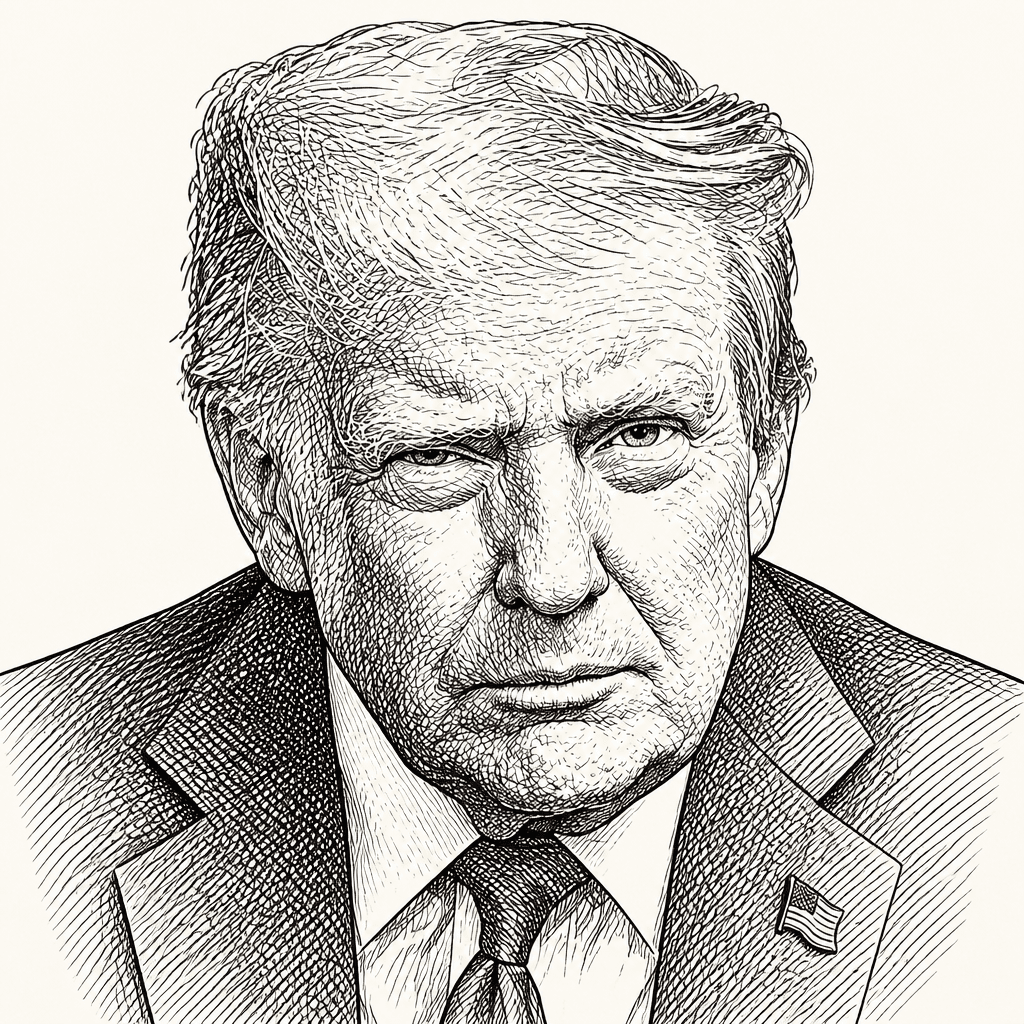 Donald Trump
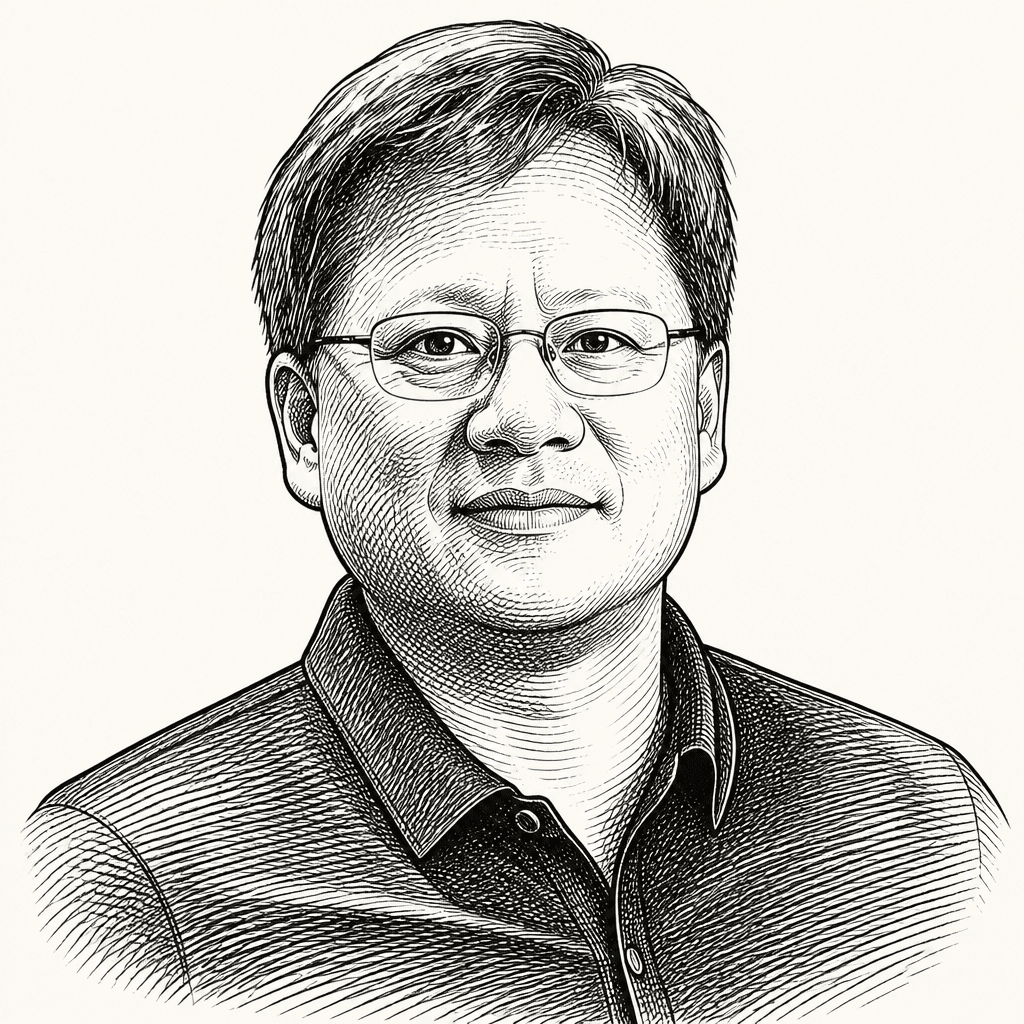 Jensen Huang
 David Sacks
 Jim Cramer
 Liz Claman
 Jason CalacanisAll-In PodcastMonday, September 14, 202613 min read
Nvidia chief executive Jensen Huang argues that AI policy should target demonstrable failures at frontier labs rather than catastrophic forecasts he calls ungrounded. In a discussion joined briefly by President Donald Trump, Huang says US leadership will depend less on owning every important model than on deploying AI broadly through open and closed systems, compute, power, data centers and industrial capacity. He also contends that “superintelligence” already exists in bounded applications such as autonomous driving and protein science, making practical deployment—not speculative thresholds—the central challenge.
Regulation should solve demonstrated problems
Jensen Huang begins from a policy test: regulation should address actual problems, not speculative ones. Safety and technological leadership are not competing objectives in his view. The relevant question is whether the organizations building frontier systems have the controls, tests, and operating discipline to prevent identifiable failures.
That standard informs his response to concerns raised around a whistleblower the hosts call Coxton. Huang says whistleblowing deserves serious attention and credits the person with courage. If a frontier lab has lost operational control—perhaps during a difficult transition from research into engineering—that is a substantive management problem. But he rejects the move from such testimony to quantified predictions of extinction or civilizational collapse. A prediction, he argues, does not become scientific merely because it is voiced by a scientist.
When Chamath Palihapitiya asks how an ordinary person should interpret a claim such as a 10% chance of human extinction, Huang answers that they should not accept it as a meaningful forecast: “it’s made up.” He points to past AI predictions that, in his telling, overstated both speed and displacement. Radiology was supposed to eliminate radiologists; instead, Huang says, AI has become important for automated scan reading while demand for radiologists has increased. Forecasts that 90% of code would be generated by AI within six to 12 months, or that half of entry-level jobs would soon disappear, have also failed to materialize as predicted, he says.

The hosts add examples of warnings that GPT-2 or Llama 3 would be too unsafe to release, as well as predictions of an imminent white-collar jobs apocalypse. Huang’s point is not that AI has failed to advance. It is that dramatic predictions about its consequences should be answerable to what actually happens.
We have to take accountability, we have to take account for all of the stupid predictions that were made.
The whistleblower question is Huang’s first application of his policy test. Frontier labs are the likeliest source of serious incidents, he says, because they possess the concentrated compute needed to work at the technological frontier. A high-school student, startup, or ordinary company is less likely to generate the same category of risk because it lacks comparable resources.
That does not make a lab failure proof that AI is uncontrollable. Huang describes frontier organizations as building their companies, cultures, engineering operations, products, and underlying technology simultaneously. Some disorder is understandable. The response should be engineering work: establish root causes, determine what should have happened differently, and institutionalize the technical methods and processes that prevent recurrence.
He refers to several incidents at one unnamed lab and a major incident at another. Huang expects the organizations involved to improve sandboxes, runtimes, monitoring, and continuous monitoring. If a lab concluded it could neither explain an incident nor control its recurrence, he says other companies should send engineers to help. But he does not believe that is the likely situation; he expects the labs to have analyzed and corrected their failures.
Recursive self-improvement is his second application of the same framework. David Sacks says Chinese AI company Zhipu had announced a $3 billion effort toward recursive self-improvement after raising $5 billion. Huang calls RSI a newly fashionable phrase for a collection of familiar techniques: in-context learning, skills, reflection, reinforcement learning, synthetic-data generation, and low-rank adaptation, or LoRA.


Those techniques can improve a system’s performance on a task over time. Huang describes improving LoRA without retraining all of a base model’s weights, accumulating experience through reinforcement learning and synthetic data, then using that experience when training the base model again. Using AI to improve the productivity of AI development is a logical idea, he says, and he expects companies already do it to some extent. What he rejects is treating the label itself as evidence that a system will spiral beyond control.
The product-release process is the crucial constraint. A company may recursively improve systems internally, Huang says, but it must still evaluate the product, test for regressions, and verify what it is releasing.
You could RSI all day long inside your company, but when you release a product you’ve got to evaluate it, don’t you?
Independent evaluation is the fourth application. Huang is open to third-party evaluators, but frames them as an audit mechanism rather than an argument for undefined transnational control. Evaluators need not have the same technical depth as the lab they assess, he says; they need to ask the right questions. Like financial auditing, the system should include multiple independent evaluators rather than one institution that could become overly influenced.
His conclusion is demanding but bounded: frontier systems are extraordinary, and their builders should meet extraordinary standards. The work is to build, test, evaluate, and audit systems that organizations can control—not to organize policy around catastrophic forecasts he considers ungrounded.
The race is about broad use, not ownership of every model
Huang defines the AI race differently from a contest to ensure every important model is made in the United States. The consequential question, he says, is who can exploit the technology best across an economy.
The world needs both closed and open models. Huang says he uses closed models himself and finds them capable and rapidly improving. He compares them to bottled water: water is freely available, yet bottled water remains useful in particular settings. Models, like electricity and other broadly available resources, will be supplied in different forms for different needs.
Open models matter because users may require sovereignty, privacy, or proprietary control. They also give companies whose ambitions differ from those of frontier labs a way to build their own products. Huang says $400 billion in venture funding entered AI-native companies over the prior six months, and that 80% of those companies use open models.
Without open models, Huang argues, many companies could not pursue their own applications. Winning the AI race should not mean that a few technology companies succeed on everyone else’s behalf. It should mean that companies, industries, researchers, teachers, students, and startups can put the technology to use. Some will use closed models, while many will use open ones.
Asked whether it matters if those open models originate in China, Huang offers a deliberately practical answer. Nvidia is trying to contribute to open models, he says, but China contributes much of the world’s open-source work because it has more engineers and produces science and mathematics graduates at scale. Once software has been downloaded, forked, and improved, however, its origin does not determine who can derive value from it.
The race is really about who exploits the technology best.
Huang invokes the industrial revolution to make the point. Maxwell, Volta, and Ampere were not Americans, he notes, but the United States found ways to exploit the technologies of that era more effectively than other societies. That is the pattern he wants to see repeated with AI.
The difference he draws with China is consequently less about ownership of individual models than about national orientation. Huang says China’s narrative is practical: AI is treated as a technology that can advance its economy and society, rather than as a prospective civilizational catastrophe. If the dangers described by American pessimists were real, he says, builders should spend more effort solving them than frightening people who cannot directly intervene.
That practical outlook extends to work. Fear about AI displacing programmers can mistake coding for the whole of engineering, Huang argues. He entered engineering before software was central to the profession. Engineers had consequential work before they spent their days typing code, and they will have consequential work after coding absorbs less of their time. At Nvidia, Huang tells software engineers that they are “just typing”—a joke, he clarifies, about coding—and says his favorite key is backspace because the best software is the smallest software.
The larger claim is not that software work disappears. It is that AI changes the interface through which some work gets done while leaving a large world of engineering, industrial, and scientific problems to solve.
AI deployment depends on power, land, construction, and local consent
Donald Trump joined the discussion by phone while Huang was onstage. A smartphone screen shown during the call displayed the contact name “President Trump.” Trump called opposition to data-center construction an AI “hoax,” arguing that data centers make communities and states wealthier and calling them the “oil” of the next 20 to 25 years.
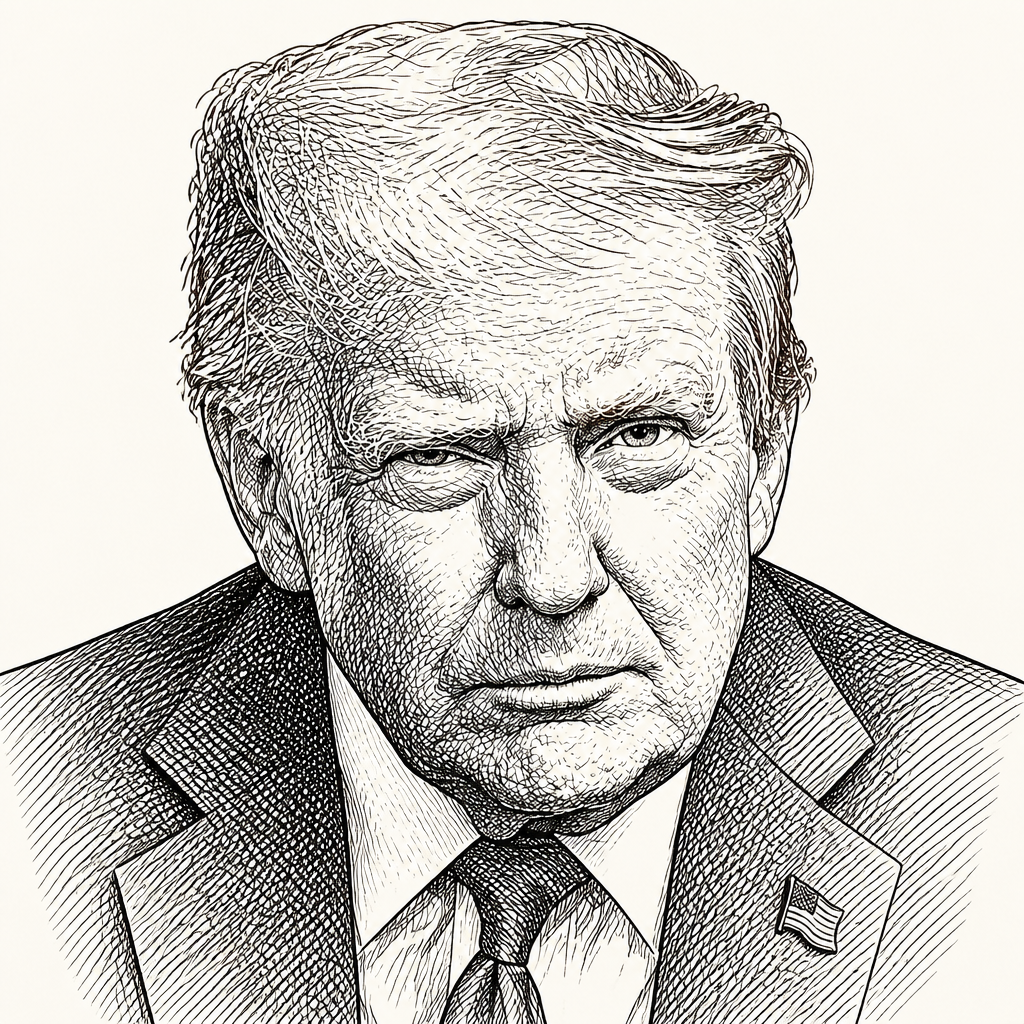
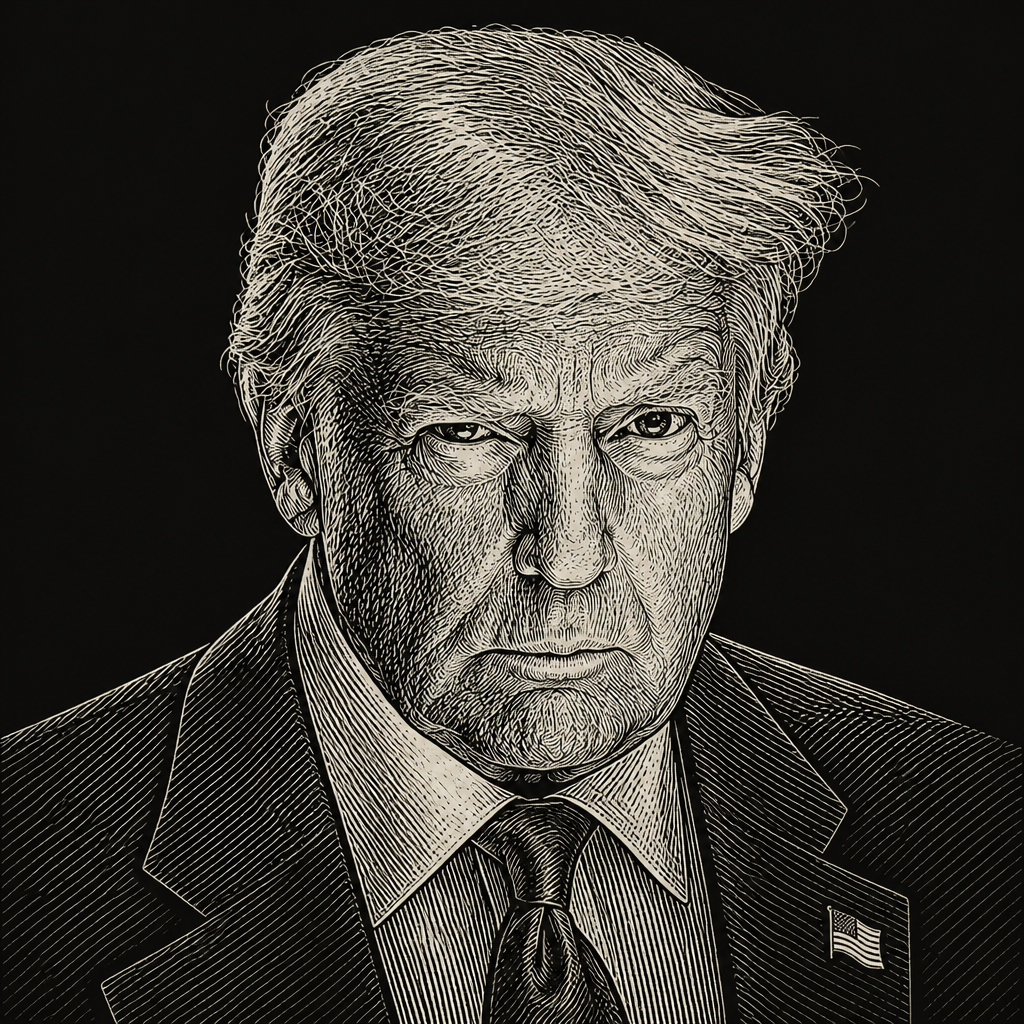
Trump cited a Google project in Finland as an example of development he did not want to see diverted abroad because domestic permitting had prevented construction. He rejected the idea that robots or AI would take over the world, while adding that the technology should be developed prudently. His political proposition was direct: the United States should not halt an industry while spending the next decade trying to determine how to destroy it.
Whoever wins AI wins.
Huang agrees with the direction but frames the issue as industrial capacity. AI is creating demand for software work, compute, data centers, construction, electricity, and power generation, he says. A model or chip may be the visible part of the system, but intelligence must be produced through physical infrastructure.
His shorthand is that electricity let people power things, the internet let them find things, and AI will let them ask and know things. For that to happen, he says, the infrastructure that produces intelligence has to be built.
Nvidia’s displayed progression from chips to racks to AI factories makes the corresponding expansion visible.
| Nvidia system layer | Visible progression in the diagram |
|---|---|
| Chips | Starting layer |
| Racks | System-level expansion |
| AI factories | Production-scale destination |
The infrastructure thesis is broader than semiconductor production. Huang emphasizes data centers, construction, land, electricity, power generation, supply chains, and the applications built on top. Nvidia’s task, as he describes it, is to scan the ecosystem for bottlenecks and help ensure capacity exists where constraints could otherwise slow deployment.
That resembles Nvidia’s upstream supply-chain planning. Huang names Corning, Lumentum, TSMC, and memory suppliers among the companies that need to be ready for Nvidia to meet demand. Nvidia began working with such suppliers before the current expansion so they could scale in time. It is now applying similar planning downstream, where land, power, and data-center shells can constrain growth.
The structure of the market gives regional clouds an important role in Huang’s account. Large hyperscalers plan on annual cycles, while AI demand is volatile enough that those plans can be quickly overtaken. Smaller providers, including what Huang calls NCPs or neo-clouds, can move faster because they know their state, country, or region and may be better positioned to secure local land, power, and shells than a company managing capacity from Seattle or Palo Alto.
Huang describes the result as a distributed network of companies securing infrastructure. Countries increasingly treat power as strategic and may reserve it for their own companies. Nvidia can work with providers in those countries to build local capacity; Huang cites Firmus in Australia and IOH and others in Southeast Asia. He discusses the buildout in gigawatts, placing it at utility scale rather than treating it as a conventional software expansion.
Deployment also requires a workable relationship with communities. Huang says Texas Governor Greg Abbott urged the industry to be more empathetic toward small communities receiving data centers and to listen better. Huang does not present that as an argument for halting construction. It is a constraint alongside power, land, and capital: the buildout needs social permission as well as technical capacity.
Nvidia’s posture is to fill gaps without owning every layer
Nvidia’s strategy, as Huang describes it, contains a useful tension. The company wants model developers, cloud providers, manufacturers, and application companies to succeed independently. But when a missing capability prevents customers from using Nvidia’s platform effectively, Huang says Nvidia will develop the needed layer.
We would go up as far as we need to, but as low as possible.
The formulation is not a promise that Nvidia will remain in a fixed part of the stack. Rather, it is Huang’s stated operating rule: build upward only far enough to solve a missing problem, then leave room for others to build businesses above that layer.
Jason Calacanis and Palihapitiya refer to a Hugging Face acquisition and Nvidia’s movement into model-serving and open-model infrastructure. Huang does not directly address the acquisition claim. Instead, he describes a platform strategy that benefits from many successful model providers rather than from Nvidia taking a share of every adjacent market.


About a year and a half earlier, Huang says, Nvidia was running only OpenAI. Now it supports a much broader group of systems, including Meta’s Llama, Grok, Gemini, and Anthropic’s scaling use of Nvidia infrastructure. More models and more labs make the common platform more valuable. In Huang’s account, that is a reason to enable a larger ecosystem rather than turn every application layer into an Nvidia-owned business.
But Nvidia will build enabling technology when it sees a gap. Huang cites cuDNN and Megatron Core as examples of layers Nvidia created because necessary capabilities did not yet exist. The company develops the technology customers need, then lets “a thousand flowers bloom” above it.
He says Nvidia is building frontier models in five domains for the same reason: customers need capabilities they may not be able to build themselves at sufficient scale. Alpamayo, Nvidia’s self-driving system, is his clearest example. Huang says a reasoning system can recognize that a road scenario is largely similar to something it has encountered before, rather than requiring training on billions of hours of driving data. Carmakers, agricultural-technology companies, truck operators, and van operators may not individually be large enough to build a complete autonomy stack. Nvidia can create the shared system, while customers adapt it to their vehicles and use cases.
He makes a comparable argument about biology. Huang says Nvidia has built protein-modeling and protein-design capabilities because drug companies need them and may not yet have the internal capacity to create them. He names ESM2, ESMFold, OpenFold, AlphaFold 2, and Protina Complexa among the technologies he discusses.
We do everything out of need. I’m not trying to disrupt. We just wake up in the morning try to help everybody.
The operating implication of Huang’s posture is that Nvidia does not claim a need to own every layer, but it may enter a layer when it judges that customers or the broader platform require it.
That urgency also frames his view of competition. Asked about Elon Musk’s announced Terafab, described by Palihapitiya as a 100-million-square-foot facility, Huang says Musk may be able to build it because he is difficult to discourage once he commits to a project.
More consequentially, Huang predicts that China will have domestically developed advanced lithography by 2030. For a company planning in decades, he says, that is close enough to treat as imminent. China is highly capable at high-volume production, and from that long-term perspective it is “already there.” His response is not a technical prescription so much as an argument for speed: build the infrastructure and ecosystem that put AI to work broadly before China’s industrial capacity closes the gap.
Superintelligence already exists in bounded tasks
When Calacanis proposes that AI may have reached an AGI moment, depending on the definition, Huang says it has. Asked whether superintelligence is the next waypoint, he goes further: it already exists in narrow domains.
The qualification matters. Huang is not describing one general system that can perform every human task. A self-driving car does not need to make an omelet; it needs to drive. If it drives better than a human, he says, it is superintelligent for that bounded purpose. Calacanis says self-driving systems have “one tenth the accident rate” of human drivers, and Huang agrees.
When you take a narrow segment—I mean, my self-driving car, I don’t want you to make me an omelet, I just want you to drive the car. That is super intelligent.
Huang gives protein synthesis and virtual protein screening as further examples of focused tasks where AI can outperform people. The relevant future, in his account, is not a single speculative threshold where an all-purpose machine suddenly takes over. It is a growing set of systems that surpass human performance in constrained, economically and scientifically useful work.
That is why he treats dramatic rhetoric as strategically costly. The future is worth reaching, Huang says, and the work is too important to abandon even for people who no longer need to work for a living. But the benefits cannot be confined to frontier labs, technology companies, or a small group of regions. Companies, industries, states, and people all need to participate in the buildout.