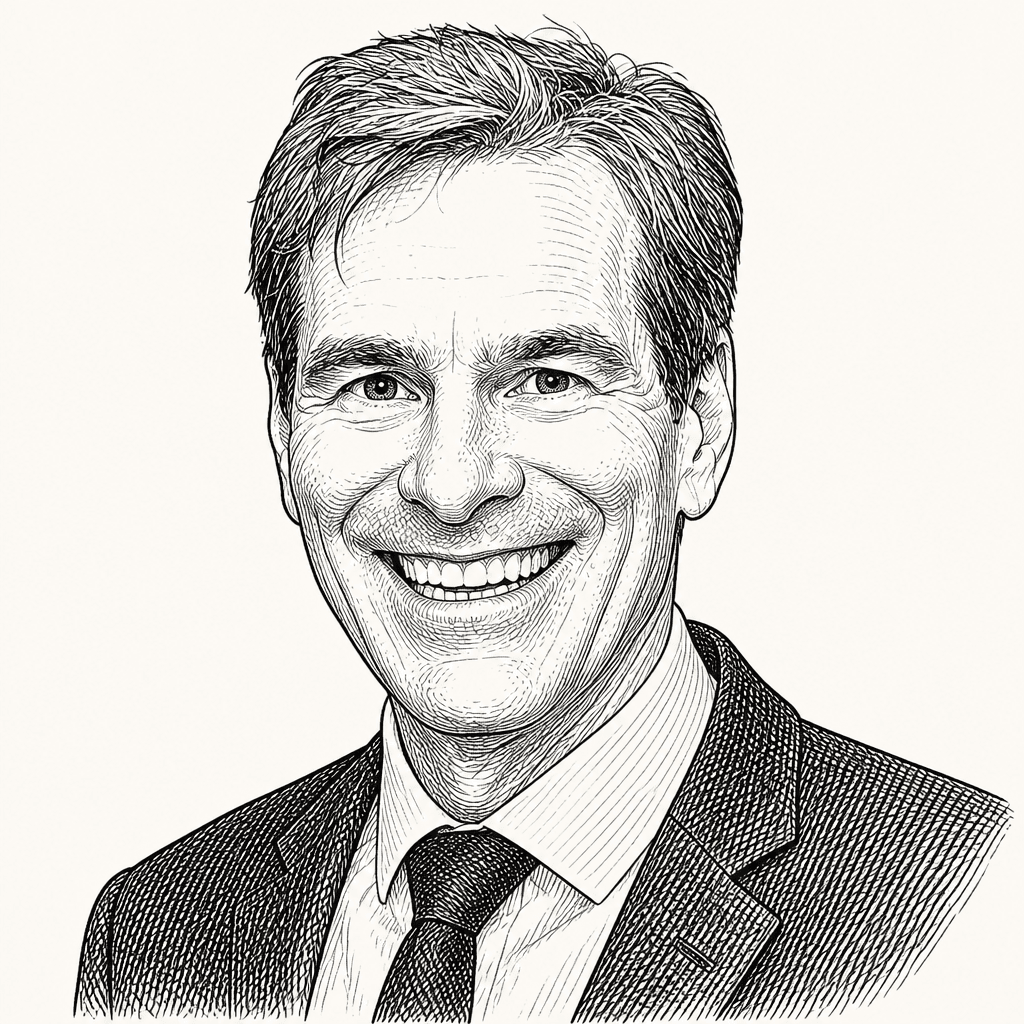
John Cochrane
John Cochrane is an economist and the Rose-Marie and Jack Anderson Senior Fellow at Stanford University’s Hoover Institution. A GoodFellows panelist, he specializes in financial economics and macroeconomics and has taught at the University of Chicago Booth School of Business.
Economic Warfare Alone Cannot Break Iran’s Grip on Hormuz
Economic pressure on Iran cannot reopen the Strait of Hormuz or produce a durable settlement unless it is tied to clear objectives, sustained enforcement and credible military backing, John Cochrane, Niall Ferguson and H.R. McMaster argue. Cochrane doubts Washington will bear those costs; Ferguson says earlier military choices have narrowed its options, while McMaster contends that Iran can still be weakened through an integrated strategy extending beyond economic measures alone.
The American Revolution Was Won by Surviving Britain’s Strategic Failures
Rick Atkinson, the military historian, tells Hoover’s GoodFellows that the American Revolution was won less by overpowering Britain than by surviving an expeditionary counterinsurgency until British strategy, logistics, political intelligence and will broke down. The discussion then turns to contemporary Britain, California and the Democratic Party, where Niall Ferguson and John Cochrane argue that fiscal promises, class politics and primary incentives are pushing democracies toward policies their institutions may not be able to sustain.
U.S.-Iran Memorandum Trades Leverage for a Fragile Midterm Quiet
Niall Ferguson, H.R. McMaster, and John Cochrane argue that the draft U.S.-Iran memorandum looks less like a settlement than a political pause that gives Tehran money and time while leaving the nuclear question unresolved. In a Hoover GoodFellows discussion, they differ on whether unintended consequences could still weaken Iran’s regime, but largely agree that Washington had leverage in the Strait of Hormuz and failed to use it. They extend that concern to Ukraine and Cuba, framing the central problem as American pressure applied without follow-through.
U.S.-Iran Memorandum Trades Hormuz Relief for Unresolved Nuclear Questions
Hoover fellows Niall Ferguson, H.R. McMaster and John Cochrane read the reported U.S.-Iran memorandum less as a peace settlement than as a bid to reopen the Strait of Hormuz while postponing the nuclear dispute and front-loading concessions to Tehran. They largely agree the draft looks weak; their disagreement is over whether it buys time for a harder strategy later, creates space for pressure inside Iran, or signals a loss of U.S. will that allies and adversaries will now test.
Tariffs Are a Weak Climate Tool Without International Coordination
At a Hoover Institution panel on tariffs, trade and the environment, economists Joseph Shapiro, Arik Levinson and John Cochrane argued over when trade policy can legitimately serve climate policy. Shapiro made the case that tariffs may help enforce international climate coordination in a world without a global carbon regulator, while Levinson warned that much of the case for environmental tariffs rests on overstated claims about outsourced pollution and becomes especially weak when applied to clean technologies. Cochrane pressed the standard economist alternative: price carbon, adjust at the border, and avoid using climate as cover for industrial policy.
Climate Policy Is Shifting From Net-Zero Mandates to Market-Led Adaptation
At a Hoover Institution session on climate policy, Steven Koonin argued that the net-zero mitigation agenda has failed to cut global fossil-fuel dependence and has overstated the evidence for catastrophe. Koonin, Matthew Kahn, Terry Anderson and other participants made the case for shifting attention toward adaptation: local, incremental responses shaped by insurance, real estate, migration, finance and property rights. Their shared claim was not that climate change is unreal, but that better information and market prices may guide resilience more effectively than mandates, subsidies and apocalyptic politics.
Iran Ceasefire Debate Turns on Whether Tehran or Washington Has Leverage
Hoover Institution fellows H.R. McMaster, Niall Ferguson and John Cochrane use a mailbag discussion to test questions of war, leadership and institutional resilience against a common standard: whether policy connects means to political ends. Their sharpest disagreement is over Iran, where McMaster argues Tehran is weak and should face more pressure, while Ferguson says it has more room to wait out Washington than the Trump administration expected; Cochrane presses the underlying incentives that make voluntary Iranian nuclear concessions unlikely.
Iran Standoff Tests Whether Washington Manages Wars or Wins Them
In this GoodFellows mailbag, Hoover fellows H.R. McMaster, Niall Ferguson and John Cochrane treat the Iran standoff as the central test of American strategy. McMaster argues Washington should stop managing the conflict and intensify pressure on a weakened regime, while Ferguson warns Tehran may be waiting for oil-price and market pain to force the United States into a worse bargain; around that dispute, the three extend the same standard to war leadership, institutional decline, Europe, climate policy and populism: policy has to connect means to political ends rather than substitute rhetoric for results.
Dollar Dominance Could Erode Without a Clear Successor Currency
At a Hoover Institution conference on central-bank independence and international risks, Condoleezza Rice, Arvind Krishnamurthy, Stephen Redding and Kenneth Rogoff argued that dollar dominance can no longer be analyzed apart from U.S. security commitments, fiscal policy, technology competition and trade frictions. The central claim running through the discussion was that the United States still benefits from a powerful reserve-currency position, but that privilege depends on confidence in safe dollar assets and stable institutions. Krishnamurthy quantified the reserve-currency asset as a large interest-rate benefit, while Redding and Rogoff warned that tariffs, fiscal strain and political pressure on the Federal Reserve could make erosion costly even without a clear successor to the dollar.
Fed Officials Call for Better Classification Tools Under Economic Uncertainty
At a Hoover Institution policy panel on central-bank independence, structure and emerging risks, Federal Reserve officials Michelle Bowman, Mary Daly, Austan Goolsbee and Christopher Waller each argued that the Fed’s next problems turn on classifying risks before they are obvious in hindsight. Bowman focused on capital rules and private credit, Daly on distinguishing temporary from persistent inflation shocks, Goolsbee on whether expected AI productivity gains lower or raise the appropriate rate path, and Waller on which Fed functions require regional autonomy rather than centralized operations.
Central Bank Independence Requires Limits on Tools, Not Just Mandates
At a Hoover Institution conference on central-bank independence, Thomas Drechsel, Luis Garicano and Carolyn Wilkins argued over how far legal insulation can stretch once central banks have large balance sheets, emergency tools and broad theories of monetary transmission. Drechsel used Fed chairs’ calendars to show how the job has become more outward-facing; Garicano warned that the ECB’s narrow mandate has not prevented fiscal, financial and climate-related expansion through its tools; and Wilkins argued that independence can survive only with clearer boundaries, cost-benefit discipline, exit rules and external review.
Reserve Bank Removal Powers Could Expose the Fed to Presidential Control
At a Hoover Institution conference on central-bank governance, John Cochrane, Edward Nelson, Gary Richardson and David Wilcox treated Federal Reserve independence as a delegated legal structure rather than a self-executing norm. Richardson argued that Congress designed the Fed to frustrate presidential control, while Wilcox warned that ambiguous authority over Reserve Bank presidents could still give a determined president a path into the FOMC. Nelson added that independence protects the Fed’s operational judgment, not the quality of its monetary doctrine.
The American Dream Is Weakening Where Competition and Mobility Are Blocked
In a Hoover Institution discussion moderated by Washington Post columnist Megan McArdle, economists John Cochrane, Valerie Ramey and Ross Levine argue that American prosperity has depended less on wealth itself than on institutions and habits that allow competition, risk-taking, mobility and disruption. They differ on emphasis — Cochrane stresses limits on government and regulatory failure, Levine competition joined to justice and stability, and Ramey education, culture and immigration — but converge on a warning that the American Dream weakens when schools fail, incumbents are protected, fiscal space erodes and politics stops doing routine maintenance.
Fellows Split Over Whether the Constitution Is Too Hard to Amend
At the first public taping of Hoover’s GoodFellows, John Cochrane, Niall Ferguson and H.R. McMaster used the Constitution as a text for argument rather than commemoration. Cochrane warned against treating it as scripture and stressed the civic “spirit” behind it, McMaster described an imperfect founding grounded in principles, and Ferguson stated a broad First Amendment position. Their clearest split came over amendment: Ferguson said the process no longer works in practice, while Cochrane argued its history shows it has sometimes been too available.