Central Bank Independence Requires Limits on Tools, Not Just Mandates
 John Cochrane
 Thomas Drechsel
 Valerie Ramey
 Andrew Levin
 Torsten Slok
 Carolyn Wilkins
 Hanno Lustig
 Sebastian Edwards
 Luis GaricanoHoover InstitutionMonday, June 1, 202622 min read
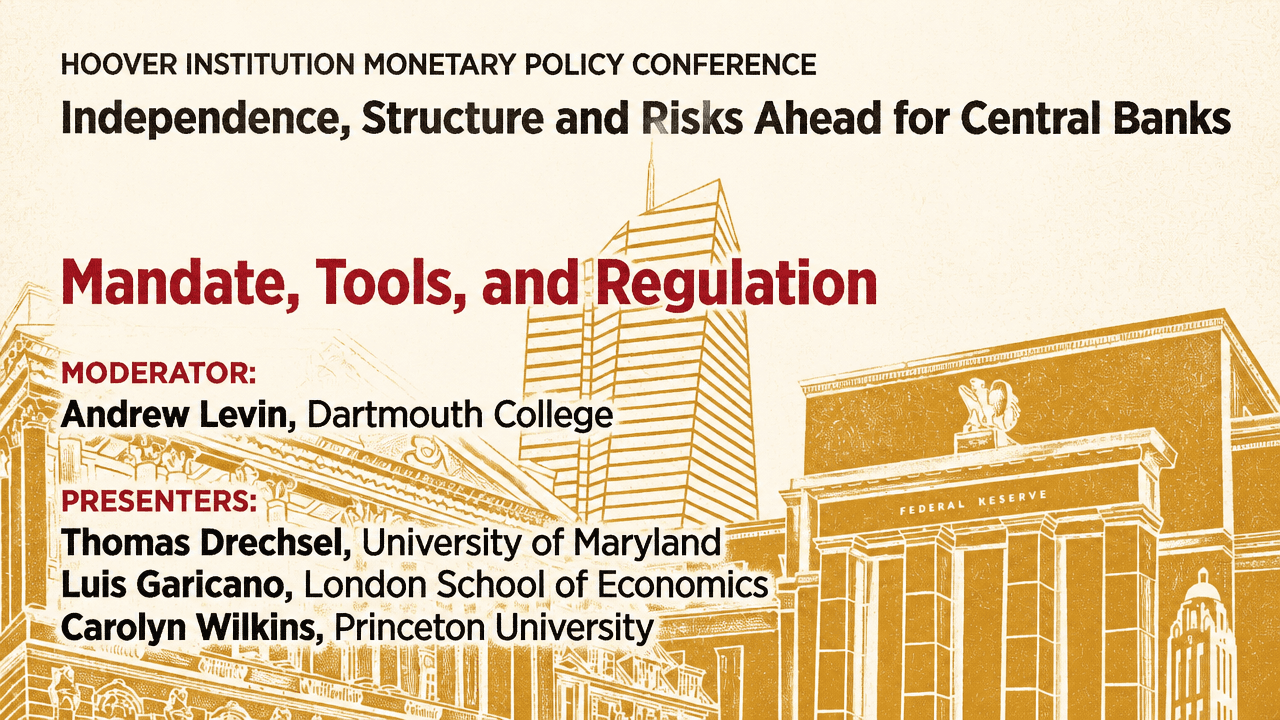
At a Hoover Institution conference on central-bank independence, Thomas Drechsel, Luis Garicano and Carolyn Wilkins argued over how far legal insulation can stretch once central banks have large balance sheets, emergency tools and broad theories of monetary transmission. Drechsel used Fed chairs’ calendars to show how the job has become more outward-facing; Garicano warned that the ECB’s narrow mandate has not prevented fiscal, financial and climate-related expansion through its tools; and Wilkins argued that independence can survive only with clearer boundaries, cost-benefit discipline, exit rules and external review.
Independence without boundaries becomes a problem of mandate, tools, and interpretation
The central-bank problem at issue was not whether monetary authorities should be insulated from day-to-day political pressure. It was what that insulation permits once a central bank has a legal mandate, a balance sheet, emergency powers, regulatory responsibilities, and its own theory of how monetary transmission works.
Valerie Ramey framed the issue by distinguishing independence from correctness. Earlier discussion at the conference had emphasized that even when central banks are not visibly pressured by politicians, they can still make severe monetary policy mistakes. She pointed to the Great Depression and to the Burns-Nixon period as examples raised in prior sessions. Independence, in that framing, is not self-justifying. An independent central bank “allowed to do anything” can itself become a problem unless its mandate, tools, and governing ideas are disciplined.


That opening set up three versions of the same institutional question. Thomas Drechsel treated the Fed chair’s calendar as evidence of how the institution’s practical priorities have evolved. Luis Garicano argued from Europe that a narrow legal mandate does not prevent central banks from expanding their effective remit when the toolkit is unconstrained. Carolyn Wilkins argued that durable independence requires governance: clear distinctions among monetary policy, financial stability, balance-sheet operations, emergency interventions, fiscal boundaries, and ex post review.



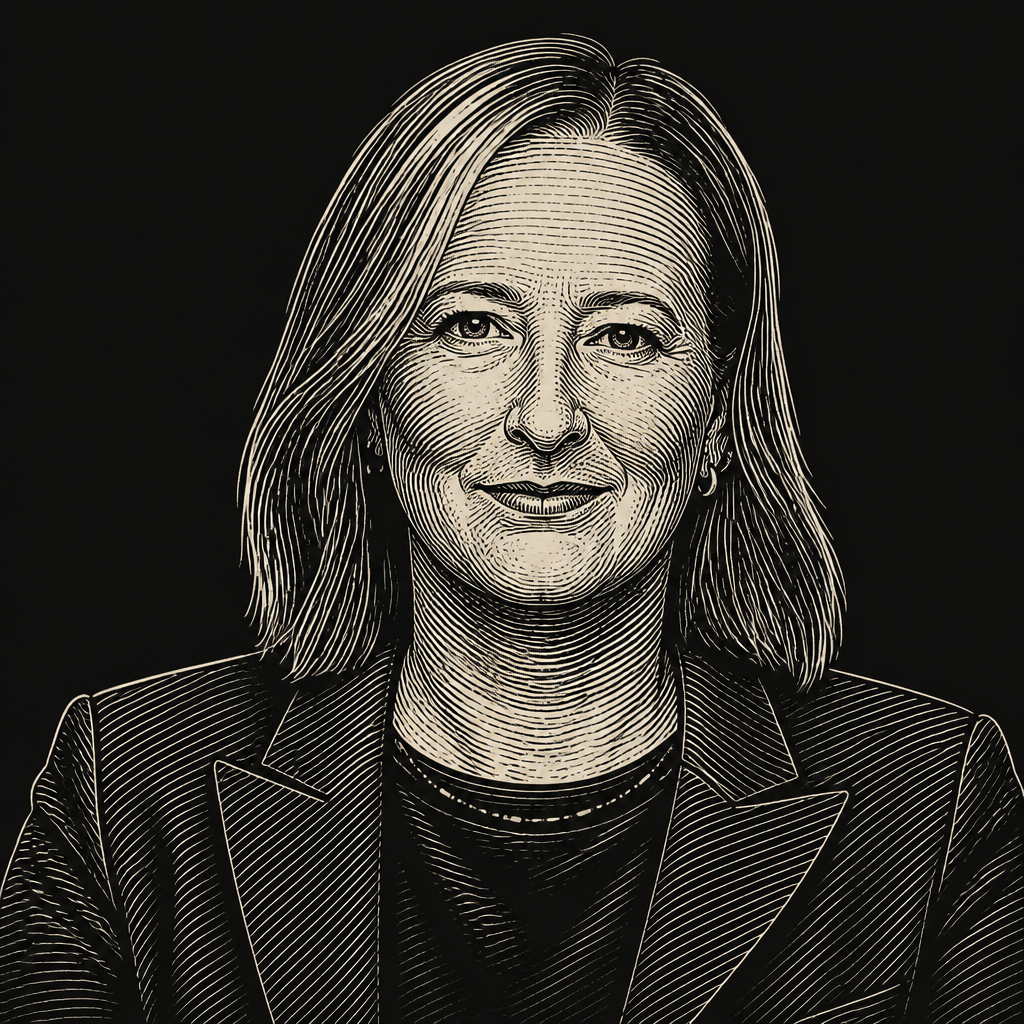
Garicano’s formulation was the sharpest. His point was not that the European Central Bank lacks a narrow mandate. It was that, in his telling, the ECB has exactly the legal features many advocates of independence would want — strong legal independence, a price-stability mandate, and treaty-level prohibition on monetary financing — and still found pathways into fiscal, financial, and climate policy through its tools and its interpretation of monetary transmission.
Narrow mandate + broad tools + self-defined transmission = unbounded scope.
Wilkins reached a less categorical but closely related conclusion. Independence, she said, is not a “technocratic blank cheque.” It is operational freedom to use legally founded tools in pursuit of a clear public mandate, paired with hard accountability. The challenge is that the modern central bank’s toolkit now extends far beyond setting a short-term interest rate.
The contrast between Garicano and Wilkins matters. Garicano’s argument was about tool-driven mandate expansion: once tools and transmission channels are elastic, legal narrowness does not hold. Wilkins’s argument was about preserving necessary flexibility without allowing that flexibility to become mission creep. One stressed how institutional discretion leaks; the other stressed how it might be governed.
The Fed chair’s calendar shows institutional priorities in practice
Thomas Drechsel offered an indirect empirical measure of how the Fed chair’s role has changed. Together with Dali Tsakadze, he digitized the released daily calendars of Ben Bernanke, Janet Yellen, and Jerome Powell and classified the chair’s appointments into categories: staff meetings, private-sector meetings, media interactions, international meetings, meetings with regulators, and meetings with members of Congress. The Fed releases these calendars with a delay, typically around two months. Drechsel’s premise was that time allocation reveals something about how the chair interprets and exercises the Fed’s mandate — where it begins, where it ends, and what institutional priorities surround it.
The calendars are not a causal model of Fed behavior. Drechsel was explicit that the data are “very indirect.” A chair’s schedule reflects events as well as priorities. Crises alter calendars. Institutional evolution alters calendars. Personal style may alter calendars. But the patterns he showed made visible shifts that often appear only as impressions.
The least surprising pattern was the centrality of staff. After warning that the earliest Bernanke calendar entries were formatted differently and appeared incomplete, Drechsel showed that staff meetings accounted for roughly 30 percent of the chairs’ activities across the three chairmanships. He read this as a straightforward confirmation that staff economists play a key role in the chair’s decision-making.
Media interactions showed a clearer regime change. Bernanke began with relatively few such meetings, but midway through his tenure the number rose sharply. Part of that increase came from the introduction of official FOMC press conferences. Under Bernanke, press conferences occurred after every other meeting; under Powell, they were held after every meeting. But Drechsel stressed that the change was not only the official press conference. The calendars also showed individual interviews, television interviews, and sit-downs with groups of journalists. Averaging across the later period, he estimated roughly 12 to 15 media meetings per quarter — about one per week.
Private-sector interactions were more cyclical and crisis-sensitive. They included banks, asset managers, insurers, industry associations, advisory groups, and non-financial corporations. Bernanke and Powell had many more such interactions than Yellen, with the global financial crisis and the Silicon Valley Bank episode leaving visible footprints. Drechsel noted that non-financial corporations appeared in the calendars as well: Bernanke’s example included a call with Ford CEO Alan Mulally, and he said the calendars also included meetings with the CEOs of Coca-Cola, Target, and other companies.
International meetings rose over time. Drechsel counted both bilateral meetings — such as with the governor of the Bank of Japan — and multilateral meetings involving organizations such as the World Bank, the IMF, or the G20. In some quarters, the chair had as many as 70 international meetings or calls. He connected the upward trend to earlier conference discussion of swap lines and the Fed’s links to other central banks and the world economy.
Regulatory-agency meetings were rare in many quarters but spiked in crisis. Drechsel included the FDIC, OCC, SEC, CFTC, FSOC, government-sponsored enterprise contacts, and other regulatory entities. Interactions built up under Bernanke, plausibly because of the financial crisis, and then surged during the Silicon Valley Bank failure, when Powell met frequently with FDIC leadership.
The sharpest institutional change was in congressional meetings. Powell met with members of Congress far more than Bernanke or Yellen. Drechsel said another figure in the paper breaks this down by House and Senate, with many meetings involving the Senate and often leaders of the Senate Banking Committee or House Financial Services Committee. The party split was fairly even, with somewhat more Republican meetings under Powell. Drechsel described Powell as “a pretty political player” who proactively sought congressional connections and perhaps lobbied Congress for Fed independence.
| Calendar category | Pattern Drechsel emphasized |
|---|---|
| Staff meetings | Stable at roughly 30% of activities after early incomplete Bernanke entries |
| Media | Regime change beginning under Bernanke; roughly 12–15 meetings per quarter in later periods |
| Private sector | Higher under Bernanke and Powell, with crisis footprints |
| International counterparts | Large volume, with a general upward trend |
| Regulatory agencies | Usually limited, but large spikes in crisis, including SVB |
| Congress | Structural shift under Powell, with a fairly even party split |
For Drechsel, the calendar evidence matters because it shows the chair’s work becoming increasingly outward-facing: toward the media, regulators, international bodies, private firms in crisis, and Congress. His summary was that media interactions grew starting with Bernanke; regulatory interactions grew starting with Bernanke; international interactions increased throughout; congressional interactions grew starting with Powell; and private-sector and regulatory contacts rise in crisis periods.
That evidence fed directly into the broader institutional question: if the Fed chair’s allocation of time reflects both events and priorities, where should the lines be drawn for a new chair?
Europe’s lesson: a narrow mandate does not stop drift if tools and transmission are elastic
Luis Garicano challenged the proposition that independence can be secured by a package of a limited mandate, limited tools, and meaningful accountability. He accepted that these elements are necessary, but argued they are endogenous. In his account, once a central bank has broad tools and can define the relevant transmission channel, the mandate can expand through practice even if the legal text remains narrow.
He used the ECB as the case because, in his view, it has the features that advocates of narrow central banking often want: a narrow price-stability mandate, strong legal independence, and a treaty-level prohibition on monetary financing. Yet Garicano argued that the ECB’s effective independence has been compromised through three “leaks”: fiscal dominance, financial dominance, and — tongue-in-cheek, as he emphasized — “climate dominance.”
The fiscal channel begins with the balance sheet. Garicano described asset purchases as a “silent fiscal expansion.” His slide showed total Eurosystem assets rising from €1.5 trillion to €8.8 trillion from 2007 to 2024, using ECB consolidated weekly financial statements. His interpretation of that expansion was not only monetary. When the ECB buys a 10-year bond and pays with overnight reserves, he said, the public sector’s liability profile changes: long-term fixed-rate debt is effectively swapped into overnight floating-rate obligations. Bondholders who sold at peak prices kept the gains, while taxpayers now pay the policy rate on reserves. When rates rose from 0 percent to 4 percent, he said, the four largest Eurosystem entities lost more than €90 billion combined in 2023 and 2024.
In Europe, Garicano argued, this fiscal action also has a cross-country dimension that the United States does not have. His slides listed PEPP flexibility through capital-key deviations, TPI, ANFA national-asset portfolios, and TARGET2 imbalances as channels through which ECB action can become redistribution without parliamentary votes. Citing work by Chien, Jiang, Leombroni, and Hanno Lustig, the slide reported large implicit transfers under a high-spread counterfactual: Germany paying 13.2 percent of GDP, Italy receiving 8.1 percent, and Spain receiving 10.5 percent. Garicano added that, in that calculation, some of the transfers went not to Italian and Spanish taxpayers but to local banks.


| Country | High-spread counterfactual | Approx. 2023-GDP-equivalent amount |
|---|---|---|
| Germany | Pays 13.2% of GDP | ≈ €555bn |
| Italy | Receives 8.1% of GDP | ≈ €173bn |
| Spain | Receives 10.5% of GDP | ≈ €158bn |
The next step in his argument was political economy. The surpluses needed to stabilize debt, he said, are unlikely to arrive. A slide based on a Bruegel working paper showed required structural primary balances to stabilize debt, with France at 1.3 percent of GDP, Italy at 2.5 percent, Spain at 2.4 percent, Belgium at 1.8 percent, and Germany near balance. Garicano tied the difficulty to pension politics. He showed figures indicating that French pensioners earn more than working-age adults on average and argued that Spain shows a similar pattern, with real income gains flowing to retirees rather than workers.
The French pension reversal was his concrete illustration. Garicano said that in November 2025 the French Assembly suspended the 2023 reform, moving the retirement age back from 64 to 62. He characterized the market reaction as modest: “a little reaction,” but minimal in his view. His explanation was that markets understood the ECB to be there to close spreads, or at least to limit them. Politicians, he argued, had noticed. From the left, Jean-Luc Mélenchon treated ECB-held debt as something that could be written down or canceled for social and ecological transition. From the right, Jordan Bardella argued that if the French economy breaks, the entire euro area breaks, implying that ECB action on sovereign debt would be unavoidable. Garicano’s point was that both wings now treat ECB support as a permitted instrument rather than a taboo.
The broader conclusion was Garicano’s, not a finding mechanically produced by the slides: once fiscal arithmetic, pension politics, sovereign spreads, and an expanded central-bank toolkit interact, the ECB has no good option. If it holds the line on inflation and raises rates as needed to hit 2 percent, aging sovereigns may not be able to service debt at the resulting yields. If it keeps yields manageable through TPI, asset purchases, or implicit yield management, price stability gives way whenever a member state is fiscally stressed. Garicano called that “fiscal dominance without monetary financing”: the legal prohibition remains, but the practical pressure enters through the toolkit.
Emergency banking tools and climate transmission become additional doors
Luis Garicano described financial dominance as a second leak. Here he was more sympathetic to the ECB’s initial rationale, because financial stability is genuinely connected to monetary transmission. But he argued that the same pattern recurred: emergency tools survive, formal architecture is not used, and the central bank becomes the backstop because the political architecture cannot absorb losses.
He used targeted longer-term refinancing operations, or TLTROs, as the example of an emergency subsidy becoming a standing instrument. Initially justified during the 2011–2014 sovereign crisis, the operations continued for a decade. At one point, banks could borrow from the ECB at –1 percent and redeposit the same money at the ECB at –0.5 percent, creating what the slide described as a risk-free 50-basis-point carry. Garicano quoted Mario Draghi’s 2019 formulation: “The issue is not whether there is a subsidy or not; there is a subsidy. The issue is whether the TLTRO fulfils monetary policy objectives.”
The European bank-resolution architecture, in Garicano’s account, exists formally but is underused. His slide counted two Single Resolution Board resolutions from 2014 to 2025 and 23 national-level bank rescues over the same period. The reason, he argued, is that national political systems still resist loss-sharing and bank restructuring, while the ECB’s toolkit creates expectations of emergency lending.
He singled out the absence of common deposit insurance and the political role of Germany’s Sparkassen. Drawing on work by Nicolas Véron and Markgraf, his slide reported that Germany’s 359 Sparkassen control €2.5 trillion in assets and that 82 percent of their board chairs are elected officials. In Garicano’s telling, Banking Union failed not because Frankfurt lacked formal authority but because Berlin protects banks run by its own politicians. A price-stability mandate does not prevent leakage when the central bank is expected to pick up the pieces.
The third leak was climate. Garicano repeatedly said “climate dominance” was tongue-in-cheek, but the underlying claim was serious: a single primary mandate is not protective if the institution defines its own transmission channel.
The ECB climate measures he listed included tilting corporate bond holdings toward better-rated climate issuers, adding a climate factor to the collateral framework, imposing climate-related disclosure requirements for collateral issuers, and conducting climate-risk stress tests in banking supervision. He described two legal or conceptual doors. The first is the ECB’s secondary objective: without prejudice to price stability, it shall support the general economic policies of the Union. The second, and in his view the more important, is the transmission channel: climate risks affect financial stability; financial stability affects monetary transmission; transmission affects the policy stance.
Garicano objected to the inflation argument used to justify this expansion. He cited ECB rhetoric describing the 2021–2022 inflation surge as “fossilflation,” with imported fossil fuels as the principal vector and energy prices peaking at 44 percent year over year in March 2022 before headline inflation reached 10.6 percent in October. His response was that the subsequent disinflation tests the mechanism. Headline inflation fell from 10.6 percent in October 2022 to 2.4 percent in December 2024, he said, with no material change in Europe’s fossil-fuel share. Inflation rose and fell without a corresponding structural change in the energy mix.
His deeper complaint was conceptual: relative-price shocks and changes in the price level are not automatically inflation in the mandate-relevant sense. Climate shocks can produce price shocks, he said, but many policies affect prices; few belong to central banks. Clean-energy investment, decarbonization targets, and emissions-trading-system design are political choices. Garicano said he supports some of those measures, including the ETS, but that support does not make them central-bank policy.
This led to one of his central institutional comparisons. The Fed’s dual mandate contains two terms — maximum employment and stable prices — that must be read against each other. The ECB’s mandate, in his telling, contains one primary term plus a residual that the institution can interpret itself. A single mandate is therefore not automatically narrower in practice if the institution can find a “door” through secondary objectives or transmission.
Wilkins: monetary policy and financial stability require different accountability regimes
Carolyn Wilkins agreed that independence cannot be treated as a legal status alone, but she resisted the idea that modern central banks can simply give up flexibility. Her starting point was that the modern case for central bank independence was built around monetary policy and price stability: delegating operational decisions to avoid short-term political pressure. That case remains important, especially given the U.S. fiscal position discussed during the conference. But COVID, the global financial crisis, expanded balance sheets, and the growth of financial-stability tools require a review of what independence means.
For Wilkins, the central question is: independence to do what, with what instruments, under what accountability framework?
She separated monetary policy from financial stability. Monetary policy has relatively clear and measurable objectives. Inflation can be measured; full employment can be estimated, even if not directly observed. Congress and markets can assess whether the Fed is delivering. Financial stability is different. Success often means a crisis does not happen. “Nothing happening” is not an easy performance indicator. Vulnerabilities may build for years, losses may surface later, and the benefits of regulation or intervention are counterfactual.
The tools differ as well. Monetary policy works through broad instruments such as the policy rate, even though unconventional tools can blur fiscal lines. Financial stability tools are granular and legalistic: capital buffers, stress tests, lender-of-last-resort operations, supervision, enforcement, and resolution. They affect particular firms, markets, and business models. Their costs are visible, while their benefits require agreement on a counterfactual world in which a crisis was prevented.
Yet monetary policy and financial stability cannot be cleanly separated. Monetary policy depends on functioning credit markets, intermediation, and trust in money-like claims. In stress, stabilizing markets may be necessary for monetary transmission to work at all. Wilkins’s warning was that this interdependence cannot be allowed to become one open-ended authority.
Her balance-sheet framework therefore separated normal times from the lower bound and financial stress. In normal times, the balance sheet should implement monetary policy and control short-term rates, with the smallest footprint consistent with effective implementation, money-market stability, and credible crisis capacity. Asset mix may matter: shorter-term Treasuries could better match short-term interest-bearing reserves and reduce fiscal optics. Interest on reserves, in her view, should be understood as part of the operating framework, not simply as a transfer to banks.
In stress or at the lower bound, the question changes. The central bank may need enough flexibility to provide macro stimulus when rates are constrained or restore market functioning when core markets break. But purchases for market functioning and QE for macro stimulus require different justifications. Market-functioning purchases should be targeted, temporary, tied to market conditions, and exited quickly. QE for stimulus should be tied to the outlook for inflation and employment and evaluated against fiscal, financial-stability, distributional, and other risks.
Wilkins was sympathetic to a smaller central-bank balance sheet. She cited Canada’s pre-crisis corridor system as having worked well and said the Bank of England’s repo-led demand-driven framework appeared promising so far, though its real test would come under stress. But she argued that the United States cannot simply return to 2007. Currency outstanding is higher; Treasury General Account volatility is greater; regulatory changes and the structure of the U.S. banking and payments system have altered the demand for reserves.
She also endorsed Chris Waller’s distinction between two reasons the Fed’s balance sheet grew: the move from scarce reserves to ample reserves, and QE. Those are different choices and should be assessed separately. On reserve remuneration, she pushed against the optics-only critique. The question is not whether it looks bad to pay banks interest on reserves; it is what operating system the central bank wants. Banks must fund their reserve holdings, and the effect on Treasury remittances depends on the Fed’s net interest income, not merely gross interest paid on reserves.
The most important governance failure she identified in the Fed’s recent experience was the lack of a full framework around QE. In work with Bill Dudley for the Group of Thirty, she said, they saw two issues: the Fed gradually shifted between market-functioning language and macro-stimulus language, and there was no comprehensive framework reassessing costs and benefits as conditions changed. She referred to work by Andrew Levin and others trying to quantify the costs, saying one need not agree with every assumption to accept the governance point: large-scale asset purchases need an explicit framework for benefits, fiscal costs, and risks before they begin and as the central bank doubles down.


Wilkins’s governance discipline had five parts. The central bank should identify whether it is acting for monetary policy or financial stability and avoid any fiscal role unless acting as Treasury’s agent. It should require a comprehensive net-benefit assessment, including fiscal, distributional, and financial-stability risks relative to a credible base case. It should separate normal balance-sheet policy from extraordinary operations. It should require public rationale, escalation rules, exit strategies, and, where appropriate, indemnities for stress tools. And it should commit to internal and external independent reviews, public lessons learned, and framework adjustment.
| Risk Wilkins identified | Governance discipline she proposed |
|---|---|
| Blurring purposes | Identify whether the mandate is monetary policy or financial stability; avoid fiscal roles unless acting as Treasury’s agent |
| Weak ex ante discipline | Require comprehensive net-benefit assessment, including fiscal, distributional, and financial-stability risks |
| Balance-sheet creep | Separate normal balance-sheet policy from extraordinary operations such as QE and emergency market-functioning tools |
| Open-ended stress tools | Require public rationale, escalation rules, exit strategies, and where appropriate indemnities |
| Weak ex post accountability | Commit to internal and external independent reviews, public lessons learned, and framework adjustment |
Mandates help, but they do not decide the fiscal test
A narrow mandate may clarify the public contract, but the discussion exposed disagreement about how much it can accomplish once fiscal stress, supply shocks, and emergency tools enter the picture.
Valerie Ramey asked whether the United States should consider structural changes such as an ECB-style hierarchy in which price stability is primary and employment secondary. Luis Garicano said he would favor a change of that kind, but doubted it would be decisive in the fiscal crisis scenario. The ECB’s mandate, in his view, is “as good as it gets.” The people who designed the euro thought carefully about monetary financing risks in a monetary union. Yet financial stability and the desire not to provoke a fiscal crisis still prevailed. His conclusion was that changing the words of the mandate helps but cannot do the whole job unless the toolkit is constrained and emergency operations are unwound.
Carolyn Wilkins also doubted that a single mandate is a “get out of jail card.” Many central banks with single mandates made the same inflation error. In the Fed’s case, she suggested the problem might have been more about the asymmetry of average inflation targeting — worrying more about undershooting and making up shortfalls — than about the employment mandate itself. Even with a single mandate, political economy requires central banks to explain trade-offs. And if too much weight is placed on employment during a supply shock, the result may simply be more inflation and less employment later after a stronger correction becomes necessary.
John Cochrane pushed the mandate issue toward fiscal crisis. A mandate, he argued, is defined as much by what is not in it as by what is in it: “and nothing else.” But mandates evolve. A central bank supports corporate bond prices, or bails out countries, and if no one objects and it happens repeatedly, that practice becomes part of the mandate.
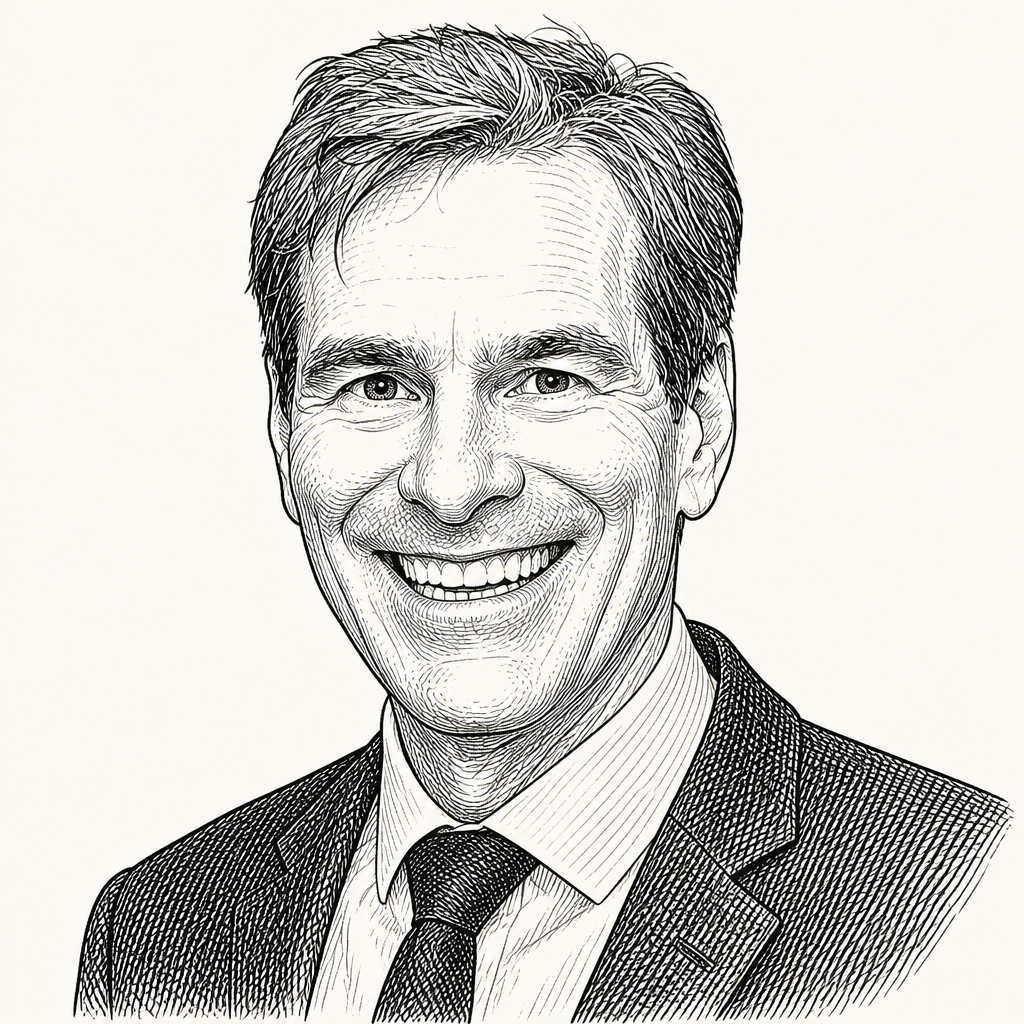
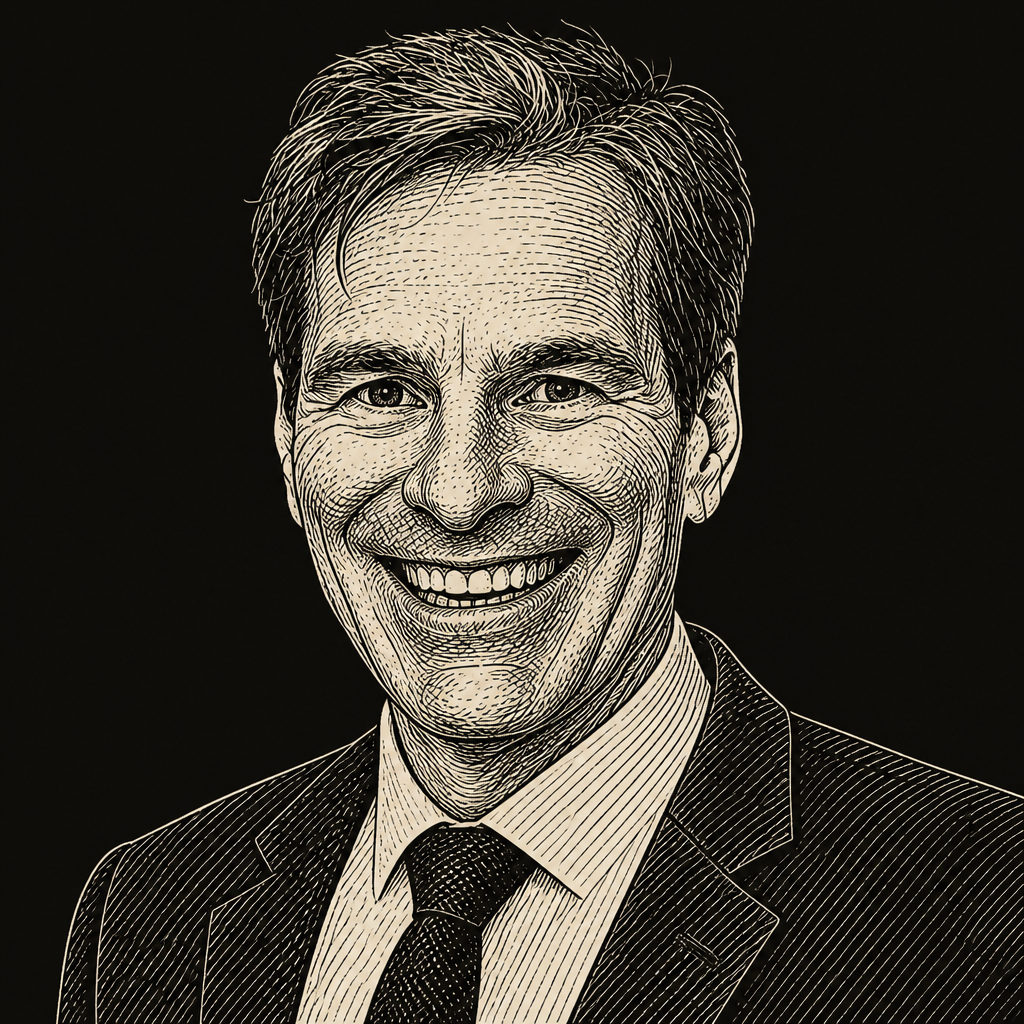
His concern was that neither Congress nor the European Union has shown itself capable of policing that boundary. In the United States, he said, he did not recall Congress telling the Fed it had exceeded its mandate; congressional pressure more often asks the Fed to do more for constituents. In Europe, he asked who is there to complain if the ECB exceeds its mandate. In that sense, he said, the ECB is more independent than the Fed because there is no effective complainant.
Cochrane then posed the hardest version of fiscal-monetary independence. The future problem, he said, is not a 1970s-style Phillips-curve temptation but a 1951-style fiscal question. A central bank’s independence includes a precommitment not to bail governments out of fiscal problems, allowing governments to commit to repay debts rather than inflate them away. Historically, he argued, that was more important than Phillips-curve fine-tuning.
But he asked whether anyone really wants an absolute prohibition. In COVID or World War II, should the central bank refuse to monetize debt, lower rates, or support bond markets, even at the cost of losing a war or forcing immediate fiscal adjustment? To say the central bank must not finance deficits is, in the extreme, to give it power to force Congress to raise taxes, cut spending, default, or accept crisis rather than inflate.
His preferred architecture was a strong official mandate with Congress able to suspend it openly in an emergency. His worry was that the system is not prepared for a future geopolitical shock, such as a China-Taiwan crisis, in which the same fiscal-monetary question returns.
Wilkins’s response was procedural. Democratically elected governments can do what they want if they follow the right process, she said, but they should do it “from the front door, not the back door.” They must be honest and prepared for the consequences. In the U.S. case, given the country’s global financial role, such changes could have global consequences. Unwinding them would also create winners and losers, as after World War II.
That exchange clarified the unresolved line. If emergency fiscal accommodation is sometimes democratically legitimate, then the central-bank design question is not whether exceptions can exist. It is who authorizes them, how publicly, and what prevents an emergency exception from becoming the next precedent.
Accountability must be enforceable, not merely scheduled
The accountability discussion turned on a practical problem: central banks can be required to explain themselves, but explanation is not the same as constraint.
Hanno Lustig pressed on the weakness of accountability in Europe. Members of the European Parliament face complex technical arguments from a central bank staffed by hundreds of PhD economists. Garicano answered from experience: as ranking member on the European Parliament’s economic committee, he saw the ECB president testify four times a year and had some private access through senior committee members. He still concluded that the mechanism provided little effective constraint. He could ask why the ECB was or was not doing something, but if it went too far, “what do you say?” His point was not that hearings are useless, but that they may not discipline mandate drift when the institution can defend its choices through technical transmission arguments.
Wilkins offered external review as one institutional answer. From her work on central bank reviews for the Reserve Bank of Australia and the Riksbank, she argued that independent reviews can increase central bank independence and credibility because they assess frameworks and tools without turning day-to-day decisions into political bargaining. She noted that the Riksbank has external reviews required by legislation every five years. “Can’t get around it,” she said.
Andrew Levin raised a U.S. version of the same issue. Since 1979, he said, the Fed has submitted semiannual Monetary Policy Reports to Congress and the chair has appeared before the Senate Banking Committee and House Financial Services Committee, pursuant to Section 2B of the Federal Reserve Act, around February 20 and July 20. As of May 8, 2026, he said, the first-half hearing had not occurred, making it later than any previous first report he could identify. He said he could find no meaningful media coverage and no Federal Reserve press release explaining an exemption or delay.
Levin also tied the reporting issue to Wilkins’s point about lessons learned. More than four years after work he and coauthors did estimating Fed balance-sheet costs through September 2022, he said, the Fed still had not produced a public “lessons learned” report. For him, the problem was not simply that the law contains a reporting schedule. It was that the system assumes good faith and provides little visible consequence when an accountability practice lapses.
The thread connecting these interventions was direct. Accountability cannot be only a ritual hearing, a statutory date, or an internal assessment controlled by the institution being reviewed. If mandate boundaries are partly created by precedent, then the system needs mechanisms that can name a precedent, evaluate it, and force an answer before it hardens into normal practice.
The unresolved line is not whether central banks need tools, but who limits their use
The speakers did not converge on a simple rule such as “narrow the mandate” or “shrink the balance sheet.” They converged more on a diagnosis: modern central banks need some flexibility in stress, but flexibility without hard governance becomes mission creep.
Thomas Drechsel showed that the Fed chair’s job, as reflected in calendar data, includes regular engagement with media, international bodies, Congress, regulators, and private-sector actors, with spikes during crises. That does not prove overreach. It does show that the chair’s practical role can be studied not only through statutes and FOMC statements, but through how the institution allocates the chair’s time.
Luis Garicano warned that legal design is not enough. The ECB’s mandate can be narrow, its independence strong, and monetary financing prohibited, yet fiscal support can enter through asset purchases and spread management, bank support can enter through emergency lending, and climate policy can enter through transmission arguments. His proposed constraints were correspondingly tool-focused: cap the balance sheet outside crises, sunset every emergency facility, and require explicit congressional authorization for asset purchases beyond Treasury debt.
Carolyn Wilkins argued for “disciplined flexibility.” The central bank should distinguish normal operating frameworks from extraordinary operations; market-functioning purchases from macroeconomic QE; monetary policy from financial stability; liquidity provision from fiscal allocation. Powerful tools need public rationale, comprehensive cost-benefit assessment, risk assessment, exit strategy, fiscal-boundary discipline, and independent external review.
The unresolved policy choice is whether democratic systems want central banks to retain emergency discretion, and if so who can credibly stop emergencies from becoming precedents. Cochrane forced the point from one side: if a central bank refuses to finance deficits in a true national emergency, it may force fiscal choices that are themselves deeply political. Garicano’s warning from Europe was that the emergency exception can become an expected tool. Wilkins’s answer was procedural: if elected governments want to override the ordinary boundary, they should do so openly and bear responsibility.