The American Dream Is Weakening Where Competition and Mobility Are Blocked
 Steven Davis
 John Cochrane
 Megan McArdle
 Valerie Ramey
 Ross LevineHoover InstitutionWednesday, May 27, 202629 min read
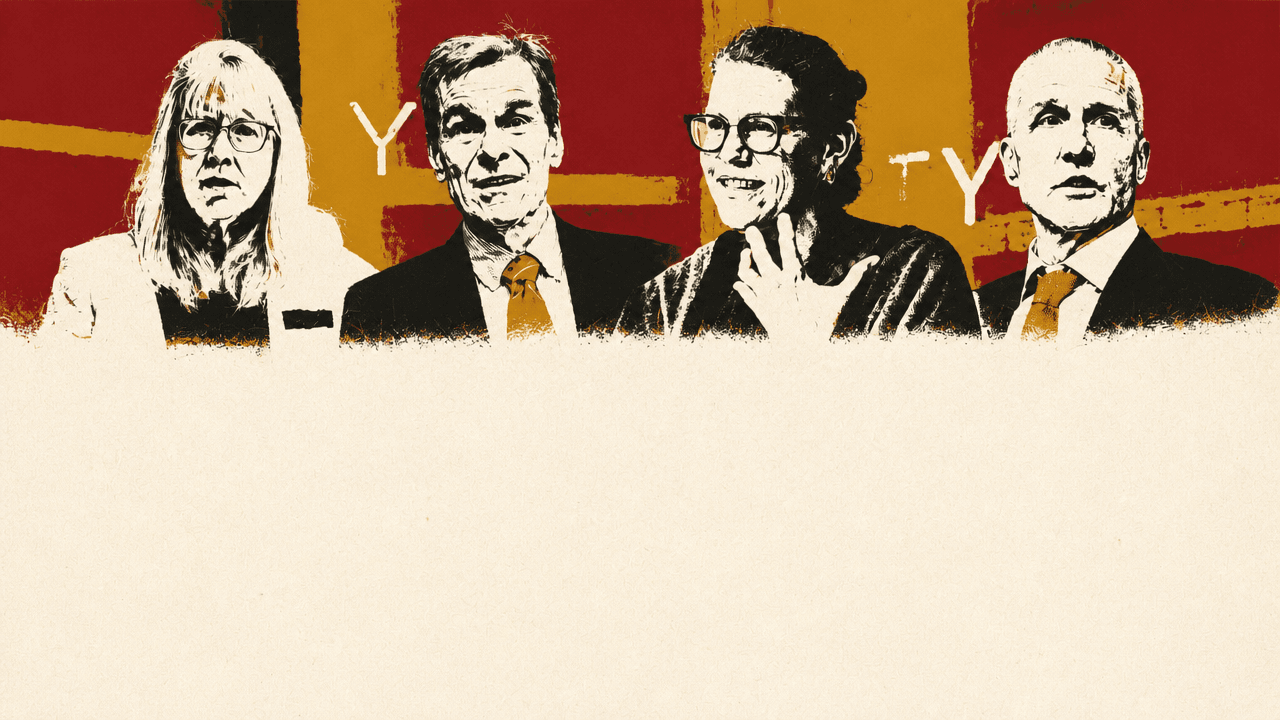
In a Hoover Institution discussion moderated by Washington Post columnist Megan McArdle, economists John Cochrane, Valerie Ramey and Ross Levine argue that American prosperity has depended less on wealth itself than on institutions and habits that allow competition, risk-taking, mobility and disruption. They differ on emphasis — Cochrane stresses limits on government and regulatory failure, Levine competition joined to justice and stability, and Ramey education, culture and immigration — but converge on a warning that the American Dream weakens when schools fail, incumbents are protected, fiscal space erodes and politics stops doing routine maintenance.
America’s advantage was never just wealth; it was the machinery that produced growth
Megan McArdle framed the central question as an American anomaly: the United States is “the biggest rich country and the richest big country,” and has occupied that position for more than a century. The possible explanations she put on the table were deliberately broad: size, freedom, institutions, land, risk-taking, tolerance for failure and unequal outcomes, federalism, creedal identity, immigrant assimilation, luck, or “all of the above.”

John Cochrane accepted “all of the above,” but redirected the question. Being richer than other countries, he argued, matters less than the deeper fact of being vastly richer than the country itself used to be. In the world of the Founders, he said, America was “astonishingly poor” by modern standards — perhaps $1,000 per capita GDP compared with roughly $80,000 today. Infant mortality, poverty, and ordinary material hardship made the founding generation’s world almost unrecognizable from the standpoint of present prosperity.
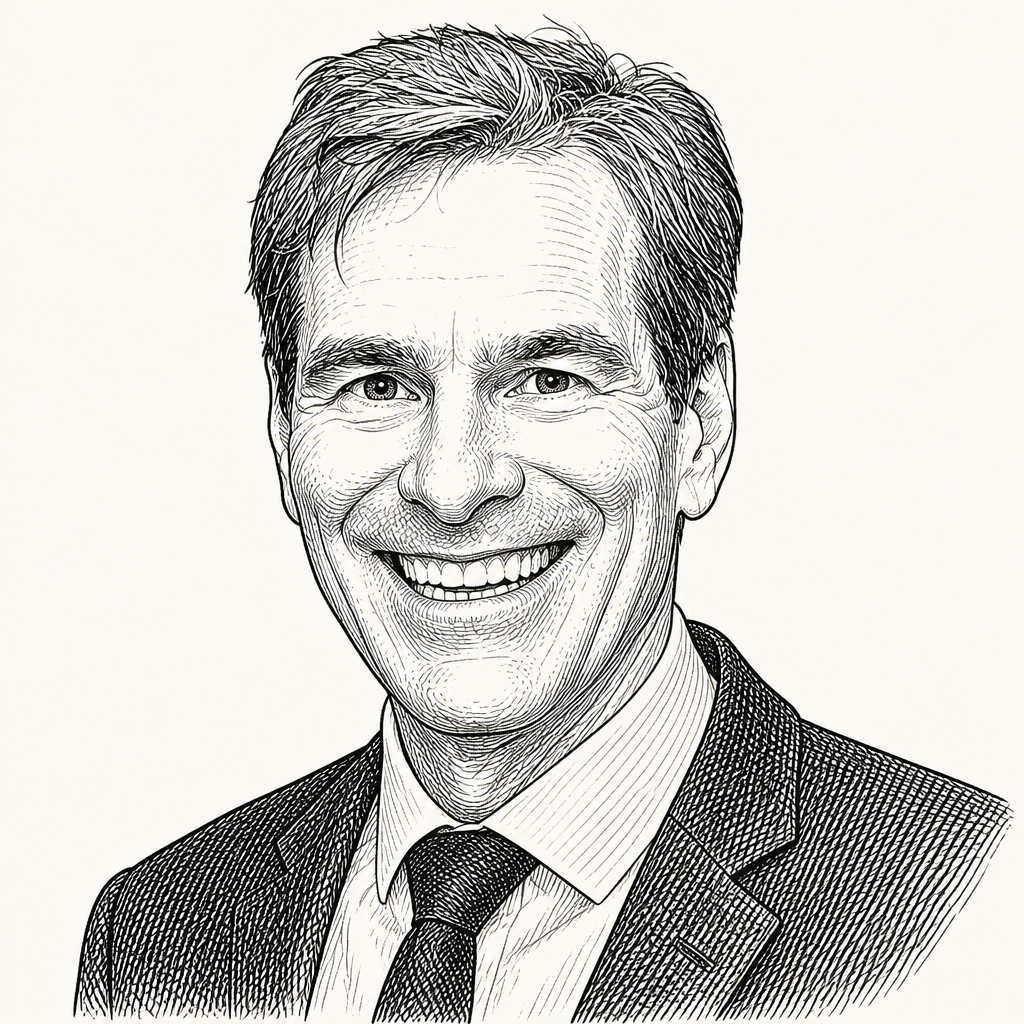
The important question, for Cochrane, is not simply why the United States outperformed peers, but what institutions enabled sustained growth at all. He divided growth into two forms. “Frontier growth” comes from new ideas and new technologies, embodied in new businesses. “Catch-up” growth comes from greater efficiency: countries or firms becoming less dysfunctional and moving closer to what is already possible. America’s historic role, he said, was unusually strong frontier innovation. It did not merely administer a large free-trade area, as Rome had done; it allowed people to innovate.
The institutional ingredients Cochrane emphasized were limited government, secure property rights, rule of law, and a large market. The relevant assurance was not that government would actively direct every breakthrough, but that someone who invested in a business would not see it “instantly taxed away or expropriated.” He saw Britain as having had many of these advantages during the Industrial Revolution, but argued that the United States passed it as Britain turned more toward socialism.
That argument led to his main anxiety: growth has been slowing through the professional lives of the panelists. Cochrane left open two possible explanations. Perhaps ideas have become harder to find and artificial intelligence will provide the next rescue. Or perhaps ideas remain available, but regulation, permitting, and red tape prevent them from becoming productive reality. He leaned toward the second view: “we have ideas but we can’t get the permits.”
Cochrane also argued that Americans overemphasize frontier invention and underemphasize process innovation. Innovation is not only “inventing a new chip.” It is also finding a better way to board passengers on airplanes, improving production methods, or making rockets much cheaper. Henry Ford did not simply invent a new object; he changed how cars were made. Elon Musk, in Cochrane’s telling, did not invent the rocket ship; he invented a way to do it “10 times cheaper than everybody else.”
That distinction mattered because it implied that the United States may still have room for substantial catch-up growth inside its own economy. India, Cochrane said, with per-capita GDP around $6,000 compared with America’s roughly $80,000, does not need to innovate to grow dramatically; it only needs to become “only as dysfunctional as the US.” But the same logic applies domestically. The United States itself contains enough dysfunction that doubling or tripling prosperity may be possible if the country caught up to its own feasible performance.
Ross Levine reduced the American formula to three themes he returned to throughout: competition, justice, and stability. Instead of leading with aggregate statistics, he told the story of Sam, a former neighbor in Maine who finished wood floors. Sam graduated from high school, worked for someone else for about ten years, then developed a better idea for installing floors. He could raise a little money from friends, including Levine, use his reputation in the community, obtain bank funding, and compete.
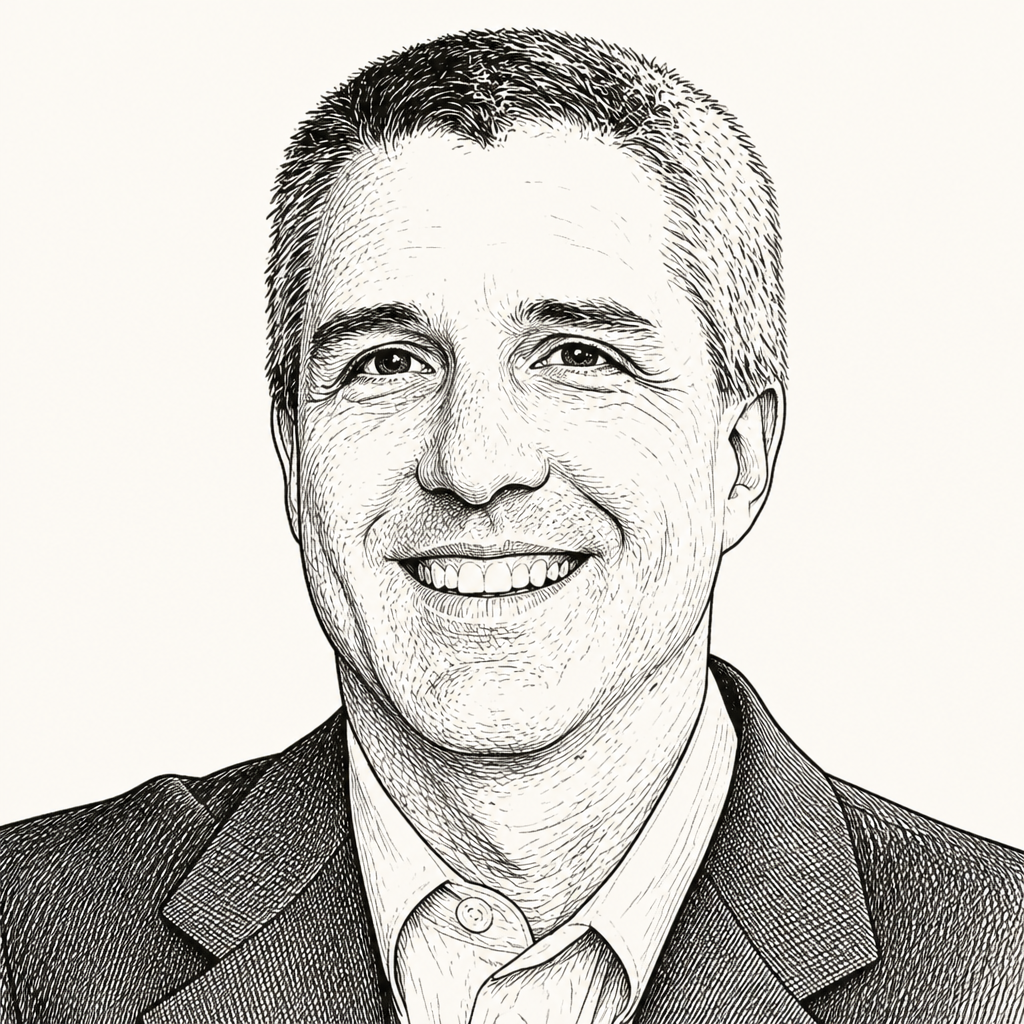
The point was not that Sam built a technology giant. It was that he did not need to serve a long guild-like apprenticeship, pay $50,000 for permission to enter the trade, or ask an incumbent for approval. He could try to persuade customers he had a better product. The judicial system allowed him to hire contract workers, obtain supplies, and enforce agreements. A reasonably stable economic environment allowed customers to sign spring contracts for fall work without worrying that inflation would make the terms meaningless within six months.
Sam’s business, Levine said, meant Bar Harbor got better floors. Scaled up, that same pattern helps explain American prosperity: people able to compete, contracts enforceable under a legitimate legal system, and enough macroeconomic stability to plan.
Valerie Ramey added luck, culture, and immigration to the institutional account. America broke into independence at the moment of the Scottish Enlightenment; Adam Smith’s Wealth of Nations appeared in 1776. Those ideas, she argued, helped give the country a strong start. But constitutional text alone was not sufficient. Liberia modeled its Constitution after the United States, she noted, without reproducing the same result.

Ramey drew on Tocqueville’s explanation: geography, laws, and mores, in increasing order of importance. Geography gave the United States land and distance from Europe’s more tradition-bound institutions. Law gave it the Constitution. But mores — the habits, expectations, and cultural practices of the people — were the most important. She emphasized literacy as one concrete example. By the best estimates, based on whether people could sign their names, white male literacy in New England in the 1790s was 85 to 90 percent, and even other parts of the country were substantially ahead of Europe. A vibrant press and a reading public helped turn constitutional aspirations into lived political and commercial culture.
Immigration then reinforced dynamism. Immigrants self-select, Ramey said: crossing the Atlantic to a new land required risk tolerance. That made the United States “a nation of risk-takers,” and risk, on average, produces return. She cited research by Ran Abramitzky and Leah Boustan linking people across censuses and finding that immigrants have had more upward mobility than native-born Americans, a pattern she said continues into the present. Immigrants tended to move to the most dynamic places and brought both innovation and mobility.
The result was not one cause but an interacting system: institutions that protected experimentation, a culture literate enough to use those institutions, a market large enough to reward scale, and a flow of people unusually willing to take risks.
Competition works because incumbents are allowed to lose
For Cochrane, American competition is not mainly the product of a government agency administering competitive conditions. It is the legal and cultural right to disrupt existing businesses. That right is socially painful because new innovation routinely destroys incumbent business models. But he treated that destruction as central to growth.
His examples were deliberately ordinary. Local grocery stores gave way to A&P, which produced cheaper goods but caused upheaval for mom-and-pop stores. Walmart then challenged and displaced A&P. Amazon later challenged Walmart. Uber undermined taxi monopolies. Each step imposed losses on incumbents and sometimes on workers, but each also represented the opening of a protected market to a new form of competition.
Government’s role, Cochrane argued, is often to “retard growth” by protecting incumbents. Given the chance, governments tend to make life easier for existing businesses and harder for new entrants. What preserves disruption is not active industrial management but limits on government power. He summarized the distinction this way: America is a government of rights, not permissions. Fracking exists in the United States, in his account, because owners can act on subsoil rights subject to limited permitting. In Europe, he argued, people must ask permission before doing much of anything, and “nothing happens.”
Levine agreed on the importance of competition, but corrected what he saw as an overly simple anti-government account. Adam Smith, he said, repeatedly warned that restrictions on competition often originate in the market itself: powerful private actors seek to use government to restrict entry and coerce competitors. To describe the problem only as “evil government” misses Smith’s insight. The danger is the commingling of powerful private interests and government authority against the public.
That is why justice mattered so much in Levine’s reading of Smith. Justice was not a decorative add-on to efficiency; Smith regarded it as fundamental. A society needs rule of law so people view the system as legitimate. Without legitimacy, people do not buy in; without buy-in, the alternative is violence. Levine linked this view to the Declaration of Independence and the Constitution: the system promises liberty and the pursuit of happiness, not guaranteed happiness. It gives people the ability to try, fail, and try again.
Cochrane pressed Levine on the political economy problem. A responsive democracy should respond to citizens’ demands. But many of those demands are requests for protection from competition. If economics professors faced foreign competition that lowered their salaries, he joked, they might petition government to protect their profession. A responsive government might oblige. The outcome is not necessarily conspiratorial or evil; it is an unintended consequence of democratic responsiveness. People ask for protection. Politicians respond. Growth is undermined.
Levine answered by invoking the missing book Adam Smith never wrote. Smith gave the world The Theory of Moral Sentiments, a study of human motivation and fulfillment, and The Wealth of Nations, an account of social organization, competition, justice, stability, and policy. He had promised a third book on jurisprudence — in Levine’s framing, a book that might have addressed how societies govern themselves so they choose good policies. Instead, Smith became a customs official enforcing tariffs after writing a major work against mercantilism, and never wrote the book. “That,” Levine said, “is the answer to John’s question.”
His own answer was that people react quickly to anger, stories, villains, victims, and simple remedies. They want immediate relief. But reality rarely supplies simple villains or immediate cures. Over time, societies create “frictions” that slow thinking down: staggered elections, cost-benefit analysis, procedural requirements, and mechanisms that force deliberation. Since the mid-1970s, technology has accelerated public reaction. Levine expected society eventually to adapt by building new frictions that slow decision-making enough for better judgment.
McArdle described the broader puzzle as one Milton Friedman had posed: poverty is the normal human condition; the mystery is why some people become rich. The United States has had cartels and protectionist episodes, but fewer or less binding ones than many other countries. The present worry is whether the old American capacity to avoid suffocating collusion has weakened — whether institutions have become too sclerotic, interest groups too entrenched, and citizens too settled into comfort.
Ramey was optimistic. American politics and policy, like technology, can move through long lulls followed by sudden reform. She pointed to the 1970s, a decade not usually remembered fondly, as an important deregulatory moment. Trucking regulations had been so restrictive that truckers were sometimes allowed to carry cargo one way and required to return empty. Airline regulation rested on the idea that every small city had to be served and that competition would make the system unworkable. Gasoline price controls followed the OPEC price shock.
Then the Ford and Carter administrations began deregulation. Airline deregulation in 1978 was chaotic at first, with firms entering and exiting, but Ramey argued that the result was lower fares and far more efficient airlines. Reagan’s early removal of gasoline and oil price controls, she said, ended gas lines by allowing prices to send the right signal: when prices rise, people carpool and conserve.
Tax policy offered another example. The tax code accumulates deductions, preferences, and higher rates until it becomes inefficient. Then, occasionally, reform clears out the brush. Ramey cited the 1986 tax reform as an example of returning toward a broader base and lower rates. Her optimism rested not on a belief that bad policies do not accumulate, but on the American record of periodically recognizing the buildup and cutting it back.
Levine’s optimism had a different emphasis. Many current challenges, he argued, are consequences of success. Since the mid-1970s, technological innovation, automation, information technology, and now AI have disrupted labor markets. Some families and groups have received extraordinary opportunities; others have become fearful. The story does not require a villain. But fear makes electorates receptive to bad policy and politicians’ simplified explanations: foreigners, immigrants, elites, billionaires. Levine believed the country would eventually return to the underlying tasks: fostering competition, maintaining justice, preserving stability, and adjusting fiscal policy.
Cochrane supplied the counterweight. The United States has cycled through stagnation and reform before, but 1980 is now far in the past, and he saw the number of “unaddressed dumpster fires” growing. His list included K–12 education, especially in cities and for poor children; permitting; public investment failures such as California high-speed rail; post-fire rebuilding delays in Los Angeles; housing regulation in California; a tax system that now produces “minimal revenue at the maximum distortion”; immigration reform that everyone can outline but no coalition can enact; social programs that impose nearly 100 percent marginal tax rates on low earners as benefits phase out; homelessness spending that fails to reduce homelessness; unreformed farm subsidies; and the Jones Act.
His anxiety was institutional competence. Americans have lost faith in elite institutions, he argued, not because of irrational populism but because those institutions proved incompetent. The financial crisis was one wake-up call. Public health during COVID was another. He referred specifically to official insistence on masking two-year-olds outdoors as the kind of episode that destroyed trust.
The hopeful sign, in Cochrane’s account, is volatility. American politics can shift sharply when voters conclude they have had enough. He described support for Donald Trump not as necessarily affirmative enthusiasm, but as a sign that median Americans were rejecting a governing class. Americans “vote against presidents,” he said, and may vote against this one too. The capacity to shift and return to common sense remains possible. But reform requires a functional Congress, and he did not yet see one.
The American Dream now fails first in school
When McArdle turned from national prosperity to opportunity, she asked where ordinary people now encounter the largest barrier to the American Dream: housing, finance, education, or something else. Ramey’s answer was immediate: education.
K–12 education, she said, “just does not produce value” for many students. Children from households with educated parents can compensate for weak schools. Children without that backup fall further behind with each grade. Ramey said she had examined achievement patterns over time and across ethnic groups. In California public schools, she said, Asian students’ test-score advantage over white students is almost as large as the white student advantage over other minority groups. Something happening at home is compensating for what schools are not providing.
The stakes are technological. Ramey invoked the “race between education and technology,” associated with Claudia Goldin and Larry Katz. As technology advances, education must advance too, so workers can use, implement, and innovate with new tools. The United States once led on this margin. In the 1920s, the high school movement gave Americans more years of education than other countries. Businesses supported it because electrification, chemicals, and other technologies required workers who could understand a blueprint.
Ramey argued that the United States later made a costly mistake. As the economy demanded more specialization, colleges and universities expanded engineering, business, and other professional schools. At roughly the same time, beginning in the 1970s, high schools increasingly treated college preparation as their central mission and removed vocational training. Students for whom college was not a good option left high school without usable skills. Germany, by contrast, maintained stronger vocational training and did a better job educating its workforce.
Her education argument was not only about labor-market skills. She also emphasized civic education. If students do not understand why the United States became unusually prosperous and successful, the political culture that sustains those conditions weakens.
Levine agreed and connected education back to political economy. Better education allows more people to see and use opportunities. Those citizens then demand less protection from government and more freedom to pursue their goals. In turn, they choose different leaders, because leaders respond to what voters demand.
Cochrane agreed that the bottom end of opportunity is the central issue, but resisted the idea that America has broadly ceased to offer mobility. He distinguished opportunity from inequality. Whether billionaires fly private, he said, makes little practical difference to a kid pumping gas in Fresno. The more important question is whether that kid has a path upward.
He pointed to charter schools and vouchers as evidence that reform, however slow, is moving. Milton Friedman proposed school vouchers decades ago, and the idea has spread gradually. Cochrane treated this as an example of American reform’s frustrating but real pace.
He also rejected the narrative that middle-class life is now impossible for those outside elite tracks. The traditional sequence — finish high school, get a job, get married, have children, stay married, in that order — still produces a middle-class life, he argued, even with current difficulties. Too many people fall off that path, and some social programs intensify the problem by removing benefits as earnings rise. If an extra dollar of earnings costs a dollar of benefits, people avoid advancement.
But Cochrane was wary of a top-down vocational education program or centrally planned job retraining. Recent calls to teach displaced steelworkers to code looked less compelling once AI threatened coding work. His preferred answer was broad supply-side reform and experimentation rather than a federal program designed around the occupation of the moment.
He objected more generally to “one big fix” thinking. America’s public problems, he said, require “a Marie Kondo cleaning up of the insane complexity of our public life.” The metaphor mattered. Reform is not a macroeconomic stimulus check or one sweeping gesture. It is the sock drawer, then the underwear drawer, then the kitchen cabinets, and eventually the garage. Each broken subsystem is broken in its own complicated way. The “one thing” America needs is a large-scale reform program — but that means fixing many things, one by one.
Fiscal space is the danger hiding inside the prosperity story
McArdle described federal finances bluntly: the government has been “spending like a drunken sailor on shore leave with a terminal disease and our credit card.” Debt is around 100 percent of GDP, and the deficit is 6 or 7 percent in peacetime. Her question was whether there is any way out short of a fiscal crisis.
Levine said the country will get out of the debt problem one way or another. The question is whether it exits “in a body bag” or “on our own feet with our heads held high.” At present, he argued, both parties support the worst route: high deficits, growing debt, and eventual bond-market reaction that produces soaring interest rates and serious trouble. He noted that congressional leaders who had previously called deficits immoral nevertheless passed fiscal policy that increased them. In a Washington Post piece, he said, he had asked, “Where have all the conservatives gone?”
His preferred alternative was gradual and credible adjustment. Any plan that begins “we just have to” is unlikely to work. The adjustment must include spending restraint over time, including entitlement programs. Levine was skeptical that the solution would come from higher taxes, because he believed taxes are already high and higher taxes would stymie growth, innovation, and opportunity. Above all, the adjustment requires bipartisan support — exactly where he saw bipartisan support currently aligned in the opposite direction.
Ramey said debt and deficits are the subject on which she is usually most pessimistic. She had warned about debt when it was 70 percent of GDP, then 80, 90, and now roughly 100 — close to the level at the end of World War II. World powers that run into fiscal trouble, she argued, can lose hegemony; she mentioned the Netherlands centuries ago and Great Britain.
The public does not fully register the problem, in her view, partly because trillions of dollars are too abstract. She translates the debt into personal terms: about $89,000 per person, including women and children. A baby born today could be described as already owing that amount.
Ramey had written in 2019 that prudent governments run surpluses in good times because they do not know what crisis may come next. She did not know the next crisis would be a pandemic. But the pandemic and the current defense buildup illustrated her point: prior deficits left the country weaker.
She assigned a large share of current debt to stimulus payments during the Great Recession and COVID. Twenty-three percentage points of the debt-to-GDP ratio, she said, came from those Keynesian stimulus payments. Her research finds very little macroeconomic stimulus from them. Without those payments, she said, debt would be closer to 77 percent of GDP rather than 100 percent.
Cochrane added that the formal debt understates the problem because of unfunded liabilities such as Medicare and Social Security. He put those around $78 trillion, making the effective burden far larger than after World War II, especially given demographics.
Ramey then addressed a common historical analogy: after World War II, the United States reduced debt from 107 percent of GDP to 23 percent by the 1970s. Some argue the country simply grew its way out. Ramey said growth helped only a little. A large early reduction came from inflation. In the first three years after the war, prices rose almost 30 percent. Because the debt was nominal, inflation reduced the real debt burden and lowered the debt-to-GDP ratio. War-bond buyers absorbed large losses.
Why did interest rates not rise to compensate? Ramey pointed to financial repression. The Treasury pressured the Federal Reserve to keep interest rates near zero to help finance the debt. Even after the Fed gained more independence in 1951, the government repeatedly surprised lenders with inflation, producing negative real interest rates. Borrowers with 1950s mortgages benefited, but savers were repaid in dollars worth less in goods. Ramey called financial repression “one of the worst things you can do to an economy,” citing Stanford’s Ron McKinnon, who coined the term. South Korea, she said, took off only after leaving financial repression behind.
The risk is that high debt gives governments an incentive to use the “inflation tax” again.
Cochrane’s fiscal argument began with a distinction: the problem is not debt itself; it is the lack of a credible plan to repay it. Countries can carry very high debt if creditors believe repayment will occur. Britain paid off debt of about 140 percent of GDP after the Napoleonic Wars through steady small primary surpluses, helped by the Industrial Revolution. The United States could also borrow at high levels if people saw a plausible path back.
Default or inflation would not solve the underlying issue. If the United States wiped out the debt today, the government would return to bond markets tomorrow needing to borrow several percentage points of GDP for the current deficit. Creditors would still ask for the repayment plan.
Cochrane’s deepest worry was not that “bond market vigilantes” suddenly arrive in normal times. It was loss of fiscal space in a crisis. Another pandemic, a Taiwan blockade, a major financial crisis, or a collapse in world trade could force the government to borrow $5 trillion to $10 trillion for bailouts, stimulus, or defense. Bond markets might then ask why they should provide new savings to a government that had no credible repayment path and had recently inflated away part of COVID-era debt. They might say no.
The alternative bad path is a “standard Latin American” pattern: as deficits become harder to finance, government imposes financial repression, forces banks to hold government bonds, pressures the Fed to hold rates down, taxes wealth and government debt, and produces inflation and stagnation.
Yet Cochrane insisted the economics of repair are straightforward. The fiscal gap may be around 3 percent of GDP for the next 20 to 30 years. The country needs to return to its traditional fiscal pattern: small, steady primary surpluses in good times, with borrowing reserved for crises. It does not face external pressure comparable to barbarians invading Rome. It still has the world’s strongest economy relative to peers. A debt crisis caused by the inability to match spending and transfers would be “a self-inflicted wound of first order.”
The solution, he said, does not require austerity or budget gimmicks. It requires reform: a tax system that raises revenue without excessive distortion, social-program changes that do not “throw grandma from the train” but may index benefits differently, and health-insurance reform that stops promising “everything to everybody.” It also has to last through many administrations. Bondholders must believe that after borrowing in a crisis, America will return to slow repayment.
Why have markets not already revolted? Cochrane’s answer was confidence. Investors still believe that, however ridiculous Congress may look, the United States is a great country that will eventually do the obvious things a bipartisan commission could recommend. That faith remains, but it is more fragile than before.
A good next 50 years requires less rage and more maintenance
Asked how historians would describe a good or bad next 50 years, Levine rejected a one-policy explanation. The favorable story, he said, would be that Americans stopped “enjoying being angry so much” and rejected anger as an explanation for all their problems, on both the right and the left.
He returned to Sam, the floor installer. Sam does not want grand ideological stories; he wants problems solved. People who work in small businesses understand compromise because they deal with workers, suppliers, customers, and constraints. A better political economy would demand leaders who solve problems instead of offering villains.
Levine saw financial regulation as an urgent example. He said the financial sector is “really a mess now with regulation” and expressed fear that the country may be heading toward a financial crisis larger than 2008. If that happened in the current fiscal and political environment, explaining the crisis in terms of moral hazard, too-big-to-fail incentives, and bad regulation would not satisfy the public. People would demand government intervention in finance, and the consequences could be severe. Avoiding that future requires citizens who demand problem-solving leaders rather than platitudes that direct anger toward “some make-believe villain.”
Ramey emphasized the interplay between voters and leaders. She still believes individuals can matter in history. Politicians can tell voters that reform will be tough in the short run but beneficial later. She cited Ronald Reagan’s support for Paul Volcker’s anti-inflation policy despite unemployment reaching about 10 percent. Reagan told the country to hang in, and the economy recovered from a deep recession. She also cited Franklin Roosevelt as a wartime leader able to mobilize people, while noting she did not agree with all his economic policies.
But leaders require a polity willing to elect them. Ramey worried that reasonable people are retiring from politics because Washington has become so awful. If that does not change, she said, the country could decline.
Cochrane’s version of the good future was a generation of leaders in Congress, the presidency, and especially state and local governments who “mind the store.” He argued that American public discourse has been overtaken by recurring millenarian quests: overpopulation, resource exhaustion, nuclear power, genetically modified foods, climate catastrophe, and now AI taking all jobs. His prescription was deliberately deflationary: calm down, fix what is broken, and allow natural progress to occur.
The model was again the late 1970s and 1980s. Airline deregulation, tax reform, and other changes showed that reform can be done. Other countries can change too; Cochrane cited Sweden’s move away from socialism while retaining high taxes.
But he also saw problems in the rules of political competition. The presidency has become too winner-take-all because governing by executive order lets one side impose policy until the next side reverses it. Too much power makes losing an election feel intolerable. Primaries also push candidates toward extremes. When nominees were selected by party insiders in “smoke-filled rooms,” Cochrane said, those insiders picked candidates who could win general elections. Democratic primaries, by contrast, empower the most motivated and ideological voters. These were examples, not a full institutional reform plan, but he treated them as evidence that the rules of the game are malfunctioning.
The 1986 tax reform offered a leadership lesson. Reform need not be pure pain. The top marginal tax rate fell from 70 percent to 28 percent while loopholes were closed. Cochrane described the political art as persuading each interest group to give up its special deduction while gaining from lower rates and a cleaner system — making everyone an ally in eliminating everyone else’s preferences.
If the next 50 years go well, he said, government will fade from the center of the story. The news will be AI, new companies, innovation, and prosperity. People may not remember the political maintenance that made it possible, just as they remember the 1920s more for prosperity than for Calvin Coolidge. But the prosperity can be killed. Nuclear power could have supplied cheap carbon-free electricity, he argued, had it not been put on hold for 50 years. Genetically modified foods were similarly restricted in much of Europe. It is possible to “kill the goose who lays the golden eggs.”
AI does not repeal the old productivity bargain
The audience questions pushed the panel toward automation and the future of work. One questioner asked what happens if the United States can produce everything it needs with half the effort: do half the people become unemployed, does everyone work half time, and how do incomes adjust to mortgages and other fixed obligations?
Ramey answered through John Maynard Keynes’s essay “Economic Possibilities for Our Grandchildren.” Writing during the Great Depression, Keynes predicted that productivity would increase eightfold over the next century and that the economic problem of scarcity might disappear. But he also thought some work was good for people, perhaps five to ten hours per week.
That is not what happened in the United States. Ramey cited her paper “A Century of Work and Leisure,” which found that among prime-age Americans, average hours worked per person in the working-age population did not fall over the 20th century despite enormous productivity gains. Work shifted from men toward women as female labor-force participation rose. Part of the reason, she argued, is that people did not merely want more of the same goods. New goods appeared: flights to Europe, medical innovations, and other things worth working to afford.
Europe’s hours did fall somewhat, but not nearly as much as Keynes predicted. Ramey referred to new evidence from Berkeley researchers suggesting that Europe’s lower hours may reflect labor-market restrictions imposed by governments. Her conclusion was open-ended: Americans might someday choose fewer hours, or new goods may remain valuable enough that people keep working as much as before.
Cochrane responded with the standard historical argument against technological unemployment. When Gutenberg invented the printing press, monks lost work copying manuscripts, but society did not run out of jobs. Steam engines, steamships, and tractors displaced labor from old sectors. Agriculture once employed a large share of Americans; now it employs a small share. The displaced majority did not remain permanently unemployed in the streets. When it becomes cheaper to make things, people invent new things to do, and society produces more. His answer to the “half the effort” premise was: produce twice as much and work the same.
He applied the same reasoning to AI. The question “what happens if AI takes all the jobs” has appeared in different forms many times. His view was that it will be “great” because productivity will rise and new forms of work and consumption will emerge.
Levine added a non-economist’s answer drawn from philosophy. Across history and cultures, he said, people want to “shine.” They want esteem, dignity, and distinction. More abundance will not erase the desire to achieve or stand out. That desire produces frustration, but also satisfaction. Even in a world with more stuff, people will continue trying to be distinct.
On inequality and mobility, Cochrane cautioned that the numbers are often “jiggered.” He argued that claims of historically unprecedented income inequality are overstated, especially when adjusted for lifecycle effects. People tend to have low income when young and old, and higher income in middle age; that is not necessarily inequality in the relevant sense. Consumption measures also show less inequality than headline income measures.
Levine distinguished paycheck inequality from inequality after taxes and transfers. Excluding the top one-tenth of one percent, he said, the increase in after-tax, after-transfer inequality since the 1970s has been fairly moderate, not what newspaper coverage often suggests. On intergenerational mobility, he referred to an American Economic Review study by Ward indicating that mobility has not changed too much over centuries. His memorable formulation was that Americans are “two generations from the trailer park in both directions.”
Cochrane likewise argued that social mobility remains substantial. The benchmark should not be perfectly random mobility, as if family background had no relationship to outcomes. It is still striking, he said, how many Americans born in the bottom 20 percent end up near the top — and how many fall in the other direction.
The future looks better than the past, if the institutions hold
A later question asked the panelists, in effect, whether they would rather be born when they were or be born into the world of today’s students. Cochrane answered without hesitation: he would choose to be born now, or ten years from now.
His answer rejected nostalgia for simpler agrarian life. Life on the farm, he said, was “brutal and short”: back-breaking labor, children dying of disease, starvation, and vulnerability to soldiers or expropriation. Modern complexity is not a loss; it is civilization. Spending time in school and learning “wonderful things” is better than hoeing ground from childhood until early death.
He also spoke from personal memory. Growing up in 1960s Chicago, he said, meant coal dust everywhere and coal dust in his lungs. Today’s young people have better chances of dramatic life extension, of delaying Alzheimer’s, of surviving cancers that might still kill older generations. Once a society reaches today’s wealth levels, health and longevity become central gains. Cochrane said he was jealous of his grandchildren.
Levine was nearly as optimistic, though with a caveat about music being better in the past. He described his own life as excellent and expressed gratitude for what the country had given him. But he saw his children’s opportunities, expected AI to be “phenomenal,” and observed inventions emerging constantly at Stanford and other universities. Today’s young people will have challenges, as earlier generations had Vietnam and other crises, but he leaned strongly toward the future.
Then Cochrane added the conservative warning: “If you can keep it.” The danger is not primarily external. It is that American society could fall apart internally or become unable to meet its challenges. Preserving the system is the responsibility of those inheriting it.
Levine also acknowledged that competition and innovation can push people into lives they might not prefer. A dynamic economy expands options, but it can also create pressure and narrow certain choices. His daughter, raised with the advantages available to a professor’s child, chose to live in Wyoming and take a different path. The society still imposes constraints, but it offers an unusually wide array of options to many people.
Ramey made a related point through her daughter, who moved to Arkansas, bought two acres, and planted a large vegetable garden. The garden worked for a few years until beetles destroyed it. Ramey’s response was: “Aren’t you glad there’s a Whole Foods around the corner?” In the past, crop failure could mean starvation. Modern abundance allows people to choose a more self-sufficient life without being trapped by its full risks. They can go off the grid, but also return to it.
She also understood that abundance can produce overload. When she and her husband were decorating a house, the abundance of choices became exhausting. When a decorator finally said there were only two upholstery options for dining-room chairs, they cheered. Too many choices can be burdensome, but having the option set remains different from deprivation.
Ramey was more ambivalent about being born now because she had a wonderful childhood and knew how her life turned out. She described the optimism of her parents’ World War II generation. Her father, born in 1915, and mother, born in 1918, had lived through the Great Depression and the war; her mother served in the Navy, and her father worked as an electrician on Liberty ships in Houston. They emerged from the war optimistic, and that mood shaped her childhood.
She also explained why the postwar period felt so full of opportunity for many manufacturing workers. In 1950, she said, the United States produced 75 percent of the world’s motor vehicles. Germany, Japan, and others were still recovering from the war. U.S. firms held substantial global market power, and strong unions forced them to share rents with workers. Europeans visiting the United States were struck by how well manufacturing workers lived.
But that arrangement could not last. The rents depended on unusual postwar conditions. As Japan recovered, imports rose, China later grew, and global competition intensified, firms and unions could no longer preserve the same monopoly rents. Ramey, who said she had written on this with George Borjas, argued that people who ask where postwar opportunity went are often remembering a historically specific moment. Opportunity did not simply vanish; it changed.
McArdle closed by noting that some losses attributed to modernity are choices. Parents do not have to treat children like “little rajas” being prepared for one of a handful of elite-college slots. Families could give children more freedom. Cochrane replied that if parents leave children alone in the park, child services may bring them back — a reminder that even cultural choices are entangled with law and institutional practice.