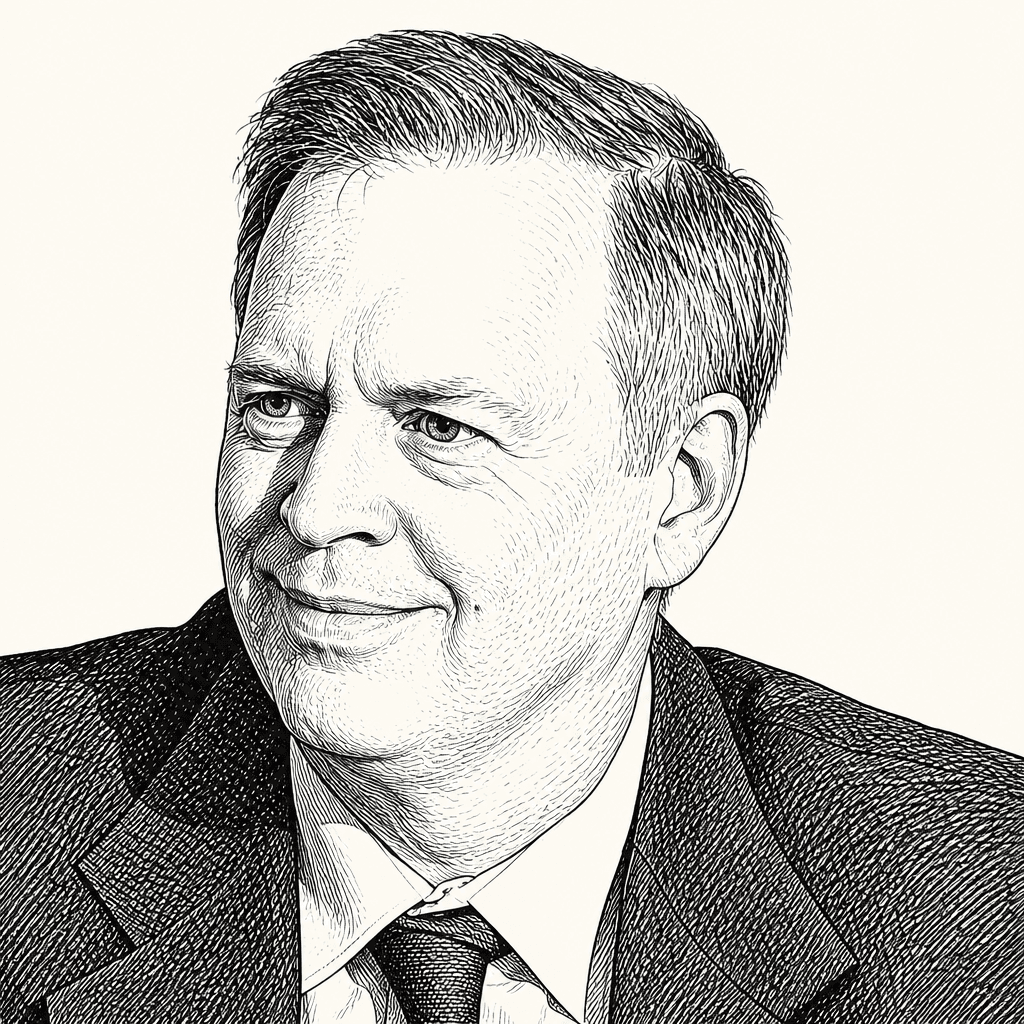
Steven Davis
Economist and host of Hoover Institution’s Economics, Applied. He is the Thomas W. and Susan B. Ford Senior Fellow and Director of Research at the Hoover Institution, a senior fellow at Stanford’s Institute for Economic Policy Research, and a researcher focused on macroeconomics, labor markets, economic uncertainty, and work arrangements.
Treasury Intervention Cannot Override Fiscal Pressure on Long-Term Yields
Anil Kashyap argues that recent U.S. Treasury moves to support the yen and potentially buy long-dated government debt may influence markets briefly but cannot durably lower borrowing costs or stabilize currencies without fiscal and monetary policy changes. In discussion with Steven Davis, he says large deficits and rising debt-service costs are putting sustained pressure on both U.S. and Japanese yields, while Kevin Warsh’s Jackson Hole remarks have set up an immediate test of whether the Fed will act on his stated concerns about inflation.
Central Banks Cannot Conceal the Fiscal Signal in Rising Yields
Former Reserve Bank of India governor Raghuram Rajan argues that central banks cannot solve a fiscal problem by suppressing the market signals it produces. Rising long-term yields may reflect government deficits and the future cost of accumulated debt, he says, rather than market dysfunction requiring intervention; attempts to push them down risk delaying the fiscal adjustment policymakers must eventually make. Central banks can restore liquidity in a genuine market crisis, Rajan contends, but they cannot make persistent public borrowing sustainable.
Housing Affordability Depends on Building More, Not Cheaper Mortgages
Richmond Fed president Tom Barkin argues that housing affordability depends less on cheaper mortgages than on making homes easier and less costly to build, through changes to land use, permitting, redevelopment and local attitudes toward construction. In a discussion with Steven Davis at Jackson Hole, Barkin also describes a labor market with low layoffs but weak hiring, and says uncertainty over long-term real interest rates leaves fiscal policy with less reason to assume borrowing will remain cheap.
Faster Payments Could Erode Banks’ Core Deposit Franchise
Kansas City Fed President Jeffrey Schmid argues that the important payments shift is not digitization but the growing speed and range of ways money can move, which could make banks’ deposit funding less predictable. Instant-payment rails, stablecoins and other emerging models may erode the float and stability that once defined the core deposit franchise, he says, while raising the stakes for resilient payment infrastructure. Schmid places that work within a Fed mandate he says is owed to the public—not financial markets—and requires both inflation control and dependable financial plumbing.
Capitalism Requires Impartial Law, Competition, and Broad Opportunity
Ross Levine argues that market-based capitalism delivers prosperity and freedom only when competition is protected by impartial law and the state is strong enough to enforce rules without becoming a dispenser of political privilege. In conversation with Steven Davis, he makes a moral as well as economic case for a system in which people advance by serving willing customers rather than securing favors, while both men argue that public policy must address market failures and give more people a meaningful chance to participate.
Permitting Delays and Construction Costs Threaten Affordable U.S. Energy
Steven Davis of the Hoover Institution argues that America’s relatively low energy prices—an advantage for households and industry—are at risk as electricity demand rises from data centres, industrial expansion and other uses. He says the United States will need new generation, transmission and distribution capacity, but that building it affordably requires cutting tariffs on construction inputs, easing occupational licensing barriers and reforming permitting and environmental reviews that add years of cost and uncertainty.
Focused Deterrence Helped Baltimore Cut Homicides Without Saturation Policing
Steven Davis’s interview with economists Aaron Chalfin and Max Kapustin examines Baltimore’s 2022 adoption of focused deterrence, a strategy aimed at the small number of people, groups, and disputes driving serious gun violence. Chalfin and Kapustin argue that the evidence does not prove the strategy caused Baltimore’s full 60% homicide decline, but that district-level comparisons, crime-specific declines, and changes in enforcement patterns point to a material effect on shootings and homicides. Their case is that focused deterrence is neither saturation policing nor a services-only model, but a targeted approach whose promise depends on sustained coordination among police, prosecutors, service providers, and community leaders.
America’s Drug-Death Crisis Began With Chronic-Pain Prescribing
Economists William Evans and Ethan Lieber argue that America’s drug-death crisis began with a domestic medical failure: a late-1990s shift toward prescribing opioids for chronic pain, reinforced by pharmaceutical promotion and regulatory acceptance. In Steven Davis’s interview, they trace how counties with more underlying pain were hit hardest, how OxyContin made the shift more dangerous, and why the crisis later moved from prescription drugs into heroin and fentanyl. Their account leaves little comfort for current policy: correcting prescribing practices may address the original channel, but most deaths now come from illicit fentanyl markets that are far harder to control.
Central Banks Face Accountability Tests Across Independence, Reserves, and Stability Policy
At a Hoover Institution conference on central-bank independence, Marvin Barth, Darrell Duffie and Christina Skinner each framed the next phase of monetary and financial policy as an accountability problem. Barth argued that the Federal Reserve’s policy failures and lack of humility have weakened its political legitimacy; Duffie said shrinking the Fed’s balance sheet depends on changing reserve demand and payment mechanics, not simply selling assets; and Skinner argued that financial stability policy should weigh growth and economic security rather than treating every visible risk reduction as a net gain.
Fed Officials Call for Better Classification Tools Under Economic Uncertainty
At a Hoover Institution policy panel on central-bank independence, structure and emerging risks, Federal Reserve officials Michelle Bowman, Mary Daly, Austan Goolsbee and Christopher Waller each argued that the Fed’s next problems turn on classifying risks before they are obvious in hindsight. Bowman focused on capital rules and private credit, Daly on distinguishing temporary from persistent inflation shocks, Goolsbee on whether expected AI productivity gains lower or raise the appropriate rate path, and Waller on which Fed functions require regional autonomy rather than centralized operations.
The American Dream Is Weakening Where Competition and Mobility Are Blocked
In a Hoover Institution discussion moderated by Washington Post columnist Megan McArdle, economists John Cochrane, Valerie Ramey and Ross Levine argue that American prosperity has depended less on wealth itself than on institutions and habits that allow competition, risk-taking, mobility and disruption. They differ on emphasis — Cochrane stresses limits on government and regulatory failure, Levine competition joined to justice and stability, and Ramey education, culture and immigration — but converge on a warning that the American Dream weakens when schools fail, incumbents are protected, fiscal space erodes and politics stops doing routine maintenance.
Supply-Chain Chokepoints Turn Cheap Inputs Into Geopolitical Leverage
In a Hoover Institution discussion with Steven Davis, trade policy experts Chad Bown and Soumaya Keynes argue that the real danger in cross-border supply chains is not import dependence in general, but concentrated control over inputs that firms cannot quickly replace. Bown points to China’s 2025 restrictions on rare earths, permanent magnets and Nexperia chips as cases where upstream chokepoints threatened auto production more effectively than reciprocal tariffs. Keynes cautions that governments need sharper vulnerability mapping, but that information alone will not make private firms pay the cost of resilience when cheaper, efficient supply chains remain available.
China Could Pressure Taiwan Into Submission Without Invading
In Defending Taiwan, Eyck Freymann argues that U.S. strategy is too narrowly focused on deterring a Chinese invasion and is underprepared for a gray-zone crisis that could isolate Taiwan without open war. Freymann’s case, developed in discussion with Hoover Institution participants including Philip Zelikow, is that Beijing’s most plausible path may be legal, commercial, and coercive control over Taiwan’s external ties. Deterrence, he argues, will require Washington and its allies to integrate military power with political discipline, economic planning, technological leverage, and diplomatic coordination before such a crisis begins.
Noncompete Enforcement Reduces Mobility and Innovation Despite Firm Investment Claims
Economists Steven Davis and Evan Starr examine whether states should enforce noncompete agreements, a contract tool Starr says now reaches well beyond executives and trade-secret holders to low-wage workers, interns, and janitors. Starr argues the evidence points to weak worker consent, continued use of unenforceable clauses, and lower innovation where noncompetes are enforced; Davis presses the countercase that some clauses may protect legitimate firm investments in training, clients, or confidential information. Their disagreement centers on whether law can distinguish those uses cheaply enough, or whether broader bans and bright-line rules are the better response.