Iran Ceasefire Debate Turns on Whether Tehran or Washington Has Leverage
 Bill Whalen
 Niall Ferguson
 John Cochrane
 Herbert McMasterHoover InstitutionSaturday, June 6, 202622 min read
Hoover Institution fellows H.R. McMaster, Niall Ferguson and John Cochrane use a mailbag discussion to test questions of war, leadership and institutional resilience against a common standard: whether policy connects means to political ends. Their sharpest disagreement is over Iran, where McMaster argues Tehran is weak and should face more pressure, while Ferguson says it has more room to wait out Washington than the Trump administration expected; Cochrane presses the underlying incentives that make voluntary Iranian nuclear concessions unlikely.
Iran exposed the central disagreement: who has leverage
Herbert McMaster rejected the premise that the confrontation with Iran is approaching an “end of the war.” In his view, there is no discrete war to end: the United States has been in a 47-year conflict with the Iranian regime, and the current phase is better understood as a “ceasefire war” than a ceasefire. The term, he said, has proved “pretty darn inaccurate.”
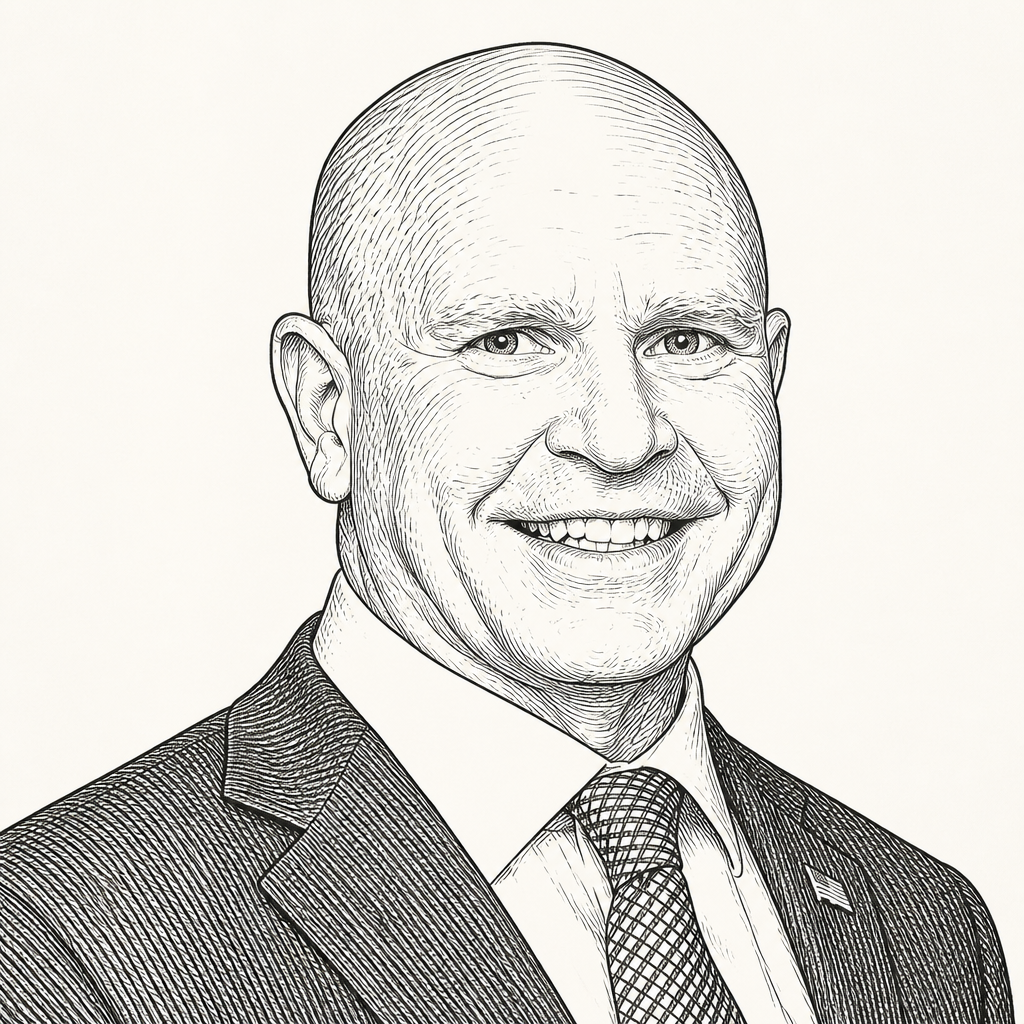
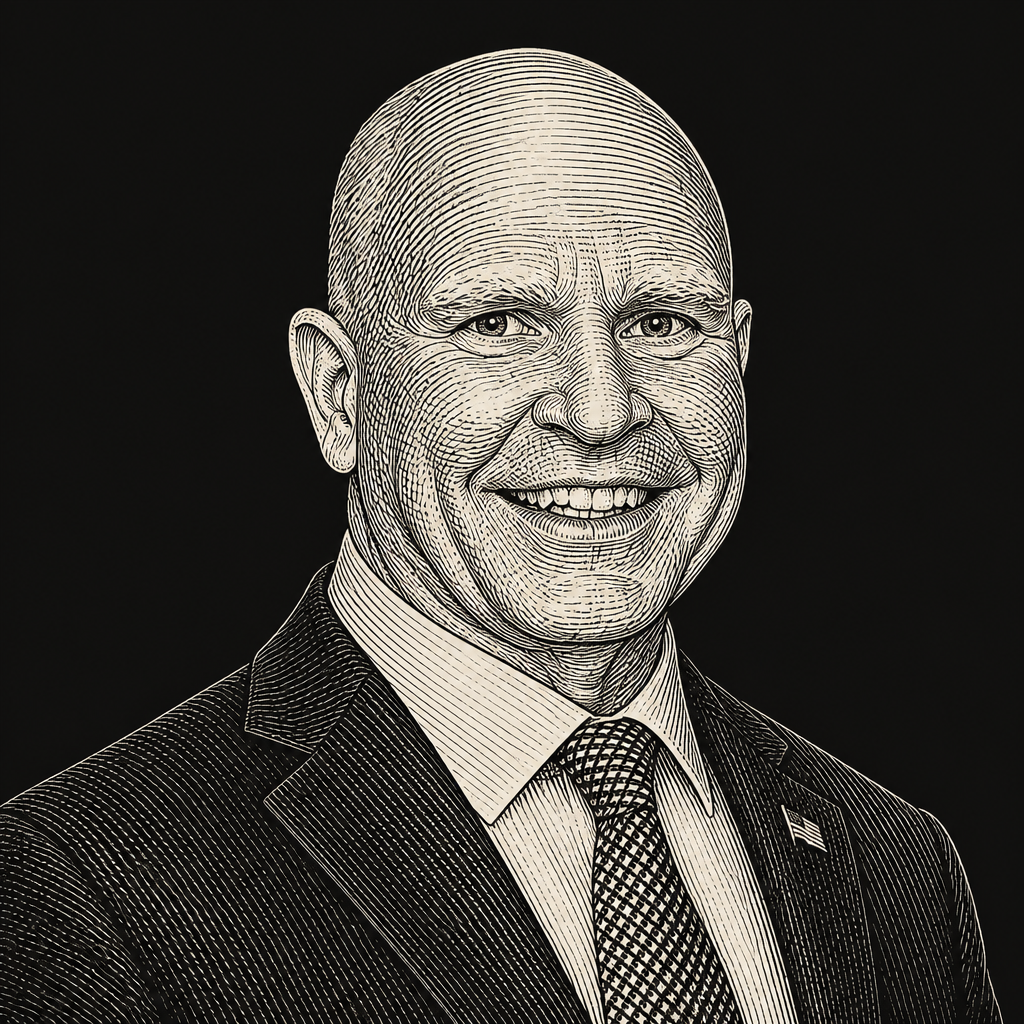
McMaster’s expectation was that President Trump would eventually have to abandon a tit-for-tat cycle and resume a large-scale campaign against Iran. He described the likely sequence as renewed attrition against Iran’s missile and drone strike complex, followed by operations intended to clear the way for forcibly reopening the Strait of Hormuz. That phase, he said, had been planned from the outset but was never reached because of the ceasefire.
Niall Ferguson was more doubtful that such an escalation would happen. He called the present condition “Schrodinger’s ceasefire,” simultaneously a ceasefire and not one. The Iranians, in his account, had been stringing President Trump along through negotiations they had little incentive to conclude because they were not under the expected duress. “Operation Economic Fury,” Ferguson said, had been expected to bring the Iranian economy to its knees within days or weeks; more than a month later, Iran had found ways to keep enough oil moving that it did not have to shut down wells. His blunt lesson was that “blockades are hard.”


The disagreement was not over whether Iran remained hostile or whether the ceasefire was failing. It was over relative leverage. McMaster saw Iran as weak, cash-starved, and misread by Western media. Ferguson saw Iran as having more room to wait than Washington had hoped, and he was skeptical that Trump would now pay the higher costs of reopening the Strait of Hormuz after deciding not to act weeks earlier. Ferguson argued that the IRGC had used the intervening time to prepare and that the damage done to Iran’s missiles and drones had not been as great as initially thought. He predicted no breakthrough, saying he would not be surprised if the same discussion were still taking place on July 4 and again on Labor Day.
John Cochrane pressed the strategic logic behind Iran’s behavior. He distinguished what the United States “should do” from what it “will do,” saying the path seemed to be “give up.” He asked why Iran would want to talk forever, why it was able to talk forever, and why it did not simply sign promises it did not intend to keep, as he said it had done before.
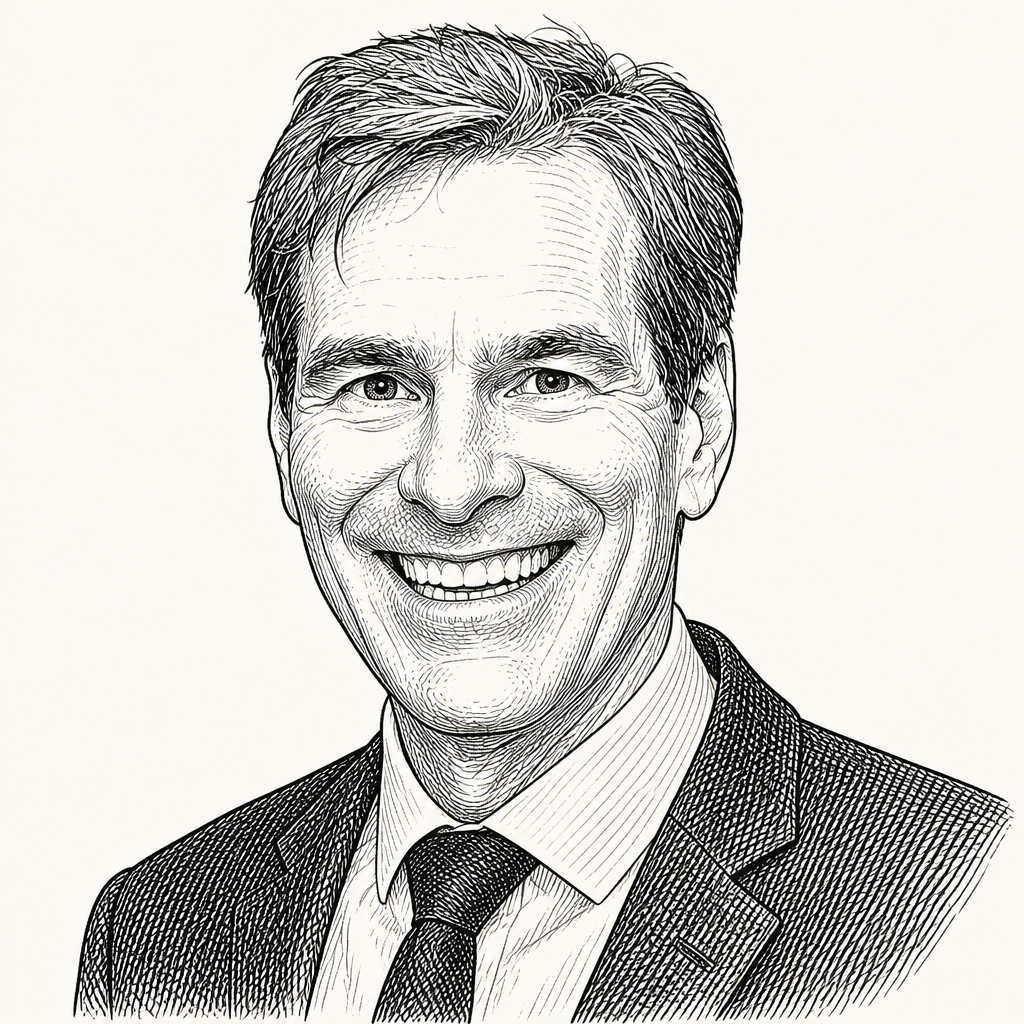
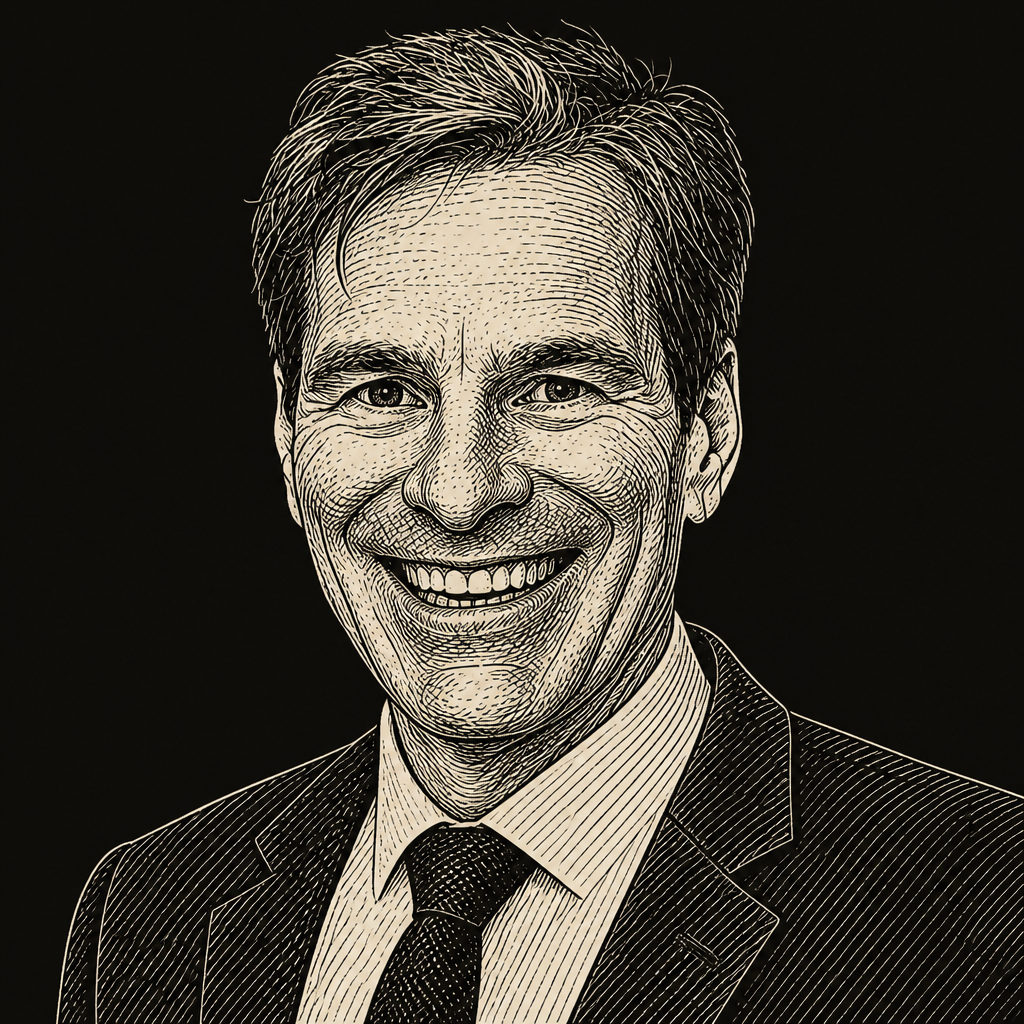
Ferguson’s answer was that Iran had not yet inflicted enough pain on the U.S. economy. He argued that Tehran was waiting for a meaningful increase in that pain, especially through higher oil prices and inflationary pressure. The United States had cushioned the shock of the Strait’s closure by drawing down the Strategic Petroleum Reserve and other measures, he said, but that option was nearing its limit. He expected equity markets eventually to reflect pressures already visible elsewhere. In Ferguson’s view, Iran would settle only once the economic pain allowed it to demand a deal worse for the United States than the JCPOA.
McMaster forcefully rejected the idea that Iran held the advantage. Iran, he said, “are feeling pain,” are “desperate for cash flow,” and remain in “a position of profound weakness.” The reason Iran kept pushing, in his account, was ideological and psychological: the regime believed the United States was weak, had studied Vietnam and Afghanistan, and assumed Washington could be waited out. McMaster’s worry was not that Iran’s calculation was objectively right, but that U.S. leaders might prove it right.
| Speaker | Assessment of Iran | Implication |
|---|---|---|
| H.R. McMaster | Iran is financially constrained, strategically weak, and testing U.S. will. | Washington should intensify military pressure rather than return to de-escalation. |
| Niall Ferguson | Iran has more room to wait than expected and can still impose economic pain through oil and inflation. | A near-term breakthrough is unlikely; Trump may avoid the higher costs of reopening Hormuz. |
| John Cochrane | Iran’s regime has strong incentives to preserve its nuclear option and wait out U.S. resolve. | A voluntary nuclear concession is unlikely while the regime and its objectives remain in place. |
Cochrane then raised the nuclear question in long-run terms. He argued that the regime would never voluntarily give up its nuclear program because it had studied Ukraine, Iraq, Libya, and North Korea. In his account, Iran wants a nuclear weapon less as an immediate instrument for bombing Tel Aviv than as a “get out of jail free card” that would let it continue pressuring Israel and neighboring states below the threshold of a massive attack. Nuclear weapons, Cochrane said, would dramatically push back that threshold. If the regime and its goals remain in place, he concluded, asking Iran to give up nuclear weapons is “fairly hopeless.”
The U.S.-Israel relationship, as Ferguson described it, is not one of equality. Israel is “clearly the junior partner,” he said, and therefore cannot defy pressure from President Trump. Ferguson said Trump had leaned hard on Prime Minister Benjamin Netanyahu to ease off Israeli strikes against Hezbollah in Lebanon, even as Israel was ramping up its campaign. From Jerusalem, Ferguson said he was hearing frustration that Trump had not “finished the job” and had left Iran in too strong a position. That view directly cut against McMaster’s assessment of Iranian weakness. Ferguson said some Israelis believe Iran is now strategically stronger than before because it controls the Strait of Hormuz, which previously was not the case.
Cochrane focused on Hezbollah’s drones and their implications for northern Israel. He argued that Hezbollah could have a ceasefire “anytime they want” if Iran simply told the group to stop shooting, and he objected to letting Tehran turn negotiations with Washington into negotiations over Israel’s ability to defend itself against Hezbollah. Ferguson added that there had effectively been two ceasefires from the outset, and that the one between Israel and Hezbollah was the one in which “the fire really didn’t cease.”
McMaster supplied figures to make that point. Since the April ceasefire, he said, Hezbollah had killed an Israeli citizen, wounded more than 300 Israeli civilians, forced evacuations from towns in northern Israel, and killed 15 IDF soldiers. “How the hell is that a ceasefire?” he asked. His policy conclusion was that Israel should continue and intensify its campaign against Hezbollah while the United States intensifies military action against Iran.
For McMaster, the larger danger was a return to a de-escalation mindset. If Trump fell back into what had long governed U.S. policy toward Iran, he said, Washington would cede the initiative to Tehran unnecessarily. He argued that Iran was losing $450 million a day through restrictions on exports from Kharg Island and that the blockade was producing real financial constraints. In his interpretation, attacks on Kuwait and Bahrain were messages to the Emiratis and Saudis: pressure Washington not to respond massively, or similar attacks could follow.
McMaster was especially emphatic that Iran should have no say over Lebanon. He pointed to a Lebanese government that, in his telling, had been working toward a ceasefire and perhaps eventually normalization of relations, which Iran desperately wanted to prevent. Iran’s objective, he said, was to preserve Hezbollah, a force he described as having destroyed Lebanon and driven a large share of the Lebanese population out of the country.
Wars are lost when military action is severed from political purpose
Herbert McMaster began from Clausewitz: war is an extension of politics. The aim in war, he said, must be a sustainable political outcome consistent with the reason for entering the fight. Recent U.S. practice, in his view, has forgotten this. Leaders speak of a “responsible end” to a war, but war is a competition involving life and death. Even in a boxing match, he said, no one enters the ring saying he wants to bring the fight to a responsible end; he would get beaten.
Winning in war means convincing your enemy that your enemy has been defeated.
McMaster described recent U.S. war-making as “fundamentally incompetent” because military action has been divorced from political and diplomatic objectives. Afghanistan was his example. Washington announced a withdrawal timeline to the Taliban, then attempted to negotiate the end of the war after telling the enemy it was leaving. To McMaster, that was not merely poor tactics but a basic misunderstanding of war as a contest of wills.
Niall Ferguson offered Volodymyr Zelensky as a contemporary example of a successful war leader: someone who, unexpectedly, transformed from comedian and sitcom actor into wartime leader. Zelensky’s case, Ferguson said, showed the importance of conviction that victory is possible even when the odds appear overwhelming. But he added that leadership alone is insufficient. A leader needs a people willing to follow.
That led Ferguson to the deeper problem: not only leadership but “followership.” The American public, he argued, has not for a long time had the stomach for winning wars if winning requires casualties, costs, and sacrifice. He placed that shift in the post-1945 period. Korea was a stalemate, Vietnam a defeat, Iraq not a defeat but not a triumph, and Afghanistan ultimately “a pretty clear defeat.” Those outcomes, he said, cannot be blamed only on leaders; they also reflect public willingness to see wars through.
McMaster accepted the point but returned responsibility to political leadership. The key question, he said, is whether a war can be won at a cost acceptable to the American public. Leaders have failed to explain both what is at stake and what strategy can deliver an acceptable outcome at acceptable cost and risk. He said Americans were barely paying attention to Afghanistan when the United States engaged in what he called “self-defeat.”
John Cochrane emphasized restraint at the front end: do not start wars too frequently, and do not start them without a clear and attainable objective to win. He underlined that the question is about political leaders, not military commanders. Their job is to rally domestic and international support, not merely to reflect existing public opinion. He cited Roosevelt’s work to build support for World War II, Thatcher’s leadership in the Falklands, Lincoln’s political patience in achieving war aims, George Washington’s endurance in the Revolution, and George H.W. Bush’s assembling of international support for the Gulf War.
McMaster added George W. Bush’s surge decision in Iraq as an example of a leader making a decision against political headwinds and explaining it to the public. Iraq, he said, could be called a win in a limited sense because a government remained “kind of hanging together,” despite serious militia problems and other unresolved issues. Cochrane added that even Bush’s initial handling of going to war in Iraq succeeded politically in rallying popular support and winning Democratic votes, though “things went wrong afterwards.”
North Korea supplied the darker version of what happens when adversaries acquire survivable coercive power. McMaster said the problem has worsened because the regime is not as isolated as it once was. It can draw support from Russia and China, helping keep the Kim family regime alive. Its survival still depends on brutal repression, but McMaster said it now has enough economic wherewithal to remain in power. Succession after Kim Jong-un is unclear, though McMaster added that Kim may live a long time despite unhealthy habits.
Ferguson agreed and noted that North Korea itself has shifted policy away from unification. He was skeptical of Pyongyang’s motives. North Korea poses a grave threat not only to South Korea but to the region, Ferguson said, and benefits from being part of the China-Russia-Iran axis. He also said North Korea is assisting Vladimir Putin as Putin tries to stabilize an increasingly unstable situation in Ukraine.
Cochrane tied North Korea back to the Iran debate. North Korea is the example of why Iran should not have nuclear weapons, he said: once a regime has them, it can remain in power indefinitely because no one wants to touch it. A collapse would also be a massive problem for China and the region because of refugees and disorder, so outside powers have little appetite for forcing the issue. His conclusion was bleak: “It’ll go on until it doesn’t.”
Institutional competence, not doom, was the measure of American and European resilience
Niall Ferguson answered American-doom arguments with Franklin’s warning: “a republic if you can keep it.” Americans have worried since the founding that the experiment is failing, that the republic is becoming Rome, and that republican government will give way to empire. Ferguson found that habit reassuring. As long as Americans keep worrying about the republic, he said, “we’ll be fine.”
His optimism rested on the Constitution. Ferguson described it as the key to the republic’s success and “an extraordinarily impressive operating system.” As he checks up on it, he said, it is doing what the founders intended.
Herbert McMaster agreed and warned against catastrophism, especially the idea that impersonal forces make national decline unavoidable. Citizens, he said, have agency and authorship over the future because they have a say in government. His prescription was civic rather than theoretical: demand better political leadership and opt out of, or transcend, the toxic and vitriolic discourse that defines much of politics.
John Cochrane was the most explicitly worried. Many public institutions, he said, are rusty, creaky, dysfunctional, and not working as they should. He also saw a decline in the willingness to preserve the system rather than use every tool to win today’s partisan battle. Institutions are becoming politicized, he said, and tools of partisan warfare; things once considered off-limits are no longer off-limits.
Still, Cochrane found grounds for hope in American culture. There remains, he said, a reservoir of common sense that survives even though the educational system tries to beat it out of people. At some point, citizens look at dysfunction and say, “you have got to be kidding,” and throw the bums out. For Cochrane, the combination of remaining institutions and cultural common sense keeps doom from becoming the right conclusion.
The same frame carried into the discussion of China and U.S. debt: the central risk was not a single adversary’s move but a broader loss of confidence. On whether China might sell a significant amount of U.S. Treasuries, Ferguson said China already has. Its holdings are down significantly, insofar as outsiders can know in a system he described as not entirely transparent. China, he said, increasingly prefers gold, for a straightforward geopolitical reason: gold is harder to sanction than dollar-denominated securities.
Cochrane agreed with the direction of change but minimized the systemic risk from China specifically. China holds roughly a trillion dollars of U.S. Treasuries against a much larger total U.S. debt stock, he said, and other buyers can step in. China can also buy other assets. A Treasury market meltdown, if it happens, will not be because China decides to sell. It will be because “everybody else decides to sell” for reasons connected to faith in the United States’ willingness and ability to pay back its debt.
Europe’s economic decline produced a similar distinction between institutional blame and national responsibility. Cochrane said the European Union can survive decline if its citizens are content to decline together. The union becomes politically endangered if people come to believe that the EU itself is causing the decline through red tape from Brussels. He noted that the EU at least says it understands the problem, pointing to the Draghi report, and said the question is whether it can fix it.
Ferguson described the EU as a kind of triumph precisely because its doom has been predicted repeatedly and yet it has continued to exist and even expand. Its economic growth has been dismal, but in crises it has shown some capacity to respond. He judged the response to the Eurozone crisis as ultimately real, even if too often too little and too late; the response to COVID as relatively successful; and the response to the war in Ukraine as “not bad.”
Ferguson’s central point was that Europe’s economic underperformance is often blamed on European institutions but is rooted largely in national governments. Italy, France, and Germany suffer from how they are governed nationally, not simply from Brussels. Britain, he said, is the clearest test. It blamed Brussels before the 2016 referendum, left the EU, and has now effectively been out for a decade, but its economic performance is just as bad as that of continental countries. For Ferguson, that shows the problem is “actually not much to do with Europe.” The EU may even help somewhat through the single market and fiscal crisis response. The underperformance will persist until national-level problems are solved.
Cochrane agreed that Britain used Brexit as an excuse to add regulations rather than remove Brussels regulations.
McMaster focused on Europe’s strategic shift. He said Europe is cooperating on defense and more aggressively supporting Ukraine. He had recently spent two weeks in Germany and found urgency around making government more effective, deregulating, improving energy security, and moving beyond an economic model built on cheap Russian energy, low-cost manufacturing, and exports. Germany and Europe more broadly, he said, also doubt the reliability of the United States as a partner.
McMaster wanted a positive transatlantic agenda built around overlapping needs: energy security, deregulation, stronger industrial manufacturing, resilient supply chains, reduced Chinese coercive power over Western economies, and defense cooperation. The agenda Europe needs, he said, is much like the one the United States needs.
Britain’s populist temptation sharpened the question of responsible conservatism
Niall Ferguson remains no fan of Nigel Farage or Reform UK. He argued that Britain can right itself only if the Conservative Party recovers from the mistakes it made after the 2016 Brexit referendum, when he said it went off the rails. Under Kemi Badenoch, he thinks that recovery is possible. He called her “admirable and impressive.”
Whalen introduced the question by citing an on-screen Sun item in which Andrew Roberts was described as calling Reform UK a “party of misfits” and Britain’s current leadership “Lilliputian.” Ferguson’s answer did not defend Reform as a corrective to that leadership failure. Instead, he contrasted Farage with Badenoch through a recent case in Southampton.
In Ferguson’s account, Henry Nowak was a young man stabbed to death by a Sikh who told police that Nowak had racially insulted him. Ferguson said that when police arrived, they arrested the dying Nowak and put him in handcuffs even as he was saying he had been stabbed and was using the words “I can’t breathe.” Ferguson called the case an outrageous illustration of what has gone wrong in British policing: anti-racism training producing, in his words, “a bizarre new form of racism” in which a young white man is assumed to be at fault even when mortally stabbed.
Farage’s response, Ferguson said, was to call for an outpouring of “pure cold rage.” To Ferguson, that was reaching for kerosene and pouring it on the fire. Badenoch’s response, by contrast, was more measured and responsible. The program showed a Good Morning Britain clip in which Badenoch said she kept thinking, “what if that was my boy?” and described Nowak’s last moments in handcuffs as “an awful, awful way for anyone to die.” Ferguson argued that the episode showed why Farage is unfit to be prime minister.
John Cochrane suggested that support for Farage may be a “cri de coeur” from voters asking what is going on after years of incompetence by what he called the standard center-left blob. He compared it to part of the Trump phenomenon in the United States. The constructive effect, Cochrane suggested, might be to push the Conservatives to be conservative again and force them to absorb the common sense of Farage voters without the craziness.
Ferguson said he hoped the period before the next general election would reveal a clear difference between Badenoch’s vision and Farage’s. Badenoch, in his account, understands the need to reform welfare, stabilize public finances, and restore enterprise and markets. Farage’s populism, by contrast, is “big government populism” and “spend populism”: cut taxes and never mind the deficit. Ferguson said that if Reform’s policies were costed, they would almost double the deficit in a way he regarded as completely unsustainable.
The choice, Ferguson said, is between responsible conservatism and irresponsible populism. The Conservatives have suffered a train wreck before and survived worse historical errors, he argued, including appeasement in the 1930s. The missing ingredient is leadership with integrity, and on that measure he said Farage fails.
Cochrane added one illustration of the scale of the domestic challenge Badenoch would face: a million men not working, permanently, with half of them on mental disability. More money, he said, would make that kind of problem worse.
Climate policy fails when it ignores costs, China, and energy security
John Cochrane objected to the premise that he is against people worried about human-induced climate change. He said he is “not against anyone” and not against moving to clean energy. He is against “bad policies and bullshit,” costly unproductive measures, and climate policies that do not pass even a rough cost-benefit test.
Cochrane accepted that climate change is real and largely caused by human-emitted carbon dioxide, while emphasizing that he was summarizing the science rather than reciting dogma. His criticism was that the issue had become a vast green pork project, wasting trillions of dollars, deindustrializing places such as Europe, and producing no climate benefit. He cited California’s $230 billion high-speed rail project as an example.
He also criticized what he called the perversion of science in service of a millenarian political cause. He referred to a Wall Street Journal opinion article by Bjorn Lomborg, shown on screen under the headline “Global Warming or Just Getting Old?” The visible subheadline said a World Health Organization panel called climate change a global health emergency but “forgets to adjust its data for age.” Cochrane said that once the data are adjusted for age, because Europe is getting older, the change disappears; and fewer people are dying of cold. His point was not that climate change is good, but that institutions are distorting evidence to support policies that waste money.
Cochrane supported nuclear power, renewables where appropriate, solar where intermittent power can be bought sensibly, technology, and adaptation. What he rejected was “trillions and trillions of taxpayer dollars into big ratholes in the ground” while participants signal virtue.
Niall Ferguson took a different angle. The cooling of climate rhetoric, he said, is itself a reason to worry. When activists dial down the hysteria and figures such as Bill Gates say climate is no longer a top priority, that may be exactly when serious problems become clearer. The program showed a Gates Notes page titled “Three tough truths about climate,” with visible text saying, “Climate change is serious, but we’ve made great progress.” Ferguson said he has never been a denier or skeptic. His consistent argument has been to focus on China.
In Ferguson’s account, emissions are falling in the West, including in the United States and Europe, while China has been the principal source of greenhouse gases because of its enormous coal consumption. The Chinese economy, he argued, does not run on solar and wind, despite CCP propaganda; it overwhelmingly runs on hydrocarbons, with coal as the largest source of primary energy.
For Ferguson, Green New Deal-style debates in the United States and “disastrous” energy policies in Western Europe rest on a misunderstanding of what is driving the problem. The climate problem is real, he said, and principally driven by Asian, especially Chinese, emissions. He did not endorse the most extreme scenario from the international climate panel, saying that model appeared badly specified, but he warned that trouble lies ahead and that people should begin “filling the sandbags.”
Herbert McMaster said Steven Koonin and Bjorn Lomborg do strong work on the topic. He argued that even those who believe man-made carbon emissions are an existential threat must admit current policies are not working. The solution will not come simply from U.S. and European policy decisions. It must be effective, market-based, and cost-effective, avoiding a false tradeoff between energy security and carbon reduction. He pointed to nuclear fission as one promising path and said the largest reduction of man-made carbon emissions in history came in the United States through cheap natural gas — a market solution.
Cochrane added that climate change should not be treated as the military’s greatest strategic threat. It is a long-run problem, he said, but tanks and airplanes require dense energy that fossil fuels supply. In his view, trying to run tanks on batteries is an example of decarbonization pursued where it is least efficient.
Reading, clothing, and historical fiction were tests of seriousness, not taste
John Cochrane declined to recommend his own technical economics books as a first introduction for a reader new to the subject. The point, he said, is to read things that are fun, intriguing, and likely to lead to more reading. His first recommendation was “anything by Tom Sowell,” especially Sowell’s economics textbook. He also praised the Marginal Revolution blog and said the Cato Institute does a strong job on economics, “more than we do” at Hoover.
Niall Ferguson gave a similar rule for the “gentleman-scholar’s wardrobe”: do not think too hard about clothes. Buy clothes you like, he advised, and then wear them unthinkingly, preferably from graduate school until they fall apart. He recalled a child asking why he always wore the same clothes; his answer was that this way he did not need to think about them.
Cochrane supplied Mark Twain’s line that “clothes do make the man” because “naked people have very little influence in society,” and said Stephen Kotkin was the Hoover figure to ask about being well dressed. Herbert McMaster recommended Paul Fussell’s “Uniforms: Why We Are What We Wear” and told a White House story at his own expense: surrounded by wealthy colleagues, he discovered that one of his suits had been made by a mobile tailor in Kabul, Afghanistan, and had cost about $90. Trump, McMaster said, was reported to have said he looked like a beer salesman; McMaster’s goal became upgrading his look to “a purveyor of fine scotches.”
Ferguson had categorical advice for aspiring historians: never watch historical drama. In his view, Hollywood exists to misrepresent the past, and such drama is “a kind of mental contaminant.” The danger is not merely inaccuracy but the accumulation of images and stereotypes that historians must then fight against. He returned to the problem of romanticizing the past: life expectancy was short, health poor, and teeth often gone. A film that accurately represented the past would be “unwatchably shocking.”
Cochrane agreed in broad terms and said “Medici: Masters of Florence” was awful. For Florence, he recommended reading “Florence in the Forgotten Centuries” by Eric Cochrane. He allowed more room for deeply researched historical fiction, citing Hilary Mantel’s Thomas Cromwell novels as the kind of work that researches intensely, avoids provable falsehoods, and fills gaps to tell an interpretive story. McMaster wished George MacDonald Fraser’s Flashman series would be brought to the screen, praising the books as historically based, funny, and supported by extensive endnotes.
War films received a different standard. McMaster said “Saving Private Ryan” is worth watching because it helps explain why soldiers fight: for one another. It captures cohesion, confidence, and the bond between soldiers as elements of combat readiness. He also praised “The Longest Day” as still a good D-Day film.
Arsenal and the All Blacks reopened the argument about leadership
Niall Ferguson treated Mikel Arteta’s Arsenal as a case in disciplined teamwork. His first point was addressed to Americans: with the World Cup approaching, the United States would be hosting “the world’s game,” and viewers should be prepared to understand it. The World Cup, he joked, would be “essentially Arsenal v Arsenal” because so many Arsenal players would appear for different national teams.
The leadership lesson, however, was not about football fandom. National-team managers have little time with players, Ferguson said, because the players usually belong to clubs. Arteta’s achievement at Arsenal took years: he built a formidably disciplined team. Ferguson generalized the point to human organizations. Armies, companies, and academic institutions are only as good as their teamwork.
Arsenal has individual stars, Ferguson said, including Bukayo Saka, but its brilliance is collective. His example was Arsenal’s performance against Paris Saint-Germain in the Champions League final. Arsenal did not win, but Ferguson argued that taking a superior side that far reflected “incredible teamwork” and defensive play that shut down PSG’s front line. “Everything, even history itself, is more like football than it is like literature,” he said.
Herbert McMaster was unconvinced by soccer’s lack of physical contact and the theatrical reaction when contact occurs. If one wants leadership lessons from sport, he said, read James Kerr’s “Legacy” about New Zealand’s All Blacks: “that’s a real sport.” The program showed the cover of Kerr’s book, whose subtitle was visible on screen: “What the All Blacks Can Teach Us About the Business of Life.”
Ferguson answered with a British synthesis. Some people, he said, are not physically suited to the beautiful game, and for them rugby was invented. He rejected a false dichotomy between round ball and oval ball, so long as both are British codes: association football and rugby football. Those, he said, are among the enduring legacies of the British Empire.
Cochrane’s contribution was itself a novelty: for the first time on the program, he said, he had “no opinions whatsoever on this topic.”