U.S.-Iran Memorandum Trades Hormuz Relief for Unresolved Nuclear Questions
 Bill Whalen
 John Cochrane
 Herbert McMaster
 Niall FergusonHoover InstitutionThursday, June 18, 202620 min read
Hoover fellows Niall Ferguson, H.R. McMaster and John Cochrane read the reported U.S.-Iran memorandum less as a peace settlement than as a bid to reopen the Strait of Hormuz while postponing the nuclear dispute and front-loading concessions to Tehran. They largely agree the draft looks weak; their disagreement is over whether it buys time for a harder strategy later, creates space for pressure inside Iran, or signals a loss of U.S. will that allies and adversaries will now test.
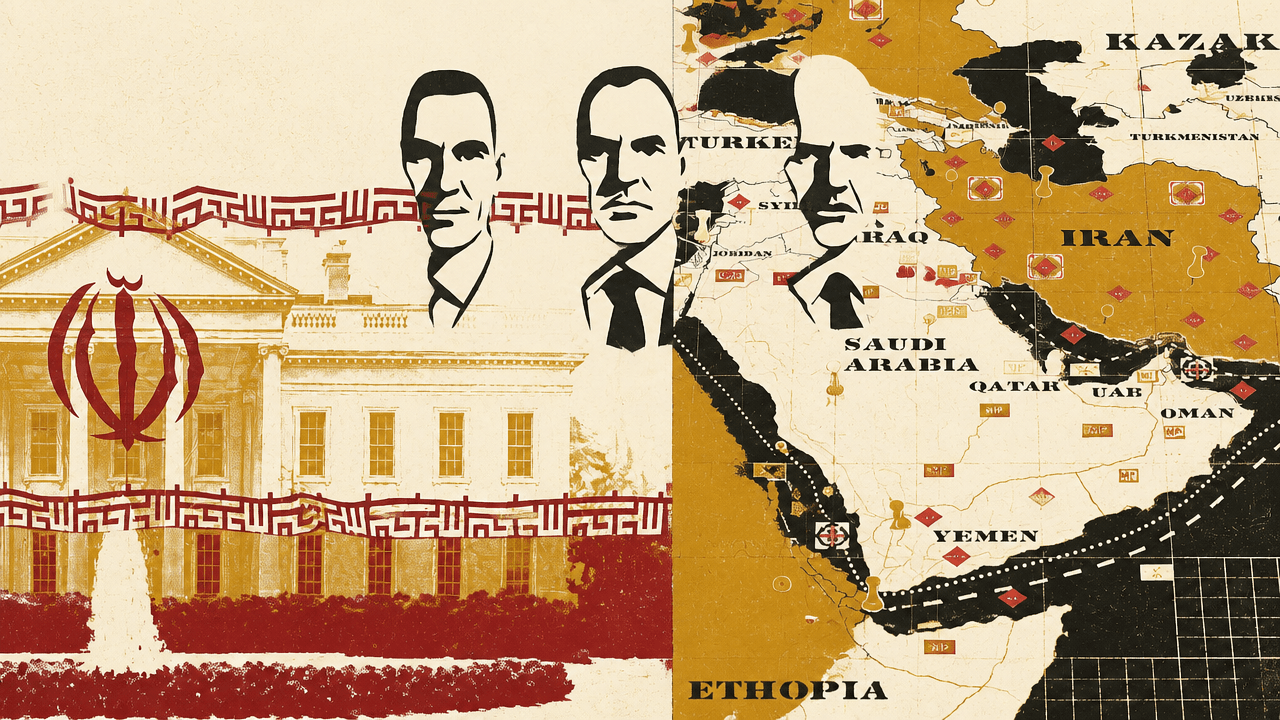
The Iran memorandum buys a pause by conceding the hard questions
The proposed U.S.-Iran memorandum of understanding was treated by all three Hoover fellows as a document driven less by settlement than by urgency over the Strait of Hormuz. The reported draft’s most exposed provisions were an “immediate and permanent end to the war on all fronts, including Lebanon”; a 60-day period to negotiate a final agreement; an immediate lifting of the U.S. naval blockade; and Iran’s reiteration that it “will never produce nuclear weapons,” while leaving the fate of enriched material and other nuclear-related issues for the final agreement.
| Point | Visible provision | Why the provision matters |
|---|---|---|
| 1 | Iran and the United States, with allies in the current war, declare an immediate and permanent end to the war on all fronts, including Lebanon. | Lebanon is folded into a U.S.-Iran text even though Israel is not named, raising the question of whether Iran gains standing over Hezbollah’s theater while Israel is constrained. |
| 3 | Iran and the United States undertake to negotiate and reach a final agreement within a maximum of 60 days, extendable by mutual consent. | The core nuclear dispute is postponed into a short process that the speakers doubted would produce a final settlement. |
| 4 | The United States will lift the naval blockade and restore traffic within a maximum of 30 days to full capacity. | Washington gives up the blockade leverage that had helped pressure Tehran in order to reopen shipping through Hormuz. |
| 8 | Iran reiterates that it will never produce nuclear weapons; enriched material and other nuclear-related issues will be addressed in a final agreement. | Iran repeats a no-weapon pledge while enriched material, nuclear needs, and other operational questions remain unresolved. |
Niall Ferguson said the version he had seen contained 14 points rather than 13, while adding that none of the circulating versions appeared definitive. His judgment was not softened by that caveat. The points, he argued, were “broadly dreadful,” and he read the agreement as having been assembled first and foremost to reopen Hormuz. The document’s treatment of the strait was, in his view, “strangely asymmetrical,” while the nuclear question was pushed into a 60-day process that he did not believe could plausibly produce a settlement.


This is a far cry from what the administration set out to achieve when it launched Operation Epic Fury. And the operational headline is likely to be Operation Epic Fail if this is it.
The most consequential concession, Ferguson argued, was financial. He counted four of the 14 points as offering Iran sanctions relief and the unfreezing of roughly $100 billion in assets, with some relief front-loaded through waivers for Iranian oil exports. That made the document, in his view, a long way from what the Trump administration had set out to achieve with Operation Epic Fury.
Herbert McMaster agreed with Ferguson’s assessment and sharpened the objection around Lebanon and Israel. If the first line includes Lebanon, McMaster asked, “why the hell should the Iranians have any damn say about what happens in Lebanon?” He emphasized that Israel was not mentioned in the draft, despite having been attacked by Iranian proxies on October 7 and then drawn into what he described as a six-front war through Iran’s “ring of fire.” For McMaster, the omission was not incidental. A deal that constrains hostilities in Lebanon without naming Israel appeared to him to constrain Israel’s ability to defend itself against Hezbollah while granting Iran standing over a theater where it should have none.
John Cochrane tried to find a contrarian reading and found only a narrow one. The optimistic interpretation, he said, was that the administration was papering over the conflict long enough to reopen Hormuz, hold oil prices down, keep missile exchanges at a politically tolerable level, get through the midterms, and then return to “something serious” afterward. Otherwise, he said, the United States had “thrown in the towel” and been defeated by Iran.
McMaster added another objection: the reported final point that the ultimate agreement would be approved by the UN Security Council. In his account, Russia and China were on the brink of losing influence in the Middle East because their Iranian partner had been badly weakened. Inviting the Security Council back into the process would give them a way back into regional diplomacy at precisely the moment when Washington had leverage.
Cochrane was skeptical that this procedural point would ever matter. “There won’t be a final agreement,” he said. “We’re talking to talking.” McMaster agreed that the process was unlikely to go anywhere. The disagreement was not over whether the final agreement would be strong. It was over whether one would ever exist.
The strategic error, in Ferguson and McMaster’s view, was not taking the strait
The defense of the memorandum was straightforward: the alternative to peace is war. Ferguson’s answer was that the decisive military choice had already been missed.
Niall Ferguson said Trump should have used military force roughly nine weeks earlier to take control of the Strait of Hormuz. The option, he believed, “certainly existed” and would have been presented by the chairman of the Joint Chiefs and the commander of CENTCOM. Trump chose not to take the risk. Ferguson acknowledged that such an operation would have carried risk, but argued that once Trump declined it and chose economic pressure instead, Washington was on track toward a document like the MOU.
In Ferguson’s view, Iran’s ability to assert control over Hormuz after absorbing damage in the first phase of the war changed the whole bargaining structure. The memorandum was not just a flawed legal text; it was the product of a missed second phase of the war. He called it a “memorandum of incomprehension,” because the concessions only made sense if one accepted that Washington had already backed away from a decisive military step.
Herbert McMaster agreed. The ceasefire, he said, came just as the campaign was about to shift toward opening the strait. He also suggested that Trump had become “enamored” of Field Marshal Munir, whom McMaster described as acting in line with Chinese interests at a moment when Beijing was likely panicked and wanted a ceasefire. McMaster’s broader critique of Trump was not that he refuses risky decisions. He credited Trump with taking risks in the 2017 Syria strikes, the sustained campaign against Assad that followed, sanctions, and the 2017 South Asia strategy. The problem, McMaster said, is that Trump has “a really hard time sticking with decisions.” People get in his ear, and the original decision loses force.
John Cochrane added that the U.S. blockade of Iran had been working “pretty darn well.” Removing it and giving Iran money up front would undo the leverage that blockade had created. McMaster compared the dynamic to the 2015 Iran nuclear deal, which he said gave the Iranian regime an infusion of cash when it desperately needed one and helped Ayatollah Khamenei “up off the mat.”
Ferguson said the new infusion could be even larger. That, he argued, would be the hardest part for Trump to sell, particularly because critics could line the memorandum up against the 2015 Joint Comprehensive Plan of Action and ask whether this arrangement was better or worse. The JCPOA excerpt shown on screen underscored the comparison: its visible nuclear section referred to “agreed limitations” on enrichment and enrichment-related activities, including limits on certain R&D activities for the first eight years, followed by a gradual evolution of Iran’s enrichment activities for “exclusively peaceful purposes.” Ferguson’s point was political as much as technical: Trump had been a fierce critic of the JCPOA, and the visible comparison invited critics to ask whether his own arrangement conceded more.
The nuclear issue may be the wrong center of gravity
Cochrane questioned whether Iran’s nuclear program should dominate the assessment. The program, he said, had been “blown to bits” and set back substantially. With fresh money, he expected Tehran first to keep the economy going, rebuild the security state, and produce conventional missiles to threaten its neighbors. A nuclear weapon, in his view, remained years away and had been further delayed by the destruction.
Niall Ferguson pointed to another reported clause: “Iran will maintain the status quo on its nuclear program.” His question was basic: what does that mean? Cochrane’s answer was that it likely meant working slowly toward the program’s continuation, while acknowledging that Iran’s capacity had been set back.
Herbert McMaster agreed with Cochrane’s near-term assessment. If the Iranians were smart, he said, they would do exactly what Cochrane described: deepen their magazines of missiles and drones, because that had “worked great for them, apparently.” Cochrane then offered a sharper theory of Iranian messaging. Tehran keeps talking about the nuclear program, he said, because it causes Washington to focus on nuclear issues and ignore Lebanon, conventional weapons, support for terrorism, and the rest of Iran’s regional network. A looming nuclear weapon becomes a diversionary “talking point.”
That did not make Ferguson sanguine about the memorandum. But he introduced a caveat that changed the argument. Peace agreements and MOUs, he said, are not the whole story. The second- and third-order consequences of war often matter more than the text that is signed. He used Woodrow Wilson’s 14 points as an example: many of those points were realized after the First World War, including the breakup of empires and the creation of the League of Nations, even though the settlement fatally mishandled Germany and Germany returned to war within 20 years.
The same uncertainty, Ferguson argued, applies here. The document looked bad. But the regime in Tehran might be better able to survive under war conditions than under peace conditions. If the shooting stops and the regime enters crisis before year-end, Trump and his team could look much smarter than the text currently suggests. Ferguson did not predict that outcome. He argued only that it could not be ruled out, and that critics should not dismiss the agreement with complete confidence as an “epic fail.”
McMaster accepted the importance of follow-through but returned to cash as the decisive test. If the infusion happens, he said, “it’s bad.” In his account, the region reached its current crisis because the regime was revived by cash in 2015 and then again after what he described as highly successful Trump first-term sanctions, when roughly $110 billion flowed into Iranian coffers under the Biden administration. That money, McMaster said, went to Hamas, Hezbollah, Palestinian Islamic Jihad, Assad, the Houthis, Hashd al-Shaabi militias, the nuclear program, and missile and drone manufacturing. Doing that again, he said, would be “crazy.”
One theory of the deal is that Washington is trying to exploit Iranian corruption
McMaster raised the possibility, explicitly as a question rather than as an established account, that the administration’s real theory was not visible in the text. Was there, he asked, some kind of deal involving Mohammad Bagher Ghalibaf, the speaker of Iran’s parliament? Could Washington be trying to marginalize the IRGC, exploit fissures within it, or use pressure over offshore accounts to divide regime elites? McMaster described Ghalibaf as, above all, a corrupt actor with offshore accounts that he would want to keep accessing, and speculated that Washington might currently have leverage over those accounts.
Niall Ferguson answered by reconstructing what he thought may have been part of the administration’s thinking all along: that there must be divisions inside the Iranian regime that could be exploited. Those divisions, he said, were “quite visible in Tehran.” His account of the possible logic was blunt: appeal to the corrupt with money, even “boundless” amounts of money, in the hope that venality would undercut the fanaticism of IRGC leaders. He noted that figures as high as $300 billion were being included in the document, which may explain why it looked so generous despite Trump’s longstanding criticism of the JCPOA’s carrots.
Ferguson would not say the strategy was certain to fail. John Cochrane was more skeptical. If it worked, he said, it would be because Washington got lucky. From where he sat, the United States did not appear to be doing much to undermine the regime. Israel, in his view, understood that the central problem was the Iranian regime itself. Washington, by contrast, now looked as if it were supporting the regime, just as Cochrane said it was supporting the regime in Venezuela. Once a peace agreement is signed and money flows, the implicit message becomes: “We help you stay in power, you stop shooting.”
The unanswered question was why the regime had survived at all. The war began, as Whalen framed it, with two stated purposes: preventing Iran from acquiring nuclear weapons and reducing Iran’s ability to shower the Middle East with missiles. Whalen said Trump had not explicitly called for regime change, but had hinted that he wanted a regime he could work with, and had sent a message to the Iranian people suggesting that if they decided to rise up, the United States would have their back.
Ferguson said there had been an uprising, and that it had been crushed with “extraordinary brutality,” claiming, in his account, the lives of between 30,000 and 40,000 mostly young Iranians. He did not expect another immediate uprising under U.S. and Israeli aerial bombardment. But he described the regime as deeply hated, suggesting that perhaps only one in 10 Iranians still supports it. His best hope for Trump’s strategy was that, once the shooting stops, the population’s antipathy toward the regime reemerges as a political force. Repressive regimes, he argued, cannot simply keep shooting their own people forever.
Cochrane’s interpretation was that Israel, before the campaign was halted, had been going after the IRGC and the mechanisms of repression in the hope of unseating the regime. But he also warned against assuming repression must fail quickly: North Korea and Cuba show that regimes willing to be ruthless enough can remain in power for a long time.
Gulf hedging is the regional cost of U.S. hesitation
Gulf partners, in McMaster’s telling, saw the same problem through the lens of infrastructure vulnerability. Herbert McMaster said many Gulf countries got “cold feet” once they saw their energy infrastructure threatened. When the nascent Operation Freedom began to escort ships out of the Gulf, he said, the Saudis and possibly the Qataris told Washington to stop, because Iran had threatened and signaled massive attacks against Gulf oil and gas infrastructure. Tehran had already launched some attacks as a signal, McMaster said. As a result, those states became reticent about a forcible entry into the Strait of Hormuz.
McMaster described the Emiratis as initially more inclined to “finish the job,” meaning to keep weakening the Iranian regime to the point of possible collapse. But he characterized the next claim as reports: the reports, he said, were that the Emiratis were already “sliding money under the table” to Iran. The broader pattern, in his view, was hedging: Gulf states responding to an apparent lack of U.S. resolve by cutting their own deals.
Niall Ferguson said the war had worsened an existing rift between the Emiratis and the Saudis. Riyadh and Abu Dhabi, he said, were now pursuing “really quite different strategies.” The larger consequence, in his view, was a fundamental reconfiguration of the region because the United States had failed to provide the public good that mattered most: freedom of navigation. Hormuz would not normalize as quickly as it had shut down. The assumption that tankers would simply resume once the spigot was turned back on was, in Ferguson’s view, too easy.
He invoked the Carter Doctrine as the idea that the United States should be supreme in the Persian Gulf. Until now, he said, it had been. McMaster disputed the implication that U.S. supremacy was gone in any material sense. The United States still had the means, he said; it had simply decided not to use them. John Cochrane agreed: this was “clearly a lack of will rather than a lack of means,” but once that lack of will had been demonstrated, others would draw conclusions. Europeans who had been embarrassed by their reluctance to join the war, he said, might now feel vindicated.
Clearly a lack of will rather than a lack of means, but now we've shown the lack of will.
McMaster identified two consequences he considered certain. First, the supply chain for Gulf oil and gas would be adjusted: new pipelines, new routes, and new ways to access energy, along with slack capacity picked up elsewhere, including in the United States. Second, Gulf states would invest at scale in missile defense, drone defense, and long-range precision strike. He expected contracts already to be flowing for those capabilities.
The 60-day nuclear negotiation window, if counted to August 19, did not inspire confidence. Ferguson predicted an extension request. McMaster agreed. Cochrane expected “yakity, yakity, yak” with occasional missiles through the midterms. McMaster warned that Lebanon could be the immediate flashpoint. Israel, he said, would not hold back, and Prime Minister Netanyahu and others would likely make a direct case to the American people and Congress that Israel had been excluded from a deal that constrained its defense against Hezbollah. On that point, he said, Netanyahu and Yair Lapid would be aligned. Cochrane added that Iran would test the limits, likely by telling Hezbollah to lob rockets or send drones to see what happens.
Ukraine looks stronger, but a weakening Putin may be more dangerous
The war in Ukraine, nearing four years and four months, looked materially different to Niall Ferguson than it had in the previous two years. Since the beginning of the year, he said, Ukrainians had been killing Russian soldiers faster than Vladimir Putin could recruit them. Ukraine was also striking back in ways not previously seen, using drones and its own Flamingo cruise missiles against targets in the Russian heartland around Moscow and St. Petersburg.
For Ferguson, that meant the war had moved away from the stalemate of the previous two years. Putin’s position had “significantly deteriorated,” and Russians knew it, which he cited as the reason internet and social media access had largely been shut down in Russia. The change narrowed Trump’s diplomatic room. Ukrainians were no longer ready to accept the kind of deal discussed late last year, under which Ukraine would give up more territory in Donbas. When Ferguson spoke with Ukrainians, he said, their attitude was: “No way, we don’t need to. We’re winning this thing.”
I think President Putin's position has significantly deteriorated this year while we've been looking elsewhere.
Herbert McMaster agreed and added gasoline and diesel shortages inside Russia, including restricted internal sales. He also argued that Washington now had less leverage over Ukraine because Europeans had picked up much of the slack in supporting Kyiv. President Zelensky, McMaster said, was wisely pressing his advantage by saying he was ready to talk to Putin anytime. If the Iran memorandum reopened the oil, gas, and refined-product spigot and oil returned to around $60 a barrel or less, McMaster suggested, the effect on Putin’s finances could be devastating.
John Cochrane pushed the scenario further while marking the uncertainty around what he was seeing. Ukraine, he said, appeared to be working to cut off Crimea, stop its supply, and possibly retake or isolate it. Ukraine’s domestically developed long-range strike capacity was strengthening. Cochrane also said Russians could no longer use Starlink, that Russian air defenses seemed “fairly helpless,” and that the domestic economy was cratering. He added that he had seen reports of fairly widespread surrenders, but warned that those reports “may be propaganda.” His comparison to summer 1918 on the Western Front was also qualified: it “may be too hopeful.”
The danger, Cochrane said, was the “wounded bear.” Losing the war would threaten Putin’s regime. If Crimea were cut off or lost, Putin might escalate horizontally, including in the Baltics, to force others to stop. After the Persian Gulf experience, and after U.S. reluctance to help Ukraine or even sell it material, Cochrane doubted that anyone would look to Washington as a credible broker.
McMaster said Putin was already escalating horizontally through a shadow war and gray-zone conflict. His examples included attempts to burn down Keir Starmer’s house, cutting undersea cables, bombing warehouses, bombs on DHL aircraft, drone incursions, and claims on Estonian territory. He described the strategy as an attempt to show NATO weakness, break confidence, and use the specter of broader European conflict to pressure the United States into backing ceasefire terms unacceptable to Ukraine and Europe. That, McMaster warned, would be a step toward breaking NATO apart and doing permanent damage to the transatlantic relationship.
The Ukraine war’s lessons are human as much as technological
Asked for the war’s legacy, Herbert McMaster gave a military and political answer. The first lesson, he said, is that deterring a war is far cheaper than fighting one. Had Ukraine received earlier the capabilities it now has, he suggested, the war probably never would have happened.
The second lesson is that war remains hard and is still about control of territory, populations, and resources. McMaster criticized the recurring “pipe dream of easy war.” Russia, he argued, made a mistake comparable to Germany’s invasion of the Soviet Union: it looked at the map but failed to grasp the scale. He invoked Clausewitz’s “culminating point of an attack,” where offensive power is no longer sufficient to overcome the defense. Clausewitz also said the offense is the decisive form of war, while defense is the stronger form. Ukraine, in McMaster’s account, used defense effectively: trading territory to impose casualties, then delivering what Clausewitz called the “flashing sword of vengeance,” the counterattack.
The battlefield now resembles the Western Front of World War I in intensity and positional difficulty, McMaster said, though the means of warfare differ sharply because of FPV drones and other systems, while massed artillery remains familiar. One central lesson is battlefield transparency. It is now difficult to sustain offensive operations at scale when the enemy can see so much. The first phase of the next war, he argued, will have to be blinding and deceiving the enemy, including through air defenses against drones and other aerial systems, cyberspace operations, and attacks in low Earth orbit against capabilities that make the battlefield transparent.
John Cochrane said McMaster had captured the second half of the war, but he saw the first two months as the larger lesson. On paper, Russia still had the old Soviet arsenal, and U.S. analysts were not irrational to think Russia should have been able to walk into Ukraine. What they missed, he argued, was the “surprising rottenness” and corruption of the Russian army. A proper military, Cochrane said, is organized and non-corrupt, and the soldier at the front knows commanders have his back. Russia instead grabs people off the streets and sends them to the front knowing they will die.
McMaster agreed and said he had believed on day one of the invasion that Russia had already failed. The Russian side showed rot, but the Ukrainian side showed the transformation of its army since 2014. Javelins mattered, but the larger difference was human: stronger leadership, cohesive teams, confidence, and initiative by territorial defense forces, including in the defeat of the Russian paratrooper attack on the airfield. War, McMaster said, is human. Drawing on John Keegan, he described battle as the struggle of men and women trying to reconcile self-preservation with achieving an aim while others try to kill them. Battle is about the disintegration of human groups; the objective is to keep one’s own group from disintegrating while causing the enemy’s to do so.
Cuba’s transition problem is not only regime change, but ownership
U.S. pressure on Cuba included the indictment of former president Raúl Castro, sanctions on the current president and his family, and an effort to choke the island economically. Niall Ferguson said Cuba looked to him as if it were going the way of Venezuela. He expected the regime to be on the way out, though not necessarily to be replaced by the liberal democratic government Cuban exiles in Florida would prefer. More likely, he said, was a compliant successor regime willing to deal with Washington. That would be a win for Trump and Secretary of State Marco Rubio. Ferguson’s reason was material: Cuba was “fresh out of just about everything.”
John Cochrane was less optimistic. In Venezuela, Iran, and Cuba, he said, the United States had taken situations from the “50-yard line” to the opponent’s “5-yard line” and then walked off the field. Had Delcy Rodríguez been running Venezuela, had the Iranian regime actually been replaced, and had Washington finished what it started, he argued, Trump’s approval ratings would be through the roof and Cuba might already have had its revolution and new regime. His expectation for Cuba was therefore more modest: perhaps a new regime, somewhat more compliant and willing to do deals, but “no big change.”
Cochrane’s economic advice for a friendlier Cuban government was minimalist: get out of the way, let people run businesses, and let them use real cash. That, he said, would allow tremendous growth.
Herbert McMaster said the key would be managing the transition away from Cuban military ownership of essentially everything without creating a new oligarchic class like the one that emerged in Russia’s transition. He saw one favorable sign: the oppositions in both Cuba and Venezuela had decided to unite. He cited Rosa María Payá, whom he had recently hosted on Today’s Battlegrounds, as “pretty darn optimistic,” and also Héctor Fuentes, a visiting scholar at Stanford’s Center on Democracy, Development and the Rule of Law, whom McMaster said was optimistic about Venezuela’s transition.
McMaster’s condition was political and economic at once: a transition must ensure that the free market actually prevails. Cochrane added that the assets currently controlled by regime-linked actors are largely worthless. The important thing is not to fight over the “last crumbling remains” of the Cuban economy, but to build new things that different people own.
Ferguson’s football coda turned sport into national identity and pain
The closing turn to soccer was lighter, but it still carried Ferguson’s view of national sport as identity, ritual, and disappointment. Boston had been “invaded” by Scotland’s Tartan Army during the World Cup: marching to Fenway Park, drinking bars dry, and watching Scotland defeat Haiti 1–0.
Niall Ferguson said the Scots’ anthem at the last European championship was “No Scotland, No Party,” and he endorsed the slogan. Scotland fans, he argued, are now among the world’s most fun, though this marked a change from his youth, when he remembered them as among the most ferocious, including looting Wembley Stadium. Repeated defeat had chastened them. In the 1970s, he said, Scotland genuinely believed it could win the World Cup. Now the fans approach tournaments with irony, aware that progressing beyond the group stage is unlikely, especially in a group with Brazil and Morocco, the reigning African champions.
Ferguson also offered a nationalist argument for football over American sports. He said he was on a “proselytizing conversion mission” to persuade Americans to play “real sports that everybody else plays,” rather than the eccentric games they took up after independence: armored rugby, rounders, and basketball. “The world cares about football,” he said. “Get with the program, America.”
John Cochrane resisted the World Cup—his sympathies lay with the Chicago Cubs—but conceded one virtue of soccer from childhood experience in Italy. It required almost nothing: no bat, no bases, no equipment-heavy structure, no parents, no coaches. Children could find a vacant lot and play with whoever was there. America, he said, tries to ruin even that with organized youth soccer, parents freezing with lattes, and coaches telling children what to do.
Ferguson ended with the darker side of his enthusiasm. Football, he said, is an addiction, and it mostly consists of pain. A supporter spends most matches in agony: nil-nil, narrowly ahead, or behind. Americans, he suggested, may be wise to avoid it if they believe life is the pursuit of happiness. Cochrane’s reply was that Cubs fandom could supply pain too.