Iran Standoff Tests Whether Washington Manages Wars or Wins Them
 Bill Whalen
 Niall Ferguson
 John Cochrane
 Herbert McMasterHoover InstitutionThursday, June 4, 202620 min read
In this GoodFellows mailbag, Hoover fellows H.R. McMaster, Niall Ferguson and John Cochrane treat the Iran standoff as the central test of American strategy. McMaster argues Washington should stop managing the conflict and intensify pressure on a weakened regime, while Ferguson warns Tehran may be waiting for oil-price and market pain to force the United States into a worse bargain; around that dispute, the three extend the same standard to war leadership, institutional decline, Europe, climate policy and populism: policy has to connect means to political ends rather than substitute rhetoric for results.
Iran is the test case for whether Washington manages wars or wins them
The sharpest disagreement was not over whether the Iran confrontation is dangerous. It was over leverage: whether Tehran is being cornered, as Herbert McMaster argued, or whether it has succeeded in waiting out U.S. pressure, as Niall Ferguson warned.
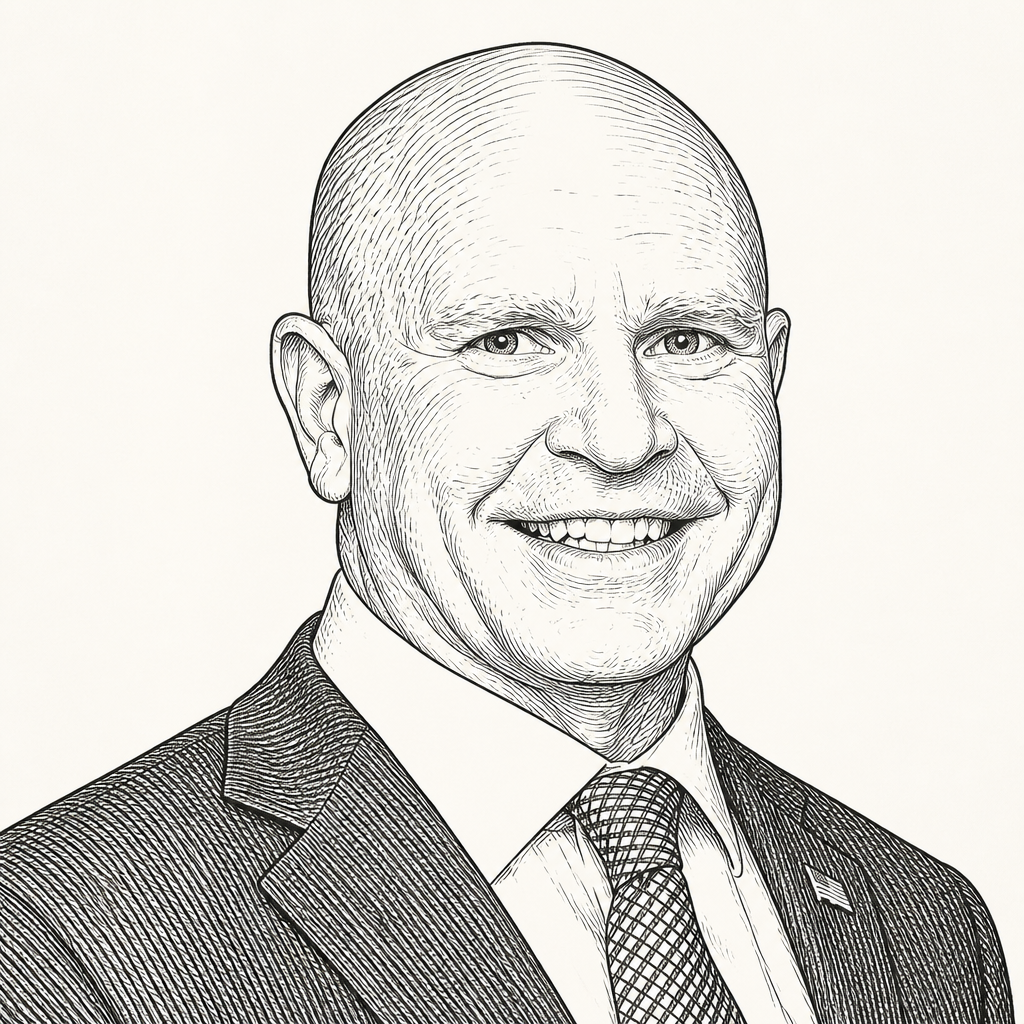
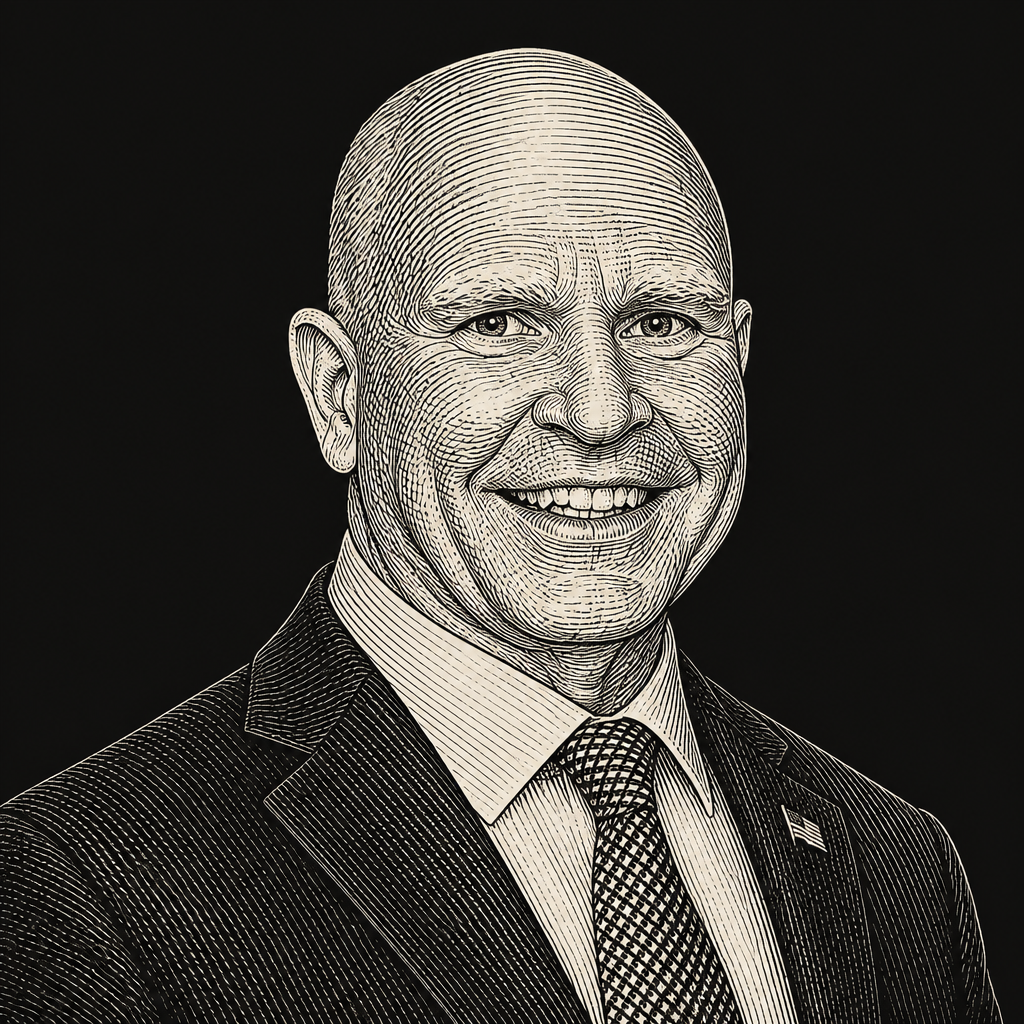
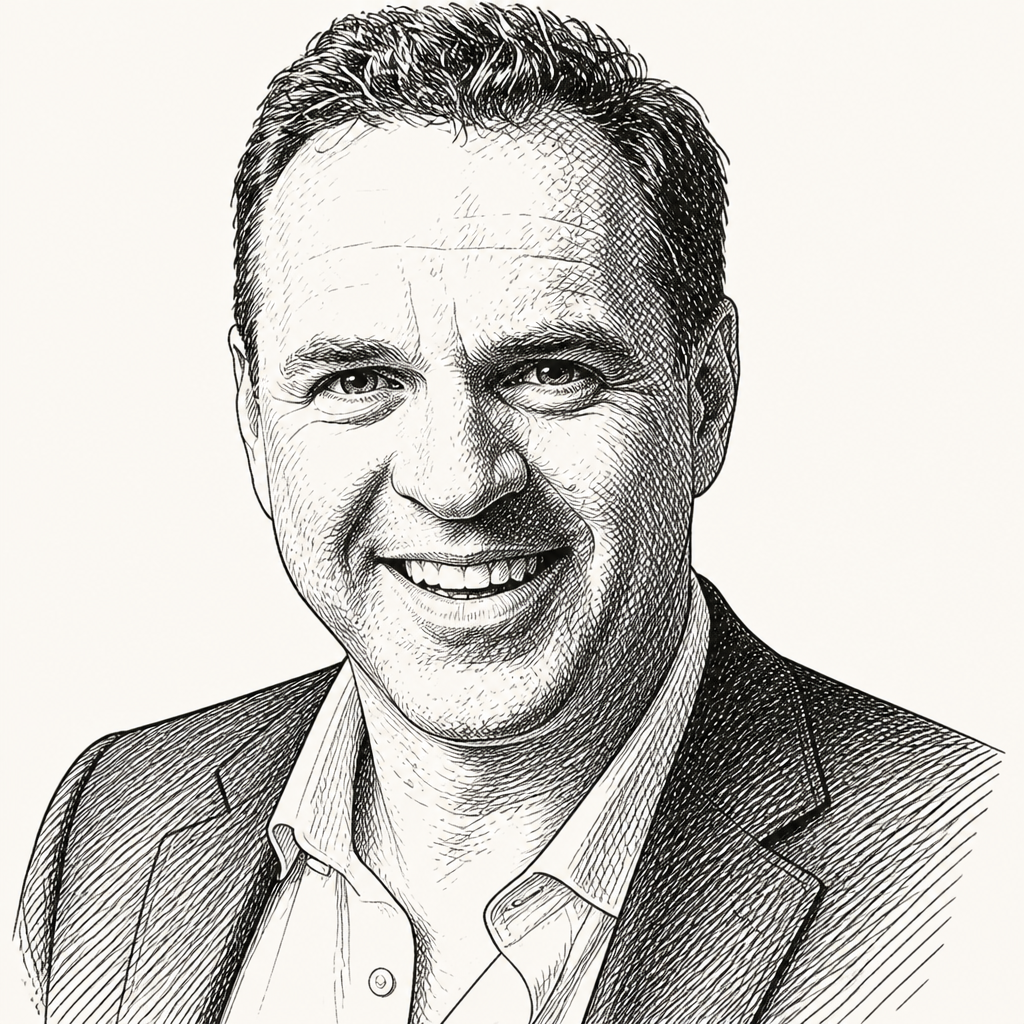

McMaster treated the reported strike on Kuwait’s airport, introduced by Bill Whalen as breaking news, as predictable rather than anomalous. In his account, the United States is not dealing with a crisis that began in the past few weeks. It is dealing with the latest phase of a 47-year war with the Iranian regime. The phrase “ceasefire,” he said, has concealed more than it has clarified. What exists is a “ceasefire war”: a formal claim of restraint layered over continuing strikes, proxy activity, pressure on Gulf states, and unresolved control of the Strait of Hormuz.
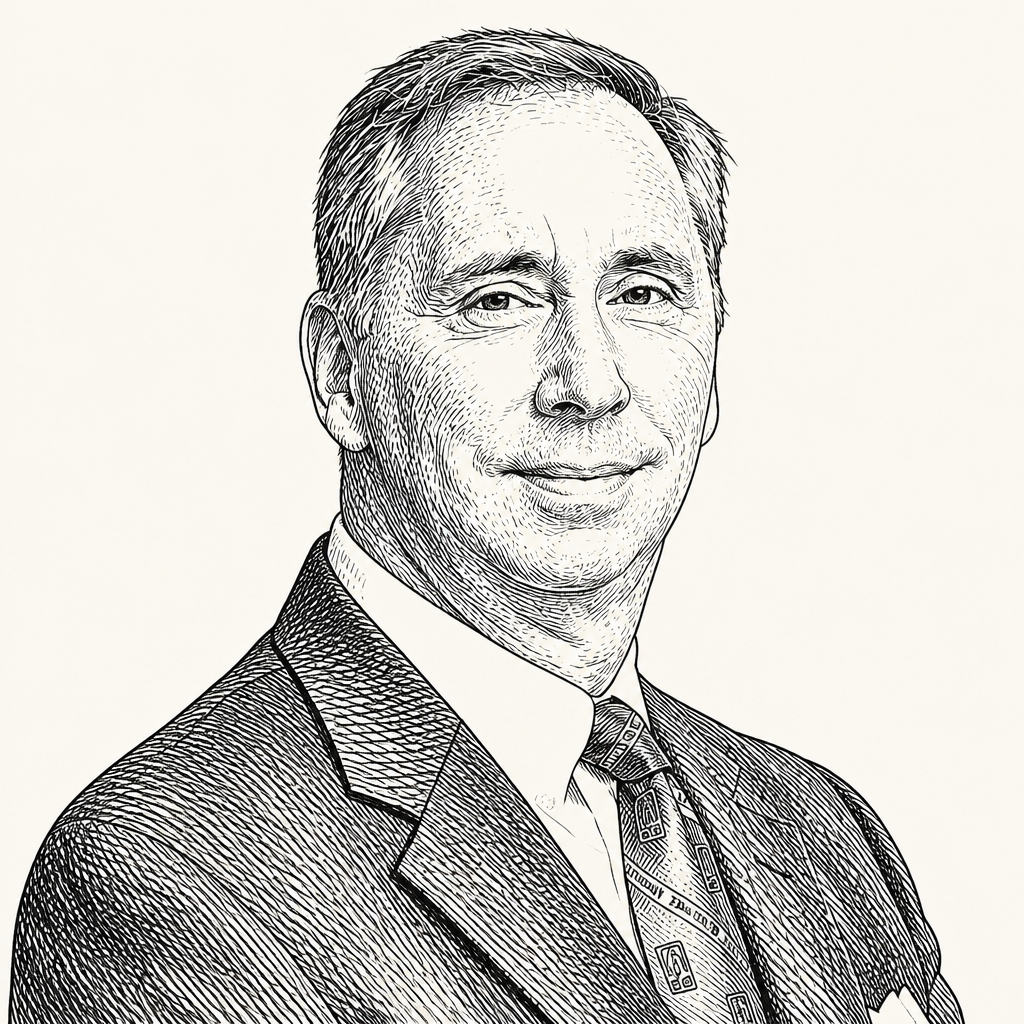
There won’t be an end of the war because it’s been going on for 47 years.
McMaster’s forecast was that President Trump would have to move beyond tit-for-tat responses. He expected a renewed large-scale air campaign, first to further attrit Iran’s missile and drone strike complex, then to support operations aimed at forcibly opening the Strait of Hormuz. He said that phase had been planned from the outset but was not reached because of the ceasefire.
Ferguson was much less certain that Trump would make that move. He called the situation “Schrödinger’s ceasefire,” simultaneously a ceasefire and not a ceasefire. His criticism was that “Operation Economic Fury,” as he described the pressure campaign, had not forced Iran to capitulate. Ferguson said he had been told Iran’s economy would be brought to its knees within days or weeks. More than a month later, in his telling, Tehran had found ways to keep enough oil moving to avoid the feared shutdown of its wells. His blunt lesson was that blockades are hard.
Where McMaster saw an adversary in profound weakness, Ferguson saw an adversary waiting for American pain to become politically usable. Ferguson argued that the United States had cushioned the shock of the Strait’s closure partly by drawing down the Strategic Petroleum Reserve, but that this option was nearing its limit. If the standoff remained unresolved, he expected oil prices to rise, inflationary pressure to build, and Kevin Warsh — whom Ferguson described as the incoming Fed chair — to inherit a serious problem. Iran, in Ferguson’s view, was waiting until U.S. equity markets absorbed the pain already visible elsewhere. Only then would Tehran settle, and the deal it wanted, he said, would be worse for the United States than the JCPOA.
McMaster rejected that reading. He said Iran’s leadership may believe time is on its side because it is reading Western media and seeing signs that Washington is ready to throw in the towel. But he described that as a misreading. Tehran, he said, is desperate for cash flow and is acting from ideological rigidity and from its belief that the United States can be waited out. In McMaster’s telling, Iran has studied Vietnam and Afghanistan and concluded that U.S. resolve breaks under pressure. He said that belief should not be indulged.
The disagreement mattered because it led to different expectations about escalation. Ferguson said he would not be surprised if the same discussion were still happening on July 4 and again on Labor Day. McMaster said the moment called for intensifying the military campaign against Iran rather than returning to the long-standing pattern of de-escalation. He described that pattern as “war management,” a way of giving the initiative back to the adversary.
John Cochrane shifted the discussion from near-term bargaining to regime incentives. His question was why Iran would ever abandon a nuclear program while the current regime and its goals remain in place. In his analysis, Tehran is likely to look at Ukraine, Iraq, Libya, and North Korea and conclude that regimes with nuclear weapons are harder to attack and harder to overthrow. Cochrane did not frame the nuclear program as mainly a plan for an immediate strike on Tel Aviv. He argued that a nuclear weapon would function as a “get out of jail free card,” allowing Iran to continue harassing and damaging Israel and neighboring states below the threshold of massive retaliation.
That logic made negotiated nuclear surrender seem unlikely to him. If the regime wants nuclear weapons as immunity for continued coercion, then demanding that it give them up is not merely difficult; it may be asking the regime to surrender the instrument it sees as essential to survival.
Hezbollah reveals the cost of treating proxy war as a side issue
The Hezbollah front turned the Iran debate into a dispute over alliance management. Niall Ferguson said Trump had leaned hard on Benjamin Netanyahu to reduce Israeli strikes against Hezbollah in Lebanon. Israel, in Ferguson’s account, had been ramping up its campaign, and that campaign complicated U.S. negotiations with Iran because Hezbollah is an Iranian proxy. From Jerusalem’s perspective, he said, Trump’s pressure has been frustrating: Israel has not fully dealt with the Hezbollah threat in the way it wanted, but it remains the junior partner in the U.S.-Israel relationship and cannot simply defy Washington.
Ferguson also said he was hearing dissatisfaction from Jerusalem that Trump “did not finish the job off” against Iran. He attributed to Israelis the fear that Iran may now be in a stronger strategic position because, in that Israeli assessment as Ferguson conveyed it, Iran now controls the Strait of Hormuz, a condition they did not previously face.
John Cochrane focused on the danger of allowing Iran to make Hezbollah part of the U.S.-Iran bargain. Hezbollah, he said, can have a ceasefire whenever it wants: it can stop shooting. The United States, in his view, should say that negotiations with Iran are not about Hezbollah and should refuse to let Tehran bargain over violence conducted through a proxy in Lebanon.
Herbert McMaster put numbers to the claim that the ceasefire label has become detached from reality. Since the April ceasefire, McMaster said, Hezbollah had killed an Israeli citizen, wounded more than 300 Israeli civilians, forced evacuations from towns in northern Israel, and killed 15 IDF soldiers. He presented those figures as evidence that the ceasefire was not functioning as a ceasefire.
McMaster also estimated that Iran was losing $450 million a day through restrictions on exports from Kharg Island, and argued that the blockade was working in terms of financial pressure. He interpreted the reported attacks on Kuwait and Bahrain as coercive signaling aimed at the Emiratis and Saudis: Iran, he said, wanted Gulf states to pressure Washington not to respond massively. If the United States accepted that logic, it would be falling for Tehran’s gambit.
His larger objection was that Iran should have no say over Lebanon. McMaster described the Lebanese government as working toward a ceasefire and perhaps eventual normalization, and Iran as desperate to prevent that by preserving Hezbollah. He described Hezbollah as a force that has destroyed Lebanon and contributed to the displacement of a large share of the Lebanese population. The strategic error, in his view, would be to let Tehran decide what happens outside its borders through the threat of proxy violence.
The war-leadership question is really about political purpose
A viewer asked what qualities to look for in a leader who can win wars. Herbert McMaster’s answer began with Clausewitz: war is an extension of politics. The military aim must be connected to a sustainable political outcome consistent with the reason for entering the war. The American failure in recent conflicts, he said, has been to separate military action from political and diplomatic purpose.
McMaster especially objected to the language of seeking a “responsible end” to war. War is a competition involving life and death, he said. No boxer enters the ring merely hoping to bring the fight to a responsible conclusion. Winning, in his formulation, requires convincing the enemy that it has been defeated.
Winning in war means convincing your enemy that your enemy’s been defeated.
Afghanistan was his central example of what happens when political purpose collapses. Washington announced its withdrawal timeline and then tried to negotiate the outcome after telling the Taliban it was leaving. McMaster called that ludicrous. The error was not simply operational. It was conceptual: the United States had forgotten that war is a contest of wills aimed at a political result.
Niall Ferguson offered Volodymyr Zelensky as a living example of successful wartime leadership. Zelensky, he said, mutated from comedian and sitcom actor into war leader, and did so when the odds against Ukraine appeared overwhelming in February 2022. But Ferguson then moved from leadership to “followership.” A leader needs conviction, he argued, but also a people willing to follow. The American public, in his view, has not for a long time had “the stomach for winning wars,” because victory can require casualties, costs, and sacrifice.
He sketched the post-1945 record in those terms. Korea was a stalemate rather than a defeat. Vietnam was a defeat. Iraq was not, in Ferguson’s judgment, a defeat, but it was not a triumph. Afghanistan was ultimately a clear defeat. Those outcomes cannot be blamed only on presidents or generals, he argued. Public appetite matters.
McMaster accepted the point but put responsibility back on political leaders. The right question is whether a war can be won at a cost acceptable to the American public. Leaders, he said, have failed to explain what is at stake and what strategy can deliver a favorable outcome at acceptable cost and risk. In Afghanistan, he argued, many Americans were barely paying attention when the United States engaged in what he called “self-defeat.”
John Cochrane clarified that the discussion was about political leaders, not military leaders. Political leaders should not start wars too often and should not start them without clear and attainable objectives. Their job is to rally domestic and international support for the cause, not merely to receive and mirror public opinion. He cited Roosevelt in World War II, Thatcher in the Falklands, Lincoln during the Civil War, George Washington during the Revolution, and George H.W. Bush’s coalition-building before the Gulf War.
McMaster added George W. Bush’s surge decision in Iraq as a case of a president acting against political headwinds and explaining the decision. He described Iraq after the surge as a “win” in the limited sense that a government was still hanging together, while acknowledging serious continuing problems. Cochrane added that Bush had also rallied popular support after September 11, even if things later went wrong.
The answer to the viewer’s question was not a checklist of martial virtues. It was a theory of political leadership: do not enter wars without attainable aims; explain why they matter; connect military means to political ends; maintain domestic support without pretending that public will is fixed; and define winning as more than ending.
American decline is not destiny, but the warning signs are real
The domestic questions turned on a similar distinction between fatalism and responsibility. Asked whether the United States might be doomed, Niall Ferguson answered with Franklin’s “A Republic, if you can keep it.” Americans, he said, have worried since the founding that the experiment is failing, that the Republic is becoming Rome, and that constitutional government will give way to empire. For him, that recurring anxiety is part of the system’s resilience.
Ferguson described the Constitution as the key to the Republic’s success and called it an “extraordinarily impressive operating system.” His view was that, when checked, it is still doing what the founders intended. As long as Americans keep worrying about whether they can keep the Republic, he suggested, they have a chance of doing so.
Herbert McMaster agreed and resisted the idea that impersonal forces determine the Republic’s fate. Citizens in a democratic system have agency, he argued. They have “authorship over the future.” His prescription was civic rather than apocalyptic: demand better political leadership, refuse catastrophism, and opt out of the toxic discourse that now dominates politics.
John Cochrane was more visibly worried. He said many public institutions are “rusty, creaky, and dysfunctional.” Institutions are increasingly politicized as tools of partisan warfare, and things once treated as off limits are no longer off limits. He also sensed a decline in the belief that the system itself must be preserved even in hard political fights.
His grounds for hope were cultural rather than institutional. There remains, he said, a reservoir of American common sense, even if the educational system tries to beat it out of people. At some point, voters look at dysfunction and say, “you have got to be kidding,” then throw the bums out. The remaining institutions and that cultural common sense give him hope.
Debt and European stagnation turn on confidence in institutions
The question about China’s Treasury holdings moved the institutional discussion from constitutional endurance to financial trust. Niall Ferguson said China had already sold a significant amount of U.S. Treasuries, to the extent that outsiders can tell in a system he called not entirely transparent. He also said Beijing now prefers gold, because gold is harder to sanction than dollar-denominated securities.
John Cochrane agreed with the direction of the shift but argued that China alone is not the central danger to the Treasury market. China’s holdings, he said, were roughly $1 trillion against a much larger U.S. debt stock. Other buyers can step in, and China can buy other assets. The real risk, in his view, would come if “everybody else decides to sell” because faith in U.S. repayment erodes.
Europe supplied the transatlantic version of the same problem. Cochrane said the European Union can survive economic decline if its citizens are willing to tolerate decline within a union. The danger comes if they conclude that the union itself is causing the decline through Brussels red tape. He noted that European officials at least say they understand the problem, pointing to the Draghi report, but said the question is whether they will fix it.
Ferguson argued that the EU has repeatedly survived predictions of doom. It has continued to grow in size despite poor economic growth. In crises, he said, it has eventually responded: too little and too late after the Eurozone crisis, relatively successfully during COVID, and “not bad” in response to the war in Ukraine. The deeper economic failures, in his view, lie mainly with national governments. Italy, France, and Germany underperform because of how they are governed, not chiefly because of Brussels. Britain, he argued, proves the point: it blamed Brussels before Brexit, left the EU, and has performed about as badly as continental Europe since.
Herbert McMaster had just returned from two weeks in Germany and reported a real sense of urgency there about making government more effective, deregulating, and focusing on energy security. He said Europeans recognize that the old model — cheap Russian energy, relatively low-cost manufacturing, and exports — no longer works. They need to build industrial strength, take advantage of artificial intelligence, create more resilient supply chains, and reduce China’s coercive leverage. But he was troubled by doubts in Germany and Europe about the reliability of the United States. He argued that the European agenda and the American agenda should align: energy security, deregulation, industrial renewal, resilient supply chains, and defense.
North Korea is the warning Iran invites
North Korea returned the nuclear discussion to Cochrane’s earlier point about immunity. Herbert McMaster said Pyongyang is now in a worse strategic position for the United States because it is no longer as isolated as it once was. Russia and China, he argued, can help sustain the Kim family regime, which survives through brutal repression of its own population and now has enough economic wherewithal to remain in power.
Niall Ferguson agreed and added that North Korea has shifted its own policy away from unification, though he cautioned against taking that at face value. North Korea, he said, poses a grave threat not only to South Korea but to the region, and benefits from membership in what he called the China-Russia-Iran axis. He said Pyongyang is assisting Putin as Russia tries to stabilize an increasingly unstable situation in Ukraine.
John Cochrane made the connection explicit: North Korea is the case for why Washington does not want Iran to acquire nuclear weapons. A nuclear-armed Kim regime is likely to remain in power because no one wants to touch it, and because collapse would create refugee and stability problems for China and others. For North Koreans, he said, the suffering continues. “It’ll go on until it doesn’t.”
Britain’s right is being pulled between reform and rage
Niall Ferguson’s answer on Nigel Farage and Reform UK was not a general complaint about populism. It was a distinction between responsible conservatism and what he called irresponsible spend-populism.
He said he is “no fan” of Farage or Reform. Britain, in his view, needs the Conservative Party to recover from the mistakes it made after the 2016 Brexit referendum. Under Kemi Badenoch, he thinks that recovery is possible. He called her admirable and impressive.
Ferguson used the killing of Henry Nowak in Southampton to illustrate the contrast he sees between Badenoch and Farage. As Ferguson described the case, Nowak was stabbed, the attacker claimed Nowak had racially insulted him, and police handcuffed the dying Nowak even as he said he had been stabbed and could not breathe. Ferguson presented the episode as an example of what he believes has gone wrong in British policing, arguing that anti-racist doctrine had produced a “bizarre new form of racism” in which, in his account, a young white man was assumed to be at fault even when mortally wounded.
The political contrast, for Ferguson, was in the response. He attributed to Farage a call for an outpouring of “pure cold rage,” which Ferguson characterized as pouring kerosene on a fire. Badenoch’s response, he said, was more measured and responsible. That contrast was why Ferguson said Farage is unfit to be prime minister.
John Cochrane offered a partial defense of what Farage’s support may represent, without defending Farage himself. It may be a “cri de coeur” from British voters against a center-left governing “blob” they see as incompetent, similar in some ways to Trump’s appeal in the United States. The constructive outcome, Cochrane suggested, would be if Reform’s pressure forced the Conservatives to become conservative again and to reach voters’ common sense without taking on the “craziness.”
Ferguson’s policy distinction was fiscal and economic. Badenoch, he argued, understands the need to fix the welfare system, stabilize public finances, revive enterprise, and get markets working. Farage’s populism, by contrast, is big-government populism: spend more, cut taxes, and ignore the deficit. Ferguson said that if Reform’s policies were costed, they would almost double the deficit in an unsustainable way. Britain does not have to make the choice immediately, he noted, because the general election is not this year. That gives Badenoch time to rebuild a Conservative Party that has recovered from disasters before.
Cochrane added the concrete policy problem Badenoch would face: a million men permanently not working, half of them on mental disability. More money, he said, would make that worse.
Climate policy fails when symbolism substitutes for cost-effective decarbonization
John Cochrane objected to the premise that he is “against those who are worried about human-induced climate change.” He said he is not against people and not against clean energy. He is against bad policy, “bullshit,” and costly programs that do not produce meaningful climate benefits.
He accepted the core scientific premise as he summarized it: climate change is real, and human-emitted carbon dioxide is largely responsible. His criticism was directed at policy. Climate politics, he argued, has become a large green pork project that wastes trillions of dollars, deindustrializes places such as Europe, and does little for the climate. California’s $230 billion high-speed rail project was his example of a policy that fails a basic cost-benefit test.
Climate change is real, climate change is caused by human emitted carbon dioxide largely.
Cochrane also objected to what he sees as politicized science. He cited a Wall Street Journal opinion article by Bjorn Lomborg shown on screen under the headline “Global Warming or Just Getting Old?” The visible subheading said a World Health Organization panel called climate change a global health emergency but “forgets to adjust its data for age.” Cochrane’s summary of the argument was that claims about rising European heat-wave deaths failed to adjust for Europe’s aging population; once adjusted for age, he said, there is no change, and fewer people are dying from cold. His point was not that climate change is beneficial, but that misleading analysis corrodes trust and supports wasteful policy.
His preferred approach includes nuclear power, renewables and solar where appropriate, and technologies and adaptation that reduce emissions efficiently. What he rejected was “trillions and trillions of taxpayer dollars into big rat holes in the ground” combined with moral signaling.
Niall Ferguson agreed that earlier climate rhetoric has cooled, but he interpreted that as a warning sign. When activists and figures such as Bill Gates dial down the urgency, he said, that may be when the seriousness of the problem becomes clearer. A Gates Notes page shown on screen was headed “Three tough truths about climate” and included the visible line, “Climate change is serious, but we’ve made great progress.” Ferguson said he has never been a climate denier or skeptic. His argument has long been that serious climate policy must focus on China.
Western emissions, he said, have been falling: in the United States for some time and sharply in Europe. The main driver of the problem, in his telling, is China, especially its coal consumption. He argued that people are misled by Chinese Communist Party propaganda into thinking China runs on solar and wind, whereas its economy overwhelmingly runs on hydrocarbons, with coal as the largest primary energy source. Green New Deals in the United States and what he called disastrous energy policies in Western Europe rest, in his view, on a misunderstanding of where the emissions problem is coming from.
Ferguson did not endorse the most extreme climate scenarios. He said the most extreme model from the international climate panel appeared misspecified. But he expected a difficult period ahead as climate problems become more acute. His warning was that when prominent voices say to relax, that is when people should start filling sandbags.
Herbert McMaster tried to locate common ground between those who think man-made carbon emissions are an existential threat and those who are skeptical of that framing. If emissions are an existential threat, he said, then the current approach plainly is not working. The problem will not be solved by policy choices in the United States and Europe alone. It requires market-based, cost-effective solutions that do not create a false choice between emissions reduction and energy security. He pointed to nuclear fusion as a possible future solution and said the largest reduction of man-made carbon emissions in U.S. history came from cheap natural gas — a market-driven shift.
Cochrane added a military example of misplaced climate policy. Climate change is a long-run problem, he said, but not the greatest strategic threat. Tanks and aircraft require concentrated energy, and fossil fuels provide it. Other sectors can bear more of the burden of decarbonization; trying to run military systems on batteries, in his view, is an example of doing climate policy inefficiently.
Judgment means knowing what deserves discipline and what deserves dismissal
The lighter questions still circled the same standard that ran through the strategic ones: judgment depends on disciplined attention, and disciplined attention requires saying no to distractions.
Asked what a beginner should read to learn economics, John Cochrane warned against starting with his own books, including Asset Pricing, The Fiscal Theory of the Price Level, and Crisis Cycle. They were not written as introductions. His advice was to read things that are fun and intriguing enough to lead to more reading. He recommended Thomas Sowell, especially Sowell’s economics textbook, the Marginal Revolution blog, and economics work from Hoover and the Cato Institute.
Niall Ferguson gave a parallel answer on clothes. Asked for the basics of a gentleman-scholar’s wardrobe, he said he has spent roughly 30 years not thinking hard about clothes. The key is to buy clothes one likes and wear them unthinkingly. He recalled a family story in which one of his son’s friends asked why he always wore the same clothes. Ferguson’s answer was that it spared him from thinking about clothes. The rule, as he put it, was to buy clothes as a graduate student and wear them until they fall apart.
Historical drama got less indulgence. Ferguson told aspiring historians never to watch it, calling it a mental contaminant because Hollywood has long misrepresented the past. Cochrane mostly agreed and said Medici: Masters of Florence was awful, recommending Eric Cochrane’s Florence in the Forgotten Centuries instead. But he defended deeply researched historical fiction in the Hilary Mantel mode: nothing provably false, extensive research, and imaginative filling-in to tell an interpretive story. McMaster nominated George MacDonald Fraser’s Flashman novels as historical fiction worth adapting, praising them as funny, historically based, and supported by extensive endnotes.
War movies received a different judgment from McMaster. Saving Private Ryan, he said, is worth watching because it helps explain why soldiers fight: for one another. It captures the bond among soldiers, unit cohesion, and confidence as parts of combat readiness. He also praised The Longest Day as still a good D-Day movie.
The final sports exchange returned to leadership and collective performance. Ferguson treated Mikel Arteta’s Arsenal as a case study in disciplined teamwork. Arsenal, he said, has individual stars such as Bukayo Saka, but its brilliance lies in the team. He pointed to Arsenal’s Champions League final against Paris Saint-Germain, which he described as a match Arsenal nearly won despite PSG’s superior talent. Arsenal survived, in Ferguson’s account, through defensive organization and collective discipline. His broader claim was that any human organization — an army, company, academic institution, or football club — is only as good as its teamwork.
McMaster rejected football as too little contact and recommended James Kerr’s Legacy, about New Zealand’s All Blacks, for lessons from a “real sport.” Ferguson replied that rugby was invented for those not physically suited to the beautiful game. Cochrane marked the moment as unusual because he had no opinion whatsoever. Ferguson gave him one anyway: “Real men fly gliders.”