Climate Policy Is Shifting From Net-Zero Mandates to Market-Led Adaptation
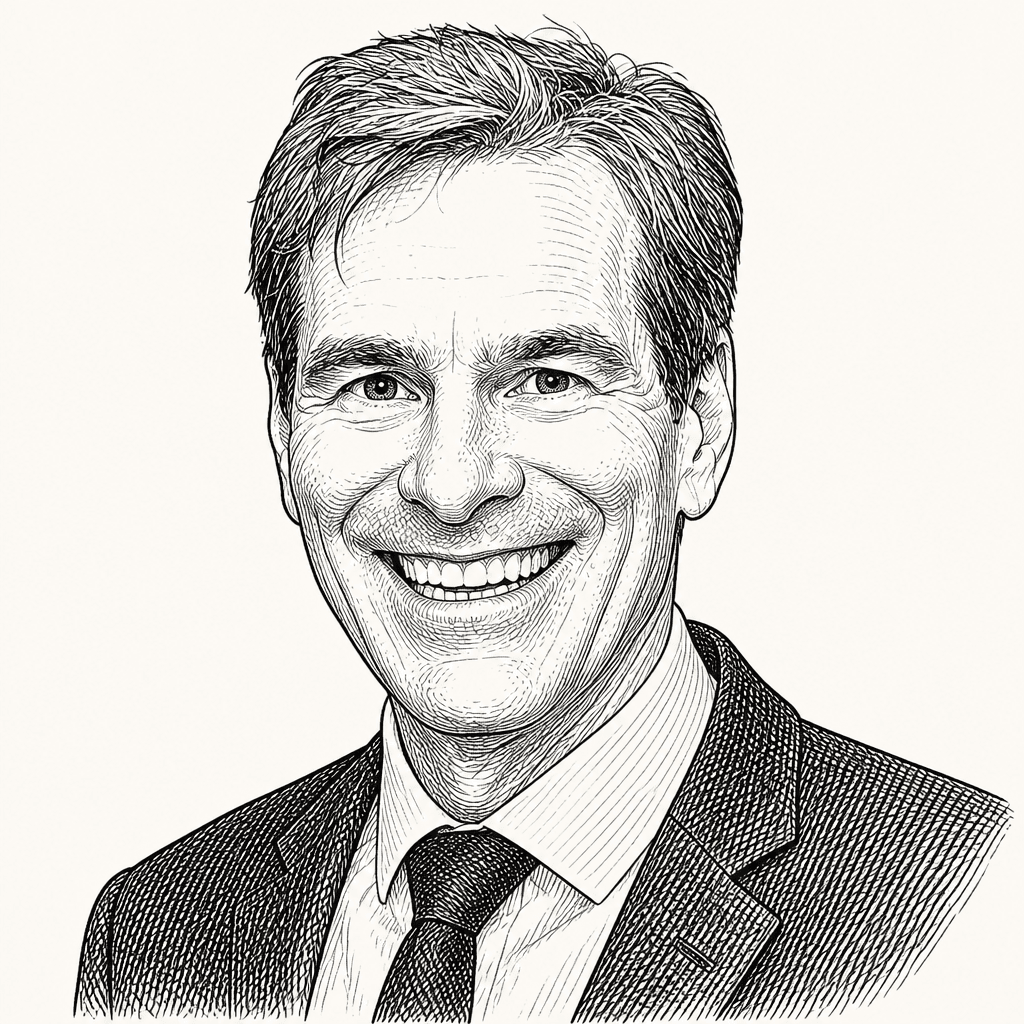 John Cochrane
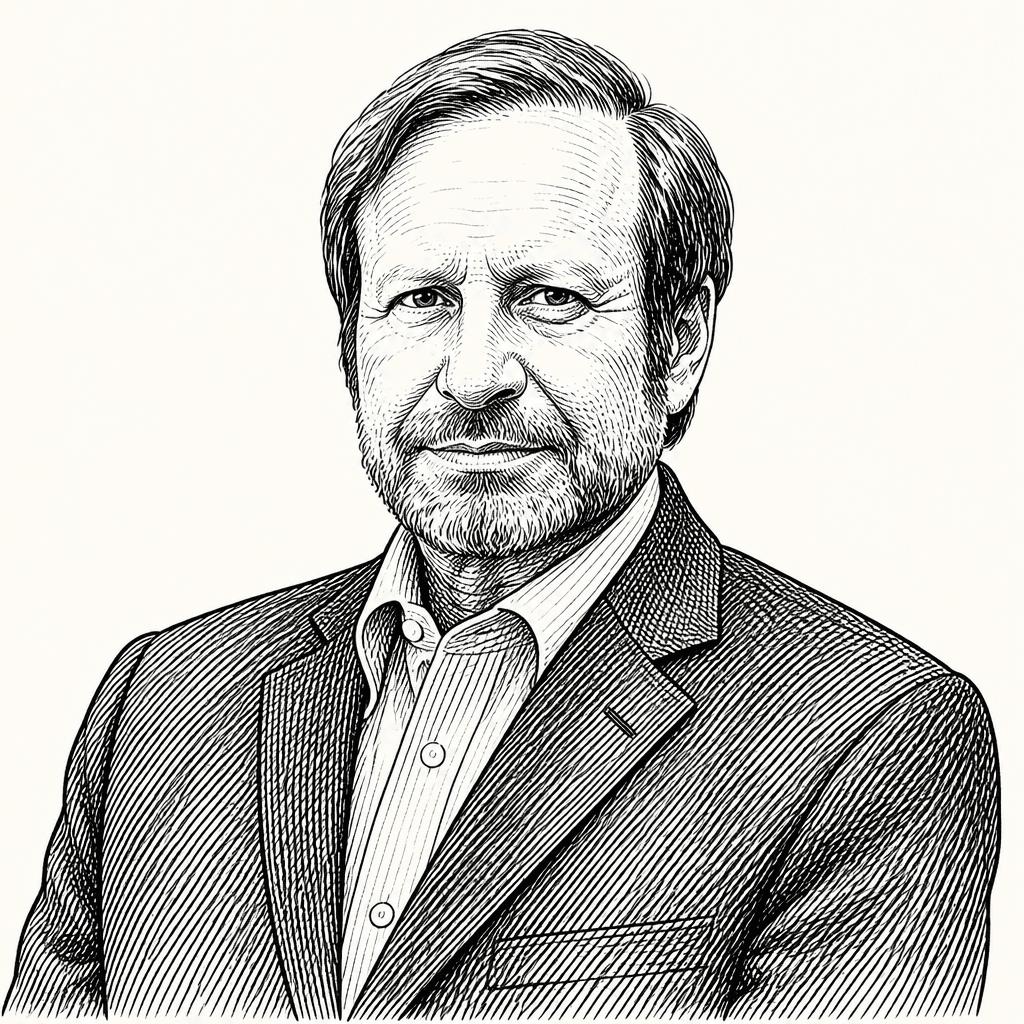 Steven Koonin
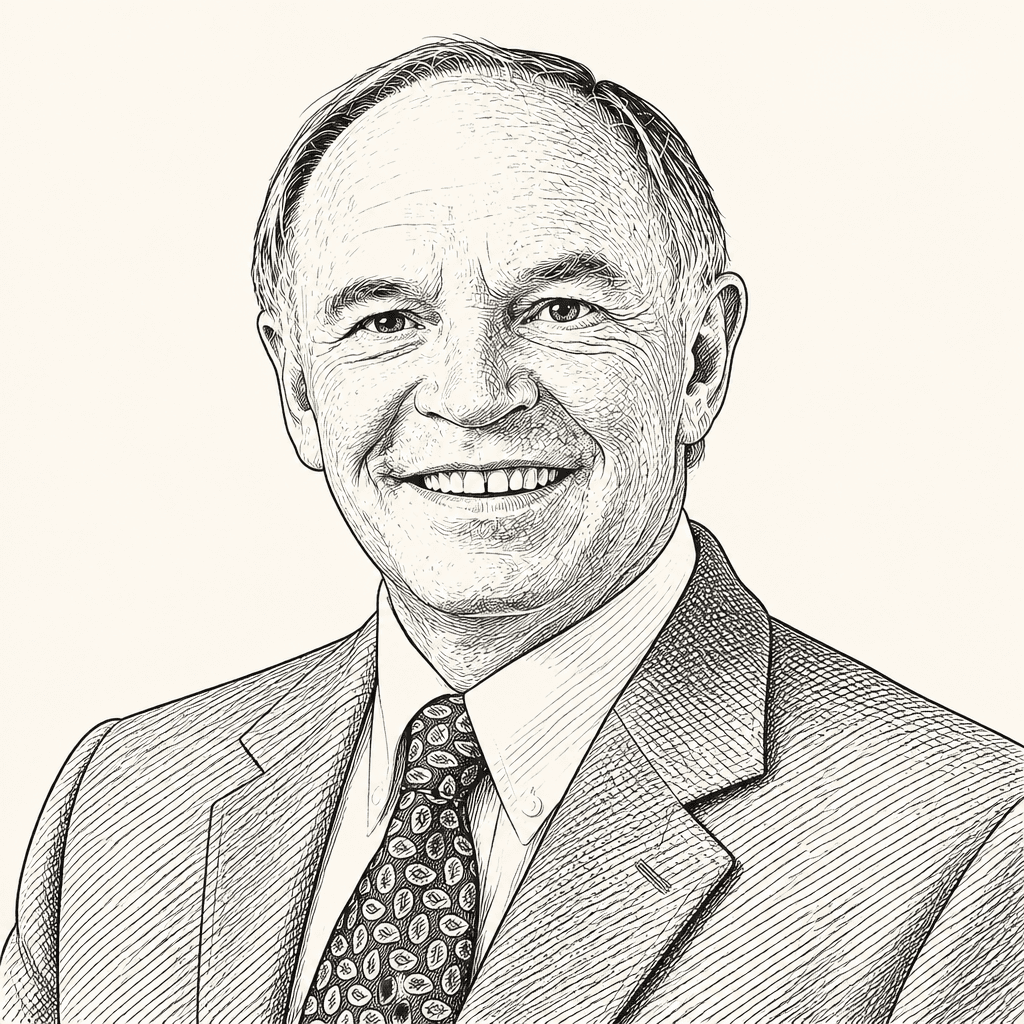 Terry Anderson
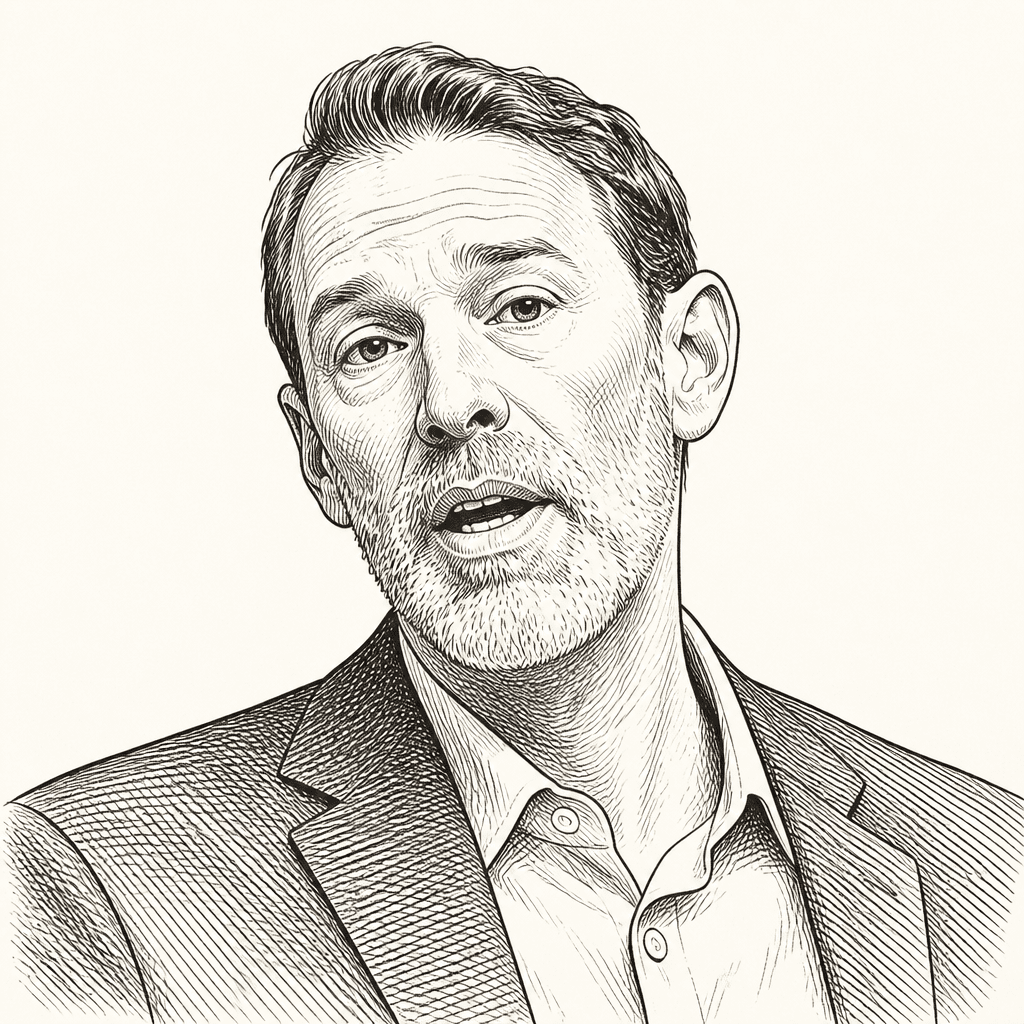 Dominic Parker
 Matthew KahnSteven HaywardHoover InstitutionMonday, June 8, 202620 min read
At a Hoover Institution session on climate policy, Steven Koonin argued that the net-zero mitigation agenda has failed to cut global fossil-fuel dependence and has overstated the evidence for catastrophe. Koonin, Matthew Kahn, Terry Anderson and other participants made the case for shifting attention toward adaptation: local, incremental responses shaped by insurance, real estate, migration, finance and property rights. Their shared claim was not that climate change is unreal, but that better information and market prices may guide resilience more effectively than mandates, subsidies and apocalyptic politics.

Adaptation changes the policy question from targets to tradeoffs
Climate response, as Steven Koonin framed it, has three possible lines of action: mitigation, adaptation, and geoengineering. He set geoengineering aside. Mitigation, in his definition, means reducing emissions; adaptation means adjusting to climate conditions as they emerge. His central claim was that the mitigation project of the past two decades has failed on its own stated terms, while adaptation remains underappreciated because it is more incremental, more local, and less dependent on global political coordination.
Koonin’s mitigation critique combined empirical claims and political judgment. He said global carbon dioxide emissions remain at an all-time high; coal and oil consumption are at all-time highs; gas consumption is near an all-time high; and fossil fuels still supply 83% of global primary energy. He attributed that persistence not primarily to “evil fossil fuel companies,” but to the practical value of coal, oil, and gas as reliable energy sources for economic development and for new demands such as data centers.
He cited, without providing the paper on screen, a Nature article from August 2024 that he said examined 1,500 policies across 40 countries over 25 years. As Koonin described it, the study found that 4% of those policies had a detectable impact on emissions, amounting to about 2 gigatons of carbon dioxide in total. He treated that as evidence that global emissions reduction is not merely politically difficult but structurally hard.
The costs of the mitigation push, according to Koonin, have been large: “several tens of trillions of dollars,” supply-chain dependence on China, greater electrical-grid instability, more expensive energy, deindustrialization in the United Kingdom, Germany, and increasingly the United States, and a generation of young people frightened into believing “the climate is broken” and catastrophe is imminent.
He separated that political and social reaction from what he said the climate record shows. Koonin accepted that the planet is warming and that heat waves are becoming somewhat more common. But he said cold snaps are becoming less common, and argued that because more people die from cold than from heat, the mortality comparison is not the one implied by a simple focus on heat. He also said that for hurricanes, tropical cyclones, droughts, floods, and similar categories, he does not see global observational trends attributable to human influence.
His example was the flooding in Kerrville, Texas, “last summer,” where children died at a summer camp. Koonin said the event was quickly attributed to climate change, but he pointed to a handwritten observer record from July 1900 in Kerrville showing a mostly dry month interrupted by 14 inches of rain on July 13 and 14 and a note that the river rose 33 feet overnight. His claim was not that contemporary floods are harmless. It was that an extreme weather event is not, by itself, evidence of a changed climate. Politicians, activists, and the media, he said, routinely confuse weather with climate.
Terry Anderson drew out the contrast between mitigation and adaptation by emphasizing margins. Adaptation, he said, can be proportional: conditions change, people adjust somewhat; conditions change more, they adjust more. Mitigation, by contrast, is closer to “all or nothing” if the goal is to alter the climate itself; emissions have to be cut substantially before the intervention registers climatically.
That distinction shaped the rest of the discussion. The argument was not that climate risk is imaginary or that nothing should be done. It was that adaptation is often closer to how people, firms, insurers, lenders, and communities actually make decisions: locally, with imperfect information, under uncertainty, through repeated tradeoffs.
Koonin’s less dire forecast depends on both models and scenarios
Steven Koonin’s case for adaptation depended partly on his view that the most frightening climate projections have lost credibility. To project future climate, he said, one needs two things: assumptions about future greenhouse gas concentrations, emissions, and energy technology; and models of how the climate responds to those influences. Both sides of that exercise, in his account, have shifted in a less catastrophic direction.
On models, Koonin said the current CMIP6 generation includes a large number that are too sensitive to greenhouse-gas forcing. According to him, modelers themselves discard roughly 40% of those models because they warm too rapidly or too strongly compared with observations. On scenarios, he said the United Nations panel has recently published a set of scenarios for the next assessment report that treats the most extreme earlier scenarios as implausible.
Those two changes—lower effective model sensitivity and more benign emissions assumptions—led Koonin to say that future climates “will not be anywhere near as dire” as the projections that drove panic over the previous decade.
He then put projected warming beside human performance during the warming already experienced. Since 1900, he said, global temperature has risen about 1.3 degrees Celsius. Under plausible scenarios, he said, roughly the same magnitude of warming is projected over the next century. During the past century-plus, he noted, population rose fivefold; lifespan increased from 32 to 73 years; literacy rose from 20% to 80%; GDP per capita rose by a factor of seven; and deaths from extreme weather fell by a factor of 50.
His inference was that society has already adapted to a comparable amount of warming while improving living standards dramatically, and that there is reason to expect continued adaptation.
Matthew Kahn accepted Koonin’s invitation to think in terms of growth and adaptation, but his emphasis was different. Kahn presented himself as “risk averse” and said he, too, can be frightened by climate coverage. What he wants, he said, is a truthful account of the path society is actually on. He linked a flatter emissions path to “ingenuity and innovation” in fracking and nuclear power, if regulation permits further development. He was especially concerned about youth pessimism and how it might affect young people’s investment in their own lives.
Kahn’s optimism was not built on a claim that nothing bad can happen. It was built on the idea that climate science makes future risks more legible. He said it “expands our imagination about possible futures” by converting unknown unknowns into known unknowns. His example came from a National Bureau of Economic Research discussion about the year 2300: if Harvard and MIT face future flooding risk in Cambridge, the fact that the risk is visible gives them reason to act before the damage occurs. Institutions that expect to endure, in Kahn’s view, do not wait passively for losses; they invest in avoiding them.
Insurance and real estate are the adaptation markets Kahn wants to make smarter
Adaptation, in Matthew Kahn’s most developed argument, will be organized through the markets in which climate risk is capitalized: insurance, real estate, and finance. His premise was simple: most Americans are homeowners, and much of their wealth is concentrated in their homes, but they are amateurs at assessing flood, fire, tornado, and other property risks. The question is whether reliable information and properly priced contracts can help them make better choices before losses occur.
He described a field experiment involving Redfin and First Street Foundation flood-risk scores. In that experiment, households searching for homes were informed about property-level flood risks. Kahn said buyers in both red states and blue states responded to the information: it changed how they bid for housing and made them more sophisticated searchers.
The significance, for Kahn, is not merely that buyers may pay less for risky homes. It is that common knowledge about risk changes incentives for sellers and property owners. If Anderson owns a home in a flood zone and wants to sell at a high price, Kahn said, he has reason to seek cost-effective adaptation strategies from environmental entrepreneurs. Better risk information means fewer surprised buyers, fewer regrets, and more demand for firms that can reduce flood and fire exposure.
Kahn repeatedly called insurers “the adult in the room.” Insurers, unlike politicians or homeowners, have direct financial reason to price risk and reward precautions. But for that role to work, he said, insurers need freedom to write contracts and charge rates that reflect risk. If regulators prevent prices from reflecting expected losses, the market signal weakens. If insurers can offer discounts for verifiable precautions, homeowners get concrete reasons to act before a disaster.
His example was Big Data applied to property monitoring. Kahn praised a company whose name was rendered in the transcript as Placemeter or Placemetry, founded by friends of his, which he said drives cars down streets and takes images of homes. He acknowledged that he and Anderson had discussed how “creepy” such monitoring could feel. But he focused on the adaptation benefit: street imagery could show overgrown vegetation, debris on roofs, or other features relevant to wildfire and property risk. Aerial drones, with homeowner consent, could provide additional monitoring. If homeowners opt in, he said, insurers could offer discounts.
Kahn also mentioned California insurance regulation and named Ricardo Lara while discussing limits on insurers’ ability to write contracts. He did not pause to explain the reference. The point he attached to it was that adaptation incentives depend on whether insurers can price and contract on risk rather than being constrained by regulation.
The purpose was not surveillance for its own sake. It was that information allows insurance contracts to become behavioral incentives. If Kahn is a homeowner who underestimates the risk around his own house, the insurer can tell him he could receive a large discount by taking specific preventive steps. That argument depended on two conditions. First, the data must be trusted enough to guide decisions. Second, insurers must not be barred by regulation from pricing and contracting on the basis of that information. Without those conditions, insurers may walk away from high-risk markets rather than stay and incentivize adaptation.
Climate adaptation is often a weakest-link problem
Matthew Kahn moved from individual homeowners to neighborhoods because many adaptation problems are not fully private. A homeowner’s failure to clear vegetation or harden a roof can raise the risk faced by neighbors. He called this a “weakest link” or “O-ring” technology: if one centrally located homeowner underinvests in precaution, the whole community can become more vulnerable, even if nearby owners have behaved prudently.
That is where homeowner associations enter his adaptation story. Kahn said he was beginning research with a UCLA colleague on California homeowner associations and the steps they are taking to address climate risks. An HOA, he said, can lower transaction costs among neighbors in a Coasian sense. Instead of each owner bargaining separately with every other owner over vegetation, roofing, drainage, or other precautions, the association can create rules, coordinate investments, and interact with insurers on behalf of the community.
The property-rights issue is central. If a homeowner has the right not to maintain a property, but that choice imposes risk on others, then either neighbors need to compensate that homeowner to change behavior or institutions need to define responsibilities differently. Kahn did not resolve the issue; he treated it as precisely the kind of tradeoff adaptation forces into view. Who has the right to leave a roof vulnerable? Who pays if that roof raises community fire risk? What happens when an HOA borders an area of unaffiliated single-family homes, creating spatial spillovers across institutional boundaries?
Steven Koonin pressed the analogy to vaccination: if one person does not clear vegetation, is he endangering others in the way an unvaccinated person may endanger a community? Terry Anderson thought the analogy had force. Kahn’s response brought the discussion back to housing markets and mobility. If buyers know they are moving into a community where neighbors choose not to take precautions, they can choose not to live there. That answer assumed information is available and prices reflect it. It also revealed the limit of purely private adaptation: mobility solves some problems only if people can see the risk, afford to move, and bear the consequences of their choices.
Anderson supplied a concrete case from his own property in Bozeman, Montana. His house borders Forest Service land, and he had long viewed the adjacent forest as a fire risk. He and his wife removed about 200 tons of timber from roughly 16 acres and later hired someone with a bush hog to clear underbrush on a steep slope. No insurer instructed them to do it; no large data system flagged the property; no neighbors offered to share the cost. They did it because the risk looked obvious and the cost was acceptable. Anderson thought they created a public good, since downstream neighbors benefited from reduced fire risk.
Years later, he said, neighbors lower down the slope began clearing limbs and brush under a government grant. He doubted the work meaningfully reduced fire risk in those lower areas, though it may have made properties look better. His concern was the price signal: because the grant made the work free to the recipients, people may have overdone mitigation they would not have purchased with their own money. He said he lectured neighbors that “somebody’s paying for this.”
Koonin’s response was dry: Anderson should have waited for the subsidy. But the exchange sharpened a central tension. Market incentives can underprovide precautions that generate public benefits. Subsidies can overprovide precautions when recipients face a zero price. Kahn answered Anderson in Thomas Sowell’s language of tradeoffs. Some people may prefer attractive vegetation and accept a little more fire risk rather than clear so aggressively that they dislike the landscape they have created. The aim is not maximum risk reduction at any cost. It is choosing the amount of precaution worth its cost, including the aesthetic and property-value costs of clearing too much.
Durability, mobility, and the option to leave are part of adaptation
Steven Koonin raised earthquakes as a comparison. Southern California and the Bay Area have long lived with earthquake risk. People bolt houses and change building practices. He asked whether climate adaptation can learn from that experience.
Matthew Kahn answered by talking about the optimal durability of capital. If a place faces major shocks, it may not be optimal to build structures meant to last 200 years. Less durable capital can preserve the option to rebuild differently after a shock. He invoked the real-options logic of Avinash Dixit and Robert Pindyck: when the future is uncertain, flexibility itself has value.
His example was Japan, where, according to his Japanese friends, housing stock is less durable. Koonin connected that to paper walls. Terry Anderson added an example from ghost towns and company towns, where firms built worker housing that was serviceable but not intended to last indefinitely. The structures were appropriate to uncertain mining prospects; they could rot, burn, or collapse after the economic purpose had passed.
Kahn extended the logic to urban decline. He cited Ed Glaeser and Joe Gyourko’s work on durable capital and Detroit, arguing that Detroit would not be poor today in the same way if its capital stock had been less durable. As auto employment declined, less durable housing would have made it easier for people to leave rather than remain in an unproductive place with cheap but persistent structures. He suggested the same logic may apply to climate adaptation. If some areas become as dangerous as climate advocates claim, a more modular capital stock would make retreat easier.
That logic led naturally to migration. Anderson said migration should be understood as part of adaptation, not a separate afterthought. If grapes can no longer be grown profitably in one place, growers may move to another. If coastal flooding risk is capitalized into housing prices, households may move away or avoid moving in. But subsidies can distort those decisions: subsidized insurance rates may encourage people to remain in or migrate to risky places they would otherwise avoid.
Koonin treated migration as a basic human behavior. He noted that he does not live where he was born and that his grandparents came from another continent. Anderson had opened the session with an even older example: people crossing the land bridge from Asia into North America, encountering unfamiliar conditions and megafauna, and adapting. The point was anthropological as much as economic. Human beings adapt partly by changing practices, partly by changing technologies, and partly by moving.
Some adaptation finance may come from new ownership contracts
Matthew Kahn also argued that homeownership itself may need more flexible financial forms. He referred to Andrew Caplin, Joe Tracy, and Su-Yen Chan’s 1997 book on housing partnerships and asked why the choice is usually framed as rent versus own. Why not own half a house?
In a housing-equity partnership, as Kahn described it, another investor could own a share of the home. The benefits could be broad: younger households might buy earlier because they need only part of the down payment; older households that are house-rich but cash-poor could sell a slice while continuing to live in the home. For climate adaptation, the model could also bring capital and expertise to households that lack both.
Kahn’s example was a homeowner who knows he does not know how to adapt to wildfire risk and cannot easily finance a $25,000 roof. If an equity partner—he used Koonin hypothetically—owns part of the house, that partner has an incentive to help raise the home’s adaptation quality. Wall Street capital and analytics, in Kahn’s telling, could then be aligned with household-level resilience because the outside investor would share exposure to the asset’s value.
This was part of Kahn’s larger claim that adaptation opportunities emerge when risks become known and people have “skin in the game.” If the government routinely bails out losses, property owners have weaker incentives to learn and invest. If homeowners bear the consequences of concentrating too much wealth in a place-based asset, they have reason to use information, insurance, contractors, and finance to protect themselves.
If government doesn't bail us out, if we have skin in the game, if we as property owners who have put too much of our money in a single place-based asset, our home, if we're aware of these risks, we have no excuses to not use market forces to protect us.
Terry Anderson, however, pressed the weakness in this optimism. The two markets he sees as most important for adaptation—real estate and insurance—are already distorted. Insurance rates are regulated, muting the price signals that might otherwise induce resilience. Housing investment is affected by monetary policy and interest rates. Finance, insurance, and real estate are not pristine markets calmly transmitting risk information; they are layered with policy interventions.
Kahn did not deny the problem. He shifted to political economy: perhaps federal fiscal pressure will eventually force decentralization of disaster costs. He said he favors scaling back FEMA because of moral hazard and thinks states should handle their own disaster budgets. Invoking Milton Friedman, he said localities make more prudent decisions when they spend their own money rather than other people’s. He asked when political reform occurs and suggested that crisis can force changes that normal politics resists.
Anderson was not optimistic on that front. Steven Koonin added that the longer a system stays “out of whack” before reform, the more dramatic the eventual correction becomes.
The climate-politics question is whether the issue is becoming normal
Steven Hayward challenged Kahn and Koonin’s optimism by asking whether climate policy is really becoming more sensible or only temporarily less intense. Hayward said he had long thought better climate policy would become possible only when the issue stopped being apocalyptic and became a “normal problem,” comparable to air pollution, labor policy, health care, or education: messy, contentious, but recognizable.
He saw some signs of normalization. The dropping of RCP 8.5, in his account, marked a mainstream step away from apocalypse. He mentioned a New York Times op-ed arguing Democrats no longer need to campaign on climate change, and he noted that “abundance” arguments now criticize energy suppression.
But Hayward’s question was whether those changes are durable. He pointed to residual Malthusianism and what he described as an almost religious appetite for apocalypse. In his experience, telling some environmentalists that environmental conditions are improving makes them angry. Apocalyptic threats, he said, supply social and political energy. He identified environmentalists and the news media as two major hindrances to sensible environmental policy because they reinforce each other’s worst tendencies.
Matthew Kahn declined to analyze electoral politics in detail. He said the political process is above his pay grade. His attention is on young people, venture capital, entrepreneurship, and the Julian Simon idea that human ingenuity applied to a problem can solve it. He was not waiting for a senator to design perfect climate legislation.
Steven Koonin answered with Anthony Downs’s issue-attention cycle. In that model, experts first identify a problem; the public then recognizes it and becomes enthusiastic about solving it; later, people realize the solution is costly and disruptive; attention then declines. Koonin said climate appears to be on that downslope, with microplastics, artificial intelligence, or both becoming the new “threat du jour.”
Terry Anderson offered a more local counterpoint from Montana. During a summer of severe drought, low mountain snowpack, and predictions of bad fires, he expected newspapers to attribute the conditions to climate change. He said he searched hard and did not find that framing. To him, that suggested at least some restraint: people were not automatically converting a one-year event into proof of climate change.
The disagreement was subtle. Hayward worried that catastrophism is politically resilient because it serves purposes beyond climate policy. Koonin thought attention is already shifting. Kahn placed more faith in entrepreneurial response than in political correction. Anderson saw anecdotal evidence that not every weather anomaly is now automatically narrated as climate change.
Cochrane’s challenge: do we need adaptation policy at all?
John Cochrane separated climate policy into three questions: what will happen to the weather; what economic damage will result; and what policies pass a cost-benefit test. As an economist, he said, uncertainty rises at each step. The weather forecast is uncertain; the damage estimate is more uncertain; and policy performance is another matter still.
Cochrane was especially skeptical of climate-damage estimates. He said the empirical study of climate damage contains more “skullduggery” than he has seen elsewhere. His illustrative fact was that Maine is cold, Texas is hot, and Florida has hurricanes, yet business is moving from Maine to Texas and Florida. That migration, he said, is an order of magnitude larger than climate change and is avoided in all empirical studies. From that evidence, he found it difficult to see huge economic damage from warming.
His direct question was whether adaptation policy is needed at all. He warned against a “fallacy of time compression”: people imagine 100 years of change arriving in a week. Migration over a century is not extraordinary; he noted that 70% of Americans lived on farms in 1900 and that the country’s population distribution changed enormously over the following century. Sewer systems will decay and need rebuilding anyway. Infrastructure can be replaced when replacement is due. In his view, much adaptation can occur when the time comes.
Cochrane’s example of maladaptation was San Francisco Bay Area spending on sea-level defenses. If sea level is rising on the order of millimeters per year, he said, defenses built far in advance may crumble before the relevant sea-level rise arrives. He also criticized subsidies that keep people in risky places, saying the better adaptation after Hurricane Katrina would have been to let New Orleans sink and leave rather than pay people to remain.
Steven Koonin was sympathetic to the thrust. Adaptation, he said, is proportional, agnostic, and autonomous. It is proportional because investments can scale with observed change. It is agnostic because it does not matter why the climate changes; if conditions change, people adapt. It is autonomous because adaptation is what people already do.
Adaptation is proportional, agnostic, and autonomous.
But Koonin did not take that all the way to zero policy. He allowed for a “light hand.” If a community is going to raise seawalls, it must decide how high to raise them. His general principle was at least to “prepare for the past,” which he said society often fails to do. That leaves room for some general principles and infrastructure choices without turning adaptation into a comprehensive planning regime.
Koonin’s final distinction: CO2 is not a hoax, but he says the danger has been exaggerated
The last substantive exchange returned to first principles. An audience member asked why carbon dioxide is bad if it is a building block of life. Steven Koonin answered that CO2 has been demonized over the past 30 or 40 years. It is plant food, he said, and greenhouse operators raise CO2 concentrations to several times ambient levels.
He then stated the scientific reason for concern: carbon dioxide increases the heat-trapping ability of the atmosphere. He described the direct effect as small—“like a half a percent effect”—but sufficient in principle to raise temperatures by one or two degrees depending on climate-system details. His objection was not to the basic greenhouse mechanism. It was to the claim that this mechanism implies catastrophe.
When Terry Anderson asked whether climate change is a hoax, Koonin said no. When Anderson asked how exaggerated the issue is, Koonin answered: by a factor of 10.
That distinction was important to Koonin’s position. He accepted human influence, warming, and a physical CO2 effect. Matthew Kahn accepted risk and treated information about future climate as economically valuable. Anderson accepted that mandates may sometimes have a role. Their shared objection was to policy and rhetoric that turn climate into an emergency overriding cost-benefit analysis, local knowledge, property rights, and market signals.
Anderson closed by returning to Sowell’s tradeoff framework. The question is not markets good, mandates bad, or the reverse. The question is what each mechanism does to information and incentives. Mandates can sometimes improve outcomes, but they can also distort price signals and induce overreaction. Markets can transmit risk and reward adaptation, but only if prices are allowed to reflect reality and people bear enough responsibility for their choices.
The optimistic claim was not that climate change creates no hard problems. It was that people are unusually good at making adjustments when they face accurate information, meaningful prices, and the consequences of their decisions.