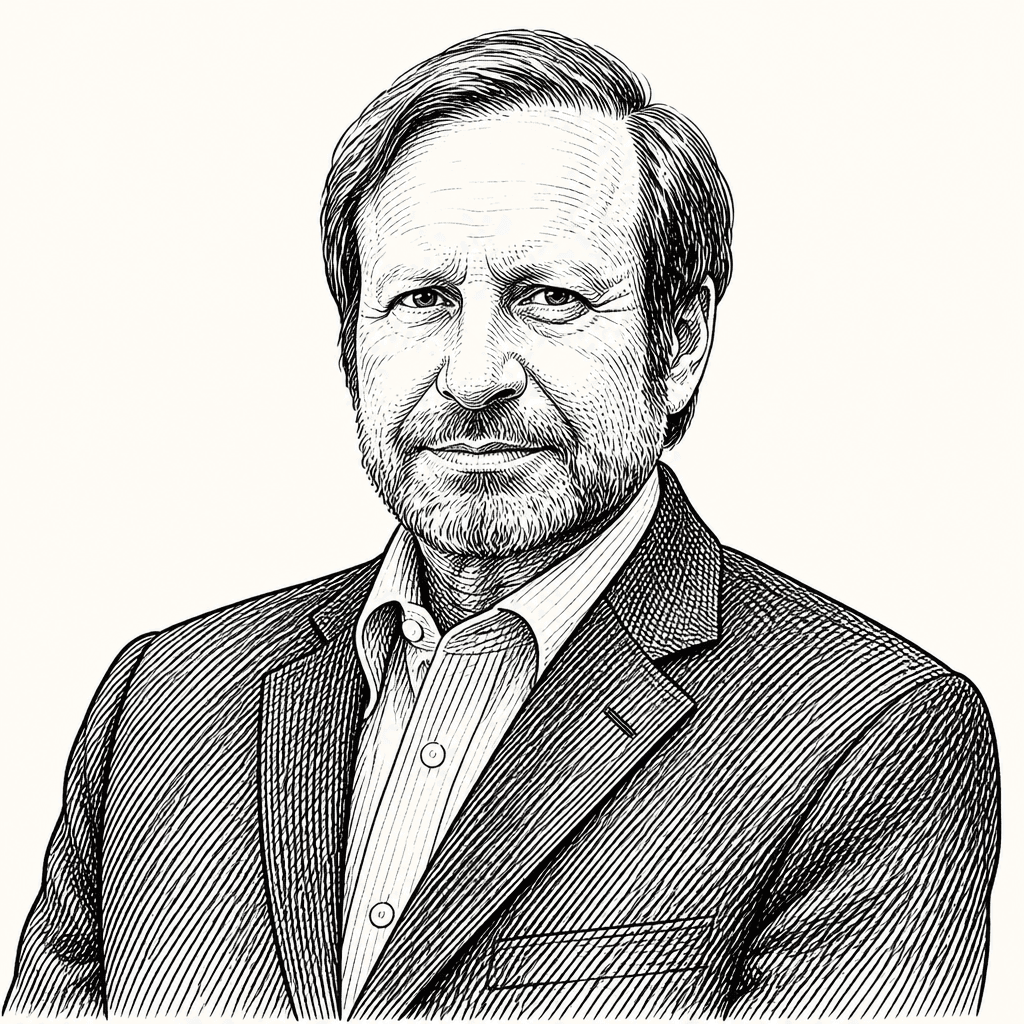
Steven Koonin
Steven Koonin is the Edward Teller Senior Fellow at Stanford University’s Hoover Institution, where he focuses on climate change, energy policy, and science and technology. He previously served as Under Secretary for Science at the U.S. Department of Energy and was a professor at New York University. His work on energy strategy and data-center electricity demand connects him to discussions of AI infrastructure.
Rising Energy Demand Makes Reliability Central to Climate Policy
Steven Koonin argues that rising energy demand makes reliability and affordability essential tests of climate policy, and that trying to decarbonize too quickly can create risks of its own. In his remarks on energy realism, he says wind and solar cannot alone guarantee power through prolonged periods of low output, and calls for faster construction, sustained research and development, and nuclear power at scale. His case is for reducing emissions while being candid about costs, technical limits and the time needed to build.
Tariffs Are a Weak Climate Tool Without International Coordination
At a Hoover Institution panel on tariffs, trade and the environment, economists Joseph Shapiro, Arik Levinson and John Cochrane argued over when trade policy can legitimately serve climate policy. Shapiro made the case that tariffs may help enforce international climate coordination in a world without a global carbon regulator, while Levinson warned that much of the case for environmental tariffs rests on overstated claims about outsourced pollution and becomes especially weak when applied to clean technologies. Cochrane pressed the standard economist alternative: price carbon, adjust at the border, and avoid using climate as cover for industrial policy.
Climate Policy Is Shifting From Net-Zero Mandates to Market-Led Adaptation
At a Hoover Institution session on climate policy, Steven Koonin argued that the net-zero mitigation agenda has failed to cut global fossil-fuel dependence and has overstated the evidence for catastrophe. Koonin, Matthew Kahn, Terry Anderson and other participants made the case for shifting attention toward adaptation: local, incremental responses shaped by insurance, real estate, migration, finance and property rights. Their shared claim was not that climate change is unreal, but that better information and market prices may guide resilience more effectively than mandates, subsidies and apocalyptic politics.