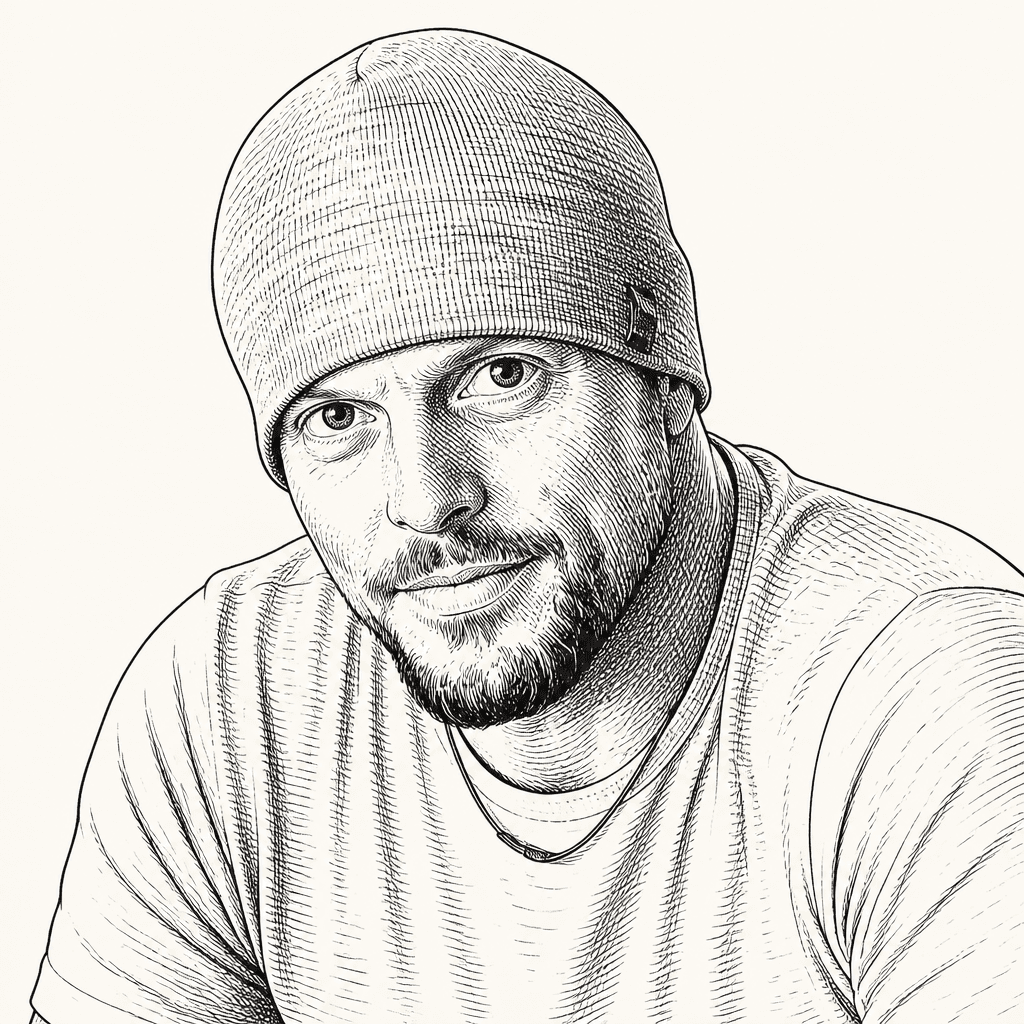
Tim Ferriss
Host of The Tim Ferriss Show, bestselling author, entrepreneur, and early-stage investor. He interviewed Tania de Jong about the campaign that enabled prescription psychedelic-assisted therapies in Australia.
Australia Opened a Restricted Prescribing Pathway for MDMA and Psilocybin
Mind Medicine Australia co-founder Tania de Jong argues that Australia’s 2023 decision to permit tightly controlled prescribing of MDMA for PTSD and psilocybin for treatment-resistant depression was won not by a single regulatory application, but by building the clinical, political and public infrastructure around it. Her account is a procedural one: revise rejected submissions against regulators’ objections, mobilize patients and clinicians, recruit scientific allies, train a workforce before approval and prepare systems for data collection and payment. The result remains a restricted psychiatric pathway, not broad legalization—and its durability now depends on whether access can expand without compromising supervision or affordability.
Mentava Targets Eager Preschoolers With Readiness-Based Reading Instruction
Mentava founder Niels Hoven argues that young children who are ready to learn should not be held to an age-based educational pace, and that well-designed software can help preschoolers acquire reading skills independently. In a working session with Tim Ferriss, Hoven describes the company’s phonics-based program and its challenge in selling an advantage parents cannot easily inspect before a trial. Ferriss argues that Mentava should lead with concrete parent results, clarify readiness and fit, and treat its $500 monthly price as qualification rather than obscure it.
Clinical Support, Not Recreation, Changed Huberman’s View of Psychedelics
Stanford neuroscientist Andrew Huberman says his view of psychedelics changed not because he became an advocate, but because clinically supported sessions gave him access to psychological material he had not been able to reach through therapy, journaling, or the drugs separately. He argues that MDMA and psilocybin served different roles in that work—one making difficult emotions bearable, the other exposing patterns and absences—and that their value depended on trained guidance and follow-through in ordinary life.
A Recovery-Led Training Week Built Around Hard Compound Work
Stanford neuroscientist Andrew Huberman argues that his six-workout routine is governed by recovery rather than a fixed weekly calendar: hard, low-volume resistance sessions are followed by rest or conditioning according to how much fatigue they create. He pairs sets taken to failure with compound lifts, uses high-intensity cardio that can be repeated without undue injury risk, and reserves a final day for slower outdoor movement. The specific machines and exercises are personal choices, he says; the underlying structure is recovery-led sequencing.
Peptide Hype Outruns Evidence, Dosing Knowledge, and Product Quality
Stanford neuroscientist Andrew Huberman argues that peptides should be judged by dose, evidence and sourcing rather than by their status as naturally occurring molecules. He distinguishes GLP-based weight-loss drugs, which he says have powerful effects and meaningful trade-offs, from growth-hormone secretagogues that can shift hormone measurements without delivering expected gains in strength or recovery. BPC-157, meanwhile, has promising animal data but no published human trial, he says, making gray-market use particularly difficult to justify.
Durable Agency Depends on Options, Attention, Relationships, and Exercise
Tim Ferriss argues that rapid technological change and personal uncertainty call less for constant reinvention than for durable agency: expanding one’s options, testing assumptions with reversible experiments, and protecting attention, relationships, and physical capacity. In this Q&A, the author and investor identifies learning, communication, negotiation, and close in-person relationships as skills that remain valuable alongside AI, while making the case that sustainable work and health depend on repeatable practices rather than maximal optimization.
Health Protocols Should Start With Adaptations, Not Routines
Stanford neuroscientist Andrew Huberman argues that health protocols are useful only when they are tied to a defined biological or behavioral aim, rather than copied as fixed routines. Across training, psychedelics, peptides and emerging health technology, he distinguishes between tools that may create conditions for change and the directed practice, monitoring and recovery needed to make that change durable. His broader case is for adapting evidence and interventions to individual circumstances without treating novelty, personal experience or the label “natural” as proof of safety or value.
A Total Loss Taught Guy Oseary to Build Survivable Bets
Guy Oseary argues that his first major investment taught him to separate identifying a promising opportunity from structuring a bet that can withstand bad timing. After putting virtually all his capital into Idealab before the dot-com crash, he returned to investing through Vita Coco, where he paired a conviction about coconut water’s emerging audience with a role for his own network in expanding the brand’s reach.
Socialism’s Moral Promise Masks Corruption and Stagnation
Max Levchin, the Affirm chief executive and PayPal co-founder who grew up in the Soviet Union, argues that socialism’s appeal lies in a morally attractive promise of fairness and mutual obligation. His warning is that the promise depends on centralized redistribution, which he says concentrates power, invites graft, and removes the competitive pressure that drives improvement. Levchin’s alternative is not indifference to hardship, but a more humane capitalism built around safety nets, philanthropy, and products designed to avoid exploiting consumers.
Coca’s Defenders Say Prohibition Mistook a Medicinal Leaf for Cocaine
In a Tim Ferriss Show conversation, integrative medicine physician Andrew Weil and anthropologist Wade Davis argue that coca leaf has been wrongly collapsed into cocaine in medicine, law and public understanding. Weil presents coca as a case study in the difference between whole plants and isolated compounds, with suggestive but under-researched therapeutic uses; Davis argues its prohibition reflects a racially charged campaign against Indigenous culture as much as concern over cocaine trafficking. Both make the case for renewed research, legal reconsideration and a licit market for the leaf.
Affirm’s Founder Says Consumer Finance Should Not Profit From Confusion
Max Levchin, the PayPal co-founder and Affirm chief executive, tells Tim Ferriss that his career has been shaped by a preference for confronting constraints directly rather than explaining them away. Across PayPal, his childhood in the Soviet Union, and Affirm’s design, Levchin argues that technically elegant systems fail when they ignore human behavior, bad incentives, or user experience. His case is that better companies and decisions come from making the real trade-offs visible, whether in leadership, consumer credit, AI commerce, or personal discipline.
Genetic Medicine’s Bottleneck Has Shifted From Discovery to Delivery
Jake Becraft, CEO and co-founder of Strand Therapeutics, argues in a Tim Ferriss Founder Kitchen conversation that genetic medicine’s central bottleneck is no longer knowing what to fix, but delivering therapeutic instructions to the right cells safely, specifically, and at scale. He presents Strand’s cancer work as an early proof point for a broader platform strategy, while warning that U.S. biotech financing, clinical-trial regulation, and manufacturing infrastructure are still built for single assets rather than compounding medicine-building systems. Becraft’s case is that without faster first-in-human trials and better delivery infrastructure, many next-generation therapies will remain in labs, move overseas, or reach too few patients.
The AI Era Tests Which Human Frictions Are Worth Keeping
Tim Ferriss, Nirav Savjani, George Mack and Chris Williamson use a wide-ranging “Rabbit Hole” conversation to argue that the AI era’s central problem is not raw intelligence but judgment about what to retain, remove and resist. Across memory, ambient AI, future interfaces, neuromodulation, religion and consumer convenience, they return to the same claim: systems and societies that eliminate friction can also weaken attention, meaning and value. The discussion treats forgetting, restraint and selective resistance as human advantages that technology will have to learn rather than merely overcome.
AI Photo Analysis Is Moving From Skin Care to Cosmetic Advice
George Mack, Nirav Savjani, Tim Ferriss and Chris Williamson argue that image-capable AI is moving from practical skin-care triage into cosmetic judgment. Mack says Gemini identified a fungal skin treatment that years of doctors and lifestyle changes had missed; Savjani says the same photo-upload pattern is now driving looksmaxing tools that recommend facial changes, procedures and appearance edits. The discussion turns on a boundary the speakers see becoming harder to police: when AI advises what to do to a face, it can also normalize a version of that face that no longer matches reality.
AI Startups Are Selling Labor, Not Software Seats
Elad Gil argues that generative AI is changing the basic unit of enterprise technology from software seats to “human labor equivalents” — work product, labor hours and cognition that buyers can purchase directly. In a Tim Ferriss interview, the investor says that shift is reopening markets that once looked structurally unattractive, from legal software to other white-collar categories, because AI is giving companies something materially different to sell. Gil’s broader case is that this is a rare consensus moment: buyer openness is high, language models plug into existing commercial workflows, and weak growth from an AI company is therefore a sign that something is wrong.
Virta Health Argues Type 2 Diabetes Can Be Reversed at Scale
Sami Inkinen, the founder of Virta Health and former Trulia chief executive, argues that type 2 diabetes and related metabolic disease are not failures of willpower but conditions driven by a food environment and care model that manage decline rather than reverse it. In a conversation with Tim Ferriss, Inkinen makes the case for treating individualized nutrition as a supervised medical therapy, supported by remote monitoring, coaching, physicians, and data, while using drugs such as GLP-1s when appropriate rather than making them the whole answer.
Cathy Lanier’s Harassment Complaint Was Sustained, Then Killed by Procedure
Cathy Lanier, the NFL’s chief security officer and former Washington, D.C., police chief, recounts filing a sexual harassment complaint as a young Metropolitan Police Department sergeant after a lieutenant repeatedly put his hands on her and retaliated when she objected. In a Tim Ferriss interview, Lanier argues that the formal process sustained her complaint but failed to protect her: confidentiality broke, the case died on a missed deadline, and she was warned the complaint could cap her career.
A Cerebral Palsy Coaching Method Seeks a 25-Person Replication Test
Weightlifting coach Jerzy Gregorek uses Tae-Jin Park’s case to argue that some people with cerebral palsy may have more capacity for improvement than their care environments assume. In a Tim Ferriss interview, Gregorek describes Tae-Jin’s five-year progression from severe physical dependence, limited conversation, and basic numeracy to independent living, community college, and measurable gains in strength and movement. He is asking researchers and clinicians to test whether the method behind that change — micro-progressive training across strength, math, language, philosophy, belief, and daily independence — can be documented and replicated beyond his own coaching.
Progressive Strength Training Expanded Tae Jin Park’s Independence With Cerebral Palsy
Jeff Wolfe’s documentary Prisoner No More follows Tae Jin Park, who was diagnosed with cerebral palsy, and the years of training he undertook with Olympic weightlifting coach Jerzy Gregorek. The film’s central case, made through Gregorek, Park, his family and a clinical voice, is that Park’s limits were not fixed by diagnosis alone: progressive strength training, higher expectations and reduced dependence helped expand his movement, attention, speech, independence and access to college.
Longevity Stack Stays Conservative as Rapamycin and Bioelectric Medicine Remain Watchlist Items
Elad Gil describes a longevity regimen built less around biohacking novelty than around sleep, exercise, diet, and a narrow supplement base. In a conversation with Tim Ferriss, Gil argues for waiting on more powerful interventions until the evidence and drugs improve, while Ferriss applies a similar caution under the heuristic of “no biological free lunch.” The discussion treats rapamycin, ketones, ibogaine, anesthesia, neurosensory aging, and bioelectric medicine as watchlist items rather than settled parts of a personal stack.
Mount Pleasant Showed How Language Gaps Can Turn Policing Into Crisis
Cathy Lanier, the former Washington, D.C., police chief and current NFL chief security officer, uses her first days as a rookie officer during the 1991 Mount Pleasant riots to argue that policing fails when it substitutes force for understanding. In her account, the crisis grew from a language gap, mistrust, and a department unable to communicate with the community it was policing. The lesson she says shaped her career was operational rather than sentimental: officers have to know the people in front of them and solve the real problem, not merely impose control.
Most AI Startups Should Consider Selling Within 18 Months
Elad Gil, the investor and former operating executive, argues that many AI companies should consider selling within the next 12 to 18 months, not because AI is overhyped but because most companies formed in major technology cycles do not survive them. In a conversation with Tim Ferriss, Gil says the exceptions are the few durable winners — likely including leading foundation-model labs and deeply embedded application companies — while many others may be nearing their best exit window before growth slows, models commoditize their products, or larger competitors move in.
Cathy Lanier Entered Policing to Support Her Son and Finish School
Cathy Lanier, now the NFL’s chief security officer and a former Washington, D.C., police chief, tells Tim Ferriss that her path into law enforcement began less as a calling than as a way to support her son and keep going to school. Pregnant at 14, married at 15 and later separated, Lanier says a GED passed by one point, two jobs and tuition reimbursement from the Metropolitan Police Department became the practical steps that moved her from survival to a career in command.