Most AI Startups Should Consider Selling Within 18 Months

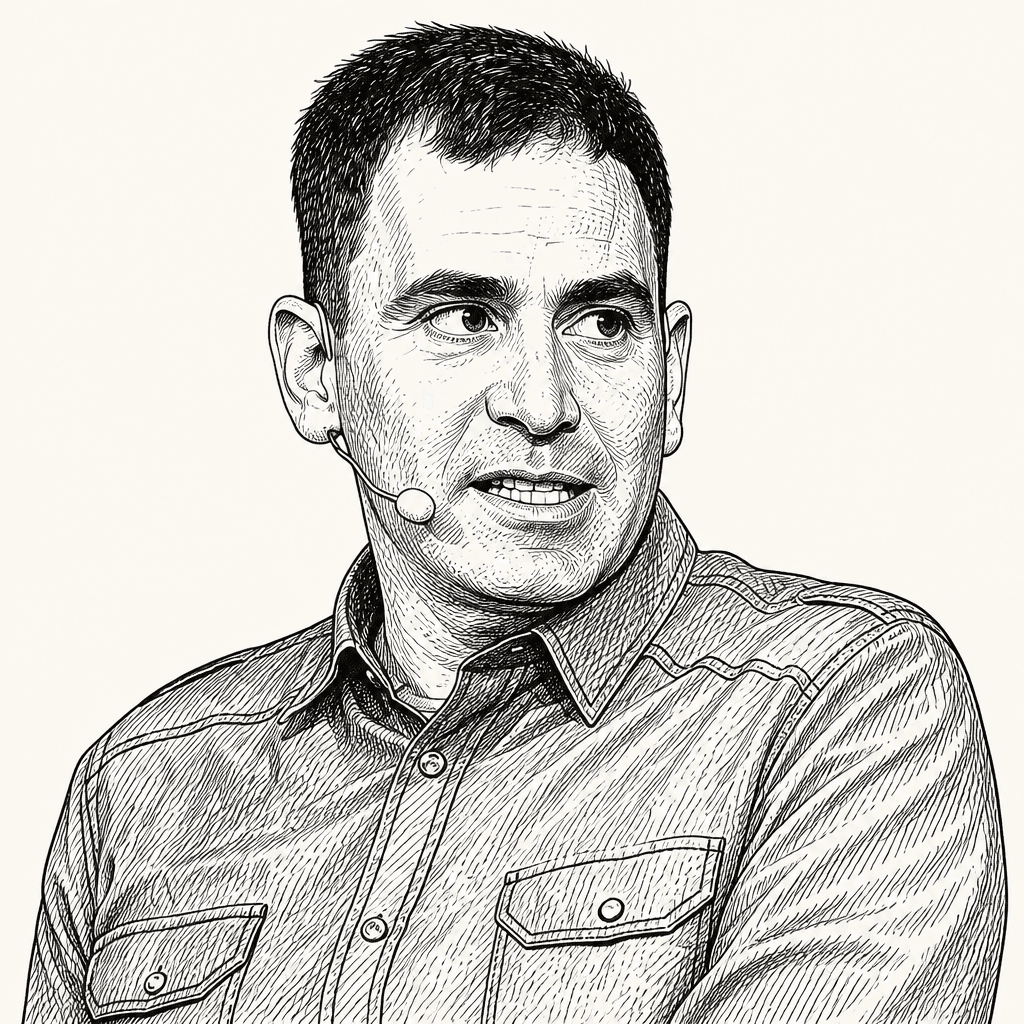
Elad Gil, the investor and former operating executive, argues that many AI companies should consider selling within the next 12 to 18 months, not because AI is overhyped but because most companies formed in major technology cycles do not survive them. In a conversation with Tim Ferriss, Gil says the exceptions are the few durable winners — likely including leading foundation-model labs and deeply embedded application companies — while many others may be nearing their best exit window before growth slows, models commoditize their products, or larger competitors move in.
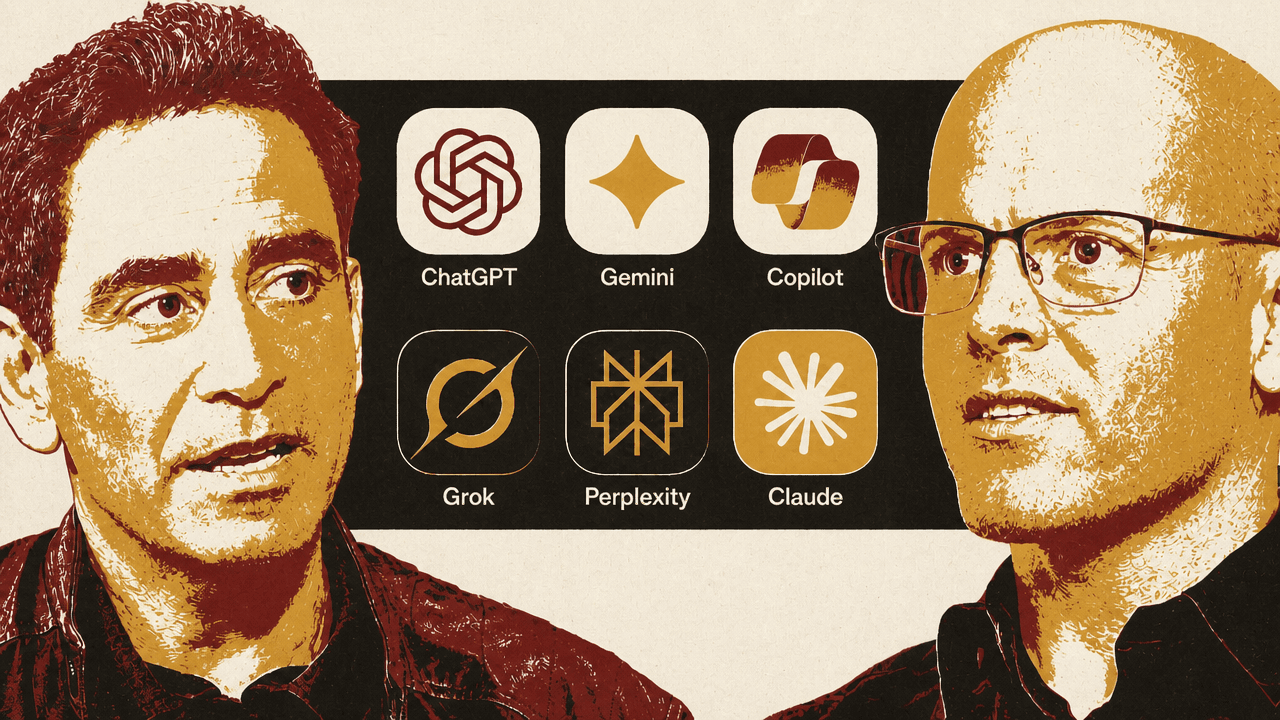
The exit window may arrive before the company looks weak
Elad Gil thinks many successful AI founders should ask a blunt question while the market still looks favorable: is this the best moment to sell?
The prompt came from Gil’s own writing on Elad Blog. A highlighted passage shown from the post said: “Most AI companies should consider exiting in the next 12-18 months.” It continued that founders running successful AI companies should take “a cold hard look” at exiting during that window because it “may be a value maximizing moment.” The same passage made the exception explicit: a handful of companies, including OpenAI and Anthropic, “should absolutely not exit,” but many others should consider selling “while everything is on the upswing.”
Gil’s warning is not about AI disappointing as a technology. He described himself as “incredibly bullish” on AI and the transformation it enables. His argument is about company-level survival inside a technology cycle.
His precedent is broad: in every major technology cycle, he said, “90, 95, 99%” of companies go bust. He reached back to the early automotive industry, when Detroit had dozens of car companies and hundreds of suppliers before consolidating into a much smaller set of durable manufacturers. He then used the internet bubble as the closer analogy. In 1999, he said, roughly 450 companies went public; another roughly 450 went public in the first few months of 2000; and perhaps another 500 to 1,000 had gone public in the preceding years. On his estimate, 1,500 to 2,000 companies “kind of made it” to the public markets.
Of those, Gil said, maybe a dozen or two survived.
The lesson he draws for AI is that most companies organized around the cycle will not endure. Some may be acquired “for a little bit.” Some may be overtaken by market changes, commoditized by improving models, competed against directly by labs, or made obsolete as the technology shifts.
That is why Gil frames the decision as an assessment of durability. Are you one of the dozen or two companies that will matter a decade from now? Or are you nearing the period when the company is important enough, growing enough, and strategically attractive enough to command its best price before headwinds arrive?
Gil described that peak as a window, often six to 12 months, when “everything’s working.” The warning can show up in the “second derivative of growth”: growth may still be positive, but the rate of acceleration starts to plateau. At that point, in his view, a founder is facing a fork. Either the company has another leg up, or it should consider selling.
If you’re one of them, you should never, ever, ever sell.
The caveat matters. Gil is not advising all AI companies to exit. He is saying most founders need to decide whether they are really in the durable handful before the market decides for them.
Foundation models look more like an oligopoly than a monopoly
At the foundation-model layer, Elad Gil said the core labs — naming OpenAI, Anthropic, and Google, “barring some accident or disaster or some blow-up” — appear to be in a durable position.
Tim Ferriss had asked how one might identify the AI equivalents of Google or Amazon amid a flood of companies, and whether the market becomes winner-take-all, an oligopoly, or something else. Gil’s answer was clearest at the foundation layer: he had written a post roughly three years earlier predicting that foundation-model and API companies would “probably be an oligopoly” with a handful of players aligned with the clouds.


The screenshot shown from Elad Blog identified that post as “AI Platforms, Markets, & Open Source,” dated February 15, 2023. Its subtitle asked: “What does the future market structure look like for AI foundation and API companies? How does OSS play a role in a world of ever scaling models?” Gil said his prediction is roughly what happened, while noting that Meta, xAI, and other players now complicate the picture.
His reason for expecting oligopoly rather than monopoly is straightforward: so far, no one model provider has pulled so far ahead in capability that it becomes the default for everyone. He allowed that this could happen. But absent a decisive capability gap, he sees no structural reason the market must collapse to one winner. Compute constraints may also limit any single player’s ability to run away quickly, or at least create an asymptote in the short run.
That analysis applies to the foundation layer. Gil treated application companies differently. There, durability depends less on being “an AI company” and more on whether the business becomes deeply useful, embedded, and hard to replace as models improve.
At the application layer, durability is workflow depth, not just model quality
Elad Gil named examples of AI application companies by vertical: Harvey in legal, Abridge in health, Decagon and Sierra in customer success. The question for these businesses is not merely whether they use strong models. It is whether improving underlying models make their products or services dramatically better for customers in a way that customers still want to keep using them.
Gil offered several lenses for judging defensibility.
First: if the underlying model gets better, does the application become more valuable to customers? Or does model progress make the application easier for a lab or competitor to reproduce?
Second: how deep and broad is the product? Gil asked whether the company is building multiple products, integrating them into a cohesive whole, and becoming built directly into a customer’s processes. In his view, the practical barrier to AI adoption inside companies is often not model quality. It is change management: how much the customer must alter workflows and established ways of working. If an AI application is embedded deeply enough into those workflows and into how people actually do business, that can become durable.
That is a narrower claim than ordinary enterprise stickiness. Gil’s point is not simply that software is hard to rip out once installed. It is that AI adoption often requires customers to change how work is routed, performed, reviewed, and integrated with other systems. A company that becomes part of those processes may gain durability because replacing it would mean changing the operating pattern again, not merely swapping one tool for another.
Third: proprietary data can matter, but not as a generic magic moat. Gil said data moats are “in general” overstated. In some cases, particularly when the product becomes a system of record, capturing, storing, and using proprietary data can be useful.
This is why Gil’s exit advice is selective. An application company may be growing quickly and still lack durable advantage if its function can be copied as models improve. Another may be harder to dislodge because it is built into the customer’s operating fabric.
Large buyers can pay prices that earlier cycles could not support
A founder who decides the company is not in the durable handful still faces a practical question: who buys it, especially if a lab could build similar functionality rather than acquire it?
Elad Gil argued that the buyer universe is broader than the AI labs. The major change, in his view, is the scale of corporate market capitalizations. Ten or 15 years ago, he said, the largest market capitalization in the world was “like 300 billion,” and the largest technology market cap was, by his rough recollection, “200-ish or something.” Now, he said, there are more companies worth between $100 billion and several trillion dollars.
That changes acquisition math. A company worth $3 trillion can, in Gil’s example, dilute by 1% and pay $30 billion for an asset. That buying power is “insane” and “unprecedented,” and it makes very large acquisitions more feasible than they would have been in earlier cycles.
The likely buyers are not only OpenAI-style labs. Gil named big labs, hyperscalers, and giant technology companies, including Apple, Amazon, Google, Oracle, Samsung, Tesla, and SpaceX. He also pointed to companies that care deeply about a vertical: for legal or accounting-related AI, he mentioned Thomson Reuters. Other large companies may be natural buyers in their own domains, including Snowflake, Databricks, Stripe, or Coinbase for financial services.
Gil also argued that one exit path is underused: merging with a competitor. If two private companies are neck and neck, competing on every deal, and destroying pricing for each other, a merger may serve the primary objective better than continued warfare. He invoked X.com and PayPal as the canonical example: Elon Musk and Peter Thiel were running competing companies in the 1990s and combined them.
Ferriss put the logic plainly: if you are the only two people doing the thing, why fight?
Gil made the strategic point without claiming certainty in every case. He mentioned Uber and Lyft as another example where a combination was rumored to have almost happened, while acknowledging he did not know the exact math. His broader point was that if the purpose is to win the market, and both companies are already fighting large incumbents, continued competition may simply make the fight harder.