A Total Loss Taught Guy Oseary to Build Survivable Bets

Guy Oseary argues that his first major investment taught him to separate identifying a promising opportunity from structuring a bet that can withstand bad timing. After putting virtually all his capital into Idealab before the dot-com crash, he returned to investing through Vita Coco, where he paired a conviction about coconut water’s emerging audience with a role for his own network in expanding the brand’s reach.
A good instinct did not make the first bet survivable
Guy Oseary traces his entry into investing to a chance encounter with an idea that made the business legible to him: Bill Gross’s Idealab. After reading about EarthLink founder Sky Dayton, Oseary sought Dayton out, who introduced him to Gross. Idealab’s incubator model immediately felt familiar. It had many companies in motion at once, much as a record label had multiple artists and projects, with people moving among them to help where they could.
Oseary worked with Idealab for about a year before deciding he wanted to invest. Gross had planned to give him an interest in recognition of the work he had done, Oseary says, but he asked to put in substantially more capital. Gross agreed.
The timing was disastrous. Oseary says he put in every dollar he had, plus capital he says he did not have, shortly before the bubble burst. He had identified three planned opportunities for his first investments: Idealab, Research in Motion—the BlackBerry company—and Vitaminwater. But the Idealab loss was severe enough that he never completed the proposed deal with Jim Balsillie at Research in Motion or the Vitaminwater investment.
I learned about diversification. I didn’t diversify, put the majority of my money in one thing. And I paid the price for it.
Oseary does not present the outcome as an indictment of Gross or Idealab. Gross, he says, built an “incredible company,” and Oseary maintains that his judgment about the three opportunities was not entirely wrong: the two investments he did not make would, in his view, have been major successes.
The loss instead separated recognizing a promising business from constructing an investment that could survive bad timing. For the next two years, Oseary says, he thought about it roughly 15 times a day and found himself blaming Sky Dayton, the magazine article that prompted his curiosity, and people who had only been trying to help.
That aftermath mattered because it threatened to turn a costly decision into a permanent retreat. After three consecutive Madonna tours, Oseary says he had rebuilt enough money to live and expected time away from touring. He returned to investing because he still believed he could identify ideas and talent; this time, he was willing to test that belief again.
| Decision | What happened |
|---|---|
| Opportunity selection | Oseary identified Idealab, Research in Motion, and Vitaminwater as planned opportunities. |
| Position sizing | He says he put all his available money, plus capital he says he did not have, into Idealab. |
| Timing | The bubble burst soon after his Idealab investment. |
| Result | He lost the Idealab capital and did not complete the planned Research in Motion or Vitaminwater deals. |
Vita Coco paired a consumer signal with an operating role
Oseary’s abandoned BlackBerry deal illustrates the practical contribution he believed he could make beyond capital. He says he bought 400 BlackBerrys and distributed them across Hollywood after encountering the devices through Bill Gross. That distribution effort led to a proposed advisory deal with Research in Motion: Oseary saw himself as someone who had put the product into an influential network early. The deal never closed.
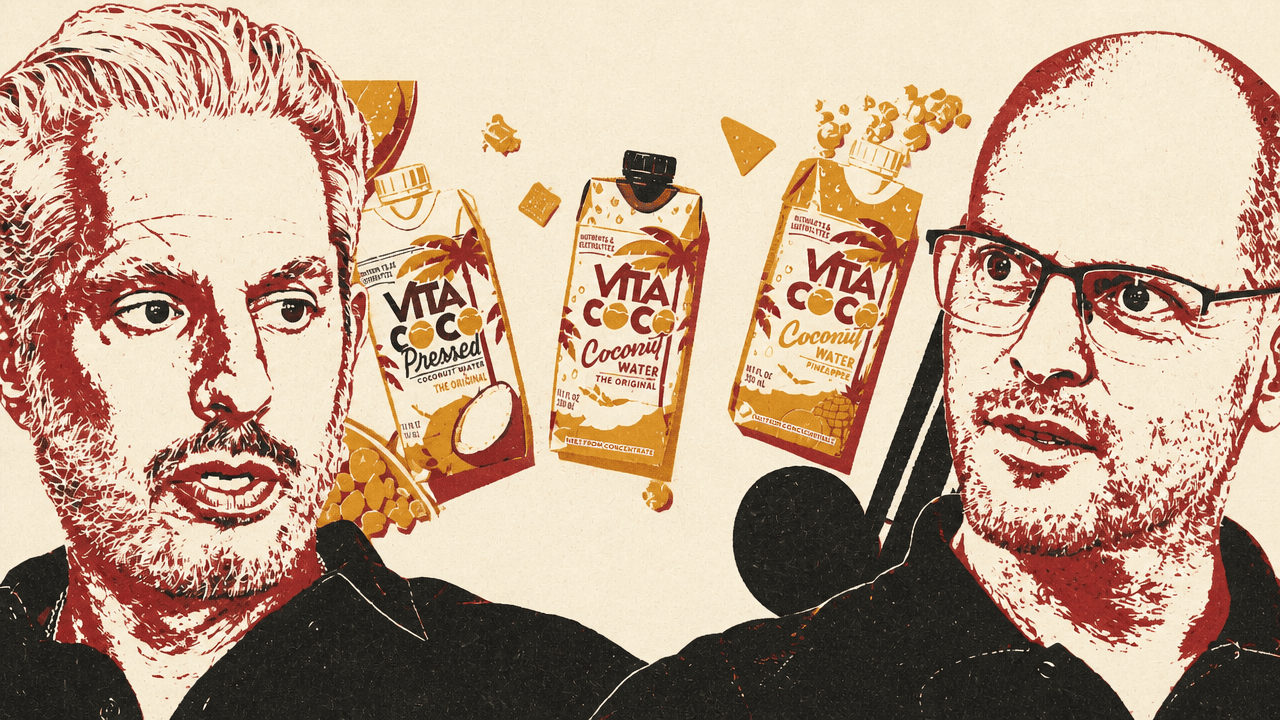
His return investment, Vita Coco, began with a comparable consumer signal. His family already drank coconut water—his wife is Brazilian, and he recalls his son’s early use of the phrase “agua de coco.” More important to his investment thesis, he had watched Madonna’s trainer search for fresh coconuts in each tour market. He began noticing that other health-conscious people were seeking coconut water as well.
At the time, Oseary estimates that all U.S. coconut-water businesses combined were only a $5 million to $7 million market. A New York Post article about Gisele drinking from a coconut caught his attention strongly enough that he cut it out and left it on his desk as a prompt to understand the category. When Seth Rodsky called to tell him about Vita Coco, the connection felt immediate.
I started to see, again, back to pattern recognition, I started to see this thing.
Oseary flew to meet Vita Coco co-founder Mike Kirban. He recalls the company being valued at roughly $35 million and says he responded without prolonged deliberation: he wanted in, stated what he could do, and moved quickly. He brought Madonna, Demi Moore, Matthew McConaughey, Anthony Kiedis, and others into the investment, describing them as health-oriented people who already drank coconut water. His objective was to use that group to help “blow this thing up.”
Tim Ferriss asks how Oseary approached the founder meeting. Oseary describes moving quickly once he believed he had identified both the category signal and a role he could play: “I’m all in, let’s go, I want to do this, here’s what I can do.” His relationships, in this account, were more than an endorsement pool. He treated the people he brought in as health-oriented coconut-water users who could help extend the product’s reach.
Vita Coco is now public, Oseary says. He offers two different estimates of its current size: in one answer, roughly a $4 billion market capitalization; in another, that it went public at around $2 billion and is now “at five.” He credits Kirban with having done an incredible job building the company.
The comparison with Idealab is not that Vita Coco eliminated uncertainty or made instinct unnecessary. Oseary describes both decisions as products of conviction. But his first loss separated the quality of an opportunity from the construction of an investment; Vita Coco gave him a chance to act on a category signal while contributing a distribution network he believed fit the product.