Affirm’s Founder Says Consumer Finance Should Not Profit From Confusion
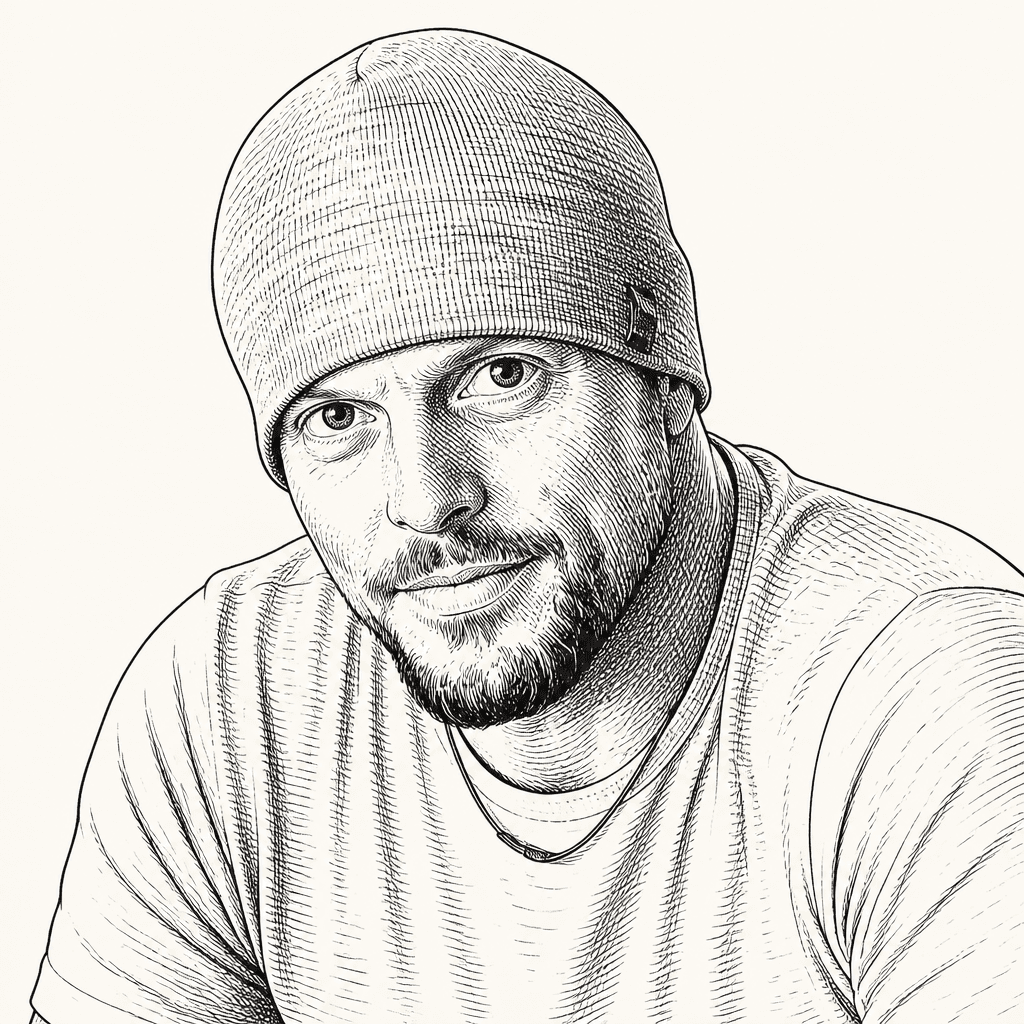
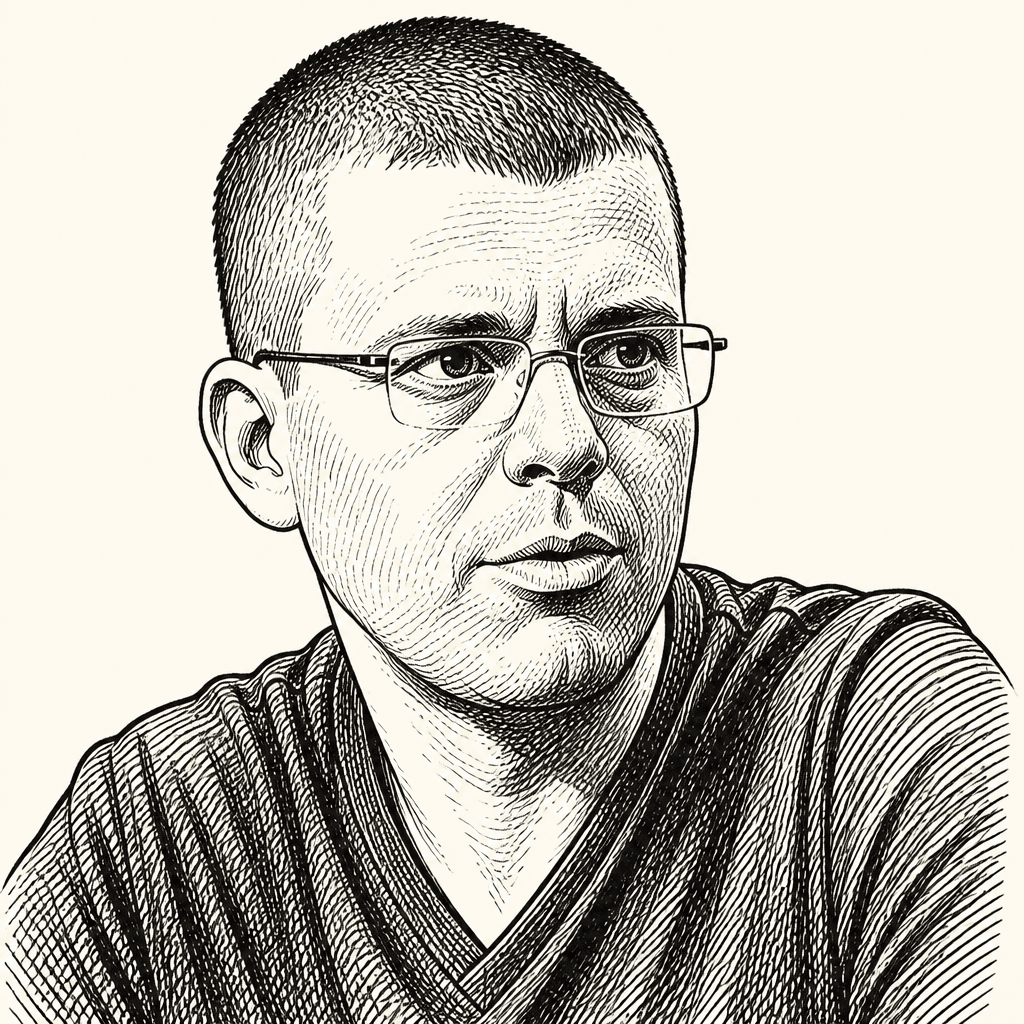
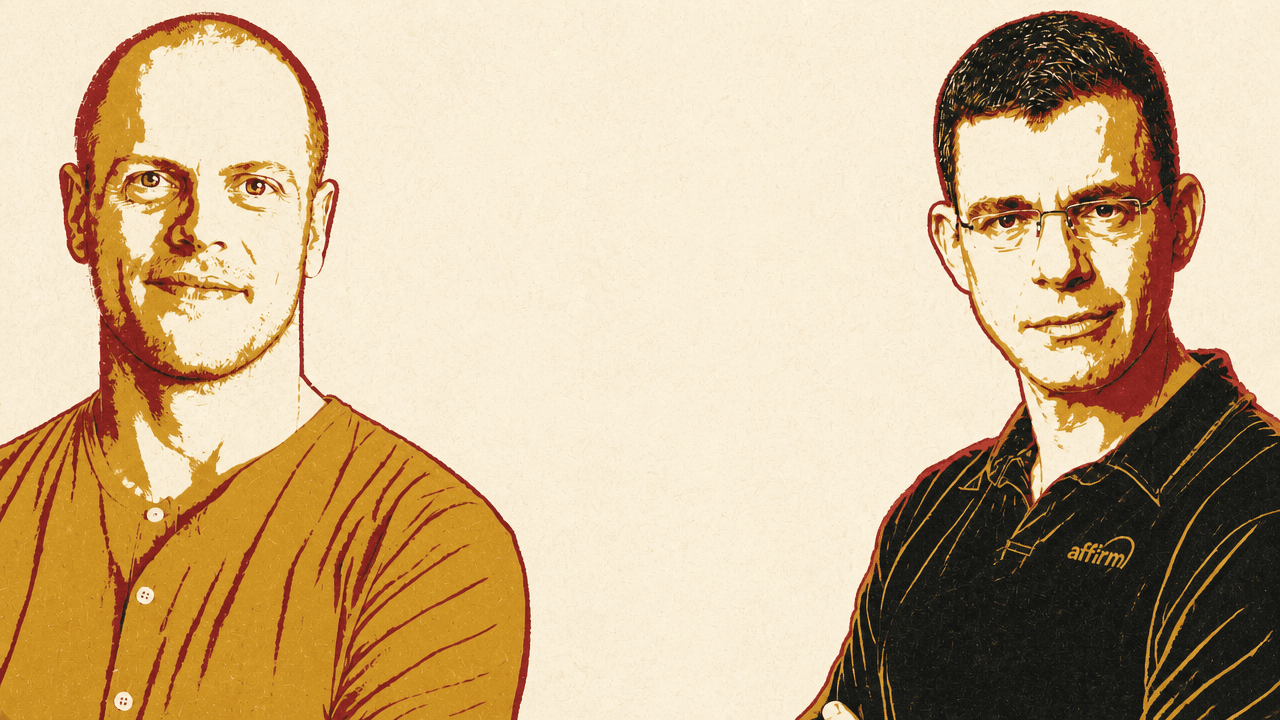
Max Levchin, the PayPal co-founder and Affirm chief executive, tells Tim Ferriss that his career has been shaped by a preference for confronting constraints directly rather than explaining them away. Across PayPal, his childhood in the Soviet Union, and Affirm’s design, Levchin argues that technically elegant systems fail when they ignore human behavior, bad incentives, or user experience. His case is that better companies and decisions come from making the real trade-offs visible, whether in leadership, consumer credit, AI commerce, or personal discipline.
The decision rule is to stop negotiating with what you already know
Max Levchin has kept returning to a line from Ronin: “Whenever there is any doubt, there is no doubt.” Tim Ferriss said Levchin’s use of the line in Tribe of Mentors had become one of the most practically useful answers in the book for him, especially in hiring and co-founder decisions.
Levchin’s reading of the line is not that every hesitation is automatically truth. It is that, in consequential situations, people often already know the answer before they are willing to say it. The quote, as he interprets it, carries several layers at once: do not doubt yourself; stop delaying the decision; and, if the necessary action is unpleasant, delay will not make it less necessary.
The version Ferriss found most useful was Levchin’s application to key people: “When you aren’t sure about a key employee or a co-founder, odds are exceedingly low your mind will be changed for the better.” Ferriss translated that into a warning against analytically persuading himself into something that “doesn’t feel right,” while still acknowledging that intuition sometimes deserves cross-examination.
Levchin connects the line to leadership because leadership repeatedly requires decisions that are both obvious and socially costly. A founder may need to fire a beloved employee, make an unpopular call, or persist through the period after a decision when the organization is angry or anxious. The danger is not merely indecision before the act; it is reversing yourself afterward because the pressure is uncomfortable.
That is why one of Levchin’s recommended leadership books is Edwin Friedman’s A Failure of Nerve. He described its central idea as the “differentiated leader”: someone who can tolerate the stress of disagreement without becoming either a tyrant or someone easily bowled over. The leader has to preserve humanity while not outsourcing conviction to the group’s immediate emotional reaction.
The same theme appears in his marriage advice. Levchin said the secret to his own marriage is that he is “still trying to impress this girl” every day. He described marriage as a kind of co-founding: two people are building a family, and the relationship can be studied with some of the same seriousness one brings to co-founder dynamics. In co-founding companies, some of his relationships were extraordinary and others failed; looking back, he believes the failure should not be reduced to one person’s blame, but examined as a relationship that fell apart.
When the subject turned to working with a spouse, Levchin’s first answer was half-joking — “You gotta marry right” — but his practical answer was about complementarity and fast conflict resolution. He and his wife, Nellie, have non-overlapping strengths: he is technical and drawn to the depths of technical problems; she has a strong finance background, understands business models, and, in his words, is “the philosopher of business these days.” She is also, he said, an “incredible empath,” while he is not. He will sometimes bring her a work situation and ask why a person is unhappy; she can explain the human dynamics better than he can.
That division matters because it keeps collaboration from becoming micromanagement. She does not ask him about his “token budget,” and he does not second-guess her hiring decisions. The danger in working with a spouse, as Levchin sees it, is overlapping in a way that compounds domestic irritation with professional resentment. One frustration becomes two: the person not only chews annoyingly but also checks your homework.
Levchin’s family motto, borrowed by his wife from somewhere else, is: “Don’t go to bed angry, stay up and fight.” They do not fight often, he said, but they try not to let things fester. In a marriage that also overlaps with professional work, unresolved conflict accumulates faster than it otherwise would. The remedy is directness before resentment compounds.
PayPal’s early lesson was that cryptography still needed a usable interface
The PayPal origin story Max Levchin tells begins with cryptography, but not with the triumphant premise that the technically correct system wins. He graduated from the University of Illinois in 1997 wanting to do research in cryptography, at a time when “crypto” still meant cryptography rather than cryptocurrency. He was interested in cryptographic currency systems and was drawn to David Chaum’s work on anonymizing signatures and DigiCash.
DigiCash, in Levchin’s telling, was the “granddaddy of all cryptocurrencies,” or at least one of the earliest serious attempts to create a real digital currency using cryptography. He believes it went bankrupt in the summer of 1998, the same year he moved to Silicon Valley. He attended what he called a “pouring one out on the curb” gathering for DigiCash, oddly held at a Stanford picnic area. An Investopedia page visible during the discussion described DigiCash as an early electronic money company founded by David Chaum in 1989 and a predecessor to modern cryptocurrencies.
The lesson Levchin took from that event was not the lesson many of the crypto people around him seemed to take. Their explanation was that the world was not ready. Digital currency was obviously right, they thought, but people did not yet understand it. Levchin’s more prosaic reaction was that the user interface was bad. If paying for a cup of coffee required slow RSA computation on a mediocre laptop, the problem was not mass ignorance; the product was too hard and too slow.
That argument was not warmly received. In the cryptographic culture around DigiCash, non-repudiation and digital signatures were sacred; no amount of waiting was too long if the cryptography was correct. Levchin’s response was that, for a user, “I just want a cup of coffee.” That distinction — between the elegance of the technical primitive and the experience of the person trying to use it — is how he explained PayPal’s early advantage.
- 1997Levchin graduates from the University of Illinois, still intending to do cryptography research.
- Summer 1998DigiCash, which Levchin described as the granddaddy of cryptocurrencies, fails around the time he moves to Silicon Valley.
- Summer 1998Levchin meets Peter Thiel at Stanford, with Luke Nosek as the connection between them.
- PayPal’s early yearsLevchin presents PayPal at the Financial Cryptography conference and argues that DigiCash failed partly because the user experience was poor.
- While PayPal is being builtThe early team reads the first online pages of Neal Stephenson’s Cryptonomicon and feels as if the book is describing their work.
Within days of the DigiCash gathering, Levchin met Peter Thiel at Stanford, with Luke Nosek as the connective tissue between them. Levchin and Nosek had known each other from the University of Illinois and had worked on failed startups together. The origins of PayPal, Levchin said, were being made that summer while he was still attending scientific conferences.
One of those conferences was Financial Cryptography in Anguilla. Levchin said he is “99% confident whoever Satoshi is” was probably going to the same conference at the same time. That was his conjecture, not something he presented as established fact. He later presented PayPal there, arguing that the company had built something with a better user interface and that DigiCash had failed in part because its user experience was poor. Some in the audience booed or told him he did not understand the point. To Levchin, PayPal’s traction suggested that perhaps the dismissed user-interface point was exactly the point.
The strange parallel track was Neal Stephenson’s Cryptonomicon. As the earliest PayPal team was coding around the clock, Stephenson was publishing the first 100 pages online. Luke Nosek had remembered Cryptonomicon as required reading around the early team. Levchin said they read those pages during breaks and felt as if the book were describing them: digital currency using cryptography, DigiCash, bad user interfaces, and the need for something more usable. He remembered sitting next to early engineer Russ Simmons and wondering whether they were in a “brain in a vat experiment.” When the online pages ran out, the joke became: how would they know what to build next?
Science fiction, in Levchin’s account, was not decoration. Snow Crash shaped his software-engineering life in college. Cryptonomicon arrived as PayPal was being built and felt like a live mirror. Neuromancer was the first book he read after arriving in the United States. Six weeks after he left the Soviet Union in July 1991, the Soviet Union collapsed, leaving him with a passport from a country that no longer existed. He started public high school in Chicago looking for his people, found the nerds, and was handed a VHS of Akira and a copy of Neuromancer as initiation materials.
Levchin described Neuromancer as a dark “plug your brain in” future, while Snow Crash offered a more consumerist, satirical version of that technological future. Ferriss framed science fiction as a place to look not only for the future but for philosophy, citing William Gibson’s lines about the past becoming present and future, and the now-common formulation that the future is already here but unevenly distributed.
For Levchin, the PayPal-era lesson was not simply that digital money was inevitable. It was that even a technically powerful idea still needed a usable interface.
The critique of socialism comes from scarcity, access, and stagnation
The Master and Margarita is the Mikhail Bulgakov novel Max Levchin gives as a gift and keeps on hand for new friends. He called Bulgakov arguably the greatest Russian-language writer of the 20th century, while acknowledging the abundance of great Russian-language writers. He specifically recommended the Pevear and Volokhonsky translation as a canonical and excellent English version.
The novel, as Levchin described it, is set in early Soviet Moscow as the post-revolutionary system is slipping into socialist bureaucracy. The devil visits with a coterie of supernatural companions and wreaks havoc on the “socialist paradise.” It is also a book within a book: the Master has written a book about the last days of Christ, and those chapters are interspersed through Bulgakov’s novel. Levchin sees it as autobiographical in part because Bulgakov himself lived through the revolution, ran afoul of Stalin, was reportedly Stalin’s favorite author, and was persecuted.
What makes the book central for Levchin is its portrayal of Homo Sovieticus — what happens to the human mind under “rampant socialism.” He emphasized that, having spent 16 years in the Soviet system, he recognized both the tragedy and the absurd comedy. The insanity of living in a socialist paradise while not having enough to eat is, in his telling, part of what Bulgakov captures so well.
Ferriss raised the apparent attraction to socialism in the United States and elsewhere. Levchin said he is worried. The ideas of socialism, he said, sound amazing at first: solidarity, sharing, doing the right thing because it is right rather than financially rewarded, a worker’s paradise without greedy lenders, capitalists, or bankers. As a child in the Soviet Union, he was fed those ideas, and he understands why they appeal.
Levchin’s indictment is that the system requires structures that, in his view, fail because of human nature. His most vivid image from childhood is the government food store. Every store was government-owned, and the people behind the counters were fat while everyone he knew was skinny. The explanation, as he put it, was simple: the people with access to food were stealing it.
That example, for Levchin, scales into the whole redistribution problem. The socialist maxim — “from each according to their abilities, to each according to their need” — depends on someone fairly distributing the pooled product. But he argues that the people doing the redistribution keep a lot for themselves. Even if they begin honestly, he said, real power makes them corrupt.
The second failure Levchin identified is stagnation. Free markets, in his account, force competition: if someone can make and sell a product at a lower price, they can win business, creating pressure to lower costs, increase efficiency, and improve. Under central planning, the government determines how many widgets will be made and at what price. The pressure to improve disappears. The result, in his Soviet memory, was that nothing ever changed for the better; prices were mandated, and the phones still looked as if they were from the 1950s. When he moved to the United States and saw phones with buttons, he was amazed.
Levchin did not deny capitalism’s failures. He said capitalism can be profoundly unfair to individuals. Entrepreneurs experience that as failure; workers experience it as being laid off, sometimes catastrophically. Every disruptive change, from the industrial revolution to AI, puts someone on the receiving end of efficiency because their work, product, or idea is no longer needed. He understands why social safety nets and welfare are morally compelling: people do not want to see fellow humans starve or be left behind.
But he rejects concentrating redistribution in the hands of government as the solution. He said he has “lived to tell the tale” that it does not work. His preferred response includes philanthropy, which he thinks becomes more important as disruption increases. Though he is not especially outwardly religious, he has come to respect the philanthropic frameworks accumulated by organized religions over thousands of years.
His other answer is product design inside capitalism. He argues that some products have optimized for profit in ways that are detached from their societal ideal. Financial services, in his view, are full of examples where firms make money because customers do not understand the math or the fine print. Affirm, as he described it, is an attempt to build a pro-social financial product without abandoning capitalism.
I am to at least some extent embracing the ideas of pro-social product and engineering. I just choose to do it strictly through the lens of capitalism.
Affirm was designed against the incentives of revolving credit
The origin story Max Levchin gives for Affirm begins with a humiliating car purchase after PayPal went public. He and Luke Nosek flew to Los Angeles to buy matching hardtop convertible Mercedes models — not the same color, after some debate — and Levchin was trying to impress Nellie, then his girlfriend and later his wife.
The dealer approved Nosek’s auto loan and handed him the keys. Levchin, despite having just taken PayPal public and being financially secure, was told his credit was bad and he could not get the loan. He had to wire the full amount before the dealer closed for the day. The reason was mundane: as a young person, he had missed credit-card payments, and Nosek had known before he did that missed payments would follow him on his permanent record.
The experience stayed with him because the credit system did not reflect what seemed obvious to him: he had come to the United States as a teenager with no record and $600 for a family of five, earned a computer science degree, become highly employable, started companies, and achieved substantial wealth. Yet the credit score could not recognize that trajectory.
Years later, he sat down with another University of Illinois friend connected through Nosek and asked: what if they built a better credit score? As computer scientists with number-theory backgrounds, they built a score using public data and other “secret sauce.” Then they needed someone to lend against it. Bankers told him no one would lend using a score nobody else had used. Levchin’s entrepreneurial reaction was that if the obstacle was lending, he would lend.
That forced him to study how lending actually worked. The deeper he looked at credit cards, the more he concluded the system was broken and anti-customer. He pointed to revolving debt that can turn a $1,000 draw into a $3,000 debt a couple of years later without the borrower being able to explain how; 0% loans that can retroactively compound if a payment is short or late; and fine print designed around customer misunderstanding.
His broader description of the lending relationship is adversarial. A customer asks to borrow money; the lender says yes, while hoping the borrower does not fail completely but does take a very long time to repay. Longer repayment means more interest. Fine print can add economics the borrower does not notice. Levchin called it a strange branch of capitalism’s decision tree: an industry that reached efficiency in a bad direction.
Affirm’s product is his attempt to rewind to a better branching point. He describes it as buy now, pay later, a category he says Affirm “kind of invented” about 15 years ago. The phrasing matters: he also acknowledged logical and spiritual predecessors, while arguing that Affirm purified the model around no fees, no revolving balance, a simple schedule, and pre-priced transparency.
At checkout, the usual options are debit or credit. Debit gives discipline: if the money is not in the bank account, the purchase does not happen. Credit gives convenience, and for wealthier customers who pay off the balance monthly, it may provide float. But many Americans use credit cards by adding to revolving debt they do not fully understand and cannot easily map to a payoff date.
Affirm’s premise is a third way: pay over time with the transparency and responsibility of debit. Every transaction becomes a simple plan. The schedule is fixed. If interest applies, the customer sees exactly how many dollars of interest they will ever pay. The transaction does not revolve. If the customer is late, there are no late fees. The consequence is that Affirm may not lend again.
| Feature | Credit-card model Levchin criticized | Affirm model Levchin described |
|---|---|---|
| Repayment | Revolving balance can persist indefinitely | Fixed schedule for each transaction |
| Interest | Can compound in ways customers may not understand | Pre-priced; total dollar interest disclosed upfront |
| Late payments | Late fees are a profit source | No late fees |
| Customer knowledge | Fine print and complexity can obscure the cost | Customer sees the schedule and payoff date |
| Lender incentive | Long repayment can increase profits | Late or slow repayment may reduce future access |
Affirm’s own checkout and app language, as shown on screen, matched the product claim Levchin kept returning to. One Affirm homepage screen read: “Buy now, pay later without the fees.” Another page described choosing a payment plan “from 4 interest-free payments every 2 weeks to longer monthly plans,” managing payments in the app or online, setting up AutoPay, and the line: “Affirm never charges late fees.” A sample app screen for a Sonos purchase showed three scheduled autopay amounts of $149.17 and a remaining balance of $447.51. The visual emphasis was the same as Levchin’s verbal one: the customer should know the schedule, the total cost, and the endpoint before accepting the transaction.
The business now operates at significant scale, according to Levchin. He said Affirm is available at roughly three quarters of e-commerce checkouts in the United States and Canada, is expanding into the United Kingdom and other European countries, and will do almost $50 billion in transactions this year. He also said the company is publicly traded, profitable, has been profitable for “a bunch of time,” and has grown more than 30% year over year for the last 10 quarters while never charging late fees or revolving interest.
Early fundraising was difficult because both banking insiders and Silicon Valley investors misunderstood the premise in different ways. Banking people told him late fees were where the profit was and that not revolving meant giving up a major economic engine. Silicon Valley investors, who generally did not need these products, did not understand why consumers could not simply use premium cards. Levchin said the difficulty was convincing people that “normal people” would use the product.
His confidence rested on two ideas he now characterizes as partly insight and partly luck. First, he read a study saying millennials hated banks. A LinkedIn article by Levchin shown during the discussion cited findings that the big four banks were each among the ten least-loved brands in America among millennials, that 53% of millennials did not think their bank offered anything different, and that 73% would be more excited about a new financial-services offering from a technology company like Google, PayPal, or Apple than from their own bank. Bankers, in his account, told him banking was sticky: people banked where they lived, used their parents’ bank, and liked the marble hall and vault. Levchin saw a ready-made audience for something better if a generation entering major spending years already distrusted the incumbents. He later came to believe the Great Financial Crisis was a major reason: many millennials were teenagers when their families lost homes or experienced financial trauma, and they associated banks with that pain.
The second idea was about talent. If Affirm refused to profit from confusing terms, it would have to be excellent at underwriting. Underwriting, as Levchin defined it, is the discipline of deciding in real time whether to lend to someone and at what price of risk, using available public or private data and models that estimate expected loss or repayment likelihood. He believed the problem was mathematically hard and interesting, yet the traditional industry did not attract the best technical people because the work was socially and morally unappealing. A mathematician could go to Wall Street and build trading models, or work for the NSA and break codes. Saying you optimized consumer loans that make profit through late fees and obscure terms was less attractive.
Affirm’s promise — transparent, pro-consumer finance — allowed him to recruit what he called an “unfair share” of mathematicians who wanted to apply their skills to honest financial products. He said some have been at the company for 10, 11, or 12 years and remain proud that they are using mathematics to help ordinary Americans borrow without feeling screwed.
AI commerce may remove friction, but not the need for judgment
Agentic commerce, in Max Levchin’s view, should not be treated as one uniform fabric where a person wants a thing and an agent buys the thing. The threshold matters. For some purchases, the agentic model is already here: asking Instacart for groceries or DoorDash for a sandwich is a form of outsourcing the purchase to an agent, human or otherwise, because the amount of money is low enough for the customer not to deliberate deeply.
The dynamics change when the price is high enough to create hesitation. Silicon Valley often forgets this, he argued, because people in the industry are not normal consumers. For a highly paid engineer, a $10,000 purchase may be tolerable; for many people, $1,000 or $500 is an extraordinary amount of money. Those consumers consciously ask whether they can afford the purchase, whether they are getting a good deal, how they will pay, and how long the obligation will sit on their personal balance sheet.
Affirm deliberately adds friction today. Credit and debit cards are, in Levchin’s words, “the single best financial interface ever created”: tap and leave, with acquiring banks, issuing banks, networks, credit decisions, and decades of infrastructure hidden underneath. Buy now, pay later asks the customer to consider each transaction, understand the term, and accept a schedule. That is extra work. The reason it can still win, according to Levchin, is that it gives certainty and control where the customer does not fully trust what happens after a card tap.
In a future shaped by AI agents, he expects some of that friction to go away. The customer may still want the protection Affirm offers — no late fees, transparent terms, fixed schedules — but agents can do much of the manual comparison and execution. He imagines a consumer asking a chatbot for a beautiful Italian-made bicycle with Shimano components, a good deal, and ideally an interest-free pay-over-time plan with no late fees. The agent would compare sellers, show images, verify availability and price, and identify whether a retailer offers Affirm, including cases where the merchant or manufacturer subsidizes the interest so the customer pays 0%.
Levchin’s forecast was aggressive for the pieces he said Affirm is building toward that future: “quarters, not years.” He did not present that as a settled timeline for agentic commerce as a whole. The reason he is excited is that Affirm’s model, as he describes it, does not depend on fooling customers. If AI gives every consumer a kind of “PhD in consumer finance embedded in my phone,” watching every penny and preventing fine-print traps, many financial firms would have to change. Affirm, he argued, would not.
He also pushed back against the “SaaS-pocalypse” or “job-pocalypse” framing around AI. He sees enormous software-building opportunity across old and new companies, not only in Silicon Valley startups. Tools can now generate software from what he called a glimmer in the mind into something that works reasonably well. The big recent inflection, in his view, was the “Claude code moment” after the earlier ChatGPT moment: the ability to work directly from an idea into running code has changed what can be built.
At the extreme, he joked about waiting for ultrasound mind-reading that outputs code. But the underlying point was serious: he thinks the available surface area for building has expanded, not collapsed.
The quantification habit began with childhood lungs
Tim Ferriss brought up a 2018 Men’s Journal passage describing Max Levchin’s tendency to quantify almost everything: food photos, sleep thresholds, meeting quality scores, and other personal metrics. Levchin did not dispute the profile’s characterization of him as “over-metricized.” His current tracking, he said, is partly driven by an unwillingness to believe he will “age properly.” He looks for marginal gains, including details as specific as cycling crank length, to recover watts lost with age.
The deeper origin goes back to childhood respiratory disease in Soviet Ukraine. Levchin said he had serious breathing problems, and his parents were told he might not live past childhood. His parents tried everything, including clarinet lessons, partly because playing clarinet might build lung capacity. He joked that as a Jewish boy from Ukraine he “probably should have played the violin,” but clarinet was a reasonable second choice and useful for lungs.
Even as a child, he measured. Soviet Ukraine was not measuring VO2 max, but there were basic lung-capacity tests: blow into a tube and see how far the ball moves. Levchin remembers trying to open his lungs and breathe, and it not working. His response, already, was to obsess and measure.
The cycling connection was also visual and aspirational. His apartment complex overlooked Kyiv’s only outdoor velodrome. The cyclists riding the boards became his “platonic ideal” of vitality and masculine athleticism. He would sneak into the closed velodrome and try to ride his own bike, once crashing badly and sliding down weathered wooden boards.
Cycling remained present through college and became more important as work intensified. If he was going to work for three days without sleep, he needed a way to do something with his body rather than only his brain. After PayPal was acquired by eBay, he hit a low point: there was nothing in life worth staying up all night for. Nellie pointed to the bike hanging on the wall and suggested he get back on it.
A group ride confirmed something for him. Others had expensive “road jewelry” — bikes nicer than their riding deserved — while he was on a relatively modest bike, perhaps from college. He dropped everyone on the first hill and thought: the clarinet paid off. He called himself a “hammerhead”: if he sees a road, he cannot not try to go fast.
Cycling gives him several things. It is low impact; a rider can go for six hours without being physiologically destroyed the next day, assuming some competence. It keeps him healthy. More importantly, going hard clears his head. During intense riding, there are not enough spare cycles to think about work, markets, features, or strategy. There is only the pain in the legs, energy management, and the instruction to go harder.
It is also social in a format compatible with his life. Levchin is not a big foodie or drinker, does not have much time for long social events, and tries not to attend too many conferences. Cycling gives him community with people who often read similar books and think about similar things. Ferriss observed that if Levchin is going hard, that sounds more like being near people than talking with them. Levchin answered that if he can still talk and they cannot, he is doing it right.
His cycling touchstones include Jens Voigt’s “Shut up legs” line and the related quote: “If it hurts me, it must hurt the other ones twice as much.” Levchin has ridden with Voigt and owns multiple pieces of clothing bearing the “shut up legs” line. He sees Voigt as an embodiment of endurance culture: pain with a smile.
The books he recommends preserve concrete experience
Max Levchin has “zero to negative” respect for most business books. His objection is that they are too long and over-generalize from experiences that are inherently specific. Books built from verbatim anecdotes by people who have actually done the thing are more useful, because they preserve the true texture of what happened. If an author is going to generalize, Levchin prefers the result to be short and distilled.
That is why he recommends Hamilton Helmer’s 7 Powers. He sees it as a compact account of what it takes to build a durable business, including why network businesses last longer than non-network businesses and what brand actually means. He found the terminology useful because it gave names to concepts founders may vaguely understand but not be able to organize.
He also recommends A Failure of Nerve for leadership under pressure, and Robert Cialdini’s Influence, which he called probably the most important social science book published in the last 50 years. For biographies, he pointed to Ron Chernow’s work: The House of Morgan, Alexander Hamilton, Washington: A Life, Grant, Mark Twain, and Titan. Of those, Titan, on John D. Rockefeller, is closest to business advice, though Levchin described it as somewhat like “how to be ruthless.”
| Book | Author | Why Levchin raised it |
|---|---|---|
| 7 Powers | Hamilton Helmer | A short, useful distillation of durable business strategy, including networks and brand. |
| A Failure of Nerve | Edwin H. Friedman | A leadership book about tolerating pressure without becoming a tyrant or reversing yourself too easily. |
| Influence | Robert Cialdini | Levchin called it probably the most important social science book of the last 50 years. |
| Titan | Ron Chernow | The Chernow biography Levchin described as closest to business advice, with a ruthless edge. |
| A Mind at Play | Jimmy Soni and Rob Goodman | A biography of Claude Shannon, whom Levchin admires for combining intellectual seriousness with playfulness. |
| The Master and Margarita | Mikhail Bulgakov | A novel Levchin gives to new friends, partly for its satire of Soviet socialism and portrayal of Homo Sovieticus. |
| Cryptonomicon | Neal Stephenson | A book that felt uncannily close to what the early PayPal team was building. |
| Snow Crash | Neal Stephenson | A novel Levchin said shaped his software-engineering life in college. |
| Neuromancer | William Gibson | The first book Levchin read after arriving in the United States, and a dark counterpoint to Snow Crash. |
He also singled out A Mind at Play, Jimmy Soni and Rob Goodman’s biography of Claude Shannon. Shannon matters to Levchin as a model of intellectual playfulness joined to deep seriousness. He called Shannon the “Richard Feynman of computer science,” a proto-computer scientist whose work helped create information theory and who remained fun, playful, and experimental. Shannon built devices, tinkered with hardware, and, in Levchin’s description, turned everything he touched into a “flower of intellectual brilliance.”
The fiction list is just as formative: Neuromancer, Snow Crash, Cryptonomicon, Reamde, and The Master and Margarita. Levchin’s account of these books is not that founders should read fiction for trivia about future technologies. It is that fiction shaped the space in which he imagined software, money, power, bureaucracy, and human behavior.
Coffee starts with the constraint, not the machine
Coffee was a side road, but Levchin’s advice had the same form as his thinking elsewhere: identify the binding constraint before spending attention on the visible object. For espresso, Max Levchin said the most important purchase is the grinder, not the machine. A strong grinder in the $600 to $700 range, such as a Niche, can dramatically improve the result. A more advanced grinder such as an Acaia Orbit, in the $1,600 to $2,000 range, adds features like swappable burrs. At the extreme, Weber Workshops makes very expensive but very good grinders, including models around $4,000.
Only after the grinder and skill development does he recommend focusing on the espresso machine. He prefers 58-millimeter portafilters and likes La Marzocco as a reliable, beautiful, multi-thousand-dollar home machine. For highly instrumented espresso nerds, he called Decent Espresso fun — “an Android tablet that happens to be attached to an espresso machine.” For a simpler and less expensive but reliable consumer machine, he said Breville makes surprisingly good coffee.
Asked to choose among Chemex, French press, and AeroPress, Levchin chose Chemex, especially for light roasts where clarity and low body are desirable. For espresso, he likes medium-dark roasts with a honeyed, viscous thickness. For non-espresso, he wants a clearer expression of bean and water. French press, to him, is a good campfire setup. AeroPress is also a campfire attraction, but his instinct is: if you are going that direction, get an espresso machine.
Ferriss pressed him on cheaper options, including manual burr grinders. Levchin conceded that if one cannot use a serious electric grinder, a manual grinder can produce beautiful coffee because lower RPMs may be gentler on the beans. It is also a workout and can take around 10 minutes per cup. The blade grinder, which he called a “spice grinder,” can make coffee too, but it sits near the edge of where he joked he might choose “no coffee today.”
Levchin also distinguished coffee from caffeine. He has, when necessary, exhausted hotel-room supplies of pre-ground pods. There is coffee in all its beauty, and then there is caffeine. He needs both, but they are not the same.