Durable Agency Depends on Options, Attention, Relationships, and Exercise
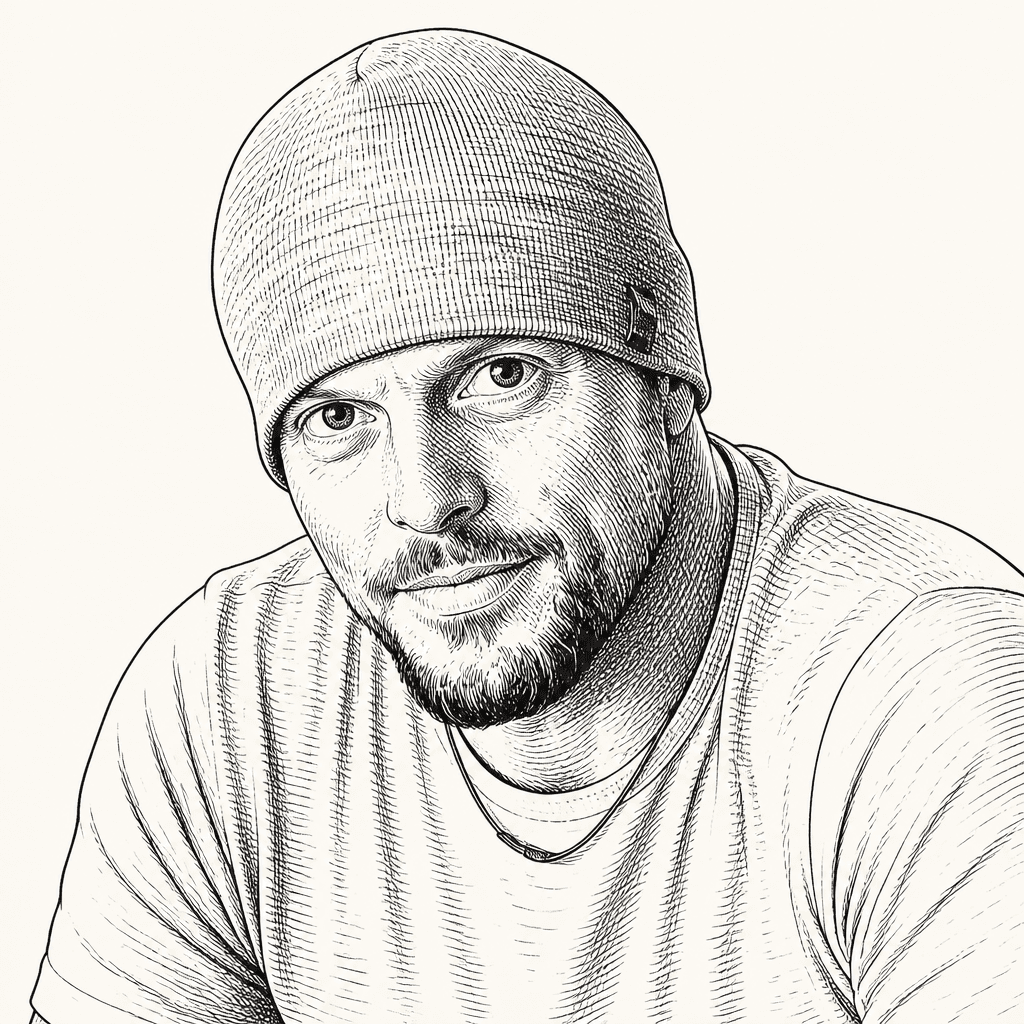
Tim Ferriss argues that rapid technological change and personal uncertainty call less for constant reinvention than for durable agency: expanding one’s options, testing assumptions with reversible experiments, and protecting attention, relationships, and physical capacity. In this Q&A, the author and investor identifies learning, communication, negotiation, and close in-person relationships as skills that remain valuable alongside AI, while making the case that sustainable work and health depend on repeatable practices rather than maximal optimization.

In uncertainty, build options and protect durable agency
When life, work, and technology all appear unstable, Tim Ferriss returns to a consistent operating preference: make reversible moves where possible, invest in capabilities that remain useful across changing conditions, and build routines that continue to work when motivation, certainty, or time are scarce.
He does not treat every urge to change as evidence that a person is stuck, burned out, or in need of a new identity. His own shift—from a highly optimized, achievement-oriented public persona toward more discussion of trauma, meditation, and relationships—came from recognizing that what looked like 17 separate problems traced back to unaddressed childhood sexual abuse. Addressing it was necessary for him. It is not, he says, necessarily necessary for everyone else.
The caution runs in both directions. A fixation on achievement and external validation can become destructive, but so can what he calls a hyper-reflective, endless cycle of “polishing the self.” The question is not whether introspection is good or whether ambition is bad. In excess, either can become another form of self-obsession.
Ferriss recommends Anthony de Mello’s Awareness and Internal Family Systems as frameworks that can help people examine themselves, but warns against turning inner work into a permanent occupation. His broader toolkit—fear-setting, a past-year review, meditation, and deliberate experiments—is meant to produce perspective and action, not another identity to optimize.
When a person is weighing a major pivot, the first task is to expand the menu of choices. Ferriss points to Derek Sivers’s “There are always more than two options,” whose premise is that a forced choice between A and B is usually a self-created dilemma. Someone torn between a frustrating job and starting a company might build the company after hours until it produces meaningful income, propose the idea as a division within the existing employer, or decide that neither path addresses the actual problem.
The purpose of generating alternatives is diagnostic as much as strategic. In Sivers’s example, the friend who believed he needed to start a business eventually realized he was avoiding the work of fixing his present situation. Ferriss does not present that realization as universal. But he argues that people reliably fall into an A-versus-B trap when C through G may be available.
He suggests another test: list the precise sources of friction that make the current life feel intolerable, then imagine placing one’s own problems alongside those of five close friends. Drawing on an idea Chris Bosh shared with him, Ferriss says people might often pick their own problems back up after seeing the full set of another person’s insecurities, relationship problems, and constraints. Familiar problems can look uniquely unbearable because they are the ones one knows in detail.
Small experiments remain useful even when the stakes are high. A new business can begin in evenings and weekends; an appealing pursuit can be expanded before it becomes a full obligation. Ferriss’s example is surfing: liking it as a contrast to weekday work does not mean enjoying it as a compulsory Monday-through-Friday job. The point is to increase the dose enough to test the underlying hypothesis before making a binary life change.
A longer absence tests the system, not just the mood
A vacation is the simplest first intervention when someone cannot distinguish between exhaustion, burnout, and having outgrown a life. It is temporary, and if it resolves the problem, that itself is information. But Ferriss distinguishes a vacation from a “mini-retirement”: ideally three or four weeks, sometimes longer, away from the normal routine or business.
A week or two away often allows people to keep triaging from afar and then return to weeks of repair work. A longer absence forces harder decisions before departure: which activities can stop, which can be automated, which policies and systems are inadequate, and which work may never have needed doing. He describes the exercise as a controlled burn: it can expose small structural failures before they become much larger ones, while distance creates the fresh perspective that comes from letting a book draft sit untouched for weeks.
When immediate problems begin to blend into an undifferentiated mass, his first move is often twice-daily TM meditation for a week or two. If the questions remain unresolved, he puts a mini-retirement on the calendar—even if it is months away—and defends it.
The AI-era advantage is judgment, communication, and real relationships
Tim Ferriss agrees that AI feels unlike earlier technological shifts and that five-year predictions can now seem unserious. But he is wary of treating uncertainty as a reason to chase every forecast or narrowly defined technical trend. For a capable person responsible for a family, he returns to five meta-skills: learning, asking questions, written communication, verbal communication, and negotiation.
Learning, asking questions, written coms, verbal coms, and negotiating is really where I would focus. I think that those are meta-skills that can be applied across disciplines to almost everything and anything.
Learning is not merely accumulating facts. Ferriss describes it as breaking an unfamiliar capability into constituent parts, and points to the meta-learning section of The 4-Hour Chef. In his formulation, learning frequently reduces to asking better questions—not only of other people, but of oneself. His 80/20 analysis is, in that sense, a collection of questions intended to surface assumptions and separate signal from noise.
Writing remains central because it can be a method for discovering what one thinks. Ferriss invokes Kevin Kelly’s observation that he does not write only what he knows; he writes to understand his own thinking. Large language models can be useful conversational tools, and Ferriss says he uses them, but he sees risks in their self-reinforcing feedback. Those risks can arise from system design as well as memory functions that preserve context across chats and threads.
For that reason, he still values offline work. Ferriss says he had spent roughly 90% of his day with pen and paper. Paper removes distraction and permits a non-linear mode of thinking: arrows, spatial relationships, and notes that do not require the keyboard’s sequential march downward. He recommends improving written communication through resources such as William Zinsser’s On Writing Well, and improving spoken communication through practical repetition—joining Toastmasters, for example, and becoming accustomed to standing up and speaking in a group.
Negotiation belongs on the list because deal structure and conflict do not disappear when technology changes. Ferriss emphasizes structures that ideally produce win-win outcomes, while acknowledging that this is not always reality. He cites Roger Dawson’s Secrets of Power Negotiating and William Ury’s Getting Past No as formative books.
The moral dimension, in his view, requires more than career resilience. Philosophy is not an ivory-tower pursuit, he says; it is instruction in how to live. Religion can serve a similar role. The relevant outcome is a consistent code that a person can follow and through which they can regard themselves as morally grounded.
The premise beneath these recommendations is that certain human requirements remain stable amid technical acceleration. Ferriss specifically includes close, in-person relationships as a prerequisite for mental and spiritual health. The social dimension of health is not, in his account, made optional by increasingly capable machines.
Endurance requires protecting the work from its own incentives
Tim Ferriss took a four-month hiatus from producing new episodes in 2024 partly to test what would happen if he “benched the golden goose.” He had feared that stopping new production would be dangerous. It was not. The fear, he says, was mostly ungrounded.
The return from that break came with rules intended to make the work sustainable and interesting. Two years on, he says several held. First: no book-launch episodes. He did not want to participate in a circuit where the same guest appears on many shows in a concentrated promotional cycle. Second: make room for “living legends”—older people who may have rarely appeared in this setting, but can still sustain a high-level conversation. He names guests including Andrew Weil, Richard Thaler, Tish Rabe, Wade Davis, David Whyte, Frank Miller, and Danny Hillis.
Those conversations may not maximize downloads. Many of the names lack celebrity recognition, and distribution systems favor short, sensational clips and familiar faces. But Ferriss frames enjoyment as operational rather than sentimental: if he enjoys the game, he has energy; energy enables attention; attention lets him use time and outlast trends.
The only way I'm going to have any endurance in playing any game I choose to play, which includes podcasting, is if I enjoy doing it.
His other surviving experiments include co-hosted conversations, guided meditations with Henry Shukman, “Founder Kitchen,” and compilations about simplifying life. Some were not among the year’s biggest downloads, but Ferriss says they created meaningful behind-the-scenes impact that platform metrics did not capture.
The resulting programming logic is a barbell: relatively unknown people with unusual stories or expertise on one end, recognizable household names on the other, plus occasional guests who have simply not circulated through the standard media ecosystem. The larger point is not a programming formula. It is that attention metrics can become incentives to repeat work that drains the person doing it.
For others trying to preserve a distinctive position in their own work, he recommends Blue Ocean Strategy and his fear-setting exercise. The exercise breaks a fear into separate questions rather than treating it as a single undifferentiated obstacle.
| Prompt | What it asks |
|---|---|
| Define | What, specifically, is the feared outcome? |
| Prevent | What actions could reduce the chance that it happens? |
| Repair | If it happens, how could the damage be repaired? |
| Cost of inaction | What are the emotional, physical, and financial costs of doing nothing over six months, one year, and three years? |
The sabbatical was an application of that approach: rather than continually protecting the existing system from disruption, he tested whether the system actually deserved the fear attached to it.
The same principle shapes his advice on building an audience. Do not attempt to read the tea leaves and manufacture what one thinks an audience wants. Follow genuine obsessions and be “authentically weird.” In nonfiction, he says, the personal can become universal when someone is honestly working through a challenge, dream, or problem. He is not aiming to reach 100 million people; if something that helped him helps five other people, he considers the work worthwhile.
Friendship and fitness depend on recurring shared practice
Tim Ferriss does not offer a clinical theory of male friendship, and explicitly says his view may not be the most research-supported. But his observation from his own friendships is clear: shared activities and projects are often the practical route to closeness.
He recalls a trip in Montana with a small group of men. The group hiked, carried weight, tended llamas, fished, climbed over rocks, and did things with a degree of risk. Only later, around a fire, did they have unusually deep conversations. One participant’s explanation was that the setting removed the intensity of direct eye contact. Looking at a fire in low light did not feel like a formal face-to-face session; it allowed people to talk without activating what Ferriss describes as ancient threat machinery.
The deep conversation mattered, but it was a small proportion of the day. The rest was shared action. Ferriss believes women are generally more adept at direct face-to-face verbal connection, for what he calls evolutionary reasons, while men often bond through doing something together. His practical recommendation to a man in a new city is therefore not to begin with an abstract appeal for intimacy, but to find recurring activities with built-in social structure: morning swims, rock climbing, runs followed by a beer, or any setting that asks people to cooperate.
His newer friendship with Elan Lee illustrates the point. They have had deep conversations, but they also spent a year building a card game. A project lets people see “through the cracks,” he says: difficult or personal subjects can emerge indirectly instead of requiring immediate, explicit disclosure.
Fitness is a continuity problem
The same preference for repeatable practice shapes his approach to fitness. He organizes physical training around longevity, not optimization for its own sake. The central rule is to avoid injury, because injuries accumulate. The second is that something is better than nothing.
If for whatever reason life got in the way, you were defeated, and you're not going to be able to make it to the gym for an hour, it's like, look, do 10 laps in the pool. Do 20 push-ups. Do something.
His current backbone is lifting two or three times a week, supplemented by yoga and some form of daily movement: biking, swimming, or walking. If he had to choose one modality for longevity, he says he would choose weight training. But the anti-injury principle changes what counts as a successful workout. Ten laps in a pool or 20 push-ups is preferable to postponing movement because an hour at the gym is impossible. Scaling down preserves continuity.
Mental and spiritual fitness, in his account, also depend on narrowing focus. He aims to be clear about the one or two professional priorities and one or two relationships that matter most, then puts actual plans with friends on the calendar. His “past-year review” is intended to identify which people and activities consistently produce positive or negative effects, rather than relying on vague intentions or annual resolutions.
Walking is another old solution that Ferriss thinks modern life underrates. Sometimes he lets his mind wander; sometimes he listens to audiobooks or makes calls. But he sees walking as aligned with a body designed to move much more than most people now do. The effects he notices include improved mood, health, and a setting in which ideas can percolate. For him, dose matters: any walking helps, but he says something meaningfully different happens after at least an hour, preferably two.
His sleep advice is similarly unglamorous. If nighttime urination is waking someone repeatedly, he suggests stopping water intake one or two hours before bed. Beyond that, he emphasizes sunlight and enough exercise to create real fatigue. Contemporary life can create a dual deficit, he says: too little natural light and too little tiredness because people spend much of the day sedentary and close to screens.
AI can expand access, but it does not solve the attention problem
Tim Ferriss makes the case for language learning not because translation technology will fail, but because translation is not the whole value of knowing another language. He expects AI to become increasingly useful for learners: it can tailor material to a person’s interests, identify resources in a target language, and make familiar content newly useful through dubbing and subtitles.
He was struck by an automatically dubbed clip in which his own English speech appeared in idiomatic Japanese in a voice that sounded like his. Because he already knew the original conversation, he could use it to improve his Japanese quickly. He sees personalized access to native content as a promising use of AI, particularly when it helps a learner find material they genuinely want to consume.
But he rejects the premise that better translation makes learning a language pointless. Ferriss says multilingualism appears to have cognitive and longevity benefits, though he presents that as an area of interest rather than a settled medical conclusion. His deeper case is experiential: new languages add concepts, distinctions, and labels that change what a person can notice.
He invokes Wittgenstein’s line that the limits of language are the limits of one’s world. Portuguese saudade, Japanese natsukashii, komorebi for dappled sunlight, and arigata-meiwaku for an unwanted favor that creates obligation are examples of compressed concepts that do not map neatly into English.
These are not linguistic curiosities to him. They add resolution to perception. A person who sees only “trees” sees a lower-resolution version of a walk than someone who knows the local species and how to distinguish them. The same is true of birds or any domain in which names and categories change what becomes available to attention. Learning languages can make life feel fuller by increasing what one is capable of noticing.
Ferriss still prefers some deliberately analog methods. A phone makes language practice compete with a thousand more alluring distractions. He likes printed flashcards and recommends watching a film or television show one already knows well with subtitles in the target language. Familiarity with the plot and dialogue reduces the cognitive burden enough to make new vocabulary and phrasing more available.
That tension—abundant AI-enabled access against scarce directed attention—also informs his advice for young people. Ferriss recommends that educators and practitioners working with teenagers follow Jonathan Haidt’s work on phones in schools. For a 16-year-old, he would frame deleting social apps for three or four weeks as an experiment rather than a moral command: assess anxiety, depressive symptoms, productivity, and the gap between stated priorities and actual time use before the break, then examine the same measures afterward. The person remains free to return to social media. The point is to create evidence from lived experience.
Ferriss’s view is that digital systems are designed to hijack free will and turn users into “a puppet of the machine.” His proposed response is not merely abstinence. It is to make room for competing activities, restore the ability to observe one’s own attention, and treat time away from the feed as a digital mini-retirement.
Privacy belongs in the same category of agency. Ferriss says he did not deliberately plan for a public career: his first book was rejected by more than 25 publishers, acquired for little money, and expected to do very little. Once it succeeded and he had accepted more public exposure, he says, the “genie was out of the bottle.”
He sometimes thinks he would accept a control-Z option and undo parts of that exposure. Yet he also sees a countervailing trend: the half-life of fame is shrinking, even as locating a particular person becomes easier. That makes proactive privacy protection more important, he argues. He mentions data-broker removal services such as Incogni and says privacy is becoming a luxury for people who do not actively defend it.
For cognitive decline, his hierarchy begins with exercise
When asked what he spends heavily on, Tim Ferriss names manual therapy, reduced travel friction, and health care for himself and loved ones. The common purpose is not display. It is maintaining physical capacity and reducing avoidable stress.
He has treated massage and sports-oriented bodywork as maintenance since he was poor, he says, rather than as an occasional indulgence. His principle echoes his training advice: reduce the dose if necessary rather than abandoning the practice entirely. More broadly, he is willing to pay for a health safety net—specialists, physicians, trainers, meal preparation, and concierge access—because the reassurance has value even when it is never needed.
That orientation is strongest in his response to cognitive decline. Ferriss says the subject frightens him because he is caring for multiple relatives with Alzheimer’s. His single highest-priority answer is exercise.
If I had to pick one thing for cognitive health, it is the exercise.
Ferriss mentions Norwegian 4x4 interval training, Zone 2 work, weight training, fasting, glucose control, sauna use, and supplements as areas he personally follows. He also mentions companies and potential therapies in which he has invested or taken an interest. But he repeatedly places those details beneath the basics.
He says Alzheimer’s remains poorly understood, is skeptical of a simple explanation centered only on removing amyloid beta and tau, and thinks vascular and mitochondrial factors may matter substantially. He says he is not a doctor and frames these comments as his personal experience and assessment.
The hierarchy he states is nonetheless clear: pills and minor interventions are insufficient if foundational habits are absent. In his formulation, exercise, good food, avoiding repeated glucose spikes, and periodic fasting come before the more speculative or supplemental work. Even when discussing possible future therapies, he returns to the near-term instruction: when in doubt, get to the gym.
A one-day TMS protocol is an area of personal interest
Ferriss also describes his experience with SAINT, an accelerated TMS protocol he has used for generalized anxiety disorder and OCD, and with Ampa Health’s ONE-D protocol. He says SAINT can involve five days of treatment with 10 stimulations a day, while ONE-D compresses a course into a single day and includes a small dose of D-cycloserine intended to help induce plasticity.
A paper shown during the discussion was titled “Real-world effectiveness of a single-day regimen for transcranial magnetic stimulation using Optimized, Neuroplasticity-Enhanced techniques in Depression (ONE-D): An open-label case series,” published in Brain Stimulation.
His own report is personal: one day of treatment gave him what he described as three to four months of complete relief. His interest in condensed approaches is partly practical. Many people cannot take a week away from work or afford travel for five days of treatment, he says; a one-day protocol could expand who can realistically access it.