The AI Era Tests Which Human Frictions Are Worth Keeping

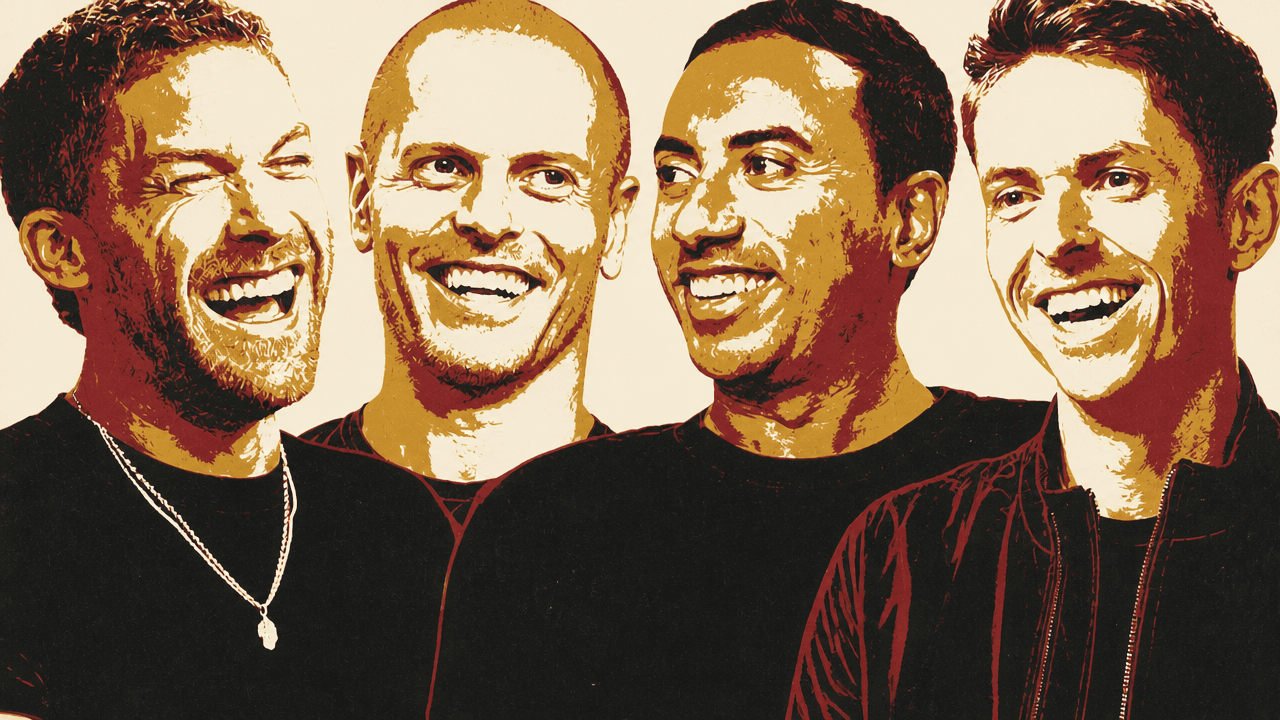
Tim Ferriss, Nirav Savjani, George Mack and Chris Williamson use a wide-ranging “Rabbit Hole” conversation to argue that the AI era’s central problem is not raw intelligence but judgment about what to retain, remove and resist. Across memory, ambient AI, future interfaces, neuromodulation, religion and consumer convenience, they return to the same claim: systems and societies that eliminate friction can also weaken attention, meaning and value. The discussion treats forgetting, restraint and selective resistance as human advantages that technology will have to learn rather than merely overcome.
Forgetting is not a bug in human intelligence
The most useful thread is not that memory is powerful, but that too much memory can become a liability. Tim Ferriss described himself as highly visual, able to remember “almost every floor plan of every restaurant” he has been in, even when he was not trying to store it. Asked about a recent dinner, he reconstructed the room: the server door to the left, the bar to the right, who sat where, and the edamame on the table.
That kind of recall sounds enviable until Ferriss names the cost. His father, he said, has a similarly exaggerated form of certain kinds of memory. It can make grievances, slights, and old emails harder to release. A less selective memory is not simply a cognitive upgrade. Past a point, Ferriss suggested, an overly developed memory may be “counter-evolutionary,” because forgetting has advantages.
Nirav Savjani described a different version of the same asymmetry. He said he has vivid face recognition, enough to remember people he saw once 15 years ago. Socially, that becomes awkward: “I know everything about you, because we met once, and this was 10 years ago,” while the other person has no reciprocal memory. He also said he can look at something once and, years later, recover much of it with striking accuracy.
The group used the common “imagine an apple” test to expose how wide the range of inner experience can be. George Mack said one friend cannot think visually at all and would register only the word “apple,” while another cannot think in words and counts by visualizing stairs. Ferriss named the absence of visual imagery as aphantasia. On screen, a Reddit post from r/INTP showed five silhouetted heads containing apples that faded from a highly detailed red apple to a barely visible outline. The prompt read: “close your eyes and imagine an apple. which one do you see? i see 1.”
That range matters because it changes what “memory” means. For one person it is a word, for another an image, for another a spatial reconstruction. Ferriss was careful not to call his own memory “photographic.” In his definition, photographic memory would be seeing a page and reading it back ten minutes later. He said he does not have that. But his broader point was that a vivid mind has a vivid burden.
Savjani extended the argument into artificial intelligence. Current AI memory systems, he said, can extract facts, store them, and bring them back into context later. But they lack a human-like sense of what should be forgotten, what is no longer salient, and what should be pruned. When systems keep pulling in stored “memories,” they can introduce noise and make connections a human mind would not make. Forgetting, in this view, is not merely deletion. It is relevance management.
That relevance problem became practical when Savjani described moving neighborhoods after a breakup. Walking through familiar streets reactivated exact scenes: a coffee shop, a flower shop, a restaurant, where he sat, who was beside him, what was said, and how it ended. Chris Williamson linked this to Alain de Botton’s observation of a young couple in Paris: a beautiful moment may become one of the greatest sources of pain if the relationship ends. Memory turns the physical environment into a trigger map.
The same mechanism appears in smaller habits. Williamson said he once tried to reduce phone use simply by moving his phone from his right pocket to another pocket. After a decade of carrying it in one place, his hand reached for it automatically, “like a speed shooter withdrawing his firearm.” Savjani described feeling phantom phone vibrations during a meditation retreat even without a phone in his pocket, and later discovering that others report the same phenomenon. The body had learned to expect a haptic interruption.
Ferriss’s remedy for attention was deliberately low-tech. He said he has had no social media on his phone for years, no ring, and no vibrate, and does not think he has sacrificed being informed. He described the phone as a mirror, then as “the black mirror,” and argued that the less one interacts with it, the better — especially given fake feeds and an environment designed to interrupt.
He also offered a way to train visual memory that does not begin with memorization. Start producing. Draw. Practice looking at the actual flower in the vase rather than drawing the mental concept of a flower. If asked to draw a tree on a bright day, start with the black parts; the exercise forces attention to the object rather than the label. Learn to distinguish the six most common trees in a region so “tree” stops being a single undifferentiated category. Gesture drawing, with very short poses that prevent overthinking, can force the hand to keep moving and train attention. Visual memory, in Ferriss’s account, is partly acuity, partly attention, and partly domain-specific labeling.
Human hallucination is the better analogy for AI hallucination
Hallucination entered first through eyewitness memory, not machine learning. George Mack brought up the Grenfell Tower fire and a story he said was widely reported at the time: a baby allegedly dropped from the top of the tower and caught below. He said there were multiple eyewitnesses and that the story became a small miracle within a horrific day. Months later, in Mack’s telling, physicists examined the claim and argued that a baby falling hundreds of feet would not survive the catch. He described the later inquiry as revealing a hallucinated memory.
His point was not that machine memory is better than human memory. It was that recording and verification might sometimes free people from fictions they have invented under emotional pressure. The risk of remembering everything is grievance, rumination, and pain; the risk of remembering unreliably is confidence in events that never happened.
Nirav Savjani brought the analogy back to AI. People talk about AI hallucination as if it were an alien failure mode, he said, but humans hallucinate memories, manipulate memories, and reconstruct the past constantly. We tend to remember fond moments and painful moments while the middle fades. From his product work, hallucination is not an abstract philosophical issue. If a system is meant to surface information at the right time, it must keep hallucinations low and context high.
His company, Skye, is trying to build what he described as an “agentic home screen” for the iPhone: an AI-processed layer of glanceable information that appears directly on the home screen, anticipating what a user may need rather than requiring a prompt. He framed current AI as too pull-based: the user opens a chat interface, writes a prompt, and does the heavy lifting. His aim is for the system to do more of that work in the background, presenting information when it matters and disappearing when it does not.
That produces a design tension. The phone home screen has changed little in nearly 20 years, Savjani argued, and widgets remain underused. A small team cannot build a new device, so Skye operates in the application layer using what the operating system allows. But the more ambient the system becomes, the more important memory pruning becomes. A home screen that remembers everything and surfaces too much becomes another noisy feed. A useful one must know what not to show.
Chris Williamson gave a simpler form of the same concern: most people already have a negative relationship with technology. In the gym, he said, he found himself on a treadmill surrounded by screens: his own phone, the treadmill screen, banks of televisions, a video wall, ads, subtitles, news, and reality TV. Even when one tries to be screen-free, screens must now be actively avoided. If AI is imagined as “more technology,” people reasonably fear that it means more of the thing already degrading their attention.
Savjani’s preferred term for the better version was “ambient AI,” though he noted that such terms are often invented by users, not companies. The desired system would not require endless app-opening or prompting. It would be like a room with presence detection that knows who is there and what might matter. Or a morning interface that lights up with the relevant pieces of life. The constraint is permission and relevance: there when needed, gone when not.
Meaning becomes harder when friction disappears
Tim Ferriss introduced the most serious question by reading from Packy McCormick’s “Riding the Leopard,” a piece sent to him by someone adjacent to a leading AI technologist. The quoted section begins by dismissing the parade of AI funding and revenue numbers — Sierra at $15 billion, Anthropic at a $44 billion run rate, new companies with billions to deploy — and asking why anyone should care. The more important question came from a woman in remission from stage-four cancer who had been forced to confront what happens to purpose when scarcity falls away, or when the need to be productive disappears.
According to the passage Ferriss read, she analyzed more than 200 science-fiction books. In post-scarcity settings, by far the most common remaining problem was meaning: 59% of the books were about the search for meaning; identity came next at 17%. Ferriss also read Viktor Frankl’s line: “As the struggle for survival has subsided, the question has emerged: survival for what? Ever more people today have the means to live, but no meaning to live for.”
Ferriss was not only asking whether AI will remove work. He was more concerned with meaning as a general problem, and with the fear of AI as a force in itself. If AI takes jobs, that has consequences. But if everyone fears that AI will take jobs, that also has consequences. His own stance, he said, is not dystopian exactly, but hypervigilant about the next five to ten years — not only because of AI, but because of the reaction to AI.
Nirav Savjani answered first through an analogy from aviation. When multiple systems fail on an airplane, a captain must decide how much to tell the passengers. Full transparency may panic them; too little information may leave them confused by turbulence. AI leaders face a similar communication problem. If researchers and executives genuinely believe software engineering is being solved, or that software will become free, how much should they say? Some technologists in San Francisco, he said, believe nearly every problem has been roughly solved and that the dominoes will fall quickly if AI can self-correct and self-research. Others take the more conventional optimistic line that every technological revolution destroys some jobs and creates others.
But Ferriss pressed the personal question: how do the people in the room think about meaning?
George Mack initially answered with optimism about problem-solving. Humans are good at forecasting problems and bad at forecasting solutions, he said, because if a solution were visible there would not be a problem in the same way. Billions of people will work on new problems. If AI becomes as intelligent as feared, he asked, why assume it could not help solve the meaning problem too? Williamson challenged that as an assumption that benevolence follows processing power. Ferriss said he would not make that leap.
Chris Williamson framed the issue more ecologically. Meaning may not become impossible in a solved world, but it may become harder to access. He compared it to obesity in a calorie-dense, ultra-processed food environment: eating healthily remains possible, but the environment makes it harder. A low-friction world may do the same to meaning. It can make purpose sparser, harder to reach, and less naturally embedded in ordinary life.
His example from Nick Bostrom sharpened the point. Bostrom, Williamson said, has asked what happens in a solved world, where scarcity and pressure are removed. Many traits we value in other people — motivation, discipline, truthfulness, prudence, judgment — are valuable because we must negotiate with a world that pushes back. If that pressure disappears, the traits do not necessarily disappear, but their social weight changes. A world without resistance may produce “a strange weightlessness” around values that historically mattered because survival and scarcity made them matter.
Savjani connected this to dating apps. Relationships used to involve scarcity and friction; apps turned them into a catalog. You browse, select, move on. Mack joked that Grindr is “post-abundance,” and Savjani mentioned Sniffies, an anonymous gay sex app he said Match Group had put $100 million into. The joking did not erase the underlying point: abundance can reduce value. If access becomes effortless, the thing accessed may stop generating the same meaning.
The same logic applied to consumer convenience. Savjani said capitalism removes friction by matching supply and demand. DoorDash and Amazon can deliver a bathing suit or a costume in 30 to 60 minutes. That is remarkable, but it also reduces the perceived value of objects and efforts. If one can get anything at any time, the emotional significance attached to getting it may fall.
Mack’s counterexample was Winston Churchill. He said Churchill suffered from depression, which Churchill called the Black Dog, and laid 200 bricks a day for a period of his life to keep himself busy. On screen, a list of Churchill’s near-death experiences appeared: battlefield dangers in Cuba, India, Sudan, and South Africa; escape from a Boer prisoner-of-war camp; frontline combat in World War I; being hit by a car; and his belief that he was preserved for a purpose and walking with destiny. The point was not that everyone should become Churchill. Mack explicitly noted survivor bias: for every Churchill or Rockefeller calling a destiny into being, there are “a thousand dickheads.” But Churchill represented a life where resistance and purpose were inseparable.
Religion returns when secular certainty feels thin
Tim Ferriss sees a rising dread of meaninglessness in his audience. Over the last five years, he said, the apathy, nihilism, and foreboding adjacent to a “creeping dread of meaninglessness” have become terrifying. He did not attribute that solely to AI. Technology, in his formulation, is more like money, power, alcohol, or psychedelics: an amplifier and an accelerant. Digital poison can be drip-fed daily without AI being the original cause.
That led him to the long-running contrast between Sam Harris and Jordan Peterson. Ferriss’s distillation was that Harris represents the possibility of building secular moral and value codes from first principles, while Peterson argues that this will not work at scale and that people need religion because it provides an out-of-the-box certainty. In a world of increasing incomprehensibility, where fact and fiction are harder to separate, people look for a foothold.
Chris Williamson pointed to Latin Mass as an example of religion’s resurgence. He said Latin Mass is among the most ascendant religious services, and noted the paradox that it is conducted in a language most attendees do not speak. He speculated that this may bypass scrutiny. If a person cannot parse every proposition, the experience becomes less available to rational counterargument and more steeped in history, music, ritual, and atmosphere. Ferriss added that perhaps attendees do not want to scrutinize it.
Williamson’s broader claim was that atheism has become uncool because, in a world short on meaning, it feels sterile, judgmental, and harsh. He did not argue that religious claims are true. Instead, he asked why a comforting delusion should be ruled out if the outcome is human flourishing. If religious people are happier, have more meaning, better community, better health, and live longer, then the belief may be irrational in one register and effective in another.
His example was Richard Dawkins and Ayaan Hirsi Ali. As Williamson recounted it, Ali spoke on stage about wanting to take her own life, being found by Christianity or God, and having her mental health improve. Dawkins’s near-immediate response, according to Williamson, was to press the factual claim: did she really think Jesus moved the stone on the third day? Williamson saw this as optimizing for rationality while ignoring effectiveness. If the thing saved a life, he asked, how can one respond only by interrogating the metaphysics?
Nirav Savjani added that intellectuals often use proof by counterexample outside domains where it belongs. In mathematics, one counterexample can void a universal claim. In religion, he argued, disproving one proposition does not necessarily invalidate the entire structure for the person using it. He characterized religion as a pick-and-choose buffet in practice, and saw no problem with that for many people.
The question was not resolved as truth versus utility. Ferriss asked for definitions before opining on AI sentience and consciousness, and the same caution hovered over meaning. He said he would use “purpose” as a placeholder: the feeling that there is a point to what one is doing or to one’s life in general. Savjani noted that Western society ties much of that to craft and work. “What do you do?” is the canonical party question. A productivity culture that manages calendars, meetings, and time allocation also binds meaning to occupation. If AI threatens work, it threatens not only income but identity.
The next interface is not obviously a phone
The device people use to interact with AI may not be the smartphone. Nirav Savjani argued that the likely interface has probably not been invented yet. It will combine input and output in a way that is less visible and more natural than the slab of glass. Voice is one candidate, but not the whole answer. There will be situations where speaking aloud is impossible or socially awkward.
He described a device a friend demoed to him, positioned around the neck or lower face, that can detect what a person intends to say without audible speech — not pure mind-reading, but something closer to expression of thought before sound. The distinction matters. A device that reads any thought would be unusable; one that detects intentional expression could become an input layer.
George Mack immediately saw the problem from meditation. He said practice reveals how many thoughts are not chosen. A song stuck in the head is the simple example. His own meditation exercise was to ask the mind what thought would come next. After several seconds of silence, the image that appeared was Arjen Robben, the former Bayern Munich winger, cutting inside onto his left foot. If a Neuralink-like device were listening, Mack asked, how would it distinguish “me” from monkey-mind noise?
Savjani’s answer was intent. The device he had in mind would not be a thought reader but a detector of attempted expression. Still, the comedy of failure mattered. He anticipated early demos where the system broadcasts the wrong inner language, and Chris Williamson added the obvious fear that what leaks would be “penis penis penis penis.” The joke landed because the interface problem is real: a private mind is noisy, and a computer that treats all inner motion as command is dangerous.
Mack’s own hardware prediction was the AirPods case. AirPods are already worn constantly, he argued, and the case could become a small output device. He said he had seen discussion that Apple had patented cameras at the edge of AirPods, which could provide visual context. The case could be spoken to, projected from, or used as a small screen. Williamson added the central hardware constraint: anything on the face must be light, which means processing may have to happen elsewhere. A separate case or receiver could carry more compute.
Williamson said VR has not delivered, at least in mass adoption. Tim Ferriss disagreed only on timing: he expects lightweight VR or AI-native systems that thousands of people enjoy for hours a day within roughly three years, maybe less. Williamson said he had seen Meta glasses beyond the next generation that “blew” his mind, though the form factor remained clunky and dorky. The current advantage of camera glasses, in his view, is simpler: taking photos and videos without re-entering the phone.
The phone, he argued, compresses memory into the experience of being on a screen. At public events, people hold phones between themselves and the thing they are supposedly watching. Glasses at least offer the possibility of recording without leaving the moment. Mack gave the comic failure case from the Louvre: using camera glasses to photograph the Mona Lisa, which is small and far away, left his girlfriend with a picture of him standing with his glasses tilted awkwardly in the air while everyone else used phones.
Ferriss asked whether someone would feel better or worse after six months of being unable to take photos or videos, except for practical business needs. Williamson thought his own life would not change much from losing photos; the real damage is ambient pinging and device navigation. Ferriss suspected he would be better off. The question sits at the center of future interface design: does the next device reduce contact with the compulsive feed, or merely make it omnipresent?
Apple may not need to be first if the market tests everything for it
Chris Williamson was skeptical of Apple’s recent user-facing progress. He said the iPhone’s improvements have begun to feel marginal: more zoom, brighter screens, lighter hardware, but little that feels like the jump from earlier generations. Tim Ferriss said iOS seems worse with every upgrade, and Williamson singled out the keyboard as bad.
Nirav Savjani offered the standard defense of Apple as strategy rather than stagnation. Apple often lets others enter first, spend capital, test the market, and discover what works. Then it enters later with a refined version. He cited smartphones, AirPods, the iPod, and computers as examples of Apple not necessarily being first but being best. Williamson summarized the strategy: “Go forth and split test these products for us, my minions.”
George Mack added that Apple’s existing businesses give it room to wait. He mentioned the large annual payment from Google for search placement, and then turned the point back to AirPods: they are already intimate, habitual, and hard to leave home without. Savjani said he never leaves the house without his. If AI requires a wearable device, Apple has one of the few consumer objects already positioned on the body, near the ear, and socially normalized.
If future AirPods include cameras, they become spatially aware sensors on either side of the head. Ferriss compared the possibility to the Batman film scenario where phones map an environment. His question was direct: what would Apple do with that data?
Savjani also argued that apps themselves may become less valuable. If ChatGPT or Claude can set a timer, answer questions, draft, search, and coordinate actions, the dedicated app ecosystem weakens. Williamson noted Elon Musk’s view that apps may disappear and the phone will generate whatever interface is needed in the moment. Savjani agreed broadly: it is now possible to build experiences that previously required full ecosystem control.
That possibility creates an opening. Apple’s moat has been the device, the OS, and the app ecosystem. But if AI can create interfaces dynamically, and if the primary interaction shifts to voice, ambient display, or a wearable input device, the current slab-and-app model becomes less secure. Still, Apple’s advantage remains distribution, patience, cash, and taste. The speakers did not settle whether Apple is late or lying in wait.
Neuromodulation is becoming the serious alternative to blunt psychiatric tools
Tim Ferriss’s most concrete technology optimism was not about chatbots or headsets. It was neuromodulation. He said he is increasingly bullish on brain stimulation and expects acceleration over the next two years. He distinguished several approaches: at-home electrical stimulation such as tDCS, transcranial magnetic stimulation, vagus nerve stimulation, focused ultrasound, and implanted devices.
Ferriss’s own experience was with accelerated TMS. After years of thinking of himself as depressive, he came to believe much of his condition was anxiety and rumination, possibly connected in part to Lyme disease and chronic neuroinflammation. In his description, clinicians used fMRI to identify targets related to anxiety and then applied magnetic pulses — intermittent theta bursts — to inhibit or excite specific areas. The treatment felt like light tapping on the head.
In the protocol Ferriss said worked best for him, he took D-cycloserine, an older antibiotic used as a neuroplasticity agent, about an hour before stimulation. Then he received short rounds of stimulation over a day: three minutes on the hour, or every half hour, for about ten sessions. The result, he said, was “three to four months of going from say an eight or nine out of like generalized anxiety and just OCD rumination to like a zero or a one.”
The lived difference, in Ferriss’s account, was not abstract. Insomnia disappeared. Instead of taking 30 to 60 minutes to fall asleep, he would lie down and be asleep five minutes later without sleep medication. Everyday scrapes and bruises became easier to move through. Practices like stoicism and mindfulness, which had previously felt like a struggle against his constitution, became more natural. Meditation for 20 minutes felt suddenly accessible rather than like constantly slapping a monkey mind on the wrist.
Ferriss was cautious throughout. He repeatedly said he is not a doctor and is not giving medical advice. He warned that the brain is sensitive and that hitting the wrong target can worsen symptoms. He explicitly told listeners not to DIY brain stimulation with batteries or consumer gadgets, and named clinics he knows by reputation: Acacia Clinic in Sunnyvale, Salience in Dallas, and Owen Muir in New York.
The risk profile, as Ferriss described it, is generally low but not zero. In his own case, successful treatments sometimes produced temporary rebound symptoms, including insomnia for a few days. He said very rare cases may involve temporary tinnitus. Most unusually, after his first effective treatment, he said he could not ejaculate for about two weeks. His doctor speculated that the protocol may have dialed down his sympathetic nervous system too much; Williamson noted the common shorthand that parasympathetic function is involved in erection and sympathetic function in ejaculation — “point and shoot,” as Ferriss put it.
Ferriss has tried TMS multiple times, and he said it has not always worked. That unreliability is part of why he is supporting a nascent brain-stimulation lab at UT Austin and becoming involved with companies in the area. The goal, as he framed it, is to increase reliability and durability. If a one-day treatment every quarter reliably takes someone from a nine to a one, that is compelling. If it works only one in four times, it is frustrating.
Cost and access are the next constraints in Ferriss’s account. Earlier accelerated TMS protocols could cost around $30,000 out of pocket and require five days, which excludes many people even before price. A one-day protocol changes the addressable population because people may not be able to take five days off work. Ferriss named BrainsWay, MagVenture, and AMPA Health as companies in the space, disclosing that he invested in BrainsWay when it was public and is involved with AMPA. He described AMPA’s device as smaller, cheaper, trainable in hours rather than weeks, and developed by people behind the one-day protocol. His ambition is to scale treatment from thousands to millions.
Chris Williamson described a related but different intervention he underwent: a two-sided stellate ganglion block. He explained it as an ultrasound-guided anesthetic injection into nerve bundles on either side of the neck, done one side at a time because it temporarily numbs half the face and throat. He described it as a hard reset or “shaking the Etch A Sketch” of the nervous system. After receiving it from Matt Cook at BioReset, Williamson reported reduced ambient agitation and rumination, and said his WHOOP data showed a 30% overnight increase in HRV that held for months before beginning to drift down.
Ferriss put his interest in neuromodulation in context. Since 2015 he has funded science related to psychedelics and psychedelic-assisted therapy, but in the last three years he has done almost no psychedelics and focused instead on neuromodulation. Psychedelics, he said, can be “nuclear power for the psyche”: valuable, but unsuitable for some people and capable of producing Chernobyl or Fukushima outcomes if mishandled. Neuromodulation may be more targeted.
He also emphasized sequencing. Many tools work “kind of” off the rack, but the order matters. Tip over the right domino first and later interventions become more effective. He connected this to language learning, psychedelics, and TMS. Drawing on Gül Dölen’s framework of reopening critical windows, he said the weeks after psychedelics may be unusually plastic, which can help learning or recovery but also make it a bad time to install destructive habits. Williamson said he received similar advice after his stellate ganglion block: the nervous system may be unusually absorbent, so treat the window carefully.
Vagus nerve devices are promising, but most consumer claims are ahead of the evidence
Nirav Savjani asked Tim Ferriss about vagus nerve stimulation because he suffers from migraines and had been recommended a device. Ferriss’s first answer was blunt: most consumer vagus nerve devices are bunk. He recommended Kevin Tracey, author of The Great Nerve, as the most credible scientist publicly educating on the subject.
The vagus nerve, Ferriss said, is like two transatlantic cables, with roughly 100,000 fibers on each side, innervating organs, the gastrointestinal tract, and much else. In Ferriss’s description, stimulating it can affect the inflammatory reflex and may apply to rheumatoid arthritis, autoimmune disorders, asthma attacks, and other conditions. But location and device design matter.
Non-invasive devices tend to be neck-based or ear-based. Ferriss said neck-based devices have been FDA cleared for certain headache conditions, and some people benefit. He mentioned a friend whose HRV tripled using a neck-based device, either trueVaga or the prescription equivalent. But he also said neck-based devices can stimulate superficial facial muscles and pull the face down, depending on intensity. Ear-based devices are even more location-sensitive. Ferriss said very few vagus nerve fibers reach the ear, and most devices are not placed precisely enough. The target he named was the cymba concha, a small inner fold of the ear.
For Savjani’s migraines, Ferriss described gammaCore, the prescription version of trueVaga. He said it is FDA cleared in the U.S. for both acute treatment of migraine pain in adults and prevention of episodic and chronic migraine. He characterized the evidence as real but modest compared with top-tier migraine medications like CGRP inhibitors. In his view, it may work best when attacks are treated early, for migraine with aura, for patients who want to reduce medication use, and for those who cannot tolerate triptans or CGRPs.
Savjani described his own migraines as beginning with visual aura, which he has had since age five. The world becomes blurry and moving, “almost as you’re on like an acid trip,” and if he does not take medication during that window, the migraine arrives. He carries sumatriptan. He suspects triggers include lighting, environmental or weather changes, caffeine, or wine without food. The standard practice, he said, is to keep a diary and retroactively infer causes because the mechanism remains uncertain.
Ferriss also mentioned SetPoint Medical, which he described as having an implant about the size of a small omega-3 capsule placed in the neck as an outpatient procedure to stimulate the vagus nerve twice a day. He said it is not for migraines and is, as far as he knows, specific to rheumatoid arthritis. The important distinction in Ferriss’s account is between a field with real promise and a consumer market that often overclaims precision it does not have.
Looksmaxxing turns AI into a mirror with instructions
The mirror theme returned in the discussion of AI and appearance. Nirav Savjani said people are already uploading photos of themselves to ChatGPT and Gemini for appearance advice. Apps wrap the same workflow: upload images, receive suggestions for hairstyle, beard, symmetry, jawline, surgery, and other changes. The broader trend is looksmaxxing, and Savjani called it a huge AI use case.
Chris Williamson brought up Qoves, a facial analysis and transformation platform. The qoves.com page shown on screen promised “Glow-up without surgery” and offered personalized facial analysis and a transformation plan. Its listed benefits included more career opportunities, greater self-confidence, stronger first impressions, improved dating life, and enhanced quality of life. Before-and-after sliders showed facial transformations for a woman and a man.
Savjani connected Qoves to Facetune, which he described as a long-standing tool for manipulating faces in photos: slimming jawlines, altering features, and preparing images before posting. AI expands the possibilities by generating and regenerating images rather than merely editing them. He said he had heard a story of someone meeting a person from Instagram who looked nothing like their photos in real life.
Williamson relayed a detail from Freya India: when groups of young girls take photos at a party, everyone wants the photo taken on her own phone because that person controls the Facetuning. Ferriss added that it is a major social faux pas to post a group photo in which you look good and someone else looks bad. The status game is no longer merely how one looks. It is who controls the post-production layer.
That brought the point back to mirrors. Earlier, Savjani had quoted a philosopher’s idea that man was never meant to have a mirror. Humans once had water reflections; now front-facing cameras, Zoom calls, filters, and cosmetic software multiply self-reflection. Williamson mentioned “Zoom face” during COVID: more people sought cosmetic surgery because they spent so much time seeing themselves. AI filters on Google Meet and Zoom now add smoothing, makeup, and other alterations.
The concern is not simply vanity. If the phone is a black mirror, AI becomes a mirror that explains what is wrong and offers a plan. It can make people more attractive, or at least more strategic. It can also intensify scrutiny, comparison, and the sense that every face is a project.
The UK looks humane and poor next to America
Chris Williamson’s comparison of the UK to a hypothetical U.S. state became a debate about what societies optimize for. He showed a Financial Times chart ranking where the UK would sit among the 50 states on several metrics. The UK ranked first for life expectancy, lowest homicide rate, lowest gun deaths, lowest prisoner population, healthcare coverage, paid maternity leave, statutory paid holiday, years in education, and lowest road deaths. It ranked second for lowest drug deaths, third for minimum wage, fifth for pupil performance and environmental performance, ninth for human development index, tenth for lowest obesity — and 51st for GDP per capita.
| Metric | UK rank if it were a U.S. state |
|---|---|
| Life expectancy | 1st |
| Lowest homicide rate | 1st |
| Lowest gun deaths | 1st |
| Lowest prisoner population | 1st |
| Healthcare coverage | 1st |
| Paid maternity leave | 1st |
| Statutory paid holiday | 1st |
| Years in education | 1st |
| Lowest road deaths | 1st |
| Lowest drug deaths | 2nd |
| Minimum wage | 3rd |
| Pupil performance | 5th |
| Environmental performance | 5th |
| Human development index | 9th |
| Lowest obesity | 10th |
| GDP per capita | 51st |
Williamson said Americans online had an excuse for every category. Lowest gun deaths? Because Britain gave up guns. Paid maternity leave? Not a valid measure. Road deaths? Roads are different. Lowest obesity? Some other caveat. His surprise was that Americans, in his experience, took the comparison less humbly than British people would. Britons are usually ready to laugh at Britain, and Williamson and George Mack have both criticized the UK heavily. But comparison with America seemed to trigger defensiveness.
Ferriss asked why GDP per capita would be 51st. Williamson’s answer was that the U.S. “absolutely rules when it comes to capitalism,” calling it the Floyd Mayweather of capitalism. Mack cited Scott Galloway’s line that America is the best place to earn money and Europe the best place to spend money. Williamson refined it: the UK is a wonderful country to be poor in and a horrible country to be rich in; America is a great country to be rich in and a horrible country to be poor in.
The praise for Britain did not last long. Williamson said the UK is living on borrowed time and cited arrests for social media posts in 2023: 12,183 in the United Kingdom, nearly double Belarus at 6,205, with Russia at 400 and China at 1,500, though he noted possible reporting issues in some countries. He attributed the number to The Times with Freedom House statistics and said it was one of the obvious negative categories where Britain would rank first.
Mack felt compelled to balance every negative comment about the UK with something positive. His defense was architecture. In London, he said, he walked past beautiful buildings and used to live in a house older than America. Much American architecture, by contrast, feels like “the back entrance” even at the front. The U.S. is more functional now, but the UK has buildings people no longer know how to make. Williamson joked that they were grasping at straws if architecture was the main defense, but Mack held the line: Big Ben is good.
The deeper contrast was between newness and accumulated form. Nirav Savjani noted how young America is in civilizational terms, almost like a teenager, and how much of its infrastructure was built closer to a blank slate. Williamson compared that to Dubai, where modern infrastructure has been driven through the desert with deliberate design. London, by contrast, carries history and friction in its layout. America may be functional and rich; Britain may be humane and beautiful; neither side escapes tradeoffs.