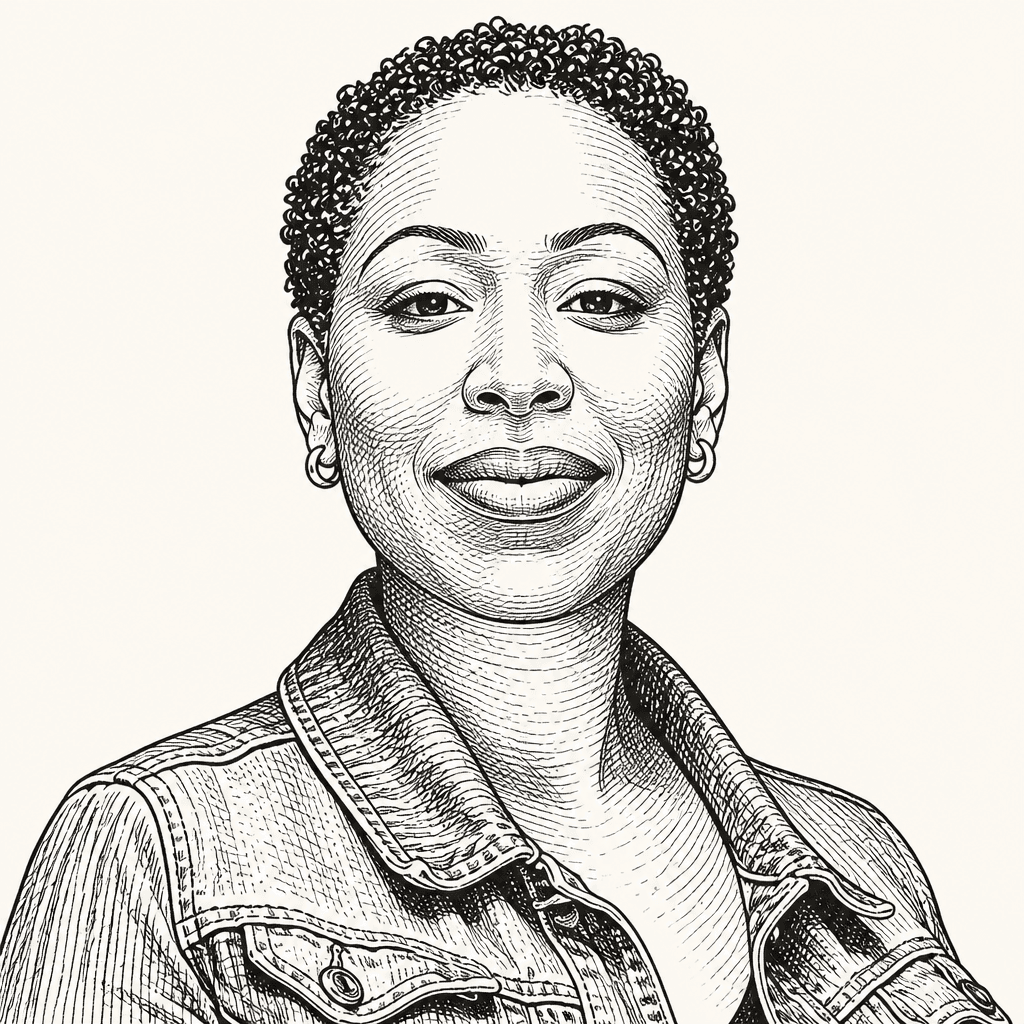
Jenn White
Jenn White is an award-winning public radio journalist and podcast host, best known as host of “1A,” the nationally distributed WAMU/NPR daily talk show and podcast. She previously worked at WBEZ Chicago, where she hosted “Reset with Jenn White” and podcasts including “Making Oprah,” “Making Obama,” and “16 Shots.”
Dallas Targets Permitting Delays as Denver Reports Homelessness Drop
Dallas Mayor Eric Johnson and Denver Mayor Mike Johnston argue that city government’s housing role is operational: remove the local barriers that block production, or build a homelessness system that moves people indoors and into permanent housing. In an excerpted City Hall discussion, Johnson casts Dallas’s affordability problem as a supply failure worsened by permitting friction, while Johnston says Denver reduced street homelessness by rapidly adding acceptable transitional units, closing encampments, colocating services, and linking the hardest cases to treatment and courts.
Rebuilding Trust in Science Requires Transparency, Accountability, and Public Presence
At the Aspen Ideas Festival, Jenn White, Laurie Santos, Mike Varshavski and Matthias Berninger examined why confidence in science has weakened even as science remains more trusted than many institutions. Their shared argument was that trust cannot be restored by asserting expertise more forcefully: scientists, doctors, universities and companies have to make evidence more visible, acknowledge past failures, show up where people seek information, and explain uncertainty and disagreement as part of the scientific method rather than a reason to dismiss it.
A Shared Civic Gospel Depends on Arguing Over Who Belongs
At the Aspen Ideas Festival, Jane Kamensky, Walter Russell Mead and David French examined whether the Declaration of Independence can still serve as a shared American civic gospel in a religiously plural democracy. Kamensky argued for treating the Declaration as a usable national creed, French said its rights language gives Americans an internal standard for condemning oppression, and Mead cautioned that American identity has always rested on belonging as well as belief. The panel’s central question was not whether Americans can recite “all men are created equal,” but why they assent to it, whom it includes, and how it can be taught without becoming sectarian rule.
Trust-Building Was Framed as Funded, Measurable Community Work
The 2026 Trust in Practice Summit highlights present trust-building as practical civic work that needs funding, tools, measurement, and local leadership, not simply a sentiment to be restored. Hosted in Chicago by the Alliance for Social Trust in partnership with Allstate, the summit convened more than 250 leaders and announced $1 million, $500,000, and $100,000 awards to 11 nonprofit collaborations across 10 states. Speakers argued that institutions should support community leaders, measure trust at a local level, and focus on the ordinary problem-solving through which trust is built.
Social Trust Requires People to Extend Trust Before Expecting It
Olajumoke “Jummy” Banjo, senior director of the Alliance for Social Trust at the Aspen Institute, closed the 2026 Trust in Practice Summit by arguing that social trust begins with people willing to extend it before they can expect it in return. In conversation with NPR’s Jenn White, Banjo framed trust-building as long-term, community-embedded work: less a matter of formal programming than of vulnerability, sustained relationships, and commitments whose benefits may not be visible for decades.
Institutional Trust Is Collapsing, but Neighborhood Networks Remain Durable
At the 2026 Trust in Practice Summit, researchers and community leaders argued that America’s trust crisis looks different depending on where it is measured. Justin Blake of the Edelman Trust Institute and Wendy Weiser of the Brennan Center described deep distrust in institutions, elections, and people outside one’s own information circles, while Lydia Prado of Lifespan Local and Frederick Riley of Weave pointed to neighborhoods where trust is still built through proximity, reciprocity, and repair. The panel’s shared case was that local trust is not enough to counter national forces driving division, but democratic renewal is unlikely without it.