Dallas Targets Permitting Delays as Denver Reports Homelessness Drop

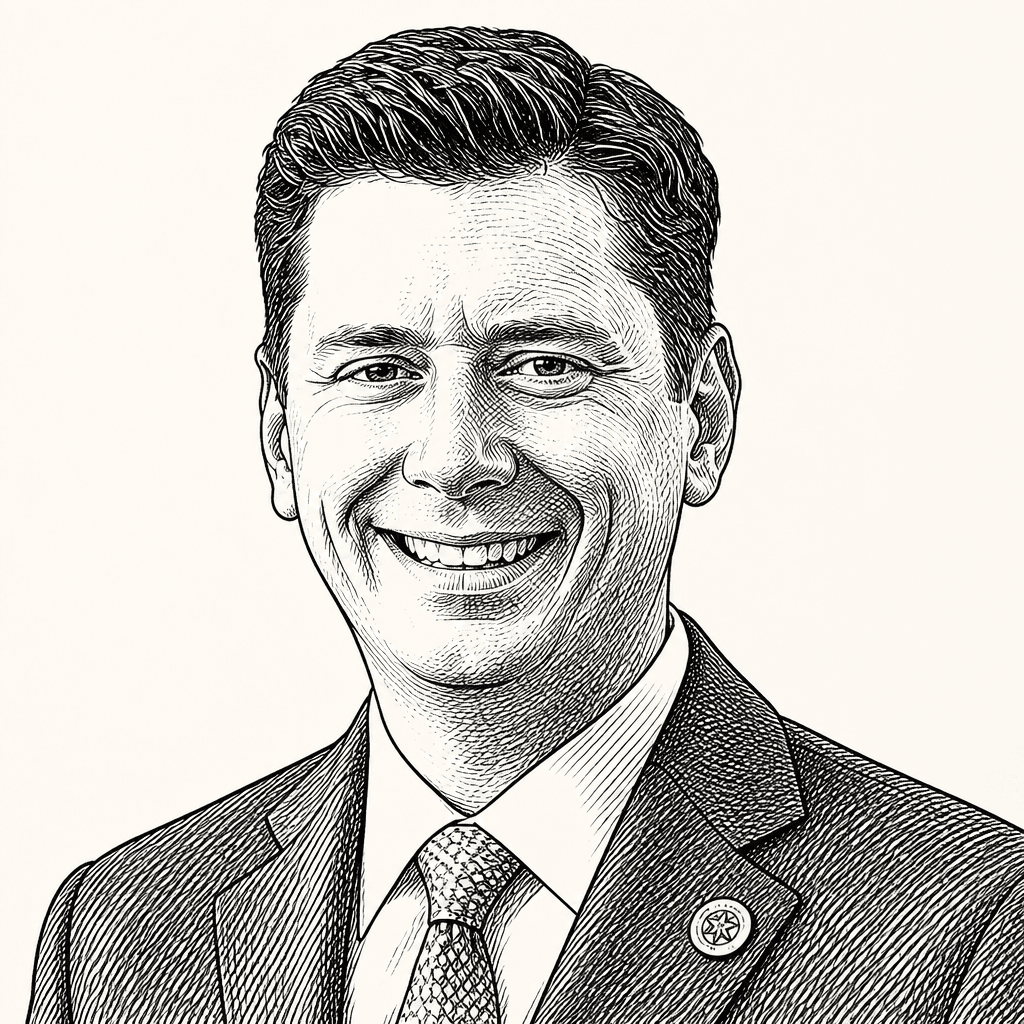

Dallas Mayor Eric Johnson and Denver Mayor Mike Johnston argue that city government’s housing role is operational: remove the local barriers that block production, or build a homelessness system that moves people indoors and into permanent housing. In an excerpted City Hall discussion, Johnson casts Dallas’s affordability problem as a supply failure worsened by permitting friction, while Johnston says Denver reduced street homelessness by rapidly adding acceptable transitional units, closing encampments, colocating services, and linking the hardest cases to treatment and courts.

Dallas wants City Hall to stop slowing housing production
Jenn White framed housing as the shared pressure point for the mayors onstage: the country has more people than available homes, and households are being squeezed out of affordability. She also pointed to President Trump’s decision not to sign a bipartisan housing bill intended to ease federal regulations, boost development, and incentivize local construction. The excerpted discussion introduces Dallas Mayor Eric Johnson, Denver Mayor Mike Johnston, and Oklahoma City Mayor David Holt, but the substantive housing and homelessness answers in this portion come from Johnson and Johnston.


? eric-johnson said Dallas needs the federal bill and “help from all quarters” to solve the housing problem. His larger diagnosis was local and structural: housing affordability is “primarily a supply issue.” In his view, the country failed for more than 50 years to build enough homes to keep pace with population growth, leaving cities in “serious catch-up mode.”
Johnson’s answer was not that Dallas City Hall should become the builder of record. It was that City Hall should stop slowing down the builders. He said the private sector is capable of producing housing if cities allow it, and that, in many cases, city government is not easy to do business with. In Dallas, he has focused particularly on permitting, arguing that delays often reflect process inefficiency rather than real problems with what is being proposed.
The private sector is pretty good at building housing if you allow them to do it.
Asked what kind of housing Dallas most needs, Johnson rejected a narrow answer. “There’s not a segment of the housing market that we don’t need more of,” he said. Single-family homes remain the “gold standard” in his region, the form many residents picture when they think about housing. But he also emphasized workforce housing and what he called “intown housing.”
That view connects housing policy to downtown reinvention. Johnson argued that central business districts are undergoing a transition and should become primarily residential. In Dallas, he wants formerly commercial areas to become more walkable, green, dense neighborhoods. Downtown Dallas, he said, “should become the next coolest residential neighborhood in Dallas,” with a mix of condos, apartments, and other housing types.
Denver’s homelessness strategy starts with units people will accept
Mike Johnston described homelessness as the largest crisis facing Denver when he took office. He declared a state of emergency in 2023 because, he said, his administration believed the problem was solvable and that there was enough evidence to use strategies that work.


Johnston reported that Denver’s street homelessness has fallen by 64% over roughly two and a half years, based on the federal point-in-time count. He called it the largest drop of any city. The administration’s model, as he described it, rests on three parts: adding the right kind of units quickly, resolving homelessness geographically, and pairing housing with onsite services.
The first piece was speed and acceptability. Johnston said Denver brought on 1,000 transitional housing units in under six months, using tiny homes and hotel rooms that cost $25,000 to $50,000 per door. The distinction that mattered, in his telling, was not simply bed count. Congregate shelter — “a gymnasium floor with a bunch of cots on it” — does not reliably get people to say yes. A locked room where someone can store belongings, shower, and go to a job does.
The second piece was geographic resolution. Denver went to encampments, moved entire encampments into transitional housing, and closed them as units became available. A 50- or 100-person encampment could be shut down as a unit of work rather than addressed person by person indefinitely. Johnston called the follow-on strategy “hold the hill”: once an encampment was closed, that section of the city was closed to camping. Each new tranche of units allowed the city to close another encampment and another section of the city to camping.
By Johnston’s account, Denver no longer has a single encampment left. “We’ve closed every one,” he said.
The third piece was service placement. The eight sites Denver used — hotels and tiny-home villages — included wraparound services onsite: mental health care, addiction services, workforce training, and permanent housing support. Johnston argued that locating those services where people are housed avoids forcing them back downtown and prevents the concentration of services that can reproduce the same geography of crisis.
He also distinguished moving people indoors from ending homelessness. Denver, he said, has gotten 9,000 people off the street and into transitional housing, and has moved 8,000 of them into permanent, long-term housing. The latter, not the interim placement, is the long-term goal.
The hardest remaining cases run through treatment, courts and permanence
Mike Johnston said Denver’s remaining unsheltered population is small enough to count and still large enough to matter: 512 people. He called that “512 too many.” He also said the last people to serve will be the hardest because they include residents with the most profound chronic mental illness and addiction challenges.
That is the basis for Denver’s “Roads to Recovery” program. Johnston described it as a direct connection to services, either addiction- or mental-health-based. The city goes first with services and offers help. But it has also worked with courts to create a recovery court for people whose addiction is tied to repeated criminal conduct.
Johnston said people with addiction do not always “wake up on a Monday morning and decide to get clean,” and that sometimes they need to be pushed. Under the model he described, if someone continues to commit crimes, the city can charge that person and bring them into recovery court. The court then supervises treatment, meetings, and job applications. If a person complies, that can happen outpatient. If the person continues breaking the law, a judge can sentence them to 30 or 60 days.
Johnston said Denver closed two pods of the county jail and converted one into an inpatient mental health facility and the other into an inpatient addiction-treatment program. A sheriff’s deputy still opens and closes the door, but inside, he said, the staff are social workers. In his description, a 30- or 60-day sentence for a drug charge becomes a chance to get treatment in a locked facility, followed by connection to housing, jobs, and medication.
“Whatever road you take,” Johnston said, “there is a path to make sure we get you to recovery.”
White pressed Johnston on whether a multi-pronged program like Denver’s can survive beyond one mayor’s tenure. Johnston’s answer was practical rather than institutional: first, the program has to work well enough to deserve to stay.
His test for durability is whether the intervention becomes part of the city’s normal expectations. Denver, he said, now assumes there should never be encampments in the city again. He wants the response to mental health distress to become similarly routine: if someone sees a person struggling, they can call 311, the city will send a responder within 12 hours, and that person can be connected to the service they need.
The point was not that a program name should outlast an administration. Johnston’s answer was cut off mid-thought, but he had already described the durability test in operational terms: make the response successful enough that it becomes an everyday expectation.