Institutional Trust Is Collapsing, but Neighborhood Networks Remain Durable
 Jenn White
 Frederick Riley
 Lydia Prado
 Wendy WeiserJustin BlakeThe Aspen InstituteWednesday, June 10, 202614 min read
At the 2026 Trust in Practice Summit, researchers and community leaders argued that America’s trust crisis looks different depending on where it is measured. Justin Blake of the Edelman Trust Institute and Wendy Weiser of the Brennan Center described deep distrust in institutions, elections, and people outside one’s own information circles, while Lydia Prado of Lifespan Local and Frederick Riley of Weave pointed to neighborhoods where trust is still built through proximity, reciprocity, and repair. The panel’s shared case was that local trust is not enough to counter national forces driving division, but democratic renewal is unlikely without it.
Institutional trust is weak, but the local picture is not the same story
Jenn White opened with the national diagnosis: Americans’ trust in major institutions is at a historic low. She named the Supreme Court, Congress, legacy media, the presidency, and democracy itself as institutions whose legitimacy and durability many Americans increasingly doubt. She also pointed to 2025 Pew Research data suggesting that Americans trust one another less.
But the central tension of the discussion was not simply that trust is declining. It was that national measures can make the situation look almost uniformly discouraging, while community-level experience often shows a different pattern: distrust of distant institutions alongside stronger cohesion inside particular neighborhoods, groups, and local networks.
Justin Blake described Edelman’s trust research as a 26-year effort to measure confidence in institutions across countries. Edelman surveys more than 1,000 respondents per country across 28 countries, looking at trust in business, government, NGOs, and media. Blake said the firm assesses trust through two dimensions: competence and ethics.
For almost the first two decades of Edelman’s research, Blake said, NGOs were the most trusted institution. Around 2018, business moved into that position. The competence side of that shift was not surprising to him: business had long been perceived as the most competent institution. What surprised him was the post-COVID trend in which business also became the institution most perceived as ethical.
That finding carried an uncomfortable implication for many people working in civic and nonprofit settings. Blake did not present it as a celebration of business; he framed it as context. Even organizations doing meaningful community work are operating in a broader environment of deep distrust, including distrust of the kinds of work represented in the room.
Lydia Prado challenged the usefulness of knowing about communities without learning from them. From her vantage point working on the ground, she said people increasingly feel distance from businesses, organizations, quasi-governmental entities, and government itself. Data collection and learning about communities can be useful, she said, but people can feel the difference between being studied and being treated as contributors.
The trust-building posture she sees communities asking for is closer and more reciprocal: “Ask some questions, get to know, step up, get closer.” In the communities she works with, there is not much trust of anyone outside the community. At the same time, she sees increasing trust and cohesion within groups of people who have had to be resilient.
Wendy Weiser put the institutional decline in democratic terms. Declining trust across institutions, she said, is eroding democratic institutions and is especially dangerous in an election year. She singled out trust in elections as a particularly acute concern.
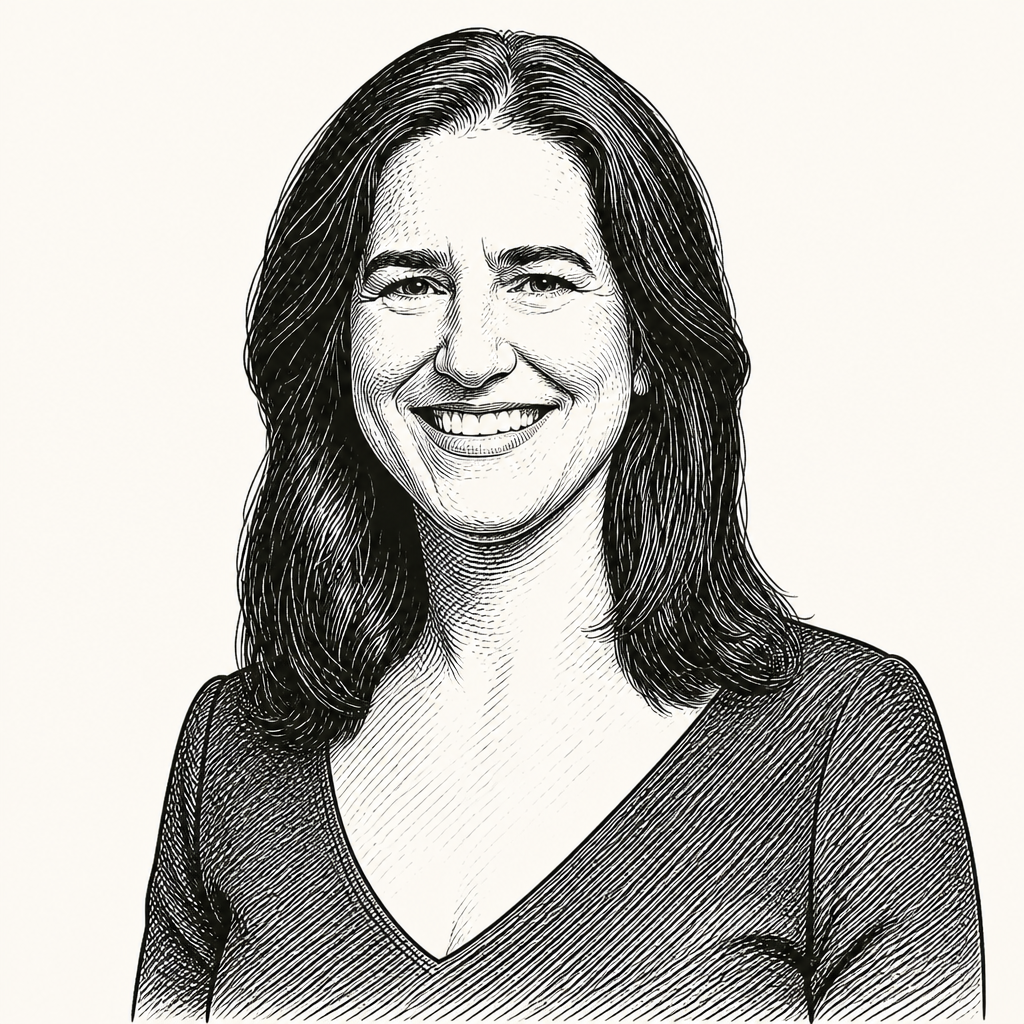
For several years, Weiser said, trust in elections had declined substantially among Republicans, producing what she described as a 56-point partisan gap two years earlier in whether people believed their vote would be counted. Now, she said, trust among people who lean Democratic has also plummeted. The result, in her view, is “extraordinarily low trust in our election system without any actual basis” across the board heading into an election year.
That matters because elections, like other democratic institutions, depend fundamentally on trust. Weiser also offered a local corrective: when people meet and work with local election officials, see how the system functions, or help their neighbors vote and navigate obstacles, they tend to trust the process more and feel more invested in it.
Low trust can create a demand for reform
Weiser did not treat institutional distrust only as evidence of collapse. She argued that prolonged stress on institutions also creates a possibility for significant reform. In her view, institutions are unlikely to survive this level of pressure without changing, and widespread distrust can produce a thirst for reforms that might otherwise be politically unreachable.
White offered the Supreme Court as an example. She said recent 1A shows on Supreme Court reform drew listener responses that were not merely emotional reactions but specific and reasoned proposals. Listeners were thinking in concrete terms about what should change, how those changes could be implemented, and what results they expected.
Weiser said trust in the Supreme Court is at an all-time low. It may still fare better than Congress, she said, but it is not functioning at a level of public confidence adequate for a court with its degree of power. She cited wide bipartisan majorities supporting 18-year term limits for justices and ethics reforms, along with other proposals. The dissatisfaction, she emphasized, is cross-partisan and deep, as is support for certain reforms.
The point was not that reform automatically follows distrust. It was that distrust has become politically legible in a new way. People are not only rejecting institutions; many are forming concrete ideas about how to make them more trustworthy.
The strongest trust work is often already happening before institutions arrive
Frederick Riley located his optimism in neighborhoods rather than national institutions. Major shifts in the United States, he argued, have often been guided by people in communities who insist that the country move in a different direction.
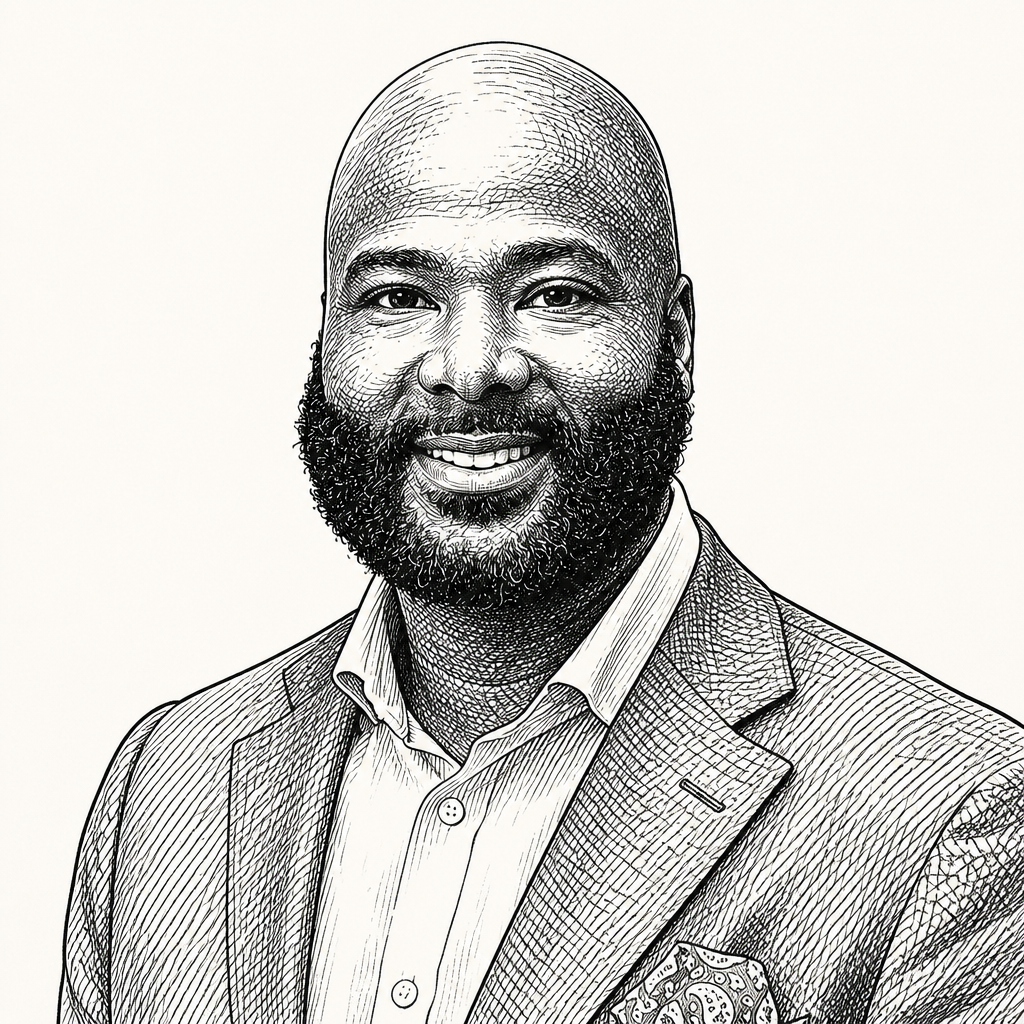
Riley described Weave’s Weaver Awards as an attempt to support that existing local work rather than prescribe it. The project began in Baltimore with microgrants to neighborhood residents who were bringing people together, bridging divides, and acting because they lived there and believed the work was theirs to do. With relatively few strings attached, he said, the grants supported concrete, small-scale changes: lights installed in a dark neighborhood so people could come outside and talk; a stage erected to bring the Baltimore Symphony into a difficult neighborhood.
Weave then took the model to Wilkesboro, North Carolina, and later to a suburban community. Riley said the organization concluded that if the model worked, it should not be confined to one place. Over the next four years, he said, Weave plans to highlight 6,000 Weaver awardees across 75 communities.
For Riley, the opportunity is narrative as much as programmatic. National headlines may accurately reflect crisis, but they obscure the people in every community who are already showing up. The work, as he described it, is to surface those stories and help others copy what is working.
He also framed trust-building as a skill deficit. People know how to respond with hostility when someone cuts them off in traffic, he said, but not everyone has learned to wave in gratitude when someone lets them in. That ordinary example was doing more than lightening the mood. Riley’s argument was that cultural change begins when groups of people learn to live differently and others model them.
Scaling this kind of work, in his view, requires restraint from central organizations. When Weave expanded the project, he said, it did not send communities “a hundred things in a box.” It identified five to seven core practices that everyone needed to do in common, including giving money to local people in a particular way and collecting certain information. Everything else had to be adapted locally.
That was necessary because, in Riley’s account, Baltimore, Wilkesboro, and Northwest Arkansas were completely different. A single centrally designed model would miss the distinct character of each place. The task was not to scale something new from a national organization, but to support what communities were already doing.
Insularity is an understandable response, but it narrows the circle of trust
Blake supplied one of the starkest data points in the discussion: 70% of Edelman respondents do not trust someone who does not share their values, beliefs, or information sources.
He described this as a retreat into “people like me” rather than the collective. But he also urged a compassionate reading of that retreat. People have come through COVID, economic crisis, and large income disparities. For many, things are not working. Under those conditions, he said, people retreat into what feels safe and comfortable.
The implication for organizations is practical. Some are already trying to bridge divides directly. Others may be focused on different issues, but they still need to understand that the people they serve may approach outsiders with an insular and distrusting mindset. The outsider might not be a national institution; it might be a neighbor who watches a different cable news channel.
White connected that observation to her own neighborhood experience. After moving into a new neighborhood, she was content to stay inside, while her husband immediately tried to meet neighbors. That effort turned into a recurring exchange of food with nearby residents: fruit crisp, tiramisu, chicken and rice after her husband’s hip surgery. White said she did not know what news her neighbors watched and had never been inside their home, but the relationship had nevertheless become meaningful.
Prado saw in that story the mechanics of trust-building. She returned to the idea of “moving in” rather than remaining distant. At Lifespan Local, she said, a hydroponic farm system inside the building has become a site of exchange: food, culture, conversation, elders’ preferences, and humor. Nutrition programming might be planned one way, but elders might say, in effect, forget that — we are going to make fry bread.
Her point was that trust is nurtured in spaces where people are known, fed, listened to, and allowed to bring their full culture and experience. Institutions have not built enough places that invite belonging and connection. When spaces are safe and affirming, she said, trust-building becomes part of community-building.
Local trust is necessary, but not sufficient against national forces
Weiser agreed that local democratic spaces build trust. When people gather in local spaces, she said, “the problem isn’t us when we get together.” But she warned against treating local trust-building as enough on its own.
The United States, in her account, is awash in forces from above that deliberately drive people apart. Top political leaders are trying to increase distrust in one another and in institutions, and those efforts are amplified by social media and partisan media. Community work is necessary, but it must be connected to a broader national vision.
Weiser’s examples showed why. Local problems can cascade across the country. She pointed to partisan gerrymandering wars and race discrimination spreading into southern states in the wake of a Supreme Court decision. Problems in Alabama, Louisiana, Tennessee, or elsewhere may be local in their immediate impact, but they are not only local problems. They become national democratic problems.
At the same time, she pointed to mobilization across places as a source of hope. People from across the country and across the South had recently gathered in Montgomery and Selma to push back against what was happening there. The local and national, in her framing, cannot be separated. Local ties are the foundation for democracy, but they must be connected across communities.
Blake introduced the language of “trust brokering” to describe one institutional role in that work. Public relations is often associated with persuasion, he said, but persuasion is not how people are inspired to work together. Trust brokering is different: the goal is not necessarily to bring someone to your opinion, but to get two people, entities, or groups who distrust one another to the table.
That may begin with shared values, shared interests, or something as modest as a good plate of food. Blake pointed to Weave’s work as an example of trust brokering in practice: not resolving every disagreement, but creating conditions in which people can sit together.
Trust repair requires owning the break, not pretending it did not happen
Prado added a clinical concept to the civic vocabulary: rupture and repair. Trust, she said, does get broken. In relationships, communities, and institutions, rupture is not exceptional; it should be expected.
The work is not to deny rupture, but to ask about repair. That means owning the break, acknowledging that something went wrong, and committing to do better. Over time, she said, that is how trust is built with communities. Communities are watching and learning, just as organizations are watching and learning. Humility, mistakes, learning, and renewed alignment can carry the work forward.
This also shaped her view of technology. In the communities where she works, technology is used effectively, but locally. She described a community under pressure from ICE presence and “horrible, awful things going on.” Residents use apps and technological tools to let one another know what is happening.
But Prado drew a boundary around what technology can do. For communication that turns into problem-solving — what do we do now, what is the lived experience here, what solutions emerge — people need to be together in person. That setting allows listening, learning, validation, and difficult acknowledgment. Solutions arise from that kind of discussion, she said, and it requires people being in the same room.
Weiser similarly emphasized convening, especially in democracy work. At the Brennan Center for Justice, she said, one of the most frequently used tools this year has been bringing people together. She described support for the Committee for Safe and Secure Elections, a bipartisan or cross-partisan coalition of law enforcement and election officials working through election problems and educating one another. She also described convenings of national security officials from different eras to address national security and foreign interference concerns, and gatherings that bring together civil rights allies, other communities, and academic disciplines.
The years spent building relationships, Weiser said, now pay off in speed and coordination. People who already know how to work together can identify solutions quickly, fan out across the country, and model similar activities in their own states or neighborhoods.
The crisis is not uniquely American, which changes the scale of the problem
Blake said Edelman’s global data complicates American exceptionalism. Across 28 countries, the United States is in the middle of the pack among Western democracies on trust in institutions, beliefs that leaders are lying, and even trust in electoral systems. That may sound like bad news, he said, but he found it somewhat heartening: the United States is not uniquely broken. The trust crisis is global.
The hopeful part, for Blake, is that trust has become a serious topic of institutional practice. Twenty-five years ago, when Edelman began studying trust, people did not convene around it. If Edelman gave a presentation, he joked, it might be to six people in a broom closet. Now there are convenings on rebuilding trust in media, CEOs talk about trust on earnings calls, and academic and practitioner gatherings are focused on solutions.
He described the shift as moving from silence, to handwringing, to practical work. The existence of a summit devoted to putting trust into practice was, for him, evidence that the conversation has advanced.
Weiser was more direct about the active production of distrust. Some people with large public platforms, White noted, are deliberately seeding distrust in institutions and telling Americans not to trust one another. Weiser agreed that this has a tremendous effect — larger, she said, than the countervailing work being done to mitigate it.
Still, she grounded her hope in evidence of participation and resistance. Americans are not giving up, she argued. Voters continue to turn out at high levels. She said the country saw its highest voter turnout in 72 years in the middle of a pandemic, and turnout is higher still now despite distrust and despair. She also pointed to mutual aid, street mobilization, lower courts acting as stabilizing institutions, and new institutions stepping forward.
Weiser also returned to reform. A few years earlier, she said, the country came very close to passing comprehensive democracy reform legislation that would have strengthened voting rights, addressed big money in politics, dealt with gerrymandering, and prevented election interference. It fell two votes short of overcoming a Senate filibuster. To her, that near miss indicates continuing momentum for institutional renewal.
On election subversion, she urged vigilance but not despair. Efforts to interfere in elections are unlawful, she said; courts and election officials are holding out, and a broad movement is engaged. The election remains a moment when voters matter and can help forge a new vision.
The long-term foundation is remembering that people need one another
Riley closed the discussion by distinguishing short-term action from long-term foundation-building. His answer was not institutional or technical. It was relational: people need one another, neighborhood to neighborhood and person to person.
He illustrated this through his godson, who joined the Peace Corps in Fiji. Before leaving, Riley described him as withdrawn, often looking down at his phone, with little voice or confidence. In Fiji, living with limited electricity, an outhouse, occasional internet, and a much more communal culture, he changed.
When Riley visited, his godson told him, “We need each other here.” He meant it concretely. One neighbor has lemons, another has greens, and they trade. When he was sick, neighbors cared for him. Travel required help from others: a horse, a bus, a chain of people and systems.
For Riley, that was not a romantic aside. It was the core of long-term trust work. Technology and election systems matter, but civic life depends on people understanding that they vote, help, gather, and solve problems because they owe something to one another.
His neighborhood example made the same point. After buying a house in Washington, D.C., Riley insisted on going door to door with his partner to meet neighbors. They brought cards introducing themselves — “we’re prickly but we’re good neighbors” — and small cactuses. Out of 15 homes, four people opened the door. One woman asked why they were doing it, because nobody ever had.
Riley said he grew up in a Michigan neighborhood where returning home means taking 40 minutes to reach the house because neighbors stop him, hug him, and welcome him back. It is a rough neighborhood, he said, but people know one another. He cited a statistic that crime is down by 86% in neighborhoods where people know the names of at least four neighbors.
His prescription was simple without being sentimental: go get to know your neighbors. You do not have to agree with them, cook the same food, or stop being annoyed about their lawn. But crossing the threshold to say hello is a civic act. The scalable work is not a new framework from a think tank; it is modeling and supporting the ordinary practices through which people become known to one another.