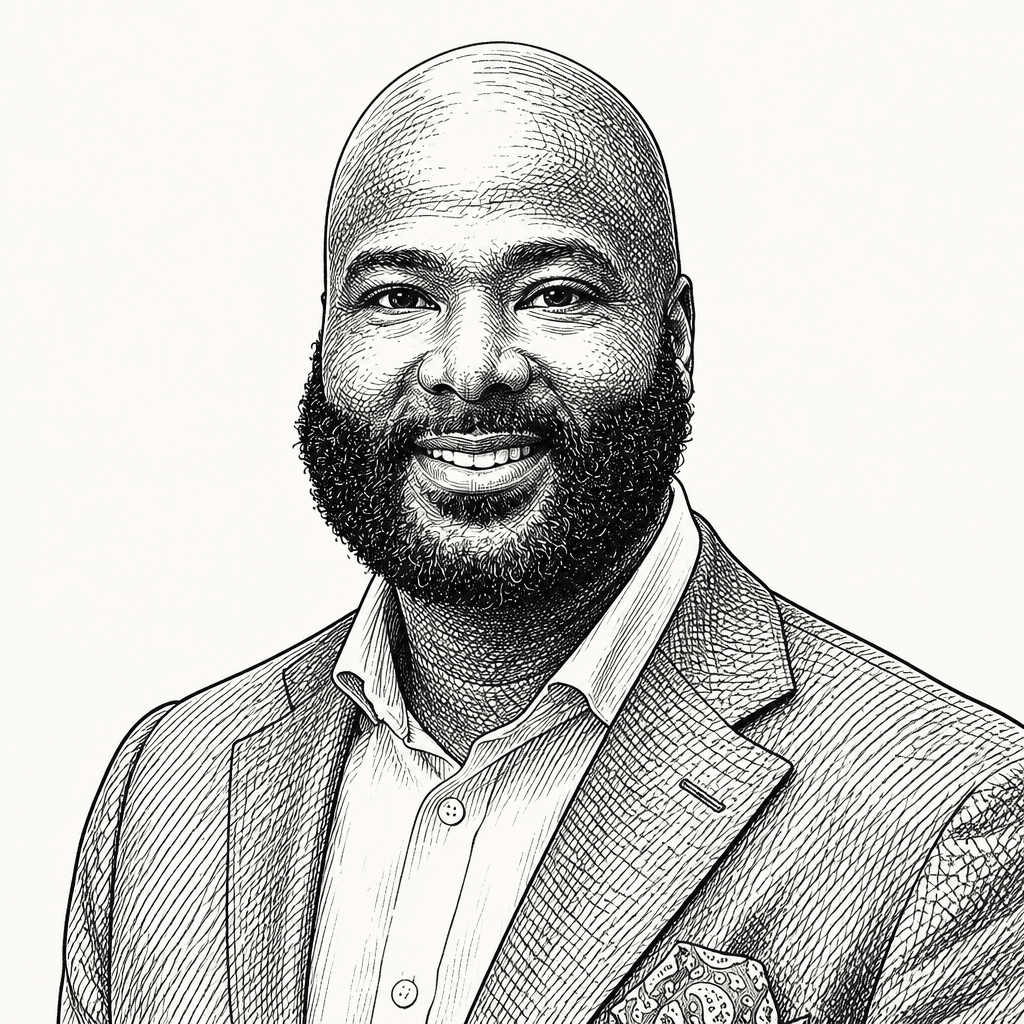
Frederick Riley
Frederick Riley is the Executive Director of Weave: The Social Fabric Project at the Aspen Institute, where he leads work focused on strengthening community trust, social connection, and civic engagement. He previously held senior leadership roles at the YMCA, including Chief Advancement Officer for the YMCA of Greater Cincinnati and National Director of Urban Development for YMCA of the USA.
Trust Is Built Through Repeated Practice, Not Civic Sentiment
At Dan Porterfield’s final Aspen Ideas Festival as president and CEO of the Aspen Institute, leaders of Weave, Aspen Kyiv and the Institute’s network strategy made a shared case that trust is not a civic sentiment but a capacity built through repeated practice. Frederick Riley argued that local trust must be rebuilt neighbor by neighbor; Yuliya Tychkivska described dialogue and leadership formation under wartime exhaustion in Ukraine; and Tommy Loper said Aspen’s dispersed alumni and programs need stronger connective tissue to turn relationships into usable institutional strength.
Community Relationships, Not Authority, Rebuild Social Trust
Frederick Riley, executive director of Weave: The Social Fabric Project, told the Trust in Practice Summit in Chicago that America’s trust problem is rooted less in disagreement than in the loss of relationships that once contained it. He argued that trust is rebuilt locally, through neighbors, mentors, coaches, business owners, and other “weavers” who create repeated contact and reasons for people to show up for one another. Programs and data can help, Riley said, but they cannot substitute for the relationships through which trust is formed.
Institutional Trust Is Collapsing, but Neighborhood Networks Remain Durable
At the 2026 Trust in Practice Summit, researchers and community leaders argued that America’s trust crisis looks different depending on where it is measured. Justin Blake of the Edelman Trust Institute and Wendy Weiser of the Brennan Center described deep distrust in institutions, elections, and people outside one’s own information circles, while Lydia Prado of Lifespan Local and Frederick Riley of Weave pointed to neighborhoods where trust is still built through proximity, reciprocity, and repair. The panel’s shared case was that local trust is not enough to counter national forces driving division, but democratic renewal is unlikely without it.
The Aspen Institute Frames Leadership as Dialogue Across Difference
In a 75th-anniversary institutional statement, the Aspen Institute presents leadership as a discipline of listening, convening and acting across difference. Its executives argue that progress begins with people: dialogue builds common ground and trust, and that trust can be turned toward work on economic opportunity, energy and climate challenges, institutions and rising generations. President and chief executive Dan Porterfield closes the case as an invitation to “ignite human potential” and create new possibilities for a better world.