Trust Is Built Through Repeated Practice, Not Civic Sentiment
 Daniel Porterfield
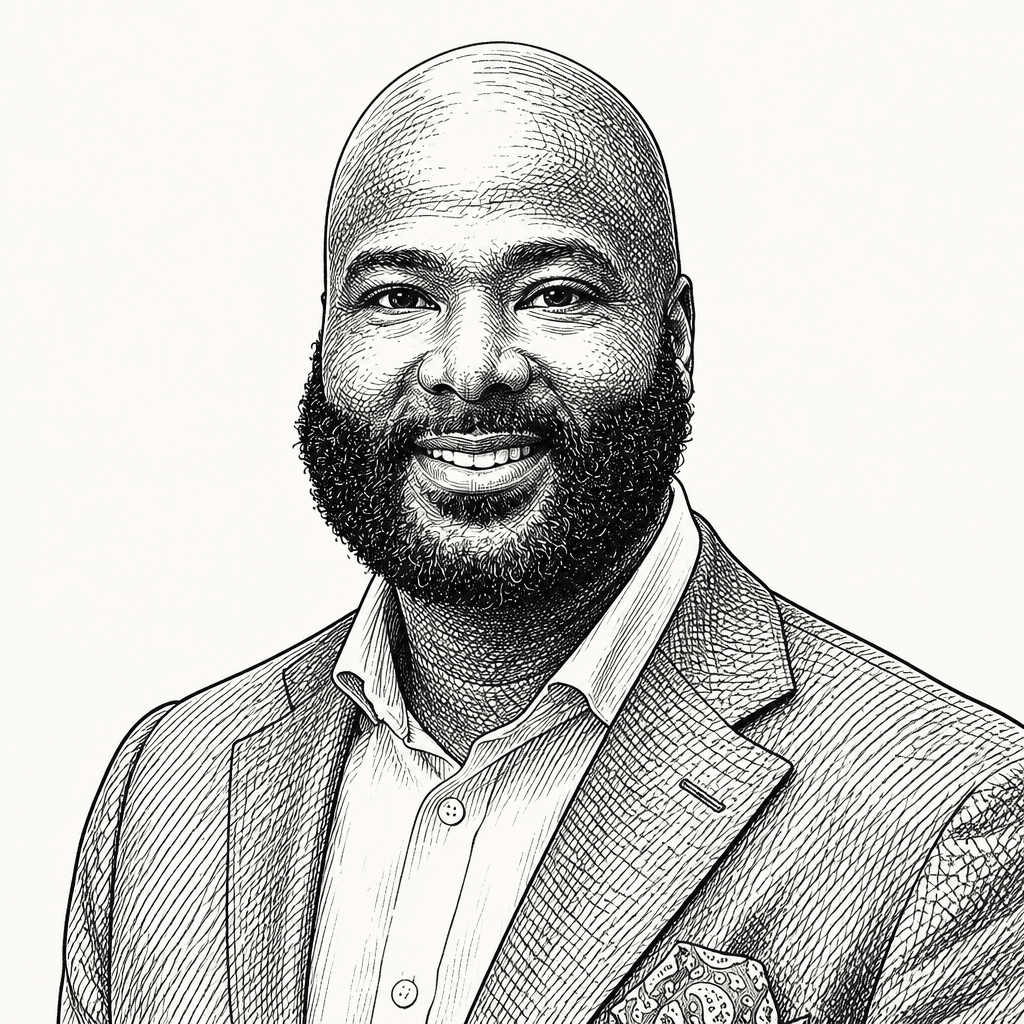 Frederick Riley
 Kim Ghattas
 Yuliya Tychkivska
 William ResnickCaroline Porterfield
 Tommy LoperThe Aspen InstituteTuesday, June 30, 202619 min read
At Dan Porterfield’s final Aspen Ideas Festival as president and CEO of the Aspen Institute, leaders of Weave, Aspen Kyiv and the Institute’s network strategy made a shared case that trust is not a civic sentiment but a capacity built through repeated practice. Frederick Riley argued that local trust must be rebuilt neighbor by neighbor; Yuliya Tychkivska described dialogue and leadership formation under wartime exhaustion in Ukraine; and Tommy Loper said Aspen’s dispersed alumni and programs need stronger connective tissue to turn relationships into usable institutional strength.

Trust is treated as operational capacity, not civic mood
Frederick Riley defines social trust as “the foundational belief that people in society will be honest and fair.” For Riley, that belief is not an abstract civic virtue. It is the “glue” of daily life, and especially of life under pressure. Loneliness, isolation, and people pulling away from one another are, in his account, indicators of a deeper failure: if the United States were a car, “all the indicators would be blinking red.”
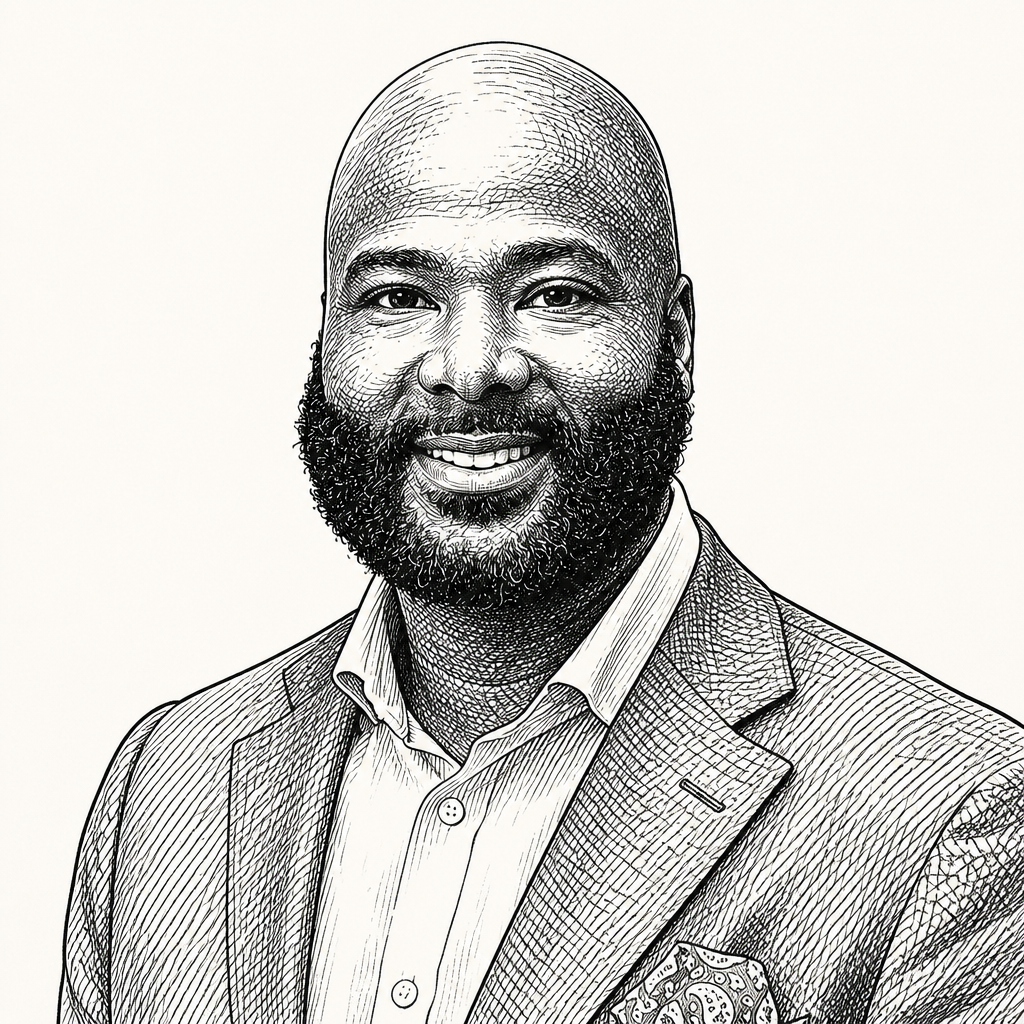
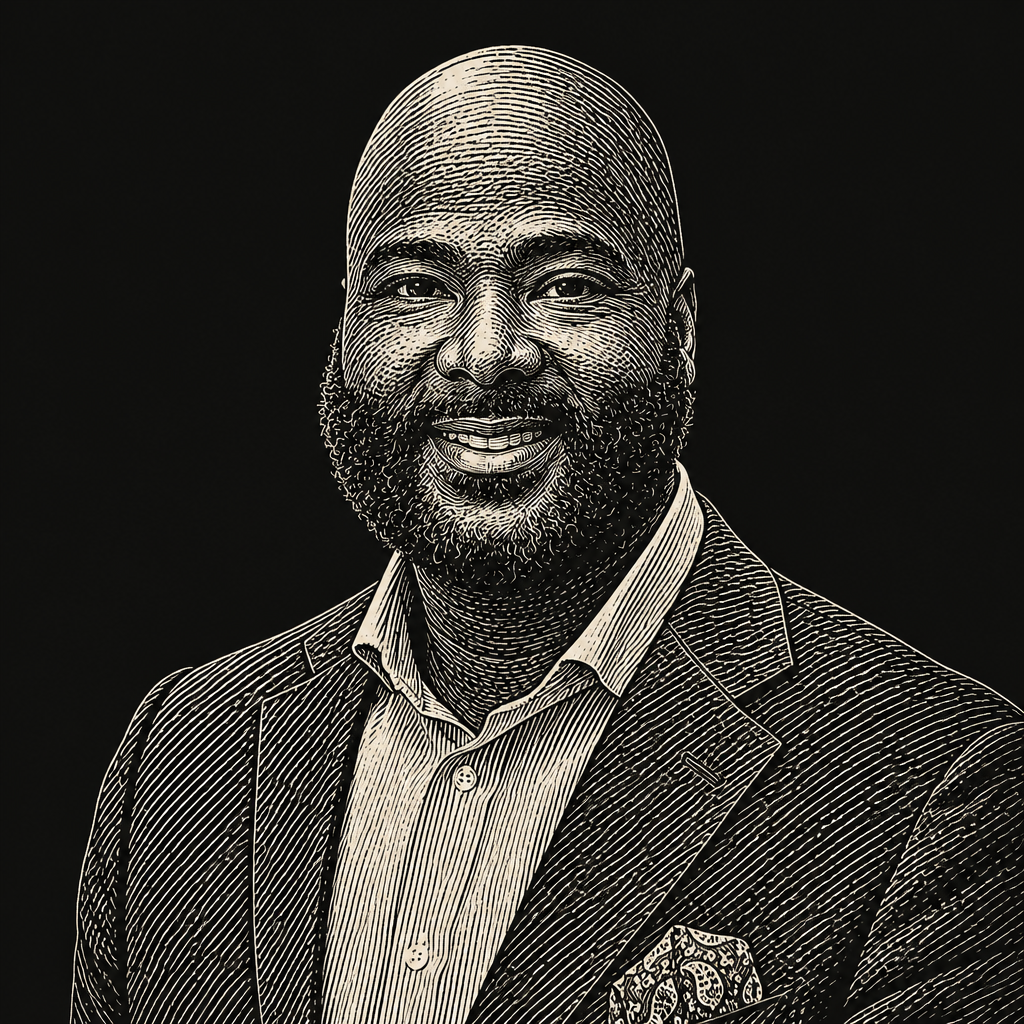
The three bodies of work described here — Weave’s neighborhood trust-building, Aspen Kyiv’s leadership formation under war, and the Aspen Institute’s attempt to connect its own dispersed network — belong together because they treat trust not as sentiment, but as infrastructure. Each depends on repeated, designed contact: neighbors working on the same alley, public leaders sitting through difficult dialogue, young people being reintroduced to civic possibility, or alumni and fellows being connected across programs. The shared premise is that relationships do not become durable by being admired. They become durable through practice, shared work, and institutions designed to keep people in contact across difference.
Weave: The Social Fabric Project, which Riley leads at the Aspen Institute, is built around a deliberately different premise from many programmatic responses to social breakdown. Its founding question, as Riley describes it, was not how to create another institution, but what would happen if “America’s greatest untapped resources” were millions of ordinary people already building trust where they live. The people he has in mind are not credentialed civic intermediaries. They are barbers, coaches, neighbors, and “the neighborhood person who’s annoying but you trust him.”
The project’s work is to find those people, connect them, fund local projects, and give them tools and resources. Riley calls them “weavers,” using the literal image of a loom: different fabrics crossing over one another to make the whole stronger. If one thread is off, he says, “it affects the integrity of the entire fabric.” Communities, in his view, are fraying in the same way, and the practical work is to support the people already weaving them back together.
The scale Riley describes is no longer small. Weave has worked on the ground in three communities, and Dan Porterfield later identifies the expansion support as a $26.2 million Lilly Endowment gift to create Weavers and connection in 75 communities. Over three years, Riley says, Weave plans to highlight and amplify 6,000 weavers, while another 75,000 to 100,000 people who apply will have access to tools and resources. Riley adds that Weave expects to give away 90% of the money, because the work, in his view, belongs with people “actually in the action right now.”
The project’s theory of change depends on the relationship between personal trust and institutional trust. Riley says people do not typically say, “I trust my governor, but I don’t trust my neighbor.” In his account, low trust begins close to home. He says 79% of Americans believe that, given the opportunity, the person next to them will take advantage of them. For Riley, that is not only a sign of distrust in institutions; it is distrust in the neighbor, the person nearby, and the social supports around them.
His argument is that rebuilding trust locally can create the conditions for broader trust to return. If people do not trust those around them, he says, they are unlikely to trust available supports, government, or systems. They will “go into a hole” and not come out. But if local communities can bring people back into relationship, Riley believes the resulting trust can permeate local government and other systems that are struggling with the same collapse.
Asked how Weave will show that its work is doing more than producing inspiring anecdotes, Riley points to both scale targets and measurement. The obvious outputs are the 75 communities and 6,000 Weaver awardees. But Weave is also partnering with More in Common to measure trust at the ground level: what people report when they enter the project, what changes as they cycle through, whether they trust neighbors, systems, and people in their communities, and whether a community weaver’s work brings them closer to others. Riley frames the evaluation question plainly: whether the work is “actually solving something or building these connections in communities.”
A Baltimore alley shows what local trust can make possible
The most concrete version of Riley’s argument is a story from Baltimore. One of Weave’s first groups of awardees included Erica Gonzalez, a resident of the Panway neighborhood. She had been driving her children across town to school when her daughter asked why their neighborhood did not look like the one they were visiting. Gonzalez, Riley says, wrestled with the question, then went out a few days later and began cleaning an alleyway: pulling weeds, removing drug needles, and taking care of a place others had written off.
One neighbor came out to help, then another, then another. The group cleaned the alleyway and went to the mayor’s office to ask for a lease. In Riley’s account, the mayor gave them a 100-year lease for one dollar. They added an outdoor library. Gonzalez then asked Weave for $7,000 to finish building a stage, because she believed the neighborhood needed arts, programming, and music.
The stage became more than a small capital project. Riley says that, a few months later, Gonzalez hosted members of the Baltimore Symphony. Marin Alsop, then an artist in residence at the Aspen Institute, had visited with an Aspen team and said she wanted to bring part of the symphony. Riley says the Baltimore mayor and Moore, then a candidate, were in the audience. Gonzalez ended up on the front page of the Baltimore Sun the next day.
Riley’s emphasis is not on the press attention, but on what followed. When he returned recently with new Weave staff, he saw large piles of dirt at the site. Gonzalez was raising money to build a teen center. Riley describes her as the trusted leader of the neighborhood: “When she speaks, people listen. When she says stop, people stop. When she says clean this up, people in her neighborhood do it.” She is not elected and is not paid for the work. She is “just a citizen.”
That example carries a central claim for Weave: there are people in communities who can move others because they have demonstrated care and earned trust. Riley believes “that power is in every community,” and the project’s ambition is to make it possible for every community to have someone like Gonzalez.
In Ukraine, dialogue has to work under wartime exhaustion
Yuliya Tychkivska describes Aspen Kyiv’s work through a related but more severe frame. In Ukraine, she says, democracy is not sustained only by laws and elections. It is secured by “the fabric of daily decisions of people” and moved forward by leaders who take responsibility, think critically, and make decisions under profound uncertainty.


Aspen Kyiv is named for the city, but Tychkivska says its original idea was regional: to operate in Ukraine and help countries around it, including Armenia and Moldova, through programming and support. Its central work is leadership formation. It invests in people who are brave and responsible, cultivates value-based leadership, and has built a community of more than 2,000 top leaders across sectors.
The important distinction, in Tychkivska’s account, is that this is not a community of like-minded people. Its “super power,” she says, is being a community of “different-minded people” who are open to dialogue and able to participate in a platform of understanding. She is explicit that shared values do not eliminate personal or political difficulty. Sometimes, she says, she may “absolutely” not like a person. But the purpose of the dialogue is to build understanding that enables better real-world decisions.
Aspen Kyiv runs roughly 60 programs a year. It works with teenagers and young people, and it works with senior leaders. Tychkivska says that “half of the government” has gone through leadership seminars and that 120 members of parliament have dedicated a week to the readings used in executive seminars. The point, for her, is not the convening itself but action: every program and dialogue is meant to send leaders back into life to make better decisions.
War has changed the conditions under which that work happens. Asked how to mobilize people for dialogue when survival is the foremost concern, Tychkivska says dialogue is needed more than ever in critical times because people are different and polarized. But she also describes the physical exhaustion of Ukrainians after Russian attacks on critical infrastructure. During a recent winter, she says, her administrative manager’s neighbor froze to death in his apartment after Russia bombed infrastructure; Kyiv had no heating for days and no electricity for days, in freezing weather.
Even people accustomed to the habits of civility and Socratic dialogue, she says, are depleted. Sleep is disrupted. She describes waking at 4 a.m. under high cortisol and living with constant stress. Under those conditions, a dialogue cannot simply begin with the assigned topic. Sometimes people need hours to complain, to unload, or to undergo something “like a psychotherapy,” because the trauma is enormous.
Her own family’s experience is part of that reality. Her husband volunteered to serve and joined the Ukrainian Marines. She took her three children out of the country after, she says, the American embassy called and indicated she was probably on a list and should leave. Yet she resists framing Ukraine as a victim. Ukrainians, she says, are fighting and defending themselves. One lesson of full-scale war, in her telling, is not to take ordinary goods for granted.
Aspen Kyiv’s impact appears in decisions, not only convenings
Tychkivska uses cooking as a contrast to leadership work: when cooking, the products, effort, and result are visible quickly. The impact of Aspen Kyiv’s work can take much longer to see. But she offers several examples of transformation that, in her view, justify the patience.
One is a lawyer who entered a leadership seminar as, in Tychkivska’s words, a “pretty ordinary lawyer.” After the seminar, she decided to enter public service. Three years later, she became Ukraine’s Vice Prime Minister and Minister of Culture, whom Tychkivska describes as one of the best the country has had. For Tychkivska, the mechanism is that Aspen creates time and space for people who feel a calling toward something larger than themselves to reflect and make decisions.
Another example is Andriy, a friend of Tychkivska’s and the owner of one of Ukraine’s largest legal companies. He was successful and wealthy, and already supporting the Ukrainian armed forces substantially. After the seminar, he concluded that support was not enough. He joined the armed forces, brought his professional expertise into an unnamed unit, and now, Tychkivska says, manages roughly 5,000 people while doing work where he is most needed.
Her institutional example concerns justice. Three weeks before the discussion, Aspen Kyiv gathered leaders of Ukraine’s Supreme Court and Constitutional Court — heads and top judges — for an off-the-record conversation about justice. Tychkivska says sociology shows that the biggest public demand in Ukraine is for justice, but “nobody knows what is justice and how do we satisfy it?” The group sat around the Aspen table for 10 hours, including three extra hours beyond the plan, trying to address what justice means in the country’s current conditions.
Tychkivska presents the convening itself as part of the institution’s value: Aspen Kyiv could gather that level of people for a sustained conversation on a critical societal issue. For her, that is part of “building good society.”
Her bottom-up example is the Aspen Challenge in Bucha and Borodianka, two cities she calls symbols of Russian atrocities. Aspen Kyiv worked with children who had lived through occupation. Tychkivska says the organization initially underestimated the difficulty because Aspen was accustomed to motivated, leadership-driven participants. In Bucha and Borodianka, the children initially did not want anything except to leave the country. That meant, to her, that they did not see a future for themselves there.
After three months of mentoring, work, and exposure to established leaders, the students presented on stage to the mayor of Bucha. They showed a pilot online platform collecting data on local events because Bucha did not have a website. Tychkivska says the mayor, sitting on the jury, responded as if making an acquisition: “I’m taking you guys, see you tomorrow in my office.” For her, the lesson returns to trust: young people who initially wanted to leave were brought into a relationship with civic possibility.
The Institute is trying to turn an archipelago into a network
Tommy Loper describes his work as building interconnectedness across the Aspen Institute’s unusually wide field of programs, partners, and alumni. He has worked at the Institute for 18 years, and says what attracted him was a belief in people working together for a better world. That belief, in his view, appears across programs such as Weave and Aspen Kyiv.

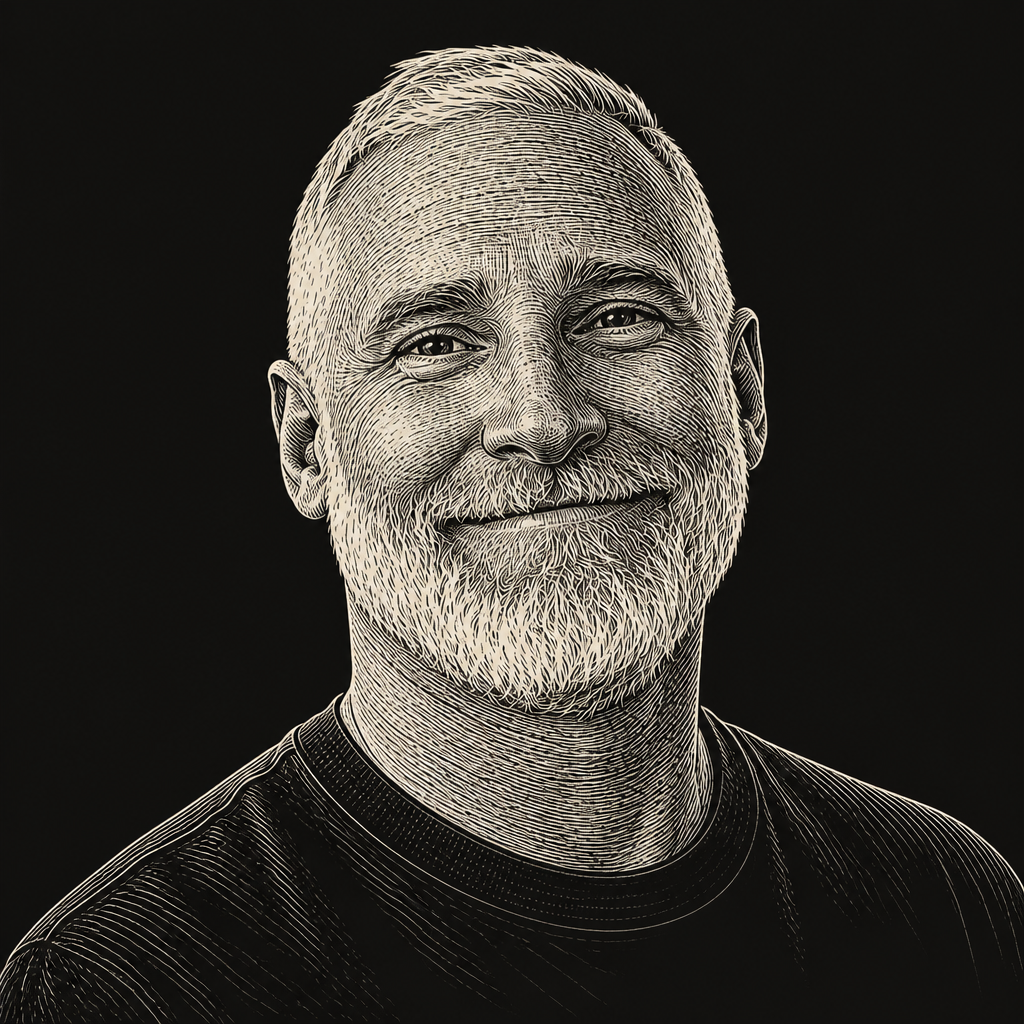
The Institute, as Loper describes it, has 13 international partners, 60 programs, and roughly 250 events each year. Porterfield adds that about 100,000 people have an Aspen affiliation, but they are spread across roughly 70 “little islands,” like an archipelago. Loper’s work is to connect those islands into something more like a continent, so that people affiliated with different programs, geographies, and issues can find one another and share knowledge.
| Aspen network element | Figure named in the discussion |
|---|---|
| International partners | 13 |
| Programs | 60 |
| Events each year | About 250 |
| People with an Aspen affiliation | About 100,000 |
Loper breaks the work into three forms of connectedness: among people, between individuals and the Aspen Institute, and across Aspen’s internal ecosystem of programs and international partners. The first is about relationships and empathy across lived experience, geography, and political perspective. The second is about keeping people who have gone through programs such as Project Play or the Rodel Fellowship involved in the broader Aspen community. The third is about making the Institute’s store of wisdom, expertise, and trust more usable on complex issues that cross program boundaries.
Two new tools illustrate the approach. The first is the Aspen Passport, which Loper says is launching later this year and rolling out more fully next year. He describes it as “almost like the Netflix of the Aspen Institute”: if someone likes one event, program, or issue area, the system can help them find related gatherings, content, or opportunities. Porterfield says a person interested in climate change or community building should be able to have relevant Aspen offerings delivered automatically.
The second is an effort to build “network intelligence.” Loper is working with Andreas Hofbauer, whom he identifies as having a PhD in network science, to gain better insight into how Aspen can connect the right actors intentionally. Aspen has historically relied on the art of convening — spaces, roundtables, expert moderators. Loper wants to complement that with greater intentionality about which network actors should be brought together for specific societal challenges.
Loper says he interviewed about 200 people across the Institute during the prior year. One repeated impact stood out: “If not for the Aspen Institute, I never would have met so-and-so.” Sometimes the “so-and-so” was someone with a different political perspective; sometimes from another sector, industry, geography, or identity. Loper argues that Aspen can make distant relationships closer, moving people from three or four degrees of relationship to first-degree relationship — his analogy is Six Degrees of Kevin Bacon — and that this can deepen empathy, increase social capital, and support career or life pivots. He says Aspen can measure that movement in relationship distance, though he does not spell out the method in the discussion.
This is also an internal operating challenge. Aspen’s many programs have distinct missions, funders, audiences, and methods. Porterfield says those programs are responsible for carrying out their purposes, assessing impact, and improving where needed. But an enterprise that large also needs people whose job is to connect dots: to find through lines of value, method, or opportunity across programs.
That kind of work is not always naturally funded, Porterfield says. Foundations often fund programs, not internal connective tissue. Aspen therefore has to raise money for inner structure and capacity. He describes Loper’s role as one example, and also names Maria Assebal, the incoming interim CEO, as someone whose strategy role was created because previously no one was paid to bring the Institute into strategic discussions across programs. Porterfield says that role has connected programs that otherwise thought they were separate and allowed the Institute to have a larger impact.
Responding to a question from William Resnick, who asks for a fuller explanation of what the Aspen Institute does beyond terms such as Executive Seminar and AGLN, Loper gives a high-level taxonomy. Aspen convenes in festival settings around public ideas and speakers. It convenes in dialogue around systems change, policy issues, and Socratic discussion, including Executive Seminars and Socrates seminars. And it convenes around leadership development, supporting people in understanding themselves, how they show up in society, and how they can use their platforms and gifts for good. That leadership work includes dozens of fellowships around the globe, run by Aspen’s international partners and by Aspen in the United States.
The strategic implication is that Aspen’s offerings are possible stages in a lifetime relationship. Loper describes work with the Rising Generations team to understand how a young person might enter Aspen at 14, return at 22, and come back again at later inflection points involving family, career, or faith. He also points to the McNulty community and the broader Aspen Global Leadership Network, where fellows doing difficult work around the world often need peer support, encouragement, and acknowledgment that the work is hard.
Riley argues Americans have forgotten practical interdependence
The sharpest challenge to Riley’s U.S.-based diagnosis comes from Kim Ghattas, who speaks from Lebanon. She says Riley’s comment about Americans not trusting their neighbors is almost the opposite of Lebanon, where people trust “nothing but our closest neighbor, our community.” After war, the port explosion, financial crash, and the pandemic, she says, Lebanon “should be at each other’s throats by now,” but is not, because community remains strong. She asks whether Weave has looked at countries where community is strong and what can be learned from how they work or fail to work.
Riley answers that Weave did use research by Kristin Lord, formerly of IREX, on six ways to rebuild broken trust when building its first strategic plan. He says those six ideas arc the program’s work. But his more immediate answer is about dependence. He believes one reason Americans can distrust one another so profoundly is that they do not know they need one another.
His example comes from Fiji, where he visited his child after a year of Peace Corps service. Riley says his child had changed noticeably: walking around the village, talking with people, leaning into conversations. When Riley asked why, his child answered, “We need each other here.” The explanation was practical. One person grows lemons; a neighbor has wild greens; another person’s wife goes into town for rice; someone else hunts and brings home beef. “I don’t eat if they don’t eat,” Riley recalls him saying. “I don’t survive if they don’t survive.”
That sentence becomes Riley’s cultural diagnosis. In the United States, he says, it is now possible to behave as if one does not need others. Weave’s work is to remind people that they do. It does so through repeated local activity — “like tilling a garden” — where working together over time grows dependence and connection. The ethic Riley wants to spread is not only neighborliness, but remembered interdependence.
When another audience member asks directly about the relationship between human trust and institutional trust, Riley answers that institutions are run by people. A lack of trust in an institution is usually a lack of trust in the people running it. If neighbors do not trust one another, and institutional leaders are experienced only through television or laws, those mistrusts collide. The work has to begin at the individual level before it can move into institutions, though Riley says they “all ride in the same car”: one driving, one passenger.
Durability requires mission, adaptation, and sometimes an exit
The discussion’s answers about permanence share a premise: institutions and programs have to sustain purpose without freezing their form.
Caroline Porterfield asks how the programs have adjusted during eight years of social, economic, and technological change, and how they will continue adjusting. Loper’s answer is that Aspen has to recognize these changes are not separate issues. Social, economic, and technological shifts are interrelated, and people across the Aspen network are already working in all of those spaces, often separately. The strategic need is to bring them together so the response is more holistic.
For Tychkivska, the test was immediate and existential. When the full-scale invasion began, Aspen Kyiv first dealt with emergencies: evacuation and other urgent needs she does not detail. Then the team convened online from wherever people had scattered and asked what had to change. Their conclusion was that the mission remained “100% relevant,” but the formats had to change. The result was six new programs and many new formats and models, all tied to the same mission.
Her organizational culture has had to become lean, flexible, and adaptive because uncertainty is constant. An event can be canceled two hours before it begins. A reunion of 400 people can happen with no water or electricity, with participants bringing candles because the power was cut shortly before. The practical lesson she draws is to keep expectations low, appreciate what is possible, become less perfectionist, and accept that “done is better than perfect.” The essential thing is to keep going: to stand up one more time than one falls.
Tychkivska’s sustainability answer is also financial and institutional. One of Aspen Kyiv’s largest donors, a Ukrainian business leader whose company she identifies as Terwin, had factories completely destroyed three weeks earlier. Under wartime conditions, she says, Aspen Kyiv cannot rely on such donors’ continued support. Inspired in part by Porterfield, Aspen Kyiv has decided to begin building an endowment. The goal she names is $45 million, which she calls scary. The purpose is permanence: if she is gone, if donors are gone, if factories are gone, the Aspen idea — “body, mind, and spirit for leaders,” value-based leadership — should live.
Porterfield frames that as especially important for an emerging or new democracy: institutions need permanence if they are to stand the test of time. His own answer on sustainability is condensed but operational: know the mission, live it, recruit people who want to live it, compete confidently for resources and impact, tell the story, and listen to those who rely on the institution so it can adjust to a changing world.
Loper uses the image of a grove of aspen trees: not one tree, but a colony with a shared root structure. Even after hard times or forest fires, the root system allows more things to flourish. His hope is that Aspen’s human network functions similarly over time.
Riley gives the most paradoxical answer. Weave thinks about shifting culture and norms, not just scaling programs. Programs can scale, he says, but culture changes only when norms change and people begin to think, act, and behave differently. In 15 years, he wants tens of millions of people — “20, 30 million” — to identify as weavers in their communities.
But if Weave succeeds, Riley says, the program may be shut down or doing something else. Durability is not preserving the organization forever. It is creating a cultural shift that no longer requires the same intervention. He jokes that perhaps they will move on to “saving turtles,” but the serious claim is that if Weave is still doing the same work 15 years from now, he and his team will not have completed the task.
If 10 or 15 years from now, if we aren’t moving on to do something else, then we’ve not completed the task.
That is the tension running through the discussion: Aspen’s leaders are building programs, networks, platforms, and endowments, but the desired outcome is not institutional activity for its own sake. Riley wants local trust to become normal. Tychkivska wants leaders to make better decisions under extreme uncertainty. Loper wants the Institute’s dispersed relationships to become usable connective tissue. Porterfield’s formulation — mission, people, resources, story, listening, adaptation — is the institutional version of the same claim: permanence depends on staying clear about purpose while changing the means.