Rebuilding Trust in Science Requires Transparency, Accountability, and Public Presence
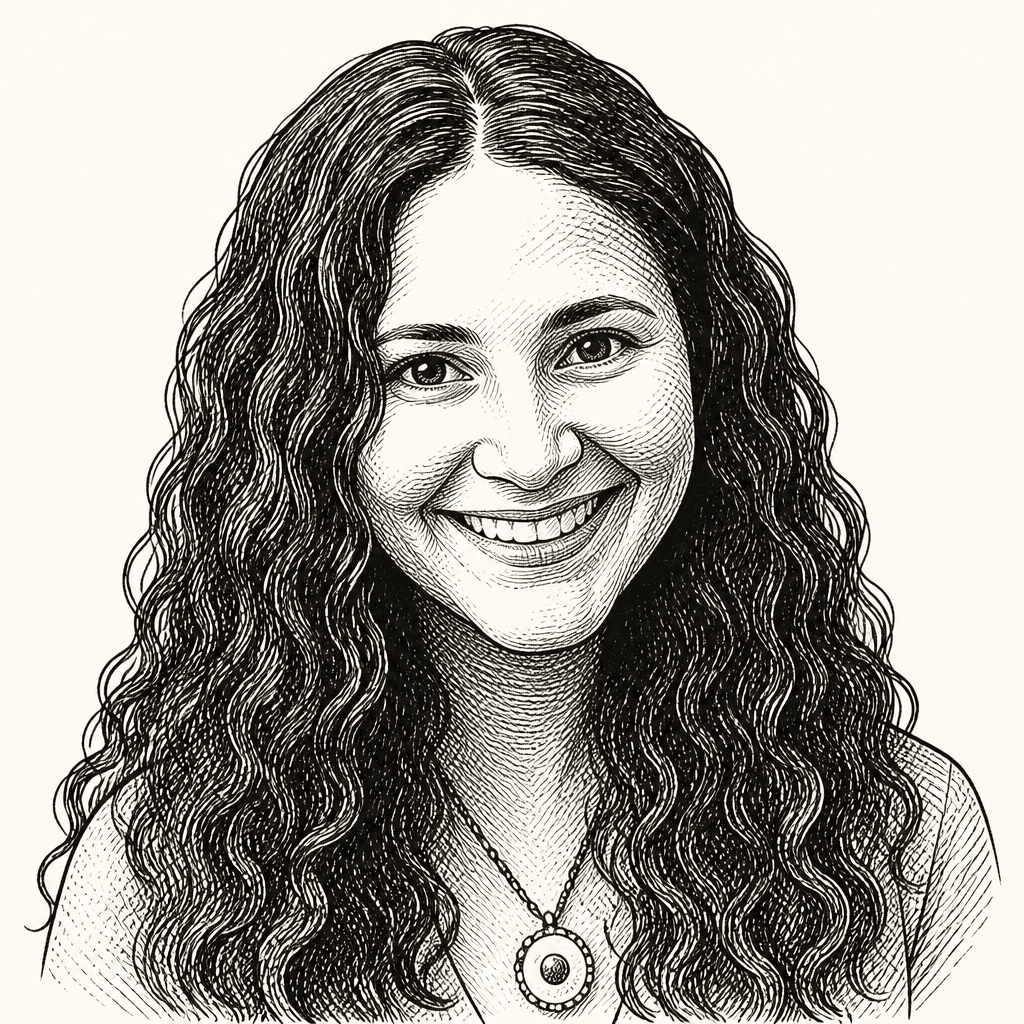 Laurie SantosSabrina Torres
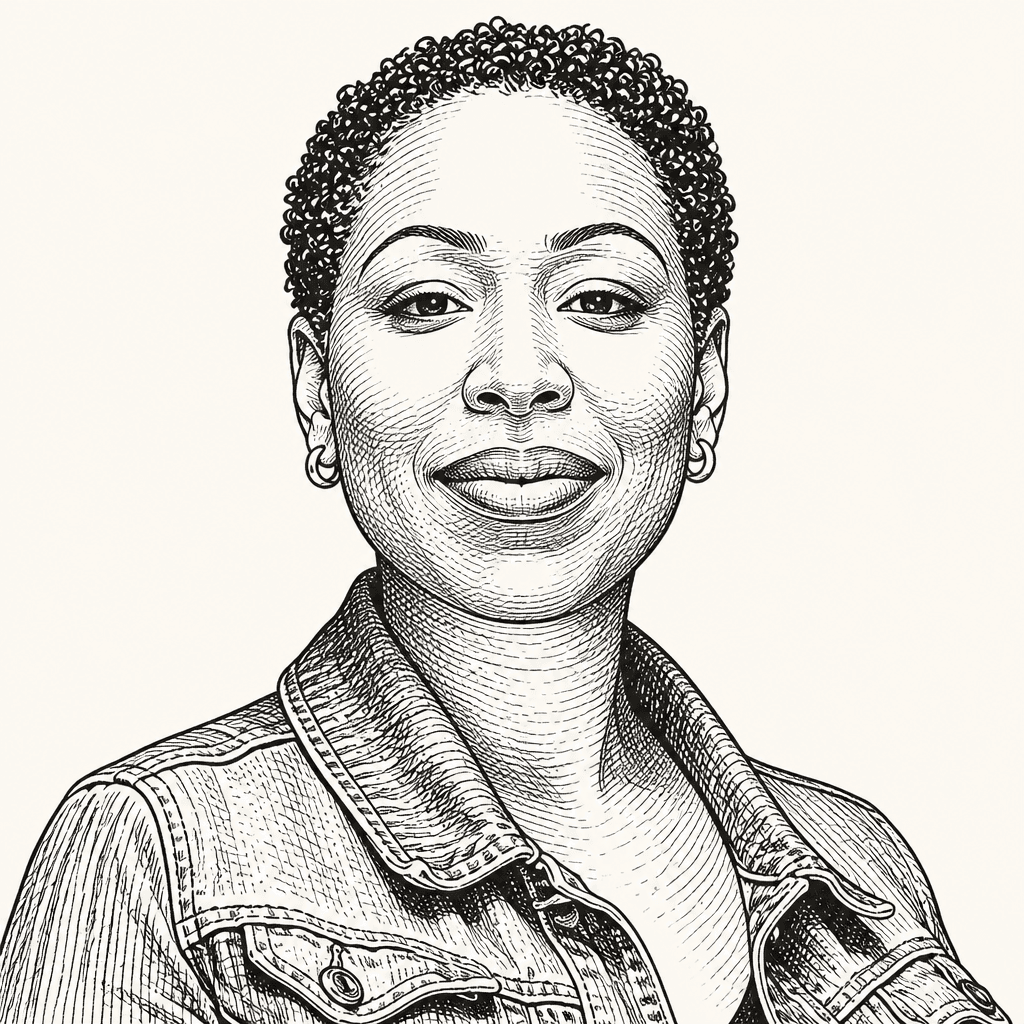 Jenn White
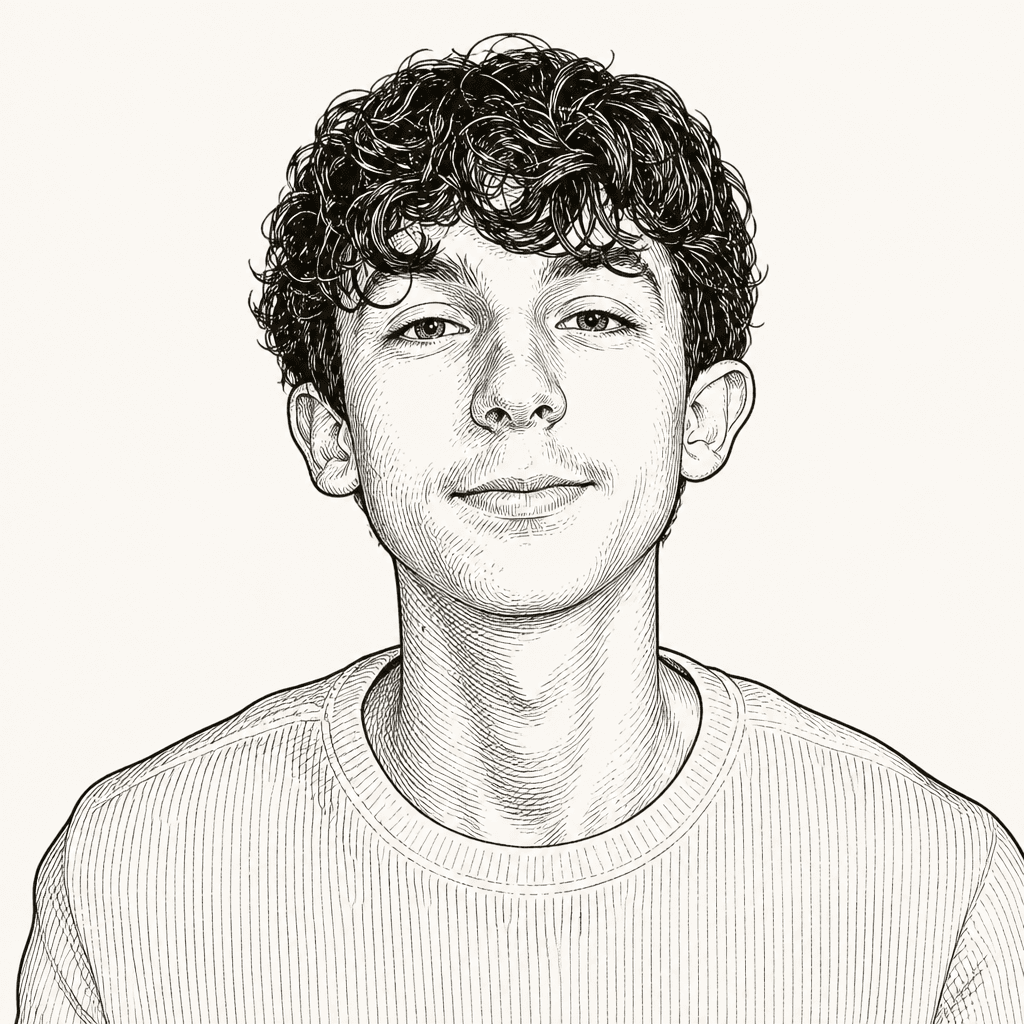 Leonardo Silva
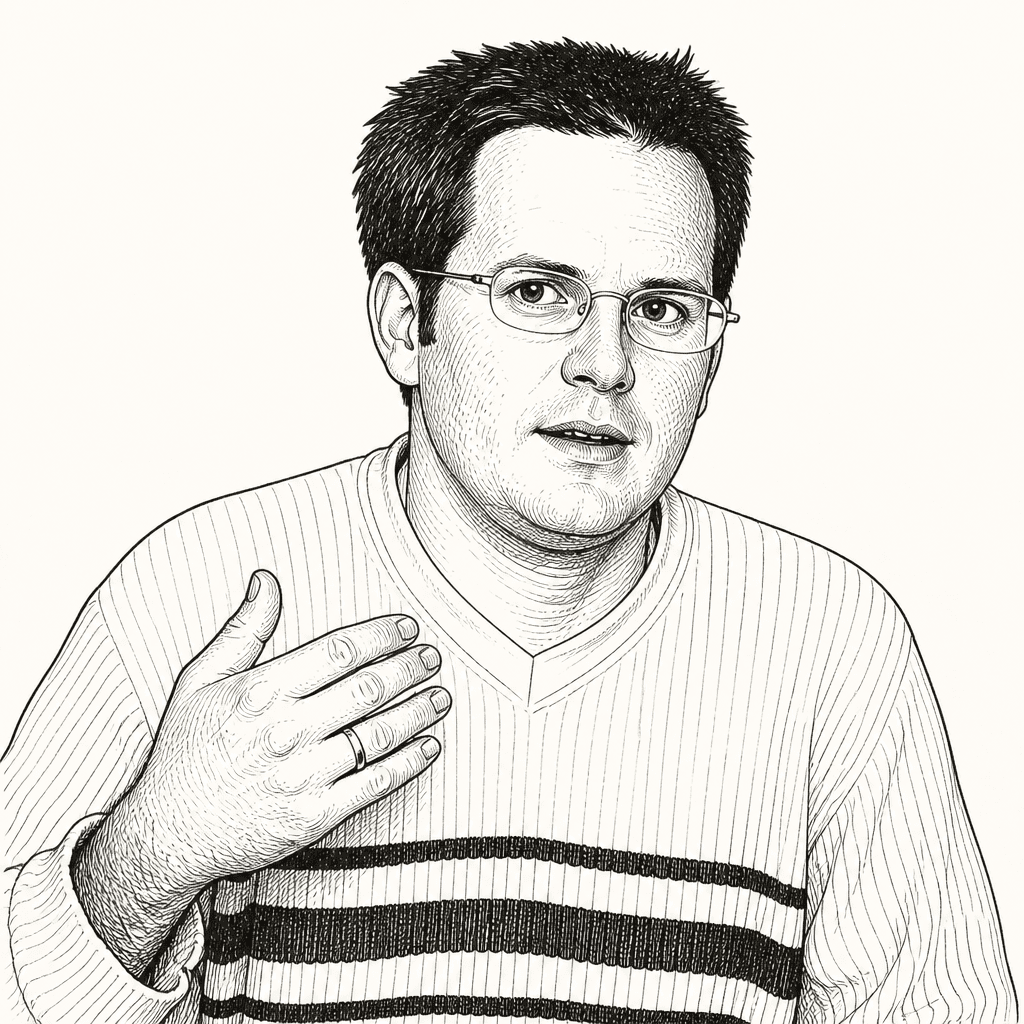 Matthias BerningerMike VarshavskiThe Aspen InstituteTuesday, June 30, 202621 min read
At the Aspen Ideas Festival, Jenn White, Laurie Santos, Mike Varshavski and Matthias Berninger examined why confidence in science has weakened even as science remains more trusted than many institutions. Their shared argument was that trust cannot be restored by asserting expertise more forcefully: scientists, doctors, universities and companies have to make evidence more visible, acknowledge past failures, show up where people seek information, and explain uncertainty and disagreement as part of the scientific method rather than a reason to dismiss it.

Trust is rebuilt by making evidence visible, human, and contestable
Trust in U.S. public institutions has been falling, and science and medicine have not been exempt. Jenn White framed the problem from that premise: confidence in scientists is lower than it was in April 2020, at the beginning of the COVID-19 pandemic, even though science and medicine still rank higher than many other institutions. The question is not whether scientific evidence matters, but how confidence in it can be rebuilt when many people doubt experts, institutions, and the channels through which expertise reaches them.
Laurie Santos put transparency at the center of the trust deficit. Science, as she described it, often operates through systems most people cannot inspect. Research is published in journals many members of the public cannot access. Scientists use specialized vocabulary without translating it. Many researchers have not made a regular practice of explaining what they do, why it matters, and why the process deserves confidence. Santos also tied distrust of science to declining trust in higher education, because so much scientific work is housed inside universities. That pairing makes it harder for scientists to communicate in a way that is received as credible “at face value,” rather than first being met with disagreement.
Mike Varshavski described the problem less as a deficit of public intelligence than as a breakdown in relationship. Social media was supposed to connect people, he said, but in a digitally connected world people are “more disconnected than ever.” Medicine compounded that problem by staying away from social platforms for more than a decade. Doctors and scientists treated conferences and journals as respectable venues and social media as beneath them. The result was a vacuum: of information, of presence, and of trust.
That vacuum did not stay empty. Varshavski said “grifters” and “snake oil salesmen” learned to use the platforms doctors avoided. They found emotional, powerful ways to reach people. Medicine, by contrast, did not create a clear line of communication with the public in the places where the public was already looking.
His analogy was deliberately simple: even arbitrary group separation can create hostility. If one group wears red shirts and another wears blue shirts, the division itself can make people see one another as enemies. For Varshavski, healthcare made a similar mistake by forgetting the broad presence that family medicine tries to maintain. A family doctor is expected to meet patients in the emergency room, operating room, inpatient ward, outpatient clinic, hospice, nursing home, and home visits. The same principle, he argued, now has to extend to social media.
Matthias Berninger drew the distinction that gave the discussion its sharpest diagnosis. The problem, in his account, is not skepticism. Good science requires skepticism. The problem is cynicism: a posture in which people no longer care which expert is right, or whether an expert is distinguishable from “the average Joe” sitting nearby. In that cynical environment, expertise loses its public function not because people ask too many questions, but because they stop believing evidence can answer them.
Every good scientist is skeptical. If you are not skeptical, you are not a scientist. Skepticism is not the problem. The problem is like cynicism.
Berninger said Bayer’s polling shows that “the majority today” gets scientific information from the same place they get much other information: social media. That creates obvious problems for differentiated scientific communication. But he also emphasized a hopeful finding: despite polarization so intense that Americans may seem unable to agree “that the sky is blue,” he said they broadly agree that science is important and that the country should invest in it. He said that support appears across demographics and political leanings. The crisis, as he described it, is not that the public has rejected science as an abstract public good. It is that the institutions and communicators of science are losing the contest over how evidence is interpreted, trusted, and acted upon.
| Speaker | Diagnosis | Remedy emphasized |
|---|---|---|
| Laurie Santos | Science is too opaque and tied to declining trust in higher education. | Transparency, translation, and relationships with the public. |
| Mike Varshavski | Medicine abandoned the platforms where people now seek answers. | Show up in social media with evidence that can compete for attention. |
| Matthias Berninger | Skepticism has curdled into cynicism, often helped by interested actors. | Defend referees, expose incentives, and move from belief to evidence. |
Distrust has causes, and some of them are earned
Distrust in medicine and science is not always irrational or merely the product of bad information. White named the Tuskegee experiments and the use of Henrietta Lacks’ cells without her consent or the consent of her descendants as examples of lived experience that can make distrust understandable. Rebuilding trust, on this view, requires acknowledging and repairing transgressions rather than treating skepticism as ignorance.
Mike Varshavski broadened the category of medical failure. He said he had a video going live the next morning on major mistakes in medicine over the previous hundred years, including Tuskegee, Henrietta Lacks, the Cutter Laboratories incident in which children ended up getting polio, the mishandling of the AIDS epidemic, and thalidomide globally. The common lesson he drew was clinical: when a mistake happens in a hospital, the best chance of a good outcome begins with owning it. A physician should tell the patient what happened, acknowledge the error, and explain what changes will be made so it does not recur. That kind of ownership, he said, reassures the patient that the institution is not simply “covering your own behind.”
Laurie Santos made the same point through the logic of personal trust. If a person breached trust with a friend, the first steps would be apology, repair, and asking what could be done. Many institutions, she argued, have not done this. Trust is built in relationships, and therefore scientists, doctors, and other communicators of evidence-based public-interest messages need to be “in relationship” with the people they are addressing. That means treating the public not as an abstract audience to be corrected, but as people with whom scientists have obligations similar to those in any relationship they value.
Matthias Berninger added a different cause: deliberate doubt. He pointed to the tobacco industry as the historical example, calling them “merchants of doubt” who systematically undermined scientific opinion and trained people to do it well. He argued that similar patterns now appear around vaccines and other subjects. In his account, the erosion of trust in science is often driven by interest — by actors who benefit from doubt.
The first target of those actors, Berninger said, is the referee. He meant the institutions that translate scientific information into regulation, guidance, or innovation: the CDC, NIH, FDA, EPA, and similar bodies. If the goal is to “play the game without a referee,” then weakening those institutions is essential. This is why, in his view, public-health agencies and regulatory bodies have come “under siege.”
Berninger wanted the beneficiaries of misinformation named. He asked who profits when people click through claims about products that promise to keep them young forever and then buy something at “the intersection of snake and oil.” In his view, industries that benefit from scientific falsehood should become socially unacceptable in the way selling cigarettes to children is socially unacceptable. He described the fight not as an exercise in accommodation but as a “cage fight.”
Varshavski agreed that bad incentives and bad actors matter, but warned against making profit itself the public argument. For a general audience, he said, it is not obvious why a corporation selling pharmaceuticals or vaccines is inherently more trustworthy than a company selling supplements. Both may make money. The problem is not that someone profits; the problem is attacking science in order to profit. If defenders of evidence respond by saying, “You’re doing this to get wealthy,” the other side can say the same back, and everyone retreats into their original group.
Their emphasis differed in a way that matters for communication. Berninger focused on the industries and interests that benefit from misinformation and on the need for social and policy pressure against them. Varshavski focused on the tactical risk of making motives the center of the public case. Both treated misinformation as consequential. Varshavski’s warning was that the case for evidence can be weakened if it sounds like one profit-making sector accusing another rather than a disciplined argument about what the evidence shows.
The messenger now matters as much as the message
People do not encounter scientific claims in a neutral information environment. They encounter them through messengers, platforms, identities, and relationships. That reality shaped the discussion of YouTube, TikTok, search engines, AI chatbots, and the broader attention economy.
Mike Varshavski said expertise itself has become harder to identify online. A person can put on an outfit that signals authority. People use the title “doctor” in different ways to imply expertise in subjects where they may not have it. But the larger reason people turn to YouTube, TikTok, Google, ChatGPT, Gemini, or other tools is simple: when they get a diagnosis or feel a symptom, they reach for a phone and type something into a search bar.
That is especially true for younger people whose search behavior is native to social platforms. Varshavski acknowledged that algorithms are often blamed for surfacing extreme or inaccurate results, and he agreed that they can do so. But he added that the algorithm reflects human psychology: what people click, watch, and engage with. Referring to a Harris poll being discussed in the session, he recalled that a large share of people agree there is misinformation on science and health online, even while they use online spaces as their primary source of information. The contradiction exists, he argued, because good information has often not been present in those spaces in a form that can succeed there.
His answer was not to make scientific communication less serious, but to make it compete. He described “dressing up” good science through entertainment, cultural trends, and timely hooks, such as tying content to events like the World Cup. He said his YouTube channel has done this for ten years and generated six billion views. If a small team can do that, he argued, large organizations such as the American Medical Association or the American Academy of Pediatrics should be able to do far more.
Laurie Santos gave the psychological account of why this works. People do not merely process information; they listen to people with whom they feel some relationship. The messenger’s identity, values, and perceived alignment matter. So does the parasocial relationship that develops when audiences repeatedly encounter a public figure through the attention economy.
Her example was Taylor Swift. Santos said she has not met Swift, but knows about her fashion, her life, and “the wedding’s coming up” because she sees so much information about her. That attention creates a felt connection. If Swift says something about fashion, Santos said, she is more likely to listen. The same mechanism is available to science communicators, but many scientists have not used it. The “snake oil salesmen” have built parasocial relationships through persuasive media; scientists largely have not.
For Santos, entertainment is not a frivolous add-on. It is a condition of entry. People use their free time to be entertained. If scientific communication can make people “nerd out while being entertaining,” it can meet them where they already are. Evidence-based content must be pro-social and accurate, but if it ignores boredom, habit, and the “clicky finger” that opens YouTube, it will not reach enough people.
Varshavski described the opportunity and risk of social media in more operational terms. The attention economy is brutally competitive: science content is not only competing with misinformation, but with Kim Kardashian, WWE, and whatever happened on Saturday Night Live. But social platforms also have fewer gatekeepers. A creator can build an audience without being selected by a traditional institution.
He argued that there may be no better time to start than now because subscriber counts matter less than they used to. In earlier years, when he published a video, his 15 million YouTube subscribers gave him a large distribution advantage. Now a video is tested with a smaller subset of viewers; if it performs well — if people watch, like, comment, and respond positively to surveys — it can spread. If it does not, it stops being shown. For a new creator, that means a good video can still break through without a large subscriber base.
The risk is reputational and professional. A medical provider cannot fully separate personal experimentation from professional authority. A profile disclaimer saying views do not represent an employer may help legally, but the letters after a clinician’s name still represent a profession. If physicians, nurses, or physician assistants behave badly online, Varshavski warned, they can make the broader group look bad. He encouraged experimentation, but “more conservatively than you would if you’re a stand-up comedian.”
AI is part of the same shift in where people seek answers. Asked about patients using AI for health questions, Varshavski called it a unique tool, sometimes overhyped in its current capabilities. He said patients are using it and that he encourages them to use it — but not unilaterally. In his preferred use, AI helps patients learn about themselves, prepare better questions, and come to the doctor more empowered. The danger is not patient curiosity; it is replacing clinical relationship and judgment with an unmediated tool.
He then widened the point into institutional response capacity. Large medical organizations, he argued, are still too slow. As an example, he said that when the Secretary of Health and Human Services says something obviously inaccurate, or posts a claim such as an assertion that the HPV vaccine hurts more people than it helps, major medical organizations lack the capacity to respond on the single “monoculture” media channel in a way that effectively fact-checks it. Varshavski said medicine needs to invest in that capacity through social media, including a team of “Avengers” made up of medical professionals who are adept and comfortable correcting misinformation in public.
Uncertainty has to be explained without pretending it away
The public often wants certainty, and digital tools provide answers immediately, whether or not they are good answers. Science, by contrast, is driven by uncertainty. The communication challenge is to explain uncertainty without making it sound like evasion, incompetence, or bad faith.
Laurie Santos named the stakes of distrust in institutional terms. At her academic institution, she said, NIH funding had been heavily cut. She described colleagues “literally in tears” because long-term behavioral datasets were pausing in ways that could never be fully recovered. In her view, damage to perceptions of science is not only a present-tense problem. It affects future knowledge, future funding, future clinical decisions, vaccine uptake, and babies who may be harmed later by choices made now.
Jenn White personalized the public-health stakes by saying her father was a polio survivor. She watched the effects over his life: one leg significantly affected and, as he aged, a “second wave” of consequences. That experience sharpened a moral difficulty. If an immunocompromised person, or a parent of a child too young to be vaccinated, faces life-and-death consequences from another person’s decision, the request for grace toward vaccine refusal can feel intolerable.
Mike Varshavski distinguished short-term anger from long-term trust. Anger may produce short-term wins, he said, but the pandemic showed the cost of shortcuts: overpromising, downplaying side effects, or seeking immediate uptake at the expense of candor can create long-term distrust. That distrust then gives bad actors fertile ground to point to moments when authorities were not honest.
He offered a concrete example from residency. Twelve years earlier, his hospital had a policy of dismissing mothers from the practice if they refused to vaccinate their children, with 30 days’ notice. The practice later concluded that the policy produced bad outcomes for those families and for the community. The alternative was to keep the relationship while protecting other patients: unvaccinated children could be brought into the office safely, placed in a quarantined room, and kept from exposing children who could not be vaccinated or were immunocompromised. The practice still treated those families, advocated for their children in other areas, and maintained trust. Varshavski said vaccine uptake increased, as did trust across the patient population.
Because it's not about getting more confidence in science, it's about creating a better relationship with people and then you will get more confidence in science.
His broader principle was that physicians should stop pushing people outside the circle. The same applies beyond the clinic. Scientists often appear on television stations where everyone agrees with them and applauds. Varshavski said he wants more scientists to go onto platforms where people disagree, where the setting may be instigative or inflammatory, and “sit there through the fire” if they are capable. They should answer hard questions, admit when they do not know, and lead with their human side.
Matthias Berninger brought a crisis-management example from mad cow disease in Europe, which he helped handle for the German government before the age of social media. He said that absence made the task “orders of magnitude easier” than it would be now. The key distinction, he said, was between belief and evidence. There had been a belief that “a German cow can’t get mad.” There was also a testing system that appeared to confirm German cattle were safe, but the testing net was so wide that it effectively could not catch an infected cow. When the first cow was caught by accident, the belief collapsed.
That collapse created an opening for evidence. Berninger said the crisis was resolved by identifying the root cause and the measures required: culling infected herds, changing the feed supply, eliminating meat and bone meal in many areas, and removing risk materials. He emphasized the brutality of those steps. Telling a dairy farmer that an entire herd had to be killed was something he never wanted to do again. For farmers, he said, the herd is family. But the evidence dictated the response.
Santos drew from that example a communication lesson. Uncertainty is easier to tolerate when there is a trusted relationship. If she has a strong relationship with her doctor and presents with frightening symptoms, she can hear that the doctor is not sure which diagnosis is correct and wants to talk through the possibilities. The uncertainty itself does not become evidence of bad faith.
She also argued that scientists need to recover the idea that uncertainty is “cool”: the story of science is that people did not know something, then figured out more, and sometimes changed their minds in ways that saved lives. The movement from uncertainty to greater certainty — such as vaccines preventing polio — can be told as a compelling human story rather than treated as an embarrassing caveat.
Transparency is becoming a technical requirement, not just a moral one
Matthias Berninger said Bayer’s own challenge is not only to communicate the promise of current research — including work on diseases such as Parkinson’s and regenerative cell approaches to restoring sight — but also to acknowledge where the company and its industry have been wrong. He named two weaknesses: acknowledgment and transparency.
The transparency problem is changing because artificial intelligence is becoming a source of public information. Berninger argued that some studies are accessible to large language models and some are not. In his view, studies that are not accessible are much less likely to become part of the answers those systems form. He did not present this as a technical audit of model behavior; he presented it as a practical risk for institutions that keep evidence out of public reach while more people use AI as an information interface.
That means the old habit of keeping dossiers and studies confined to regulators, lawyers, or technical audiences is no longer only a public-relations issue. It may affect which evidence is available to the systems that help shape public understanding.
Berninger said Bayer has piloted a different approach. When the company seeks approval for new medicines or reapproval for substances it has sold for years, Berninger said, it has started putting the dossier submitted to the regulator — the “referee” — in front of the public as well. He did not claim that most people will read all of it. Even people who are unusually interested will find the studies hard work. But public availability matters, in his account, because large language models may be able to access the material, and because transparency itself is part of rebuilding trust.
The institutional obstacle, he said, is fear: fear that oversharing will damage the company’s intellectual-property position or create other disadvantages. His view was that companies may need to make patent lawyers “sweat” and publish more of “the good, the bad and the ugly.”
The stakes, as Berninger described them, are heightened by the convergence of artificial intelligence, biology, and chemistry. He argued that society is only beginning to understand what that convergence will produce. If institutions fail to communicate coming scientific improvements well, he warned, those fields could end up in the position of mRNA science in the United States: despite helping the country overcome the pandemic, researchers no longer feeling welcome and moving to Europe or elsewhere. That, he said, cannot happen to the scientific revolutions now “at our fingertips.”
Asked how to shift a risk-averse corporate culture, Berninger joked, “One Aspen Ideas Festival at a time,” then gave the practical answer: scientists and communication experts need to band together to convince lawyers that transparency is a good idea.
Laurie Santos saw a parallel in higher education. Institutions change, she said, when they are existentially threatened. Santos said Yale had produced a major report on trust in higher education because declining trust now threatens universities’ mission and even their existence: NIH funding, admissions, and public perception are all implicated. In her description, one of the report’s first themes was institutional transparency, including around admissions and what universities do. Her hope was that institutions would not need to be pushed to the edge of survival before doing the right thing.
Disagreement should be visible without making every claim equal
The public-facing problem is not solved by telling every scientist to write for everyone. It requires a culture in which expertise remains intact, translation is valued, and disagreement is made legible as part of the method rather than as evidence that no one knows anything.
A psychology graduate student at the University of Chicago described a professional culture in which papers are rarely written for the general public and where exclusivity and inaccessibility can seem rewarded. Laurie Santos accepted that journal articles may need jargon because they are written for specialist audiences. But if research is funded, or may be funded, by taxpayer dollars, she argued, researchers have a reason to share it with a wider public.
Her prescription was not to abolish the specialist paper. It was to add communication layers. A graduate student can publish the technical paper, then explain it in a post on X or Bluesky, or make entertaining, authentic video content that teaches the research. But doing that well requires training. Universities are good at teaching students how to write jargon-heavy papers for academic journals. They are not as good at teaching them to communicate in the attention economy. Santos argued that higher education, medical schools, and similar institutions need to train the next generation to do both.
Mike Varshavski later made the complementary point that scientists should not necessarily write specialist work for the “average person.” Nor should every researcher be forced to become the public translator of their own work. Communication is a distinct skill set, cultivated over years. The better model, he said, is collaboration: scientists working with journalists, communicators, and people able to understand research and translate it accurately for broader audiences.
The same need for translation applies to disagreement. Sabrina Torres, an engineer at Medtronic, asked what happens when scientists themselves do not seem to agree. How can trust rise under those conditions?
Varshavski said disagreement needs to happen, and that medicine has long had disagreement inside conferences. The difference is that these disputes now happen in public: on X, YouTube, debate formats, and other platforms. He defended debate and discourse as important, and warned against pressure on technology companies to remove information simply because it disagrees with “modern science.” That is dangerous, he argued, because what disagrees with science today may become the future tomorrow.
But he also rejected the idea that every claim deserves equal weight. There needs to be a barometer for distinguishing ideas that may be innovative and potentially validated from ideas that are not following any logic. He invoked Ignaz Semmelweis, who was treated as a madman for recommending handwashing between the morgue and delivering babies. Science must remain open to new ideas while refusing to elevate every baseless claim.
Matthias Berninger agreed and made the point more starkly. The thing worse than disagreeing scientists, he said, is scientists not disagreeing. He pointed to Soviet biology and plant genetics, where dissent against state-backed doctrine was suppressed, with catastrophic consequences. He also gave the simpler example that it was good someone eventually disagreed with the notion that the world is flat. In his view, disagreement is not an embarrassment to science. It is part of the protection against false certainty.
That answer also clarifies what “humanizing science” meant in the discussion. Santos, responding to Leonardo Silva, a Bezos Scholar who asked whether young people build trust through expertise or through feeling understood, said the answer should be both, but that people often do not hear evidence unless they first feel understood. The point was not that expertise should be displaced by likability. It was that expertise often becomes audible only after a person feels the expert is intelligible, relatable, and acting in good faith.
Santos illustrated that with a study she said was conducted at Fermilab in the early 2000s. Seventh graders were asked to draw scientists. Their first drawings looked like the stereotype: white men in lab coats with strange equipment. After meeting people at Fermilab, the students drew scientists with more genders, more races, regular clothes, and even surfboards. The change mattered because it showed students relating to scientists as people. For Santos, scaled authentic connection can make a young person think, “I could be a pediatrician,” or “I could see myself as one of you.”
The problem, then, is not disagreement itself. It is whether disagreement is legible to the public as a disciplined process rather than as institutional chaos. That returns to Santos’s earlier point: uncertainty and debate can be tolerated when people understand the relationship, the method, and the story of how evidence changes minds.
The practical test is whether people will re-enter hard conversations
The final practical burden did not rest only with institutions. It rested with anyone who wants evidence to matter in ordinary life.
Matthias Berninger returned to the need to pivot from beliefs to evidence. Earlier, he had invoked Esther Duflo’s call at Aspen for an “evidence revolution.” Berninger’s question was whether people are equipped to make that pivot. What would it take to move from belief to evidence? How often do people accept a correlation between two things as proof of causation? For him, restoring trust requires people to become “randomistas” — people who look for evidence and resist the common mistake of treating correlation as causation.
Laurie Santos made the relational version of the same demand. If relationships shape beliefs, then people who care about science cannot leave the work only to doctors, universities, agencies, and creators. When a vaccine skeptic or someone browsing dubious health sites appears in one’s life, the response should not be silent disapproval. It should be engagement: asking how they came to that view, what they think, and doing so with compassion and some grace. Individual conversations, she argued, add up.
Mike Varshavski ended with a question that shifted responsibility back to the communicator: when was the last time you had a conversation with someone you disagreed with, and was it productive? If not, he said, do not begin by blaming the other person. Ask what you could do better. That is how a person becomes more effective as a communicator and as a scientist.