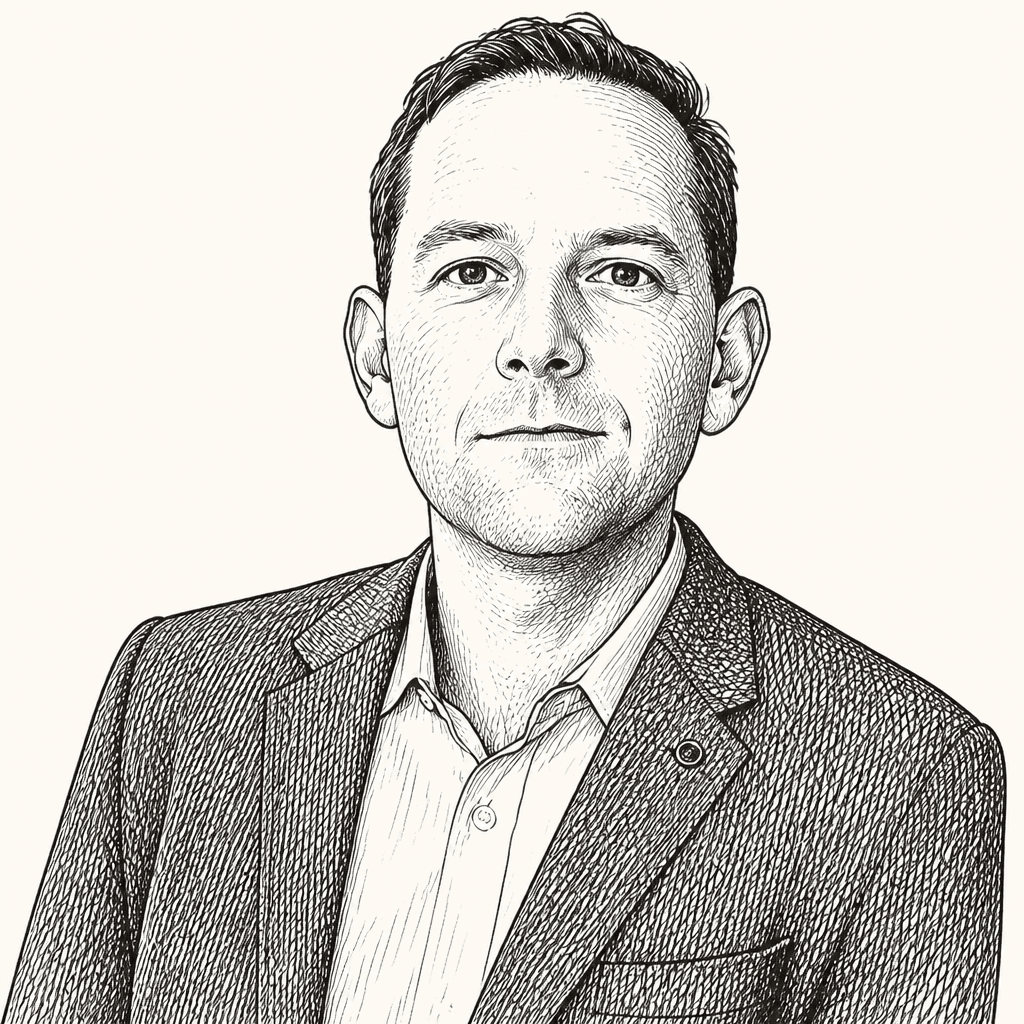
David Friedberg
Entrepreneur and investor, co-host of the All-In podcast, and founder and CEO of Ohalo Genetics. He is known for discussing technology, AI, agriculture, and economics.
Ackman Says AI Threats Are Leaving Durable Incumbents Mispriced
Bill Ackman told the All-In hosts that Pershing Square’s investment filter has shifted toward durable business quality while remaining activist where influence can extend a company’s time horizon. He argued that AI has made disruption risk the first question for long-term investors, even as markets may be overlooking incumbents such as Microsoft, Meta and Amazon. Ackman also cast founder control, valuation discipline and permanent capital — including his Howard Hughes project — as ways to underwrite businesses through a period when public markets and CEOs are still working out AI’s practical effects.
OpenAI CFO Says Compute Scarcity Will Define Its Next Phase
OpenAI CFO Sarah Friar used an All-In interview to frame the company less as an IPO candidate chasing public-market timing than as an infrastructure-scale AI business trying to finance scarce compute, broaden distribution, and defend the intelligence layer between users and the underlying technology. Friar argued that OpenAI’s consumer and enterprise products are meant to compound off the same foundation, even as the company raises unprecedented capital, diversifies cloud and chip supply, and considers ads without letting sponsored results distort ChatGPT.
AI Infrastructure Demand Is Becoming Revenue, Contracts, and Market Stress
Gavin Baker joined the All-In panel to argue that AI’s economics are becoming tangible: Anthropic’s reported profitability, surging LLM revenue, Nvidia’s results, and SpaceX’s compute contracts all point to infrastructure demand that is no longer speculative. The group framed SpaceX’s potential $2 trillion valuation as a bet on Starlink, launch, and AI compute rather than current earnings, while Baker defended Nvidia against share-loss and GPU-useful-life bear cases. The counterweight was political and macro risk: public backlash to AI, labor displacement, regulation, higher inflation, rising yields, and U.S.-China tension.
Economic Entanglement, Not Decoupling, Defines the New China Bargain
Salesforce CEO Marc Benioff joined the All-In hosts for a discussion that framed U.S.-China relations, enterprise AI, and the software selloff around the same question: when dependence is a stabilizer and when it becomes leverage. Benioff argued that more trade with China can lower conflict risk and that large software platforms remain valuable because AI still needs trusted customer data, cash-flowing distribution, and enterprise deployment. David Friedberg, Chamath Palihapitiya, and Jason Calacanis extended the argument across Taiwan, chips, AI assistants, El Niño-driven food risk, and private-market SPVs, where interconnection can either absorb shocks or transmit them.
Koch Industries Built a $150 Billion Business Around Transferable Capabilities
Charles and Chase Koch used an All-In interview to explain Koch Industries’ rise from a 300-person company in 1961 to a private conglomerate they say is worth 9,000 times more today. Their central argument is that Koch’s refusal to go public was not incidental but essential: private ownership let the company build around transferable capabilities, long-cycle culture change, values-first talent, and experiments whose learning could matter more than near-term earnings. They extend the same framework to education, philanthropy, politics, and AI, arguing for bottom-up contribution over centralized control.
Los Angeles Must Restore Law Enforcement Before It Can Rebuild
Spencer Pratt frames his Los Angeles mayoral run as a response to basic government failure, beginning with the Palisades fire that destroyed his home. He argues that Los Angeles stopped doing core public work — enforcing laws, preparing for fires, tracking public money and approving building — and says recovery depends first on public-safety enforcement, audits of institutions spending taxpayer funds and replacing bureaucratic discretion with accountable management.