Los Angeles Must Restore Law Enforcement Before It Can Rebuild

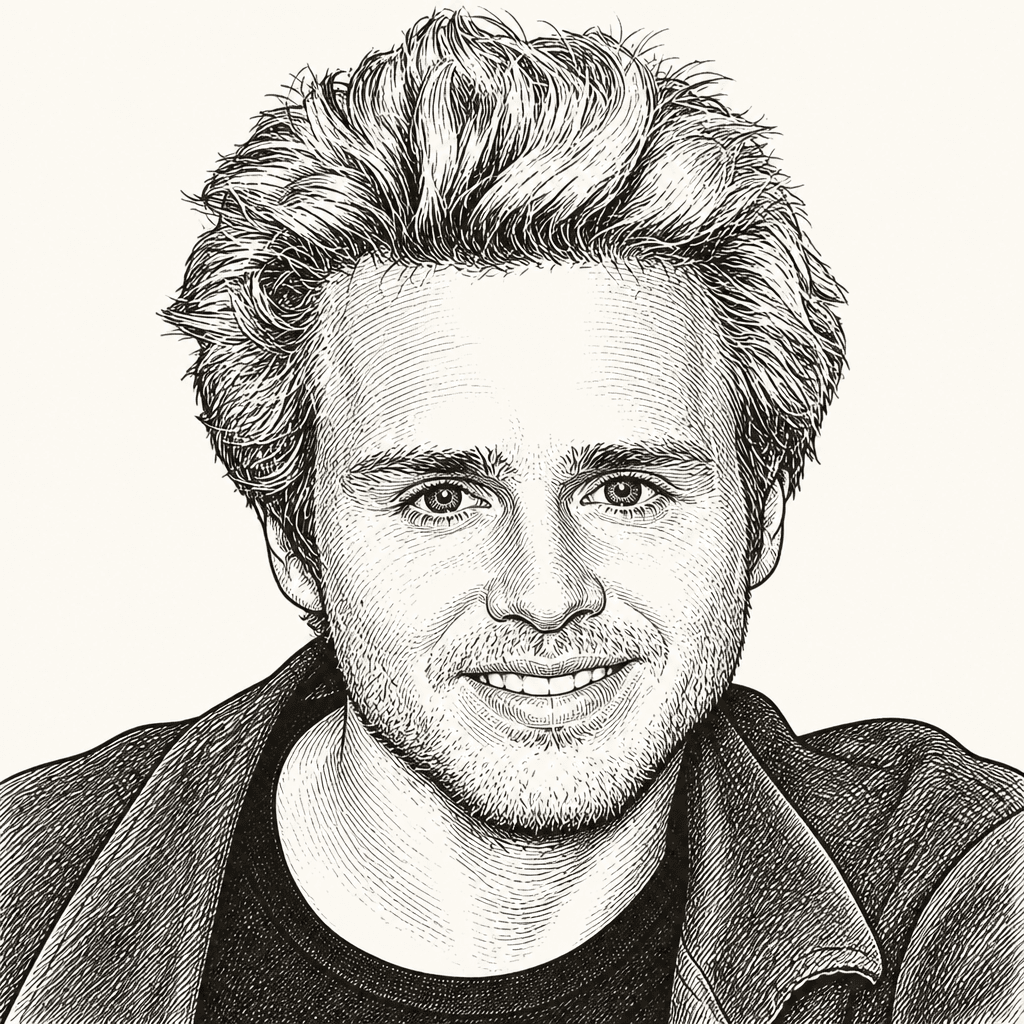
Spencer Pratt frames his Los Angeles mayoral run as a response to basic government failure, beginning with the Palisades fire that destroyed his home. He argues that Los Angeles stopped doing core public work — enforcing laws, preparing for fires, tracking public money and approving building — and says recovery depends first on public-safety enforcement, audits of institutions spending taxpayer funds and replacing bureaucratic discretion with accountable management.
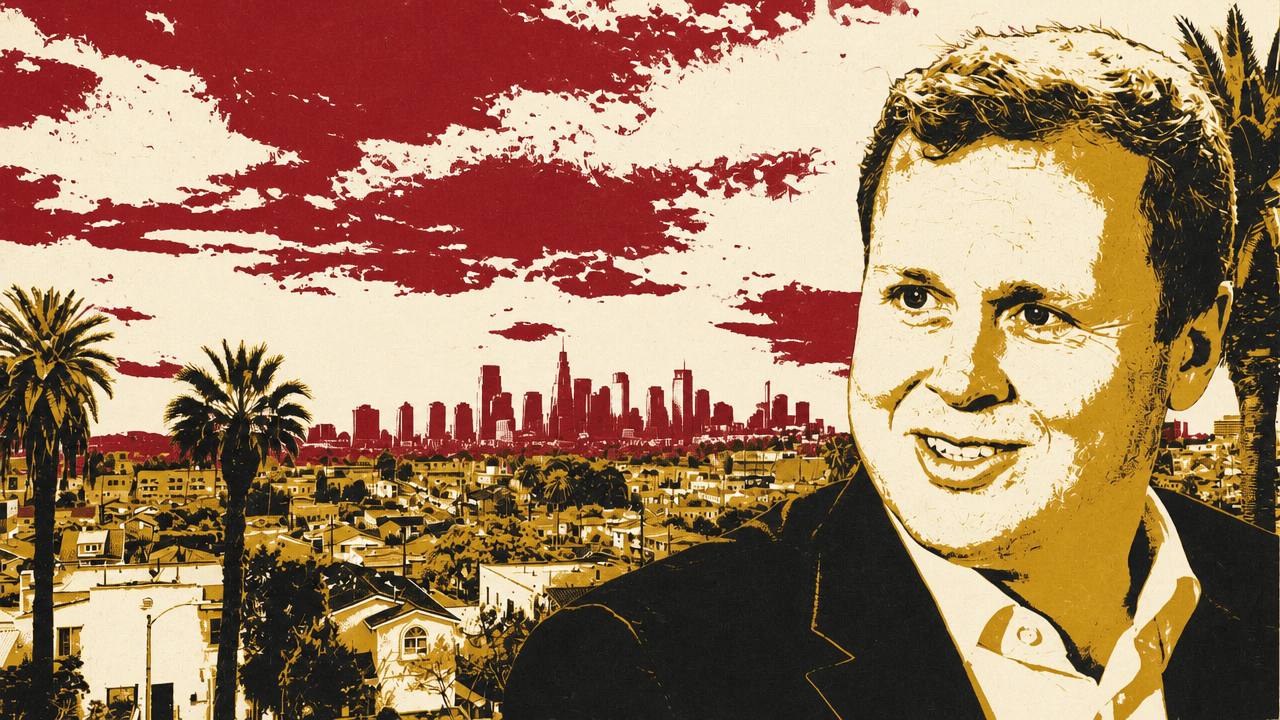
Pratt’s campaign is built on one claim: Los Angeles stopped doing the basics
Spencer Pratt presents his run for mayor of Los Angeles as a response to a governing failure he experienced directly, not as a conventional move into politics. The Palisades fire is the origin point, but his argument is larger: city government has lost competence at its core obligations — fire readiness, public safety, policing, permitting, sanitation, schools, and accountability for taxpayer money.

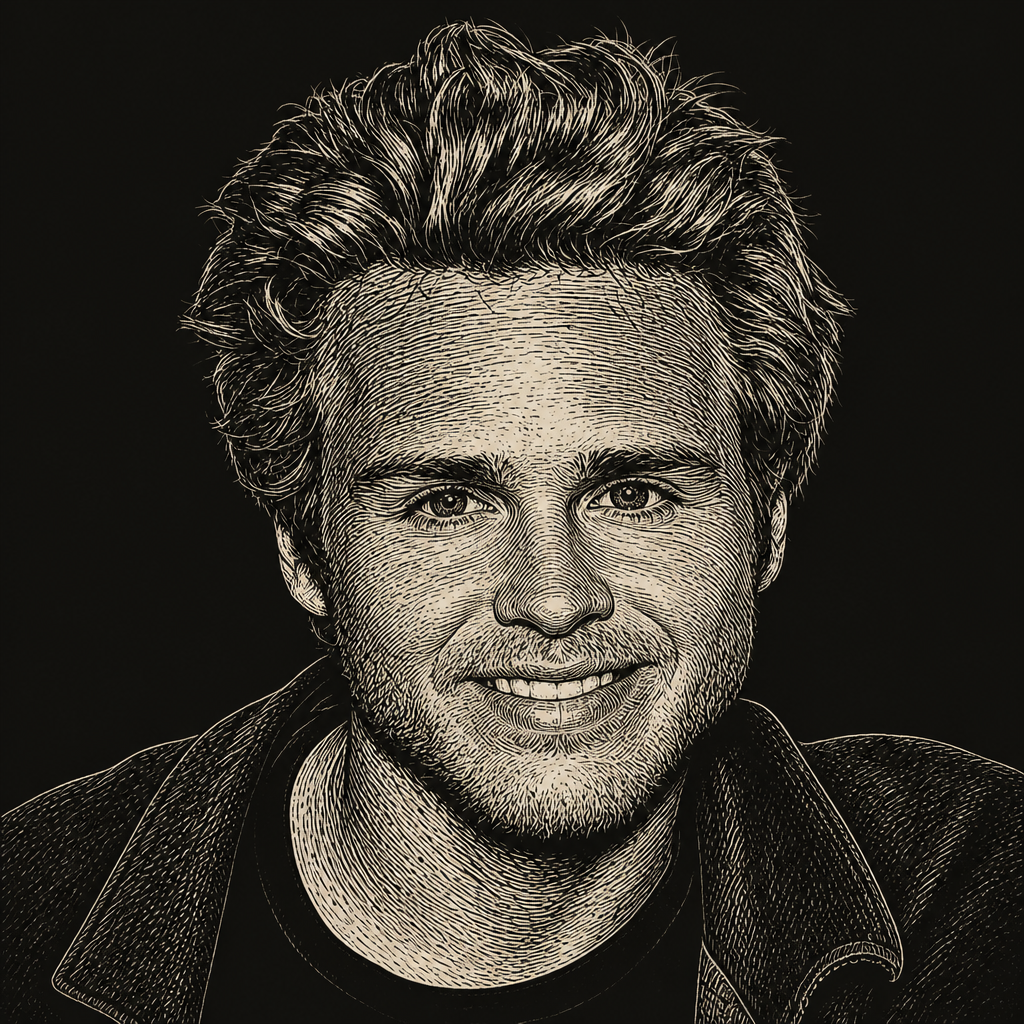
His language is moral and confrontational. He describes Los Angeles leadership as a “machine,” calls elected officials “pathological liars,” and says he is running as “the citizen” and “the angry taxpayer,” not as a representative of a party. He argues that his debate performance drew attention because officials are usually allowed to make claims without challenge, while he has spent months having to defend every assertion with names, details, and documents.
Pratt says every media appearance has effectively been an opposition interview. By contrast, he claims Mayor Karen Bass and Councilwoman Nithya Raman are treated deferentially by the media. That asymmetry, in his telling, forced him to become “fact-based and bulletproof.” Before the debate, he says, he called the lawyer representing him in litigation against the city, state, and LADWP to ask how to stay calm when arguing with people he believed were lying. The lawyer’s answer, according to Pratt, was that he stayed calm because he had the truth.
That self-conception runs through the campaign. Pratt rejects the idea that he is running as a partisan figure. Democrats can support him, Republicans can support him, and the only people he does not want support from are “communists and socialists.” The frame he wants is local rather than national: safe streets, working lights, fixed potholes, enforceable laws, fire readiness, and a city where families and businesses can function.
Pressed on whether an outsider posture can translate into executive management, Pratt does not claim he already knows how to run a city. He says he has the humility to admit he has not run “the second largest city,” and that he would recruit people who have managed larger budgets and more complex operations. He describes meetings with executives, developers, architects, sanitation operators, law-enforcement sources, and billionaires who, he says, are willing to help rebuild Los Angeles.
The operating theory is enforcement first, management second, growth third. In Pratt’s version, none of the other reforms matter until the city reestablishes order.
I didn’t run to be a political party. I didn’t run to be a politician. I ran because I experienced what city leadership failure at the ultimate level is.
The Palisades fire is his evidence of institutional collapse
Pratt’s account of the Palisades fire is both personal trauma and indictment. Even before the fire began, he says, emergency communication had failed. His son had pneumonia, he was awake at night checking his temperature, and he was on his phone often, yet he did not know that an unusually dangerous dry-wind event was expected. To him, that alone showed the emergency system was below the required standard.
On the morning of January 7, he was making espresso and preparing to do his usual Snapchat dance to Taylor Swift’s “Look What You Made Me Do” when the family nanny ran in with his two-year-old and said workers up the street had seen a fire on the hill. Pratt emphasizes that fire risk was not surprising to local residents. He had lived in the Palisades, hiked the nearby hill for years, and says friends had recently fought a Malibu fire. He had even discussed starting a private fire brigade.
He ran up the hill and saw smoke coming from the Highlands area, near the site he says is now understood to be where an earlier fire had been smoldering for a week. He FaceTimed his wife and told her to pack and go to his parents’ house in the Palisades. He stayed behind, calling locals and assuming firefighters would arrive because, as he put it, he had been paying taxes and believed the system would respond.
The core factual dispute he raises concerns reservoirs and aerial firefighting. Pratt says Bass claimed there was only one empty reservoir, but he says he lived next to another one, the Palisades Reservoir, which he describes as holding five million gallons. He says the fire department regularly drilled there, connected hoses, and used it as part of wildfire readiness. He distinguishes that reservoir from the Santa Ynez Reservoir, which he says Bass discussed and which he says was built for wildfire protection, with cisterns and helicopter dip sites.
According to Pratt, LADWP’s chief executive drained the reservoir near his house in June 2024. He says he did not realize it at the time and remained confident as the fire approached because he expected helicopters to use the water source. He also says he called the fire department directly and was told, “We have no assets available.”
As the fire spread, his wife and children were at his parents’ house, which also became threatened as the fire crossed from Temescal Canyon. Pratt says he never heard sirens, and that “real locals” would confirm there were no sirens. The absence of sirens changed how people behaved, he argues: had he heard them, he would have packed valuables or acted with greater urgency.
He also disputes the idea that extreme winds made firefighting impossible throughout the event. Standing at the top of the Palisades near the state park, he says, he did not experience winds above 40 miles per hour. He says CBS later posted reporting that supported his claim that he was not lying in the debate, and that planes were flying.
Pratt says he spoke with Bobby Garcia, a chief at the U.S. Forest Service, about what went wrong. Garcia, according to Pratt, said the initial fire had not been “made skinny,” meaning firefighters should have attacked the fire on both sides. Pratt attributes the failure partly to Los Angeles not calling in fixed-wing support. Bass was in Africa, he says, and the deputy mayor who should have acted was on house arrest. In his telling, LA County, Cal Fire, and the U.S. Forest Service eventually showed up, but the city failed to request support at the critical point.
The most vivid part of the account is watching his house burn remotely. Pratt says he was stuck in gridlock near the ramp where the 10 meets the 405, watching his home burn through security cameras on his phone. He saw his son’s bed burn, with fire appearing in the shape of a heart, and then watched room after room go.
At the same time, he could not reach his father, who was trying to save his own house near the bluffs. Pratt called 911 to ask whether emergency personnel could check on him and says he was told no emergency personnel could go there. He disputes that this was physically true, saying there were multiple ways to reach his father’s house and that his father later said he could drive out. Pratt links that experience to the deaths of people in the fire, arguing that relatives who called 911 for trapped loved ones may have been similarly told no help could be sent.
The aftermath pushed him into litigation and then politics. Pratt says his family had been dropped by Farmers and was covered by the California Fair Plan, and that all his money and possessions were in the house. He and his wife raised about $150,000 after he asked people on TikTok Live to stream and buy her 15-year-old album, which he says went to number one in multiple countries and on Billboard charts. That response helped pull him out of the immediate darkness, but it was nowhere near enough to rebuild.
He then contacted a lawyer friend whose father had fought Edison after the Camp Fire in Paradise and asked him to represent him in suing the city, the state, and LADWP. From there, he says, LAFD whistleblowers began coming to him. They told him, according to Pratt, that firefighters had been ordered to leave the smoldering earlier fire on January 1, that Bass fought a battalion chief over edits to the after-action report, and that the fire chief had fought her over a $17 million issue and warned that Angelenos would not be safe. Pratt characterizes the alleged editing of the report as “obstruction of justice.”
He also says that on the day of the debate, judges overruled an appeal by the state and city of Los Angeles, allowing a negligence case connected to the Palisades fire to move forward into discovery. He uses that ruling to reject the characterization that his claims were “conspiracy theory” or merely denial that climate change and wind contributed to the disaster.
His campaign turns private loss into a broader grievance against official privilege
Pratt says he asked Rick Caruso whether he would run against Bass. Caruso replied, according to Pratt, “Go after Bass,” implying that he would not. Pratt says he was already moving in that direction, but if Caruso had run, he would not have opposed him. When no one else stepped forward, Pratt says, “game on.”
The campaign’s emotional force comes from the contrast between official comfort and resident exposure. Pratt says one of his ads showed Bass’s house, Raman’s multimillion-dollar mansion, and his own Airstream. He describes that Airstream not as his house but as his “forward operating base.” The phrase captures how he wants the campaign understood: not as ambition, but as a battle.
He explicitly identifies with Cincinnatus: someone who leaves private life, fights a necessary battle, and returns home. Initially, he says, he thought he would serve four years and leave. Now he expects to need eight years to “lock this in” and make Los Angeles “the number one city in the world.”
Pratt’s confidence about the race is sweeping. He says he can win outright on June 2 with 51% of the vote. Conventional polling misses his support, he argues, because his voters are not answering spam calls, talking to strangers on the street, or appearing in normal surveys. Bass’s 20% standing, he says, is historically low for an incumbent and means 80% of Los Angeles does not think she is doing a good job.
He also argues Raman entered the race strategically. Pratt says Raman filed one hour before the closing deadline because her Democratic Socialists of America-aligned team believed Pratt would take out Bass and Raman could then position herself as the “fake Democrat.” He says Raman endorsed Bass two weeks before entering and worked closely with her.
The stronger point is not the horse race. It is Pratt’s account of why the campaign is resonating: a burned-out taxpayer living in an Airstream says the people presiding over failure are insulated from its consequences.
Homelessness, in Pratt’s account, is a drug crisis subsidized by NGOs
Pratt rejects the language and metrics commonly used in Los Angeles homelessness debates. When a host says homelessness may have doubled over a decade, Pratt replies that it has increased “200x,” and says the official count is “cooked.” Bass claimed in the debate that homelessness was down 17%, he says, but the count misses people under bridges, inside bushes, in tents, and in sewers. He also says RAND has suggested a 30% increase.
His central claim is that Los Angeles is misdiagnosing homelessness as a bed shortage when, in his view, it is overwhelmingly a drug addiction problem. “90% of these people are drug addicts,” he says, arguing for mandatory treatment before housing. He does not oppose beds or facilities, but says they should not be placed indiscriminately next to homes, schools, or dense neighborhoods without treatment requirements or public-safety rules.
His alternative model is a large, purpose-built treatment system in nature, with services organized by population. Veterans would be separated from single mothers with children; families would be separated from people he describes as hardened criminal drug addicts. He cites a friend, Matt Hess, who built a veterans facility in Bentonville, and says he has discussed building something with comprehensive services in a setting that does not resemble a prison.
The funding premise is that Los Angeles already spends enough to do this. Pratt says the city is spending “$25 billion plus,” and argues that a consolidated treatment infrastructure would be cheaper than the current nonprofit and housing system. The obstacle, in his view, is that NGOs benefit from the status quo.
His first concrete example is FireAid. Pratt says the event raised $100 million after the Palisades fire, but that fire victims were not seeing the money. People were messaging him constantly saying they had received nothing. He says he went to Washington and asked senators to investigate, and that a case was opened. According to Pratt, FireAid later issued a legal letter defending itself and said “several” NGOs had given directly to fire victims. He argues that “several” means fewer than ten out of a list of more than 200 recipients, and says he does not believe even those organizations directly helped victims in the way donors expected. Some claimed to have given gift cards, he says, but no fire victim had told him they received even a $500 card.
He then turns to the broader homelessness nonprofit system. Pratt cites Samantha from the Integrity Project, whom he describes as a Democratic mother in Westwood, as someone who explained the mechanics to him. A building in Westwood went on the market for $11 million, he says, and six days later the city used taxpayer money to give Weingart roughly $28 million or $29 million to buy it. Years later, he says, no one is housed there. Developers are being paid $750 per square foot, he says, when contractors have told him the cost should be $250 per square foot. And Weingart, not taxpayers, owns the building.
| Example | Pratt’s claim | Why he says it matters |
|---|---|---|
| FireAid | $100 million raised, with victims telling him they saw no direct aid | He says disaster relief money flowed to NGOs rather than fire victims. |
| Westwood building | Listed at $11 million, then bought with roughly $28–29 million in taxpayer money | He says public money created a nonprofit-owned asset without housing people. |
| Development costs | $750 per square foot charged versus $250 per square foot he says developers told him was realistic | He argues inflated costs and kickbacks drain housing funds. |
Asked how politicians benefit from allowing money to flow this way, Pratt offers two explanations. The non-conspiratorial version is that elected officials can point to programs, buildings, and services and claim progress. The more conspiratorial possibility, which he labels fringe, is that NGOs or connected entities may help campaigns, PACs, or political networks. Pratt says he personally thinks “they’re all criminals,” and claims he has spoken with Justice Department sources who believe city officials will “go down.”
His proposed response is an audit regime. He says he has met six times with the IRS criminal investigation team and would bring them in during his first week in office to audit every NGO. Insiders at City Hall have told him documents are being shredded, he says, but he believes investigators can reconstruct evidence even without complete records.
Enforcement is the first policy, not one policy among many
Pratt repeatedly returns to public safety as the condition for every other reform. Restaurants are closing, he argues, not because the food is bad but because drug addicts are frightening people away from streets and commercial districts. A downtown lawyer told him employees are not allowed to leave their office building and must have food delivered in. Reported crime is down, in his view, partly because people have given up calling 911, not because they feel safe.
He tells a story from a man he says he met at lunch: a woman on Wilshire Boulevard near the federal building was punched in the chest by a “crazed drug addict,” the man stopped to intervene, the attacker began banging on cars with a PVC pipe, then tried to rip a bike off a bus. The man called 911 multiple times and, according to Pratt, police eventually arrived but did not arrest the attacker because there were no witnesses willing to remain. Pratt says police want to enforce the law but are blocked by systems that will not back them.
The enforcement problem, he argues, is no longer confined to Skid Row. It is in the Valley, Westwood, Hollywood, and the Palisades. Before his house burned, he says, a woman was regularly cleaning her private parts in front of Palisades Elementary and across from his son’s Methodist preschool around 7:45 a.m.; LAPD would tell her to stop, then she would walk down the street and defecate in front of a barbershop.
His enforcement plan is simple and theatrical. In the first weeks of his administration, signs would go up across the city announcing that public nakedness, drug use, robbery, stealing, dog abuse, and burning dogs in the street would no longer be tolerated. Outreach teams would warn people that the rules would be enforced in two or three weeks. He believes some people would leave once they saw enforcement coming. After that period, police would begin enforcing existing laws.
He also says he would bring in the CDC because encampments contain “medieval diseases.” Streets and encampments should be swabbed and cleaned, he argues, because people are living amid feces, drug use, dead bodies, and abused animals.
San Francisco becomes his comparison point. A host says Mayor Daniel Lurie’s enforcement approach reduced car break-ins by 87% and stopped open retail theft. Pratt says Victor Coleman, a major Los Angeles real estate owner, told him to use Lurie as an example: Lurie did not have city-running experience, but he enforced the law and San Francisco real estate improved. Pratt uses that comparison to answer the “experience” critique. The essential decision, in his telling, is not technocratic innovation but the will to enforce laws that already exist.
His operating theory is that talent and capital will return if safety returns
Asked how he would actually manage the city, Pratt says the campaign has already become a magnet for people who want to “save LA.” He describes weekly meetings with successful people willing to pause companies or work for a dollar a year. Some have told him that algorithms alone can “100x the bureaucracy” in building and development. He claims he met with roughly ten billionaires in one week who are ready to help rebuild Los Angeles.
His management model is to pair outsider political authority with recruited specialists. He says he already has a deputy mayor in mind but cannot name the person because of fear of retaliation in Los Angeles. The deputy mayor’s central job would be enforcement of the law, because without that, none of the economic or operational plans work. Bass or Raman could meet with the same business leaders, he says, but investors will not put money into the city unless the mayor makes streets safe.
On unions, Pratt’s position is less hostile than his broader rhetoric about city leadership. Union leaders have backed Bass, he says, but he predicts they will “love” him because the city will have more revenue and jobs. If union leaders came to his office after he won, he would tell them he wants to work with them and secure benefits that make sense, though there may be a period of tightening. The city needs real accounting and outside budget advocacy, he argues, to understand whether salary increases are sustainable.
He distinguishes union leadership from membership. Pratt says LAFD and LAPD members support him privately but fear retaliation if they endorse publicly. He also says Los Angeles cannot afford to lose law-enforcement officers and firefighters to Orange County cities with better pay. Some eye-catching salary numbers, he argues, reflect overtime caused by understaffing; firefighters working extreme schedules have sacrificed family life and should not be caricatured.
The budget answer is to find misused money, especially in homelessness and NGOs, and increase city revenue through growth. Pratt repeatedly argues that Los Angeles should not be a scarcity city. It should be “the number one city in the world,” with “money shooting out of ATMs.” The metaphor captures his view that fiscal constraints are partly self-inflicted by disorder, regulation, and corruption.
Permitting and small business are where he sees bureaucracy as the enemy
Pratt’s rebuilding agenda depends heavily on accelerating permitting and replacing discretionary bureaucratic judgment with automatic approvals when criteria are met. David Friedberg presses him on whether the mayor has authority to overcome statutory permitting layers: design review, electrical approvals, and other requirements written into city law. Pratt’s answer is that experienced private-sector operators know exactly where the bottlenecks are and are already volunteering to take over relevant departments.
He says he had lunch with someone who volunteered to become the new head of LA Building and Safety, a person he describes as operating at the highest level in private business and knowing the system intimately. He also met an affordable-housing developer named Carlos who told him Bass’s promised fast-track initiative was supposed to take six months but had left him two and a half years into the permit process. Carlos, according to Pratt, said the city could build beautiful affordable housing much more cheaply and that current incentives encourage “cells” because developers get rewarded for fitting more people into a building.
The Airstream becomes Pratt’s symbol of red tape. It took LADWP weeks, he says, to connect one wire from a pole across the street to his Airstream, even though officials describe the recovery process as fast and red-tape-free. If that is the accelerated version, he suggests, the normal system is unusable.
Pratt embraces AI as part of the solution. Rick Caruso had supported or offered an AI program to Bass to sort zoning situations, he says: if a project meets objective criteria, it should be approved automatically. The current inspection process is absurdly manual in Pratt’s telling, with an official missing checkboxes and returning later. Offices are often appointment-only or still operating remotely after COVID.
The same critique applies to small businesses. Friedberg describes Los Angeles as a small-business city, with Ventura Boulevard’s strip malls and family-owned businesses run by Armenian, Persian, Hispanic, and other immigrant communities. Pratt responds with the example of a Venice bodega. A friend’s neighbor bought a long-standing local store, and after a year of trying to reopen without alcohol sales or food service, they were close to giving up because each city visit produced new requirements.
The remedy is to make approvals rules-based and results-based. If a bodega meets the criteria, Pratt and the hosts agree, it should be greenlit. Jason Calacanis says the city should “auto green light” such cases instead of sending people through needless review. Pratt says Los Angeles needs to become “annoying” with cranes over the next eight years, comparing the desired pace to China building bridges in weeks.

Sanitation is another bureaucracy he says lacks accountability. Pratt describes meeting Juan from Clean LA, an Ecuadorian immigrant who began cleaning streets himself because he found Los Angeles dirtier than places he considered third-world. According to Pratt, Juan says city trash crews sometimes pick up trash only to spill it back into the street and that workers sleep in cars. Juan told him sanitation is supposed to cost $1 billion but could be run for $500 million if people cared. Pratt frames that as a potential $500 million taxpayer saving.
Across permitting, small business, and sanitation, the pattern is the same: no one is paid for outcomes, no one is fired for failure, and no one is publicly accountable for where money goes. Pratt says every taxpayer dollar should appear on easy, “Cliff Notes level” dashboards showing spending and results.
Fire prevention, insurance, transit, and rebuilding are one urban plan
Pratt does not separate fire recovery from the city’s growth agenda. Los Angeles must rebuild with better fire suppression, faster permitting, and restored insurance markets. If Bass or Raman wins, he says, Bel Air, Mandeville Canyon, Sunland, Tujunga, and the Hollywood Hills are guaranteed to burn. His proposed response includes creating helicopter dip sites within a mile of homes, connecting them to each other, and connecting them to private swimming pools. He says he would work with insurers to bring insurance back first to Los Angeles and then to California by showing a better suppression model.
He also wants more aerial resources, including Chinooks like those used by LA County, alongside LA City Firehawks and Cal Fire. The goal is to convince insurers that the city can actually fight fires, making rebuilding finance possible.
His development agenda includes repealing or fighting measures he views as anti-building, including ULA, though he acknowledges he cannot do that alone. He says he would fight to stop policies he describes as “communist type things” from blocking development, allow people to sell property and build housing, stop tenants he describes as criminal squatters from extracting large payments to leave and then repeating the pattern, and stop Section 8 fraud so benefits go to veterans and families who need them rather than people abusing the system.
Pratt’s architectural vision is unusually specific. He does not want high-density buildings he compares to prisons, and rejects what he calls SB-79-style structures. Los Angeles should revive Art Deco and become the most beautiful architecture city in the world. Architects who left because it was too hard to build should come back once approvals are faster. He even imagines a downtown canal and new bike infrastructure routed through skyways or tunnels, while insisting that none of it matters until the city is safe.
Transportation follows the same safety-first logic. Pratt says he attended the opening of the D Line partly “to troll” YIMBYs, but the problem with transit is not the abstract idea of trains; it is human urine, feces, exposed bodies, and fentanyl use. People send him photos constantly, and his phone has effectively become 311. No amount of Metro connectivity, he argues, will persuade parents to ride if drug use is happening next to their children. He says about 15% of the budget goes to Metro while 5% of people use it, and argues that if the system became safe and fare enforcement worked, usage could rise toward the funding share.
Schools and Hollywood are downstream of accountability
Education comes up through LAUSD spending and outcomes. A host says LAUSD spends $23,000 per student, has an average teacher salary of $101,000, ranks 170th in California, and has only 46% of students meeting or exceeding English standards and 37% in math. Pratt’s first response is not curricular reform but audit. His son attended an LAUSD charter that was supposed to be strong, yet parents were constantly fundraising for books, learning materials, and extra teachers. If the district spends that much per student and parents still must fundraise for basics, he argues, the money must be tracked.
He says the same is true across the city: schools, fire departments, police, sanitation, and every other function should be audited. He cites alleged examples of waste, including fire stations being charged $250,000 for doors and $50,000 for refrigerators. The broader civic problem, in his view, is that children and parents need renewed pride in America. Parents are pulling children out of schools, he says, because there is no longer a Pledge of Allegiance and because schools no longer communicate that “America’s good.” Rather than rely only on instruction to oppose socialism and communism, he says, give parents hope and make them demand better.
Hollywood is another downstream case. Pratt’s own entertainment history gives him a basis for speaking about the industry: at 20, he says, he sold a reality show to Fox, making him the youngest executive producer to do so, with David Foster involved and Peter Chernin at News Corp. Pratt says he recently called Chernin to ask how to save Los Angeles. Chernin’s advice, according to Pratt, was that the mayor cannot fix the whole Hollywood picture — tax caps and broader incentive policy are more the governor’s domain — but the mayor can bring back independent filmmakers, independent production, and independent artists.
Pratt wants to prioritize indies by reducing fees, clearing streets, making filming safe, and using city resources to help productions activate blocks, restaurants, crews, and local commerce. He criticizes Bass for touting reduced Griffith Observatory filming costs from $70,000 to $30,000, saying he would go further and help people actually produce movies. Producers have told him, he says, that filming on LA streets is now so unsafe that crews must pay gang members for clearance.
David Sacks agrees that independent production is the future, saying people working for big studios or Netflix are often effectively paid “cost plus 10%” and would be better off producing on their own. Sacks says independent production is flourishing, just not in Los Angeles.
Pratt says he has reached out to David Ellison’s team, Ted Sarandos, and others because he does not want to focus only on indies. He wants major productions back too and says nobody should be going to the UK or Canada for film work. His immediate mayoral leverage, however, would be safety, fees, and street-level production support, while fighting the governor and Sacramento over uncapping incentives and post-production support.
The anti-socialist argument is a theory of tribal blindness
A large part of Pratt’s political critique is directed at what he describes as Democratic Socialists of America influence in Los Angeles politics. He says Bass was a Venceremos Brigade member who traveled to Cuba 20 times, and says she denounced communist associations only when she was under consideration for vice president. He also repeatedly describes Raman and other city council members as DSA-aligned “fake Democrats.”
His explanation for why voters support socialist candidates is not that they understand and endorse socialism in detail. It is that local politics has become nationalized and tribal. People see candidates as either part of their group or not, he says, and do not investigate what those candidates or organizations represent. Socialist candidates then promise affordability and free money, which Pratt argues cannot work because a mayor cannot lower the price of goods directly. The mayor can only make people safer, improve commerce, increase jobs, and put more money in residents’ pockets through a functioning city.
He tells a story about Rafa, a Venezuelan who manages several Dodgers, confronting him at an event. Pratt says Rafa told him he fled Venezuela because of socialism and would not allow his children to live under socialism in Los Angeles. Pratt uses that as validation from someone with lived experience.
Calacanis then offers his own anti-socialist argument, saying the United States was founded by people fleeing tyranny and that socialism is the most tyrannical system humans have created. Pratt agrees and says many smart Los Angeles friends do not even know what DSA is. His claim is that ideological commitments are being hidden under the Democratic label while voters remain focused on national partisan identity rather than local consequences.
The sharpness of this language matters because it defines the stakes as Pratt sees them. The race is not, in his telling, a dispute over better or worse management within a shared policy framework. It is a fight to remove an ideological class that he believes has normalized disorder, weakened enforcement, misused public money, and hidden its commitments.
The eight-year vision is a return to law, then a boom
When asked to imagine what he would tell his sons after eight years as mayor, Pratt says the answer would be simple: people voted for laws, and he enforced the laws that already existed. He insists he does not need to invent a utopian model of city government. A city becomes safe; then people invest, live, build businesses, go to parks, go to the beach, and use public space without fear.
That is the through-line connecting his fire story, homelessness critique, permitting plan, school audits, Hollywood strategy, transit view, and union posture. Every system has its own details, but Pratt’s framework is blunt: enforce the law, audit the money, recruit competent operators, clear regulatory blocks, and then let capital and families return.
He says his sons would see that “you can fight evil.” The evil, as he defines it, is not only the burning of his house and his parents’ house but a government that lets taxpayers feel unsafe on streets they pay for, allows children to see public drug use and public sex, and leaves ordinary parents trying to shield kids with iPads in the back seat because they do not want them to see what is happening outside. Many families without cars, he adds, must walk children under underpasses and past encampments.
The personal grievance remains unresolved. Pratt says he is doing this because officials burned down his house, burned down his mother’s house, and left him listening to his mother cry for 18 months. He says he is not trying to become a politician but to fight the people who took a city he loved and made it unsafe. He describes himself as an LA person so committed to the city that he did not even want to visit his wife’s family in Colorado.
The final answer to his sons, he says, would be “the law.” Los Angeles had laws; the city stopped enforcing them; he restored enforcement; and, in his account, that restoration made the rest possible.