Koch Industries Built a $150 Billion Business Around Transferable Capabilities

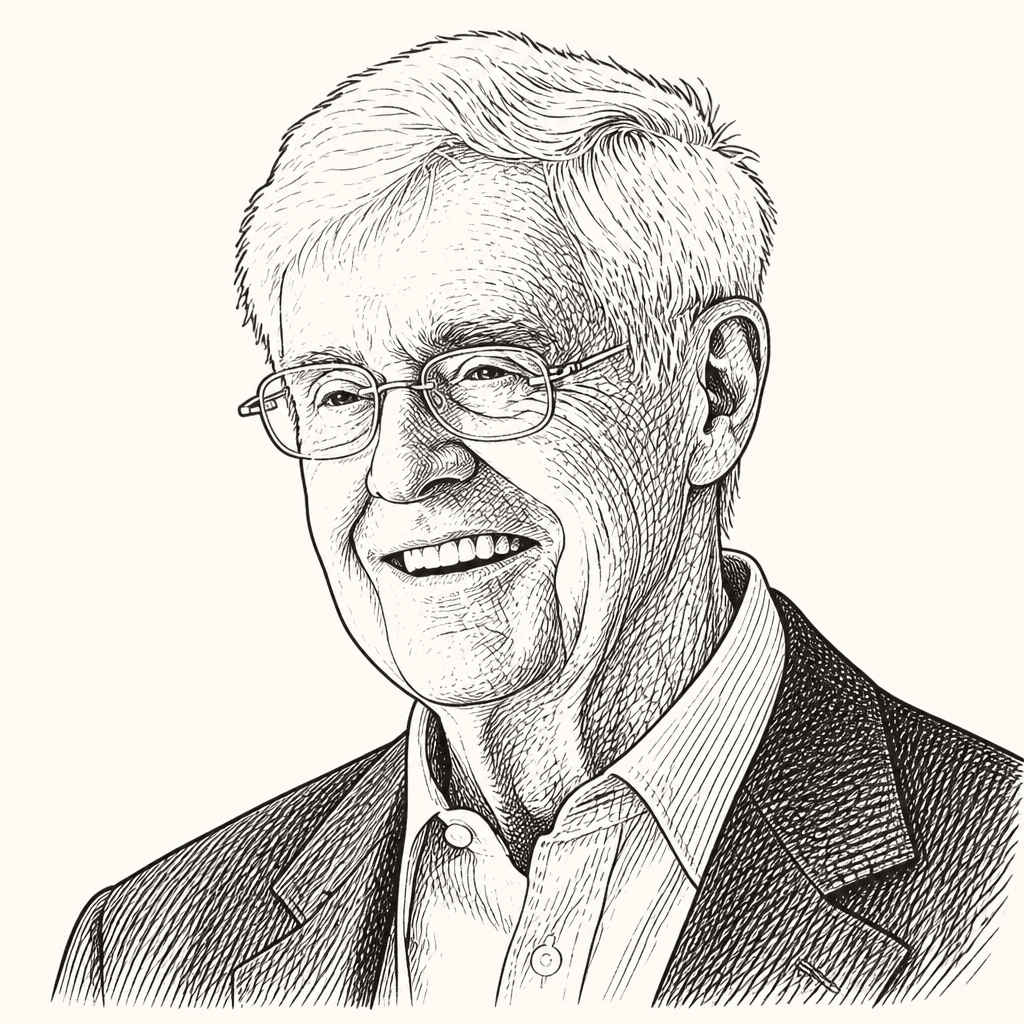

Charles and Chase Koch used an All-In interview to explain Koch Industries’ rise from a 300-person company in 1961 to a private conglomerate they say is worth 9,000 times more today. Their central argument is that Koch’s refusal to go public was not incidental but essential: private ownership let the company build around transferable capabilities, long-cycle culture change, values-first talent, and experiments whose learning could matter more than near-term earnings. They extend the same framework to education, philanthropy, politics, and AI, arguing for bottom-up contribution over centralized control.
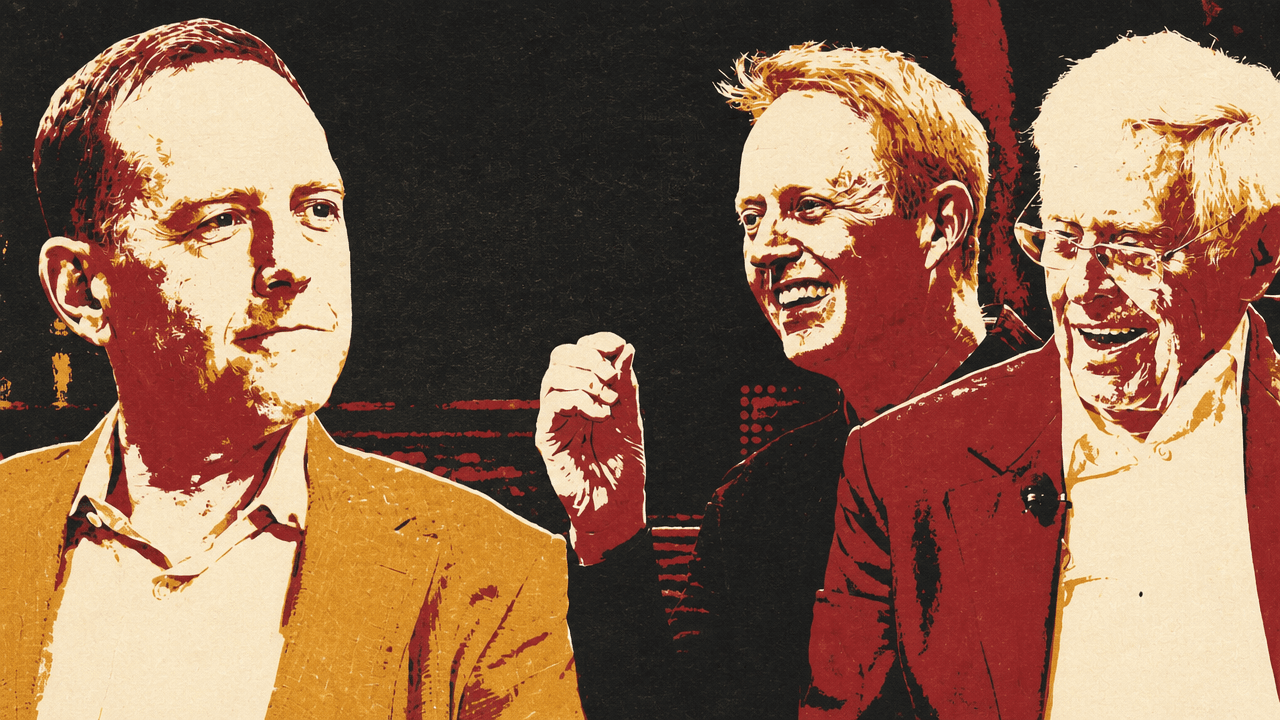
Private ownership made the operating model possible
Koch Industries’ growth is easiest to misread if it is described as a list of sectors. David Friedberg framed the company as one of the largest private family-owned businesses in the world: based in Wichita, founded in 1940 by Fred Koch, with businesses across energy, agriculture, chemicals, building products, consumer products, cloud computing, and other areas, and more than 120,000 employees across 60 countries. Charles Koch gave the operating version of the company’s scale: when he joined full time in 1961, Koch had 300 employees; today, he said, it has more than 130,000 employees in 60 countries and has increased in value 9,000 times over that period.


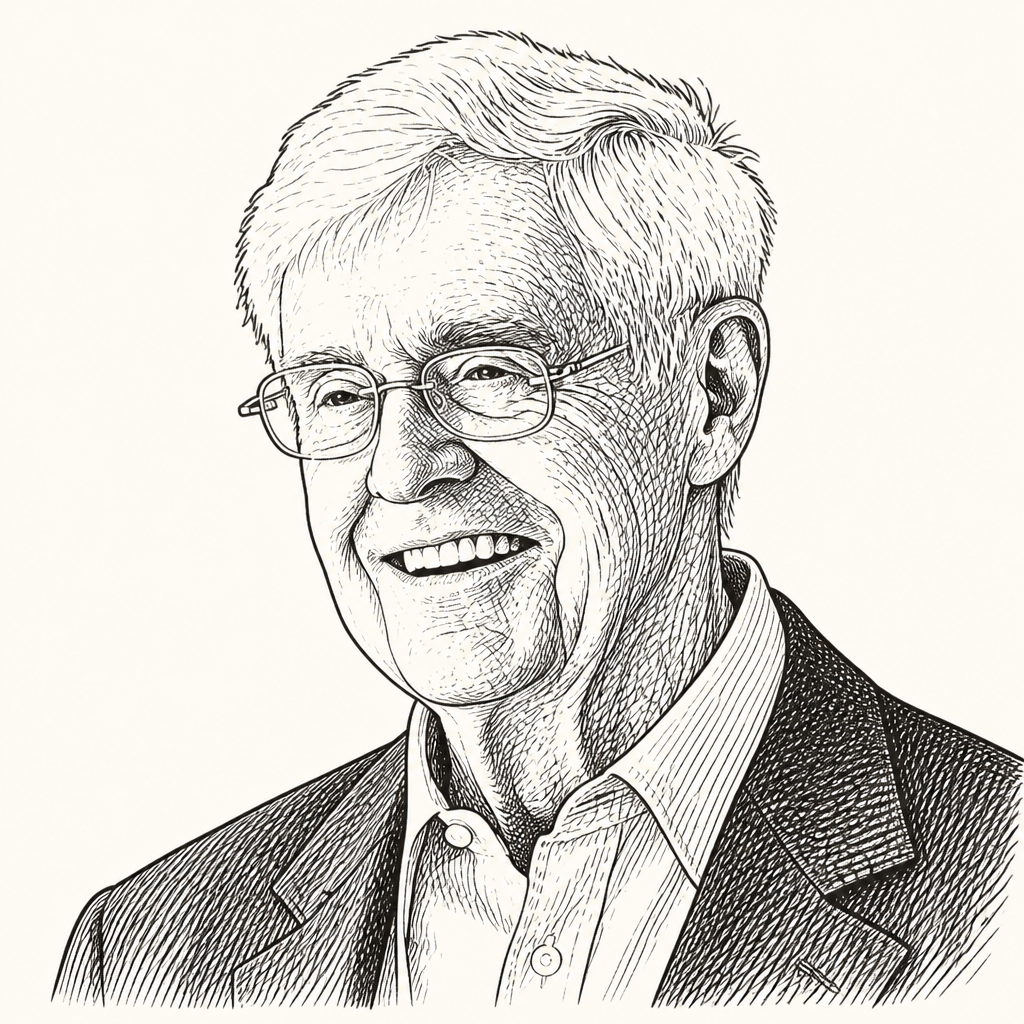
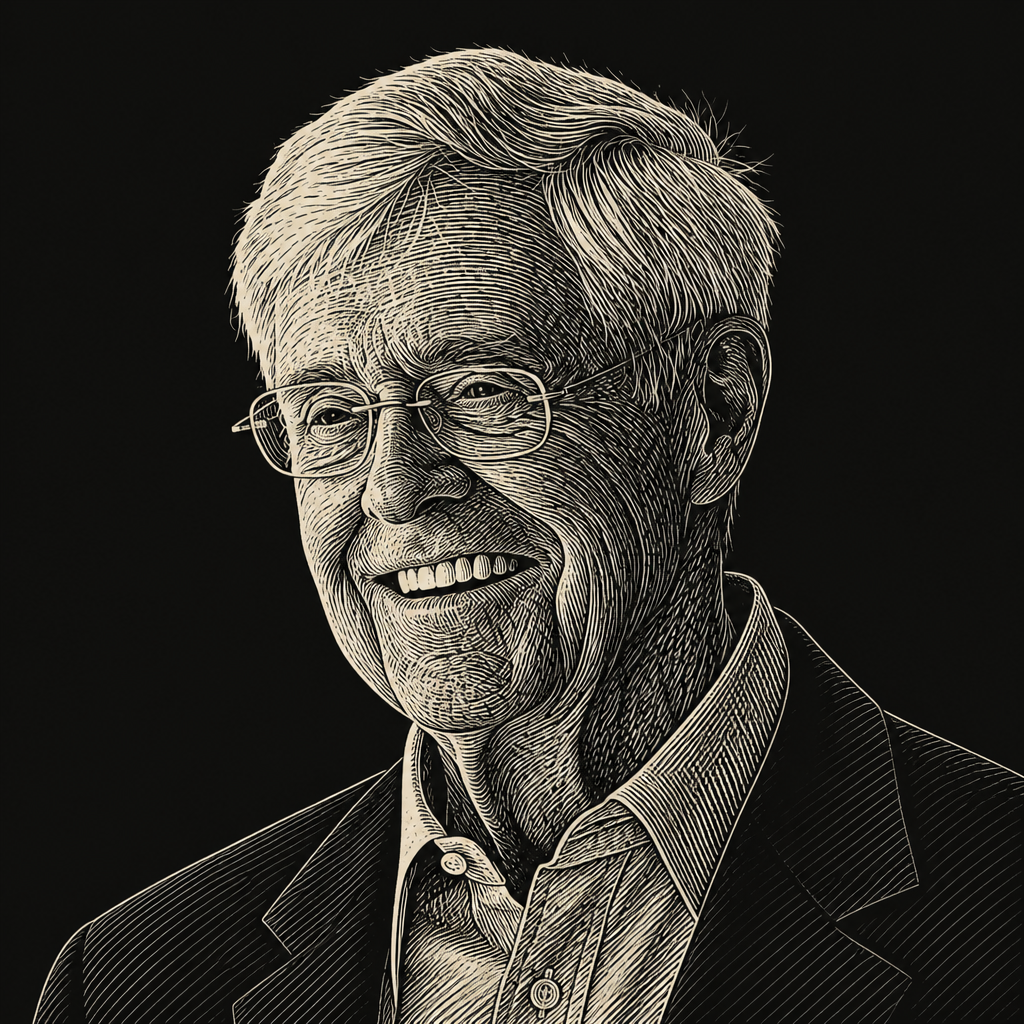
The most important connection Charles drew was between private ownership, capability transfer, and principle-based management. Koch did not grow by choosing one industry and staying inside it. It grew by trying to identify capabilities that could create value in one market, then testing whether those capabilities could be applied elsewhere. Charles argued that a public company would have struggled to sustain that model because analysts need a legible story, especially when the assets do not look related from the outside. Koch’s model, as he described it, depends on integration across businesses that can appear unrelated, long transformation cycles after acquisitions, and a willingness to absorb early losses or delayed payoffs when the learning or capability-building is valuable.
That is why Charles described the company’s refusal to go public as a governance choice that protected the operating model. He said there had been pressure from sons who wanted Koch to go public because of the value that could be realized. His answer was categorical: “over my dead body.” He joked grimly that some people might have considered that acceptable, then referred to hostile messages he receives wishing harm on him and his family.
The business reason was direct. Charles said Koch could not have built its principle-based framework or pursued its capability-bounded strategy as a public company. In his view, public-market investors would not have understood the model. A company like Georgia-Pacific, he suggested, might have received a low price-earnings ratio inside a public Koch because the market would not see how its capabilities fit the whole.
Friedberg proposed that Koch’s location and ownership structure may also be part of its advantage. Wichita, he suggested, insulates the company from the over-socialization of Silicon Valley, where companies tend to copy financing structures, hiring norms, equity patterns, and operating fashions. Charles accepted that Wichita is a competitive advantage but pushed back on the broad premise that Silicon Valley is uniform. Some companies there challenge prevailing norms, he said.
Charles did not argue that private ownership is automatically superior. Owner values matter. A private company led by a dictator cannot apply Koch’s principles. He illustrated this with a story from a presentation to a Young Presidents’ Organization group in Wichita. When someone asked how the approach could work in a private company, Charles first answered that it was easier than in a public company. Then he realized the questioner was thinking of his own father, who was a total dictator. In that setting, Charles said, the principles would not work.
His rule for any durable partnership — marriage, friendship, employment, business partnership — is shared vision, shared values, and complementary capabilities used to make each other better. Missing any one undermines the partnership. Private ownership helps only if owners have values compatible with contribution, empowerment, and long-term capability-building.
Friedberg also asked whether a public CEO without a large ownership stake could adopt these principles. Charles’s answer was qualified. He pointed to Warren Buffett as an example of someone who successfully sold investors on a different principle: buying companies without paying the top price, offering owners the ability to continue running them, and using insurance-company liquidity to fund the model. Buffett’s success, in Charles’s account, came from a clear value proposition public markets could accept. Koch’s own model is harder to sell because it depends on integration, principle-based transformation, and capability transfer rather than decentralized ownership of great managers.
Koch’s operating theory is capability, not industry
The central explanation Charles Koch offered for Koch’s compounding was not that the company found a single industry and dominated it. It was that Koch tried to define itself by capabilities rather than by industry boundaries.
We need to be capability bounded, not industry bounded.
That distinction matters because Koch began with assets that looked narrow: fractionating trays, which separate liquids by boiling point, and a crude-oil gathering system in Oklahoma. Charles joined full time in 1961 after working at Arthur D. Little. He said he had earned three engineering degrees at MIT but “sucked as an engineer”: he was good at math, science, theory, and principles, but not at making or operating things. That pushed him toward entrepreneurship and toward a search for general principles that could help him contribute and succeed.
His father, Fred Koch, had called him back to the company after first being refused. Charles said his father told him that either Charles came back to run the company or he would have to sell it because his health was poor and the companies were not doing well. Fred’s offer gave Charles unusual room to act: he could run the business any way he wanted, with his father’s approval required only to sell it.
In the early years, Charles said, the fractionating-tray business was losing money. The president was “top-down and obsessed with controlling everybody,” sending weekly memos demanding spending details and activity reports. The business also had what Charles called a protectionist culture. When customers bought internals for a fractionating tower and wanted design information so they could correct problems, Koch would not share it. In Europe, the company had no plant; instead, it used multiple subcontractors to manufacture parts of a tray and another contractor to assemble them. Charles described the result plainly: poor speed, high cost, and losses.
His response became a template. He changed management, shifted the business toward creating value for customers, empowered employees to do that work, and built an Italian plant to serve Europe directly. The business became profitable and began adding related products. What mattered in Charles’s telling was not simply that a bad manager was replaced. It was that a management philosophy changed from control and protection to value creation, empowerment, and capability-building.
Chase Koch later translated that into a practical rule for builders: identify the capabilities through which a company has already demonstrated it can create value for customers, then test whether those capabilities can be pointed into adjacent or different industries. In Koch’s case, he said, the early capabilities were operations, logistics, and trading. The company started in energy, crude oil gathering, pipelines, and refineries; then it asked whether those same capabilities could apply to natural gas, chemicals, and fertilizers.


| Question | Industry-bounded | Capability-bounded |
|---|---|---|
| Where to grow | Inside the sector the company already occupies | Where existing capabilities can create superior value |
| What to preserve | Category identity and market legibility | Principles, knowledge, and transferable operating strengths |
| Main risk | Following an industry logic where the company has no advantage | Mistaking vocabulary or adjacency for real capability |
The Georgia-Pacific acquisition looked different on the surface because it involved wood products, building products, and consumer products, but Chase argued the same operating capabilities applied. He also said the acquisition helped Koch develop a new capability: consumer branding. A capability approach, in Chase’s description, can justify entering a market that looks unrelated from the outside, but only if the company can say specifically where it has demonstrated value creation and what it expects to learn.
Koch therefore resists the standard conglomerate description, at least in Chase’s view. He contrasted Koch with Berkshire Hathaway, while praising Warren Buffett’s company. Berkshire, he said, operates more as a set of independent businesses. Koch thinks of itself as “an integrated set of capabilities” and, in Chase’s phrase, a “Republic of Science.” The company’s ambition is not to leave each acquisition as a separate silo, but to move knowledge, principles, and operating capabilities across the whole system.
Charles did not claim Koch only buys businesses that are obviously adjacent to existing operations. Molex, the electrical-connector company Koch bought, was his counterexample. Molex made connectors and cabling products used in phones, medical technology, and automobiles. Charles said Koch believed that applying its management principles could improve the company. At first, he said, Molex was not doing well because people had learned the language of Koch principles without changing behavior. Once management changed and the principles were applied, he said, the business “took off” and was “knocking it out of the park.”
Chase added an incentive contrast that mattered to the Molex case. Molex had been a public company for more than 30 years, and he said its paradigm was top-line thinking: revenue growth was what the market rewarded. Koch wanted a different orientation, with more bottom-line thinking and principle-based leadership. In Chase’s account, the problem was not that the people at Molex lacked technical capability. It was that the operating paradigm and incentives had to change, and that required leaders who could move from the vocabulary of the principles to the practice of them.
Failure is useful only when the learning is worth more than the loss
Charles Koch wanted to underline Koch’s failures as much as its growth. He said the company has had “a lot of failures” and treated that as inseparable from creative destruction. If a company is not failing at anything, he said, it is not doing anything new. But he drew a hard line between disciplined experimentation and reckless loss.
One early failure came from trying to use petroleum coke created in refining as a base to make activated carbon. The company spent meaningful money and failed. Charles did not dwell on the technical details; the lesson was broader. Koch stops when it concludes it does not have the capability to create superior value for customers in a way for which it will be rewarded. Sometimes, he added, the problem is not the product’s value but the structure of the business. He used Insightec, a company connected to Koch Disruptive Technologies, as an example of something that “does tremendous things” but has a structure that makes profitability difficult.
The largest failures Charles described were not caused by technology or markets. They came from violating a talent principle: hire first for values, second for talent. His blunt warning inside Koch was that if someone insisted on hiring a person with bad values, they should “hire them slow and stupid” so Koch could identify the problem quickly and get them out. He said Koch compounded this error by putting people with bad values into leadership roles.
The distinction he drew was between contribution motivation and destructive motivation. Contribution-motivated people want to succeed by creating value and being rewarded for that contribution. Destructively motivated people want power or control. According to Charles, destructively motivated leaders hide failures and invent successes. He cited two major episodes: reckless trading around 1973, during the Middle East war period, that could have bankrupted the company; and leadership problems in the late 1990s in agriculture and refining that, he said, almost wiped out all of Koch’s earnings.
Chase Koch made the late-1990s agriculture failure concrete. Koch had pursued what it called the “gas to bread spread”: owning every element of the value chain from natural gas extraction to fertilizer to crops to products on grocery shelves. The company even entered pizza crusts and other areas Chase later described as absurd in retrospect. The strategy assumed that controlling the whole value chain would make the business successful. Chase said it violated “probably all 41 principles” in the book: experimental discovery, knowing where capabilities actually exist, having the right people in the right roles, and applying the scientific method.
The most vivid diligence failure involved the large-animal feed business associated with Purina. Chase said Koch did “no diligence” on contracts and, within days of closing, discovered hundreds of millions of dollars of out-of-the-money hog contracts. The mistake was not merely that the acquisition lost money. It was that the company failed to try to disprove its own hypothesis before acting.
This is one of our principles, apply the scientific method so disprove your hypothesis as much as you try to prove it.
Friedberg pushed on a common founder problem: how does a company know when to stop, when builders are often too attached to what they have created? Charles’s answer was not sentimental. Enough is enough when Koch concludes it lacks the capability to create superior value for customers and be rewarded for it. A good experiment, he later clarified, is one where the value of what is learned from the failure exceeds the cost of the experiment. Buying a business with hundreds of millions in hidden contract losses is not an experiment in that sense. It is a violation of method.
That difference also shaped Koch Disruptive Technologies. Chase said early venture-style investing could have looked bad if judged on a three- or four-year profit-and-loss horizon because losers show up before winners materialize. But Koch valued the learning: exposure to technologies that might disrupt core businesses, new networks of founders, and insight into what was coming. The returns, he said, took longer, but the learning itself was part of the contribution. In his view, without that exposure, some Koch businesses risked becoming dinosaurs as technology changed.
Koch’s account of failure is therefore not a celebration of loss. It is a theory of bounded learning: experiment cheaply enough that learning is more valuable than failure, avoid pretending that large unexamined bets are experiments, and treat leadership values as a risk factor that can be as material as contracts, technology, or markets.
Principles do not scale by memo
David Friedberg asked the management question directly: a company can write down principles, give everyone a handbook, and still fail to make them real. Charles Koch said Koch learned this through a failed method he called “sheep dipping”: bring everyone into a seminar, teach the principles, and send them back to work. It did not work.
The explanation he gave came from Michael Polanyi’s Personal Knowledge, which Charles described as hard to read. Polanyi’s insight, as Charles applied it, was that personal knowledge requires changing habits of thought. It is not enough to hear an idea. The brain is wired by habit. If someone always brushes their teeth before combing their hair, deciding to reverse the order does not make the habit change. Under pressure, the old pattern returns. Charles compared the work to changing the body from that of a weightlifter into that of a marathoner: it requires intensity over time.
Koch’s method shifted from universal instruction to demand-driven practice. Find a group struggling with problems and interested in the principles. Coach them. Help them apply the principles with intensity. If they succeed, other groups ask for help because they see results. At that point, the company does not need to force adoption. It needs enough people in strategy and principle-based management who can help the demand.
Chase Koch summarized the desired endpoint: a business where people know what to do without being told. That is not a call for informality or a lack of standards. It is the opposite of top-down dependence. In his account, many companies are built around an iconic leader who is presumed to be the smartest person in the room, develops the strategy, and tells others what to do. Koch’s principle-based management tries to reverse that by using shared principles to enable bottom-up empowerment and collective knowledge.
What if you could have a business and a culture small, medium or large where everyone knew what to do without being told.
The incentive system has to support that. Friedberg observed that in many large organizations, managers rationally avoid failure because their jobs, bonuses, and reputations depend on predictable success. Charles called that a perverse incentive structure. Koch says it tries to reward people according to their overall contribution to Koch’s future, including whether they are building capability. If an experiment fails but produces learning worth more than its cost, that can be a contribution.
Culture change, in Charles’s telling, also requires visible signals. When Koch bought Georgia-Pacific in 2005 for about $20 billion, he said it was a massive bet for a much smaller Koch. Georgia-Pacific had a 51-story headquarters building in Atlanta, with senior management on the top floor and a private elevator. Visitors to management needed permission and a coat and tie. Koch sent Joe Moeller to be CEO. Charles said Moeller fired a number of bureaucratic leaders, moved remaining managers down to work with their groups, and turned the top floor into meeting rooms open to anyone.
That was not a small aesthetic change. It was a physical rejection of hierarchy. Friedberg noted that many acquirers believe they can transfer culture and fail; Buffett’s model is to buy great managers and let them run. Charles said that would not work for Koch’s acquisitions because Koch buys businesses where it believes its principles and capabilities must be applied. In almost every case, Chase added, culture change takes longer than expected and requires changing leadership to people who believe in bottom-up empowerment and can apply the principles.
Charles offered an older and harder example from refining. After his father died in 1967, Koch owned an interest in a small refinery in Minnesota and later bought it. Charles said management had allowed the union to control work rules, making the refinery inefficient. Koch tried to change the rules; the union struck at the start of Charles’s honeymoon. He described the strike as violent: a switch engine was run in an effort to knock down a unit, high-powered rifles were fired into the facility, gates were blocked, and Koch had to use a helicopter to get in.
Koch operated the refinery for nine months without the union workers, bringing in people from other plants, and Charles said it operated better than before. After the work rules changed, the company focused on employee empowerment: improving jobs, soliciting opinions, forming teams, rewarding innovations, and getting the union to agree. One group of employees argued that a machine shop would let them make spare parts cheaper and faster. Koch built it, and Charles said they saved substantial money and improved efficiency.
The point was not only that Koch won a labor fight. Charles presented the refinery as a much harder culture transformation than Georgia-Pacific. The company moved from violent conflict over work rules to what he called a “fantastic” culture. He said the refinery’s capacity increased tenfold and called it one of the best refineries in the country.
- 1961Charles Koch joins the company full time, with 300 employees and two main businesses.
- 1967Fred Koch dies; Koch later buys the Minnesota refinery Charles described as a major culture transformation.
- 2005Koch buys Georgia-Pacific for about $20 billion, a massive bet for the company at the time.
- 2013Koch buys Molex, a public electrical-connector company whose operating paradigm Chase said had to change.
Molex offered a different version of the same problem. Chase said Molex had been public for more than 30 years and was shaped by top-line thinking: revenue growth was what the market rewarded. Koch wanted bottom-line thinking and principle-based leadership. Again, Chase said, the transformation required the right people with the right mindset. The common point across Georgia-Pacific, the Minnesota refinery, and Molex was that Koch treats culture as an operating system, not a communication campaign.
Talent is values first, skills second, credentials last
The talent philosophy is one of the places where Charles Koch and Chase Koch were most aligned. Charles called values-first hiring a lesson learned through painful mistakes. Chase put it in a three-part order: values first, skills second, credentials last.
That order is deliberately different from the way many companies hire. Chase said many companies prioritize elite academic credentials — the 4.0 from an Ivy League school — while Koch has benefited from hiring what he called the “farm team”: people raised with a contribution-motivated mindset, who work hard and want to make a contribution rather than arrive with entitlement. Wichita, in this framing, is not merely a headquarters location. It helps Koch access a labor pool consistent with its culture.
His example was Koch’s CIO, Jared Benson. Benson’s first interaction with Koch, Chase said, was striping lines in the company parking lot. He had no college degree. About 20 years ago, he found his way into the company because he knew something about data science and could help. He proved himself, ran circles around parts of the team, recognized the coming cybersecurity risk, built a capability to protect Koch from cyberattacks, and eventually became CIO.
The anecdote served two purposes. First, credentials did not predict his contribution. Second, Koch’s system had to be flexible enough to let demonstrated contribution move someone into progressively larger responsibility. That depends on supervisors and leaders seeing actual value creation rather than enforcing formal markers.
Chase also used his own career to explain comparative advantage at the individual level. He did not enter the business as a polished successor. He said he had been a competitive tennis player and, at 15, burned out and started intentionally throwing matches so he could go home and party with friends. Charles gave him a choice: give full effort on the tennis court or take a job. Chase chose to stop tennis. The next morning, his things were packed, put in a truck, and he was sent six hours away to a feed yard, where he lived in a single-wide trailer, slept on the floor, worked seven days a week, shoveled manure, dug post holes, and earned minimum wage.
Chase described that summer as transformational. Within a month or two, he began feeling better about himself because he was contributing. The work was menial, but he was part of a team, being paid for effort, and adding value. He connected that to a family letter from Charles’s older brother, which Charles keeps in his office, expressing the hope that inherited wealth would not be squandered and that the recipients would experience “the glorious feeling of accomplishment.”
Charles added his own assessment of Chase: Charles sees himself as gifted in abstractions, concepts, logic, and math; Chase, like his mother, has a gift for people. Charles compared that to Sterling Varner, an early Koch president who was born in a tent in an oil-field camp, never went to college, and had a talent for making people want to do business with Koch. Chase’s current role, Chase said, is origination and partnerships: building networks in technology and with founders so Koch can access disruptive opportunities.
The harder individual lesson came when Chase was running Koch Fertilizer. After about 10 years in the fertilizer business across sales, marketing, accounting, finance, trading, and smaller business units, he was promoted to president. Nine months in, he concluded he was not the right person for the job and “fired” himself. The business was doing fine, but he did not believe he was a good enough operator. Someone else had the comparative advantage for that role.
That decision, he said, was humiliating, especially as the boss’s son. But it clarified that he was a builder and innovator, not an optimization-oriented operating leader. He wanted to work on the kinds of disruptive ideas that might transform or threaten the core business. Removing himself made the fertilizer business better by creating room for a better president and also led to Koch Disruptive Technologies.
For Chase, the organizational implication is large: if 130,000 employees better understood comparative advantage and redesigned roles around where they could create the most value, the company’s results would change materially. Charles made the supervisory responsibility explicit. Koch has more than 20,000 supervisors, he said, and one of their top jobs is ensuring each employee is in the right role. If someone is trying hard and succeeding in some parts of a job but failing in others, the answer is not simply to pressure them. It may be to redesign the role around their gifts.
Charles tied that to Abraham Maslow: if people do not develop and apply their capabilities in a way that creates value for others, they may achieve some outward success but remain deeply unhappy because they are not fulfilling their nature. Asked why, at 90, he does not lie on a beach, Charles answered that doing so would be against his nature. His nature is to use his gift.
Education and social change are treated as capability problems
Charles Koch argued that one reason people fail to find and apply their gifts is the education system. Schools, in his view, should help students find their gifts, passions, and motivations. Instead, he said, the system often demotivates them. He connected this to Koch’s management dimensions: vision, virtue and talents, knowledge, and motivation. Motivation is not a side issue. Charles cited Joe Liemandt’s schools as treating education as 80% or 90% motivation, using games and competition to make students want to learn and apply principles.
The family anecdotes made the generational contrast clear. Chase Koch joked that he is not making his children listen to Milton Friedman on tape at age 10. Charles corrected him: Aristotle was also involved. Charles described Sunday evenings in his library with Chase and his sister Elizabeth, playing tapes for 10 minutes, then waking Chase and asking what the point was. Chase later told a story about a fifth-grade philosophy paper. Charles told him to write about Aristotle and worked with him on it. The teacher gave the paper an F, saying Chase could not have written it. Charles called the teacher, argued that helping his son learn was the point, and the grade became a 99.
The institutional version of that concern is Stand Together. Chase described Stand Together as the outgrowth of Charles’s 60 years of work on social change, formalized in 2003 around the insight that more could be done together than alone. It is, in Chase’s account, a community of close to a thousand business leaders aligned around vision and values for the country. Its premise is that every human has a gift, but institutions create barriers: education, criminal justice, policy, and restrictions on building a business.
Education is one of its largest priorities. Chase said Stand Together wants to move from a “teach to test” model, with a teacher at the front of the room talking at students, to individualized education. He said Stand Together’s research found that public opinion shifted sharply after COVID. Before COVID, he said, roughly 20% of families were open to a new education model. Three or four years later, he said, 70% to 80% of families were open to transforming the education system because they had seen its failures directly.
He named several partners. Joe Liemandt’s Alpha School, in Chase’s description, focuses on the motivation gap, gamification, and meeting students where they are; he said it has taken failing students to the top of the class in three months. Sal Khan and Khan Academy are also major partners. Another initiative, the Vela Fund, is a partnership with the Walton family applying venture-capital logic to education entrepreneurs. Coming out of COVID, Chase said, thousands of parents and teachers were frustrated enough to create their own small schools and microschools. With what he called relatively modest funding over five or six years, Chase said Stand Together and its partners helped seed more than 5,000 schools.
The philosophy is consistent with Koch’s business approach: do not assume the central planner knows the solution; find people close to the problem who have discovered something that works, then help them scale. Chase described this as “show versus tell.” To change minds and paradigms, he said, Stand Together looks for bottom-up examples.
His addiction example was Scott Strode and The Phoenix. Strode had battled addiction and found that exercise, boxing, and community helped him recover. He built a gym model combining exercise with community for people facing addiction, and Chase said it produced relapse rates below 10%. Stand Together backed him rather than designing a top-down addiction program. According to Chase, The Phoenix grew from a couple of gyms in Colorado serving a few thousand people to reaching a million people overcoming addiction in the last year.
That example connects the social-change work back to the business operating model. In both settings, Chase argued against top-down control and for distributed problem-solving. In the company, that means employees closest to a problem should be empowered by principles rather than controlled by hierarchy. In philanthropy, it means people inside the problem are often the source of the solution. Stand Together, in Chase’s telling, acts more like a venture investor in working models than a central designer of programs.
Charles’s own account of social change included a critique of his earlier political strategy. He said his work began with the same principles he views as principles of human progress. But for years he worked only with people who agreed broadly with those principles, including through the Libertarian Party. He described that world as narrow and purity-driven, with people fighting over who was more ideologically exact. One person, he recalled, described libertarianism as a plumb line and said anyone who disagreed should be purged. Charles compared that strategic instinct to Leninism and said it does not work for liberty.
The intellectual turning point he described came from Maslow and Viktor Frankl. Frankl’s insight, as Charles put it, was that more people have the means to live but no meaning to live for. If people cannot find meaning by using their gifts to help others succeed, Charles said, they tend to pursue power or pleasure. Power becomes addictive and is visible in destructive business leaders, politicians, and dictators. Pleasure without long-term consequences can lead to addiction, suicide, and crime. A society organized around power and pleasure, in Charles’s view, slides toward totalitarianism, authoritarianism, and socialism.
His political regret was trying to advance principle-based policies through one party. He said that was a mistake. For the first 50 years of his social-change work, he avoided major-party politics, apart from involvement with the Libertarian Party, where he said there was no expectation of winning and the goal was to put ideas into the public debate. Later, he decided Koch’s network needed to engage because the country needed principle-based policies. The error, he said, was trying to do that through one party. The current posture, he said, follows Frederick Douglass: work with anyone to do right and no one to do wrong.
That position also explains why Charles’s political criticism was aimed at both parties. Asked about the rise of socialist political leaders, he said the country was headed “to hell in a handbasket” if it continued on its current path. He cited occupational licensing, treatment of illegal immigrants, crime, and the quality of elected leaders across Republicans and Democrats. In his telling, the problem is not only a policy platform. It is a politics driven by power and pleasure instead of principles.
The economic crisis is described as barriers, not a failure of contribution
David Friedberg challenged Charles Koch with a broad account of economic distress facing many Americans. Friedberg pointed to student-loan debt, healthcare costs, grocery bills, household debt, lack of mobility, and the political appeal of government rescue. He also pressed the deeper critique of capitalism: successful capitalists compound advantages; compounding can make it harder for others to compete or participate; eventually, critics argue, capitalism tends toward monopoly or exclusion.
Charles did not answer with a defense of inequality or a claim that markets automatically solve the problem. He answered with barriers. His argument was that people need access to contribution: the ability to enter, create value, and be rewarded. When institutions block that, people lose the path to meaning as well as income.
Occupational licensing was his first example. He argued that hundreds of occupations are protected by rules that make it difficult for people starting with nothing to enter. The incumbents in a local business use licensing barriers to prevent new competitors. He also criticized the treatment of illegal immigrants who are working and contributing. In his view, the country should welcome contributors and remove “the bad ones,” rather than harassing and expelling people who are adding value.
Tariffs were another example because, in Charles’s view, they undermine division of labor by comparative advantage and make everything more expensive. That point connected back to Koch’s business philosophy: comparative advantage is not only an internal management principle but a social and economic one. Interference with specialization and exchange reduces value creation.
Charles acknowledged the difficulty of reversing entrenched policies. Friedberg asked how to address the economic crisis, and Charles compared the problem to being asked to unscramble eggs. Once entitlements and policy structures are created, he said, they are almost impossible to remove. He pointed to Argentina as a possible example if its reforms succeed, but did not present a detailed policy program. His emphasis remained on removing barriers and restoring a system where people can discover gifts, contribute, and be rewarded.
The tension in this exchange is unresolved but revealing. Friedberg’s challenge was about material distress and why people may turn toward the state for help. Charles’s answer was institutional and moral: barriers prevent contribution; policies built around control worsen prices and opportunity; meaning and mobility depend on people being able to use their gifts. He did not deny the distress. He argued that the remedy is not more top-down rescue but removing the constraints that prevent contribution.
That answer sits naturally inside Koch’s broader framework, even when applied to problems outside the company. The business version says a firm should not trap people in roles that do not fit their capabilities, should not let hierarchy suppress knowledge, and should not confuse control with value creation. The social-policy version says institutions should not block entry, punish contribution, or centralize decisions away from the people with the knowledge and incentive to solve problems. The same vocabulary — gifts, contribution, barriers, comparative advantage, bottom-up discovery — runs through both.
AI is framed as a tool for distributed capability
The discussion of AI extended the same framework into technology. David Friedberg asked whether AI will let individuals accelerate learning and self-actualization or instead enrich a small number of people while eliminating jobs for the masses.
Charles Koch said the answer depends on how AI is developed and used. He mentioned support for Cosmos, which he described as backing people who do AI based on the principles of market-based management and human progress. Chase Koch gave the operating principle: permissionless innovation. If the cost of AI falls enough that broad access becomes possible, then AI can be combined with people’s gifts to help them unlock potential and learn “10, 100x faster.”
That is also how Koch says it is using AI internally. Chase described an app called Principle Companion, which he said can be downloaded in the App Store and is powered by the principles in their book. He said it is taking off inside Koch because it gives employees another way to engage with the principles in everyday problem-solving. The use cases he named were deliberately broad: business, philanthropy, a sports team, or problems with children.
The important design choice, as Chase described it, is that the app does not simply dispense answers. A person can bring it a problem, but the app responds by asking questions: Have you thought about this? Have you thought about that? Chase called it Socratic, then joked that “we know what happened to Socrates.”
The AI example is small relative to the broader debate, but it is consistent with Koch’s management claim. AI is not described by Chase as a centralizing tool that tells employees what to do. It is presented as a way to help people reason with principles, ask better questions, and apply judgment faster. That matches the larger management ambition: not to concentrate intelligence at the top of the hierarchy, whether in a CEO or a model, but to distribute capability so people can know what to do without being told.