China Could Pressure Taiwan Into Submission Without Invading
 Niall Ferguson
 Eyck Freymann
 Steven DavisJian Ren
 Rowena He
 Philip Zelikow
 David Fedor
 James Ellis
 Sean McFate
 Larry DiamondHoover InstitutionThursday, May 14, 202622 min read
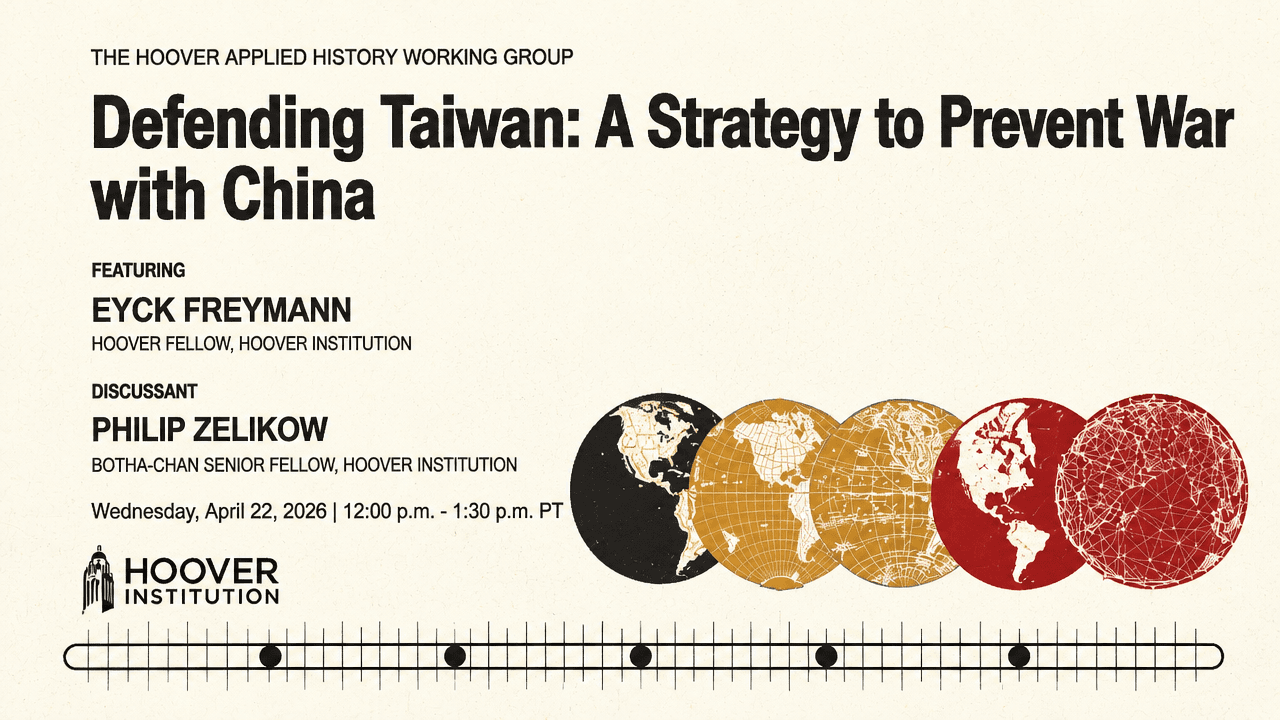
In Defending Taiwan, Eyck Freymann argues that U.S. strategy is too narrowly focused on deterring a Chinese invasion and is underprepared for a gray-zone crisis that could isolate Taiwan without open war. Freymann’s case, developed in discussion with Hoover Institution participants including Philip Zelikow, is that Beijing’s most plausible path may be legal, commercial, and coercive control over Taiwan’s external ties. Deterrence, he argues, will require Washington and its allies to integrate military power with political discipline, economic planning, technological leverage, and diplomatic coordination before such a crisis begins.
The hardest Taiwan crisis may not start as a war
Eyck Freymann’s central claim is that a Taiwan strategy built mainly around deterring invasion is too narrow. Xi Jinping is developing a full array of options against Taiwan: amphibious invasion, missile and drone bombardment, blockade, cyber operations, sabotage, decapitation attacks, legal warfare, coast guard coercion, and maritime militia enforcement. These options can be used alone, in sequence, or in combination. The United States therefore cannot rely on a single deterrent threat. It needs a way to close off each pathway by which Beijing might force Taiwan into submission.
“The object of our policy should be to deter the crisis, not just to deter the war,” Freymann said. “Because if you can't deter the crisis, you invite the crisis.”
The most consequential scenario in the discussion was not the familiar amphibious landing. It was a gray-zone move in which China asserts legal and commercial authority over Taiwan’s external relations without necessarily firing a shot. Beijing would not need to announce a blockade. It could claim the right to decide who and what enters and leaves Taiwan, then pressure private carriers, shippers, and logistics firms to follow PRC rules. If companies comply and Washington treats that compliance as a new normal, Taiwan could be boxed in gradually rather than conquered outright.
Taiwan is the place where the uneasy peace between the United States and China is likely to be tested and possibly broken, Freymann argued. The issue goes back to the start of U.S.-PRC relations, but Taiwan has acquired new weight because it sits at the center of the semiconductor supply chain behind the AI revolution. At the same time, China has used gray-zone tactics against U.S. allies and partners in the region, signaling a broader effort to weaken U.S. treaty alliances and push the United States out of its regional position.
Freymann rejected the popular view that Taiwan is mainly about chips for China. Beijing cared about Taiwan before semiconductors became strategically central. For Xi, Taiwan is fundamentally about “what China means”: whether the international community accepts a single China that includes Taiwan and recognizes the Chinese Communist Party as its undisputed leader. That is why, in Freymann’s view, a Taiwan crisis would include political and legal warfare, especially efforts to mobilize support in international institutions and among developing-world partners.
Taiwan also matters to Xi’s program of “national rejuvenation,” which he has promised to complete by 2049, the centenary of the CCP’s victory on the mainland. Xi has described Taiwan’s “reunification” as essential to that project. But Freymann stressed that Taiwan is not the whole of rejuvenation. It is a “keystone in the arch,” not the entire arch. The larger project reaches across technology, sports, culture, environmental transformation, ethnic harmony, and national prestige. Taiwan’s status becomes decisive because the manner in which it is resolved tests whether the United States and its allies can stand in the way of China’s larger ambitions.
From the U.S. perspective, Freymann said, the core issue is not what final status Taiwan eventually adopts. The long-standing American position is concerned with how that status is decided: peacefully, without coercion, including economic coercion, and in a way democratically acceptable to the people of Taiwan. That process matters because it will shape the regional order in which U.S. treaty allies live and the global economic space on which critical supply chains depend.
Deterrence rests on uncertainty about Xi
Freymann did not claim certainty about Xi Jinping’s private intentions. Xi is secretive, speaks in riddles, and scripts his public commentary on Taiwan. The inference Freymann drew from Xi’s 13 years in power was narrower: Xi is methodical, in some respects cautious, highly ambitious, and possibly opportunistic when he sees a chance to make major gains without resistance.
The encouraging fact, in that account, is that Xi has not yet moved decisively against Taiwan. Freymann treated that as evidence that Xi has been deterred so far. Deterrence is not a permanent solution and not a promise that Taiwan’s seizure can be made impossible. It is a daily discipline: persuade Xi that today is not the day.
Philip Zelikow accepted uncertainty as the right starting point. He described two broad schools on China and Xi: one that worries a lot and one that says the risk is overstated. His point was not that one school has proven the other wrong, but that uncertainty itself justifies serious preparation. “There’s a risk, and there’s a big risk, and we don’t know,” he said. The United States has to act as if the danger might be large.
Timing is equally uncertain. Zelikow described schools of thought ranging from near-term risk, to 2028 or 2029, to a more distant view that treats 2049 as the relevant horizon. His conclusion was that no one knows. History shows, he argued, that dictators sometimes recalculate quickly, for reasons invisible to outsiders, and overturn internal advice in short order.
Freymann’s own hunch was that Xi is likely waiting until after China’s Party Congress and Taiwan’s next presidential election before deciding how far to move. Xi has not historically taken major risks in Party Congress years, Freymann said, and recent turmoil in the People’s Liberation Army suggests to him that more purges may be coming. If Freymann were in Xi’s position, he would prefer to wait for a new Central Committee and a new PLA leadership, handpick them, and obtain a written mandate to press harder against Taiwan. That would reduce the risk of overstepping his authority and encountering internal resistance.
Freymann identified 2028 as a difficult year because, in his account, it combines several political uncertainties: a Taiwan election, a Philippine election, and a U.S. presidential election. That could be a period when the U.S.-led coalition is unusually disorganized and Xi is more comfortable taking risk. Freymann still cautioned that the United States needs to be ready at any point.
Other participants sharpened the uncertainty rather than resolving it. Larry Diamond argued that what once looked like a 10- or 15-year horizon has narrowed, with a crisis or major U.S. strategic choice possibly arriving by 2029 or 2030 at the outer end. Yet he also saw a countervailing signal: if China wanted to exploit U.S. distraction, why not move when, as Diamond put it, much U.S. force was deployed halfway around the world and important munitions had been consumed? The fact that Xi had not done so suggested to Diamond that Beijing may still believe it is not ready. He also suggested Xi may be waiting to see whether Taiwan’s 2028 election produces a government Beijing thinks it can do business with.

Rowena He emphasized the opacity of CCP decision-making and the role of domestic legitimacy. Even recent PLA purges, she said, can be read in opposing ways: as evidence that Xi is not ready for war because he removed a military chief, or as evidence that he removed someone who opposed war. She argued that CCP decisions about Taiwan have never been simply about the KMT or DPP’s position on “one China” or “two China”; Taiwan has long been a nationalism card the party can play when facing domestic crises.


Freymann’s reply drew on a scene from Beijing’s National Museum. He described the “Road to Rejuvenation” exhibit, which Xi visited with the Standing Committee after taking power and described as a record of China’s past, present, and future. Freymann said the exhibit celebrates Xi’s “new era”: green China, space achievements, submersibles, CCTV technology, aircraft carriers, and “dancing ethnic minorities.” But it contains no mention of Taiwan. To Freymann, that absence matters. Xi has found glory in other achievements, and a badly timed move against Taiwan would put them at risk. The task is to show him that moving at the wrong time and in the wrong way endangers everything else he wants.
Indirect control is not a blockade by another name
The public debate, Zelikow argued, is badly misweighted. It focuses overwhelmingly on invasion and, to a lesser degree, blockade. Gray-zone activity is treated as pressure tactics requiring little more than steadiness. Freymann’s analysis matters to Zelikow because it reverses that emphasis. It treats gray-zone threats as the most actionable and dangerous near-term problem.
Freymann highlighted two gray-zone scenarios. The first is coercive mobilization: China prepares for an amphibious invasion and waits to see what happens. Taiwan’s morale might crack. American morale might crack. Financial markets might react. U.S. alliances might fracture. China may derive coercive value from amphibious, blockade, and nuclear capabilities without actually using them.
Zelikow was less persuaded that coercive mobilization is the most threatening scenario. He thought it could even backfire, though he allowed that Beijing might not see it that way. The second scenario — what he now calls “indirect control” — was, for Zelikow, the most serious and least understood danger.
Freymann initially referred to this as a quarantine or indirect control scenario, originally highlighted by Zelikow and Robert Blackwill in a 2021 Council on Foreign Relations report. China would not declare a blockade. Instead, it would assert a legal right to control who and what enters and leaves Taiwan. It could then use law enforcement threats to induce private operators — FedEx, UPS, Maersk, MSC, and others — to comply with PRC law. If those companies accept Beijing’s authority, and Washington accepts that as the new normal, Taiwan is effectively checkmated. Over time, Beijing could tighten controls, prevent Taiwan from modernizing its armed forces, control chip flows and critical inputs, and eventually force a humiliating political settlement that strips Taiwan of meaningful autonomy.
Zelikow said he abandoned the term “quarantine” because it causes people to confuse the scenario with blockade. Blockade is coercion: “I’m going to strangle you so you’ll surrender.” Quarantine is too easily understood as selective blockade. Indirect control, by contrast, does not necessarily involve coercion at all. It changes the legal and commercial status quo.
Taiwan’s only international legal status, Zelikow said, is as a separate customs territory under the WTO. China can answer the question “separate customs territory of whom?” in ways that many countries’ understanding of international law may support. He noted that in 2020 the United States announced it would no longer recognize Hong Kong as a separate customs territory under the WTO and would treat the PRC as having full customs sovereignty over Hong Kong, while saying this was a U.S. decision that did not alter WTO status. China, he argued, could make a similar claim about Taiwan: that Taiwan no longer has full autonomy over its external commercial relations.
In that case, ships would still go to Taiwan, but under different rules. China could selectively enforce those rules, require diversion to the mainland for customs clearance, and impose practical control without firing. Zelikow stressed that this is not a pressure tactic aimed at immediate surrender. It is a change in Taiwan’s commercial status from which many consequences would flow, including, as he put it, “who has sovereignty over the AI revolution.”
If indirect control is the most serious form of the most serious gray-zone threat, and if public debate remains centered on invasion and blockade, then the U.S. policy conversation is misaligned with a plausible test.
Political deterrence depends on discipline, not performance
Freymann’s deterrence framework had four pillars: political, military, strategic, and economic. The political pillar begins with Taiwan itself. Washington, he argued, should apply relentless private pressure on Taiwan to expand defensive capabilities, build stockpiles, and improve resilience. But it should avoid public pressure that disrespects Taiwan’s democratic agency. Taiwan must ultimately make its own choices, and U.S. officials will need discipline, especially during election periods.
Toward Beijing, Freymann’s political formula was “three magic words”: One China policy. The content of that phrase is ambiguous and has been emphasized differently by different administrations, but the words themselves have “totemic value” in U.S.-China relations. He warned against tampering with the policy. A better approach is to say the United States remains fully aligned with its long-standing policy, while emphasizing or de-emphasizing certain elements.
The communication shift Freymann wants is directed at the gray zone. Strategic ambiguity about whether the United States would go to war for Taiwan does not mean Beijing is pushing on an open door short of war. Washington should make clear that if China salami-slices toward a quarantine or indirect control arrangement, or mobilizes forces in ways that may or may not presage invasion, the United States and its allies will not sit idle while waiting for Beijing’s decisive first move. They will respond proportionately, in a domain and manner of their choosing, in order to maintain a stable equilibrium.
Zelikow described this as a move from strategic ambiguity to “structured ambiguity” and called it sound, creative, and interesting. But he also suggested that if indirect control is the lead danger, then political deterrence becomes one of the lead counters — and the state of U.S. policy becomes worrying.
David Fedor pressed the practical gap between analysis and action. He said U.S.-Taiwan economic links are closer than ever, that the U.S. AI revolution runs through Taiwan, that the U.S. trade balance with Taiwan had recently equaled that with China, that military procurement is moving in the right direction, and that think tank analysis is better than ever. Yet in response to PRC gray-zone pressure, lawfare, and coercion, he asked, what has the United States actually done? He also argued that even militarily, interoperability with Taiwan remains far behind the likely need: “The most likely fight we have, with our most likely fighting partner, we do the least amount of prep for that conflict.”

Freymann’s answer was that one gray-zone dial Washington can turn is the informal, only partly acknowledged military-to-military relationship with Taiwan. In recent years, he said, it has been disclosed that hundreds of U.S. trainers are on Taiwan. Their number, equipment, and activity can be adjusted as a form of gray-zone pressure. He acknowledged that this does not solve the problems Zelikow identified, but called it one way to demonstrate resolve in plain view of Beijing without making the activity fully public.
The same political contest appears in Taiwan’s formal diplomatic space. Asked about Taiwan’s remaining formal diplomatic relationships, Freymann said the number of countries recognizing Taiwan has fallen from 22 to 12 in recent years and will likely keep falling. The United States, in his view, can try to give confidence to those that remain, using the State Department and other tools so they do not have to flip. It can also fight harder in international institutions, including at the UN, against China’s interpretation of Resolution 2758 and Beijing’s effort to rewrite the history of what the international community has agreed about Taiwan’s status.
Military strength is necessary but not sufficient
Freymann did not downplay invasion or blockade. He argued that the United States must be able to show it can defeat an amphibious invasion into the 2030s. He also said the problem has become harder because, in his description, U.S. air-defense interceptors and long-range precision munitions have been consumed in the Middle East.
Still, an amphibious invasion remains intrinsically difficult. It requires many things to go right. It is costly and highly risky. Beijing would have many reasons to prefer taking Taiwan “for free”: without a fight, without destroying semiconductor fabs, and possibly with greater humiliation for the United States if Washington appears simply to abandon Taiwan.
Zelikow said Freymann’s treatment of military and strategic measures for invasion and blockade is strong, but also suggested that much of the U.S. government already agrees with the basic characterization. The policy system may not be moving fast enough or doing everything correctly, but it is broadly on track on many military preparations.
The strategic deterrence pillar, for Freymann, is no longer only nuclear. It includes the cross-domain nexus of space, cyber, and AI. Nuclear forces depend on command, control, and communications systems that can be attacked through cyber means or threatened through satellite disruption. At some point, he argued, AI regulation, AI arms control, or something like it will become central to the strategic balance, even if the issue is not yet well understood or theorized. Taiwan may be part of that balance because it produces the compute driving the AI revolution.
James Ellis praised Freymann for shifting the analytic frame from what to do if deterrence fails to what must be done to ensure deterrence succeeds. His challenge was implementation. Supranational organizations are in disrepute. The necessary coordination among finance, manufacturing, edge technologies, and energy would be extremely difficult. Ellis compared the problem to the old joke about solving submarine warfare by boiling the ocean: the idea may be clear, but implementation is the real problem.


Ellis also questioned whether the subject is still only Taiwan. Freymann’s program, he suggested, amounts to designing a broader national security architecture for dealing with China globally. Finance, manufacturing, technology leadership, and energy supply are not adjuncts to national security; they are its essence. In that sense, Taiwan may become a “lesser included case” inside a much larger architecture.
Freymann did not explicitly recast the book as a general China strategy. But the measures he regards as necessary for Taiwan — economic security, alliance coordination, industrial capacity, predictable trade policy, technological resilience, and political discipline — cannot be confined to a Taiwan-only lane.
Sanctions are not a credible economic strategy by themselves
The most distinctive part of Freymann’s argument is economic. Washington’s default approach to economic deterrence is sanctions: the playbook developed against Russia, Iran, Venezuela, and North Korea. The temptation is to tell China that if it crosses U.S. lines, Washington will “throw the book” at it.
Freymann argued that this is not credible, even in some extreme scenarios and certainly not in most gray-zone cases. If a Taiwan crisis already produces financial and economic shock, U.S. politics will not point toward making the crisis worse. In a long-term attritional economic struggle with China, the United States would have to ask who is better positioned to endure: a totalitarian communist state with huge stockpiles or a coalition of democracies.
Zelikow called this one of the book’s key analytical contributions. He agreed that the stock answer of massive sanctions, which he associated with Biden administration signaling, was ill-analyzed and probably unworkable. He also agreed that another stock answer — a Malacca Strait blockade — does not solve the problem. If everyone is blockaded through Malacca, Zelikow said, the pain hits Japan, South Korea, and Taiwan much faster and harder than China.
Freymann’s alternative is to invert the question. Instead of asking how to maximize punishment of China, in ways that also punish the United States and its allies, Washington should ask what kind of international economic system it would need if deterrence failed. If China revealed itself to be unreliable, if it crossed U.S. red lines, and if Washington decided that some decoupling was necessary for economic security, then the United States would need a plan for how to do that in an integrated global economy.
That integration is the hard part. China sells to Indonesia, which sells to Brazil, which sells to Mexico, which sells to the United States. Even if Washington blocks direct imports from China, it may still import Chinese goods and components under “Made in Vietnam,” “Made in Brazil,” or “Made in Mexico” labels. Since there is no realistic world in which everyone decouples from China fully and simultaneously, Freymann argued for a web of overlapping economic security agreements developed over time.
He called this approach “avalanche decoupling”: not a single predesigned package, but a flexible framework for partial, sector-by-sector, product-by-product, coalition-by-coalition realignment. The United States might decide it can no longer rely on China for legacy chips, medicines and inputs, medical devices, drones, and other industries. Japan might agree on some categories and add others. Australia might overlap differently. Non-allies such as Mexico, Brazil, and Vietnam might never decouple fully, but might enforce rules of origin or align with particular standards.
| Economic response model | Freymann's critique or purpose |
|---|---|
| Mass sanctions | Politically and economically not credible in many Taiwan scenarios, especially gray-zone crises. |
| Malacca blockade | Zelikow argued it would hurt key U.S. partners such as Japan, South Korea, and Taiwan quickly and severely. |
| Full global decoupling | Freymann called it unrealistic because China holds roughly one-third of global manufacturing value-add. |
| Overlapping economic security agreements | Freymann's proposed flexible framework for partial, negotiated decoupling by sector, partner, and crisis condition. |
Freymann emphasized that this cannot be achieved by “flicking a light switch or posting a tweet.” One lesson he drew from “Liberation Day” was that sudden unilateral economic action cannot substitute for political commitment, planning, and endurance.
Steven Davis agreed that economic relationships are central to China’s indirect control strategy. China’s trade, infrastructure finance, investment, and payment relationships give it leverage over countries that may be forced to choose between U.S. and Chinese preferences on Taiwan customs arrangements. Davis argued that U.S. trade policy under the second Trump administration had made the United States appear less reliable as a trading and investment partner, thereby encouraging others to reduce vulnerability to future U.S. coercion and amplifying China’s capacity for indirect control.
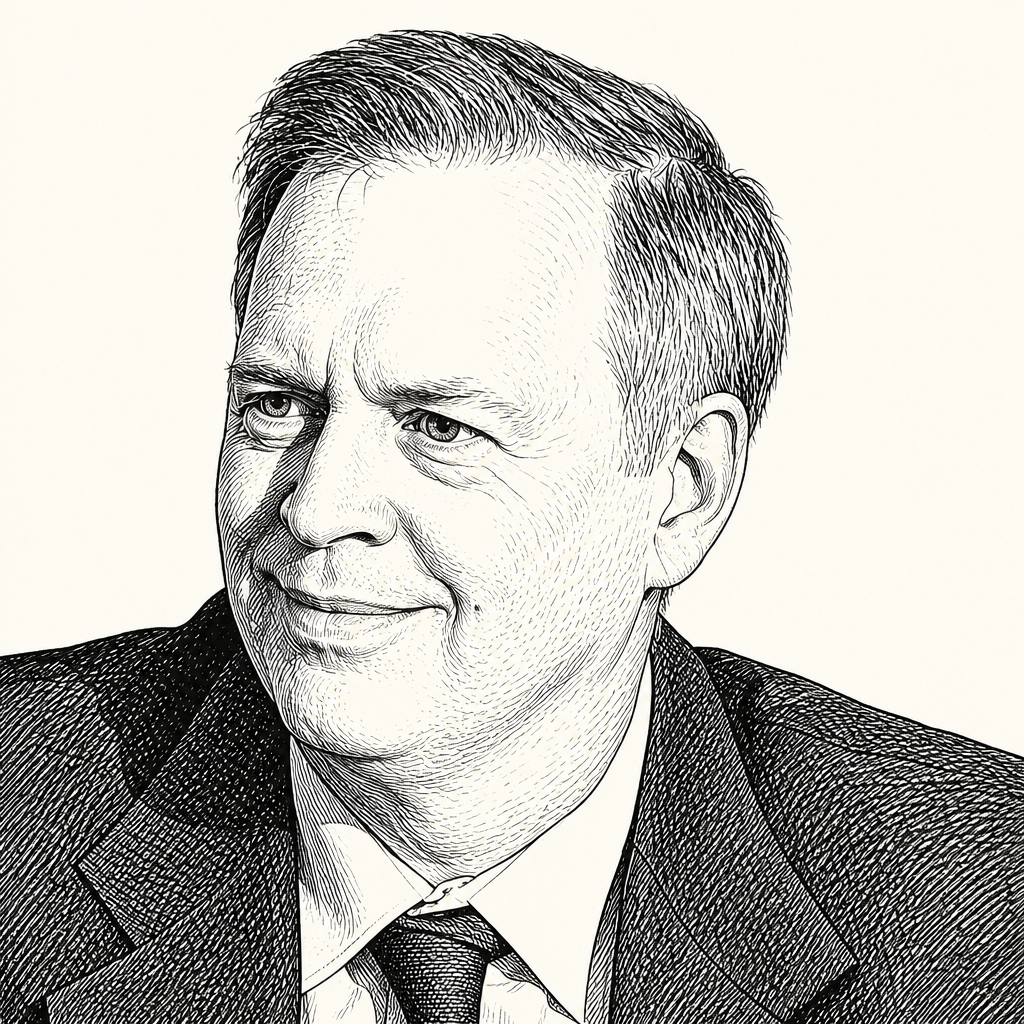
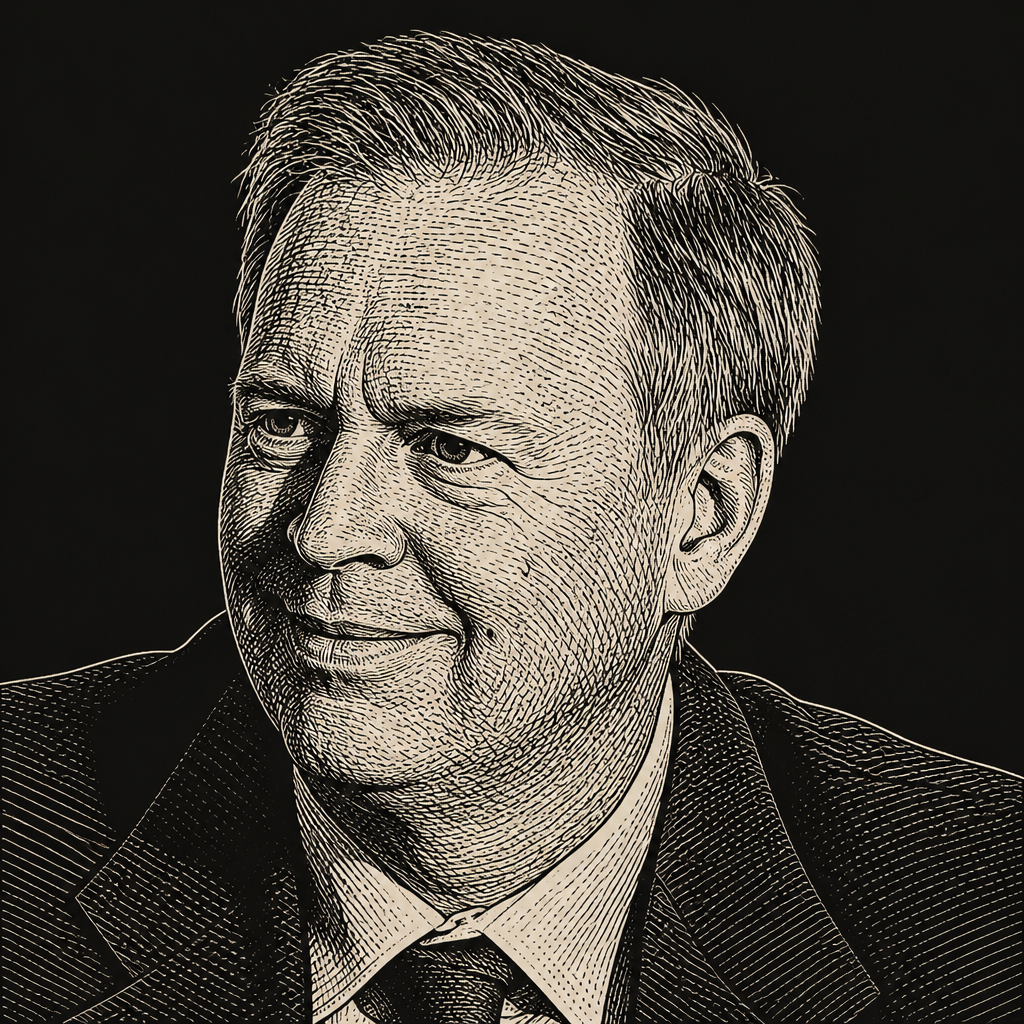
Freymann agreed that predictable trade policy is essential, especially in regions where China does much more business than the United States. That is part of the case for avalanche decoupling: stop doing trade policy by tweet and let Congress provide predictability about direction.
Davis also challenged Freymann’s political language about bringing back millions of manufacturing jobs, calling it a “pipe dream” that misdiagnoses why jobs disappeared and ignores the automated, capital-intensive, high-skill character of future manufacturing. Freymann conceded the point in part. Maybe the case should not be framed around millions of jobs, he said, but in a world where certain industries are deemed essential to economic security, there would at least be investment in communities, and that investment would have meaningful effects.
The coalition starts with a core, but the economy requires overlapping circles
Niall Ferguson pressed Freymann on whether the book implies an Asian NATO — what Ferguson suggested calling IPTO, the Indo-Pacific Treaty Organization — and whether the relevant historical analogies are from the 1940s: NATO, the Marshall Plan, and something like the Two-Ocean Navy Act to rebuild U.S. military capacity. Ferguson’s doubt was whether the United States is capable of 1940s-style efforts under current fiscal and political constraints. He also asked who would join. Japan and Australia might, but China offers massive trade in a way the Soviet Union did not.
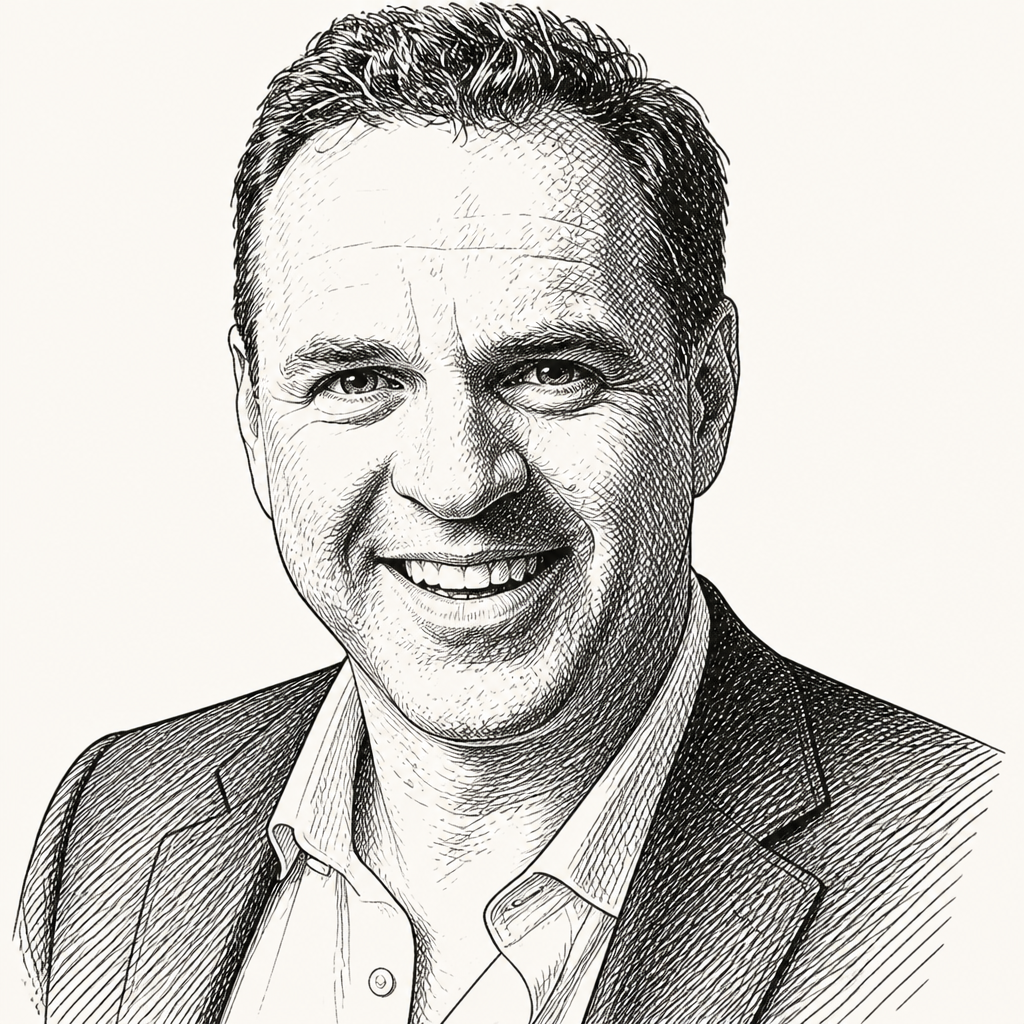
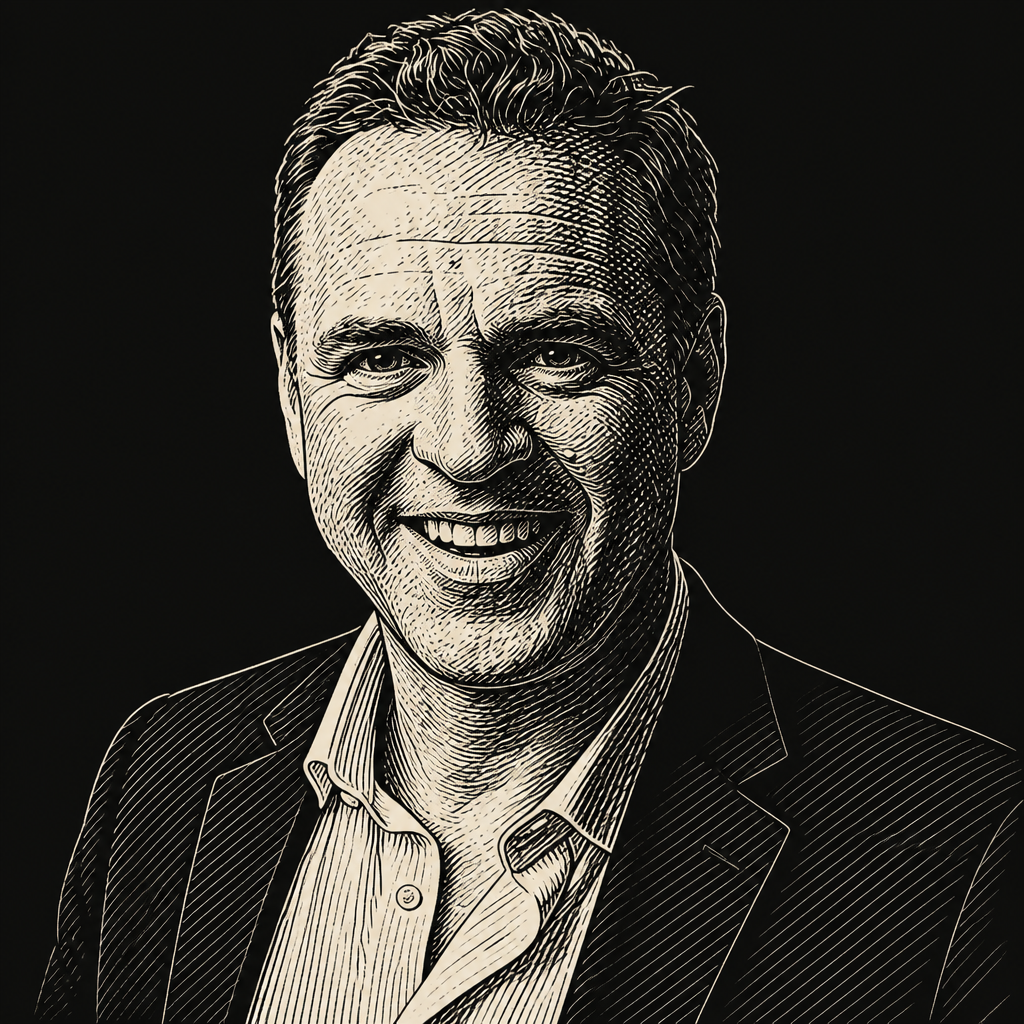
Freymann answered by distinguishing types of coalition. For political, diplomatic, military, and intelligence coordination, he argued for a core coalition consisting essentially of the Anglophone countries plus Japan: the United States, Japan, Australia, the United Kingdom, and Canada. Canada is already economically tied to the United States through a free-trade zone and cannot realistically be separated from U.S. economic security. Japan regards Taiwan as existential and now says so publicly. Australia has historically remained close to the United States and learned in the Pacific War the existential importance of the American alliance. The United Kingdom is deeply financially intertwined with China and would be implicated in any U.S.-China decoupling or sanctions scenario, Freymann said, because major British financial institutions intermediate trade between China and the world.
The European Union, in Freymann’s account, is different. It is 27 countries deciding by consensus on economic, sanctions, and trade policy. He said 27 people cannot figure out what to order for dinner, let alone how to decouple from China. Southeast Asian states, including treaty allies such as the Philippines and Thailand, face overwhelming asymmetrical Chinese coercion. South Korea is also complicated: it may not be reliable to do any particular thing in a Taiwan crisis, but it is essential for defense industry, shipbuilding know-how, industrial capacity, high-bandwidth memory, semiconductor inputs, and air-defense interceptor replenishment through Hanwha.
Freymann said that same core accounts for roughly half of global defense spending. It is therefore large enough to start with, even if members do not take exactly the same positions. The goal should be maximum alignment in politics and diplomatic communication. If the United States says one thing publicly and privately in a gray-zone crisis, while Japan and Australia say something different, Beijing can exploit the gap.
But economic decoupling cannot be organized as a rigid in-group and out-group. Freymann used South Korea to explain why. If a U.S. official asks Seoul to pre-commit to specific actions in a Taiwan crisis, the South Koreans can reasonably ask why they should commit to actions Washington itself will not pre-commit to. If the United States does not know what it would do economically, allies cannot know either.
Instead, the feasible coalition would emerge through negotiation during a crisis. Different countries would align on different products, sectors, technologies, and standards. Some measures would be unilateral; others bilateral; others trilateral or larger. The structure must be flexible enough to reflect political constraints in the moment.
This flexibility matters because China is trying to present Washington with three bad options.
| Option | What it would mean in Freymann's framing |
|---|---|
| Let Taiwan slip away | Avoid short-term crisis while China gains practical control, potentially including intact fabs and future leverage over compute. |
| Escalate to war | Use military escalation to resist the move, with all the risks that entails. |
| Trigger a financial crisis | Take drastic economic or technological measures, such as disabling fabs or imposing hard bilateral measures against China. |
China’s strategy, in Freymann’s view, is to make the third option look as big and red as possible, knowing that the first option — doing little while Taiwan’s autonomy erodes — is the default. The purpose of economic security planning is to make that red button look less catastrophic.
The domestic case has to be made before the emergency
Sean McFate asked whether political deterrence should include preparing not only Taiwan, but also the American public. Ukraine, in his view, showed that even a legitimate cause can fail to sustain majority American support. He also challenged the premise that Xi has been deterred, suggesting it may remain only a hypothesis. From a military perspective, McFate said, the United States may have been “doing push-ups in front of someone who doesn’t want to fight” and exhausting its own readiness while leaders convince themselves the current approach is working.
Freymann’s answer on public preparation was to stop describing confrontation scenarios as automatic economic Armageddon. The public case should be about contingency planning: how to make a bad crisis less bad, and how to imagine a world after the U.S.-China economic “marriage” begins to unwind. The goal would be bipartisan consensus on general principles, not necessarily on every instrument.
The political framing he proposed was divorce. The United States, he argued, made mistakes over 40 years by becoming interdependent with a state-capitalist, totalitarian regime that does not share American interests or values, wishes the United States ill, and wants to use interdependence to blackmail and coerce. The relationship has become abusive. Divorce is painful, difficult, and expensive, but sometimes necessary.
The opportunity, as Freymann would present it, is not punishment for its own sake. It is a chance to rethink the global economy from a blank sheet: what it would look like if China could no longer dump into every industry, if manufacturing investment returned to hollowed-out communities, and if the social contract could be repaired. He linked this to a Marshall Plan style of political argument: an investment now to build confidence in a better future.
That case would have to be made before a crisis, because once a crisis begins the political choices narrow quickly. If there is no bipartisan coalition around an alternative to acquiescence, Freymann warned, then acquiescence may become the path of least resistance.
The lead counters are political and economic
Zelikow’s final strategic concern was stark. If the lead threat is a gray-zone indirect-control move, and the lead counters are political and economic, then the United States may not currently have a viable strategy for the most serious danger. He characterized the Biden administration’s grand strategy as, in effect, “appeasement and delay”: mollify China enough to prevent a radical near-term move, while building military capabilities that eventually close China’s window. If China holds still long enough, the hardest problems Freymann raises can be avoided. But if China does not hold still, the strategy is exposed.
Freymann’s answer was not that the United States has solved the problem. It was that the United States must build a gray-zone deterrence strategy whose anchor is economic and political rather than primarily military. It must show China that Washington and its partners can match Beijing point for point, without giving China the excuse to escalate to war. If China tries to push the burden of escalation onto Washington, the United States needs calibrated tools to push that burden back, while deterring movement from the darkest gray-zone moments into war.
A Taiwan strategy, in this account, cannot remain a narrow military contingency plan. The crisis is Taiwan, but the instruments are alliance credibility, industrial policy, trade predictability, financial resilience, AI-relevant compute, legal status, international institutions, and public legitimacy. A Taiwan strategy that ignores these domains leaves Beijing’s most plausible pathways open.
Freymann ended with a narrow but important claim about Xi’s incentives. Xi does not need to be persuaded to give up his goals. He needs to be persuaded that patience serves them better than action. If he can be shown that moving against Taiwan at the wrong time and in the wrong way puts national rejuvenation itself at risk, deterrence can work one day at a time.