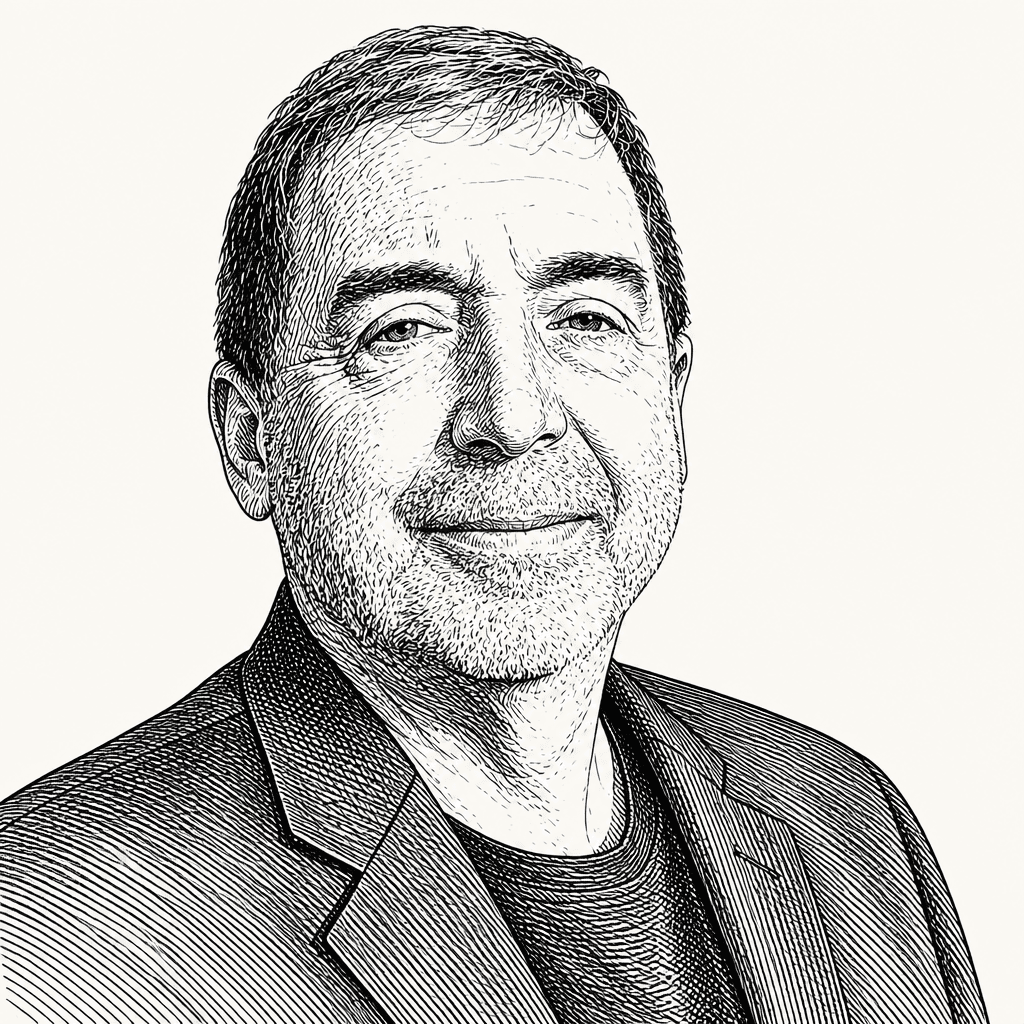
Russ Roberts
Economist, author, and host of the EconTalk podcast; he is president of Shalem College and a visiting fellow at Stanford University’s Hoover Institution.
The Retreat From Reading Weakens the Public Culture of Argument
Journalist James Marriott argues that the decline of long-form reading threatens more than books’ place in daily life: it weakens the habits of sustained argument, critical scrutiny and complex thought that literacy helped establish in public culture. Speaking with EconTalk’s Russ Roberts, Marriott contends that writing makes ideas more stable and contestable than performance-driven media, while Roberts questions whether books alone can provide depth or improve political judgment. Marriott’s narrower conclusion is that reading may persist not as a mass habit but as a deliberate discipline.
Incentives Explain Conduct but Cannot Decide What Is Right
Psychologist Adam Mastroianni argues that incentives explain why people face pressure to do harmful things but cannot excuse conduct they know is wrong. In an EconTalk conversation with Russ Roberts, he calls surrendering moral judgment to money, status or institutional approval “loser behavior,” and contends that better systems still require people willing to refuse their terms. Their discussion tests that claim against everyday compromises, career choices and the institutions that reward them.
Hamas’s Weakening Opens a Narrow Path to Civilian Rule in Gaza
Ahmed Fouad Alkhatib, a Palestinian from Gaza, argues that the territory’s future depends on stripping Hamas of its capacity to govern, rearm and intimidate, allowing civilian leaders to replace armed rule. While holding Israel responsible for settlement expansion and policies that weakened Palestinian moderates, he says Palestinians must also confront Hamas’s role in Gaza’s destruction and build a politics around work, security and self-government. Alkhatib proposes a demilitarized Gaza run by nonpartisan technocrats and a 100-day halt to violence as a basis for direct Israeli-Palestinian engagement; host Russ Roberts questions whether Hamas would genuinely disarm.
Industrialization Scaled When Parliament Made Land Rights Negotiable
Ben Southwood of Works in Progress argues that the Glorious Revolution accelerated British growth by making Parliament a dependable forum for untangling land rights that blocked investment. A legislature dominated by landowners used thousands of private acts to modify inheritance settlements, consolidate scattered holdings and authorize transport projects, while preserving claims for heirs and other affected parties. Southwood’s broader point is that industrialization depended not just on new ideas, but on institutions able to make their application—and agreement among those whose rights stood in the way—possible.
Terminal Illness Clarifies the Limits of Achievement and Power
Facing terminal pancreatic cancer, former senator and university president Ben Sasse argues that mortality strips professional achievement, online judgment and political performance of their claim to ultimate importance. In conversation with EconTalk’s Russ Roberts, Sasse grounds that view in a Christian account of guilt, grace and gratitude, and extends it to a critique of institutions—from Congress and universities to digital platforms—that seek authority or attention while evading responsibility. What endures, he says, is embodied life: faith, family, service and accountable work.
Palestinian Victimhood Has Become a Global Political Resource
Hussein Aboubakr Mansour, an Egyptian-born scholar, argues that Palestine has become a self-reproducing system in which real Palestinian suffering is converted into political legitimacy, institutional standing, regional leverage and moral meaning for actors far beyond Israel and the Palestinians. Drawing on his upbringing in Egypt and his essay on the political economy of the symbol, he contends that Arab regimes, Islamist movements, rival states, Western institutions and NGOs can all be both users and captives of a conflict whose continued centrality serves distinct interests.
Wilderness Is a Cultural Idea, Not Land Untouched by People
In *The Savage Landscape*, writer Cal Flyn argues that wilderness is not land untouched by people but a contested idea shaped by history, culture and power. Speaking with Russ Roberts, she examines how that idea influences conservation and predator reintroduction, including who gains from protected land and who bears its costs. Flyn also contends that the enduring appeal of wild places lies less in an escape from humanity than in encounters with fear, beauty and limits on human control.
The Iliad Finds Human Choice Within Fate and Violence
The Iliad examines what choice and responsibility remain when people are bound by fate, hierarchy, violence and grief. Poet and Freedom Reads founder Reginald Dwayne Betts and EconTalk host Russ Roberts argue that Homer’s warriors continue to make consequential decisions under severe constraint, while the poem measures those decisions through the dead, their families, and the homes and obligations war leaves exposed. Betts draws on his experience of incarceration to illuminate choice within narrowed circumstances, and both readers locate the poem’s moral turn in Achilles’ recognition of Priam’s grief.
Spin Master Turned Toy Novelties Into Durable Story Worlds
Spin Master co-founder Ronnen Harary argues that the company’s durable successes came when it moved beyond one-time toy novelties and built systems in which play mechanics, characters and stories reinforced one another. In a conversation with EconTalk’s Russ Roberts, Harary traces that shift from Earth Buddy and Devil Sticks to Bakugan and Paw Patrol, while arguing that the company’s longer-term test is whether it can keep generating products without its founders at the center.
Achilles’ Rage Exposes the Fragile Economy of Honor and Trust
In an EconTalk Book Club conversation, Shalem College’s Ido Hevroni and Russ Roberts read Homer’s Iliad as a poem about Achilles’ rage rather than a general account of the Trojan War. Hevroni argues that the quarrel between Achilles and Agamemnon exposes a moral economy of honor, hierarchy, trust, and duty, while the poem’s gods and violence make visible powers that still shape human life. Teaching the Iliad to students returning from war, he says, has made its account of betrayal, loyalty, and moral judgment less remote without reducing it to a book only for soldiers.
Arthroscopic Knee Surgery Failed to Beat Placebo in Chronic Meniscus Tears
On EconTalk, cardiologist John Mandrola makes the case for medical conservatism: many procedures should face stronger evidence before becoming routine, especially when patients may improve through natural recovery, expectation, or the clinical ritual itself. Using placebo-controlled knee surgery and other examples, Mandrola argues that medicine often mistakes improvement after intervention for improvement because of intervention. He tells Russ Roberts that the point is not nihilism, but humility: clinicians should test more, intervene less reflexively, and continue caring even when fixing is not the right goal.
Mobile Phones Became Productive Capital for the World’s Poor
Philip Auerswald tells Russ Roberts that the mobile phone’s importance in countries such as Bangladesh was not that it became a cheaper consumer gadget, but that it functioned as productive capital for people excluded from existing infrastructure. Using Iqbal Quadir’s Grameenphone and Strive Masiyiwa’s Econet as central cases, Auerswald argues that progress depends on more than invention: existing technologies have to be recombined with finance, regulation, distribution, and political persistence before they reach most people.
Sunlight Advice Should Weigh Total Mortality, Not Skin Cancer Alone
Author Rowan Jacobsen tells Russ Roberts that public-health advice has treated sun exposure too narrowly as a skin-cancer problem, when the relevant question should be total health and mortality. Jacobsen accepts that sunlight can cause skin cancer and that burns should be avoided, but argues that moderate exposure may also confer benefits, especially through mechanisms such as nitric oxide and cardiovascular effects. Roberts presses the limits of the evidence, leaving the case as a tradeoff rather than a reversal: sunlight is risky, but zero exposure may not be the safest default.
Healthy Communities Form People Through Tension, Not Conformity
Luke Burgis tells Russ Roberts that the central problem of identity is not choosing between individualism and belonging, but learning to remain in communities without being absorbed by them. In the EconTalk conversation, Burgis argues that families, schools, politics, religious groups, workplaces, and marriages form the self through tension — and that modern life too often promises escape from that tension through frictionless affinity. Roberts presses the implication: adulthood requires standing apart from one’s tribe without necessarily leaving it.
Career Choice Should Be Treated as an Empirical Search for Impact
Benjamin Todd, co-founder of 80,000 Hours, argues in conversation with Russ Roberts that career choice should be treated less as a search for a preexisting passion than as a sequence of tests about where a person can do unusually useful work. Todd’s case is that impact depends on marginal value, neglected problems, personal fit and evidence, not simply prestige, pay or visible helping. Roberts presses a counterpoint throughout: that meaning also comes from humane service, local obligations and the smaller contributions that economic or impact calculations can miss.
A Near-Death Vision Forced a Rationalist to Reconsider Consciousness
Sebastian Junger, speaking with Russ Roberts on EconTalk, recounts how a near-fatal ruptured aneurysm in 2020 forced him to confront an experience his atheism could not easily explain: the apparent presence of his dead father as he was close to death. Junger does not present the episode as proof of God or an afterlife, but argues that a serious rationalist should neither convert mystery into doctrine nor dismiss it because it violates prior assumptions. His account treats mortality as both a medical fact and a destabilizing encounter with consciousness, fear, and reverence.
AI Makes Embodied Competence More Valuable, Not Less
Aled Maclean-Jones argues that Tom Cruise’s later action films are best read as studies in embodied competence: knowledge acquired through tools, risk, repetition and physical contact with the world. In conversation with EconTalk’s Russ Roberts, he uses Cruise’s stunts, household repair, navigation and childbirth to question a culture that treats usefulness as mainly intellectual — a question sharpened by AI systems that now operate in the same verbal and analytical domains as many knowledge workers.
Smart Boundaries Can Make Creative Work More Productive
In an EconTalk conversation with Russ Roberts, author David Epstein argues that creativity and productive work often depend less on open-ended freedom than on well-chosen constraints. Drawing on cases from Mendeleev’s periodic table to Isabel Allende’s writing rituals and the failure of General Magic, Epstein says boundaries can clarify priorities, block habitual shortcuts, and force the kind of search that abundance often prevents.