AI Makes Embodied Competence More Valuable, Not Less

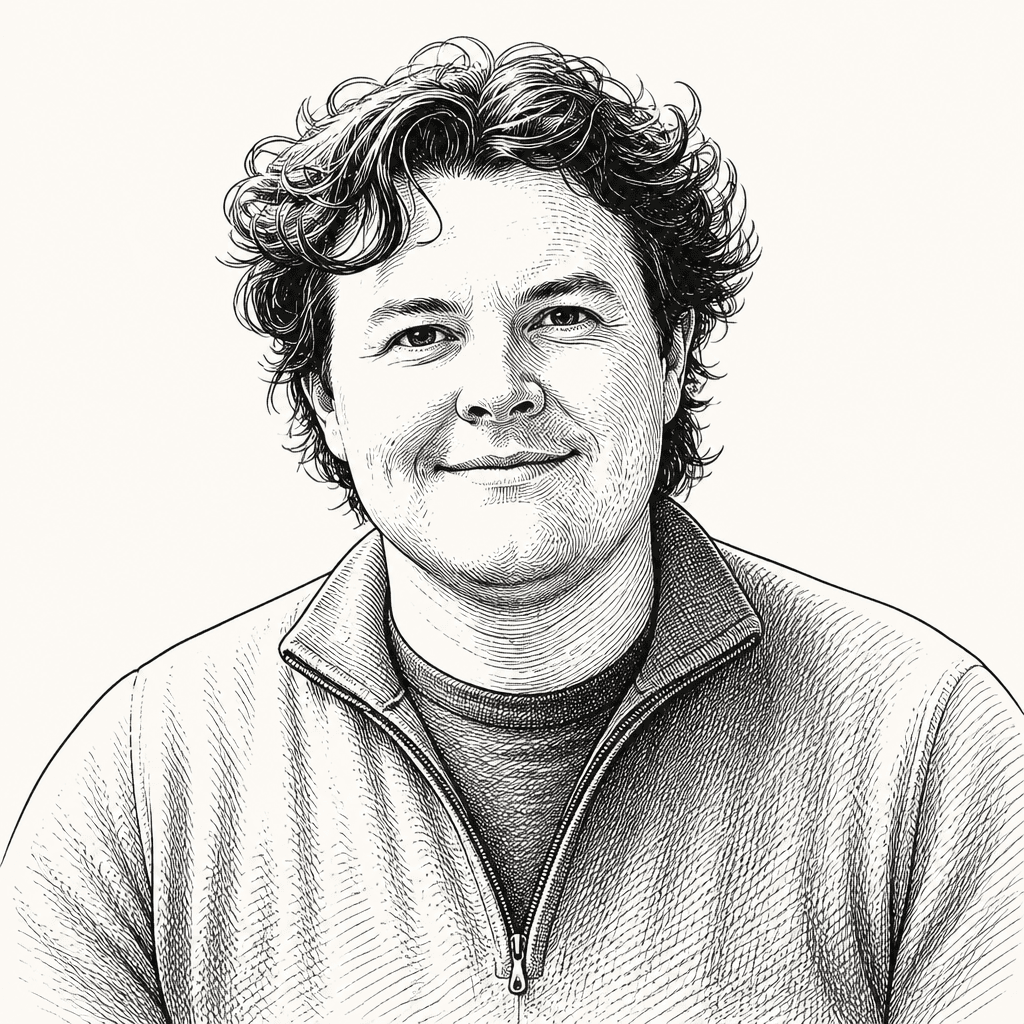
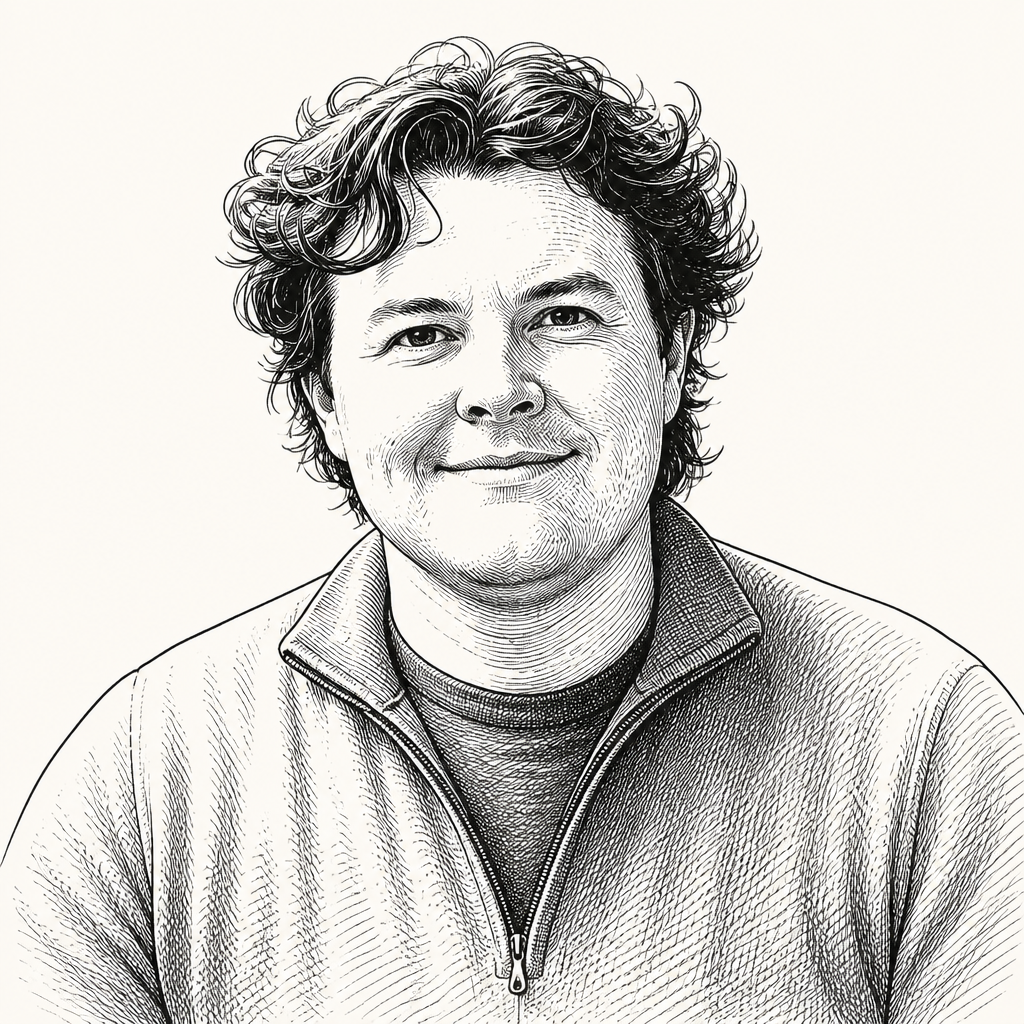
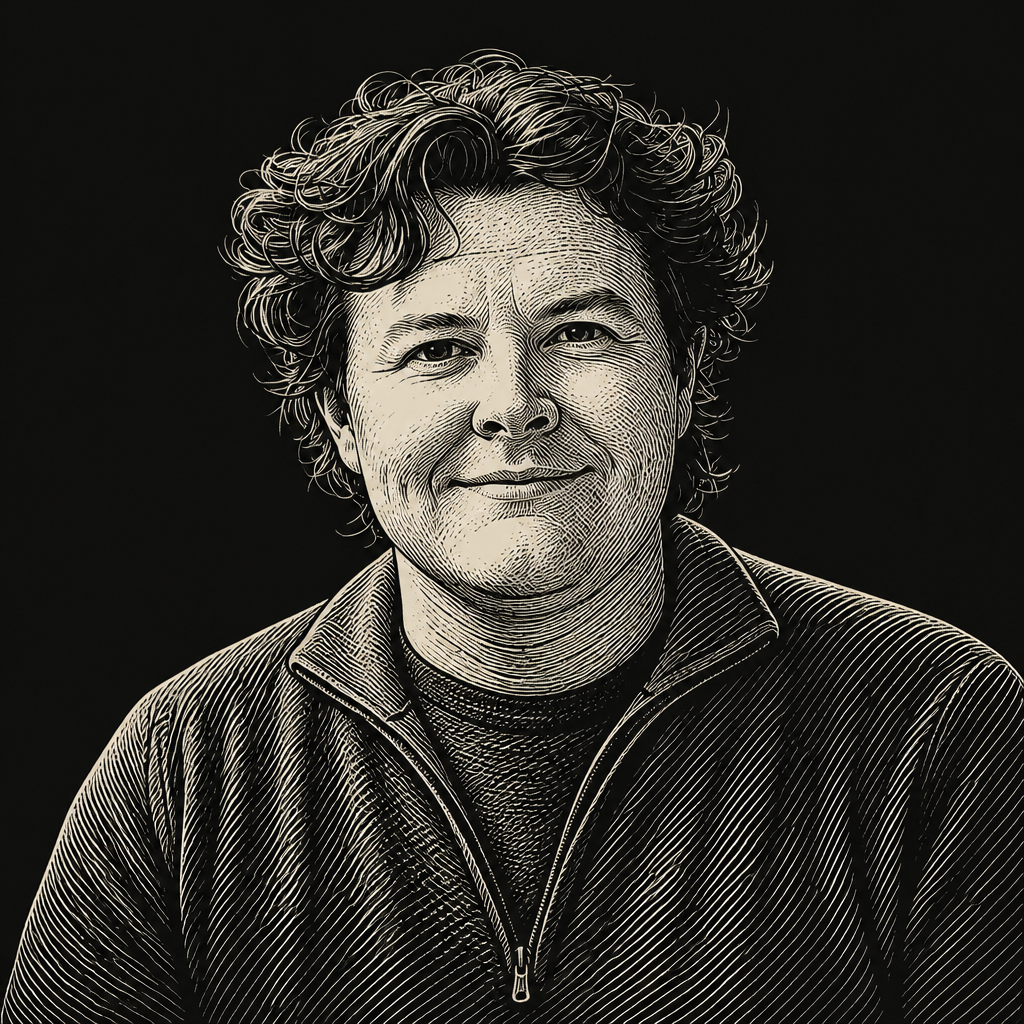
Aled Maclean-Jones argues that Tom Cruise’s later action films are best read as studies in embodied competence: knowledge acquired through tools, risk, repetition and physical contact with the world. In conversation with EconTalk’s Russ Roberts, he uses Cruise’s stunts, household repair, navigation and childbirth to question a culture that treats usefulness as mainly intellectual — a question sharpened by AI systems that now operate in the same verbal and analytical domains as many knowledge workers.
Usefulness is not only a mental category
Aled Maclean-Jones began with a problem that has become sharper in the last few years: what it means for humans to be useful when more of the work associated with “professional clever people” is exposed to automation. His route into the question was not abstract. He had been watching his young daughter on a beach on the Isle of Wight, noticing how “very embodied” she was — physically adept, quick to pick up sports, comfortable in motion — and recognizing how little that resembled his own self-conception as someone whose usefulness had mostly been intellectual.
Tom Cruise became the unexpected organizing figure because, in Maclean-Jones’s reading, the recent Cruise action films are not merely displays of danger or charisma. They are about embodied knowledge: knowledge acquired through movement, trial, timing, tool-use, fear, improvisation, and repeated contact with the world. Cruise’s persona in these films is not simply the invincible man who already knows. It is often the man who learns by doing, under conditions where the body has to solve what the mind cannot fully pre-plan.
Russ Roberts put the issue in more economic language: “learning by doing.” Modern education and knowledge work often train people to imagine knowledge as something acquired from books, lectures, notes, examinations, or instructions. But the competence Maclean-Jones wanted to describe is different. It resembles Michael Polanyi’s formulation, quoted by both speakers, that “we know more than we can tell”: the knowledge of a body that can catch a Frisbee, repair something unfamiliar, navigate without a screen, fly under pressure, or adjust to a physical situation before it can explain what it is doing.


We know more than we can tell.
Roberts admitted that this distinction made him uneasy because his own usefulness is largely conversational and mental. He described himself as not good with tools, not handy on boats, and fearful at the thought of needing to function in a sailing emergency. That sense of uselessness, he suggested, becomes more visible in an AI age. If one’s main capacities are reading, thinking, talking, and producing words, the arrival of systems that operate in those domains raises the question of what remains distinctively human — not in metaphysical terms, but in practical terms.
Maclean-Jones did not answer by rejecting technology. That was central to his point. The competence he saw in Cruise’s later films is not a retreat to a pre-industrial craft fantasy. It is a form of embodied knowledge that works with machines, tools, aircraft, navigation systems, weapons, cameras, safety procedures, and digital devices. What matters is not whether a tool has batteries or circuits. What matters is whether the person using it remains engaged in understanding and doing, or becomes merely passive before it.
Cruise’s recent action films turn learning by doing into spectacle
For Aled Maclean-Jones, one important transitional work is Edge of Tomorrow, the film in which Cruise’s character repeatedly lives the same day, dies, remembers, and improves. He begins as an army public-relations figure who survives only briefly in combat. Over hundreds or thousands of cycles, he accumulates embodied familiarity with the battlefield, the aliens, the equipment, and the timing of events. No one else can access this knowledge because no one else remembers the repetitions. It exists in him.
Russ Roberts called it “Groundhog Day but with technology,” but emphasized that its philosophical point is not delivered as a lecture. Cruise does not master the situation by reading a manual, taking notes, or cramming for “the exam of life.” He learns the way people usually learn to operate in the world: by doing, failing, adjusting, and doing again. The knowledge is multifaceted. It includes the environment, the tools available inside that environment, and the interface between the person, the tools, and the hazards.
Maclean-Jones saw that emphasis carrying into the later Mission: Impossible films, especially once Cruise began working closely with Christopher McQuarrie. He described Rogue Nation as the first strongly “embodiment inflected” Mission: Impossible film in this period, and contrasted it with an earlier image from Mission: Impossible 2: Cruise rock-climbing in Utah with effortless cool. In Rogue Nation, by contrast, Cruise’s character clings to the outside of a cargo plane. The appeal, for Maclean-Jones, is not polish. It is effort. Cruise’s hair is blown back; his face is distorted by wind; his feet scrabble for purchase before he finds a way to hold on. The body is not an ornament to the action. It is where the action is happening.
These films also carry what Maclean-Jones called a “meta film” alongside the story: the spectacle of Tom Cruise himself doing difficult things. The viewer is meant to be aware both that Ethan Hunt is in danger and that Cruise, the actor, has undertaken a real feat of training and execution. That awareness can make the films weaker as conventional plots, Maclean-Jones said, especially in the later installments where set pieces can seem strung together by a thin narrative thread. But it also gives them their peculiar force. The set pieces become demonstrations of skill.
Maclean-Jones attributed to Cruise a phrase he said Cruise uses with stunt teams: “Don’t be safe, be competent.” It captures the difference between security as avoidance and competence as trained exposure. Roberts connected it to a scene Maclean-Jones had written about in which Cruise filmed a dangerous skydive sequence 19 times and still wanted another take, until the director warned him not to “tempt the gods.” The point was not that risk is good in itself. It was that Cruise treats the work as craft: something to be trained, repeated, refined, and brought under disciplined control.
Don’t be safe, be competent.
Maclean-Jones also described Cruise’s role in Hollywood as, at least in stories circulating among actors, explicitly pedagogical. He cited a report that Timothée Chalamet had received an email from Cruise after Dune, in which Cruise said that old Hollywood would have trained a leading man in skills such as dance and fighting, but that no one would now hold him to that standard — so it was up to him. Maclean-Jones said Cruise sent contacts for experts in fields such as motorcycles and helicopters, joking over whether “helicopter coach” was even the right term. He read the story as Cruise trying to pass on an older idea of acting as embodied craft in a world where much can be done inside a sealed studio with green screen.
The appeal of competence is sharpened by a world that needs it less
Russ Roberts argued that the attraction of these films depends partly on the fact that most modern lives contain so little comparable peril. For much of human history, physical competence was not a lifestyle category. It was survival. Sailing, hunting, farming, warfare, repairing, navigating, and childbirth all involved exposure to bodily risk. In contemporary affluent life, many people experience far less direct danger. That safety changes the emotional force of seeing someone do something difficult with the body.
Aled Maclean-Jones connected Top Gun: Maverick to an older cinematic and historical lineage of dangerous competence. In the opening scene, Maverick remains a test pilot rather than becoming an admiral or politician. Maclean-Jones said he thought Cruise’s own P-51 Mustang was present in the hangar, using that possible detail to illustrate how the line between Cruise the actor and Maverick the character has, in these films, nearly collapsed. The plot sets Maverick against an admiral associated with drones and institutional replacement; Maverick’s test flight becomes, within the film’s first 10 minutes, an argument for the continuing usefulness of human skill.
That scene, Maclean-Jones argued, echoes The Right Stuff, which dramatizes the test-pilot culture described by Tom Wolfe. The Right Stuff, in his reading, is about a quality that cannot be written down. Pilots can be tested, ranked, and pushed, but the “right stuff” remains tacit, visible only in performance. Maclean-Jones then traced that lineage back further to David Lean’s The Sound Barrier, which he described as a film about postwar test pilots trying to break the sound barrier. He recounted the death of Geoffrey de Havilland Jr., son of aircraft engineer Geoffrey de Havilland Sr., whose plane broke apart during testing and whose body, Maclean-Jones said, was later found in an estuary.
The point of that lineage was not historical ornament. Maclean-Jones’s claim was that Cruise’s Mach 10 sequence in Top Gun: Maverick restages an older peril for a generation that encounters danger mainly through representation. The plane breaks apart in the film, as real planes sometimes did in the test-pilot era he was describing. Maverick survives because the movie requires him to survive, but the thrill depends on the remembered possibility that such acts were once genuinely lethal.
Roberts noted that peril itself is out of fashion. As people become wealthier, he said, they demand more security; in economists’ language, security is a normal good. Most contemporary lives are designed to avoid bodily danger, discomfort, and exposure. Even sports that look dangerous — figure skating, luge, high-level racing — are performed by people whose competence reduces the risk far below what it would be for an amateur. The emotional charge comes from watching human beings operate near a boundary that the viewer would not dare approach.
That boundary is why Formula 1 pit stops, fighter pilots, elite athletes, and certain cinematic stunts can look almost fake. Roberts described the competence of a pit crew as “absurdly unimaginable.” Maclean-Jones extended the category beyond warfare and aircraft. A spectacle of skill might be an actor learning to sing and play guitar for a role, an actor performing Shakespeare at a level where the viewer becomes conscious of acting itself, or Nathan Fielder revealing in The Rehearsal that he had learned to pilot a 747. The common element is not masculinity or violence. It is the visible fact of disciplined human capability.
Navigation shows how the world stops teaching what screens replace
Navigation became a central example because it is a familiar case where a once-valued embodied skill has been displaced by a tool. Aled Maclean-Jones described trying to stop using satnav while driving from northwest London to the British National Archives in Kew. He wanted to relearn the route in himself rather than follow Google Maps blindly. The exercise revealed not only his own dependence on the tool, but also a change in the environment.
Older roads in Britain, he said, once supported a culture of directional judgment: whether to take one road or another, how to use old Roman roads, which winding B roads to trust. People had strong views about routes. That culture has largely disappeared. He said he found a video from the 1990s showing a similar route and noticed more signage and road markings. As people rely less on signs and more on screen instructions, those markings erode, and the opportunities to learn through the world itself diminish.
Russ Roberts initially framed London black-cab drivers as a case of obsolete expertise. The cabbies historically had to pass what he called an “absurd test” requiring deep knowledge of London’s streets. When they decline to use Google Maps or Waze, he admitted, he has often found it annoying because it might add time to the journey. But he reconsidered that reaction. What he was seeing, he said, was mastery: a person carrying a map in his head, knowing routes and rhythms of congestion in a way he cannot fully explain. It may no longer be economically necessary in the same way, but it remains a form of embodied knowledge.
Such competence can become a trust signal. Black-cab knowledge distinguishes a cabbie from an Uber driver. Maclean-Jones saw a related move in film marketing: audiences respond to evidence that someone competent is behind the work. Ryan Coogler explaining film formats in the marketing around Sinners, Christopher Nolan’s reputation for not allowing phones on sets, and Greta Gerwig discussing Powell and Pressburger influences around Barbie all served, in Maclean-Jones’s account, as ways of showing the audience a mind and craft behind the product. In a culture anxious about everything being dumbed down, evidence of expertise itself becomes part of the appeal.
Roberts connected this to hiking. He finds himself nervous if he cannot see on his phone that he is on the trail. The fear of not being able to find his way home leads him to “cheat” by using the device. This is not merely convenience. It is a kind of alienation: dependence on the representation of the world rather than confidence in one’s capacity to move through the world.
AI can either detach people from the world or help them re-enter it
Aled Maclean-Jones treated AI ambivalently. He did not describe it as inherently disembodying. The relevant question is how it is used.
Screens and scrolling, he said, create a powerful form of bodily forgetting. When he is deep in a scroll, “monitoring the situation,” he can quickly lose awareness that he has a body at all. He described himself as someone who can talk fluently about Gilbert Ryle, Merleau-Ponty, and Cartesian dualism, but who has often lived like “a brain in a vat”: feeding the mind with content, writing, and reading while neglecting the body.
I could stick it to Cartesian dualism any day of the week, but the way I actually live my life and I've lived my life majorly is kind of like as a brain on a vat.
AI can intensify that condition if it substitutes for effort. If he used it to write an essay for him, Maclean-Jones said, that would be disembodying. But he had also found AI useful in becoming more practically capable around the house. When his toilet seat broke, he decided to fix it himself rather than call someone. The process was clumsy. He ordered the wrong toilet seats, the wrong screws, and eventually discovered that the previous occupants had installed what he called a niche Italian toilet. But AI helped as a kind of “handyman friend,” giving instructions while he still did the trial-and-error work himself.
That distinction mattered. The tool did not remove him from the physical task. It helped him stay with it. The same technology that could automate away an intellectual act could also help a novice enter a domain of embodied competence.
Russ Roberts offered a parallel admission. One of the few household repairs he can do is replace the mechanism inside a running toilet. He knows how to dry out the tank, identify the type of mechanism, and install the replacement. The task is not advanced, but it gives him a point of contact with the physical world. When he fails at other repairs, he finds it disproportionately unnerving. As an economist, he can explain why it makes sense to hire someone else: division of labor and comparative advantage. But that explanation does not fully answer the emotional force of being unable to do something concrete.
Maclean-Jones’s own examples were modest but important: fixing a toilet seat, drilling his wife out of a bathroom when the door bolt seized, keeping the old bolt as a trophy. He joked that having it near the wedding ring made him sound like a fictional character, but the pride was real. These were not Cruise-level feats. That was the point. Watching competence at what he called a “cosmically comically overblown scale” invited the question of what smaller versions could look like in ordinary life.
Childbirth exposes the limits of treating the body as an instrument
The sharpest expansion of embodiment came through childbirth. Aled Maclean-Jones said that when he thinks about embodiment, he does not first think of war. He thinks of having children. His wife had recently given birth to their third child, and he described childbirth as the “ultimate bodily act,” especially from the perspective of a man who cannot do it. Whatever the form — natural birth, epidural, cesarean — it confronts the observer with the limits of his own body.
Russ Roberts responded by describing his wife’s four natural childbirths without epidural, noting that many people thought she was “insane.” He contrasted that with the extreme of surrogate birth, where one might recoil from the danger and physicality of pregnancy altogether. But even with medical technology, childbirth remains among the most primitive and embodied human experiences. It is not primitive in the sense of crude or inferior, but in the sense that it reaches beneath the technological insulation that modern life usually provides.
Maclean-Jones described the shift in odds that one feels on a labor ward. On an ordinary video call, he joked, there is effectively a “one in a gazillion” chance of dying. In childbirth, those odds change. The risk is still mediated by modern medicine, but the change is felt bodily. It brings life, death, pain, vulnerability, and competence into the same room.
This led him to a broader claim about philosophy and gender. He recalled an idea — he was uncertain of the attribution, though he thought it might have been Sheila Heti — that in a less patriarchal society, the dominant philosophical question might not be “to be or not to be,” but whether to have a child. The implication was that male philosophical traditions may have elevated certain abstract dilemmas partly because men were excluded from the most profound bodily one.
Roberts connected childbirth to technology’s broader role in insulating people from danger, elements, discomfort, and unpleasantness. Modern life becomes increasingly cinematic: mediated, protected, observed through screens, turned into representation. Maclean-Jones’s worry was not only about attention spans but alienation from bodily existence itself. The more experience becomes screen-based and mental, the easier it is to forget that knowledge, vulnerability, and agency are also bodily conditions.
Mission: Impossible stages competence against artificial intelligence
The Mission: Impossible film Aled Maclean-Jones had written about gave him an exaggerated parable of the AI age. Its villain is an artificial intelligence called “the Entity,” which is taking over the world’s nuclear arsenals. To defeat it, Ethan Hunt and his team have to go offline. The film becomes, in his phrase, a “fantasia of competence.”
The team uses old aircraft, compasses, secret codes, physical improvisation, and manual repair. Maclean-Jones lingered on Ving Rhames soldering a hard drive or pen drive in an underground hospital room in London. “Tom Cruise loves a solder,” he joked, meaning that the Mission: Impossible films repeatedly seem to have someone with a soldering iron. The joke mattered because soldering represents a practical intervention into the machine. The answer to AI is not a counter-AI alone; in the film’s fantasy, it is hands, tools, codes, bodies, trust, and improvisation.
The antagonists, by contrast, are physically and morally diminished in Maclean-Jones’s telling. They point guns, issue commands, and rely on systems. Hunt’s advantage is not that he has a perfect plan. In fact, Maclean-Jones emphasized that Mission: Impossible films often begin with something going wrong, and Hunt frequently has no plan at all. That distinguishes him from James Bond, who often seems to understand the underlying structure of the situation better than others. Hunt has what Maclean-Jones, invoking Keats, called “negative capability”: the capacity to remain inside uncertainty and trust that action will disclose the path.
He described an absurd scene in which Hunt asks the president of the United States to hand him the key to preventing nuclear catastrophe. When asked for his plan, he essentially has none; the request is, in Maclean-Jones’s paraphrase, “you can just trust me.” Maclean-Jones did not suggest ordinary people should claim that kind of authority. He said he would not trust himself in that situation. But he took the scene as an exaggerated version of something smaller and real: competence can make a person less neurotic. It can produce a disposition of “whatever will happen, things are kind of going to be alright,” not because the world is safe, but because one has some confidence in one’s ability to respond.
That is the distinction between safety and competence again. Safety seeks to eliminate uncertainty. Competence builds the capacity to act inside it.
When practical skill becomes less necessary, it becomes more symbolic
Aled Maclean-Jones and Russ Roberts both recognized a paradox. The more modern life removes the necessity of physical competence, the more spectacles of competence may become compelling. Cruise hanging from aircraft, flying helicopters, riding motorbikes, skydiving, and undertaking dangerous stunts becomes meaningful partly because most people no longer need to do anything remotely similar.
Maclean-Jones called this a movement toward a world in which physical acts become symbolic — a kind of stunt culture. Historically, physical fighting, flying, repairing, and navigating might have been matters of need. Now many such acts are performed for entertainment, symbolism, or personal meaning. Elite sports function similarly. Josh Allen throwing a football 70 yards, Alysa Liu figure skating at Olympic level, or an actor learning a difficult craft for a role are not survival acts. They are demonstrations of human capacity in a world where physical capacity is often economically unnecessary.
Roberts wondered whether people will increasingly pay for physical experiences simply to remind themselves they are alive and can learn crafts outside the digital world. Gyms already simulate useful exertion without requiring useful work. Boxing lessons, cooking, hiking, repair, or craft may become ways to recover some contact with the body. He suspected that movies will continue to move toward the “useful man” or useful person: characters whose competence is not only narrative but bodily. He also noted that although the genre has often centered men because of its association with war, more women now star in films built around physical skill and combat.
Maclean-Jones widened the frame further. Spectacles of skill need not be martial, masculine, or even obviously “useful.” A grilled cheese sandwich made beautifully in Chef, Roberts’s wife making soup quickly and effortlessly, an actor learning to perform music convincingly, or a mechanic finding work easily while knowledge workers worry about automation — all are part of the same terrain. They show human beings doing things well in the world.
Maclean-Jones offered the example of his wife’s younger brother, who became a mechanic rather than going to university. In a family of “professional clever people” anxious about whether knowledge work will be automated, the mechanic’s usefulness looked less fragile. When he wanted to move garages, Maclean-Jones said, he had five job offers within two days. Maclean-Jones did not turn that into a confident prediction that society will “return to the body.” He said it was too early to know. But the contrast exposed how the hierarchy of useful skills may shift under technological pressure.
Roberts thought craft might grow in stature as AI and scrolling occupy more of intellectual life. Maclean-Jones was more agnostic about whether there will be a broad comeback. But he insisted that uncertainty about the trend does not diminish the value of the thing itself. The value of craft does not depend on whether everyone returns to it.
There are no small moments if competence is understood at human scale
The final scale of the argument was deliberately ordinary. Cruise may jump from planes, fly helicopters, and cling to cargo aircraft, but Aled Maclean-Jones did not take him as a model to imitate literally. He said he will never ride a motorbike, jump out of a plane, or want to jump out of a plane. The question is what can be taken from that exaggerated form and translated back into daily life.
Russ Roberts kept returning to domestic examples: making soup, repairing a toilet, admiring a grilled cheese sandwich made with skill. Maclean-Jones’s examples were similar: navigation, toilet repair, a seized bathroom door, watching his daughter on the beach. These are “small” only if usefulness is defined too narrowly. If competence is a way of being less alienated from the world, then small acts of doing matter.
Maclean-Jones invoked Karl Ove Knausgaard’s detailed writing about ordinary life — nappies, routines, mundane tasks — and Jeremy Strong’s admiration for Knausgaard’s insistence that “there are no small moments.” Maclean-Jones connected that idea, improbably but sincerely, to Cruise jumping out of a plane on fire and plummeting to earth. The scale differs, but the underlying claim is continuous: embodied life is not incidental to human meaning.