The Iliad Finds Human Choice Within Fate and Violence
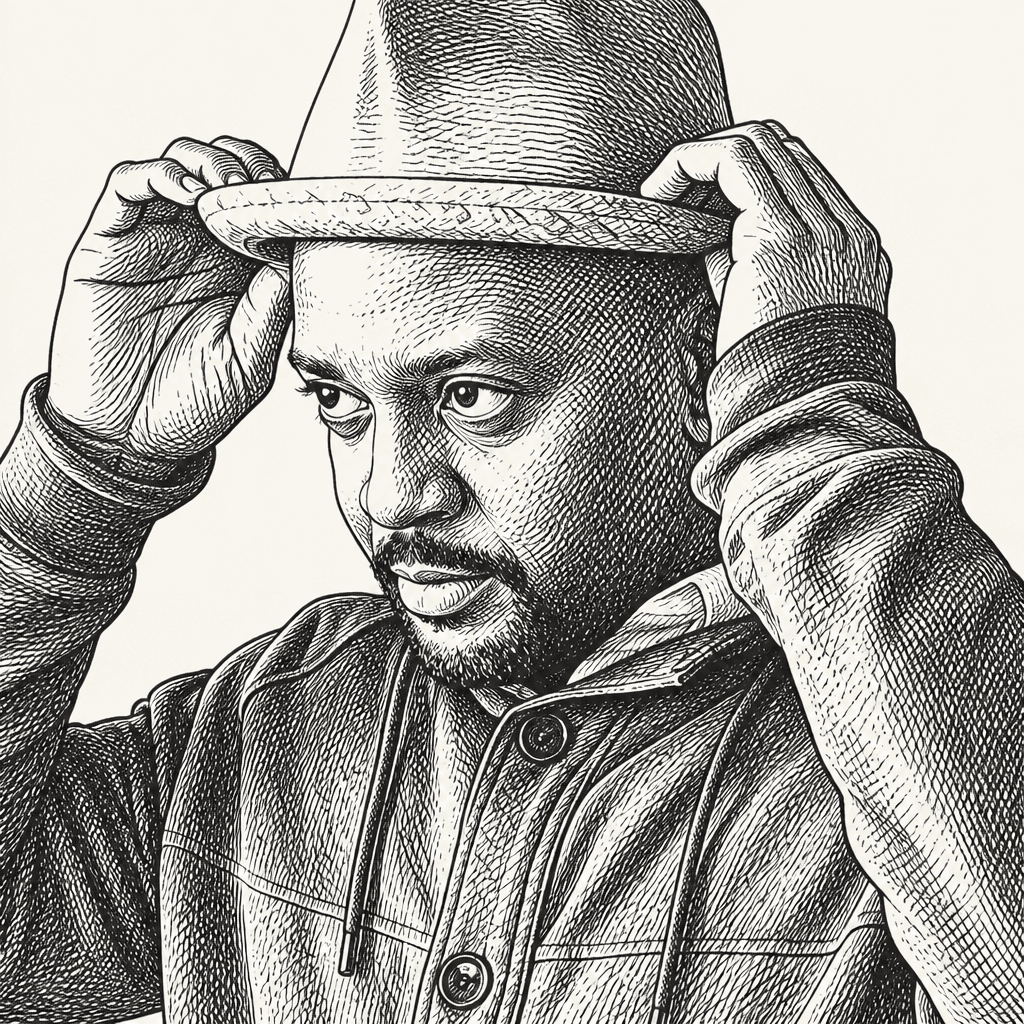

The Iliad examines what choice and responsibility remain when people are bound by fate, hierarchy, violence and grief. Poet and Freedom Reads founder Reginald Dwayne Betts and EconTalk host Russ Roberts argue that Homer’s warriors continue to make consequential decisions under severe constraint, while the poem measures those decisions through the dead, their families, and the homes and obligations war leaves exposed. Betts draws on his experience of incarceration to illuminate choice within narrowed circumstances, and both readers locate the poem’s moral turn in Achilles’ recognition of Priam’s grief.
Choice remains, even when the world has narrowed
Reginald Betts read the Fagles translation of the Iliad in an intense three-day stretch, carrying it through long walks and becoming immersed enough that the poem attached itself to a friend’s recent death, to memories of prison, and to questions about what people owe one another. Its world of gods, armor, ransom, and ritual did not make it remote. It made ordinary human pressures unusually visible.
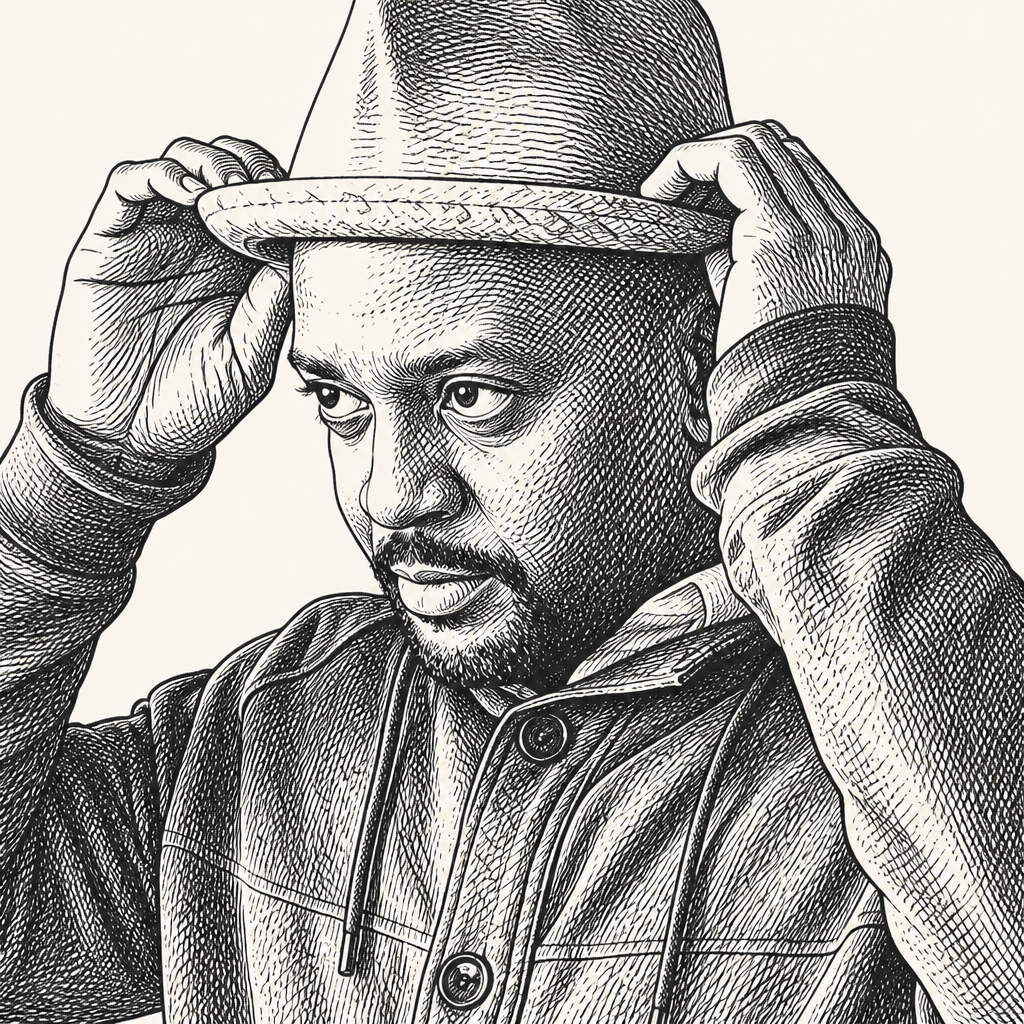
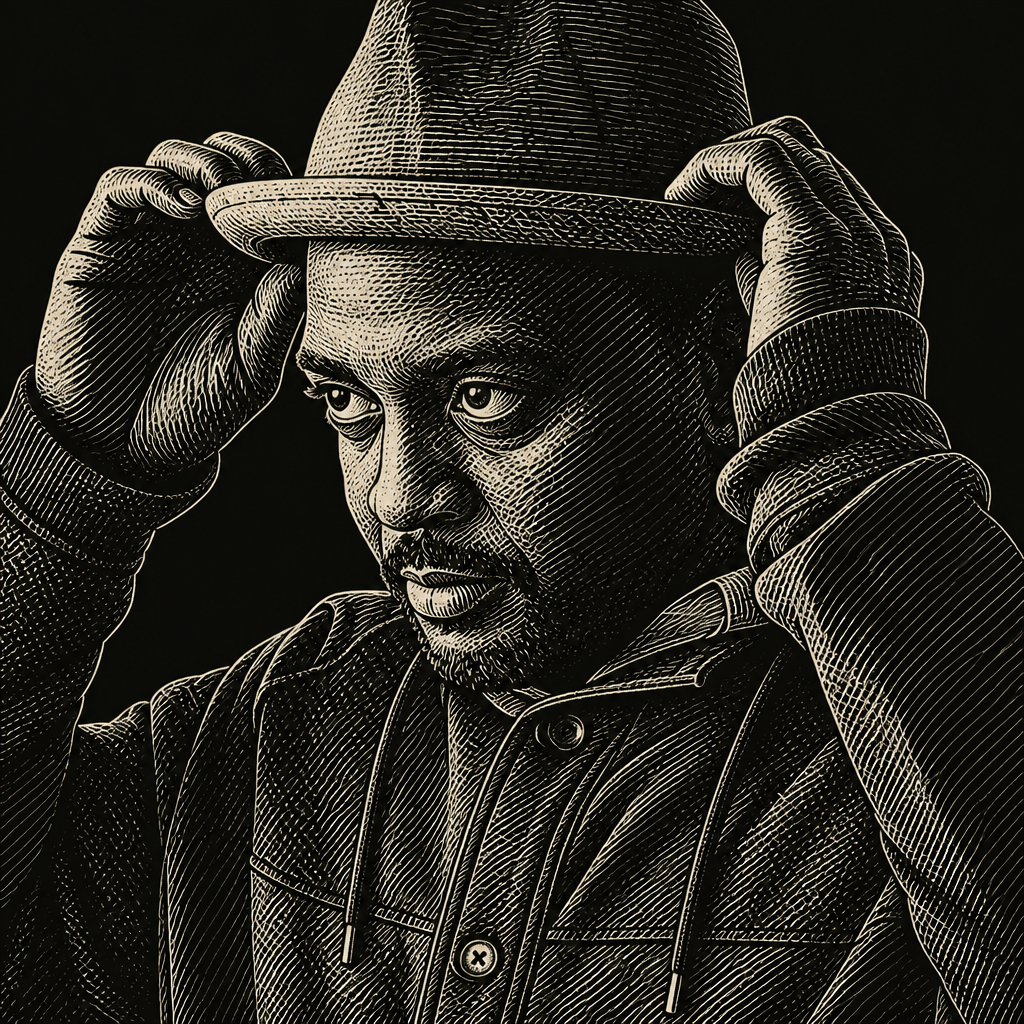
The central pressure is the paradox of choice. Homer’s characters argue, scheme, make pledges, reject advice, appeal to gods, and chase honor. Yet their lives also appear governed by fate, inherited obligation, military hierarchy, divine intervention, and the momentum of prior decisions. Betts compared that condition to a formulation he had encountered about Vietnam: a world that seems full of choices but in fact offers none.
He recognized something of that tension in his own life. Sent to prison at 16, he said, he felt after committing his crime that incarceration was a foregone conclusion—as though he had driven himself into a world where choice had vanished. Surviving prison was not foregone, however, and the work of surviving involved discovering choices within severe constraints. That is what he saw Homer’s characters doing: not escaping necessity, but continuing to make consequential decisions inside it.
It’s this world in which the characters seemingly have no choices, but still consistently animate what it means to make choices under the most dire constraints.
Russ Roberts describes the poem’s narrow plot: it is not an account of the whole Trojan War but an episode in its tenth year. Agamemnon takes Briseis, the woman Achilles has claimed as a war prize. Achilles withdraws from the fighting and asks, through his divine mother, that the Trojans be allowed to devastate the Greeks so that his absence will be felt. His closest companion, Patroclus, later enters battle wearing Achilles’ armor, is killed by Hector, and brings Achilles back into the war in a fury that culminates in Hector’s death.


Roberts, drawing on an earlier discussion with Ido Hevroni, offers a way to read Achilles’ anger as more than private resentment. Agamemnon’s seizure of Briseis repeats the original violation for which the Greeks came to Troy: Paris took Menelaus’s wife, Helen; Agamemnon takes a woman Achilles considers his own. On that interpretation, Achilles sees his commander as reenacting the injustice the war ostensibly set out to answer.
Betts agreed that Achilles presents his withdrawal as a matter of honor and rules. He refuses to fight and die for a cause whose leader will not follow its own standards. But the poem does not permit that principled stand to remain clean. Achilles’ choice contributes to the deaths of comrades, and his decision to let Patroclus wear his armor becomes inseparable from the loss that follows. Principle can be real and still be catastrophic.
The gods do not eliminate human responsibility. Achilles knows he will die, and rejects a warning about it not because he disputes it but because he still has choices to make in the coming hours. Zeus, meanwhile, is powerful but persuadable. When he considers saving his son Sarpedon, Hera argues that other gods too have lost children to human violence and that death cannot be suspended for one favored life. Pride, reason, grief, and compassion can still alter what happens next, even in a world where no one escapes death.
The poem’s formal repetitions make room for the same kind of judgment. Agamemnon instructs Odysseus to deliver a message to Achilles, and Odysseus repeats much of it verbatim. Roberts connects such repetition to an oral work designed to be remembered and performed. Betts hears more selective artistry in Odysseus’s performance. He omits Agamemnon’s demand that Achilles submit to him; on returning to Agamemnon, he does not fully repeat Achilles’ response either, reporting simply that Achilles remains angry.
Odysseus is therefore not merely a mouthpiece between men trapped in a feud. He carries the messages he has been given, but decides which parts to relay. Repetition preserves what has been said; variation reveals a judgment about what should be carried forward.
Every battlefield death reaches beyond the battlefield
The Iliad is crowded with names—Roberts cites an estimate of roughly a thousand characters—yet its density is not an obstacle to emotion. Most figures appear only briefly, often in the moment before they die. Homer identifies a fighter’s parents, hometown, craft, possessions, or unfulfilled future, then narrates the violence that ends it. The effect, Reginald Betts says, is less like a catalogue of warriors than a continuing sequence of elegies and obituaries.
A soldier is never introduced as only a soldier. A name may invoke parents who will not receive the care their son might have given them, a hometown he will not revisit, or a mother who will not be able to mourn because his body remains on the plain. The point is not that a reader must retain every individual biography. The names establish the scale of destruction beyond the celebrated fighters and the gods.
Betts connected this method to Yehuda Amichai’s “The Diameter of the Bomb,” which begins with the blast’s immediate radius—four dead and eleven wounded—but keeps widening its circle through hospitals, a graveyard, a woman buried far away, a solitary mourner across the sea, and finally “the crying of orphans.” Homer’s deaths have a similar reach. A spear strike in Troy leads outward to parents, farms, households, and people who will live with the absence.
The literal text illuminates a world in which the suffering, the circle includes everybody and there’s nobody that’s left out.
One death that stayed with Betts is Hippothous’s. Homer first establishes that he is fighting for fame, then gives his violent end in close-up: Ajax’s spear breaks his helmet, destroys his brain, and sends him collapsing beside Patroclus’s corpse. The poem then leaves the battlefield for Larissa’s “dark rich soil” and for Hippothous’s loving parents, whom he will never repay for raising him. The brutality is not softened. Its cost is placed beside it.
The economy of war is material as well as emotional. Fighters take armor from the men they kill, both as trophies and as equipment needed for the next encounter. Armor is not decorative loot. It can determine whether a man survives a spear throw, and its failure can determine how he dies.
That reality gives particular force to Hector’s seizure of Achilles’ armor after killing Patroclus. Hector does not simply claim it as an insult to Achilles or a trophy of victory. He puts it on because it may protect him. Achilles, meanwhile, cannot return to battle without replacement armor. His mother asks Hephaestus, god of the forge, to make another set, including the shield on which Homer presents an entire human world: towns, labor, celebration, conflict, agriculture, marriage, music, and dance.
Roberts compares the shield to a living hologram. Betts sees it as a reminder that war never occurs apart from the rest of life. The shield meant to protect Achilles in battle bears an image of the work, art, family, and public life that battle threatens.
The poem makes that larger world present in its similes. Betts points to the line in which the Greeks hold their position “as a working widow holds the scales.” A battlefield formation is understood through a widow’s labor, economic precarity, and bodily discipline. Homer does not ask the reader to identify with combat simply as combat. He repeatedly yokes it to work performed far from the field.
Russ Roberts also notes the constant invocation of home. Warriors threaten enemies with death on Troy’s plain, where dogs and birds will consume them and mothers will never be able to mourn. Patronymics make the same claim in another form: Agamemnon and Menelaus are both Atrides because they are sons of Atreus. For Betts, these recurring names are not clutter. They bind individual fighters to parents, kin, places, and histories.
That connection helps explain why the struggle for bodies is so central. The fear is not only death; it is dying unburied, being stripped of armor, and becoming food for animals before one’s family can honor or mourn the dead. Patroclus’s body becomes the object of an extended battle because losing it would expose him to precisely that fate. Hector’s body will later carry the same meaning for Priam.
The poem can therefore be graphic without becoming merely a spectacle of violence. Roberts singles out a scene in which Aeneas’s spear misses Meriones, lodges in the ground, and its shaft quivers until “rugged Ares snuffed its fury out.” The image is cinematic, but the poem’s gore remains tied to broken armor, unrecoverable bodies, interrupted households, and obligations survivors must somehow meet.
Achilles learns what rage cannot repair
Achilles is initially hard to admire. He is magnificent, conscious of mortality, and capable of articulating the limits even on his own divine inheritance. He is also merciless. When Priam’s son Lycaon begs for his life, offers ransom, and distinguishes himself from Hector, Achilles refuses.
Before Patroclus’s death, Achilles says, he sometimes spared Trojans and sold them into slavery. Now none will escape him—least of all Priam’s sons. His response combines philosophical clarity and horrifying conduct.
Come, friend, you too must die. Why moan about it so? Even Patroclus died, a far, far better man than you.
Russ Roberts reads the word “friend” as Achilles’ recognition that Lycaon, Patroclus, and Achilles share mortality. Achilles knows that death waits even for him, the son of a deathless goddess. But shared mortality does not make the killing merciful. Achilles understands the condition he invokes and answers it by extending death.
For Reginald Betts, the Lycaon scene makes the later encounter with Priam credible. Lycaon’s plea seems compelling: Achilles had captured and spared him once before. Yet Achilles is too consumed by Patroclus’s death to hear a claim on his sympathy. His eventual change cannot be read as innate gentleness. It emerges after the poem has shown how fully rage has possessed him.
Patroclus’s loss changes Achilles’ emotional register. The unsurpassable warrior weeps constantly. Betts stresses that grief is also entangled with responsibility. Achilles gives Patroclus his armor and allows him into battle under limits Patroclus will exceed. The loss is not simply an injury inflicted on Achilles; it follows from his withdrawal, his strategy, and his belief that he could control the consequences.
Patroclus himself is not a simple emblem of innocence. He is caring, stops to help a wounded friend, and presses Achilles to aid the Greeks. Yet Betts notes that the poem gives him a past in which he killed someone in a dice game. The detail matters because Homer permits a person to be noble without being pure. It also sharpens the question Achilles must confront: how does someone answer for anger and foolishness after the people harmed by them cannot be restored?
How do you apologize for your foolishness? How do you apologize for your anger?
The answer takes the poem to Priam’s visit to Achilles. Achilles has killed Hector and other sons of Priam; he has tied Hector’s body to his chariot and dragged it repeatedly, while the gods preserve it from disfigurement. Priam must cross into the Greek camp to ask the killer of his children for Hector’s body.
The gods arrange the meeting, and Hermes escorts Priam in the guise of Achilles’ attendant. Roberts expected that divine pressure to make the resolution feel coerced. Instead, the encounter feels intensely human. Priam and Achilles share food, observe hospitality, and weep. The gods create the occasion, but they do not supply the recognition that occurs between the two men.
Priam’s appeal turns on Peleus, Achilles’ father.
Remember your own father, great, godlike Achilles. As old as I am, past the threshold of deadly old age.
Priam asks Achilles to imagine Peleus surrounded by danger, with no son there to defend him. Peleus still has one consolation: he hears Achilles is alive and can hope to see him return. Priam has lost Hector, the son who most embodied what he valued. Achilles knows he will not return home. Priam therefore reaches him not through an abstraction about pity but through an anticipated father’s grief.
Betts read the passage during Father’s Day weekend and heard it as an account of what fathers do for sons even after death. Priam does not retain dignity by remaining untouched. He says he has kissed the hands of the man who killed his son. For Betts, this is not a surrender of moral judgment. It is an act demanded by love when the person one loves can no longer act for himself.
He connected Priam’s plea to an essay by Randall Horton about Horton’s father pleading before a judge for his incarcerated son. The father was not arguing that his son was innocent. He was asking what mercy a person deserves apart from guilt. Priam acts in a similar moral space. He cannot undo the war, defend every act of his family, or restore Hector’s life. He can insist that his son’s body be returned and that mourning be allowed to begin.
Achilles agrees not only to release Hector’s body but to grant Troy 11 days for funeral rites before fighting resumes. Betts was struck that readers are led to believe Agamemnon will honor the arrangement: the enemies know one another’s customs well enough to recognize the obligation.
The body matters because it begins, rather than completes, the work of grief. The Iliad repeatedly treats exposure on the battlefield—left for dogs and birds—as one of the worst possible fates. Patroclus’s remains are handled with care; his bones are separated from others after the pyre, and he asks that they eventually be buried with Achilles’ bones. Betts calls that a profoundly intimate portrayal of friendship between men, one contemporary writing does not always know how to notice.
Ritual gives grief a social form. Patroclus’s funeral games are not simply a pause in war. They allow older men to remember youth and younger men to imagine age, even as death has made both prospects uncertain. Priam, who says he has not slept for 12 days, can begin to move from relentless grief toward mourning only when Hector’s body can be brought home and honored.
The poem ends not with Troy’s destruction or Achilles’ death, but with Hector’s burial. It does not resolve the war or absolve Achilles. It creates a temporary interruption in revenge: enemies recognize a shared susceptibility to loss, honor the dead, and permit ritual obligation to carry more weight than fury.
Reading together makes a book part of a life
Betts wanted to read the Iliad with Roberts because he was drawn to the experience of encountering a book alongside another person. Reading quickly, while anticipating their discussion, made the poem connect to both present grief and a developing friendship. The work became more than a canonical achievement to check off; he said he felt he had lived inside it.
That conviction also informs Freedom Reads, the organization Betts founded to put 500-book libraries on prison cell blocks. The aim is not only access to books but reading in community. Betts described one incarcerated reader who had read about 60 books through a Freedom Library, including 24 in a book club, and who spoke at length about Roberts’s How Adam Smith Can Change Your Life and Adam Smith’s The Theory of Moral Sentiments. For Betts, the exchange illustrated how a library can create unplanned connections among texts, self-reflection, and conversation.
The Iliad offers a version of the same claim at a larger scale. Its deaths, rituals, and repeated invocations of fathers, sons, friends, and homes insist that no life is intelligible by itself. Reading the poem with someone else did not dissolve its violence or tragedy for Betts. It gave those pressures another setting in which to be recognized and shared.