Palestinian Victimhood Has Become a Global Political Resource

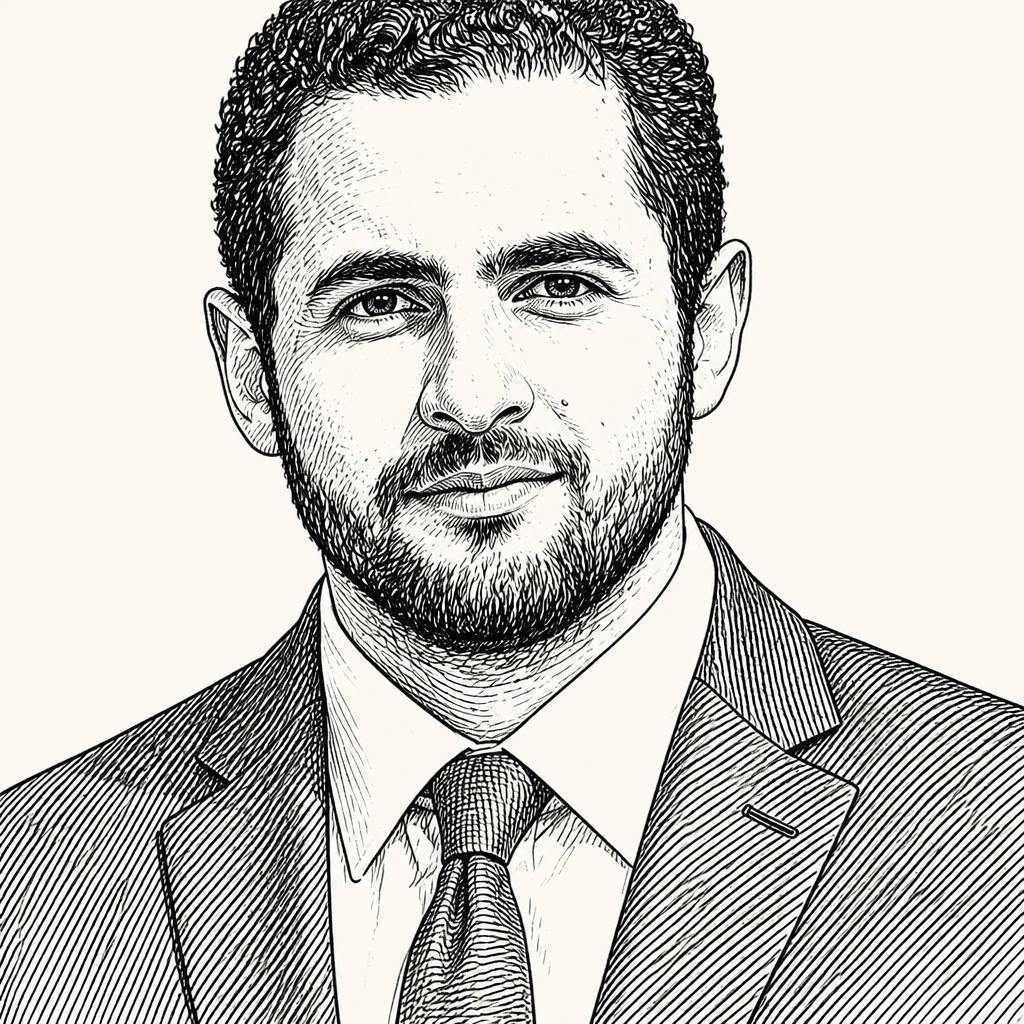
Hussein Aboubakr Mansour, an Egyptian-born scholar, argues that Palestine has become a self-reproducing system in which real Palestinian suffering is converted into political legitimacy, institutional standing, regional leverage and moral meaning for actors far beyond Israel and the Palestinians. Drawing on his upbringing in Egypt and his essay on the political economy of the symbol, he contends that Arab regimes, Islamist movements, rival states, Western institutions and NGOs can all be both users and captives of a conflict whose continued centrality serves distinct interests.
Palestine as a system that converts suffering into political assets
Hussein Mansour argues that “Palestine,” as it functions in contemporary politics, is no longer principally a place, a people, or even a cause. It is a globally circulating symbol through which Palestinian victimhood can be converted into political legitimacy, moral status, institutional standing, influence, and material support.
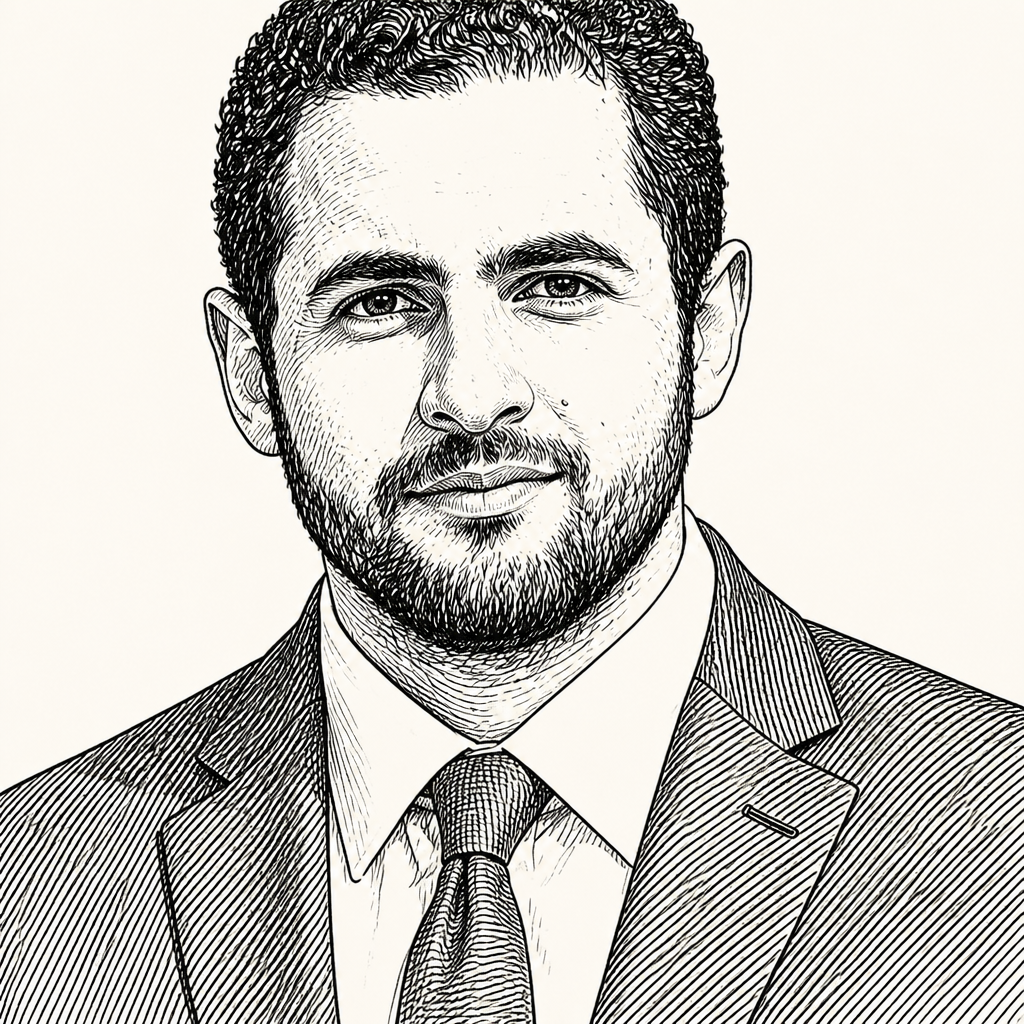
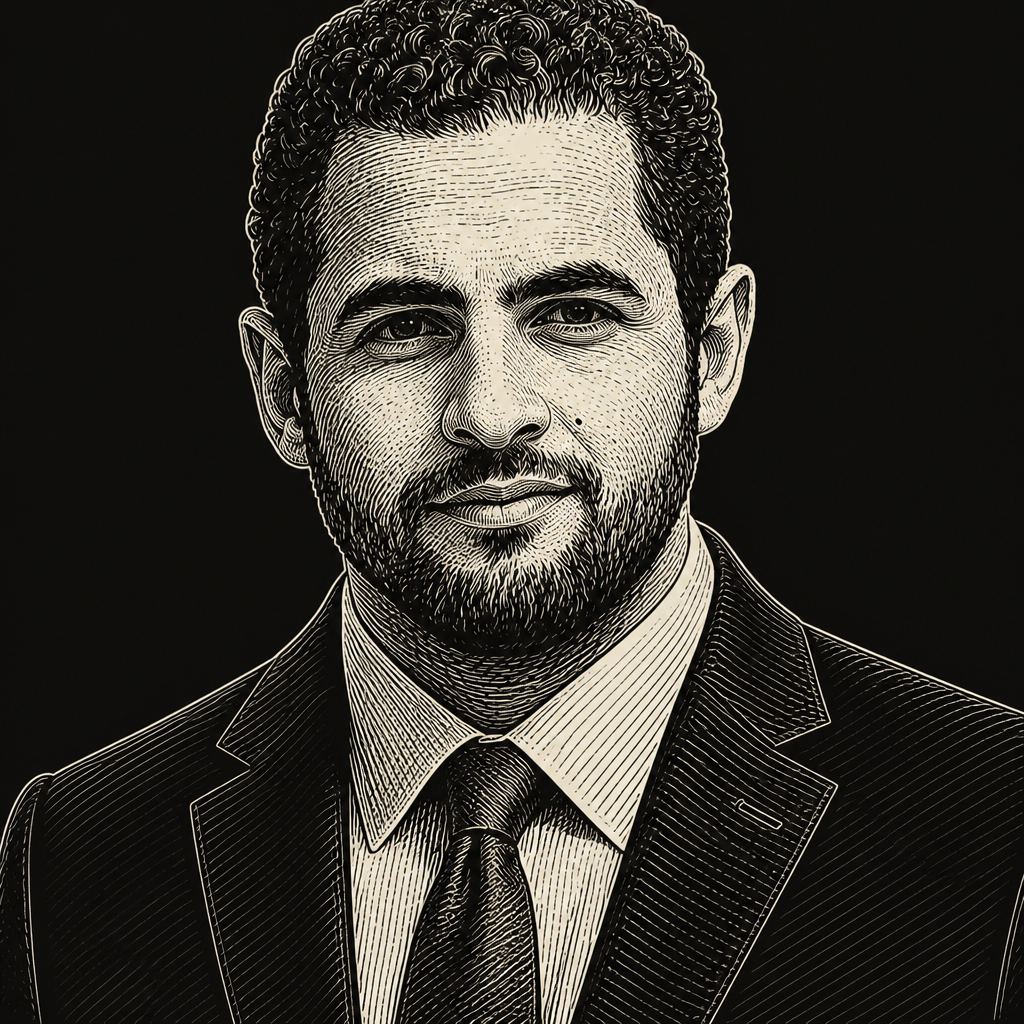
Mansour, an Egyptian-born fellow at the Jewish Institute for National Security of America, developed the argument in his essay “A Metacritique of Palestine: On the Political Economy of a Word-Symbol.” His question is not whether Palestinians suffer, whether Israel bears responsibility for aspects of that suffering, or whether particular claims in the conflict are true. It is why this conflict has acquired such unusual force across constituencies that otherwise share little: Arab nationalists, Islamists, Western liberals, anti-colonial scholars, NGOs, regional governments, conservative security analysts, and candidates in local Western elections.
Their substantive programs may be incompatible. A liberal may invoke human rights; a leftist, settler colonialism; an Islamist, Crusaders and religious struggle; an Arab nationalist, Western betrayal; a realist, regional security; a post-Christian European, the perceived irony of Jewish power. But Mansour’s claim is that each framework makes Palestine usable within its own ideological setting.
Palestine, as it exists today as a global phenomenon, is not really primarily a place or a people or a cause. It’s really a self-producing, self-reproducing system of political-economic extraction.
He calls it an “autopoietic symbolic convertibility machine”: a self-reproducing arrangement whose central commodity is victimhood and whose returns vary by participant. A government may obtain domestic acquiescence. A regional rival may gain leverage. A university activist may gain moral authority. An NGO may acquire a durable institutional mission. A policy professional may gain standing through the language of security or peace-making.
The historical roots, Mansour says, lie in the Middle East, where this political use of Palestine developed from at least 1948 through Arab nationalism, revolutionary Third Worldism, and later Islamism. What has changed is its reach. In roughly the last decade, he argues, the symbol has become embedded in Western universities, cultural institutions, electoral coalitions, and domestic political contests.
The governing distinction in Mansour’s account is not simply between cynical manipulators and innocent believers. Participants can be sincere while still entering a system that turns their commitments into political or institutional value. They can also be beneficiaries and captives at once. A government may use the issue to manage dissent yet be unable to renounce it without inviting attack from rivals. A peace advocate may genuinely seek a resolution, yet find that the work of pursuing resolution creates another durable professional or ideological position within the conflict.
Mansour applies this logic to proposed solutions as well. The two-state solution may confer liberal moral prestige; one-state advocacy may confer radical credibility; rights-based advocacy may support an NGO sector; a security framework may sustain a policy profession. He does not say that such positions are necessarily insincere. His point is that the language of solution does not automatically stand outside the incentives that make the conflict politically indispensable.
In Egypt, Israel became an explanation for everything else
Hussein Mansour grounds the argument in his own experience growing up in Egypt in the 1990s. He says he was raised, as he understood others in his generation to be raised, to regard the liberation of Palestine as the central political and moral question of life: the lens through which world affairs, personal dignity, and civilizational standing were judged.
Egypt, in his description, was marked by authoritarian rule, restricted civic life, instability, and unresolved questions of identity. Was the country fundamentally Egyptian, Arab, or Islamic? Palestine and anti-Zionism supplied a common point of orientation across those identities. Whether someone understood himself principally as Muslim, Arab, or Egyptian, Mansour says, the stable point of cohesion was that “we are at war with Israel.”
The idea appeared throughout cultural production—music, film, and literature—and across the political field. The government invested in it, he says. Secular opposition movements did too. So did Islamist movements. Anti-Israel politics was not merely a foreign-policy position; it organized a story of collective identity.
Mansour says that, as a child immersed in what he describes as a thick anti-Semitic atmosphere, he became preoccupied with the evils of Zionism and Israel as he had been taught to understand them. Over time, he came to believe that he had been living inside a myth that was politically and morally disastrous. Clashes with the Egyptian government contributed to his leaving Egypt in 2012.
The myth’s power, in his telling, lay in its explanatory reach. Egyptian intellectuals could begin with concrete problems: agricultural stagnation, debt, IMF austerity, cash-crop exports, dependence on imported wheat, or lack of democratic rights. A chain of causation would eventually lead to Camp David, the peace agreement with Israel, and finally Zionism.
Russ Roberts cautions that this kind of causal account can contain real elements of truth. U.S. support for Arab governments, Israeli security concerns, and regional stability can be connected in ways that are neither imaginary nor trivial. Mansour’s concern is not that every link in the argument is false. It is that Israel becomes the master explanation before the state’s own political arrangements, economic failures, elite interests, and institutional choices can be examined on their own terms.


He gives the example of an argument about democracy in Egypt or Jordan. If democratic elections would likely bring anti-Zionist forces to power, one might conclude that Washington supports authoritarian rulers in order to preserve Israeli security. That account can be persuasive, Mansour says, because it can be incorporated into a broad intellectual structure. But once it becomes totalizing, it creates what he calls a cognitive trap. Israel becomes the intuitive answer to stagnation, lack of mobility, police abuse, and repression, displacing inquiry into domestic causes.
Arab regimes need the flame, but cannot let it spread
Mansour’s model treats anti-Israel politics not only as ideology but as a mechanism of rule. An autocratic regime benefits, he argues, when citizens understand hardship as the work of an external enemy rather than as the outcome of domestic extraction, repression, or elite failure. Once that explanation becomes intuitive, the regime needs less overt censorship because people reproduce the political account themselves.
But the rhetoric is also dangerous to its users. A government that presents itself as a defender of Palestine while maintaining peace, security arrangements, or diplomatic ties with Israel gives opponents an opening. Islamist movements in Egypt, Mansour says, could accuse the regime not merely of softness toward Israel but of collaboration with it.
You need Palestine, but at the same time you don’t need it too much.
That is the political thermostat. The regime must keep anti-Israel sentiment high enough to direct public frustration outward, but low enough that opposition groups cannot transform it into a revolutionary challenge. The phrase “you’re too soft on Israel” is therefore not simply a moral accusation. In Mansour’s account, it is a weapon in a domestic struggle for power.
The same structure extends beyond national borders. Mansour identifies Qatar, Turkey, Iran, Saudi Arabia, Egypt, and other states as actors that can invoke the Palestinian issue to undermine rivals, claim regional leadership, cultivate constituencies, or increase influence. He describes Qatar as a particularly important case because, he says, it sponsored Muslim Brotherhood movements and operated Al Jazeera as a powerful regional media instrument. He argues that Iran competes for influence by presenting itself as a custodian of Palestine despite not being an Arab state.
The regimes are not simply exploiting a useful asset, Mansour says. They are trapped by it. An Egyptian ruler who decided to abandon the game would still face domestic opposition and foreign rivals able to use Palestine against him. Qatar, Turkey, Iran, and other states could raise the political cost of restraint or accommodation. Withdrawal is not a neutral act in this framework; it may threaten a ruler’s survival.
Roberts emphasizes the distance between this environment and the moralized way many Westerners think about foreign policy. In a system where rulers can be removed through violence rather than elections, the consequences of breaking a political taboo are not merely reputational or electoral. Mansour agrees, describing the Middle East as a field of power politics without a regional structure that reliably compels cooperation. He argues that Western observers often see Middle Eastern leaders as more ideologically driven than they are, while underestimating how directly those leaders think in terms of interest and regime survival.
Normalization tried to reverse the incentive structure
The Abraham Accords appeared, for a time, to offer a way to change the regional game. In Mansour’s interpretation, the United Arab Emirates’ normalization with Israel was not simply a bilateral diplomatic decision. It was an attempt to reverse the underlying incentive structure: make cooperation with Israel, rather than hostility toward it, a source of access, investment, influence, and strategic advantage.
Mansour calls this a “daring vision.” The UAE, in his telling, recognized that the prevailing Palestine-centered arrangement constrained governments from pursuing interests transparently. Rather than merely withdrawing from that arrangement, the Emirates sought to make acceptance of Israel an asset in relations with Western partners and neighboring states.
For a period, Saudi Arabia appeared to be moving in that direction. Mansour argues, however, that Saudi calculations changed after October 7 and the regional shifts that followed. He believes Israeli military action weakened Iran’s position, altering a threat environment that had long shaped regional alignments. He also says Saudi officials began weighing the heightened global salience of Palestine and uncertainty about future American support for Israel when assessing Israel’s strategic value.
Saudi normalization, Mansour says, was tied to a transactional relationship with Washington. He names a civil nuclear program and F-35 aircraft among the benefits Saudi Arabia sought. In his reading, normalization could serve as a bargaining asset rather than a simple statement of regional reconciliation.
He interprets the hardening of Saudi official language—from not being able to ignore Palestinians, to demanding a path to Palestinian statehood, to insisting that statehood is the only way forward—as evidence of a strategic recalculation. Mansour does not think Saudi officials necessarily regard Palestinian statehood as viable under current conditions in Gaza, the West Bank, and Israeli politics. His interpretation is that an unattainable demand can still be useful: it may allow Saudi Arabia to regain comparative leverage over Israel, the UAE, and other competitors by returning to the older political game.
Egypt and Jordan illustrate an international layer of the argument. Mansour says both depend substantially on U.S. support, and that their value to Washington is tied to their relations with Israel. He characterizes Egypt’s border with Gaza as a source of leverage because crises make Egypt essential to U.S. diplomacy. As an illustration, he notes that President Biden’s first call to President Sisi came during the 2021 Hamas-Israel war, when Egypt’s role on the Gaza border became especially important.
For Mansour, this is not a centrally directed conspiracy. It is an interacting set of incentives in which governments can treat Palestine as a resource, a liability, and a constraint at the same time.
Western institutions became another site of political conversion
Hussein Mansour traces the expansion of the Palestine symbol in Western politics to cultural, institutional, demographic, and geopolitical developments. His argument is deliberately broader than a claim about anti-Semitism, Islam, or a civilizational clash.
He points to the spread of post-colonial academic frameworks, which he says began in literature departments and then spread through the humanities. In his account, these frameworks established a hierarchy in which Third World and colonial questions came first, including in disciplines not directly concerned with colonial history. He argues that this moral ordering can produce priorities in which solidarity with a Hamas fighter appears more urgent than outrage over the rape of Israeli women.
Mansour also names the expansion of higher education, migration, and what he calls declining Western institutional health. Beneath these developments, he sees a demand for political meaning. Palestine becomes unusually capacious: a symbol able to absorb grievances and ambitions that might once have been organized through other causes.
He further argues that some states have deliberately cultivated this symbolic power abroad. Qatar is central to Mansour’s analysis. He says Qatar has invested “twenty billion dollars or something” in American higher education, and asks what a small, wealthy, non-democratic state seeks when it spends at that scale in foreign elite institutions.
His answer is influence. Qatar, he argues, lacks demographic scale, military weight, and a large diplomatic corps. It can nevertheless turn wealth into access, media reach, ideological presence, and relationships that extend its influence beyond what its population could otherwise support. In his formulation, support for Islamist networks can function like an extended diplomatic arm: people who regard Qatar as a patron can advance its standing and interests in places where it cannot send large numbers of representatives.
Roberts acknowledges that this argument can sound conspiratorial at first hearing. But he also argues that large foreign investments in American institutions call for an account of motive. Mansour’s point is not that every scholar, student, or program funded in this environment acts at a state’s direction. It is that Qatar and similar governments have reasons to convert financial surplus into influence, and that this process may have consequences in Western elite institutions and political coalitions.
Mansour directs readers to Georgetown’s Arab Studies and Islamic Studies programs as examples of what he regards as a conspicuous academic consensus around Gaza, genocide, Palestine, and Israel. His broader claim is that a political use of Palestine once concentrated in the Middle East now has institutional homes and constituencies within Western societies.
The system neither erases Palestinian suffering nor makes Israel its only cause
The bleak implication of Mansour’s argument is that the arrangement is difficult to resolve because its participants derive different kinds of value from it. Domestic regime management is not the same as interstate bargaining; Western academic activism is not the same as Palestinian factional competition. But, in his framework, each can make use of the conflict’s continued political centrality.
The Palestinian population occupies, in his view, the least privileged position in this arrangement, but Palestinians are not without agency. Mansour says Palestinian militias seek domestic authority by claiming to be the most authentic representatives of Palestine; they compete with rivals and seek resources from regional patrons. He describes Palestinian politics after 1967 as repeatedly shaped by proxy relationships involving Ba’athist Syria, Iraq, Egypt, Iran, and other powers. He characterizes Hamas as an Iranian proxy, and says Saudi Arabia has been seeking to increase its influence over the Palestinian Authority.
He reserves particular attention for UNRWA, the UN agency serving Palestinian refugees. Mansour argues that its distinctive treatment of refugee status as hereditary means that the refugee population compounds across generations rather than declines. He interprets that feature as a mechanism that perpetuates statelessness as an identity and preserves the victimhood on which other actors can build political claims.
Roberts pushes back on Mansour’s language of “inventing” victimhood. Palestinians do not need an institution to manufacture suffering, he notes: they experience violence, insecurity, economic constraints, political repression, and the effects of Israeli policy. Mansour’s answer is not that all suffering is fabricated. It is that institutions and political movements can have an interest in ensuring that victimhood remains durable, legible, inherited, and politically central.
A frequent criticism of Mansour’s essay was that it concentrated on Arab, regional, and Western actors while saying too little about Israel. He agrees that Israel, Israeli factions, and American Jewish institutions participate in the broader field of incentives. Israeli right-wing politics, for example, can draw ideological energy from aspirations toward annexation; other Israeli and Jewish institutions may obtain political or organizational value from the conflict.
But Mansour deliberately declined to put Israel at the center of his analysis. The continual return to Israel and Zionism, he argues, is how the wider structure obscures itself. The field of vision contracts until there are only Israelis and Palestinians, while Turkey, Iran, Egypt, Qatar, Saudi Arabia, Western institutions, and other involved actors disappear from explanation.
His response is methodological rather than exculpatory: if the framework is useful, apply it to Israel as well. The point is not to offer a new polemical line. It is to ask what each actor gains, what risks it faces, and why a conflict that causes so much suffering remains so politically productive.
The deepest resource being extracted is moral meaning
The political economy Mansour describes rests on something more fundamental than money, aid, or influence: moral sentiment. Political actors can draw value from Palestine, he says, because people become morally enchanted by the cause. The central commodity is not suffering alone but a story in which suffering becomes redemptive.
The basic form of extraction that makes that creates value is ultimately sentiment. It’s the moral sentiment and the moral enchantment of as many people as possible with this cause.
Mansour places this in a broader theory of the post-Christian condition. By that phrase, he does not mean only declining Christian observance in Europe. He means what he sees as a universal modern condition: older structures of meaning have weakened or collapsed, while the human need for meaning, redemption, and an interpretation of suffering persists.
A person may not feel that need urgently until encountering tragedy, humiliation, loss, or powerlessness. Then the demand for an explanatory story becomes acute. Palestine can satisfy it. It offers a comprehensive moral drama through which someone can understand personal injury, guilt, longing, aspiration, or rage.
His Egyptian example is deliberately concrete. A middle- or lower-class Egyptian sees few economic prospects, worries about children, lacks political power, and encounters a police state that feels predatory. Then, in Mansour’s description, a polished broadcaster tells him that his country’s dysfunction, lack of rights, and economic limits are ultimately Israel’s doing. Mansour describes the offer as self-justification: one can understand oneself as the victim of an external force rather than confront the realities of one’s society and rulers.
That, he says, is a false source of meaning. It turns a genuine human demand for redemption into a political resource that powerful men can use against rivals. He extends the warning beyond the Middle East. In his view, twentieth-century Islam was profoundly transformed when older religious structures collapsed under modern ideological pressure and were reassembled into a politicized religion of Palestine, civilizational struggle, and opposition to the West.
Mansour’s proposed exit is therefore not a policy program. It is an inner conversion: teshuvah, understood as turning away from self-justification and facing reality honestly before God. The conclusion is religious because he believes political arrangements alone cannot satisfy the demand for transcendent meaning that this political economy exploits.