A Near-Death Vision Forced a Rationalist to Reconsider Consciousness

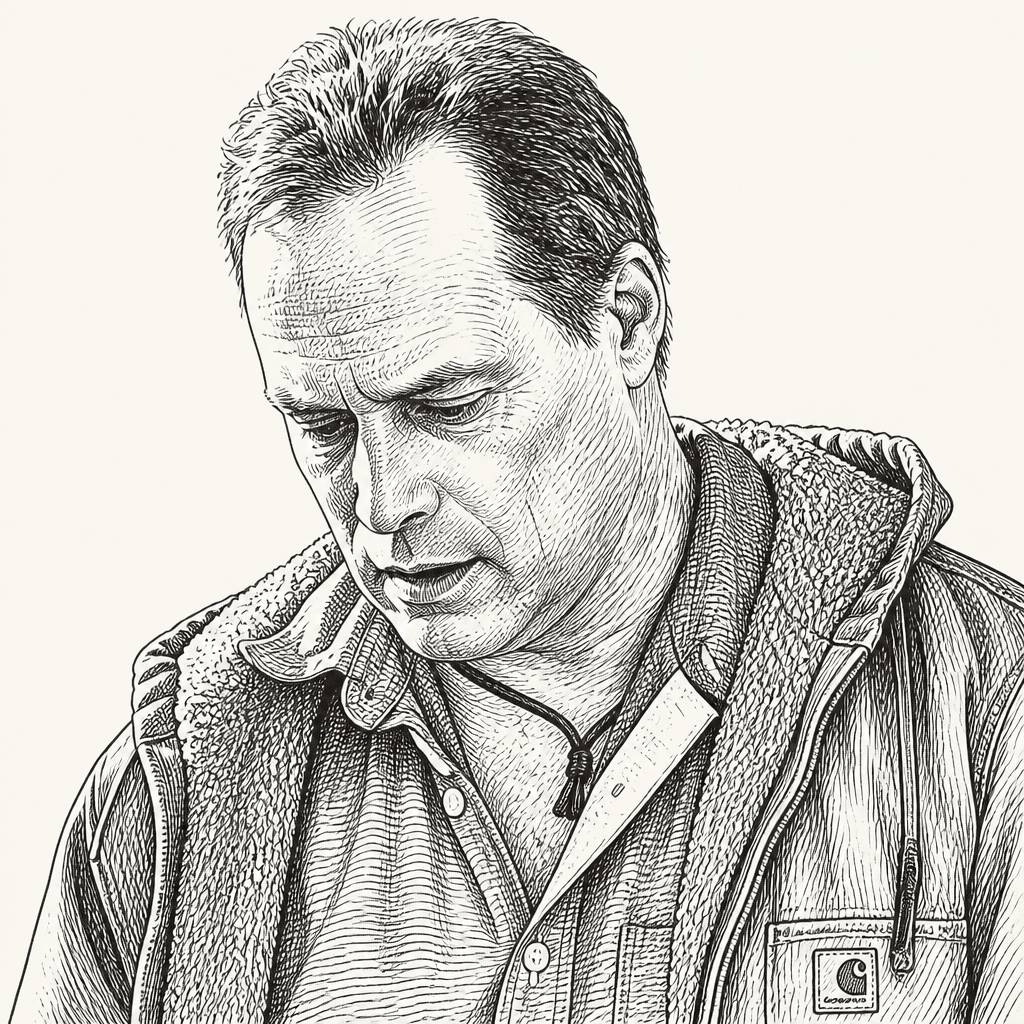
Sebastian Junger, speaking with Russ Roberts on EconTalk, recounts how a near-fatal ruptured aneurysm in 2020 forced him to confront an experience his atheism could not easily explain: the apparent presence of his dead father as he was close to death. Junger does not present the episode as proof of God or an afterlife, but argues that a serious rationalist should neither convert mystery into doctrine nor dismiss it because it violates prior assumptions. His account treats mortality as both a medical fact and a destabilizing encounter with consciousness, fear, and reverence.
A lifelong rationalist met death as a physical event, then had to explain what he saw
Sebastian Junger had spent much of his adult life near danger without treating death as an abstraction. He had reported from Sarajevo during the siege, Afghanistan as the Taliban were taking over in 1996, Kosovo, Sierra Leone, Liberia, Nigeria’s Niger Delta, and later from a small American outpost in Afghanistan. He had also nearly drowned while surfing alone in winter off Massachusetts and had worked high in trees with a running chainsaw, taking them down in sections.
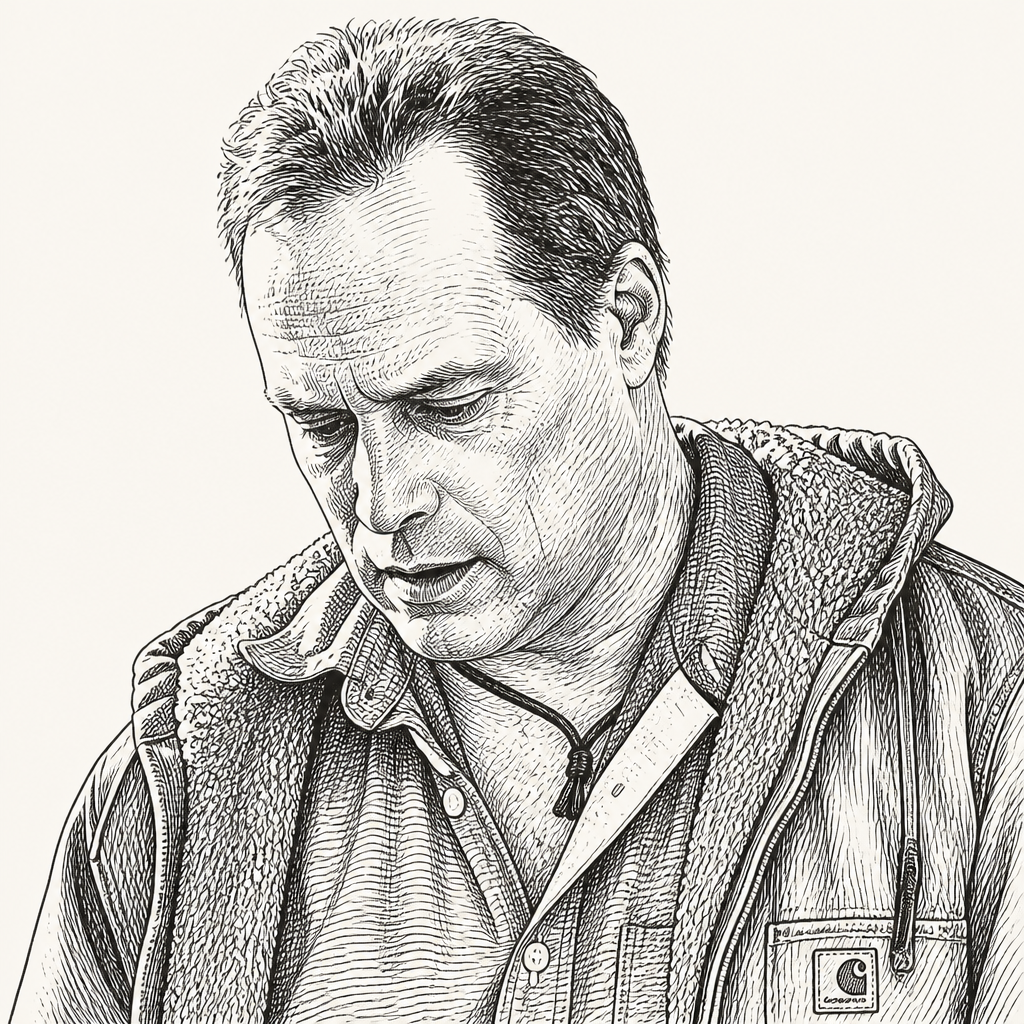
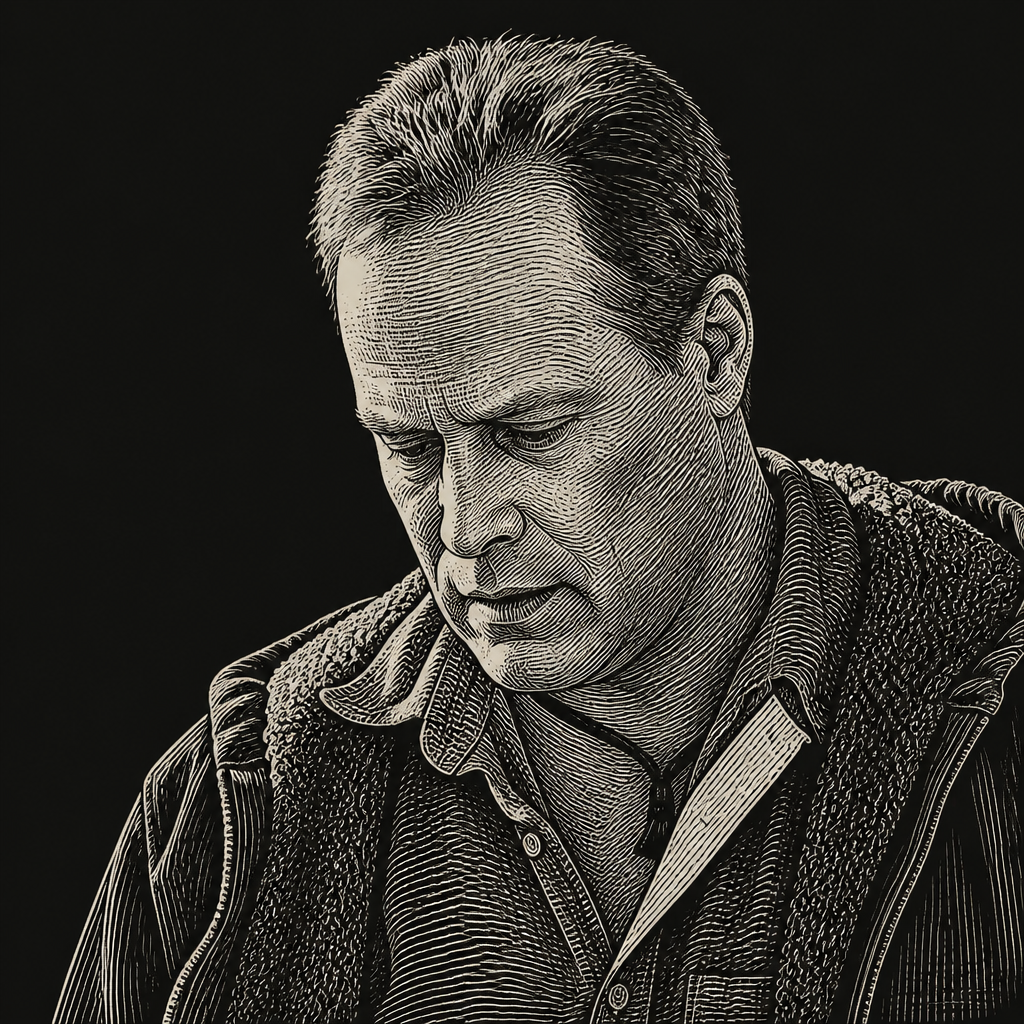
What mattered in those experiences was not a general appetite for risk. It was a way of managing fear. In tree work, Junger came to believe the danger was knowable because it was governed by physics. If a pine top came back and crushed him, it would be because he had cut wrong, failed to account for wind, or misunderstood the forces in play. That made the job feel, in one sense, safer than driving, where other people introduced a less predictable element.
Combat required a related discipline. Junger said he was never fighting as a journalist; if he had been, he would no longer have been a journalist but a participant. His job was to observe, record, write down what he saw and heard, and, when working with American soldiers, film constantly. At Restrepo, he slept with his video camera because anything — a firefight, a conversation, an ordinary exchange between soldiers — might matter. He imitated the soldiers around him closely: when they took a knee, drank water, got low, or moved behind cover, he did the same. His fear was not only of being killed. It was of becoming a problem. Even being wounded, he said, would have imposed danger and obligation on men already in combat.
The most frightening moments he recalled had a common element: the loss, or near-loss, of agency. In Sierra Leone, rebels emerged from the jungle and stopped the jeep he was riding in. They appeared to argue, in Krio, about whether to kill everyone in the vehicle. One man racked his gun and leveled it; another grabbed the barrel and jerked it upward. In Nigeria, after rebels detained him because they suspected he was a spy, a muscular young Ijaw warrior with a machine gun introduced himself by saying that when they killed Junger later, he would be the one to do it.
With American soldiers, the only time Junger said he froze was when a firefight began suddenly, the first round struck a sandbag near his forehead, and he could not reach his camera. The camera was ten feet away, and the sand between him and it was moving from bullet impacts. Without a task, he had no insulation from fear. His colleague Tim Hetherington jumped across the gap, threw him the camera, and then began throwing ammunition to soldiers who had been separated from theirs. Junger added that he had seen Hetherington paralyzed by fear at other moments while Junger was fine. Fear, he said, is “a weird thing.” Hetherington was later killed in combat in Libya in 2011.
That background matters because the near-fatal crisis at the center of Junger’s account did not happen in a war zone or amid any chosen hazard. It happened at home, in good health, with his wife and young children nearby.
In June 2020, Junger and his wife had taken their family out of New York City to their property in Massachusetts, deep in the woods at the end of a dead-end dirt road. There was no cell coverage; when it rained, the old landlines could go out. With rare babysitting available during COVID, Junger and his wife went to a cabin he had built farther into the woods, without electricity, lit by kerosene lamps and heated by a wood stove.
In mid-sentence, he felt a jolt of pain in his abdomen. He thought it might be severe indigestion. When he stood to walk it off, he nearly fell over. He did not know he had an undiagnosed aneurysm in his pancreatic artery. He described it not as a heart attack or clogged-artery problem, but as a structural defect: an unnatural ballooning in an artery wall that can grow silently for years or decades and then rupture. Once it ruptures, the person bleeds into the abdomen as if an artery had been severed by a stab wound, except there is no visible blood.
Junger said that within a minute he was too lightheaded to stay on his feet. His blood pressure was plummeting. He was losing perhaps a pint of blood every ten or fifteen minutes into his abdomen. The human body has roughly ten pints of blood, he said, and a person can lose about half before dying. He lived about an hour from the nearest hospital, a small regional hospital. He called himself “a human hourglass.”
His wife dragged him out of the woods, got him to the car, and called an ambulance. Junger moved in and out of consciousness without realizing it. For a person in that syncopal state, he said, the breaks in consciousness are seamless. Every time he went out, his wife thought he might not come back. Then the sky turned blinding white, and everything became white — another symptom of blood loss.
By the time he reached the hospital, he said, he was in end-stage hemorrhagic shock and had lost half to two-thirds of his blood, a condition that for most people, especially at his age in his late fifties, would not be survivable. His advantage was what he called an athlete’s heart. It kept working long enough to give the doctors something to work with.
- June 2020Junger feels a sudden abdominal pain in an off-grid cabin in the Massachusetts woods.
- Minutes laterHe becomes too lightheaded to stand as a ruptured pancreatic-artery aneurysm bleeds into his abdomen.
- Emergency roomDoctors recognize end-stage hemorrhagic shock and begin transfusing him through his jugular.
- Interventional radiologyDoctors try for hours to reach and embolize the rupture through a catheter.
- ICU the next morningJunger wakes to nurses telling him they almost lost him and that no one can believe he is alive.
In the emergency room, doctors placed him in a trauma bay and began transfusing him through a large-gauge needle inserted into his jugular. Junger paused on that detail to make a direct appeal: donate blood. He said he is alive because ten people donated blood, and that such donations keep alive someone’s father, daughter, or spouse.
He was in extreme pain because of the blood filling his abdomen, but the doctors could not sedate him normally; his blood pressure was around 60 over 40. A nurse came to him, held his hand, and told him to look at her and breathe with her. He said he thought, internally, that this was not going to work — he wanted drugs, not “1960s Lamaze stuff.” But it did work. The pain went away. He later treated that human connection as part of what saved him, alongside the doctors’ technical intervention. Doctors, he said, do not have time to hold a patient’s hand; that work falls to someone else.
Then, while still conscious and able to speak, he experienced the event he could not reconcile with his worldview. Under him, he said, the universe seemed to crack open into infinite darkness, and he was being pulled into it. He did not know he was dying, but he knew he did not want to go into that black pit. Then his dead father appeared above him, to his left, on the ceiling. Not as a body in ordinary form, but as an essence or energy form. Junger recognized him.
His father communicated, in Junger’s account, that he did not have to fight, that it was all right, that he could come with him and would be taken care of. Junger’s reaction was horror rather than comfort. His father was dead; Junger did not want to go with him. He told the doctor: “You gotta hurry, I’m going. I’m going away.” He did not know where he was going, only that he would not return from it.
The doctors moved him to interventional radiology, where he lay on a fluoroscope — an X-ray machine that takes video — while dye in his blood allowed doctors to see which vessel was leaking and where a catheter was traveling through his vasculature. The goal was to reach the rupture and embolize it, plugging the leak. They worked for hours and could not get the catheter to the rupture. Junger, in pain and confused, said he was having hallucinations and seeing monsters in the machinery. At one point he saw the doctor shrug, as if to say they had tried and could do no more. That was the first moment he understood he might die.
Again, he described the decisive human presence as a nurse. She told him to keep his eyes open so they would know he was still there, and that she was with him; they were going through it together. For Junger, the medical crisis was not only a technical rescue. It was an encounter with dependence, terror, touch, dignity, and the limits of explanation.
His father’s appearance mattered because his father had no use for such things
Junger’s father was not a religious figure in his life. He was, as Junger put it, “an atheist and a physicist,” which Junger joked was “atheist squared.” That made the vision harder, not easier, to assimilate.
His father’s life had been shaped by war and exile. He was born into a family formed by a mixed marriage: an Austrian Catholic mother and a Jewish father who was a journalist, had grown up partly in Spain, and spoke fluent Spanish. Junger’s grandparents met at a dinner party in Salzburg, fell in love quickly, married, and moved to Dresden. After the Reichstag fire in 1933 and the deterioration that followed, the family left Germany. They went to Spain until the fascists came in 1936, then to Paris until the Nazis arrived, then to Portugal, and eventually to the United States. Junger said his father liked to say that, because of the fascists, he got married, had a family, and learned five languages fluently.
He became a physicist, a brilliant man whom Junger described as sweet, emotionally limited, somewhat childlike, and, in retrospect, probably on the spectrum. Junger said he and his father had a complicated relationship: intellectual connection was possible, emotional connection was difficult. Yet when his father died, he died holding Junger’s hand and talking to his own dead sister, whom he experienced as present in the room.
That earlier moment had been Junger’s first encounter with what he called the phenomenon of dying people seeing the dead, or the dead appearing to receive the dying. At the time, his reaction was rationalist dismissal: strange, perhaps, but not evidence of anything. His father, too, would have had no use for supernatural interpretation. Yet when Junger himself came close to death, his father appeared in the same role.
The emotional consequence was not conversion, but repair. Junger said his father’s appearance, as unwelcome as it was in the moment, became one of the closest connections he had ever had with him. The father who had been hard to reach emotionally appeared as “a beautiful big-hearted father” ready to take care of his 58-year-old son.
Russ Roberts described himself as a “mystical rationalist”: analytical and rational, but open to the ineffable and to religious life as a way of connecting to mysteries that are not completely understood. He treated unexplained perception as something that puts pressure on the shared order by which other people recognize reality. Seeing something that cannot be squared with one’s worldview can look, from the outside, like madness.

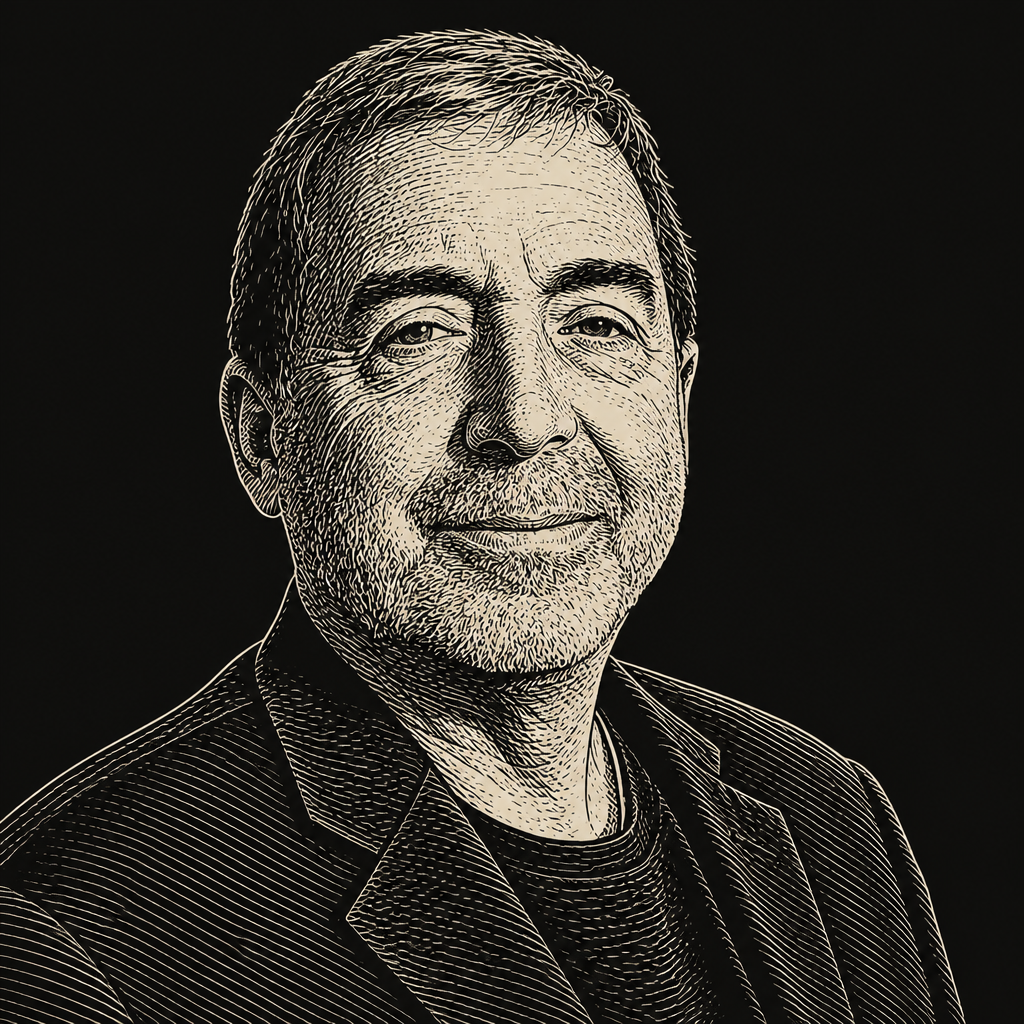
Junger did not dismiss his vision as merely stress or hallucination, but neither did he let it become a ready-made story of religious proof. The distinction he drew was between stories and explanations. Stories are crucial to psychological survival; they often involve God, heaven, and the hope that loved ones, especially children, go somewhere good. As a father, he said, he understands why people need such stories. Explanations are different: they describe how the world works and can be tested. If an explanation of why airplanes fly has holes in it, people die.
I was looking for answers, right? And there are two sort of main groupings in my mind of things that need to be talked about. There are stories, and there are explanations.
He was looking, he said, not for a story about his father’s appearance but an explanation of what he had seen. This distinction also shaped his response to readers who were dissatisfied that he remained an atheist, or that he did not declare the existence of an afterlife. If he had seen God, he said, there might be a different argument to make. But he saw his father. And there is, in his view, no scientifically or journalistically responsible way to announce that death is not the end and that everyone should stop worrying. That would be faith, not rational inquiry.
The rational explanation explains much of near-death experience, but not everything that troubled him
Junger did not present near-death experiences as untouched by ordinary explanation. On the contrary, he said the rationalist account explains many features convincingly: out-of-body sensations, hovering over the body, visions under the stress of a dying brain, low oxygen, neurochemical effects, and related phenomena. He noted that fighter pilots placed in human centrifuges, under enough G-force to pass out, can have out-of-body experiences. Give a room full of people LSD, and they will hallucinate. Stress the brain in known ways, and it can produce strange perception.
That was not enough for him. The problem, he said, is not that people near death hallucinate; it is that many of them report the same kind of hallucination. They see the dead. They do not all see random imagery — fire trucks, flamingos, swimming pools. In some testimonies, dying people see someone whose death they did not know about: “What’s David doing here?” Junger did not call that probative. He did say it raised questions for him.
His broader point about rationality was not anti-rational. He called rationality an enormously powerful tool: airplanes stay aloft because of rational process; medicine exists because of it. But rationality has a problem: “things keep happening that don’t make any sense.” For a proper rationalist, he argued, skepticism must also be applied to skepticism itself. The rationalist must inquire into the rational process skeptically, rather than use rationality as a team identity.
That led him from near-death testimony into physics, partly because his father had been a physicist and partly because, in his view, explanations ultimately terminate in physics. The result was not a tidy metaphysical doctrine. It was an opening to uncertainty grounded in the strangeness of accepted scientific claims as Junger summarized them.
Junger put the implausibility of ordinary reality in stark terms. The universe, he said, is 93 billion light years across. It came from nothing to everything in an amount of time too small to measure. Mineral dust organized itself into beings capable of self-awareness. At the quantum level, in Junger’s formulation, particles appear to behave differently depending on observation: if observed by a conscious observer, they can be in one place at one time; if unobserved, they are in all places at one time. He described the abstract act of observation at the quantum level as creating the reality being observed.
If a person announced all that on a street corner through a megaphone, Junger said, people might look for social services. But his point was that physicists, whom he described as supremely rational men and women, had arrived at claims that sound bizarre to ordinary intuition. He said some have considered the possibility that consciousness is a universal quality, like gravity: part of the physical universe and somehow involved in giving it form. He quoted the physicist Arthur Eddington’s remark that “something that we don’t understand is doing we know not what” as a fair description of the state of human knowledge.
Junger did not say this proves God. He explicitly separated God and afterlife: one could have an afterlife and no God, or God and no afterlife. They are often assumed to belong together, but they do not logically require one another. What he considered possible, after reading physics and near-death literature, was “a post-death continuation of individual consciousness at the quantum level” that human beings cannot yet understand. Our brains, he said, are built for the macroscopic world, not for the subatomic one.
He placed a range of strange claims — telepathy, the dying seeing the dead, ghosts, memories from former lives — in the same provisional category. Many such testimonies strike him as flaky. But he remained open to the possibility that some are connected by a simpler underlying fact: that human beings do not understand the true nature of reality, time, life, and death.
When Junger asked two of his father’s physicist colleagues what his father might have made of the hospital vision, he encountered the literalness of that world again. He invited them to lunch, told them what had happened, and asked what the odds were that his father could wind up years after death hovering in the corner of the room. Junger meant it rhetorically. One colleague, Rudolfo, took it literally, looked up, appeared to run the numbers, and estimated the odds at about 10 to the minus 63.
The premise was materialist: the atoms that had once made up his father’s body were still in the universe, and random motion would have to assemble them coherently in the corner of the room for Junger to see him. The answer was effectively impossible in practical terms, but not absolute zero. For Junger, that was the physicist brain he had known throughout childhood: ask a rhetorical question, and someone starts calculating.
The exchange did not solve the problem. It reconnected him to his father’s way of encountering the world, and to the childhood sense that physics itself was a kind of magic.
Survival did not feel like being returned to life; it felt like being introduced to death
Junger’s survival did not produce an immediate, clean sense of gratitude or a cinematic “new lease on life.” A line from his book captured the reversal: “Finding yourself alive after almost dying is not, as it turns out, the kind of party one might expect. You realize that you weren’t returned to life, you were just introduced to death.”
He had known, in the abstract, that life was finite. What he had not known was that he could be dead by dinner while at home, in good health, without a war, a car crash, or any obvious danger. That realization terrified him. But he also described terror and reverence as inseparable.
The flip side of terror is reverence.
In the book passage Roberts read aloud, Junger writes that if one is not sufficiently reverent, one is not sufficiently terrified, and vice versa. After the hospital, his appreciation of the present moment rose to a level that could almost be paralyzing. Ordinary activities could come grinding to a halt because he would realize again how unlikely everything was. He wondered why everyone was not crying all the time over trees, clouds, or the pattern water droplets make on a porch screen after rain. Religious people understand life as miracle, Junger wrote, but one need not “sub it out to God” to be rendered nearly mute with wonder. One can stand on a street corner and look around.
Junger said he now has easier access to reverence, though no one can live constantly in that state. The transcript has him saying “it’s been six years,” even though the medical event he described occurred in June 2020 and the interview date given at the outset was March 24, 2024; the substantive point was not the arithmetic but the persistence of the change. Tasks, mundane details, and children require attention. But if a person cannot access reverence at all, he said, that person is not really living. Frustration and anger, when allowed to overwhelm, eclipse the miracle of being alive: existing, holding one’s children, seeing a tree.
The language of sacredness entered his recovery through an ICU nurse. After the doctors eventually found another approach, successfully embolized the rupture, and saved his life, Junger woke in the ICU to two nurses talking about him. One told him, “Congratulations Mr. Junger, you made it. We almost lost you last night. In fact, it’s kind of a miracle, no one can believe you’re alive.” He was shocked; he had not understood how close he had been. Then he remembered the black pit and his dead father.
An hour later, when the nurse returned and asked how he was doing, he said he was not doing well. What she had told him was terrifying, and he could not stop thinking about it. She suggested he try thinking of it not as something scary but as something sacred.
Junger, a secular person, found the word necessary. He defined sacredness not by doctrine but by human dignity: any process, information, or work that protects and upholds it. School teachers, therapists, doctors, ministers, and journalists can all do sacred work in that sense. On his best day as a journalist, he said, he had gone to front lines and returned with information that might help the world make wiser choices and protect human dignity. Without such information, whatever one’s politics, good choices are not possible.
That became the question he put to himself about the book. He had gone to what he called the ultimate front line, looked over the edge of death, and returned. Had he come back with sacred information — information that could help others face mortality with more dignity, more love, and less fear? He treated the writing as an attempt to answer yes.
The trauma was worse than combat because it destabilized reality itself
The aftermath of Junger’s survival was not simple gratitude. He said it took two years before he could even start writing because he was avoidant and traumatized. Almost dying was worse for him than combat.
One common but little-discussed effect of near death, he said, is the fear that one actually did die and does not realize it — that one is living inside a dying hallucination and is the only person who does not know. He compared it to the film Jacob’s Ladder, in which a Vietnam soldier believes he has returned home but is actually dying on the battlefield; the apparent flashbacks are reality, and the rest is hallucination.
Junger became, by his own description, “the most neurotic person” he had ever met. He was depressed, anxious, unable to be alone, and agoraphobic. At one point he asked his wife to tell him that she saw him, that he was there, and that he had made it. She did. But his mind replied that this was exactly what a hallucination would say. The experience pushed him into the philosophical problem of how one knows one is here at all.
His wife eventually asked a question that helped loosen the paralysis: did he feel lucky or unlucky that it had happened — not that he survived, but that the crisis occurred at all? If he could press a button and erase it, would he? He did not know how to answer. It had been the most terrible thing he had experienced. Yet he also felt privileged, even chosen, to have looked over the edge and returned.
He reframed her question in mythic terms: was he blessed or cursed? Looking up the origin of “blessing,” he found it related to the Anglo-Saxon bletsian, meaning blood. From that he drew the idea that there is no blessing without a wounding — no blessing without cost, consequence, or diminishment. Life is both painful and miraculous, blessing and curse together. Seeing it that way, he said, released him from a moral paralysis about who he was and what had happened to him.
The same question of suffering and formation also reaches backward into Junger’s chosen life. Russ Roberts suggested that Junger had sought experiences that would develop parts of himself left untouched by a safe childhood, perhaps in response to the lives of his parents and grandparents, whose suffering and exile had forged their own character.
Junger accepted much of that framing. He said he was conscious of the luck of his childhood: no reasonable fear for his safety, no worry about food for dinner, no threat of being forced from home as a refugee. Having reported from wars, he understood how extraordinary that security was. He would not call his response guilt, but he did feel something essentially human had been left undeveloped because he had never had to worry about what would happen to him.
Modern safety, in his telling, is historically new. Antibiotics were invented only a few decades ago; when his father was born, an infection could easily kill. In his own lifetime, protections against “bad outcomes” became normal that would have been unimaginable to grandparents. That realization led him not exactly to “test himself,” though he used the phrase and then qualified it, but to refuse to prioritize safety, convenience, and comfort. He wanted to prioritize experience, challenge, and human connection. He wanted to be where people connect viscerally because circumstances require them to. Those situations, however stressful, had fed his soul and filled what he called the “moral vacuum” of a safe American suburb in the 1970s.
Writing became the way to turn terror into usable information
Junger had not written about himself in this way before. As a journalist, he said, self-focus had always seemed unseemly except for occasional mentions. This book was different because it was about mortality, and about him. He said it could easily be the book that ends his career, not because he announced retirement but because he did not know how to go beyond it.
The challenge was technical as well as emotional. Junger said he loves the process of arranging words so they communicate essential, even sacred, information in a way readers cannot help but keep reading. In this case, that work was intensified because the subject was abstract and elusive: death, consciousness, trauma, quantum reality. The question was whether he could keep such material grounded in a compelling reality even while writing about physics.
He knew some readers thought there was too much science. He heard similar criticism about The Perfect Storm, where readers objected to the physics of wave motion. His answer there was that a 100-foot wave sank the boat, so a reader might want to know how that works. The same logic applied here: the medical and scientific detail was not decoration. It was part of the explanation he was trying to build.
The process was also full of grief. Trauma, he said, brings sorrow, loss of innocence, and pain. He cried through sections as he wrote them. Then, eventually, the crying stopped, and that was all right. At his wife’s urging, he also found a counselor. Between writing the book and talking to a good therapist, he got to a good place. But it took years.
The final claim Junger left standing was not that death revealed a doctrine. It was that life, when understood clearly, is terrifying and magical in equal measure. There is no better bargain available.